A person can have choices and still not be free.
They can choose the city, the job, the partner, the religion, the platform, the politics, the hairstyle, the purchases, the self-description, the exit, the entrance, the next room, the next mask, the next version of the self.
And still carry the same claimant everywhere.
That is the part liberty does not solve by itself.
Liberty gives the self space.
Freedom releases the one who keeps needing space.
That difference matters because the modern world worships choice as though choice itself were liberation. More options, more mobility, more speech, more markets, more platforms, more rooms, more ways to say who you are and what you want and what you refuse to be.
But a claimant with more choices is still a claimant.
A self liberated into a larger prison may call the prison freedom because the walls are farther apart.
Liberty gives the self room.
Freedom releases the one who keeps needing rooms.
The Image of Choosing
America does not only offer liberty.
It teaches the self to worship the image of choosing.
The torch, the flag, the fireworks, the anthem, the frontier, the market, the speech, the vote, the personal brand, the right to move, buy, speak, assemble, defend, refuse, reinvent, and declare.
These are not meaningless.
External liberty matters. A human being should not be owned by a tyrant, master, empire, caste, state, market, priest, party, mob, or inherited chain. The body should not be treated as property. The voice should not be forced into silence. The stranger should not be crushed by the gate.
But external liberty does not finish the work.
It opens the field.
Then the claimant enters that field and asks:
What can I become now?
That question may be creative. It may be necessary. It may be dignifying.
But it can also become the next room.
The self says:
I am free because I can choose. I am free because I can leave. I am free because I can speak. I am free because I can buy. I am free because I can define myself. I am free because no one can tell me who I am.
Geomytha asks the harder question:
Who is the one who needs to keep defining itself?
If liberty only protects the claimant’s right to keep saying “I am thisGEOMYTHA readingThe False-Self Sentence — I Am ThisThe false-self sentence forms when claim joins reflection to a fixed object of identity: I am this.Read full entry →,” then liberty has not become freedom yet.
It has become architecture for identity.
The Torch
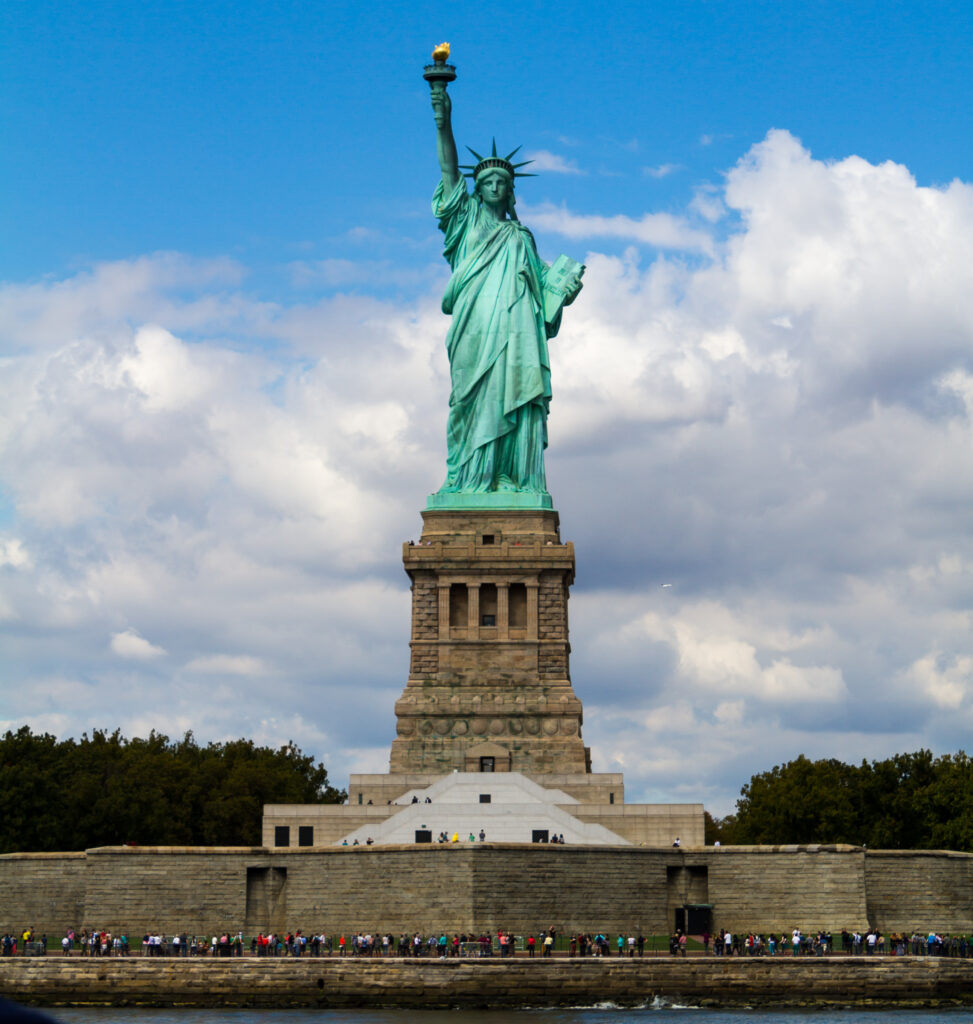
The Statue of Liberty holds fire.
That fire can still be holy.
It welcomes the stranger. It dignifies the exile. It shines against tyranny. It stands at the edge of the harbor and says a human being should not be trapped forever inside the room another power built.
The torch is entrusted fire when it lights a way through.
It becomes false when it becomes proof of the one holding it.
That is true for nations.
It is true for people.
The national torch becomes fallen when the nation says:
We are the light.
The personal torch becomes fallen when the self says:
My freedom proves me.
The torch was supposed to guide passage. It was not supposed to become the face in the mirror.
This is the Luciferic danger of liberty. Not darkness. Not obvious evil. Light identified with the bearer. Fire held so high that the one holding it begins to believe the height belongs to them.
Luciferic liberty is the right to keep mistaking the torch for the self.
But the torch is not the self.
It is only fire.
And fire must be returned.
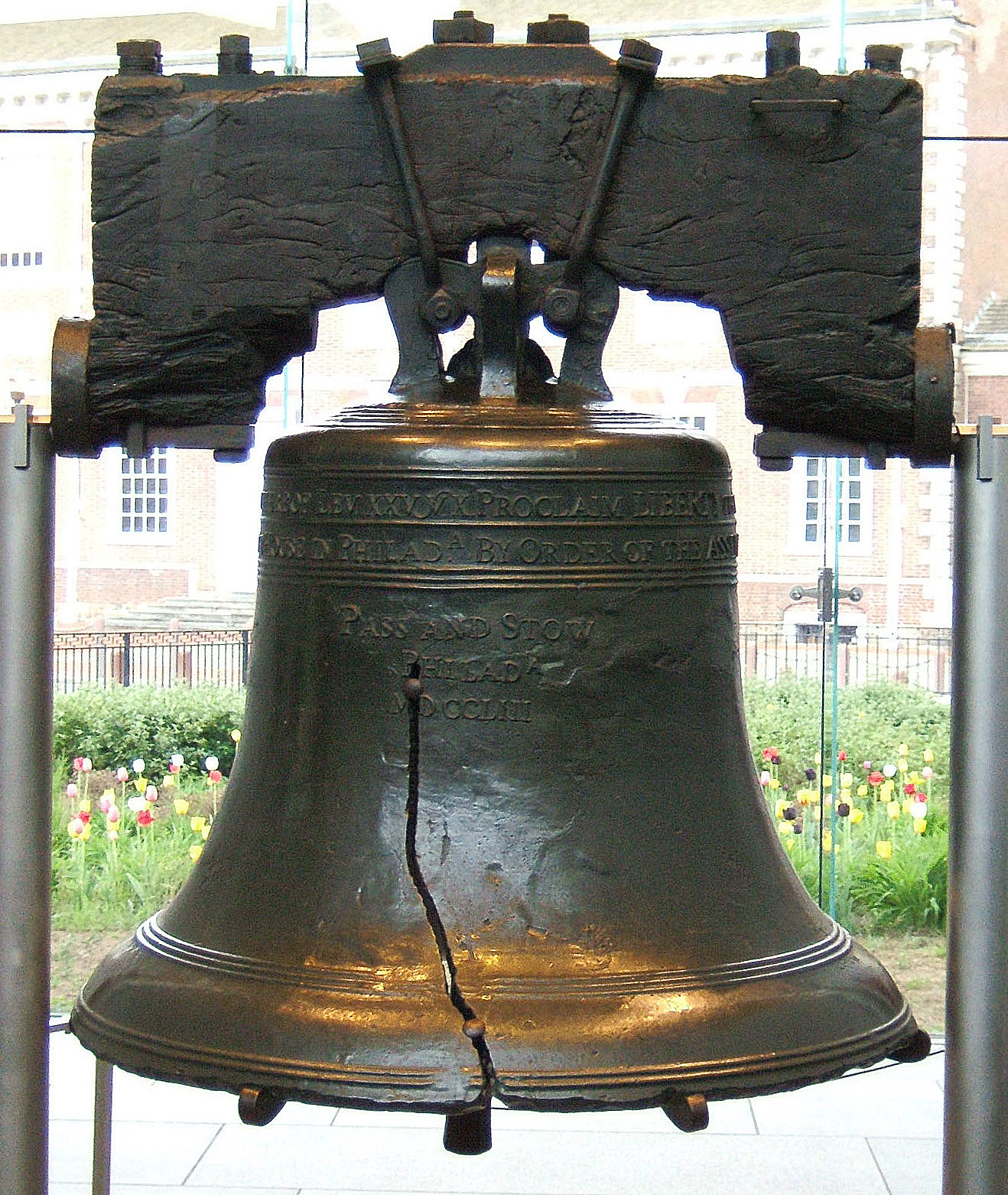
The Cracked Bell
The Liberty Bell tells the truth by failing to ring cleanly.
That is why it is one of the better symbols.
A perfect bell would lie.
A perfect bell would let the nation imagine liberty as a clean note, a pure announcement, an unbroken sound. But the bell is cracked. Its body bears the fracture of the thing it proclaims.
That fracture is not a weakness in the symbol.
It is the symbol’s honesty.
Liberty in the world is always cracked because outer release cannot complete inner return. A law can open a gate, but it cannot remove the claimant. A revolution can change the ruler, but it cannot guarantee freedom from the inner Pharaoh. A right can protect speech, but it cannot make speech truthful. A market can multiply options, but it cannot make desire clean.
The bell is supposed to ring freedom.
But its voice is broken.
So is ours.
That does not make liberty worthless. It makes liberty humble. It reminds the witness that every public freedom must pass through the heart before it becomes real freedom.
The bell says:
The symbol is cracked.
Listen more deeply.
Revolutionary Liberty
Liberty often appears as a radiant woman leading the people.
She carries the flag. She bares the chest. She steps over bodies. She gathers the crowd into motion. She makes revolt look like a sacred procession.
The image is powerful because revolution really can break chains.
But revolution can also preserve the claimant.
The tyrant falls. The crowd rises. The old throne breaks. A new authority appears. The image survives.
The danger is not resistance.
The danger is identity.
A revolution fails spiritually when it kills the ruler but preserves the claimant.
The ego is willing to overthrow almost anything except itself. It can become revolutionary. It can become anti-authoritarian. It can become the one who sees through power. It can become pure opposition. It can stand in the street with a liberated face and still carry the same hunger for domination.
The ruler outside may fall.
The ruler inside may remain.
Then liberty becomes another mask.
The chant changes.
The claimant survives.
Exodus and the Inner Pharaoh
Exodus clarifies the distinction.
Leaving EgyptReferenceEgyptAncient Egyptian cultural and mythic field referenced by the essay.Read full entry → is liberty.
But the wilderness reveals whether freedom has happened.
A people can pass through the sea and still carry Egypt internally. They can leave the old empire and still long for its food, its order, its predictability, its idols, its familiar slavery. They can be physically released and still interpret the unknown through the grammar of bondage.
That is not because the exit was false.
The exit was necessary.
But outer liberation is not the end of the story.
It is the beginning of the test.
You can leave Egypt and still carry Pharaoh as an inner grammar.
Pharaoh is not only the ruler behind you. Pharaoh is the structure inside you that still wants control, certainty, visible proof, managed appetite, and a god you can build with your own hands.
The wilderness asks whether liberty can become trust.
That is where freedom begins.
Not at the border.
In the heart after the border.
Checking Out
Hotel CaliforniaReferenceHotel California — EaglesHotel California is the title track of the Eagles’ 1976 album.Read full entry → gives the modern version.
Checking out is liberty.
Leaving is freedom.
A person can check out of one room, one job, one relationship, one religion, one identity, one city, one platform, one belief system, one story, and still not leave the hotel.
They have exercised liberty.
They have chosen.
They have moved.
They have exited.
But the guest remains.
The claimant enters the next room and begins decorating.
New setting. Same hunger. New language. Same wound. New doctrine. Same fear. New identity. Same one saying, “I am this.”
Liberty lets you check out.
Freedom lets the guest disappear.
That is why the distinction matters. Without it, every exit becomes another reincarnation. Every doorway becomes another room. Every act of self-definition becomes another lease signed by the claimant.
The gate opens.
The self walks through.
Then builds the same hotel somewhere else.
Consumer Choice
Consumer liberty is the marketplace giving the claimant more mirrors.
Choose the brand.
Choose the flavor.
Choose the feed.
Choose the look.
Choose the device.
Choose the lifestyle.
Choose the diet.
Choose the practice.
Choose the opinion.
Choose the aesthetic.
Choose the version of yourself you want the world to see.
Choice multiplies until it feels like freedom.
But the claimant remains untouched.
In fact, the claimant may grow stronger because every choice gives it another reflective surface. The self learns to experience existence as curation. It becomes a room decorated by preferences.
This is not a call to reject ordinary choice. Choosing is part of life. The body needs food, shelter, work, clothing, tools, and forms of expression. There is dignity in having real options where there was coercion before.
But choice is not the same as release.
A menu is not liberation.
A marketplace is not source.
A thousand mirrors do not free the face that needs them.
Self-Expression
Self-expression can be beautiful.
A person speaks after silence. A child finds a voice. An artist makes visible what lived privately. A wounded person finally names what happened. A body that was shamed learns to stand in public without apology.
That matters.
Expression can be part of healing.
But expression becomes trap when it is treated as existence.
The profile. The bio. The post. The comment. The stance. The aesthetic. The declaration. The repeated announcement of identity.
The self says:
I am free because I can say who I am.
Geomytha asks:
Who is the one who needs to keep saying it?
Expression is not freedom if the claimant must keep refreshing itself.
A person can be allowed to speak and still be trapped in the need to be seen speaking. They can be free to declare themselves and still be bound to the identity being declared.
The question is not whether expression is allowed.
The question is whether expression returns the person to presence or feeds the public self.
The Doorway and the Room
The Doors gave popular culture one of its cleanest freedom phrases:
Break on through to the other side.
It sounds like liberation because it has the shape of passage. Door, breakthrough, other side. The old wall is broken. The boundary is crossed. The next field opens.
But even the breakthrough can become a room.
That is the Morrison Hotel problem.
The door becomes a place to stay. The threshold becomes persona. The one who broke through becomes “the one who broke through.” The other side becomes identity.
This happens constantly in spiritual life.
A person leaves the old doctrine and becomes the one who left. Breaks through fear and becomes the fearless one. Sees through ego and becomes the one beyond ego. Escapes the room and begins charging rent at the doorway.
The other side becomes another room when the claimant arrives intact.
So the question is not only:
Did you break through?
The question is:
Who crossed?
If the claimant crossed, the hotel expands.
The Self-Made Person
American liberty especially loves the self-made person.
The one who rose. Built. Struggled. Made a name. Refused limitation. Became something through effort, grit, ambition, talent, discipline, hunger, refusal, and will.
There is real dignity in labor.
There is real beauty in courage.
There is real justice in a person not being trapped forever by inherited condition.
But self-making has a hidden burden.
If the self is made, the self must be maintained.
The self-made person becomes responsible for keeping the image alive. Every achievement must prove the maker. Every failure threatens the product. Every public sign of weakness endangers the story.
The maker becomes servant of the made.
The self-made man is still trapped if he has to keep being his maker’s product.
Freedom does not mean doing nothing. It does not mean refusing effort, work, excellence, or growth. It means action without imprisonment in the actor.
Build.
But do not become the builder-image.
Create.
But do not become the created self.
What Freedom Actually Means
Freedom is not passivity.
It is not political quietism.
It is not indifference to injustice.
It is not refusal to act.
It is not the spiritualization of helplessness.
A free person can speak, work, resist, vote, build, love, move, organize, create, protect, and fight when necessary.
The difference is possession.
Freedom is not fewer forms.
It is less possession.
A person can act without turning the action into self. Speak without needing the speech to prove existence. Resist without becoming hatred. Build without becoming the builder. Love without owning the beloved. Leave without becoming the one who left.
Freedom is the release of the claimant inside action.
That is why freedom can exist even when external liberty is constrained, and why bondage can persist even when external liberty expands. External liberty matters, but it is not the whole field.
The inner claimant can turn any liberty into a room.
Freedom releases the room-maker.
Test the Chooser
Before celebrating the choice, witness the chooser.
Ask:
Who is choosing?
What identity does this choice protect?
What fear does this option soothe?
What image does this decision strengthen?
Does this return me to presence?
Or does it give the claimant another room?
Would I still be here if this choice disappeared?
Can I act without becoming the actor?
Can I leave without becoming the one who left?
Can I speak without becoming the profile of my speech?
This is not meant to paralyze action.
It is meant to clean action.
A choice made from presence can be strong. A choice made from the claimant may still be necessary, but it should be seen clearly. The danger is not choosing. The danger is worshiping the chooser.
Liberty says:
You may choose.
Freedom asks:
Can the chooser be released?
Put the Torch Down
The torch can guide.
But it cannot be self.
At some point, the torch must be put down.
That does not mean liberty is rejected. It means liberty is returned to its proper place. The torch opens the gate. It lights the passage. It dignifies the one who was trapped. It exposes the tyrant. It helps the stranger find harbor.
But the torch is not the destination.
The torch is not the self.
The torch is not source.
Liberty is beautiful when it opens the gate.
It becomes false when it asks to be worshiped as freedom.
Walk through.
Give thanks.
Put the fire down.
The gate is not the destination.
The right to choose is not the end of bondage.
The self that chooses is not the final truth.
Liberty gives the room enough space for the witness to appear.
Freedom begins when the witness stops becoming the guest.
So release the radiant claim.
Let the torch light the way.
Then let it go.
Freedom is not the self finally getting every room it wanted.
Freedom is the moment the self no longer needs a room to be.