Movement appears to be the opposite of stillness.
Yet without stillness, movement becomes impossible.
A wheel turns because something does not.
The axle remains.
The rim rotates.
Without the center, the wheel collapses into chaos.
This simple fact hides one of the deepest symbolic truths humanity has ever discovered.
Motion itself depends upon something motionless.
And perhaps life does too.
The Search for the Pole Star
For thousands of years, sailors looked toward the heavens in search of orientation.
Most stars rose and set.
Most wandered across the sky.
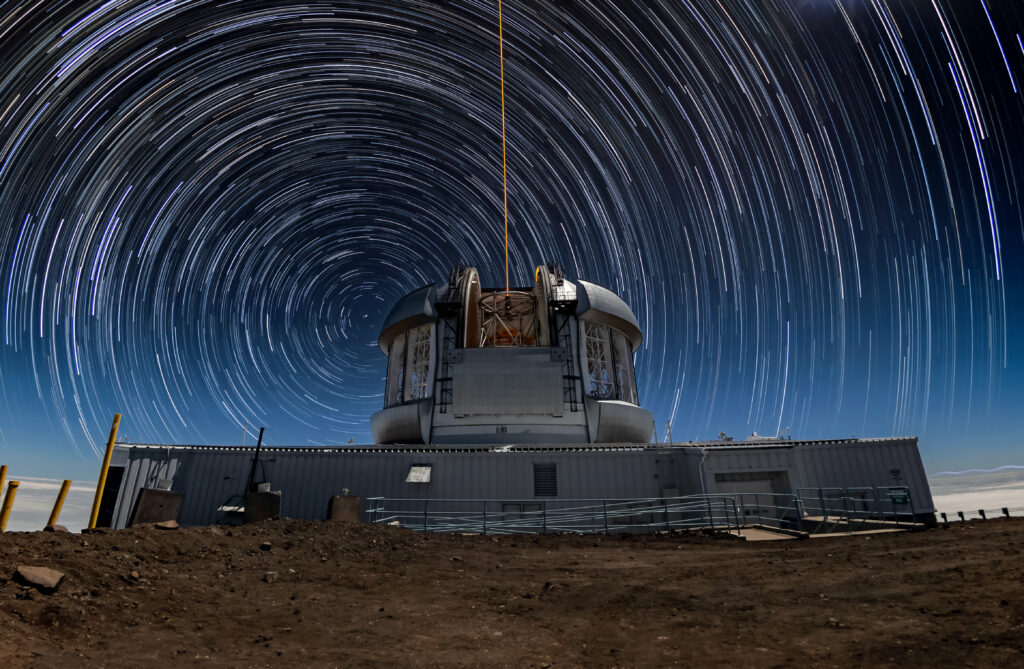
But one appeared strangely stable.
Polaris.
The North Star.
The heavens seemed to revolve around it.
Empires rose and fell.
Generations came and went.
Yet the pole star remained.
Ancient navigators trusted it because it provided what changing things could not.
Orientation.
Direction.
Home.
Human beings have always needed such points.
Not because life stands still.
But because life moves.
Motion requires reference.
Journey requires destination.
Memory requires continuity.
Without some form of center, movement itself becomes meaningless.
The Axis Mundi
Civilizations repeatedly discovered the same image.
Mount Meru.
Yggdrasil.
The world mountain.
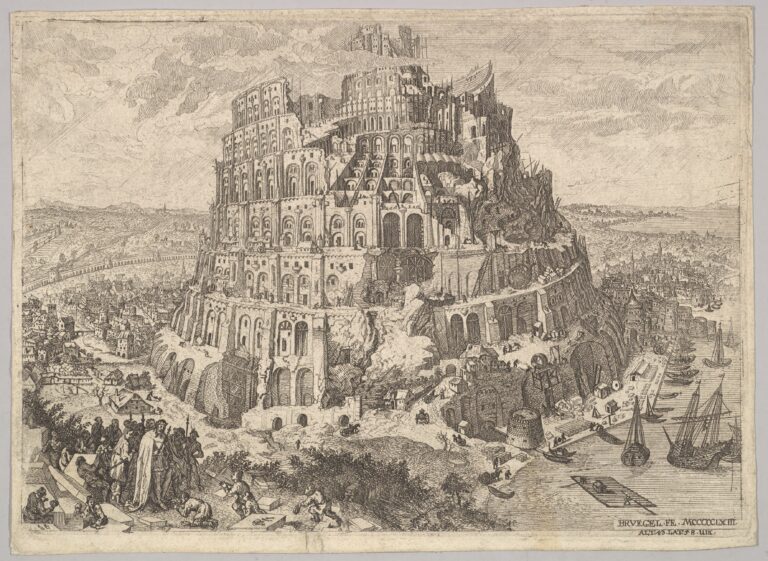
The cosmic pillar.
Jacob’s ladder.
The Temple Mount.
The omphalos stone.
The world tree.
Different cultures.
Different myths.
Different names.
Yet the pattern persists.
The universe appears organized around a center.
Not because geography literally possesses a single sacred coordinate.
But because consciousness itself seeks an axis.
Human beings need something around which experience can organize itself.
Without it, multiplicity becomes fragmentation.
The directions become enemies.
History becomes noise.
Life becomes exhaustion.
Four Around One
The previous article explored the four directions.
East.
North.
West.
South.
Structure.
Orientation.
Order.
Yet four alone remains unstable.
Opposites emerge.
Division appears.
Multiplicity threatens unity.
The solution repeatedly appears in symbolic systems.
Not another direction.
A center.
The fifth.
Not east.
Not west.
Not north.
Not south.
The axis.
The point that gathers without dominating.
The stillness that allows motion.
The place where the wheel remembers itself.
Ancient mandalas preserve this.
So do Celtic crosses.
So do temples.
So do cities.
Again and again, the world appears as four around one.
Not chaos.
Not uniformity.
Harmony.
The False Center
But not every center is true.
Empires seek to become the center.
Ideologies seek to become the center.
Nations seek to become the center.
Religions seek to become the center.
The ego seeks to become the center.
And the ego’s favorite sentence is simple:
I am thisGEOMYTHA readingThe False-Self Sentence — I Am ThisThe false-self sentence forms when claim joins reflection to a fixed object of identity: I am this.Read full entry →.
Identity hardens.
Possession begins.
Everything else becomes subordinate to the claimant.
At first this feels powerful.
Eventually it becomes exhausting.
Because false centers cannot carry the weight placed upon them.
No ideology can save.
No identity can contain life.
No empire can bear eternity.
False centers eventually collapse beneath the burden of pretending to be source.
The Still Point
T. S. Eliot once spoke of “the still point of the turning world.”
The phrase captures something ancient.
Life turns.
Seasons turn.
Relationships turn.
Civilizations turn.
Thoughts turn.
Bodies age.
Memories deepen.
History spirals.
Nothing remains fixed.
And yet something remains present through every change.
Not a thing.
Not an object.
Not a possession.
Presence itself.
The witness beneath the stories.
The silence beneath the thoughts.
The openness beneath the identities.
The center does not stop the wheel.
It makes the wheel possible.
The purpose of stillness is not escape.
It is orientation.
Why Presence Cannot Be Seized
This is why the center remains elusive.
Objects can be possessed.
Centers cannot.
Empires can conquer territories.
But they cannot conquer presence.
Ideologies can organize thoughts.
But they cannot become awareness itself.
The ego can claim identities.
But it cannot become the witness that sees them.
The center escapes possession because it is not another thing inside the wheel.
It is what allows the wheel to turn.
Perhaps this explains why the deepest traditions speak in paradoxes.
The last become first.
The servant becomes king.
The empty hand receives.
The one who loses life finds it.
The center cannot be grasped because grasping itself belongs to the rim.
The axis simply remains.
The Wheel Around the Axis
Modern life often attempts to solve anxiety by stopping movement.
We seek certainty.
Control.
Permanent security.
Final answers.
But life does not stop.
Nor should it.
The answer is not to freeze the wheel.
The answer is to discover the axis.
Not endless motion.
Not rigid stillness.
Living circulation around a stable center.
The seasons return.
The stars move.
The years pass.
The body changes.
Love deepens.
Grief transforms.
History spirals.
And through it all, something remains.
Not because it dominates.
Not because it possesses.
But because it simply is.
Perhaps that is why every wheel requires an axis.
And perhaps that is why every soul eventually begins searching for the center that does not move.
For without the center, life becomes chaos.
But around the center, even change itself becomes home.