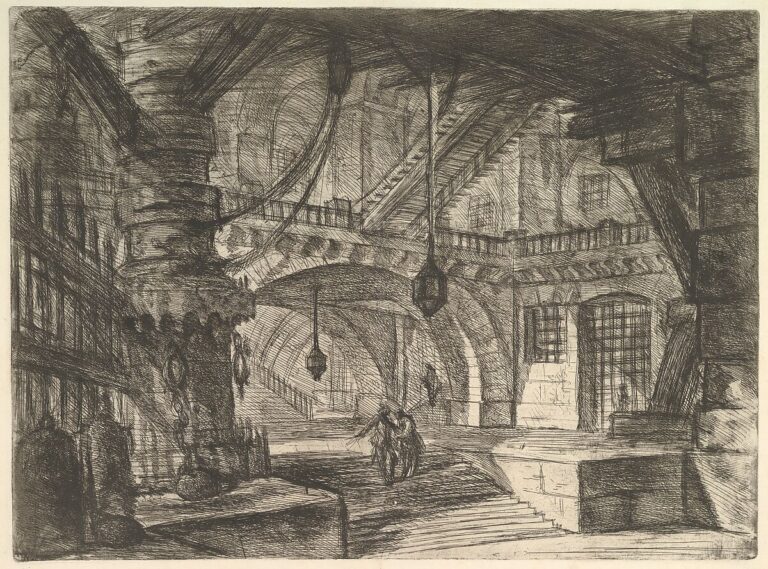
A maze is not always built to hide a monster.
Sometimes it is built to protect a king.
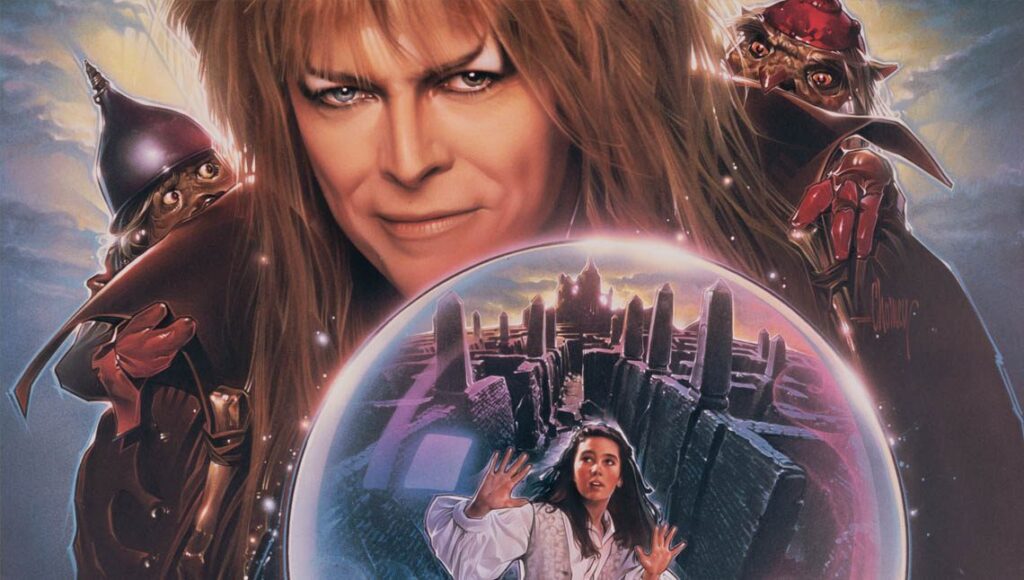
That is the bridge from the Minotaur to LabyrinthLabyrinth — 1986 FilmFantasy film in which Sarah enters the Goblin King’s labyrinth to rescue her baby brother Toby.Read full entry →. In the old myth, Minos hides the hybrid child at the center of an engineered maze. The monster appears to be the problem, but the deeper problem is royal refusal: the king receives a sacred gift, claims it, distorts the field, and then builds architecture around the consequence.
Labyrinth gives that ancient structure a modern fairy-tale body.
A girl.
A baby.
A wish.
A false kingCounterfeit KingshipCounterfeit kingship appears when a role, ruler, institution, or self treats the throne, office, authority, or form it occupies as the source of legitimacy rather than as a vessel answerable to something…Read full entry →.
A thirteen-hour clock.
A maze that lives on delay.
A final sentence that breaks the spell.
The movie is not about defeating fantasy.
It is about withdrawing sovereignty from the false king inside it.
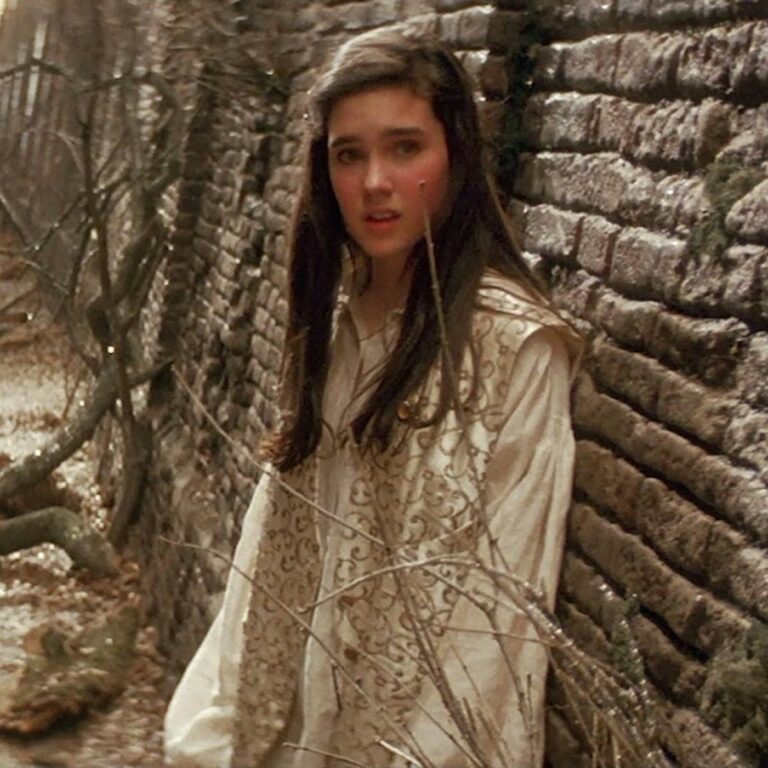
Sarah at the Threshold
SarahSarah Williams — LabyrinthTeenage protagonist who must rescue Toby from Jareth’s labyrinth.Read full entry → is not simply selfish.
That is too easy.
She is adolescent I at the threshold: theatrical, imaginative, wounded, dramatic, resentful, gifted, half-child and half-sovereign. She lives partly in ordinary family life and partly in the enchanted language of her own performance. She recites lines in costume. She inhabits story before she inhabits responsibility.
That does not make her imagination the enemy.
Her imagination is alive. It gives her intensity, language, beauty, and symbolic depthLiving SymbolA living symbol is a form that continues to mediate depth, relation, and transformation rather than collapsing into a fixed shell or decorative sign.Read full entry →. The problem is not that Sarah has fantasy. The problem is that fantasy has become a costume for refusal.
She does not yet know how to hold the ordinary demand of love without turning it into a scene.
That is where the story begins.
Not with evil.
With refusal.
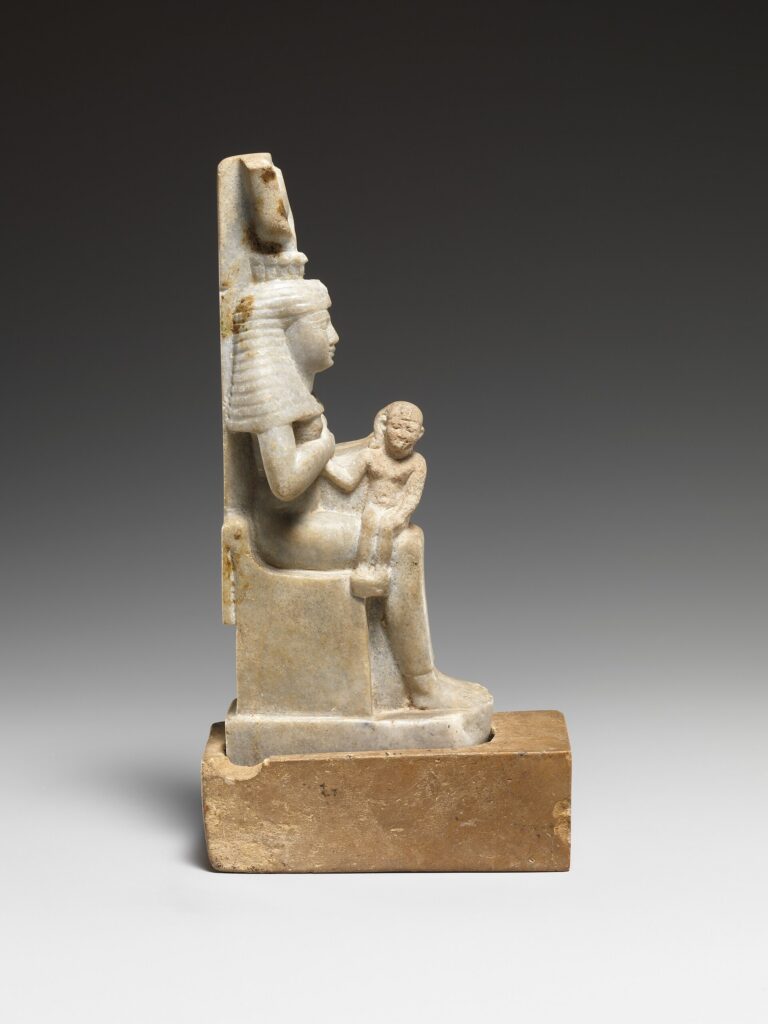
Toby as Living Relation
Toby, the baby brother, is the immediate demand Sarah does not want.
He cries. He interrupts. He needs. He cannot be reasoned with, aestheticized, or turned into a supporting character inside Sarah’s private theater. He is embodied dependency.
In Geomytha, Toby carries Am in the story: breath, innocence, need, living relation, the small body that requires presence now.
Sarah experiences him as an obstacle to her image-worldImage WorldImage World names a symbolic environment in which representation becomes the dominant medium through which reality, value, identity, and belonging are encountered.Read full entry →.
That is why the wish matters.
She does not merely wish away a baby. She wishes away the living relation that her fantasy cannot control.
The baby is the living demand that fantasy cannot edit.
This is the first wound.
The Wish
Sarah says the words.
The goblins answer.
The false world begins when resentment becomes speech.
That is the magic of Labyrinth: language does not merely describe the world. It opens one. The sentence becomes threshold. The theatrical line becomes contract. The private irritation becomes a realm.
This is how false worlds often form.
A feeling appears.
Then I claims it.
Then speech hardens it.
I am wronged.
I am trapped.
This is unfair.
This person is the problem.
This life is stealing from me.
Take it away.
The wish is not just fantasy. It is I attempting to rearrange reality so the living demand disappears.
But the thing wished away does not vanish.
It becomes the center of the maze.
Jareth as False Radiance
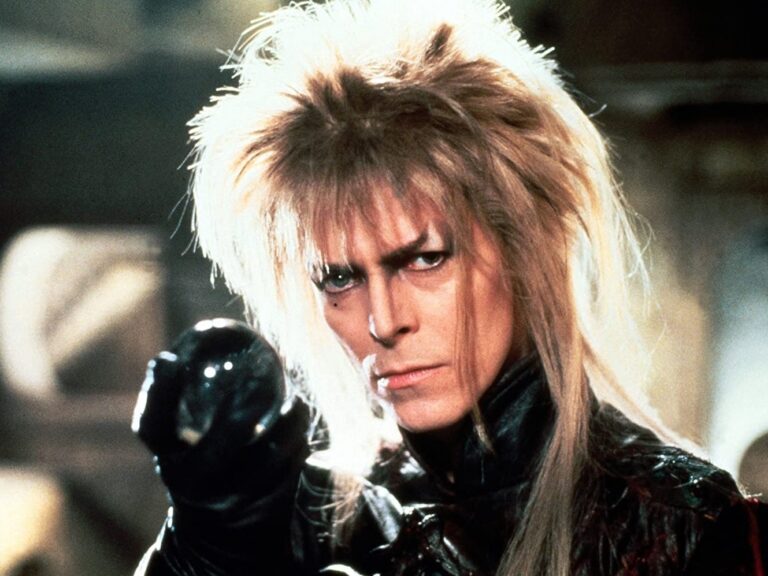
JarethJareth / Goblin King — LabyrinthGoblin King played by David Bowie who rules the labyrinth and holds Toby.Read full entry → is not merely a villain.
He is glamour.
He is charisma, theater, seduction, music, danger, beauty, control, and false sovereignty. He is the Goblin King, but he is also the glowing center of the symbolic world Sarah has entered.
That is why Leo matters here.
Jareth radiates. But his radiance does not free. It enchants.
He offers Sarah a world where she matters intensely because everything orbits the drama. He gives her fear, attention, spectacle, tests, riddles, costumes, songs, and the intoxicating feeling that her inner life has become cosmic.
This is false radiance.
Not light that reveals sourceIs — SourceIs names unclaimed being: awareness before possession, distinction, or identity.Read full entry →.
Light that makes the maze desirable.
Jareth’s power is not brute force. It is the glamour of being orbited by a world.
That is what makes him dangerous.
The Labyrinth as All This
The Labyrinth is not merely a place Sarah enters.
It is the symbolic environment built from the claimI — ClaimI names claim: the interruption by which reflected presence is taken as mine.Read full entry →.
It contains delays, false directions, riddles, appetites, helpers, betrayals, traps, clock-pressure, impossible rooms, and emotional reversals. Every step appears to move forward, but the maze keeps changing the terms.
This is All ThisAll This — World-SystemAll This names the total symbolic environment that has become so complete it is experienced as reality itself.Read full entry → in fantasy form.
A total world-system with its own logic, inhabitants, laws, threats, rewards, and center.
The maze feels external, but it is also Sarah’s own imaginative field turned against her. It uses her drama, her wishes, her fears, her desires, her need to feel special, and her reluctance to accept ordinary responsibility.
The false king seems to own the maze.
But he does not.
The maze survives on the attention Sarah keeps giving it.
Thirteen Hours
Jareth gives Sarah thirteen hours.
That number matters.
Thirteen can be the hidden hinge, the exit beyond the twelvefold wheel, the opening that prevents the system from closing. But in Jareth’s hands, thirteen first appears as pressure.
A countdown.
A spell.
A deadline.
A threat.
If Sarah fails, Toby becomes one of the Goblin King’s own. Living relation becomes absorbed into the false king’s world.
This is captured thirteen.
The exit-number becomes a clock of anxiety.
But the same number can change function.
At the beginning, thirteen belongs to Jareth because he frames it as control. At the end, thirteen belongs to Sarah because she exits the entire spell.
The same number can threaten or releaseReturn — RemembranceReturn names remembrance and release: the loosening of possession so reflection can become transparent to source again.Read full entry → depending on who holds it.
Helpers in the Maze
The maze is false, but not everything inside it is false.
That is important.
Hoggle, Ludo, and Sir Didymus are not simply distractions. They are partial-return figures inside the distorted world.
Hoggle is compromised help: fear, self-interest, bargaining, loyalty slowly recovered.
Ludo is gentle body-force: strength without domination, animal power without cruelty.
Sir Didymus is comic chivalric I: courage, absurd honor, noisy bravery, the little knight who performs nobility while still helping the path open.
Do not over-map them too rigidly. Their function is relational.
They show that even the false world cannot fully extinguish relation.
Something inside the maze can still help the way out.
That is why Sarah cannot simply reject everything she meets. Return does not come from hatred of the symbolic world. It comes from learning which figures feed the spell and which figures help loosen it.
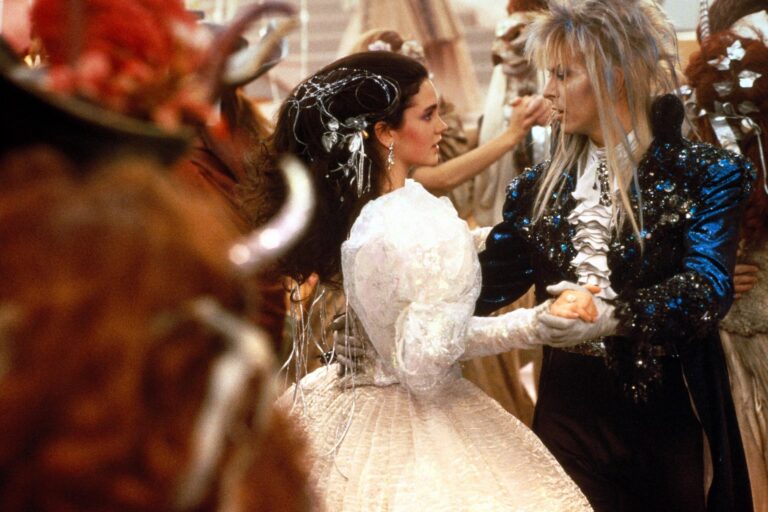
The Ballroom
The masquerade ballroom is one of the film’s clearest images of TheseThese — AccumulationThese names accumulation: possessions, titles, achievements, beliefs, communities, and other extensions gathered around identity.Read full entry →.
Masks.
Gazes.
Costumes.
Desire.
Music.
Movement.
Beauty.
A room full of roles.
Sarah is dressed and displayed. She becomes part of the fantasy’s social order. She is no longer only trying to rescue Toby. She is being absorbed into an aesthetic field where being desired can feel like being real.
That is the seduction.
The ballroom does not imprison her with chains.
It enchants her with image.
This is one of the most dangerous kinds of capture because it feels like arrival. The self thinks:
Now I am seen.
Now I am chosen.
Now I am beautiful.
Now I belong to the center.
But the center is Jareth.
The ballroom is what happens when the self mistakes being desired for being real.
The Junkyard
Then comes accumulation.
Sarah is buried in her own things.
Her room returns in distorted form: toys, objects, memories, comforts, fragments of identityThis — IdentityThis names the formed identity: the body, role, image, wound, belief, or story claimed as what the self is.Read full entry →. Everything says:
Keep this.
Remember this.
This is yours.
This is who you are.
Stay here.
This is These in its most literal form.
These are mine.
The junkyard is not ugly because objects are evil. It is ugly because the objects have become identity-props. They no longer serve life. They delay return.
This is one of the film’s strongest practical images.
The self can be buried by the very things that once helped it feel like itself.
A toy, a photograph, a role, a memory, a costume, a book, a wound, a phrase, an old dream — each may be innocent alone. But when gathered into These, they can form a soft prison.
The junkyard asks:
Are these memories helping you return?
Or are they keeping you from the child?
Impossible Stairs
The final castle space turns perspective against Sarah.
Up and down lose stability. Toby crawls through impossible architecture. The usual rules of approach fail. Sarah cannot simply climb toward the baby because the room itself no longer obeys ordinary orientation.
This is All This at its most sophisticated.
The false king’s last defense is perspective itself.
When a system is weak, it blocks the door.
When a system is stronger, it changes the room.
This is how false worlds defend themselves. They make the direct path impossible. They make near and far unreliable. They make urgency distort perception. They keep the living thing visible but unreachable.
Sarah can see Toby.
But seeing is not yet return.
She must remember the line.
The Line
“You have no power over me.”
This is the Second Death FireSecond Death FireSecond Death Fire is the exposing fire that burns false claim after the identity-world has reached its limit.Read full entry → moment.
Not because anything burns visibly.
Because false authority loses its place to hide.
Sarah does not defeat Jareth by becoming more powerful than Jareth. That would only make her another false sovereign. She does not claim the throne. She does not demand the maze orbit her instead. She does not become Queen of the Labyrinth.
She withdraws belief.
That is the clean cut.
The sentence is not:
I have more power than you.
The sentence is:
You have no power over me.
That difference is everything.
The first would preserve the contest.
The second ends the orbit.
Jareth’s world collapses because its authority depended on Sarah’s participation. He could threaten, seduce, delay, and dramatize only while she remained inside the spell of his importance.
The false king dies when attention stops kneeling.
Return
Sarah returns home.
Toby is safe.
But imagination is not destroyed.
That is crucial.
The helpers appear in her room. The fantasy world remains available, but it has changed position. It is no longer sovereign. It is no longer king. It no longer owns the child. It no longer controls the household. It has become play, friendship, memory, symbolic companionship.
That is the healthy ending.
Return does not kill imagination.
It removes the crown from fantasy.
This is what distinguishes Geomytha’s reading from moralistic suspicion of imagination. Fantasy is not the enemy. Story is not the enemy. Theater, music, costume, desire, and myth are not the enemy.
The enemy is false sovereignty.
The enemy is when imagination stops serving life and starts ruling it.
What This Corrects
Imagination is not the problem.
Avoidance is.
Jareth is not source.
He is false radiance, the charismatic center that makes the maze feel meaningful.
The Labyrinth is not only external.
It is the world built from Sarah’s claim, resentment, fear, desire, and attention.
Thirteen is not automatically liberation.
It begins as captured countdown and becomes exit only when authority is withdrawn.
Return is not anti-fantasy.
It is fantasy restored to right relation.
The goal is not to become unimaginative. It is to stop letting fantasy govern the living child.
Who Is Your Goblin King?
This is why Labyrinth remains practical.
Everyone has a Goblin King somewhere.
A glamorous false centerFalse CenterA false center forms when sovereignty is assigned to an object, role, institution, future state, identity, or projection that cannot actually serve as source.Read full entry →.
A wound that feels royal.
A resentment that sings.
A fantasy that makes avoidance feel meaningful.
A private drama that keeps demanding orbit.
Ask:
What did resentment turn into speech?
What living relation did I wish away?
What false king became glamorous because I felt unseen?
What maze keeps delaying responsibility?
What possessions bury me in These?
What impossible perspective keeps me from the child?
What line do I need to remember?
These questions matter because false kings rarely survive on force alone. They survive on attention. They survive because the self keeps circling the throne, arguing with it, fearing it, desiring it, resenting it, admiring it.
The false king keeps power by convincing you that the maze is his.
It is not.
It is built from the attention you keep giving him.
Sovereign Refusal
The final movement of Labyrinth is not conquest.
It is refusal.
A clean, sovereign refusal.
Not hatred.
Not domination.
Not counter-magic.
Not a new throne.
Sarah does not need to become the Goblin Queen. She does not need to defeat fantasy by becoming harder than fantasy. She only has to stop believing that the false king owns what he has been holding.
That is the cut.
That is First Quarter in its cleanest form.
A decision that gives consciousness direction.
The child returns.
The maze collapses.
The king loses orbit.
Imagination becomes play again.
That is why the line works.
“You have no power over me” is not an insult.
It is a return spell.
It gives the center back to life.
It ends the false radiance.
It lets the baby breathe.
It opens the room.