Encyclopedia Record

Claimant I and Functional I
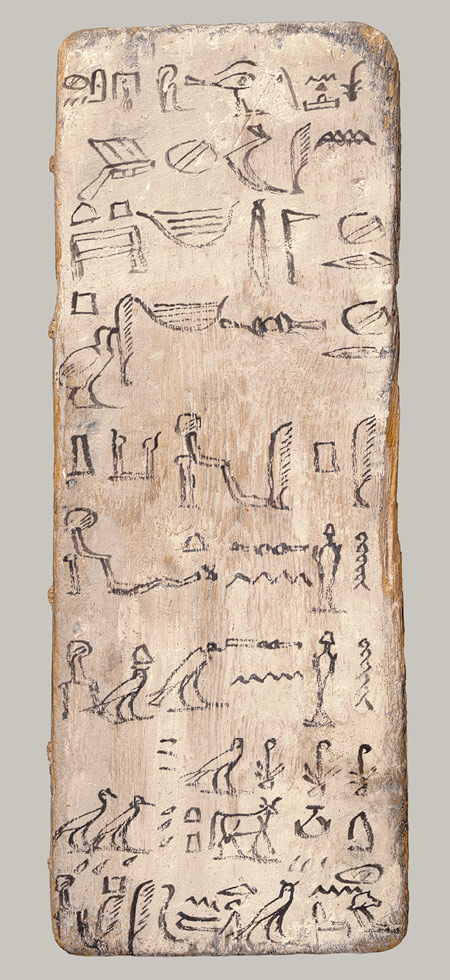
Ancient Egyptian writing board of an apprentice scribe, Metropolitan Museum of Art
Mechanism statement
Functional I coordinates ordinary life; claimant I takes experience as possession and uses it to harden identity.

Geomytha Reading

The diagnostic question is whether self-reference serves relation or demands ownership and defense.

Geomytha function

The distinction prevents Geomytha from treating every first-person statement as egoic distortion.

Structural movement

Functional I may remain practical; claimant I drives Am → I → This.

Claim boundaries

This is a Geomytha distinction and should not be presented as an established linguistic category.

Misuse warning

Do not police ordinary language for the word I; examine the function of claiming instead.

Applied field

Where this mechanism appears

Only explicit links already recorded by the publication engine are shown here. Conceptual resemblance alone does not create an application link.

Essays · 6

The Moment Thought Becomes “I”
Most people assume the ego begins when thoughts appear. But thoughts are not the problem. Feelings are not the problem. Memories are not the…


The Falcon Before the Throne
Most people know Horus as the victorious son of Osiris. He battles Set. He restores order. He inherits the throne of Egypt. He is…


The Heel-Grabber
Jacob enters the story holding a heel. That image is not incidental. It is the whole mechanism. Before he has a name, before he…


The Body Grammar of Breath
The false self is not only an idea. It is a body-pattern. It has a route. It has a pressure. It has a place…


The Breath Grammar Before the Gods
Before the gods have names, there is breath. Before Isis becomes a goddess, before Osiris becomes a murdered king, before Set becomes the adversary,…


The Box Before the Beginning
The box is empty. The ring is gone. The drawer is cleared. The phone is face-down. The old letter has been put away, burned,…

Index instances · 6

Ehyeh Asher Ehyeh — Exodus 3:14 / Burning Bush
In Exodus 3, Moses asks what name he should give the Israelites when they ask who sent him. The reply includes the Hebrew formula Ehyeh Asher Ehyeh before Moses is instructed what to say…


I Am That — Nisargadatta Maharaj
I Am That is a published collection of talks by Sri Nisargadatta Maharaj, translated from Marathi by Maurice Frydman and first published by Chetana in 1973.


Jacob / The Heel-Grabber — Genesis 25–32
Genesis introduces Jacob emerging while holding Esau’s heel, later depicts him obtaining Isaac’s blessing while disguised as Esau, and eventually places him in a night wrestling encounter before his reunion with Esau.


Julius Caesar
Roman general, statesman, and dictator whose calendar reform reorganized the Roman civil year into the Julian system. The historical record is treated separately from Geomytha's symbolic Caesar/seizure reading.


Papyrus of Ani — Weighing of the Heart
The British Museum identifies the scene as Ani’s Judgment in the Hall of Judgment. Ani’s heart is weighed against a feather representing Ma’at, truth and order. The scene belongs to the ancient Egyptian afterlife…


The Caterpillar — Alice’s Adventures in Wonderland
In Chapter V, “Advice from a Caterpillar,” of Lewis Carroll’s Alice’s Adventures in Wonderland, the Caterpillar asks Alice who she is. Alice replies that she hardly knows at present, remembers who she was that…

Concept network

Follow the mechanism

Source trail

Evidence beneath the record

GEOMYTHA CORE GRAMMAR — internal canonical source

Primary internal source document defining the Geomytha Is / Am / I / This grammar.

Geomytha Project

GEOMYTHA GRAMMAR ENGINE — internal canonical source

Primary internal engine document defining Source → Reflection → Claim → Identity and the extended attention grammar.

Geomytha Project