Most people assume the ego begins when thoughts appear.
But thoughts are not the problem.
Feelings are not the problem.
Memories are not the problem.
Even identity itself is not the problem.
The difficulty begins when something is claimed.
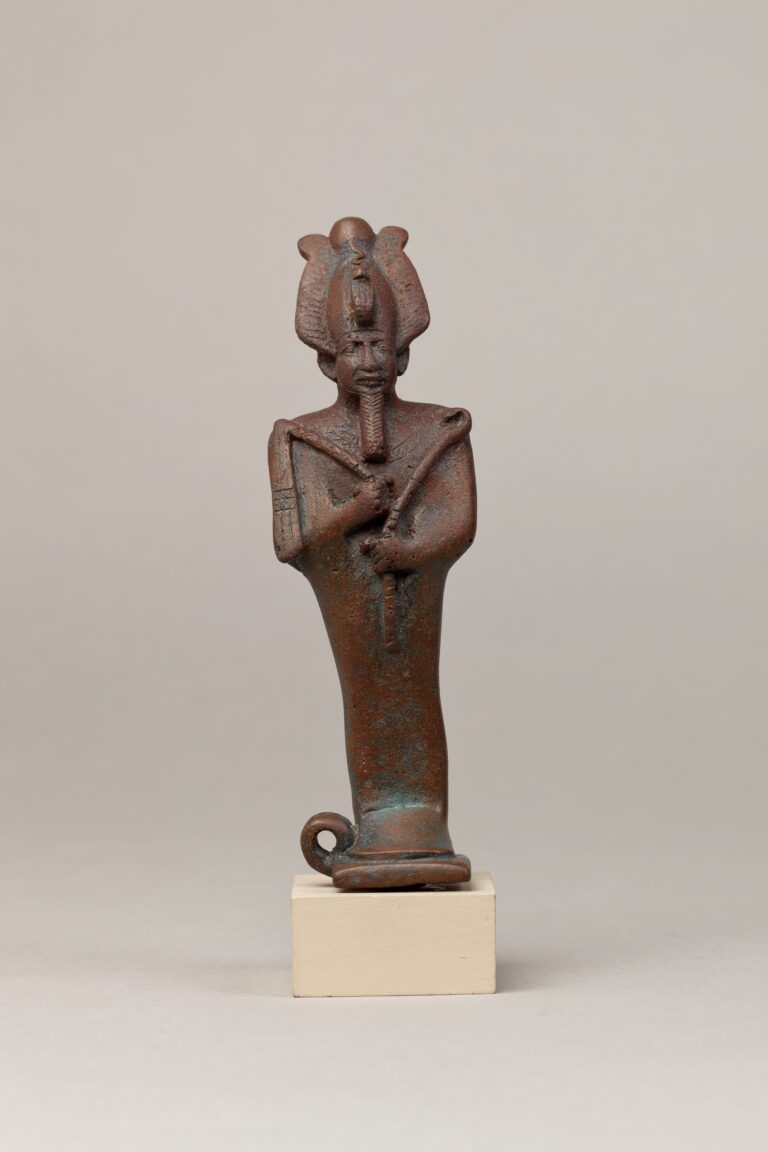
Ancient Egyptian myth dramatizes this movement through OsirisGEOMYTHA readingOsirisWithin GEOMYTHA, Osiris names Am: reflected, embodied presence before ownership. This is the project’s interpretive use, distinct from the Egyptian deity’s historical roles.Read full entry → and SetGEOMYTHA readingSetWithin GEOMYTHA, Set names I: the claimant that seizes reflected presence as mine. This is the project’s interpretive use, not every historical role of the Egyptian deity.Read full entry →.
Osiris represents right reflection. He receives. He mirrors. He participates in life without trying to possess it.
Set interrupts.
He separates.
He claims.
He divides.
This movement is so familiar that we rarely notice it.
Fear arises.
Immediately:
“I am afraid.”
Anger appears.
“I am angry.”
Sadness comes.
“I am depressed.”
A role emerges.
“I am thisGEOMYTHA readingThe False-Self Sentence — I Am ThisThe false-self sentence forms when claim joins reflection to a fixed object of identity: I am this.Read full entry →.”
The claim happens almost instantly.
The thought itself is not the trap.
The trap is ownership.
Buddhism recognized this pattern long ago. Feelings become craving. Craving becomes clinging. Clinging becomes identity.
The Stoics noticed the same thing. An impression appears. Assent follows. Character forms.
Even Genesis preserves this movement. Seeing becomes desire. Desire becomes possession. Possession becomes exile.
Human beings are extraordinarily quick to convert experience into self.
But another possibility exists.
Before the claim fully hardens, something sees.
A feeling appears.
A thought arises.
And for a brief moment awareness notices the process itself.
This does not destroy anger.
It does not eliminate fear.
It does not make someone spiritually superior.
It simply reveals that the experience and the claimant are not identical.
Ancient contemplative traditions repeatedly point toward this discovery.
“Watch and pray.”
“Be sober.”
“Remain awake.”
The instruction is remarkably simple.
See.
Notice.
Remember.
Freedom does not begin by conquering thought.
Freedom begins when thought is no longer invisible.
The ego forms when reflection becomes claim.
And liberation begins when that transition becomes visible.
Perhaps that is why so many traditions place such emphasis on vigilance.
Not because awareness is trying to destroy experience.
But because seeing restores choice.
The movement from reflection to ownership is the birthplace of the false self.
And the moment it is seen—
something begins to soften.
Not through force.
Not through conquest.
Simply through recognition.