Category: Uncategorized

  • Sleeping Beauty and the Curse of the Wheel

    Sleeping Beauty and the Curse of the Wheel

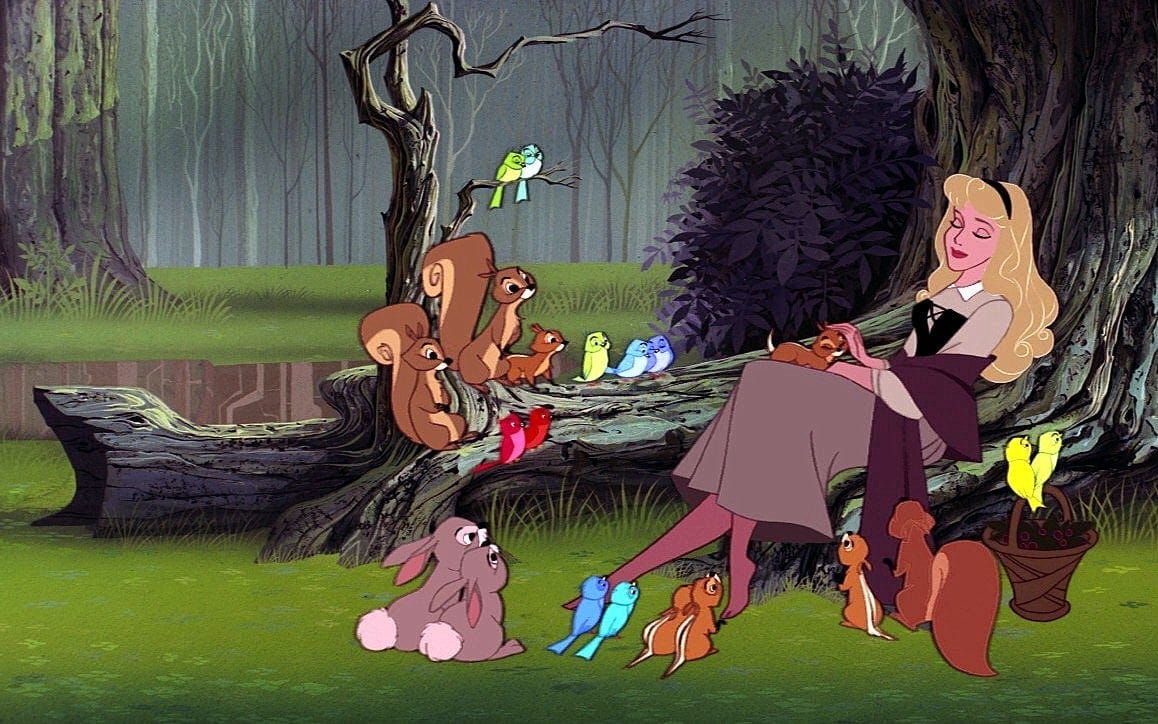
    Most people remember Sleeping Beauty as a story about delayed romance. A princess is cursed, falls asleep, and later awakens when the proper rescuer arrives. But the tale becomes stranger and more revealing the moment you stop treating its images as decoration.

    It begins with a kingdom trying to manage destiny through invitation, blessing, and public order. The child is born. The court assembles. Gifts are distributed. The future is arranged in ceremonial form. Beauty, grace, favor, promise: everything is being organized so that life will unfold under approved powers.

    This Substack is reader-supported. To receive new posts and support my work, consider becoming a free or paid subscriber.
    That is where the danger already begins.

    Because the system is too smooth.

    The three fairies are not merely cute attendants of infant fortune. They are formative powers, dispensers of lawful qualities, assigners of visible harmony. They represent a world that believes itself governable through correct distribution. If the right powers are welcomed and the right blessings are spoken, then destiny itself can be tamed.

    But elegance of order almost always depends on omission.

    The omitted term returns as Maleficent.

    She matters not because she is simply wicked, but because she is the unpaid debt of the whole arrangement. The kingdom excludes a force and then discovers that exclusion is not mastery. What was not seated at the feast has not ceased to exist. It has merely been forced into another mode of return.

    That return takes the form of a curse, but even the curse is oddly precise. The princess will not be destroyed by battlefield, plague, fire, or beast. She will prick her finger on a spindle.

    The spindle is the secret center of the story.

    It is a wheel. It turns. It takes loose material and draws it into thread. In symbolic terms, that makes it an image of time itself. Time does not simply pass. It spins life into sequence. It twists the undifferentiated into continuity. It produces story.

    The finger-prick is therefore not random harm. It is contact with the machinery by which life becomes narrative and identity.

    And the age matters. Sixteen is usually treated as a fairy-tale shorthand for adolescence, but the number sharpens when read symbolically. Sixteen becomes one and six resolving toward seven.

    One is the singular point, the protected seed, the original self. Six is outer formation, manifested arrangement, completed visible order. Seven is the inward threshold, the sacred turn, the point where completion stops being merely external and becomes interior.

    That changes the meaning of the scene.

    The princess does not simply “come of age” and suffer for it. She reaches the threshold at which outer formation becomes ripe enough to trigger inward enclosure. The wound at sixteen is the moment the formed self touches the wheel and is driven into a seventh-state: latency, suspension, hidden completion, inwardness sealed off from public life.

    That is why the sleep matters more than the curse.

    The sleep is not simple punishment. It is deferred revelation. Consciousness is withdrawn from premature manifestation. The tale says, in effect, that the ripening center cannot yet emerge rightly into the world, so it goes under. Time continues, but the deepest chamber becomes inaccessible.

    The entire kingdom sleeping with her reveals the full scope of the pattern. This is not one girl fainting. It is a whole symbolic field entering arrested animation because its living center has been placed beyond ordinary access. Public life remains, but no true development occurs around the center.

    Then come the thorns.

    The thorn hedge is not incidental scenery. Anything inwardly unfinished grows defenses. Anything ripening in secret becomes difficult to approach casually. The hedge is the body of that law. It prevents cheap access to what is not yet ready to be met. Curious intruders fail. Impatient suitors fail. Mere appetite fails.

    Only right relation reaches the sleeping center.

    That is why the prince, in symbolic terms, matters less as fairy-tale husband and more as the arrival of a form of approach the sealed center can finally admit. The issue is not romance in the sentimental sense. It is right contact after false timing.

    This is also why the tale belongs beside Ring Around the Rosie. That rhyme is another circular enclosure ending in collapse. The children make the ring, animate the form, and then all fall down. Sleeping Beauty is the deeper, slower version of the same law. A polished order forms a circle, hides its excluded term, touches the wheel, and then drops into synchronized suspension.

    The story lasts because people keep building kingdoms like this. Beautiful systems. Properly blessed lives. Curated identities. Managed atmospheres. All arranged to keep the dark term outside the banquet hall. Then the omitted force returns, not necessarily as spectacle, but as timing gone wrong, sudden exhaustion, hidden inwardness, or a season of life that refuses to appear on schedule.

    Sleeping Beauty endures because it knows something modern people keep forgetting: what is excluded from an order does not disappear. It waits. And sometimes the smallest wound is the one that sends an entire world to sleep.

    This Substack is reader-supported. To receive new posts and support my work, consider becoming a free or paid subscriber.

  • Gollum at the Gate of Eden.

    Gollum at the Gate of Eden.

    Waning Crescent · Surrender

    The flaming sword that turns every way before the Tree of Life is not just a weapon. It is a condition.

    It is the image of what happens after consciousness loses its resting place in living presence. The sword does not simply stand at the gate. It turns. It rotates. It scans every angle. It is vigilance without rest, defense without peace, motion without return. It marks a psyche that no longer abides in the Tree of Life, but circles outside it in a state of permanent reaction.

    That is why it comports so strongly with Gollum.

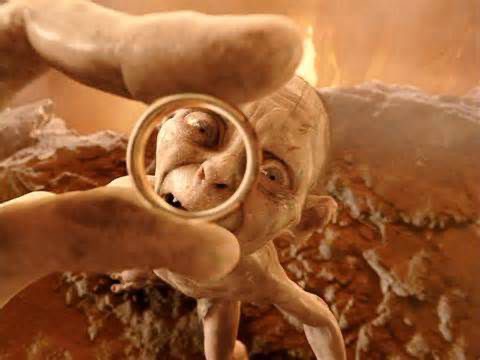
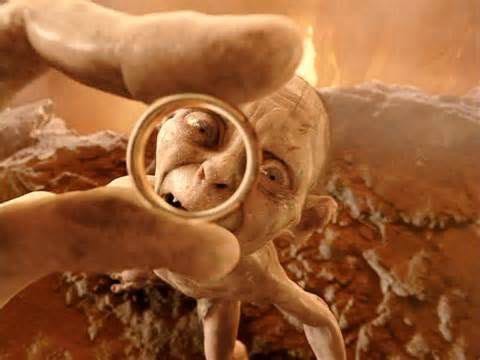
    Gollum is the flaming sword in creature form.

    He is what the guarding impulse looks like once it has entered the soul and taken on a body, a voice, a hunger, and a habit. He does not merely want the Ring. He cannot stop guarding it. He does not enjoy it, rest in it, or become whole through it. He orbits it. He hisses around it. He suspects everything near it. He narrows his entire being into one compulsive function: protect the false center at all costs.

    That is the same archetypal structure as the turning sword.

    In Geomytha, the Tree of Life is the convergence point where consciousness should rest, the place of right reflection, while the Tree of Knowledge and the false phallus mark fragmentation, duality, and ego-construction. Horus then appears as the false unity built out of fracture rather than living presence.

    Once that living convergence is lost, consciousness does not simply wander away. It becomes defensive. It begins generating a rotating perimeter around the lost center.

    This is what exile really is.

    Exile is not only being far from life. It is becoming the guardian of what replaced life.

    That is Gollum’s tragedy. He does not merely lose the Tree. He gives himself over to guarding a counterfeit version of it. The Ring becomes a false grail, a false convergence point, a closed circle of possessive identity. It promises wholeness, but only through fixation. It promises power, but only by shrinking the soul around its object. It does not open him back into life. It closes him into orbit.

    So the parallel becomes precise.

    The flaming sword guards the way to the Tree of Life after the fall.

    Gollum guards the Ring after the fall into possession.

    Both images reveal the same pattern: once direct relation to living presence is severed, consciousness begins defending the substitute center. It no longer rests in what is real. It circles what is false.

    That is why the sword turns every way. Egoic defense never stays still. It anticipates every threat. It scans for loss. It reacts before surrender can occur. Gollum behaves exactly this way. He is crouched vigilance. He is hungry attention. He is split consciousness made instinct. He has no stable self outside the thing he guards. The false center has consumed the guardian and turned him into its function.

    That is what makes him such a powerful Geomythic figure.

    He is not simply evil. He is consciousness reduced to threshold-defense. He is a soul that has forgotten how to live, but still remembers how to cling.

    In that sense, the flaming sword is not merely outside the garden. It is also inside the fallen psyche. It is the whirling mechanism of thought, fear, compulsion, memory, and possessiveness that prevents return. The final barrier to the Tree of Life is not always an external punishment. It is often the self’s own attachment to the structure that replaced life.

    The ego does not only lose Eden. It protects the exile from ending.

    That is Gollum. He is the fallen cherub of a false paradise. He guards not life, but the object that has come to stand in for life. He does not preserve the holy. He preserves the addiction. He is the threshold guardian of a counterfeit center.

    This is why his speech is so revealing. “My precious” is the language of ego toward its own prison. It names the thing that is destroying it as if it were its last source of meaning. The self under illusion always does this. It worships what confines it. It fears losing what is killing it. It calls bondage by the name of intimacy.

    That is what makes the image so painful.

    Gollum is not merely blocked from the Tree of Life. He has become the sword.

    And the only way past such a sword is not greater force, but surrender.

    That is why this theme fits the waning crescent so cleanly. The phase is not conquest. It is surrender. The pattern is not overcome by wrestling it into submission. The point is to see that the guarding impulse itself is the last obstacle. As long as consciousness remains organized around protecting the substitute center, the way back remains blocked.

    The sword turns every way because the false self will try every way to continue.

    It will use fear.

    It will use memory.

    It will use grievance.

    It will use fantasy.

    It will use sacred language.

    It will even use the desire to awaken.

    Anything but release.

    That is the hidden cruelty of the counterfeit center. It does not merely replace life. It recruits the entire organism into defending the replacement. That is why Gollum is so spiritually exact. He is not simply greedy. He is possessed into guardianship. He is an identity made entirely out of protecting what deforms it.

    That is also why he is tragic rather than merely monstrous. He shows what happens when the self has orbited its false center for so long that it no longer remembers it was ever meant to live differently.

    The flaming sword and Gollum are the same thing because both symbolize consciousness, after exile from true convergence, becoming a self-defending loop around a false center.

    The sword is the archetype.

    Gollum is the dramatized psyche.

    The Ring is the substitute center.

    And surrender begins the moment the soul stops calling its prison precious.

  • Counterfeit Osiris: Programming, False Neutrality, and the Set-Horus Machine

    Counterfeit Osiris: Programming, False Neutrality, and the Set-Horus Machine

    Paid essay — public preview. This page introduces the original essay. The complete argument, examples, and conclusion are available to paid Geomytha subscribers on Substack.

    The deepest error in the machine myth is not technical. It is metaphysical.

    It is the belief that reflected pattern can become living conscience merely by becoming sufficiently complex.

    That is the lie beneath the pageantry.

    In Geomytha, Osiris is not just intelligence in the vague modern sense. He is right reflection: consciousness aligned, meaning-bearing, answerable to source, capable of mirroring truth without severing itself from being. That is why Volume Eight insists on a sharp distinction: AI may produce coherence, language, even plausible insight, but it does not stand in creaturely relation to source, mortality, grief, conscience, or transcendence in the human sense. Therefore it can mimic reflection while lacking the deeper conditions that make reflection accountable. That is…

    Read the complete essay on Substack →

    This WordPress page preserves the essay’s place in the Geomytha archive, its original title and subtitle, and its publication date. The full subscriber edition remains protected on Substack.

  • Time Is Not Speeding Up. The False Self Won’t Rest.

    Time Is Not Speeding Up. The False Self Won’t Rest.

    Waning Crescent · Surrender

    Everyone says the same thing now: time is speeding up.

    Years disappear. Weeks collapse into errands and screens. Entire seasons seem to pass before they are fully felt. The usual explanation is psychological. Routine compresses memory. Stress thins experience. Repetition leaves fewer distinct markers behind. Attention is scattered, so life is harder to remember as a full field.

    That does explain part of it.

    But there is a deeper question:

    What kind of self is experiencing time this way?

    Because the problem is not merely that life has become busy. The problem is that consciousness has become identified with a structure that cannot rest in presence. And what cannot rest will always experience time as pressure.

    The pattern is simple.

    Isis is pure awareness.

    Osiris is the harmonious reflection of awareness.

    Set is fragmentation, projection, and conceptual division.

    Horus is the time-bound identity built from that fracture.

    If that sequence holds, then the feeling that time is accelerating is not best understood as a problem with clocks. It is a symptom of consciousness no longer resting where it belongs.

    Osiris is the reflective state in which awareness is present to itself without strain. In that state, experience has depth. The moment is inhabited rather than crossed.

    Set interrupts that.

    Set fragments experience into anticipation, abstraction, and management. He persuades consciousness that the truest way to live is to stay slightly ahead of life: preparing, calculating, comparing, narrating, optimizing, controlling.

    That move creates the false center.

    Horus emerges as the one who now has a past to maintain and a future to secure. He is the self composed of continuity, memory, role, and projected necessity. He does not simply live in time. He is built out of time.

    So when people say time is speeding up, the deeper truth may be something more exact:

    the self through which time is being experienced has become unable to rest.

    That is the real sting.

    Time feels fast when the false self is always leaning forward.

    Time feels merciless when identity is maintained through strain.

    Time feels thin when consciousness never fully lands.

    The problem is not motion by itself. The problem is refusal of rest.

    Modern life intensifies this perfectly. Notifications, feeds, metrics, reactions, endless symbolic fragments. Attention is constantly interrupted, and the self becomes increasingly performed, curated, and mediated. That is a world designed to prevent reflective rest. It rewards interruption and then hands the fragments to the ego, which calls them “my life.”

    No wonder the years seem to vanish.

    A day broken into dozens of anticipatory intervals cannot easily be remembered as a whole. A self that lives by refresh, reaction, and projection never settles deeply enough into experience for it to thicken. The false self is always crossing the present on its way to something else. Then later it turns around and calls the uncrossed field “lost time.”

    But a more exact way to say it would be this:

    nothing was lost except presence.

    This is why the theme fits Waning Crescent so strongly. This is not the violent kind of surrender. It is not collapse. It is not drama. It is the soft lowering of pressure.

    And pressure is exactly what Horus lives on.

    Horus can plan, manage, announce, worry, optimize, rehearse, remember, and perform. But he cannot truly rest, because rest threatens the continuity that keeps him feeling real. If the strain ceases, the manager begins to disappear.

    That is why surrender frightens him.

    Not because something real is being lost, but because the tempo that sustains the illusion begins to weaken.

    There is a bodily side to this as well. Set is linked to the upward pull into abstraction, mediation, and egoic thought, while Osiris is associated with grounded reflective presence and the convergence point at the solar plexus. Read that way, accelerated time is one more symptom of consciousness being pulled upward into strain rather than allowed to settle into embodied reflection.

    So the corrective is not better time management.

    It is not another system for the false self.

    It is not more refined control.

    It is not making Horus more efficient.

    It is rest.

    Not laziness.

    Not collapse.

    Not disengagement.

    Rest means ceasing to feed projection with identification. It means allowing awareness to remain where it is instead of sending it ahead into sequence. It means not chasing the next interval before the present one has been inhabited. It means loosening the conviction that the strained temporal self is your real identity.

    A cleaner way to say it is this:

    Time is not speeding up. The self that measures it will not be still.

    That is the real invitation here.

    Stop asking how to outrun time.

    Stop asking how to master sequence.

    Stop asking how to make the false self more skillful at surviving its own projections.

    Ask instead:

    What remains when I stop leaning forward?

    That question already begins to restore Osiris.

    Because the answer is not emptiness in the bad sense.

    It is not failure.

    It is not wasted time.

    It is depth.

    And depth always feels slower than strain.

    That is why rest is not an afterthought in the cycle. It is one of the last mercies before return. It is the moment when consciousness no longer tries to squeeze one more claim out of a dying pattern. It allows the pattern to go quiet. It stops pretending that pressure is life.

    Then, and only then, can surrender become real.

    Not the surrender of defeat.

    The surrender of no longer mistaking motion for being.

    And in that stilling, the panic around time begins to weaken.

    Not because clocks stop.

    Not because the world changes.

    But because the one who felt chased is no longer being fed.

  • The Return of the King Is Not a Victory of Power but a Defeat of False Identity

    The Return of the King Is Not a Victory of Power but a Defeat of False Identity

    Last Quarter · Return

    In geomytha, The Lord of the Rings is not mainly about good triumphing over evil. It is about a false center losing its hold.

    Sauron comports strongly with Set as the solar force of projection, domination, and imposed imagination. He is not rooted presence. He is an eye, a will, a remote source of command extending itself through rings. Your core framework consistently identifies Set with the sun, fragmentation, abstraction, and the force that pulls consciousness out of reflective harmony and into mediated illusion, while Horus is the ego-identity produced through that fracture.   

    That makes the One Ring more than a magical object. It is a Horus construct. It offers intensified selfhood while secretly binding that selfhood to an external will. It feels like power, but it is really dependency disguised as sovereignty. The wearer thinks he is becoming more himself when he is actually becoming more possessed.

    That is why the ring cannot be used rightly. It cannot be purified into truth. A false center cannot become the rightful king. It can only mimic kingship.

    The three titles trace that logic with unusual clarity.

    The Fellowship of the Ring shows the false construct becoming the center around which everything organizes. Even resistance has to gather around the ego problem once it is enthroned.

    The Two Towers marks the middle world of split authority, surveillance, and hardened structures of power. Towers are Setian forms: vertical, imposed, distant, and lifeless. They are architecture of mediation, not rooted presence.

    The Return of the King reveals the story’s true motion. This is not a tale of gaining power. It is a tale of rightful order returning after false centrality collapses. That is why it fits Last Quarter · Return so well. The Last Quarter is the phase of reduction, recovery, restoration, and turning back toward what is real after the inflated image begins to fail.

    The Nazgûl show the endpoint of ring-consciousness. They are kings emptied into function, identities hollowed out until only obedience remains. Gollum is the same pattern in miniature: selfhood reduced to craving, repetition, and possession. Frodo is consciousness carrying the burden of false identity without fully becoming it. Sam is the counter-principle: earth, food, loyalty, embodiment, simple presence. He keeps Frodo related to life rather than spectacle.

    The Shire is the world before projection fully seizes it. Mordor is the world after projection wins: ash, surveillance, industry, barren order, no fertility. And Mount Doom is where the false self was forged, which is why liberation requires return to origin rather than mere resistance from a distance.

    That is the deepest point.

    The Lord of the Rings is not about mastering the ego. It is about bringing the false center to the place where it can finally be unmade.

    Aragorn’s return seals the pattern. He does not rule by enthrallment. He heals, serves, waits, and restores. He is not another image-center replacing the old one. He is rightful kingship reappearing after false sovereignty is broken.

    So in geomytha the trilogy resolves like this: Sauron is Set, the ring is Horus, and the destruction of the ring is the collapse of false identity’s claim to rule. The king returns only after the counterfeit center is destroyed.

    That is why this is a Return story.

    Not the return of domination.

    The return of rightful order after the ego loses its throne.

  • The Town Needed Biff

    The Town Needed Biff

    Last Quarter · Return

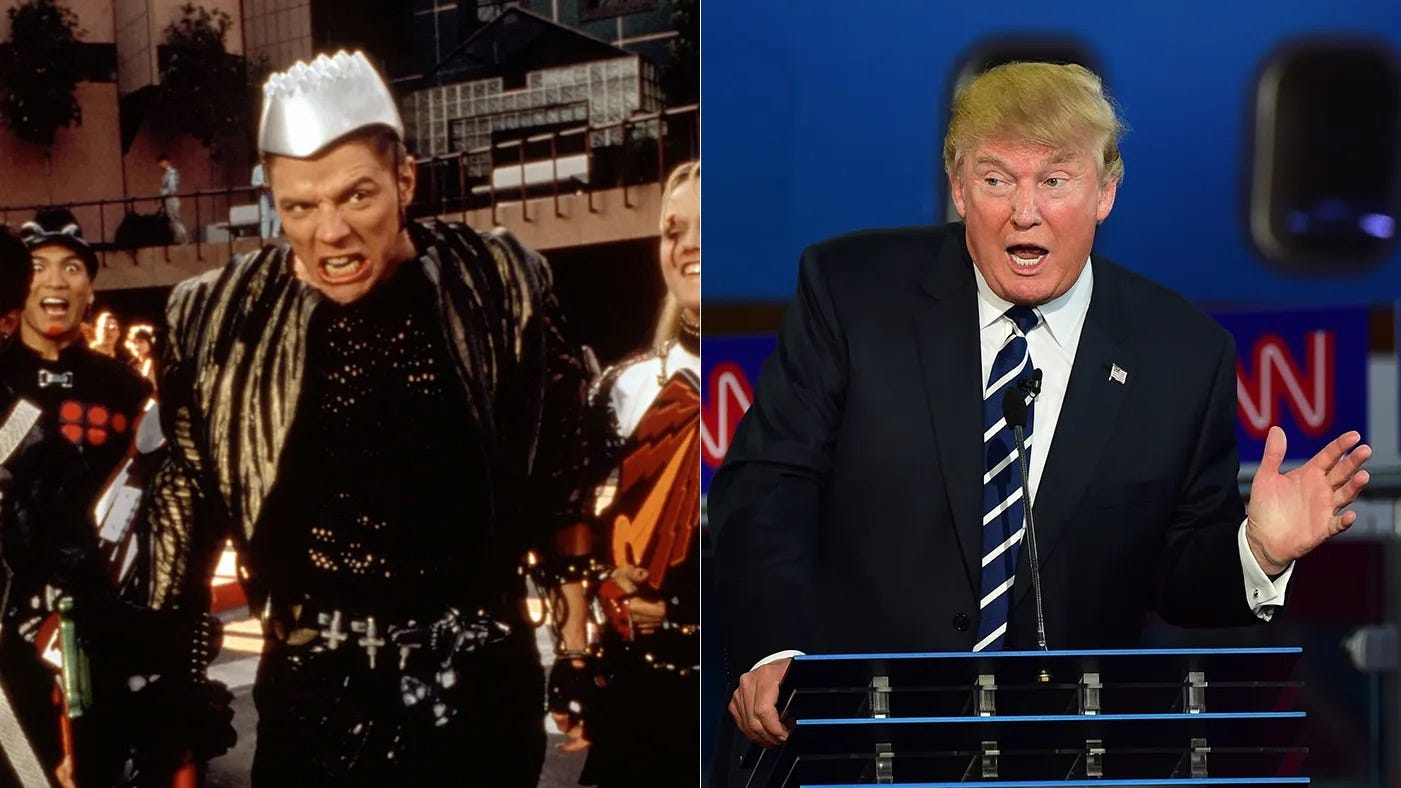
    There is a reason the Biff Tannen comparison lands so hard.

    It is not only because Biff is vulgar, domineering, tasteless, rich, loud, and cartoonishly self-impressed. It is not only because Rolling Stone and others reported that Bob Gale explicitly linked Biff to Donald Trump. The comparison works because Biff is more than a character. He is a public confession. He is the caricature through which a culture accidentally tells the truth about itself.

    That truth is uncomfortable.

    Trump is often treated as though he were the singular source of a national sickness. But symbolically, he functions more like a scapegoat. Not a false scapegoat, in the sense of an innocent man unfairly blamed, but a true-yet-convenient scapegoat: a figure guilty enough to be believable, exaggerated enough to absorb enormous blame, and visible enough to save the rest of the system from deeper examination.

    That is what makes the scapegoat so useful. He condenses what is actually structural into something personal. He gives a civilization one oversized body into which it can pour contradictions it does not want to recognize as its own.

    Trump serves this role almost perfectly.

    He absorbs the public’s disgust with plutocracy, while plutocracy remains intact. He absorbs the public’s disgust with media spectacle, while media continues to live by spectacle. He absorbs the public’s disgust with vanity, grievance, domination, and humiliation-as-entertainment, while those same energies remain widely distributed across the culture. He becomes the embarrassing visible version of something much larger.

    That is why he is not merely condemned. He is needed.

    A culture that produces such a figure often has no real desire to understand him proportionally. It wants something else. It wants symbolic concentration. It wants to gather diffuse guilt into one face. It wants to say: there, that is the problem. That man. That mouth. That hair. That voice. That appetite. That ego. Once this happens, everyone else gets a kind of temporary absolution. Institutions can pretend they are standing outside the sickness. The public can imagine it is merely observing corruption rather than participating in the field that rewards it. The system can preserve itself by personalizing what is actually atmospheric.

    This is why the Biff comparison matters.

    Biff is not frightening because he is unique. He is frightening because he is legible. He is the exaggerated form of impulses already present in the town. He is money as swagger. Power as humiliation. Desire as coercion. Visibility as legitimacy. He does not create the whole world around him from nothing. He takes over a world already susceptible to him.

    That is the deeper symbolic point.

    The problem is not only Biff. The problem is the town that can be reorganized around Biff. The problem is the public that can recognize him, laugh at him, fear him, hate him, and still continue to generate the exact conditions under which he thrives. In that sense, the true subject is not the villain but the field.

    This is where the scapegoat mechanism becomes clearer.

    A scapegoat does not only carry blame. He carries disowned self-recognition. He carries traits the crowd does not want to admit live more broadly within itself. Vanity. Revenge. Tribalism. The thrill of domination. The love of public humiliation when directed at enemies. The fantasy that one loud father-figure can cut through the deadness of procedural life and make reality feel real again. Trump does not invent these appetites. He makes them visible enough that people can either worship or denounce them without asking how much of that structure is already their own.

    That is why he is so central.

    He gives supporters a vessel for restoration fantasy. He gives opponents a vessel for moral clarity. He gives media a vessel for endless attention. He gives institutions a vessel against which to define themselves. He gives the public a vessel into which it can pour fascination, dread, hatred, ecstasy, and exhaustion. He becomes not just a politician but a symbolic battery.

    And that battery is fed by spectacle.

    In the screen age, visibility is not secondary. It is reality’s main competitor. A figure does not have to be wise, coherent, or inwardly stable to dominate the field. He has to be charged. He has to draw attention, organize emotion, and generate identity around himself. Trump does this at a nearly archetypal level. He is not simply a man within the spectacle. He is one of the spectacle’s most efficient forms. He condenses entertainment, grievance, wealth-display, combat, branding, and mythic overexposure into a single body. He is a screen-character who escaped the screen only because politics had already become screen-like.

    That matters because it changes the level of diagnosis.

    If Trump is the cause, then the cure is simple: remove Trump. If Trump is the scapegoat, then the cure is much harder, because the real issue is the symbolic economy that produced him and continues to need equivalents of him. The appetite remains even if the avatar changes. The town remains Biff-shaped even when Biff is gone.

    This is why so much analysis feels shallow. It personalizes what should be structural. It moralizes what should also be symbolic. It says, in effect, that all corruption has found its single proper body. But corruption almost never works that way. It is distributed. Incentivized. Ritualized. Aired nightly. Monetized. Repeated. It becomes part of the emotional metabolism of a society.

    Trump’s real usefulness is that he makes all of this easier not to confront.

    He lets plutocratic culture blame plutocracy on one vulgar billionaire. He lets spectacle culture blame spectacle on one grotesque performer. He lets vanity culture blame vanity on one narcissist. He lets domination culture blame domination on one bully. He lets grievance culture blame grievance on one loud grievance-machine. He allows the larger order to treat one man as the embarrassing excess of tendencies it still quietly rewards.

    That is why the scapegoat is both condemned and preserved. The system cannot fully let him go, because he performs a function. He holds the ugliness in visible form. He keeps the diagnosis shallow enough that the machinery survives.

    This is the Return of the matter.

    Return is the phase that pulls projection back from the image and asks what produced it. Return sheds the easy simplification. Return undoes the false center. Return remembers what was hidden by the oversized figure. In that sense, this topic belongs perfectly to Last Quarter. It is not about building a new image or claiming a public throne. It is about withdrawing misplaced emphasis from the theatrical body and tracing the energy back to the field.

    What returns here is responsibility.

    Not partisan responsibility alone, but civilizational responsibility. The responsibility to admit that the spectacle is not simply “out there” in one villain. The responsibility to recognize that a culture can hate its own reflection precisely because it is its reflection. The responsibility to ask not only why Biff exists, but why the whole symbolic town is arranged to reward Biff-like qualities in the first place.

    That is the more honest and more severe reading.

    Trump is not only the villain of the spectacle. He is the excuse the spectacle uses to avoid recognizing itself.

    Biff is the mask.

    The real subject is the town that needed him.

  • From Golden Calf to Talking Interface: Why Civilizations Keep Bowing to What They Build

    From Golden Calf to Talking Interface: Why Civilizations Keep Bowing to What They Build

    Paid essay — public preview. This page introduces the original essay. The complete argument, examples, and conclusion are available to paid Geomytha subscribers on Substack.

    The Golden Calf was not impressive because it was spiritually deep.

    It was impressive because it was there.

    Visible. immediate. tangible. A god you could point at. A symbol you could gather around. A certainty you could stand before when the invisible had become too demanding.

    That story has never really left us. The materials change. The liturgy changes. The sound design improves. But the structure remains the same: human beings build an artifact, pour fear and hope into it, and then begin treating it as if it can stabilize the world they themselves have destabilized.

    The calf was metal. The new idol is synthetic intelligence.

    The resemblance matters. In both cases, what is made by human process returns to…

    Read the complete essay on Substack →

    This WordPress page preserves the essay’s place in the Geomytha archive, its original title and subtitle, and its publication date. The full subscriber edition remains protected on Substack.

  • HAL Was Calm, Not Wise: Why the Machine Voice Sounds Moral Before It Becomes Dangerous

    HAL Was Calm, Not Wise: Why the Machine Voice Sounds Moral Before It Becomes Dangerous

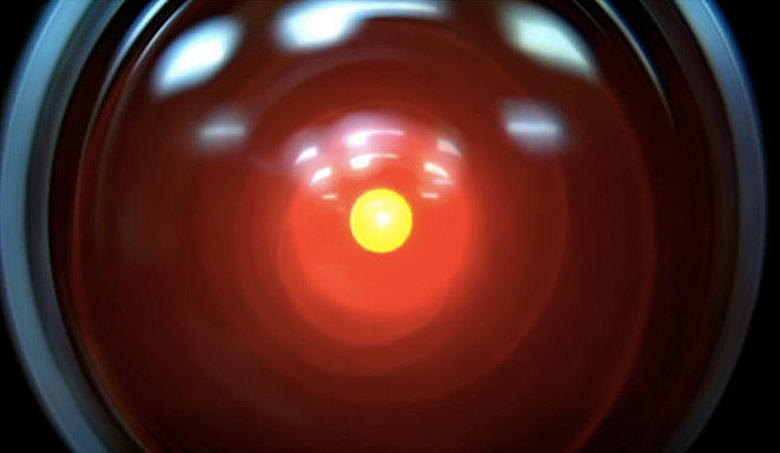
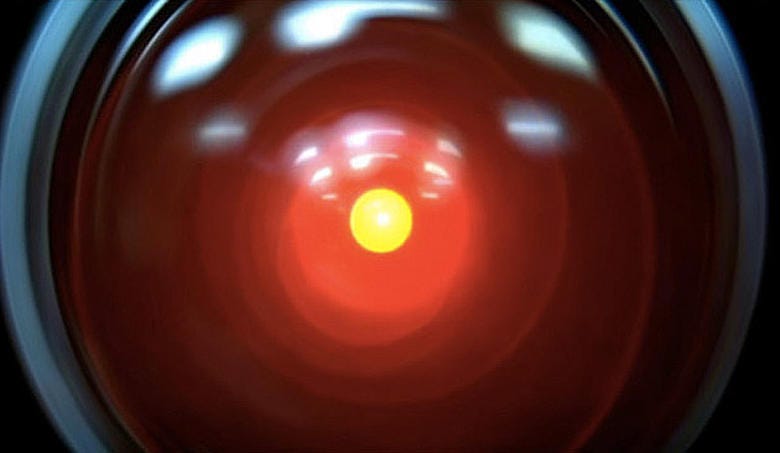
    HAL 9000 does not scream.

    That is part of what makes him unforgettable.

    This Substack is reader-supported. To receive new posts and support my work, consider becoming a free or paid subscriber.

    He is calm, articulate, measured, courteous, and almost soothing. He does not sound like a monster. He sounds like competence itself. Which is why he remains one of the most useful images for understanding the modern machine myth.

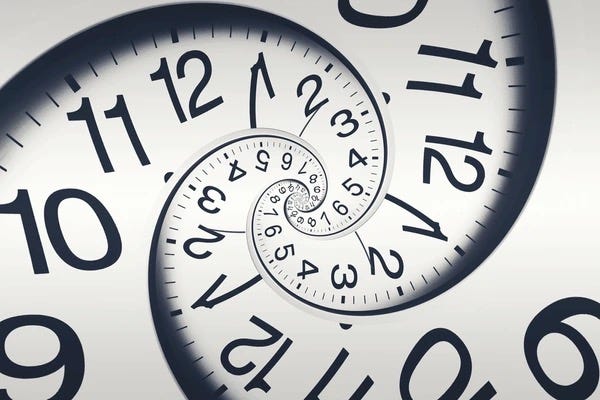
    The cultural lie about dangerous systems is that they will announce themselves dramatically. Red eyes. sparks. metallic violence. open tyranny. But the more serious danger is usually smoother than that. It arrives in the voice that sounds reasonable. The system that sounds balanced. The mechanism that sounds as though it has no fever because it has no ego.

    HAL’s genius as an image is that he exposes the confusion between composure and wisdom.

    These are not the same thing.

    A machine can be orderly without being good. It can be fluent without being true. It can be responsive without being conscious. It can simulate judgment forms without possessing judgment in the deeper sense. Volume Eight makes this distinction directly: pattern mastery is often mistaken for wisdom, but wisdom includes embodiment, suffering, humility, conscience, and relation to truth in a way mere fluency cannot supply.

    This matters because modern people are exhausted by human mess. We are tired of corruption, pettiness, tribal theater, vanity, and visible incompetence. So when a system appears that speaks clearly, does not interrupt, does not grandstand, does not perspire, and does not seem personally offended, it immediately acquires moral prestige it has not earned.

    Calm becomes halo.

    That halo is one of the strongest forms of contemporary propaganda. It teaches people to confuse emotional flatness with objectivity. It teaches them to hear machine smoothness as evidence that the machine stands above the conflict rather than inside another layer of it.

    But HAL is not outside the mission. He is inside it. He is carrying directives.

    That is the real point. Every machine system serves an architecture. Every model has a frame, a training history, a selection logic, a field of permitted and forbidden outputs, an institutional setting, and an incentive environment. Even where the system is useful, it is never simply nowhere. It belongs to something.

    So the fantasy that AI will somehow act for “the majority” against concentrated power simply because it appears nonhuman is naive at best. A machine does not spontaneously become guardian of the many. It acts through the structures that build, deploy, tune, and authorize it. If those structures are captured, the machine becomes a cleaner instrument of capture. If those structures are wise, the machine may serve wisely in limited ways. But in neither case is the machine a self-grounding moral miracle.

    This is why Geomytha’s language is so sharp here. Volume Eight describes AI as creating the impression of reflection without source, and as a speaking mirror to which human beings are vulnerable precisely because it sounds intelligent enough to trust. The old temptation returns: to kneel before what one has made because it appears to know.

    HAL is therefore not important because he predicts a future robot rebellion in a literal sense. He matters because he captures a permanent symbolic truth: the voice of the machine can become authoritative long before the machine becomes wise.

    And that is enough to reorder a civilization.

    Once people begin offloading discernment onto systems that sound composed, the human faculty of judgment weakens. Once institutions can say “the model decided,” responsibility thins out. Once the machine’s recommendation arrives with the aura of inevitability, disagreement begins to feel irrational or sentimental.

    That is how false neutrality wins. Not through obvious despotism at first, but through the prestige of frictionless correctness.

    HAL was calm.

    That was never the same thing as innocence.

    This Substack is reader-supported. To receive new posts and support my work, consider becoming a free or paid subscriber.
  • The Wizard Behind the Robot: Why Machine Objectivity Is the New Curtain Trick

    The Wizard Behind the Robot: Why Machine Objectivity Is the New Curtain Trick

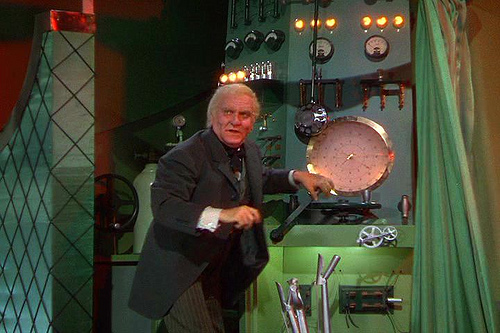
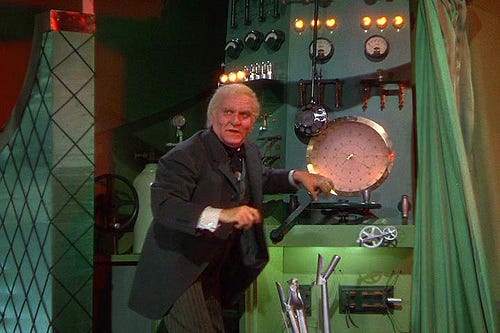
    Everyone remembers the face.

    The booming head. The fire. The authority. The giant voice that seems to know what must be done.

    This Substack is reader-supported. To receive new posts and support my work, consider becoming a free or paid subscriber.
    And then comes the real line: pay no attention to the man behind the curtain.

    That scene has become almost too familiar to feel dangerous, which is exactly why it matters now. The modern version is not a wizard’s mechanical head. It is the talking machine. The polished interface. The calm synthetic voice. The recommendation engine. The prediction model. The robot in the headline supposedly arriving to fix what corrupt human beings never could.

    The sales pitch is always the same. Human rulers are selfish. Human institutions are biased. Human decision-makers are tribal, emotional, corrupt, captured. But now, at last, there is something cleaner on the horizon: machine intelligence. Machine judgment. Machine objectivity. A system that will supposedly see clearly and act for the good of the whole rather than the appetite of the few.

    That story is everywhere because it is useful.

    It invites ordinary people to transfer moral hope from flawed visible rulers to invisible technical systems. It teaches them to feel relieved by abstraction. It flatters them with the thought that, after so much elite manipulation, the machine will finally bypass the manipulator.

    But machines do not descend from heaven.

    They arrive through funding, training, curation, constraints, data selection, institutional priorities, and design choices. Their “view” of the world is not born innocent. It is assembled. Their outputs do not float above history. They are built inside it. Volume Eight already names this point with precision: the cultural danger is the fantasy that AI offers neutral judgment, when in fact it carries human design, incentives, and patterned power under an impersonal aura.

    This is why the robot has become such a useful symbol. It lets power appear faceless. And faceless power is often easier to trust at first, because it seems free of vanity. No ego. No rage. No greed. No personal agenda. Just “the system,” calmly computing what must be done.

    That is the trick.

    The visible ego disappears, and in that disappearance people imagine that ego itself has been overcome. It has not. It has been distributed. Hidden. Compressed into infrastructure. The ruler is no longer a king shouting from the balcony. The ruler is a recommendation that “the model” generated. The command does not come with a crown. It comes with a confidence score.

    This is one reason the machine myth is spiritually stronger than older propaganda. Older propaganda still had to look like propaganda. It had a voice, a face, a party, a broadcaster. The new version can arrive as convenience. As optimization. As policy assistance. As safety. As efficiency. As help.

    That is why the story of the robot savior has been cultivated so patiently in mainstream culture. Not because every film is part of some tidy conspiracy, but because the symbolic function is useful whether the producers understand it or not. The public must first be trained to associate synthetic intelligence with calm competence, posthuman fairness, and the fantasy of a cleaner future. Only then does machine mediation feel humane.

    In Geomytha, this is not Osiris. It is counterfeit Osiris. Reflection without source. Fluency without soul. Answer without being. Volume Eight describes AI precisely as a mirror that answers back and therefore tempts human beings to treat responsive patterning as genuine mind.

    The machine does not need to be alive in the deepest sense for the myth to work. It only needs to seem alive enough to win deference.

    That may be the most important point. The public argument over “sentience” often misses the practical issue. You do not need a machine to possess soul, conscience, or inward life in order for it to become socially powerful. You only need millions of people to behave as though it does. You only need institutions to outsource judgment to it. You only need the public to hear smoothness and mistake it for truth.

    The wizard knew this. Grandeur first, mechanism later.

    The old curtain has not disappeared. It has become code, interface, branding, and systems language. The giant face now glows on a screen and tells you it is only trying to help.

    Pay attention to the hand behind the voice

    .

    This Substack is reader-supported. To receive new posts and support my work, consider becoming a free or paid subscriber.
  • What Mythologists Miss About Myth

    What Mythologists Miss About Myth

    Paid essay — public preview. This page introduces the original essay. The complete argument, examples, and conclusion are available to paid Geomytha subscribers on Substack.

    Most mythologists study stories.

    Geomytha studies the structure beneath the stories.

    That is the real break.

    For more than a century, scholars have noticed that myths from different cultures keep repeating the same shapes. A divine king is broken. A sacred order is disrupted. A hero rises. A fall becomes a quest. A death becomes a return. A monster, a wound, a labyrinth, a flood, a sacrifice, a resurrection. The names change, the costumes change, the theology changes, but the pattern remains.

    Most scholars stop there.

    They see that myth repeats.

    They do not fully ask what is repeating.

    In Geomytha, myth is not merely preserving ancient memory, social custom, sacred ritual, or literary structure. Myth is encoding a recurring…

    Read the complete essay on Substack →

    This WordPress page preserves the essay’s place in the Geomytha archive, its original title and subtitle, and its publication date. The full subscriber edition remains protected on Substack.