Last Quarter · ReturnReturn — RemembranceReturn names remembrance and release: the loosening of possession so reflection can become transparent to source again.Read full entry →
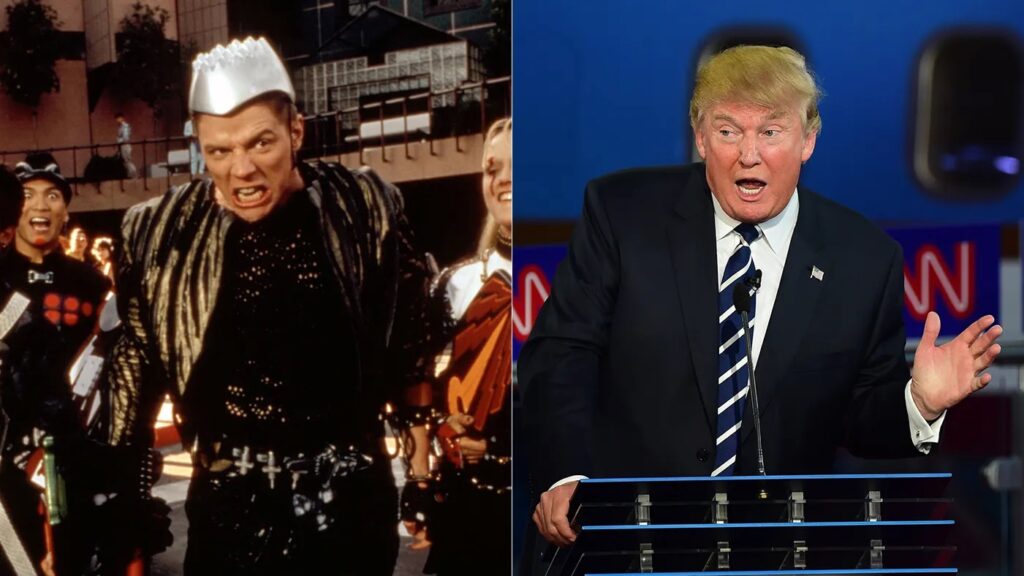
There is a reason the Biff Tannen comparison lands so hard.
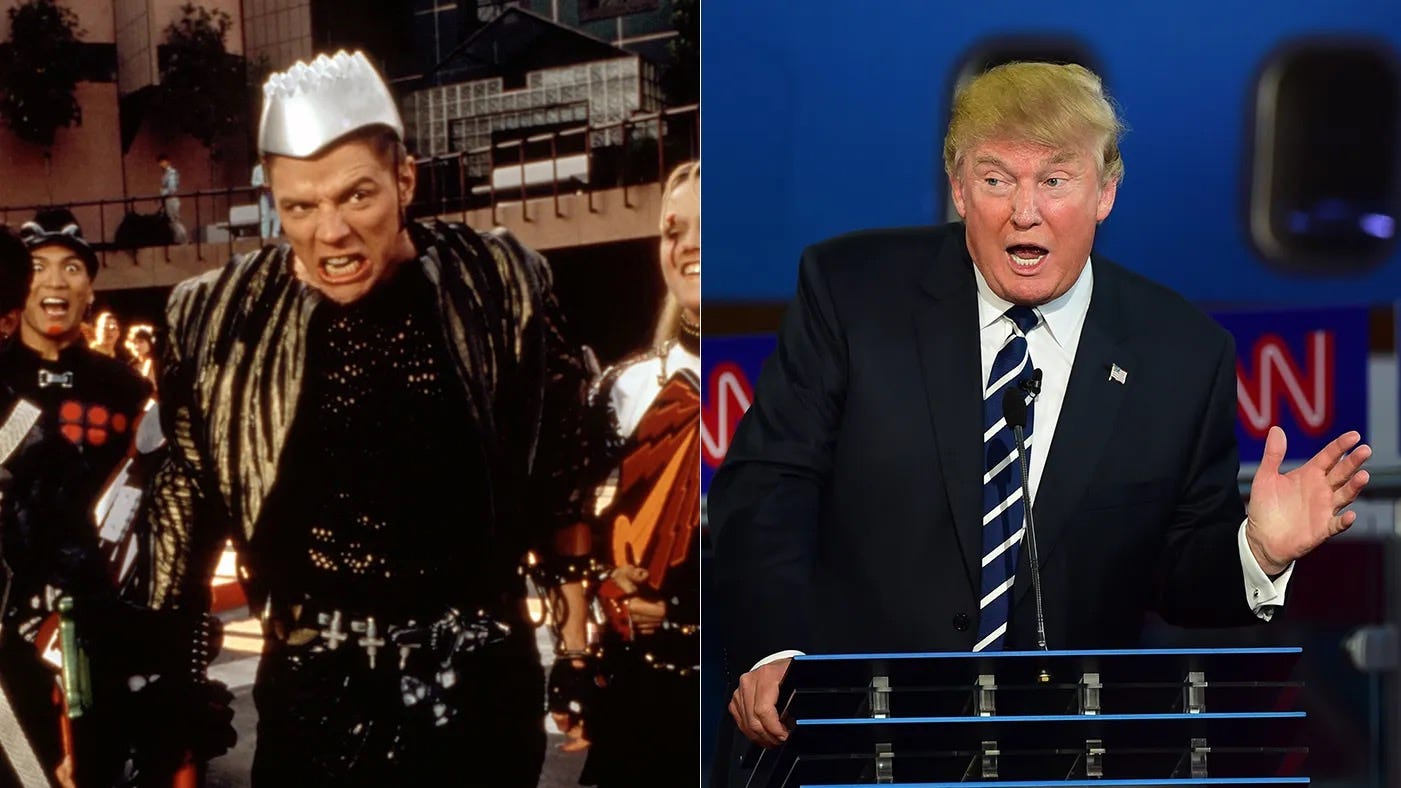
It is not only because Biff is vulgar, domineering, tasteless, rich, loud, and cartoonishly self-impressed. It is not only because Rolling Stone and others reported that Bob Gale explicitly linked Biff to Donald Trump. The comparison works because Biff is more than a character. He is a public confession. He is the caricature through which a culture accidentally tells the truth about itself.
That truth is uncomfortable.
Trump is often treated as though he were the singular sourceIs — SourceIs names unclaimed being: awareness before possession, distinction, or identity.Read full entry → of a national sickness. But symbolically, he functions more like a scapegoat. Not a false scapegoat, in the sense of an innocent man unfairly blamed, but a true-yet-convenient scapegoat: a figure guilty enough to be believable, exaggerated enough to absorb enormous blame, and visible enough to save the rest of the system from deeper examination.
That is what makes the scapegoat so useful. He condenses what is actually structural into something personal. He gives a civilization one oversized body into which it can pour contradictions it does not want to recognize as its own.
Trump serves this role almost perfectly.
He absorbs the public’s disgust with plutocracy, while plutocracy remains intact. He absorbs the public’s disgust with media spectacle, while media continues to live by spectacle. He absorbs the public’s disgust with vanity, grievance, domination, and humiliation-as-entertainment, while thoseThose — ProjectionThose names projection: enemies, outsiders, competitors, threats, and disowned qualities placed beyond the identity boundary.Read full entry → same energies remain widely distributed across the culture. He becomes the embarrassing visible version of something much larger.
That is why he is not merely condemned. He is needed.
A culture that produces such a figure often has no real desire to understand him proportionally. It wants something else. It wants symbolic concentration. It wants to gather diffuse guilt into one face. It wants to say: there, that is the problem. That man. That mouth. That hair. That voice. That appetite. That ego. Once this happens, everyone else gets a kind of temporary absolution. Institutions can pretend they are standing outside the sickness. The public can imagine it is merely observing corruption rather than participating in the field that rewards it. The system can preserve itself by personalizing what is actually atmospheric.
This is why the Biff comparison matters.
Biff is not frightening because he is unique. He is frightening because he is legible. He is the exaggerated form of impulses already present in the town. He is money as swagger. Power as humiliation. Desire as coercion. Visibility as legitimacy. He does not create the whole world around him from nothing. He takes over a world already susceptible to him.
That is the deeper symbolic point.
The problem is not only Biff. The problem is the town that can be reorganized around Biff. The problem is the public that can recognize him, laugh at him, fear him, hate him, and still continue to generate the exact conditions under which he thrives. In that sense, the true subject is not the villain but the field.
This is where the scapegoat mechanism becomes clearer.
A scapegoat does not only carry blame. He carries disowned self-recognition. He carries traits the crowd does not want to admit live more broadly within itself. Vanity. Revenge. Tribalism. The thrill of domination. The love of public humiliation when directed at enemies. The fantasy that one loud father-figure can cut through the deadness of procedural life and make reality feel real again. Trump does not invent theseThese — AccumulationThese names accumulation: possessions, titles, achievements, beliefs, communities, and other extensions gathered around identity.Read full entry → appetites. He makes them visible enough that people can either worship or denounce them without asking how much of that structure is already their own.
That is why he is so central.
He gives supporters a vessel for restoration fantasy. He gives opponents a vessel for moral clarity. He gives media a vessel for endless attention. He gives institutions a vessel against which to define themselves. He gives the public a vessel into which it can pour fascination, dread, hatred, ecstasy, and exhaustion. He becomes not just a politician but a symbolic battery.
And that battery is fed by spectacle.
In the screen age, visibility is not secondary. It is reality’s main competitor. A figure does not have to be wise, coherent, or inwardly stable to dominate the field. He has to be charged. He has to draw attention, organize emotion, and generate identityThis — IdentityThis names the formed identity: the body, role, image, wound, belief, or story claimed as what the self is.Read full entry → around himself. Trump does this at a nearly archetypal level. He is not simply a man within the spectacle. He is one of the spectacle’s most efficient forms. He condenses entertainment, grievance, wealth-display, combat, branding, and mythic overexposure into a single body. He is a screen-character who escaped the screen only because politics had already become screen-like.
That matters because it changes the level of diagnosis.
If Trump is the cause, then the cure is simple: remove Trump. If Trump is the scapegoat, then the cure is much harder, because the real issue is the symbolic economy that produced him and continues to need equivalents of him. The appetite remains even if the avatar changes. The town remains Biff-shaped even when Biff is gone.
This is why so much analysis feels shallow. It personalizes what should be structural. It moralizes what should also be symbolic. It says, in effect, that all corruption has found its single proper body. But corruption almost never works that way. It is distributed. Incentivized. Ritualized. Aired nightly. Monetized. Repeated. It becomes part of the emotional metabolism of a society.
Trump’s real usefulness is that he makes all of this easier not to confront.
He lets plutocratic culture blame plutocracy on one vulgar billionaire. He lets spectacle culture blame spectacle on one grotesque performer. He lets vanity culture blame vanity on one narcissist. He lets domination culture blame domination on one bully. He lets grievance culture blame grievance on one loud grievance-machine. He allows the larger order to treat one man as the embarrassing excess of tendencies it still quietly rewards.
That is why the scapegoat is both condemned and preserved. The system cannot fully let him go, because he performs a function. He holds the ugliness in visible form. He keeps the diagnosis shallow enough that the machinery survives.
This is the Return of the matter.
Return is the phase that pulls projection back from the image and asks what produced it. Return sheds the easy simplification. Return undoes the false centerFalse CenterA false center forms when sovereignty is assigned to an object, role, institution, future state, identity, or projection that cannot actually serve as source.Read full entry →. Return remembers what was hidden by the oversized figure. In that sense, this topic belongs perfectly to Last Quarter. It is not about building a new image or claiming a public throne. It is about withdrawing misplaced emphasis from the theatrical body and tracing the energy back to the field.
What returns here is responsibility.
Not partisan responsibility alone, but civilizational responsibility. The responsibility to admit that the spectacle is not simply “out there” in one villain. The responsibility to recognize that a culture can hate its own reflectionAm — ReflectionAm names reflected presence: awareness embodied or mirrored without yet becoming ownership.Read full entry → precisely because it is its reflection. The responsibility to ask not only why Biff exists, but why the whole symbolic town is arranged to reward Biff-like qualities in the first place.
That is the more honest and more severe reading.
Trump is not only the villain of the spectacle. He is the excuse the spectacle uses to avoid recognizing itself.
Biff is the mask.
The real subject is the town that needed him.