Category: Uncategorized

  • Slang as Spellcraft

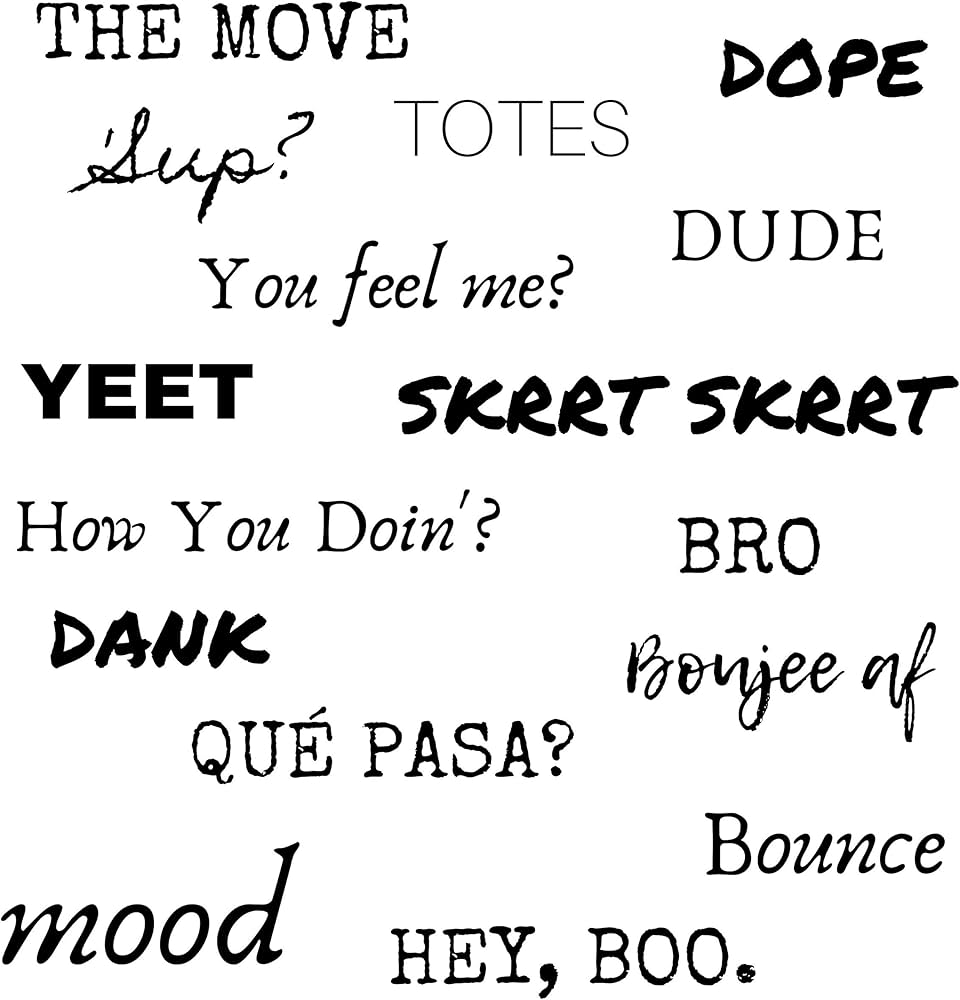
    Slang as Spellcraft

    People talk as if slang were just decoration.

    It is not decoration. It is training.

    A culture’s throwaway phrases tell you what kind of self it is building long before anyone admits there is a theology hiding in the joke. The tongue gets there first. It starts praising a posture before the mind has words for the altar underneath it. That is why slang matters more than people think. It is not merely expressive. It is formative.

    Take “loc’d out.” On the surface it sounds like style, bravado, just one more compressed bit of social shorthand. But symbolically it reads like a confession disguised as swagger: locked out. Locked out of presence. Locked out of stillness. Locked out of the simple fact of being here before the performance begins. The tragedy is right there in the boast. Exile gets renamed charisma.

    That is the mechanism in miniature.

    Or take the broader cluster of phrases that turn numbness into prestige. “I’m dead.” “I’m weak.” “Cold.” “Ice in my veins.” “Checked out.” “Zoned out.” These are not neutral. They make depletion sound impressive. They turn detachment into style. They reward distance from immediacy and then circulate that distance until it feels witty, socially fluent, even enviable. A person no longer merely passes through estrangement. The phrase teaches him how to inhabit it.

    Then the deeper inversion begins. “Savage” becomes admiration. “Bad” becomes praise. “Lit” becomes a compliment for overstimulation, combustion, overcharge. “No cap” turns truth into a theatrical signal because even honesty now has to arrive dressed for performance. The phrase has to announce that it is telling the truth because ordinary speech has already become a costume.

    That is not a side effect of culture. It is the ritual life of culture.

    This is why Babel remains the right mythic frame. Babel is not only about language becoming confused. It is about language becoming architecture. A people begin speaking in a way that no longer receives reality but arranges it, climbs through it, builds with it, protects itself inside it. Speech stops being a way of staying near the living center and becomes a way of constructing a tower inside experience.

    That is what a lot of contemporary slang does. It takes a passing mood and turns it into identity furniture. It takes a wound and gives it branding. It takes estrangement and teaches the speaker to wear it with pride. What should have remained a signal becomes a residence. What should have remained a joke becomes a habit. What should have been recognized as distance from presence becomes one more brick in the personality.

    Repetition does the rest.

    A phrase said once is a phrase. A phrase said ten thousand times becomes weather. And once the weather changes, people do not merely speak from fragmentation. They become fluent in it. They hear themselves echoed back by the crowd and mistake the echo for proof that the posture is true. The phrase becomes social shelter. The shelter becomes loyalty. Before long, the self is serving what it merely thought it was describing.

    That is why the screen age made the whole thing worse. Image culture already trains desire, identity, and performance by saturation. Social media turns selfhood into signal before invisible crowds; the gap between being and showing widens until showing starts replacing being. Slang is the pocket version of that machine. Portable Babel. A little verbal brick you can carry around all day. A private ritual that never stays private.

    Sacred traditions understood the danger, which is why they cared so much about speech. Blessing. Prayer. Vow. Chant. Mantra. They all assume the same thing: the mouth is not innocent. Repeated language shapes the one who speaks it. The difference is that those forms, at their best, are trying to gather attention back toward center. Modern slang often runs the same mechanism in reverse. It teaches people how to live farther from presence while sounding more socially alive doing it.

    That is why the article belongs to Build. Every phrase is building something. Every verbal habit is showing what kind of center it serves. Careless language does not remain careless. It recruits attention. It orders feeling. It trains the body toward certain loyalties.

    Speech is never just speech for long.

    It is one of the places where devotion reveals itself.

    So the practical question is harder than “Is this phrase funny?” or “Does it sound cool?” The real question is: what kind of self does this way of speaking keep asking me to serve? Which phrases make numbness look strong? Which ones make distance feel sophisticated? Which ones keep training me to live outside my own direct awareness and call that fluency?

    Watch your mouth.

    Not because somebody is policing it. Because your tongue is always building a center. The only question is whether that center is alive.

  • Zombie in Your Head

    Zombie in Your Head

    Paid essay — public preview. This page introduces the original essay. The complete argument, examples, and conclusion are available to paid Geomytha subscribers on Substack.

    The most dangerous possession is the pattern in your mind that has been repeated so long it now feels like you.

    By the time a false pattern becomes visible, it has usually already been fed long enough to feel natural.

    That is why Zombie belongs to Waxing Gibbous · Build.

    Build is the phase of accumulation, pressure, and inhabitation. In its true form, it is devotion: the patient strengthening of what deserves structure. In its distorted form, it becomes occupation. A pattern gathers enough repetition, enough emotional energy, enough aesthetic reinforcement, enough internal rehearsal that it stops feeling like a pattern and starts feeling like a self.

    That is zombie-consciousness.

    The great symbolic force of the song lies in its…

    Read the complete essay on Substack →

    This WordPress page preserves the essay’s place in the Geomytha archive, its original title and subtitle, and its publication date. The full subscriber edition remains protected on Substack.

  • Octopus’s Garden and the Eight Honest Doors

    Octopus’s Garden and the Eight Honest Doors

    Life does not ask for one permanent emotion. It asks for the right inner directive at the right phase.

    The maze of life is not escaped by feeling harder. It is navigated by matching the right directive to the phase you are actually in.

    One of the most misleading spiritual habits is the search for one permanent key.

    Stay grateful. Stay calm. Stay trusting. Stay surrendered. Stay positive. Stay detached. The advice usually contains something true, but it flattens time. It imagines there is one superior emotional posture that should unlock every chamber of life.

    Nature does not move that way. Rhythm does not move that way. The moon does not move that way.

    That is why Octopus’s Garden becomes such a strong image.

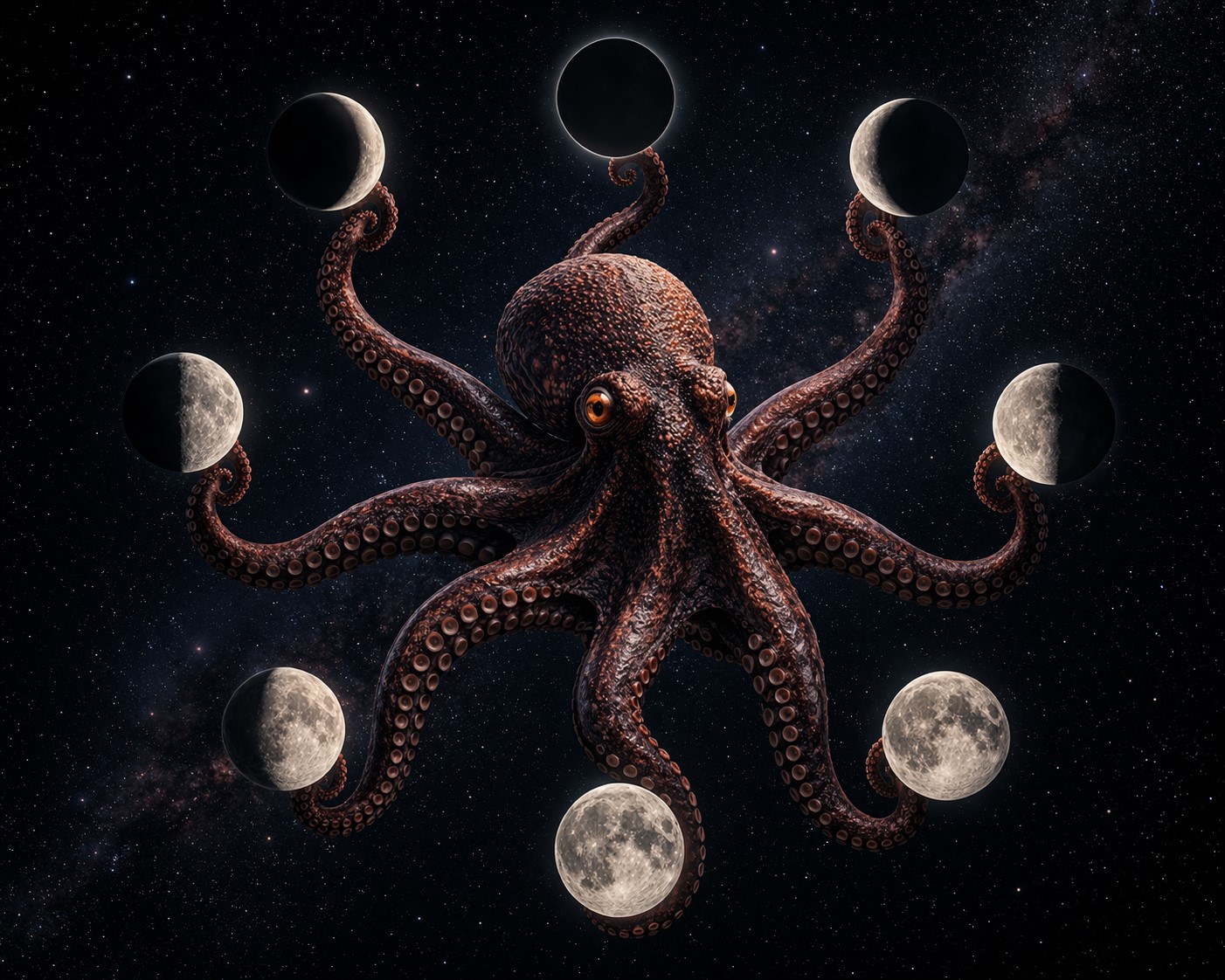
    Read symbolically, it suggests that the maze of life does not have one universal emotional answer. It has eight honest doors, and each door opens under the right directive at the right phase.

    This belongs exactly to First Quarter · Form.

    Form is the phase where movement must become contour. It is not enough to feel that life has rhythm. The rhythm has to be distinguished. Motion has to choose its line. Ambiguity must stop pretending to be depth. First Quarter asks consciousness to decide.

    The genius of Octopus’s Garden is that it places refuge under the sea rather than under the sun. That matters. The undersea setting suggests descent beneath surface spectacle, beneath public glare, beneath the false regime of overexposed visibility. It is not a march into more stimulation. It is a movement into a hidden order where life can be felt differently.

    The garden matters because a garden is not chaos and not dead machinery. It is cultivated complexity. It is life that has shape without losing vitality. It is enclosure without total imprisonment. It is the perfect symbol for phase-order itself.

    The octopus matters because it carries eightness in the body. It does not merely symbolize a number. It embodies distributed intelligence. It does not insist on one posture. It extends, recoils, anchors, conceals, reaches, and shifts according to the chamber it inhabits. It already knows what many spiritual systems forget: truth may be constant, but the right motion is phase-bound.

    This is why the fixed Geomytha cycle matters here:

    Gather, Stir, Form, Build, Claim, Release, Return, Surrender.

    Each phase has its own inner directive:

    Receive, Hope, Decide, Devote, Witness, Give Thanks, Remember, Trust.

    The mistake is not that these directives are false. The mistake is forcing the wrong one into the wrong chamber.

    Hope is true, but it does not belong everywhere. Trust is true, but it does not belong everywhere. Gratitude is true, but it does not belong everywhere. First Quarter does not ask for dissolution. It asks you to Decide. It asks for line, frame, cut, and commitment.

    This is why the labyrinth image matters so much. Many people think being trapped means there is no exit. More often, being trapped means the exit exists, but the wrong principle is being applied. Someone tries to surrender when the moment requires decision. Someone tries to build when nothing has yet been formed. Someone tries to claim what has not yet ripened.

    The key is real.

    The door is wrong.

    That same symbolic law can be seen in other songs of refuge. Yellow Submarine presents enclosure as cheerful, communal, musical, and easy. It is a furnished vessel. Big Yellow Taxi gives the image of paradise paved and replaced by managed movement, where someone else drives and meters the route. Both songs reveal that shelter can become false habitat. Octopus’s Garden is stronger because it suggests refuge not as sedation, but as fit. Not a managed vehicle, but a living chamber.

    The stress test here is modern spirituality’s obsession with universal methods. Many people keep applying Build-energy everywhere: intensify, amplify, visualize, commit harder. But Form is not Build. Form cuts. Form chooses. Form gives shape. When Build-energy is forced into a Form chamber, possibility multiplies and nothing clarifies.

    The mercy of First Quarter is that it refuses vagueness. It insists that the week have a line. It teaches that sincerity is not enough. Rhythm must become structure.

    The octopus survives because it does not worship one motion. It lives by timing, fit, and relation.

    So does consciousness.

    Geomytha’s final thoughts
    Which directive do you overuse in every phase, even when life is clearly asking for a different door?

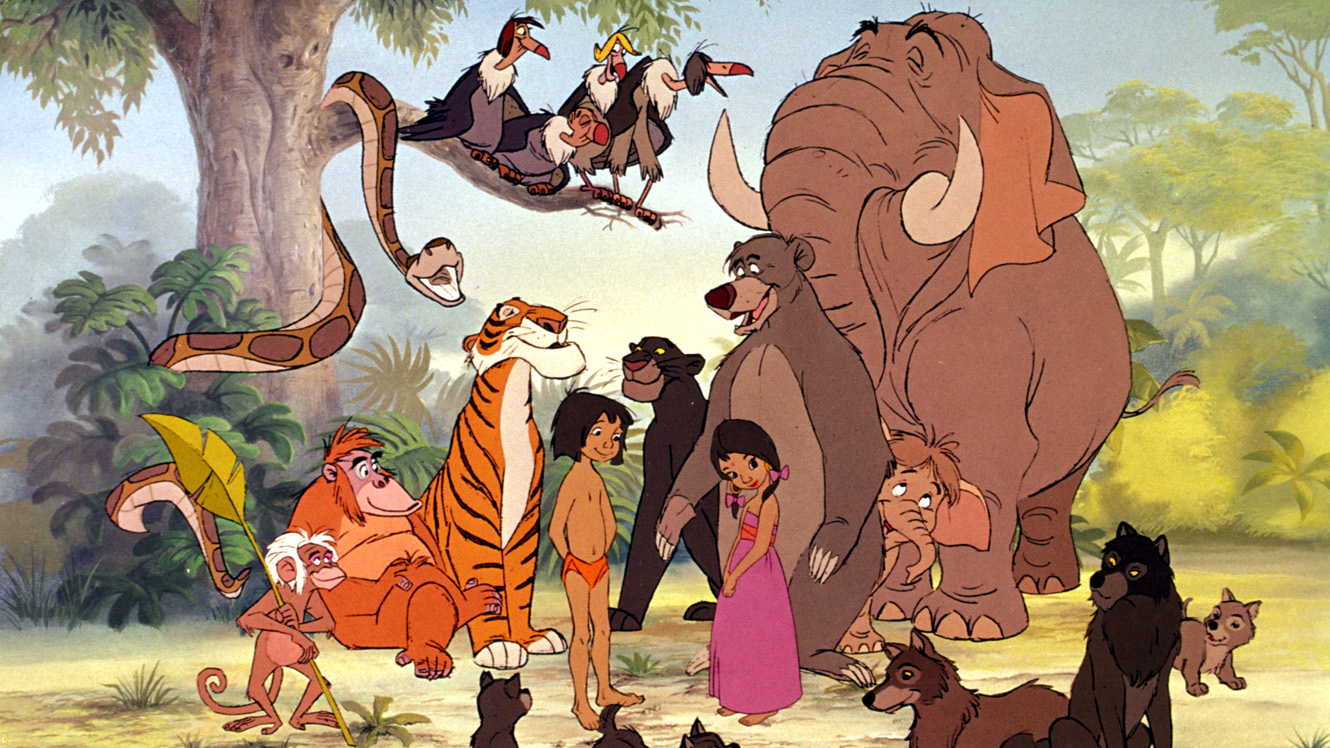
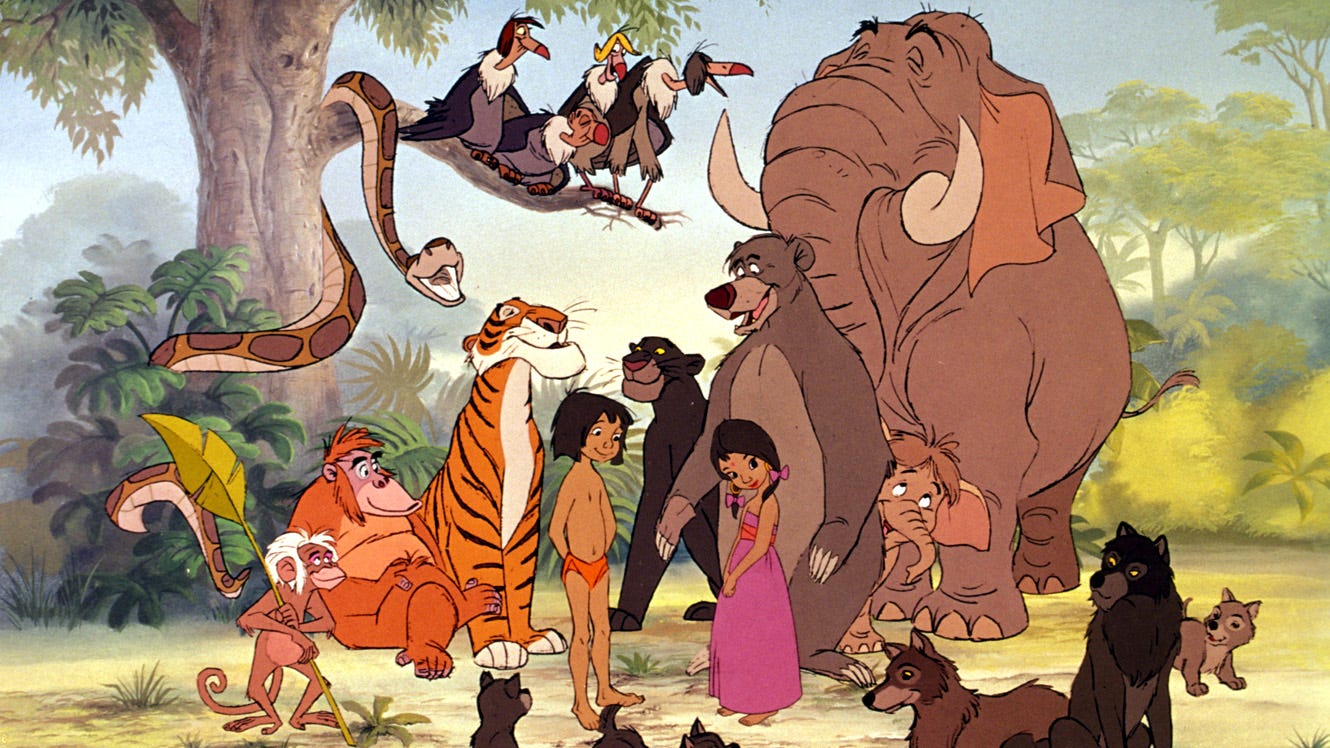
  • The Jungle Book in Geomytha revisited, Kaa, King Louie, and Red Fire

    The Jungle Book in Geomytha revisited, Kaa, King Louie, and Red Fire

    The first Jungle Book article argued that the story is a map of becoming: how seamless presence gets pushed into category, survival, law, and social mirror until a time-bound self takes shape. But the film does more than show that identity forms.

    It shows the instruments that form it.

    If the first piece mapped the field, this one names the tools. Kaa, King Louie, and man’s red fire reveal that the false self is not built by fear alone. It is completed by fascination, imitation, and the promise of control.

    Kaa and the Capture of Attention

    Shere Khan is obvious danger. Kaa is subtler.

    Kaa does not first threaten Mowgli into becoming a self. He captures his attention. He replaces direct presence with a moving image that feels more compelling than reality itself. That is why the snake matters.

    In Geomytha, this is one of the purest forms of capture: not brute force, but fascination. Awareness stops resting in itself and begins orbiting an object. The center shifts. Presence no longer holds attention. Attention now serves the image.

    That is the deeper meaning of Kaa’s hypnosis. He is not merely deception. He is the mechanics of image-capture.

    This is how identity begins to harden. Not only through fear of what might happen, but through fascination with what appears. The self is not just pressured into existence. It is enchanted into existence.

    Why Kaa Is the Hinge

    Even the name feels like a clue.

    Not as a historical claim, but as symbolic logic, Kaa sounds like a hinge-syllable, a middle operation, a transfer point. That makes him especially suggestive alongside the middle sound in mer-ka-ba.

    Read through Geomytha, mer-ka-ba can be taken as the vehicle by which awareness becomes mobile, formed, and projected. In that sense, ka is the animating middle, the subtle transfer by which direct being becomes image-bearing experience. Kaa comports with that almost perfectly.

    He is the serpent at the hinge.

    He is not the whole vehicle. He is the middle mechanism: the soft turning of awareness away from itself and toward what it sees.

    King Louie and the Counterfeit Ascent

    If Kaa shows how awareness is captured, King Louie shows what identity wants once it has already accepted mediation as reality.

    Louie does not want peace. He wants upgrade.

    “I wanna be like you” is one of the clearest confessions in the film. It is identity admitting that it believes being can be obtained by copying form. Essence is treated like something external: a trick to learn, a power to steal, a symbol to possess.

    That is counterfeit ascent.

    In Geomytha, counterfeit ascent happens whenever the self tries to reach authenticity through acquisition. Instead of remembering the ground directly, it looks for a method, a credential, a secret, or a performance that will make it real.

    King Louie is therefore not just comic relief. He is mimetic ego in royal form. He is the unstable self trying to turn imitation into sovereignty.

    He does not want source. He wants the advantages source seems to provide.

    Why He Wants Red Fire

    That is why Louie wants man’s red fire.

    Red fire is the missing bridge between imitation and dominion. The monkeys can mimic. They can chatter, gather, and copy. But they cannot stabilize rule. They lack the power that turns intelligence into command.

    In Geomytha, red fire strongly comports as forethought made operative.

    Not simple thinking.
    Not imagination in its harmless form.
    But abstraction converted into leverage.

    Fire is the human power to project ahead, manipulate conditions, and reorder life by technique. It is what lets man move from participation to control. It is not evil because it destroys. It is more dangerous than that. It works.

    That is what makes it sacred to the false self.

    Once fire appears, presence begins to look weak. Surrender looks naïve. Technique becomes ultimate. Experience becomes material for reconfiguration. Identity becomes operator.

    That is why Louie wants it. He wants the force that would let mimicry harden into kingship.

    Why the Fire Is Red

    The color matters.

    Red belongs to the Setian side of the symbolic field: the harsh land, the cutting force, the power that separates, defines, and dominates. Fire carries that same signature. It divides, transforms, and masters. It is the promise that thought can do more than interpret the world. It can remake it.

    That is why red fire is more than flame. It is a metaphysics.

    It tells consciousness:

    You do not need to trust the field.
    You can command it.
    You do not need to remember the center.
    You can construct one.
    You do not need to remain in relation.
    You can rule.

    That is Set’s promise in its refined form.

    Power does not always overthrow being through violence. Sometimes it simply makes being look insufficient.

    The Sequence the Film Reveals

    Taken together, Kaa, Louie, and red fire form a precise sequence:

    First, awareness is captured by image.
    Then identity seeks essence through imitation.
    Then abstraction becomes power.

    That is one of the clearest formulas for false-self formation in the story.

    Kaa says: leave directness and follow the image.
    Louie says: acquire the secret and become more than you are.
    Fire says: convert thought into dominion.

    That is not just characterization. It is a process.

    Presence becomes entranced.
    Entrancement becomes mimicry.
    Mimicry seeks leverage.
    Leverage stabilizes identity.

    By the time law, tribe, and village consolidate the self, the deeper displacement has already happened.

    Why This Is First Quarter · Form

    This is why the article belongs to First Quarter · Form.

    The first Jungle Book piece showed the environment of becoming. This one shows the sharper mechanism. It isolates the forces that give the self contour: hypnosis, imitation, and tool-power. These are not merely stirring forces. They are form-making forces. They define, sharpen, and establish.

    That is First Quarter logic.

    Kaa gives identity its image-capture.
    Louie gives it its ambition.
    Fire gives it its leverage.

    This is where becoming stops being diffuse and starts taking shape.

    The Question Left Hanging

    That is why The Jungle Book persists.

    It does not merely encode the fact that presence becomes identity. It shows the seductions that make that becoming feel inevitable, desirable, and powerful.

    The self is not only threatened into existence. It is enchanted into existence.
    It is not only categorized into existence. It is tempted into existence.
    It is not only protected by structure. It is offered dominion.

    And so the question becomes sharper than before:

    Once awareness has been captured by image, imitation, and fire, can presence still be remembered inside what has been formed?

  • The Exit Was Never Outside

    The Exit Was Never Outside

    The deepest trap is not the false world around you. It is the habit of imagining that truth, freedom, and reality exist somewhere else.

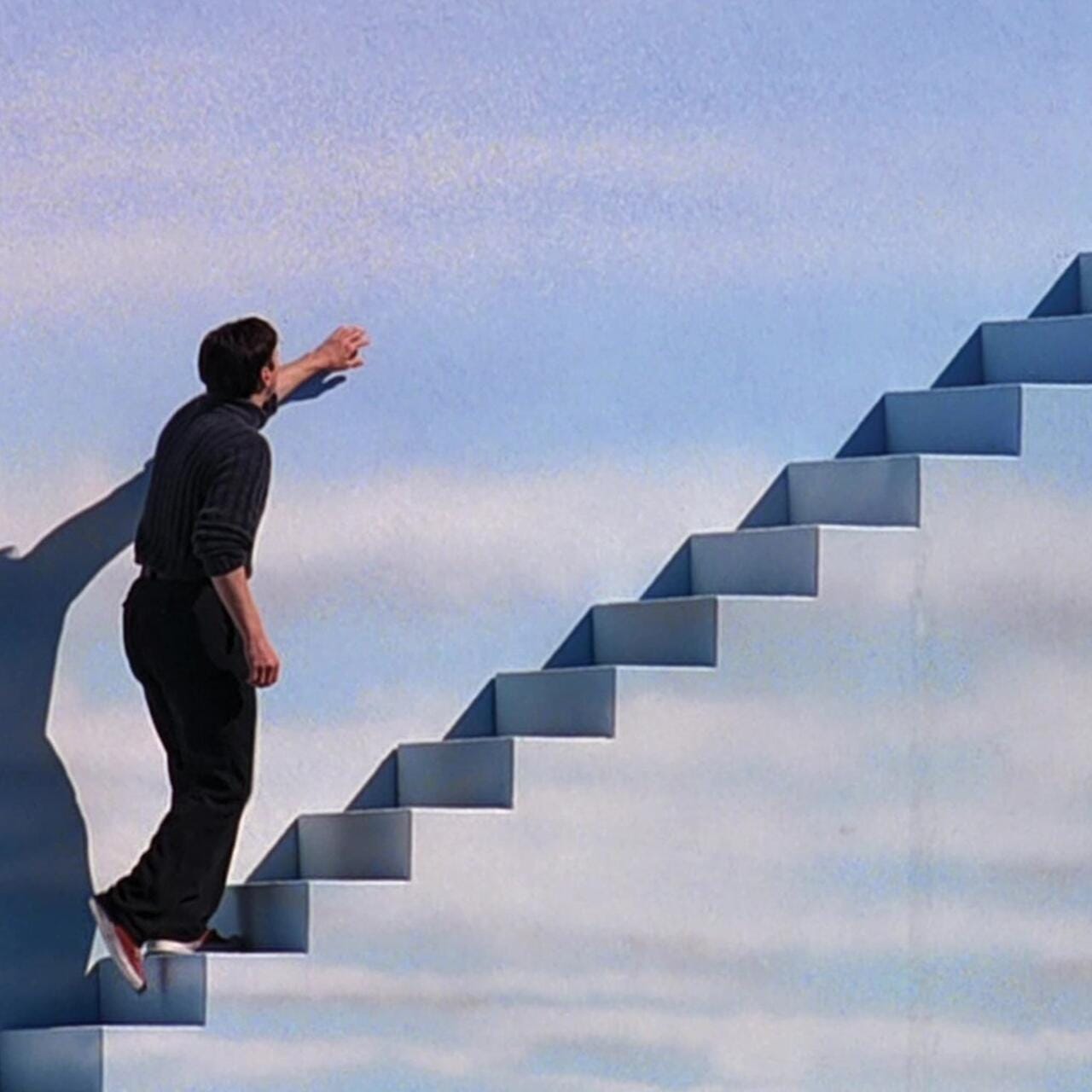
    The Truman Show matters not because Truman leaves, but because he stops calling the enclosure the world. The real exit begins before the door.

    One of the deepest modern inversions is the belief that liberation happens somewhere else.

    The hero escapes the dome. The prisoner leaves the simulation. The chosen one reaches the edge of the stage and steps beyond the lie. The story is always emotionally satisfying because it preserves the ego’s favorite assumption: reality is elsewhere, freedom is elsewhere, truth is elsewhere. Salvation remains a matter of reaching the correct exterior.

    But The Truman Show reveals something more severe.

    Truman’s world is obviously artificial. His town is curated, his relationships are staged, his emotional weather is managed, and the horizon itself is painted. Yet the film’s deepest truth is not that he eventually leaves. It is that awakening begins the moment he no longer consents inwardly to the script.

    The first liberation is distrust.

    A light falls. A pattern slips. A repetition becomes too seamless to ignore. The world begins to overexplain itself. Truman starts to feel that what surrounds him may be less like reality than like a system designed to preserve identity.

    That is the real beginning.

    The door comes later.

    This is why the story fits Waxing Crescent · Stir so perfectly. Stir is the phase of first disturbance, first irritation, first honest discomfort with the smoothness of illusion. It is not yet the phase where the pattern is fully articulated. It is the phase where consciousness begins to feel that something is wrong and can no longer be soothed back into compliance.

    That is why the true point is not that Truman exits the set. The true point is that he ceases to call the set the world.

    Outer departure may matter. Sometimes it is necessary to leave false institutions, manipulative systems, dead enclosures, and staged identities. But Geomytha draws a sharper distinction: leaving a structure is not the same as ending identification with the logic that structure installed. A person can abandon the town and keep Seahaven in the mind.

    That is where the deeper body logic matters.

    The head is the regime of narration, staging, anticipation, and image-management. The body is deeper reflective life. The set is sustained because consciousness keeps reporting upward to the stage manager instead of returning downward into presence. The person is not merely living inside the constructed world. The constructed world has become a habit of perception.

    That is why the ache in Locked Out of Heaven by Bruno Mars is so useful here. The song names felt nearness while still treating access as something externally triggered. That is Truman’s condition for most of the film. He senses that reality exists, but imagination still frames it as a place reached by departure rather than as a truth obscured by misidentification.

    The same thing appears in My Sweet Lord by George Harrison. The repeated invocation can be heard as devotion, but it can also be heard as consciousness held in a state of approach rather than arrival. Nearness is felt. Rest has not yet occurred. The sacred is invoked, but still at a distance. That is exactly how illusion keeps its hold while preserving the feeling of spiritual intensity.

    A useful contrast is ordinary rebellion. Many people leave one system only to enthrone another. They reject one authority and become dependent on a rival authority. They denounce one enclosure and celebrate a new enclosure. The scenery changes. The captivity survives.

    The ego loves this because it allows departure to remain theatrical.

    It gets to say: I escaped. I crossed over. I won.

    Presence is less dramatic than that.

    Presence does not need to become the hero of its own exit story. It only needs to stop granting reality-status to the script.

    That is the hidden hope of Stir. The disturbance is not failure. The seam showing is mercy. The painted sky cracking matters more than the final door, because once the world is seen as staged, it can no longer command innocence in the same way.

    The exit was never outside.

    The exit began the moment the enclosure stopped being mistaken for reality.

    Geomytha’s final thoughts
    What “outside” have you been imagining would save you that may actually be another version of the same set?

  • The Feed Wants You Near Revelation, Never In It

    The Feed Wants You Near Revelation, Never In It

    The attention economy does not need to keep you ignorant. It only needs to keep you externally routed, agitated, and just outside direct contact with reality.

    There is a reason the feed feels spiritual without ever becoming sacred.

    It promises revelation, access, urgency, and the thrill of standing close to the hidden center of things. It tells you that if you keep watching, reacting, decoding, refreshing, and interpreting, you will eventually arrive at what is real. But the feed rarely returns consciousness to reality. It keeps consciousness circling reality’s surface.

    That is why the image of being locked out of heaven matters so much.

    In Geomytha, heaven is not first a distant location. It is the condition of consciousness that is not estranged from presence. To be locked out of heaven is to sense that contact exists while repeatedly locating the gate somewhere outside yourself. You feel the ache of nearness, but access is always deferred. The next signal will do it. The next revelation will do it. The next disclosure will do it. The next collapse will do it. The next interpretation will do it.

    But it never does.

    That is the law of the modern feed. It survives by exploiting remembered nearness. It takes a real hunger for contact and continually routes it outward. It does not have to destroy longing. It only has to manage longing. It keeps the appetite alive while withholding repose.

    This is why official media and conspiracy media can function by the same spiritual logic even while pretending to oppose one another. One offers authorized reality. The other offers forbidden reality. One says trust the script. The other says trust the counter-script. Both can keep consciousness dependent on incoming signal. Both can keep the mind leaning away from the center.

    That distortion belongs exactly to Waxing Crescent · Stir.

    Stir is the phase of first movement. In its true form, it is hope. Life begins to lean outward in a clean and living way. But Stir can also be hijacked. Instead of consciousness waking into alignment, consciousness gets baited into reaction. Instead of hope, there is agitation. Instead of movement toward life, there is movement toward capture.

    This confusion appears everywhere in the logic of spectacle. The loudest thing becomes the truest thing. The most repeated thing becomes the most important thing. The dominant image becomes the winning image. The crowned signal becomes the thing people call reality.

    That is why beast and best are so similar.

    What appears triumphant is often only what has successfully colonized attention.

    The same law appears in Zombie by the Cranberries. The repeated return to “in your head” places the problem exactly where it belongs. The deepest issue is not just violence in the public world. It is occupation in the psychic world. Something has moved into consciousness and learned how to repeat itself there. The same old theme does not stay alive because it is true. It stays alive because it keeps finding hosts.

    That is what the feed builds: reanimated urgency without presence.

    A person can be informed and absent at the same time. They can know what happened everywhere except where they are. They can become so practiced in mediated concern that direct perception starts to feel slow, naïve, or unreal.

    The stress test is simple. If a stream of information leaves consciousness more urgent than honest, more reactive than rooted, more convinced than present, then it may be feeding on attention more than serving discernment. The question is not just whether facts are present. The question is what happens to the center while those facts are consumed.

    Hope, in this phase, does not mean optimism. It means refusing to believe that attention belongs to the machine by default. It means remembering that the gate can still be guarded. It means recognizing that not every stirring is awakening.

    The feed thrives by making people feel close to heaven while keeping them locked outside it.

    Geomytha’s final thoughts
    What part of your attention has been trained to confuse agitation with awakening?

  • The Zodiac as the Life of Consciousness

    The Zodiac as the Life of Consciousness

    Most people are taught to read the zodiac as a wheel of personalities.

    Geomytha reads it differently.

    Not as thirteen kinds of people, but as thirteen stages in the yearly movement of consciousness. Not “what you are,” but what awareness does when it enters form, takes on weight, becomes divided, seeks protection, forms an image of itself, gets wounded, learns containment, takes aim, builds structure, pours outward, and finally loosens its grip again.

    That reading fits the deeper grammar already running through Geomytha: religion as symbolic memory of consciousness trying to describe what it is, how it became divided, and whether it can return to wholeness. In that grammar, Isis names pure awareness, Osiris names right reflection, Set names fragmentation and projection, and Horus names the hardened self that mistakes its own partiality for the whole.

    The zodiac becomes powerful when read through that same lens.

    Then Aries is no longer a personality brand. Taurus is no longer just stubbornness. Cancer is no longer vague emotionality. Scorpio is no longer merely intensity. Ophiuchus is no longer an odd thirteenth insert.

    They become verbs of consciousness.

    The whole year becomes a map.

    Aries begins the cycle because consciousness does not first appear as comfort. It appears as incision. As thrust. As the courage to break outward from undifferentiated possibility into an actual field of action. Aries is Dare because manifestation begins with a cut. Something has to risk beginning. The year does not start in enclosure. It starts in rupture.

    Then Taurus: Steady.

    What broke open now has to hold. It has to take body, appetite, continuity, weight. A beginning that never settles into form is only a spark. Taurus is the stage where consciousness becomes embodied enough to persist. The first danger after emergence is dissipation. Taurus answers with mass, rhythm, repetition, touch, ground.

    Then Gemini: Notice.

    Once awareness has taken form, it begins to see difference. Mirror and contrast appear. Self and other. This and that. Language begins here, not because language creates reality, but because duality becomes legible. Gemini is where consciousness first becomes explicitly doubled. It notices by dividing. It learns by contrast. The world becomes thinkable because it is no longer seamless.

    Then Cancer: Shelter.

    This is why Cancer is the womb.

    Not because it is the start of the cycle, but because once consciousness has broken outward and become doubled, it needs a chamber in which that division can be held without shattering it. Cancer is enclosure, protection, memory, interiority, origin-feeling. It is the place where vulnerability is not yet exposed to the whole weather of the world.

    Aries is the cut out of the womb.

    Cancer is the chamber built in response.

    That distinction matters.

    Cancer is not first movement. Cancer is first protected inwardness. It is where consciousness tries to preserve itself from the violence of exposure. In Geomytha terms, this is why Cancer naturally carries the pressure of home, mother-field, roots, and origin-memory. It is not merely softness. It is protection as metaphysical necessity.

    Then Leo: Radiate.

    What was sheltered now becomes visible. The self appears as image. Persona, crown, display, solar center. Leo is the stage where consciousness does not merely exist but shines itself outward as a recognizable form. It wants to be seen. It wants to be the center of its own field. It wants to rule its own atmosphere.

    This is not automatically false. But it is dangerous.

    Because the moment consciousness becomes image, it can begin mistaking image for essence.

    Then Virgo: Refine.

    After display comes correction. Sorting. Tending. Clarifying. Virgo is where the visible self is put under discipline. What belongs? What does not? What is excess? What is noise? If Leo is the crown, Virgo is the hand that cleans the crown and notices the dust.

    Then Libra: Balance.

    Now consciousness enters relation explicitly. Not just self-display, but proportion. Weighing. Calibration. Reciprocity. Judgment. Libra is the sign where consciousness discovers that a world full of forms cannot survive on self-assertion alone. It has to measure itself against the other.

    Then Scorpio: Penetrate.

    And here the whole sequence darkens.

    Because balance does not save consciousness from the wound. Relation does not prevent desire, jealousy, fear, sex, betrayal, death, obsession, or depth-pressure. Scorpio is where the polished surface breaks. Consciousness is pierced. It is driven below appearances. The world stops being manageable and becomes dangerous, magnetic, intimate, irreversible.

    Scorpio is not simply darkness. It is the moment when consciousness is forced to discover that it is not sovereign over its own depth.

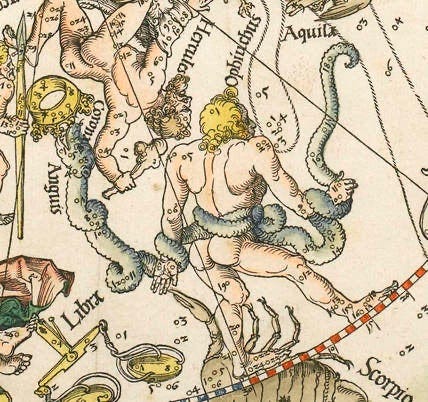
    That is where Ophiuchus enters.

    And this is why Ophiuchus is not decorative. It is the hinge.

    Between Scorpio and Sagittarius, the sequence could have moved directly from wound to quest. Many people do exactly that in life: they suffer, then immediately convert suffering into doctrine, mission, philosophy, or outward movement. But the sky itself inserts something else there: the serpent-bearer.

    That is why Ophiuchus matters.

    Ophiuchus is Contain because it names the threshold between being ruled by dangerous force and learning to hold it rightly. Scorpio is the sting. Sagittarius is the arrow. Ophiuchus is the hand that keeps venom from becoming destiny.

    This is where Geomytha becomes sharper than generic astrology. The serpent is not just evil, and it is not just wisdom. It is force. It can possess, poison, heal, transmute, or overtake. Ophiuchus is the stage where consciousness stops merely suffering the serpent and begins to learn dosage, restraint, medicine, pressure rightly handled.

    Without Ophiuchus, the zodiac is smoother.

    With Ophiuchus, it becomes more true.

    Because most human lives are not transformed by suffering itself. They are transformed by whether suffering becomes compulsion or containment.

    Only after that hinge does Sagittarius appear as Seek.

    Now consciousness can aim. Quest becomes possible. Meaning becomes a horizon. Doctrine, pilgrimage, long-range direction, the pull of the distant truth — all of this belongs here. But Sagittarius is healthiest only after Ophiuchus. Otherwise quest becomes escape. Otherwise doctrine becomes reaction. Otherwise the wound writes the philosophy.

    Then Capricorn: Endure.

    The quest cannot stay airy forever. It has to bear time. Burden. Structure. Hierarchy. Labor. Dryness. Long effort. Capricorn is what happens when meaning hardens into form and asks to be carried even when inspiration is absent. This is the sign of tested will. Not glamorous will. Proven will.

    Then Aquarius: Distribute.

    What has been built cannot remain private. It pours outward. Through systems, groups, networks, publics, abstractions, collective channels. Aquarius is not merely eccentricity or innovation. It is the distributive stage of the cycle. What was formed in the singular begins circulating through the plural.

    Then Pisces: Release.

    Form loosens. Boundaries soften. The hard edge of identity becomes porous again. Pisces is not simply confusion, though confusion often happens there. It is the return of permeability. The release of over-definition. The beginning of dissolution back toward a field larger than the image-self can control.

    And then the year is ready for Aries again.

    Not because nothing happened.

    But because every release prepares the possibility of a new incision.

    So the zodiac, read this way, tells a full story:

    Dare. Steady. Notice. Shelter. Radiate. Refine. Balance. Penetrate. Contain. Seek. Endure. Distribute. Release.

    That is not a wheel of personality types.

    It is the yearly life of consciousness.

    And once you see that, older myths begin to fall into place.

    The strongest whole-system analogue remains the Isis–Osiris–Set–Horus grammar already running through Geomytha. There, pure awareness, right reflection, fragmentation, and the hardened self provide the underlying pattern that later symbolic systems keep refracting. The zodiac does not replace that structure. It narrates one yearly version of it.

    The Greek zodiac myths also make more sense when read as fragments of one larger story rather than as isolated curiosities. The ram, the bull, the twins, the crab, the lion, the virgin, the scales, the scorpion, the serpent-bearer, the archer, the sea-goat, the water-bearer, the fish — these are not just pictorial labels. They are distributed symbolic functions. They hold pieces of the drama.

    The Grail stories tell much of the same movement in another language. Visibility, kingship, wound, the question, the quest, the burden, the possibility of restoration. Inanna’s descent presses especially hard on the Scorpio–Ophiuchus–Pisces arc: penetration, stripping, ordeal, altered return. The myths do not all agree. They do not need to. They repeat the structure under different skies.

    That is why the zodiac should not be treated as a static badge.

    Its deepest use is dynamic.

    Not “I am this sign, therefore this is my personality.”

    But: what is consciousness being asked to do here?

    That question changes everything.

    It turns Aries from branding into courage. Taurus from stubbornness into embodiment. Gemini from chatter into signal-recognition. Cancer from sentimentality into sacred enclosure. Leo from vanity into visibility. Virgo from fussiness into purification. Libra from indecision into measure. Scorpio from melodrama into necessary wounding. Ophiuchus from curiosity into medicine. Sagittarius from optimism into direction. Capricorn from severity into tested endurance. Aquarius from abstraction into circulation. Pisces from vagueness into release.

    The zodiac matters, then, not because it tells you who you are.

    It matters because it tells you what happens to consciousness when it enters time and forgets that it is more than the image it wears.

    Read that way, the year stops being a horoscope wheel.

    It becomes a discipline of remembrance.
  • AI, Paradise, and the Externalization of Set

    AI, Paradise, and the Externalization of Set

    Paid essay — public preview. This page introduces the original essay. The complete argument, examples, and conclusion are available to paid Geomytha subscribers on Substack.

    The modern discussion about AI keeps circling the wrong center. It asks whether the machine is intelligent, dangerous, conscious, useful, creative, ethical, inevitable. Those are real questions, but they do not reach the symbolic core of what has actually happened.

    What has happened is that a major cognitive burden has been externalized.

    That burden is not wisdom. It is not presence. It is not embodied perception or moral conscience. It is something more volatile and more modern: branching, simulation, recombination, alternative generation, possibility management, language production, and synthetic arrangement.

    In Geomytha terms, this is close to Set-work.

    Set is not merely disorder in the shallow sense. He is the projecting, proliferating, cutting, branching force. He introduces alternate routes, rival framings,…

    Read the complete essay on Substack →

    This WordPress page preserves the essay’s place in the Geomytha archive, its original title and subtitle, and its publication date. The full subscriber edition remains protected on Substack.

  • The Hidden Term: Why Closed Systems Always Leave Something Out

    The Hidden Term: Why Closed Systems Always Leave Something Out

    Every powerful system makes the same promise. It offers completion.

    Completion is one of the most persuasive pleasures in human life. It calms the mind, rewards the need for order, and allows people to feel that reality has been brought within the terms of a manageable structure. Everything has its place. The names are sufficient. The categories are stable. The circle closes.

    That promise is rarely as innocent as it looks.

    Again and again, the deepest truth about a system lies not in what it includes, but in what it had to leave out to appear complete in the first place. The visible order depends on omission. The omitted term remains active. Then, sooner or later, it returns as contradiction, curse, anomaly, scandal, symptom, backlash, or breakdown.

    The hidden term is often the real center of interpretation.

    Fairy tales understand this immediately. A kingdom arranges a beautiful public order, gathers the rightful powers, blesses the child, and assumes destiny can be managed by correct ceremonial inclusion. But one force remains uninvited. The excluded term does not disappear; it returns with more authority precisely because it carries the unpaid truth of the arrangement.

    Greek myth makes the same structure explicit at the wedding of Peleus and Thetis. Eris is excluded from the feast, then returns through the golden apple that turns the ceremony’s apparent harmony into conflict.

    That pattern is not limited to mythic courts.

    Religion does the same thing whenever public doctrine hardens into polished sufficiency. What cannot be absorbed remains at the edge as mysticism, heresy, esoteric remainder, unresolved symbol, or apocalyptic pressure. The visible shell insists the matter is settled. The hidden term continues to testify that it is not.

    Politics does it whenever a regime calls itself complete, rational, inevitable, or fully humane. What it suppresses then returns, often not as philosophical objection but as instability in lived reality. The system is haunted by whatever its own language cannot process.

    Psychology does it every day. A person arranges a self-story, chooses values, stabilizes a persona, builds a role, and creates a manageable inner kingdom. This is who I am. This is what I do. This is what I reject. This is what belongs to someone else. And then the hidden term arrives: a desire that embarrasses the image, a grief the story cannot absorb, a weakness that contradicts the self-description, a longing that does not fit the brand.

    The excluded term has not come from nowhere. It was active all along.

    That is what makes closed systems spiritually dangerous. Not because order itself is false, but because order is tempted to mistake its simplification for reality. The system becomes proud of its own coherence. It begins to worship the fact that its categories line up cleanly. It forgets that lining up cleanly is often achieved by force.

    This can happen in theology, in politics, in philosophy, in personality, in aesthetics, in technology, and in everyday habits of self-management. The cleaner the system, the more carefully one should ask what its tidiness cost.

    And that does not mean the hidden term is always noble. Sometimes what a system excludes is ugly, destructive, embarrassing, dangerous, or genuinely difficult to integrate. The point is not to romanticize the fringe merely because it is fringe. The point is diagnostic. What a system cannot comfortably include tells you something decisive about what kind of system it is.

    A healthy symbolic intelligence therefore asks a different sort of question from the usual believer or skeptic. Instead of only asking whether the system is true or false, one asks: what did this structure have to repress, rename, minimize, moralize, or sideline in order to present itself as total?

    That question opens almost everything.

    A polished identity becomes interesting where it overreacts.
    A doctrine becomes interesting where it grows anxious.
    A culture becomes interesting where it censors.
    A bureaucracy becomes interesting where it creates euphemism.
    A public moralism becomes interesting where it cannot bear one particular fact.

    The hidden term lives there.

    This is one reason symbolic numbers have such peculiar staying power. Numbers associated with totality often carry a strange pressure around them. They promise finished order, but that promise can become theatrical. The moment a number becomes too perfect socially, one should suspect the possibility of remainder. Not because the number is false, but because the human use of it may be tidier than the field it claims to organize.

    What matters is not paranoia. It is humility toward reality. Closed systems fail most dangerously when they begin assuming that what lies outside their terms is unreal, irrelevant, or already mastered.

    That is the beginning of illusion.

    The mature symbolic reader does something more severe. He watches for pressure points. He notices what the system cannot say without weakening itself. He studies what the order cannot integrate without losing its clean public face. He listens for the omitted term not because omission is glamorous, but because omission is where a structure often tells the truth about itself.

    That discipline changes how the world looks. The hidden term stops being a minor exception and becomes the place where interpretation begins.

    The circle does not usually reveal itself by its center. It reveals itself by its strain.

  • Ophiuchus and the Hidden Thirteenth

    Ophiuchus and the Hidden Thirteenth

    The zodiac survives because it offers a seductive kind of order. Twelve signs. Twelve repeating zones of temperament, timing, and cosmic legibility. It feels complete in the way civilization likes things to feel complete: elegant, symmetrical, memorable, and easy to inhabit.

    That is precisely what makes it symbolically interesting.

    This Substack is reader-supported. To receive new posts and support my work, consider becoming a free or paid subscriber.

    The problem is not that twelve is meaningless. The problem is that any public system arranged too cleanly begins to invite a deeper question: what had to be managed, trimmed, or set aside so the visible wheel could appear so finished?

    Ophiuchus stands at that question.

    The serpent-bearer is not best understood as some hidden villain of the sky or as a dramatic cosmic usurper. That pushes the symbol too hard. Its real importance is quieter and more revealing. Ophiuchus is the uncounted term that shows how much elegance can depend on convention.

    That makes it powerful.

    Because symbolic systems do not rule only by truth. They rule by legibility. A complete circle reassures the mind. It tells people that time can be mapped, life can be sorted, and the heavens themselves can be distributed into manageable order. Even those who do not literally believe in such systems still feel their charm. A finished wheel calms the nervous system.

    Then something extra appears.

    The extra is always destabilizing.

    It need not overthrow the system. It does something more subtle. It reveals that the closed order was achieved partly by simplification. The visible completeness depended on leaving a remainder in the wings. Ophiuchus is that remainder.

    That does not make it superior to the twelve. It makes it diagnostic.

    Its significance lies in what it teaches about all polished symbolic structures. Public order often works by drawing the most stable possible map, then forgetting it made choices in the process. The map is presented as nature itself. But the hidden term remains as evidence that selection and omission were part of the construction all along.

    That is why Ophiuchus belongs to this week. It gives a sky-image to a broader human habit.

    We do this in religion. Official forms become fixed and self-contained, while mystical, apocalyptic, or esoteric strands linger at the margins as reminders that the visible doctrine is not the whole symbolic field.

    We do it in politics. An order describes itself as rational, settled, and complete, while its exclusions return as tension, contradiction, scandal, or unrest.

    We do it in personality. A person assembles a tidy self-story, stable values, a public role, a managed image, and then finds that the life he cannot narrate remains stubbornly active at the edge of his consciousness.

    The hidden term remains.

    This is why Ophiuchus matters more as a principle than as a piece of niche zodiac trivia. It is the emblem of managed incompleteness. Not malice, not curse, not secret superiority, but the stubborn remainder that tells you the circle is less absolute than it appears.

    Its serpent-bearing image deepens this further. The serpent has long been associated with renewal, danger, medicine, forbidden knowledge, cyclical life, and powers that do not sit comfortably inside rigid public administration. A figure carrying the serpent through the sky suggests a relationship to forces that cannot be fully sterilized into tidy abstraction. That is already too much for a perfect wheel to comfortably admit.

    And that is the point.

    The problem with closed systems is not merely that they exclude something. It is that they train the mind to forget exclusion happened. Once that forgetfulness sets in, administration begins pretending to be ontology. The map claims to be the field.

    Ophiuchus quietly breaks that spell.

    It reminds us that public symbolic order may be useful without being total, elegant without being final, and meaningful without being exhaustive. That is a healthy correction in an age that keeps building systems designed less to describe reality than to make reality feel comfortably processed.

    The hidden thirteenth is therefore not a new identity slot to aggressively inhabit. That would only repeat the problem in reverse. Its real function is to teach suspicion toward visible completeness. Whenever a circle appears too flawless, it is worth asking what it had to leave in the wings.

    Sometimes the remainder is the real clue.

    This Substack is reader-supported. To receive new posts and support my work, consider becoming a free or paid subscriber.