Baseball can be read, through Geomytha, as a ritual drama of incarnation.
Not as a literal historical claimI — ClaimI names claim: the interruption by which reflected presence is taken as mine.Read full entry → that Abner Doubleday secretly encoded Egyptian theology, but as a symbolic structure that happens to mirror the same pattern: origin, projectionThose — ProjectionThose names projection: enemies, outsiders, competitors, threats, and disowned qualities placed beyond the identity boundary.Read full entry →, embodiment, struggle, returnReturn — RemembranceReturn names remembrance and release: the loosening of possession so reflection can become transparent to source again.Read full entry →. In that sense, baseball behaves like myth. It stages the movement of consciousness through form.
The deepest clue is the word home.
The game begins at home. The journey starts from home. The whole point is to leave home, move through the square of the world, and somehow return home again. That alone makes baseball more than a sport in symbolic terms. It becomes a map of life itself: consciousness departing from its ground, entering bounded experience, and circling back toward origin.
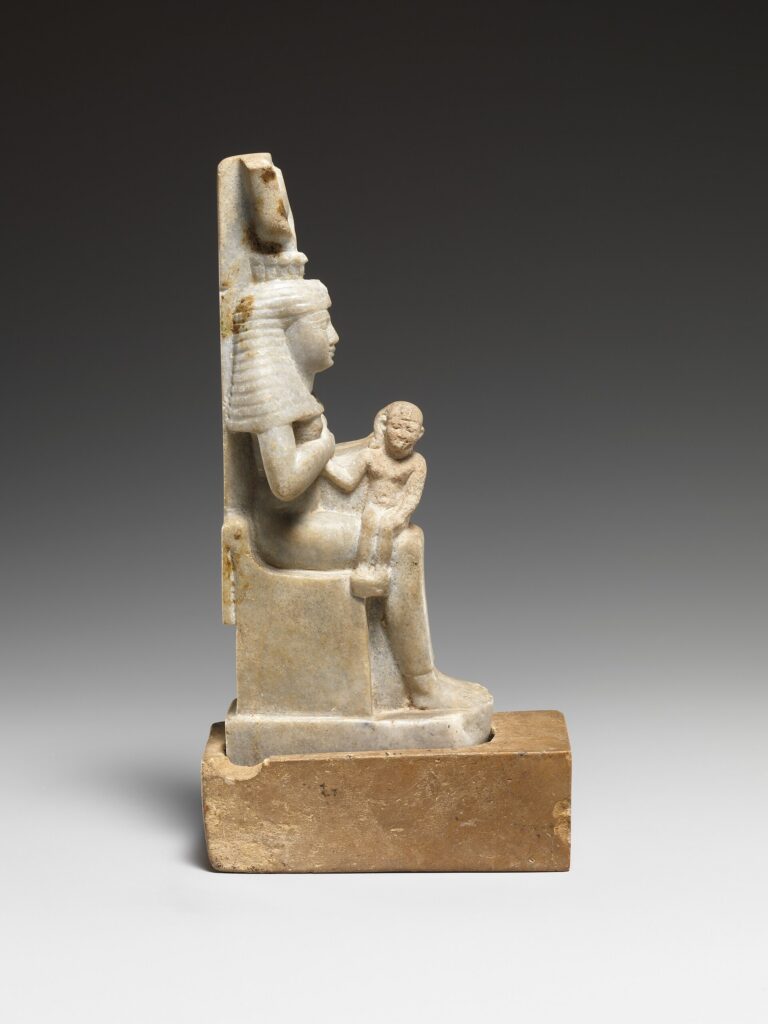
Through your lens, home plate is IsisIsisIn Geomytha, Isis names the unclaimed field: Is — pure being, awareness before possession, and the ground before the claimant appears.Read full entry →. Not because it is feminine in a shallow sense, but because it is the ground, the sourceIs — SourceIs names unclaimed being: awareness before possession, distinction, or identity.Read full entry →, the place of belonging before the journey begins. Isis is awareness, earth, the undivided field. Home is where the cycle starts and where it seeks completion. It is the resting point before motion, and the return point after struggle.
From there, the game moves into polarity.
The pitcher can be read as the initiating masculine principle. He sends motion into the world. He begins the event. He introduces the moving seed, the concentrated impulse, the thing around which the whole field organizes. The ball is therefore a powerful symbol of condensed potential. It is life in transit. It is the spark of incarnation. Everything responds to it. All eyes follow it. Once it is released, the field wakes up.
The catcher then becomes the receptive pole, the gate of reception, the matrixThe MatrixThe Matrix presents Neo’s ordinary experienced world as a computer-generated or neural-interactive construct maintained by a machine system. The film repeatedly distinguishes the operative rules of that construct from whatever lies outside…Read full entry → that receives, frames, and contains what is sent. If the pitcher is projection outward, the catcher is reception inward. That is why the reproductive symbolism is so strong here. The pitcher and catcher are not merely male and female bodies. They are archetypal poles: generative and receptive, sending and holding, impulse and womb.
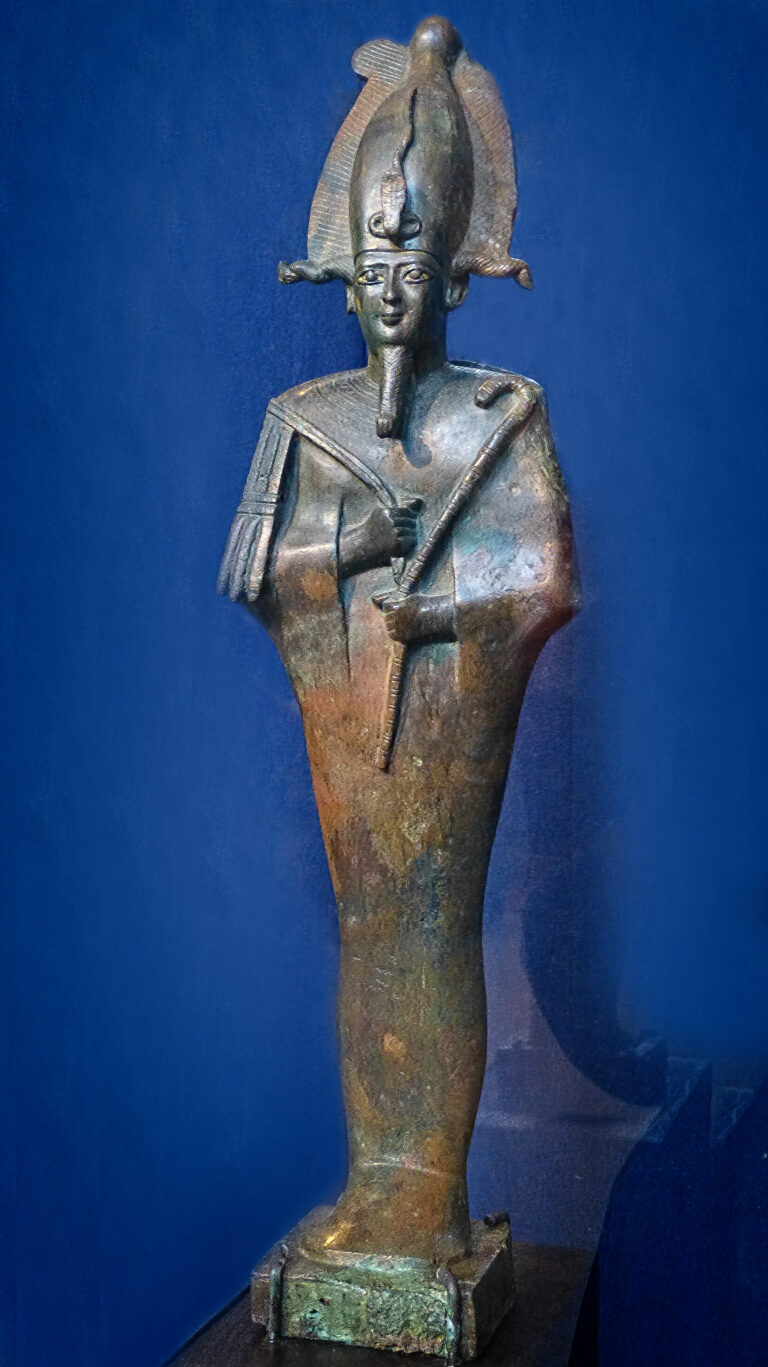
But Geomytha sharpens the pattern further. The pitcher is not simply “OsirisOsirisIn Geomytha, Osiris names reflected presence: Am — awareness reflected as living consciousness without yet becoming ownership.Read full entry →” or “SetSetIn Geomytha, Set names the claimant: I — the interruption by which reflection is taken as mine and converted toward ownership.Read full entry →” in every case. He can express either principle depending on the quality of the motion. If the throw is lawful, rhythmic, reflective, and ordered, then it is Osirian. If it is deceptive, destabilizing, violent, manipulative, or meant to overpower by illusion, then it tilts toward Set. That is why the pitcher is such a rich figure. He is the initiator, but initiation can either reflect the ground or distort it.
The batter is where HorusHorusIn Geomytha, Horus names the identity that forms after claim: This — the body, role, image, wound, belief, or story taken as what the self is.Read full entry → enters. The batter stands at the threshold between receiving life and becoming somebody. He confronts what is thrown at him, and by striking the ball he transforms pure motion into personal destiny. The ball is no longer just potential. Now it has a trajectory. Now it has become a life. Once contact is made, the batter becomes a runner, and that runner is pure Horus: a time-bound identityThis — IdentityThis names the formed identity: the body, role, image, wound, belief, or story claimed as what the self is.Read full entry → moving through the world, trying to survive the field long enough to complete the circuit.
This is where the diamond becomes crucial.
The baseball diamond is a square. In Geomytha, that matters. The square represents bounded existence, the four-cornered world of temporality, sequence, law, and incarnation. To enter the basepath is to enter measured life. It is to leave the unbounded ground and move into the world of counting, roles, rules, and consequences. The runner is now in time. He can be safe or out. He can advance or be thrown back. He can succeed, fail, hesitate, overrun, be trapped, be sacrificed. That is biography. That is ego in motion.
The bases themselves can be read as stages of life.
First base is emergence. Birth. Entry into embodied existence. The self has now made it into the world.
Second base is polarity and relation. The doubling of life into self and other, subject and object, desire and resistance.
Third base is maturity, crisis, and the nearness of return. The journey is nearly complete, but danger intensifies.
Home is return to source: death, reintegration, remembrance, or awakening.
That makes the whole trip around the bases a symbolic life cycle. One leaves home only to rediscover home. One departs from the ground, enters the square of manifestation, and spends the whole journey trying to make it back.
And yet in baseball, the return is not final.
You score, but the game continues.
That is where the reincarnation reading becomes especially strong. Returning home does not end the whole system. It only completes one run. Another batter steps up. Another pitch is thrown. Another circuit begins. The structure is cyclical, not absolute. In other words, baseball does not symbolize final liberation so much as successful completion within a repeating world-order. That is much closer to reincarnation than to total transcendence.
You could say it this way: baseball is not moksha. Baseball is samsara with a scoreboard.
The player leaves origin, traverses the square of embodied life, returns to origin, and yet remains inside a larger repeating game. The innings continue. The sides reverse. The process repeats across generations. One life scores, ends, and gives way to the next.
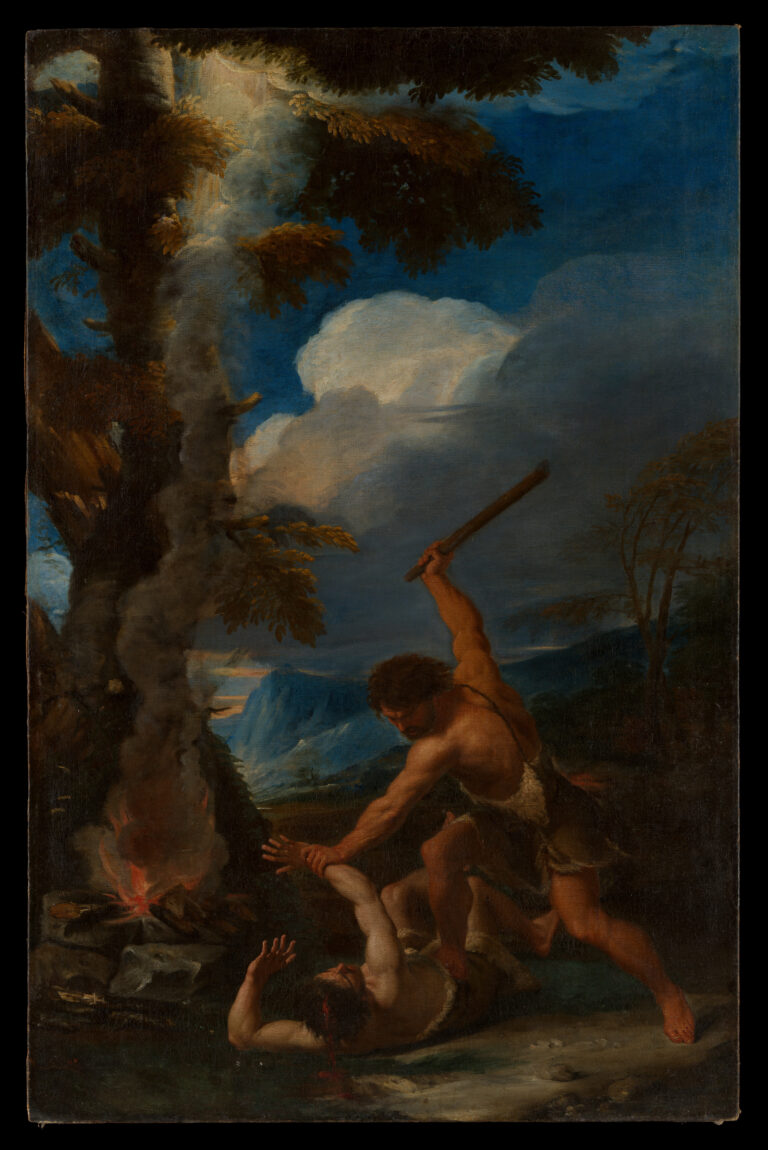
That repeating structure is what brings Set into the center of the interpretation. Set is not merely the villain in the abstract. Set is the adversarial principle built into the field. He is the curveball, the deception, the rivalry, the interruptionThe Interruption — Am → IAm → I is the interruption in which reflected presence becomes claim.Read full entry →, the tag, the error, the steal, the pickoff, the strikeout, the endless refusal to let the runner return home easily. Set is what makes the world of form dramatic. Without Set, there is no contest. There is only rest. The whole game depends on displacement, resistance, and obstruction.
So the runner is Horus moving through Set’s domain, trying to return to Isis.
That is why baseball is such a powerful fit for your framework. It stages the exact structure you keep finding in myth: awareness gives rise to reflectionAm — ReflectionAm names reflected presence: awareness embodied or mirrored without yet becoming ownership.Read full entry →, reflection becomes hijacked by projection, projection gives rise to ego, and ego struggles through time seeking return to what it never really left.
In that reading:
Isis is home, the field of origin, the ground of belonging.
Osiris is lawful rhythm, clean reflection, the ordered movement of the game before distortion.
Set is disruption, conflict, feint, rivalry, displacement, and the hostile conditions of manifestation.
Horus is the runner, the batter, the statistical self, the identity trying to survive the circuit.
That last piece matters because baseball is full of Horus language. Batting averages. RBIs. Wins. Losses. Errors. Records. Contracts. Legacies. All of it is identity measured through performance in time. Horus is not just on the field. Horus is the very logic of the scoreboard. It is the ego quantified.
And yet the whole thing is held inside a deeper irony: no matter how much Horus accomplishes, the real goal is simply to touch home.
That is almost the entire human condition in one gesture. We build identities, accumulate stats, compete, strive, get thrown out, advance, retreat, steal, sacrifice, and perform under pressure, but the only meaningful completion is return to the ground. Not better numbers. Not domination of the field. Home.
Even the phrase safe at home becomes profound through this lens. To be safe at home is to return to awareness without being intercepted by the forces of projection. It is to complete the cycle. It is not just to win a point. It is to touch the origin again.
But baseball also suggests why that return is so fleeting for most people. In the game, you do not remain standing at home in perpetual rest. You score, and the cycle moves on. Another life begins. Another at-bat. Another inning. That mirrors the way consciousness briefly touches origin, then becomes reabsorbed into identification and repetition. Home is known, but not abided in. Awareness is touched, but not stabilized.
That may be why the game is so beloved. On some deep level, it externalizes the rhythm of existence itself. Arrival, effort, obstruction, completion, repetition.
The umpire adds another dimension. The umpire is not Isis, because he does not generate the field. Nor is he Horus, because he does not run the bases. He is closer to impersonal law within manifestation. He enforces the rules of the square. He calls safe and out. In that sense, the umpire resembles karmic adjudication or demiurgic order: not ultimate reality, but the operating logic of the bounded world.
Even being out carries symbolic weight. To be put out is to have the circuit interrupted before completion. The life ends before it consciously returns to source. A strikeout suggests unrealized potential. A force out suggests inevitability. A tag out suggests contact with the adversarial world before full reintegration. TheseThese — AccumulationThese names accumulation: possessions, titles, achievements, beliefs, communities, and other extensions gathered around identity.Read full entry → are all ways of saying the same thing: incarnation does not always remember itself.
And then there is the matter of sacrifice.
Baseball openly uses sacrificial language. A sacrifice bunt. A sacrifice fly. One self gives itself up so another may advance. Through Geomytha, that can be read in two directions. In a fallen sense, it reflects the constant economy of the world of form, where progress seems to require surrender, loss, exchange, blood-price. But in a higher sense, it also encodes the ego’s necessary yielding. Horus cannot complete the journey merely by clinging to itself. Something must be given up for the movement toward home to continue.
So yes, the reproductive symbolism and life-cycle symbolism both comport strongly, but only when taken archetypally rather than biologically. The pitcher and catcher are not merely man and woman. They are sending and receiving, projecting and containing. The ball is not merely an object. It is the concentrated seed of manifestation. The runner is not just an athlete. He is ego in time. The diamond is not merely a field. It is the square of the world.
The cleanest summary is this:
Baseball is consciousness leaving home, entering the square of incarnation, being tested by projection, and trying to return to origin before being put out.
That is why it feels mythic. It is not just a game about scoring. It is a game about the possibility of return.
And the deepest twist may be this: maybe the point is not merely to get home, but to realize that home was never absent. The whole game arose within it. Isis was not waiting at the end as a distant destination. Isis was the field in which pitcher, catcher, batter, bases, runner, and umpire all appeared. In that sense, the true awakening would not be simply touching home plate after a long struggle. It would be recognizing that the entire diamond was always being held within the ground of awareness.
That is where baseball, like myth, turns inside out.
It begins as a story of travel.
It ends as a revelationRevelation — Book of RevelationThe final book of the Christian New Testament, also called the Apocalypse of John.Read full entry → of what never moved.