A Geomytha reading of how one interior world splits into “parts,” then forgets it was ever one
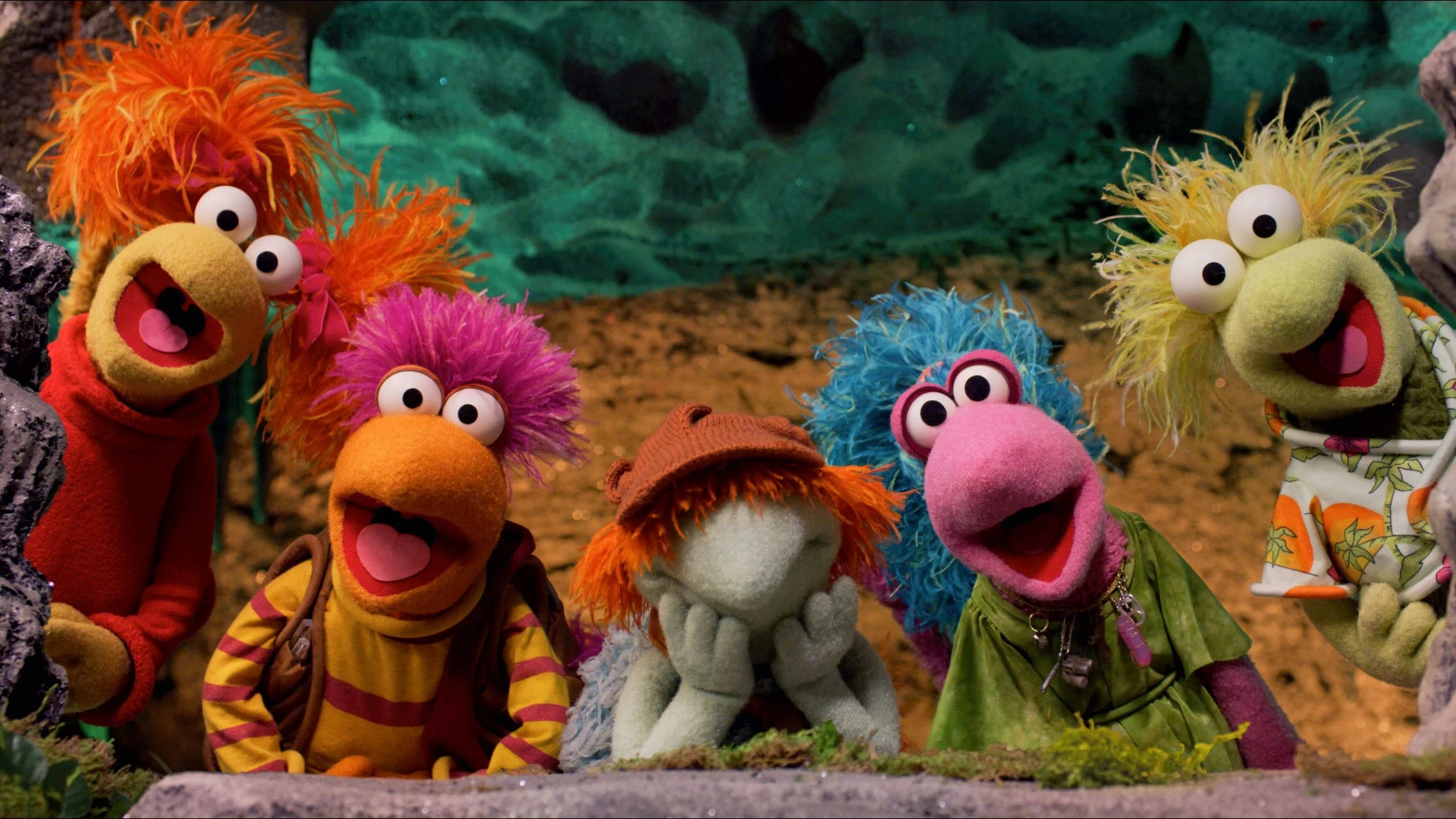
Most people remember Fraggle Rock as a whimsical children’s show—bright colors, catchy songs, and charming creatures living in a hidden world. In Geomytha, that “hidden world” is the point: the Rock reads like the interior architecture of consciousness itself—one unified field divided into compartments that begin to mistake themselves for separate realities.
The series is built on a simple but profound premise: multiple communities occupy the same ecosystem, depend on one another, and yet repeatedly fail to understand each other. When read symbolically, that is not just social commentary—it is a portrait of the psyche after it fragments.
The Rock as the psyche-cavern
The Rock is not merely a setting. It functions like a mind-space: layered, enclosed, interconnected, and internally consistent. Different regions are “close” yet experientially distant—exactly how internal parts coexist in one person while acting like separate nations.
In Geomytha terms, the Rock is the container of awareness—the ground that existed before the story of separation began. The conflict is what happens when that ground is forgotten and the compartments start claiming sovereignty.
The Fraggles as “parts” within one field
The central Fraggles are not just characters; they read like stable sub-personalities—distinct orientations that persist over time. If you name them precisely, the show all but hands you an internal map:
Gobo — the seeker/scout part: initiative, risk-tolerance, outward exploration, “go first” energy, narrative drive.
Red — the assertive/fiery part: will, competitive spark, boundary-testing, disruption of complacency, corrective confrontation.
Wembley — the attachment/appeasement part: social harmony, belonging needs, indecision from over-attunement to others, conflict-avoidance.
Mokey — the intuitive/poetic part: imagination, feeling-tone, symbolism, contemplative sensitivity, receptivity to the unseen.
Boober — the anxious/protective part: vigilance, pessimistic forecasting, contamination/avoidance themes, procedural caution, “prevent harm” management.
Read together, they form a recognizable inner ecology: the explorer (Gobo), the fighter (Red), the diplomat (Wembley), the mystic-artist (Mokey), and the sentinel (Boober). FragmentationDismemberment / FragmentationDismemberment names the symbolic breaking of a previously integrated reflection into separate parts, roles, objects, or powers.Read full entry → isn’t that theseThese — AccumulationThese names accumulation: possessions, titles, achievements, beliefs, communities, and other extensions gathered around identity.Read full entry → parts exist—it’s that each part starts acting like it is the whole.
The Doozers as thought-forms and compulsive construction
The Doozers are builders. Their identityThis — IdentityThis names the formed identity: the body, role, image, wound, belief, or story claimed as what the self is.Read full entry → is production: plans, structures, systems, repairs. In Geomytha, they resemble the constructive engine of mind—conceptual architecture continually erected to stabilize an uncertain world.
The symbolic punchline is that the Fraggles consume thoseThose — ProjectionThose names projection: enemies, outsiders, competitors, threats, and disowned qualities placed beyond the identity boundary.Read full entry → constructions. Read inwardly: the personality feeds on mental structures. We metabolize our own plans, worries, frameworks, and interpretations into mood and identity. Thought builds; identity eats; the cycle continues.
That closed loop is what makes fragmentation durable: each part reinforces the others without noticing the shared sourceIs — SourceIs names unclaimed being: awareness before possession, distinction, or identity.Read full entry →.
The Gorgs as inflated ego-authority
The Gorgs embody the stance of the ego that believes it rules reality. They interpret the world through status, control, and threat management. They are convinced of their centrality while remaining oddly blind to the living system surrounding them.
In Geomytha, this maps to the time-bound identity that crowns itself “king”—the self-story that insists: my model is the universe; my boundaries are reality; my fear is wisdom.
The Gorg posture is not merely arrogance; it is a compensatory delusion that emerges when inner unity collapses. A divided psyche often produces an authoritarian manager-part to keep the system from feeling its underlying instability.
Doc and Sprocket: intellect and instinct out of sync
The outer frame—Doc in his workshop and Sprocket reacting to what Doc dismisses—reads like a classic split:
Doc resembles the rational intellect that requires proof in its own language before it can acknowledge anything.
Sprocket resembles instinctive knowing: the body’s immediate recognition that something is happening, even when the intellect cannot categorize it.
This dynamic captures a modern condition: the intellect becomes the official spokesperson for reality, while deeper perception is treated as noise—until it starts barking.
Traveling Matt and the interpretive overlay
Uncle Traveling Matt’s reports from “Outer Space” repeatedly misunderstand what he sees. That pattern is the point: perception filtered through an interpretive grid becomes a story that sounds plausible but misses the real thing.
In Geomytha, this is how imagination overtakes contact. It is not lying; it is overlay—an interpretive film placed over direct experience until the overlay is mistaken for the world.
What the show quietly teaches
Viewed through this lens, Fraggle Rock is not primarily about creatures learning to get along. It is about consciousness learning to reintegrate.
The ecosystem is one. The factions are interdependent. The conflict persists because each group mistakes itself for a separate world and treats the others as “external.” That is the signature of fragmentation: the loss of the felt sense of shared being.
The remedy implied by the narrative is not domination but recognition:
communication between parts
humility about one’s own model of reality
restoring relationship across compartments
returning attention to the underlying unity that precedes the split
When that unity is remembered, the story changes. Not because the parts disappear—but because they stop claiming the throne.
If you want more Geomytha readings like this—myths, children’s stories, pop culture, and sacred texts decoded as consciousness maps—subscribe and share.
YouTube: Geomytha
X: @mythicgeometry
Instagram: mythic geometry
Patreon: Geomytha Noir
Substack: Geomytha Noir