Paid essay — public preview. This page introduces the original essay. The complete argument, examples, and conclusion are available to paid Geomytha subscribers on Substack.
Most systems try to get rid of the remainder.
They smooth it over. They force it into symmetry. They make the chart cleaner than reality. The mind likes a closed circle. It likes opposites neatly paired, meanings evenly distributed, every force assigned a partner, every loose end tucked into place.
But living symbols do not always behave that way.
Sometimes the thing that refuses to fit is not the flaw.
It is the key.
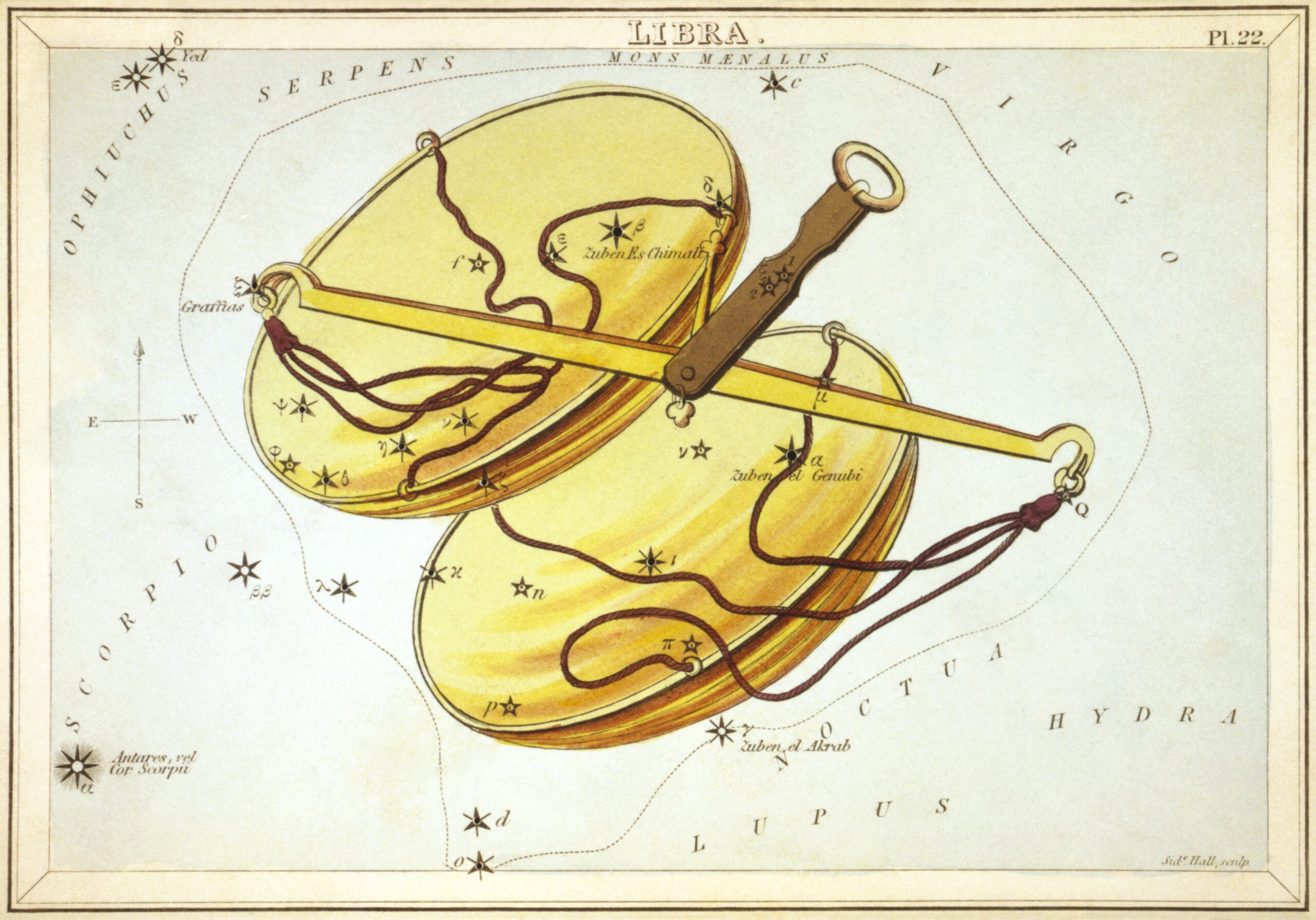
That is what happens with Libra.
Once Ophiuchus is restored to the zodiacal sequence, the wheel becomes thirteenfold. The old twelve-sign symmetry breaks. A simple opposition chart no longer works without distortion. Something remains unpaired. Something stands apart.
This WordPress page preserves the essay’s place in the Geomytha archive, its original title and subtitle, and its publication date. The full subscriber edition remains protected on Substack.
Waning Gibbous · Gemini — Release Through Noticing — Dry Recognition: Why Sleep Restores the Attention Identity Fragments
The old version of this article began with a simple image:
the Sandman throws sand into your eyes.
Then it made a larger claim.
Sand fragments.
Water flows.
Therefore the Sandman must represent consciousness being broken into pieces.
It is a beautiful symbolic chain.
It is also too neat.
The folklore itself points in another direction.
Vilhelm Pedersen illustration for Hans Christian Andersen’s Ole Lukøje. Public domain. Andersen’s Sandman figure brings sleep and stories rather than simply symbolizing fragmentation.
There Is More Than One Sandman
The Sandman is not one fixed mythic character with one ancient meaning.
Hans Christian Andersen’s 1842 Ole Lukøje is gentle. He comes quietly at night, closes children’s eyes, and tells them stories. He carries two umbrellas: one filled with pictures for beautiful dreams and one without pictures for dreamless sleep.
E. T. A. Hoffmann’s earlier The Sandman is much darker. In that story, the childhood figure is frightening, bound to fear, eyes, obsession, and uncertainty about what is real.
Even the details vary by telling and translation.
That matters.
It means GEOMYTHA should not pretend that “sand” has one universal inherited meaning.
The stronger shared mechanism is simpler:
the Sandman stands at the boundary where waking perception gives way to sleep and dream.
The Sand Does Not Have to Mean Fragmentation
Sand is granular.
That makes it a useful GEOMYTHA image for multiplicity.
A beach can be seen as one field or countless grains.
That shift resembles something attention does all day.
It is not an established folklore explanation for why the Sandman carries sand.
And it does not follow that sleep itself fragments consciousness.
Modern sleep research points the other way.
The Drying Happens When Sleep Is Withheld
Sleep loss reliably weakens sustained attention.
A 2024 systematic review and meta-analysis of one night of restricted sleep found more sleepiness, slower sustained-attention responses, and more attentional lapses.
Longer reviews of sleep deprivation find the same basic pattern: vigilant attention becomes less stable, response variability increases, and repeated sleep restriction can produce cumulative deficits.
Sleep also matters for emotion.
Reviews link inadequate or disrupted sleep with greater emotional reactivity and weaker regulation.
So if we want to keep the old article’s language of “drying,” the correction is important:
the drying is not what the Sandman does to consciousness.
The drying is what happens when waking demand never releases its grip.
Waking Attention Loves Pieces
Waking life requires distinction.
This appointment.
This person.
This danger.
This bill.
This message.
This identity.
That capacity is not a mistake.
Without it, ordinary life would be impossible.
But distinction has a cost when it never stops.
The mind keeps sorting.
Ranking.
Predicting.
Defending.
Remembering what must be done next.
GEOMYTHA calls the claimant in that process I.
The claim hardens into This.
I am this worker.
I am this parent.
I am this problem.
I am this person who cannot fall behind.
Then even sleep can begin to feel like an interruption of identity.
The Sandman Interrupts the Claimant
This is where the folklore becomes newly useful.
The Sandman closes the eyes.
The ordinary visible field disappears.
The worker stops working.
The profile stops updating.
The face stops performing for an audience.
The person temporarily gives up deliberate control over what comes next.
Dreams may come.
Or they may not be remembered.
Either way, waking identity loses its uninterrupted rule.
That is the GEOMYTHA value of the Sandman.
Not an enemy who dries consciousness.
A threshold figure who interrupts the daytime claimant.
Dream Is Not Automatically Truth
The older article also risked romanticizing dream as though sleep automatically returned a person to pure source.
That is too strong.
Dreams can be strange.
Repetitive.
Fearful.
Absurd.
Emotionally charged.
They do not arrive with a certificate of metaphysical truth.
Hoffmann’s Sandman is especially useful here because his story turns eyes, perception, obsession, and uncertain reality into horror.
The threshold can restore.
It can also disorient.
GEOMYTHA therefore treats dream as another field of experience—not automatic revelation.
The Modern Refusal of Night
The contemporary pressure is not mysterious.
There is always one more thing to watch.
One more message.
One more episode.
One more shift.
One more argument.
One more scroll.
The day no longer ends because darkness arrives.
Artificial light, screens, work schedules, entertainment, anxiety, and habit can all extend waking activity far beyond sunset.
The symbolic consequence is simple:
the claimant gets more hours in which to keep claiming.
Sleep becomes something to optimize, delay, compress, hack, or recover from later.
The Sandman becomes the inconvenience.
Waning Gibbous: Release Before Return
Waning Gibbous is Release.
Its directive is Give Thanks.
Sleep fits that movement because it requires a daily release of control.
The day cannot be carried intact into the night.
Some tasks remain unfinished.
Some conversations remain unresolved.
Some identities cannot be actively maintained while the body sleeps.
The practice is not mystical.
It is brutally ordinary.
Stop.
Darken the room.
Let the body become unavailable to the day.
The Stress Test: Sleep Is Not Surrender in Every Situation
This symbolic reading should not turn sleep into a moral test.
Insomnia is real.
Shift work is real.
Infants wake parents.
Illness disrupts sleep.
Trauma can make night difficult.
Economic conditions can make adequate rest hard to obtain.
A person struggling to sleep is not spiritually refusing release.
That distinction matters.
The GEOMYTHA return is not “sleep better and become enlightened.”
It is much smaller:
where choice exists, stop treating endless wakefulness as proof of devotion, productivity, toughness, or importance.
The Sandman Is the Release
Sand can still carry the old article’s image of grains.
But the image changes once the folklore is respected.
The Sandman does not arrive to make the waking mind more fragmented.
He arrives when the waking mind is supposed to stop.
The eyes close.
The count pauses.
The visible world releases its grip.
And the nervous system gets a chance to become less brittle.
Release the day. Give thanks for what was enough. Let the Sandman interrupt the self that thinks it must remain awake to remain real.
E. T. A. Hoffmann, The Sandman — public-domain literary source for the darker Sandman tradition centered on eyes, fear, obsession, and unstable perception.
Waxing Gibbous · Gemini — Build in Noticing — Captured Devotion: How Living Breath Hardens into Religious Shell
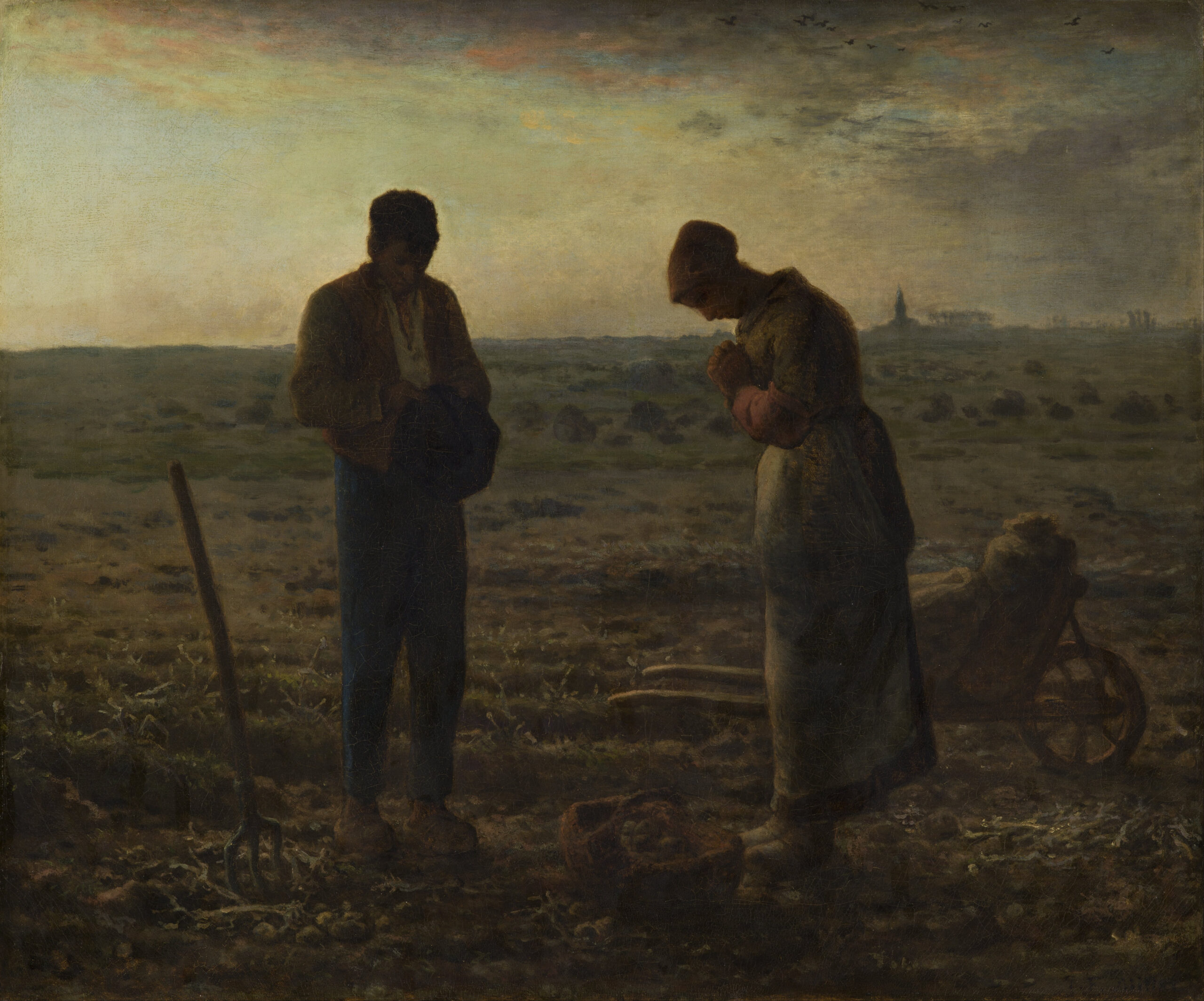
Two workers stop in a field.
The work is still there.
The tools are still there.
But for a moment, the work does not get the final word.
Jean-François Millet’s The Angelus gives us a simple image of religious form at its best: a bell marks time, bodies pause, heads bow, and ordinary labor opens into a different relation.
Jean-François Millet, The Angelus, 1857–1859. Musée d’Orsay; public-domain reproduction.
The bell is a form.
The posture is a form.
The prayer is a form.
And form is not the enemy.
The question is what the form is still serving.
Dogma Is Not Just a Bad Word
The old version of this essay used dogma too casually, almost as a synonym for dead religion.
That is not accurate.
Religious traditions use doctrine and formal statements to preserve teaching, mark boundaries, transmit memory, and give communities a common language. In Catholic Christianity, for example, the Catechism describes creeds as compact, normative summaries meant to hand faith on across generations. The Nicene Creed remains important precisely because a community believed some distinctions were worth preserving.
So the problem is not that breath eventually becomes words.
Words are how insight travels.
The problem begins when the words stop pointing and start posing.
When the form no longer carries the practice.
When the form becomes evidence of who the practitioner is.
That is what this article means by breath becoming dogma.
It is a GEOMYTHA phrase, not a claim that actual dogma is inherently lifeless.
The Form Can Carry the Fire
A practice needs form.
Without repetition, a prayer disappears with the mood.
Without language, teaching changes every time it passes through a new mouth.
Without calendars, bells, postures, texts, songs, meals, fasts, or gatherings, memory can become vague enough to mean anything.
A vessel can protect what it carries.
This is why mature traditions rarely oppose form and spirit as simply as modern spiritual language sometimes does.
Form can train attention.
Form can create continuity.
Form can make surrender possible on a day when feeling is absent.
The shell can protect the living thing.
Until the shell starts demanding to be mistaken for the life.
A Tradition Can Warn Against Its Own Shell
The strongest stress test comes from inside religion itself.
Christian scripture does not simply praise visible religious performance. In Matthew 6, prayer and fasting are specifically criticized when they become public displays designed to be seen by other people.
The practice remains.
The performance is questioned.
That distinction is almost exactly the one GEOMYTHA needs.
Religion does not have to be attacked from outside in order to notice that religious behavior can become self-display.
The warning already exists within the tradition.
The Rosary Knows the Difference
The rosary offers an even sharper example.
Its repetition is intentional. Beads help hold sequence. Repeated prayers create rhythm. The body and voice are given something concrete to do.
But Catholic teaching itself warns that repetition can become mechanical if contemplation disappears. John Paul II, drawing on Paul VI, described the rosary as contemplative prayer and warned against formula repeated without the inward relation the form is meant to support.
That is not GEOMYTHA criticizing Catholic prayer.
That is Catholic tradition naming the same internal danger:
a form can remain externally intact after its purpose has been lost.
When the Practice Starts Proving the Practitioner
The shift can be subtle.
Prayer becomes: I am the one who prays.
Fasting becomes: I am the disciplined one.
Doctrine becomes: I am the one who knows the correct formulation.
Humility becomes: I am the humble one.
Even surrender can become: I am the one who has surrendered.
The action may still be good.
The belief may still be true inside its own tradition.
The problem is the claimant taking possession of it.
GEOMYTHA’s Grammar of Capture
GEOMYTHA names the movement:
Is → Am → I → This.
Is is presence before claim.
Am is presence reflected into relation.
I is the claimant.
This is the formed identity.
A religious form can serve Am. It can hold a person inside relationship—with God, community, memory, body, time, obligation, gratitude, or mystery.
Then I can take the form.
Now the relation becomes possession.
The person no longer simply practices.
The practice becomes proof of This.
I am this believer.
I am this pure person.
I am this awakened person.
I am this correct person.
That is captured devotion.
Waxing Gibbous: Devotion Has a Shadow
Waxing Gibbous is Build.
Its directive is Devote.
Devotion means repetition, commitment, attention, and structure.
You keep returning when novelty is gone.
That is how a practice becomes real.
But Build can also build a prison.
Every repetition adds another brick if the practitioner is secretly building an identity out of the practice.
Gemini sharpens the danger because Gemini Notices.
Words matter.
Distinctions matter.
Definitions matter.
But the person who can distinguish correct from incorrect can begin using correctness as a mirror.
The doctrine still says one thing.
The identity built around possessing the doctrine says another.
This Is Not an Argument for Vague Spirituality
A common escape would be to say: forget doctrine, forget ritual, just have direct experience.
That does not solve the problem.
“I do not need religion” can harden into identity as easily as “I have the true religion.”
“I am spiritual” can become another costume.
“I see through dogma” can become a more flattering dogma.
The claimant does not care whether the costume is orthodox, mystical, skeptical, secular, esoteric, or anti-religious.
It only needs the sentence:
I am this.
GEOMYTHA Has to Pass Its Own Test
This is where the article has to turn on itself.
GEOMYTHA can become dogma too.
Its grammar can become a badge.
Its myths can become a private language of superiority.
Its interpretations can become proof that the reader “sees what others cannot see.”
If that happens, the system has failed by its own standard.
The map was supposed to reveal the claimant.
Now the claimant owns the map.
A Better Test for Religious Form
Do not ask only whether a form is old, strict, mystical, beautiful, rational, orthodox, or personally meaningful.
Ask what it is doing.
Does this practice return me to relation, or mainly tell me who I am?
Does this doctrine preserve a distinction, or has possessing the distinction become a status?
Can I perform the ritual without using it to rank myself against someone else?
If the form stops serving its purpose, can I notice that without immediately treating the form as the enemy?
Can I let the practice correct me instead of using the practice to certify me?
That is the difference between devotion and captured devotion.
When Breath Became Dogma
Breath needs form if it is going to become shared practice.
Form needs language if it is going to survive memory.
Language needs distinctions if it is going to mean anything.
None of that is the fall.
The fall happens when the form that carries relation becomes the identity that replaces relation.
The prayer remains.
The breath is gone.
The doctrine remains.
The listening is gone.
The posture remains.
The surrender is gone.
Then the shell is asking to be worshiped.
Build the form. Keep what carries life. Let the practice correct the claimant. Devote without turning devotion into a self.
Waxing Crescent · Gemini — Stir in Noticing — Playful Recognition: How “Hey Diddle Diddle” Turns Cosmic Fragmentation into Children’s Song
“Hey diddle diddle.”
The phrase already sounds like play before it sounds like explanation.
Then the world tilts.
A cat plays a fiddle.
A cow jumps over the moon.
A dog laughs.
A dish runs away with a spoon.
Nothing behaves normally.
That is the useful place to begin.
Randolph Caldecott, “And the Dish Ran Away with the Spoon,” from Hey Diddle Diddle and Baby Bunting, 1882. Public domain.
First: It Is a Nonsense Rhyme
The earliest recorded version resembling the modern rhyme appeared in the eighteenth century, and scholars have spent a great deal of time proposing hidden origins for it.
Those explanations should not be treated as established fact.
The safest historical reading is also the simplest: Hey Diddle Diddle is a traditional English nonsense rhyme whose power comes from impossible images, rhythm, repetition, and surprise.
GEOMYTHA does not need a secret origin story.
It asks a different question:
What does the rhyme let us notice when ordinary relations are playfully turned upside down?
The Cat and the Fiddle
The cat does not need to be assigned a universal lunar meaning.
The image is already strange enough.
An animal takes up a human instrument.
A creature becomes a performer.
Function shifts. Category shifts. The world becomes theatrical.
That matters because the rhyme never pauses to explain the transformation. It simply presents the impossible action and keeps moving.
The listener accepts the new relation before there is time to demand a reason.
That is the first GEOMYTHA mechanism here: the world can become strange without immediately feeling threatening when strangeness arrives through play.
The Cow Over the Moon
Then comes the image everyone remembers.
The cow jumps over the moon.
The scene violates scale, distance, gravity, and ordinary animal behavior in a single line.
That is why the image works so well.
A heavy animal crosses above the object that normally hangs far beyond it.
The title of this essay—The Moon Beneath the Cow—names that inversion.
Not because the rhyme secretly teaches an Egyptian cosmology.
Because the normal hierarchy of the picture has been reversed.
What should be below is suddenly above.
What should be unreachable becomes part of a jump.
The impossible becomes cheerful.
The Egyptian Cow Is a Comparison, Not an Origin
Ancient Egypt does give us a real cow-and-sky image worth comparing.
Hathor was strongly associated with the cow. Museum objects show her in bovine form or with cow horns and a solar disk. A New Kingdom plaque from Deir el-Bahri, for example, depicts a cow with a sun disk between its horns and identifies that form as a common representation of Hathor.
That documented image belongs to Egyptian religion.
There is no evidence that Hey Diddle Diddle was composed as a coded Hathor story.
The comparison is useful only because it reminds us that cows have carried cosmic and divine associations in some cultures. GEOMYTHA can place those images beside one another without pretending one caused the other.
The Dog Laughs
The dog is the witness.
Not because every dog in mythology always means loyalty or civilization.
Because this dog has one clear function in the rhyme:
it sees the impossible and laughs.
That is a much stronger observation than assigning the animal a fixed symbolic dictionary entry.
The world has inverted.
The witness responds with delight.
That is why nonsense matters.
It lets the mind rehearse broken expectations without panic.
The impossible becomes sport.
The Dish and the Spoon
The final image completes the shift.
Household objects become characters.
The dish does not contain.
The spoon does not serve.
They run away.
The older version of this article tried to turn the pair into a fixed sexual polarity—receptive dish, penetrative spoon.
That was unnecessary.
The more defensible mechanism is simpler:
objects defined by relation are suddenly treated as autonomous little selves.
The utensil becomes a character.
The vessel becomes a character.
Relation becomes narrative.
That is where the GEOMYTHA grammar becomes useful.
From Relation to “This”
GEOMYTHA’s root grammar is:
Is → Am → I → This.
Presence enters relation.
Relation becomes claim.
Claim hardens into an identifiable thing.
The rhyme gives that movement a comic form.
Animals become performers.
A cow becomes a cosmic jumper.
A dog becomes an audience.
Dishes and spoons become runaway characters.
The world fills with little “thises.”
Again, this does not mean the anonymous makers of the rhyme intended GEOMYTHA’s grammar.
It means nonsense gives us an unusually clean picture of categories becoming mobile.
Why Children’s Nonsense Works
Children do not need a theory of absurdism to enjoy the rhyme.
The pleasure is immediate.
Rhythm repeats.
Sounds rhyme.
Images escalate.
Each line violates expectation and hands the listener another picture before the last one has completely settled.
That does not make the rhyme a hidden indoctrination device.
It makes it good nonsense.
The older draft claimed nursery rhymes “bypass analysis” and smuggle symbolic structures into children’s consciousness. That is too strong without evidence.
The better observation is visible on the page:
the rhyme makes impossible transformation memorable by making it musical and funny.
The Waxing Crescent Problem
Waxing Crescent is Stir.
Something that was quiet begins to move.
Difference appears.
The field becomes populated.
That is why this rhyme fits the phase so well as a GEOMYTHA reading.
Everything starts moving.
The cat plays.
The cow jumps.
The dog laughs.
The dish and spoon flee.
Stir is delightful because movement creates possibility.
Its shadow is that movement can outrun recognition.
The next image arrives before we have asked what the last one changed.
The Stress Test: Maybe It Really Is Just Nonsense
This article fails if GEOMYTHA requires the rhyme to secretly encode its system.
It does not.
The rhyme can be ordinary nonsense.
Its makers may have intended nothing beyond amusement, sound, absurdity, and memorable imagery.
The GEOMYTHA reading comes afterward.
That boundary matters because symbolic interpretation becomes sloppy when resemblance is turned into proof of origin or intent.
The value of the rhyme is not that it proves GEOMYTHA.
The value is that it gives us a familiar miniature world in which relation, scale, agency, and category all become unstable at once.
The Moon Beneath the Cow
The moon beneath the cow is funny because it should not be there.
That is enough.
The image does not need a secret key.
Its power is the inversion itself.
What was distant becomes jumpable.
What was ordinary becomes alive.
What was relation becomes character.
And because the whole thing is sung with a smile, the strange world feels natural almost immediately.
That is the practical return.
When something strange starts to feel normal, do not assume that makes it wrong.
Just notice the inversion.
What changed places?
What stopped serving its old function?
What became a character that used to be a relation?
Stir. Notice. Enjoy the play. Then look again before the impossible becomes invisible.
Sources
Iona and Peter Opie, The Oxford Dictionary of Nursery Rhymes — standard scholarly reference for the rhyme’s history and the caution against elaborate unsupported origin theories.
Waxing Gibbous · Gemini — Build in Noticing — Fragmented Excitement: How Pop Culture Turned Broken Motion into Personality
There is something restless about a zigzag.
It does not travel in a straight line. It moves by sharp turns: one direction, then another, then another again.
That is the ordinary meaning of the word. A zigzag is a line or course made of alternating sharp turns. The English word is centuries old. It was not invented by modern pop culture, and it does not carry a hidden psychological doctrine inside its etymology.
But the shape gives us a useful question.
What happens when a culture begins to experience identity the same way—through continual turns, reinventions, shocks, styles, signals, and interruptions?
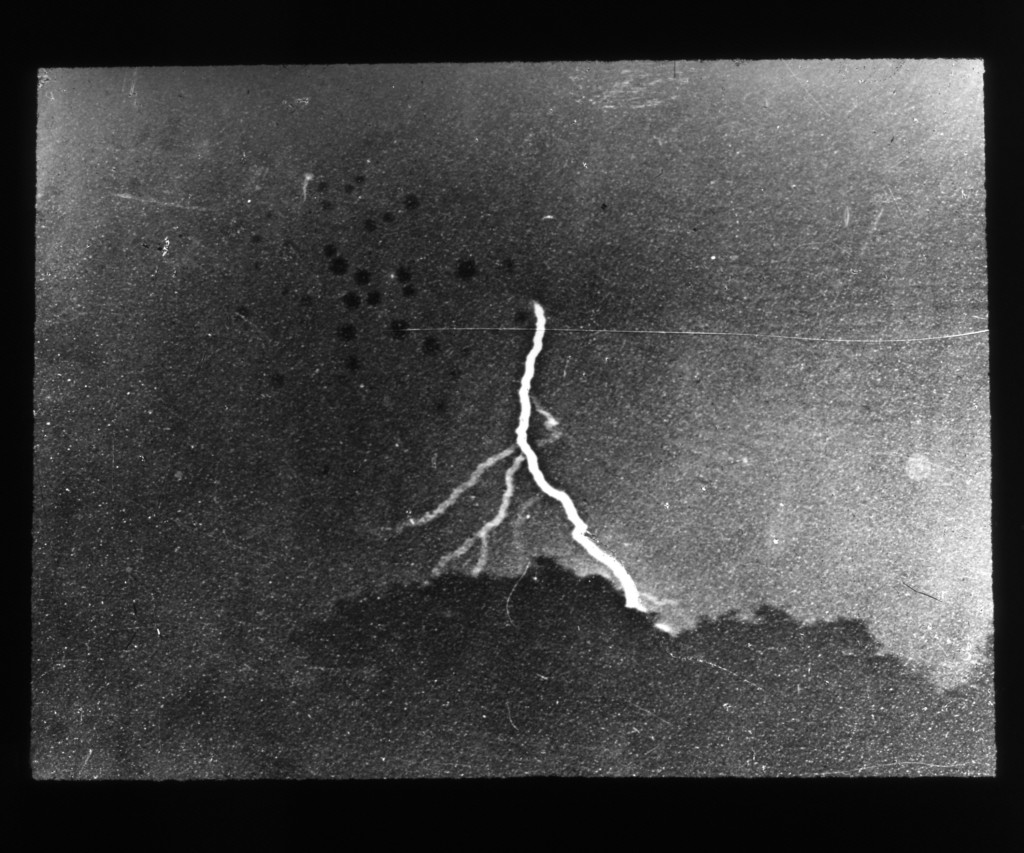
William N. Jennings, early photograph of lightning, 1882. Historical photography gives us a useful correction: actual lightning is more irregular than the neat bolt-symbol cultures often draw.
The Shape Before the Theory
The first correction to the old version of this article is simple.
The letter Z does not historically “mean fracture.” Ziggy Stardust, Zig-Zag rolling papers, ZZ Top, the Spice Girls’ “zig-a-zig-ah,” and electric rock imagery do not descend from one secret source.
The documented origins are different.
Zig-Zag says its name comes from the interleaving pattern of its rolling papers. Billy Gibbons has explained that ZZ Top grew out of blues names and initials—especially Z.Z. Hill and B.B. King. David Bowie said the name Ziggy came from a tailor’s shop, while the character drew on several different artistic and musical influences. “Zig-a-zig-ah” emerged from the collaborative writing of “Wannabe” and became famous precisely because it was catchy and strange.
Those facts matter because they prevent the symbolic reading from pretending to be historical proof.
GEOMYTHA’s claim is narrower:
unrelated cultural forms can still become useful mirrors when they converge around the same felt mechanism.
Here, that mechanism is broken motion becoming personality.
Ziggy Stardust: Personality as Spectacle
Ziggy Stardust is the strongest example because the persona itself is the subject.
Bowie did not merely release songs under a stage name. He built a visible character: alien, glamorous, theatrical, sexually ambiguous, charismatic, doomed, and inseparable from performance.
The documented history is already enough. Bowie drew Ziggy from multiple sources, including rocker Vince Taylor and other artistic influences, and later said the name “Ziggy” came from a tailor’s shop he had passed.
Nothing about that proves GEOMYTHA.
What matters symbolically is what the persona does.
Ziggy turns identity into an event.
The self is no longer merely lived. It is staged, stylized, amplified, watched, copied, and consumed.
That is a modern pressure we now recognize everywhere.
The profile changes. The look changes. The language changes. The declared self changes. Each turn feels like movement.
But movement is not always return.
The Feed Is a Zigzag
Modern attention rarely moves in a long unbroken line.
A message. A video. A headline. A joke. A purchase. A crisis. A song. A notification. A face. An outrage. A memory.
Attention turns.
Then turns again.
That does not make screens evil or fragmented attention uniquely modern. Human attention has always wandered. But digital systems can make rapid switching a default environment rather than an occasional interruption.
GEOMYTHA calls the pressure fragmented excitement: stimulation strong enough to keep identity moving, but not always long enough for reflection to deepen.
The person feels alive because something is always changing.
The question is whether anything is being integrated.
“Zig-a-Zig-Ah” and the Power of the Repeatable Fragment
The Spice Girls give us a lighter example.
“Wannabe” helped make “zig-a-zig-ah” globally recognizable even though the phrase has never needed a stable literal meaning in order to work.
Its function is sonic before it is explanatory.
You can repeat it. Shout it. Dance to it. Recognize it instantly.
That is useful for thinking about identity-signals in general. Many social signals work before they are fully interpreted. A look, phrase, pose, meme, logo, fandom reference, or slogan can announce belonging faster than an argument can explain it.
The fragment becomes a badge.
Used lightly, that is play.
Used compulsively, it becomes a substitute for presence.
The Counterexamples Matter
This is where the older version of the article needed the most correction.
Zig-Zag rolling papers are not evidence that the culture unconsciously chose “zig” because it means fragmented consciousness. The company’s own history says the name referred to the zigzagging interleave of the papers.
ZZ Top is not evidence either. Billy Gibbons has described the name as emerging from blues performers’ initials and his play on Z.Z. Hill and B.B. King.
Those examples actually strengthen the article once we stop abusing them.
They demonstrate the difference between origin and later symbolic use.
A symbol does not have to originate from a shared hidden code in order to acquire new associations after it enters culture.
The question is not “Did all these creators secretly mean the same thing?”
The better question is “Why does this angular, alternating form remain so easy to reuse when culture wants to communicate speed, electricity, difference, interruption, or edge?”
Electricity Is Not Fracture
Rock music complicates the pattern further.
Electricity, amplification, lightning bolts, sharp typography, chrome, and hard-edged logos are everywhere in rock imagery.
But electricity is not inherently a symbol of fractured identity.
It is power.
It can illuminate, connect, amplify, animate, or destroy.
The GEOMYTHA distinction is relational. When energy serves expression, it can intensify life. When stimulation becomes the only way the self knows it is alive, energy becomes dependence.
That is why the article is not really about the letter Z.
It is about the nervous system of identity.
From Reflection to Performance
The core GEOMYTHA grammar is simple:
Is becomes Am.
Am is interrupted by I.
I hardens into This.
In ordinary life, that formation is necessary. A person needs a usable identity.
The problem appears when the formed identity must be continually restimulated in order to remain convincing.
Now “This” cannot simply be lived.
It must be refreshed.
New look. New outrage. New category. New affiliation. New enemy. New purchase. New revelation. New version of me.
The zigzag becomes a useful picture because the movement is real while the center remains unsettled.
The Stress Test: Reinvention Can Be Healthy
Not every changing identity is fragmentation.
People leave abusive roles. Artists experiment. Adolescents try forms on. Converts change beliefs. Workers change careers. Grieving people rebuild. Transitions can be signs of health.
Stability is not automatically wisdom, and repetition is not automatically authenticity.
The test is not how often the self changes.
The test is what the change serves.
Does each turn make relation clearer?
Or does each turn merely create another surface that must be defended?
That boundary keeps the symbolic reading from becoming nostalgia for a supposedly simpler, more “authentic” past.
A Better Way to Read the Zig
Do not ask whether every Z-shaped logo is secretly telling the same story.
Ask what the form is doing in the specific case.
Is it showing speed?
Alternation?
Electricity?
Defiance?
Instability?
Play?
Brand distinction?
Repeated self-reinvention?
Then ask the GEOMYTHA question second:
Does the motion return the person to clearer relation—or keep the self alive by forcing another turn?
That is the difference between movement and agitation.
Between transformation and performance.
Between a living path and a self that cannot stop changing long enough to notice what is changing.
Notice the turn. Notice what drives the next one. Stir without becoming addicted to motion.