Waxing Crescent · Gemini — Stir in Noticing — Playful Recognition: How “Hey Diddle Diddle” Turns Cosmic FragmentationDismemberment / FragmentationDismemberment names the symbolic breaking of a previously integrated reflection into separate parts, roles, objects, or powers.Read full entry → into Children’s Song
“Hey diddle diddle.”
The phrase already sounds like play before it sounds like explanation.
Then the world tilts.
A cat plays a fiddle.
A cow jumps over the moon.
A dog laughs.
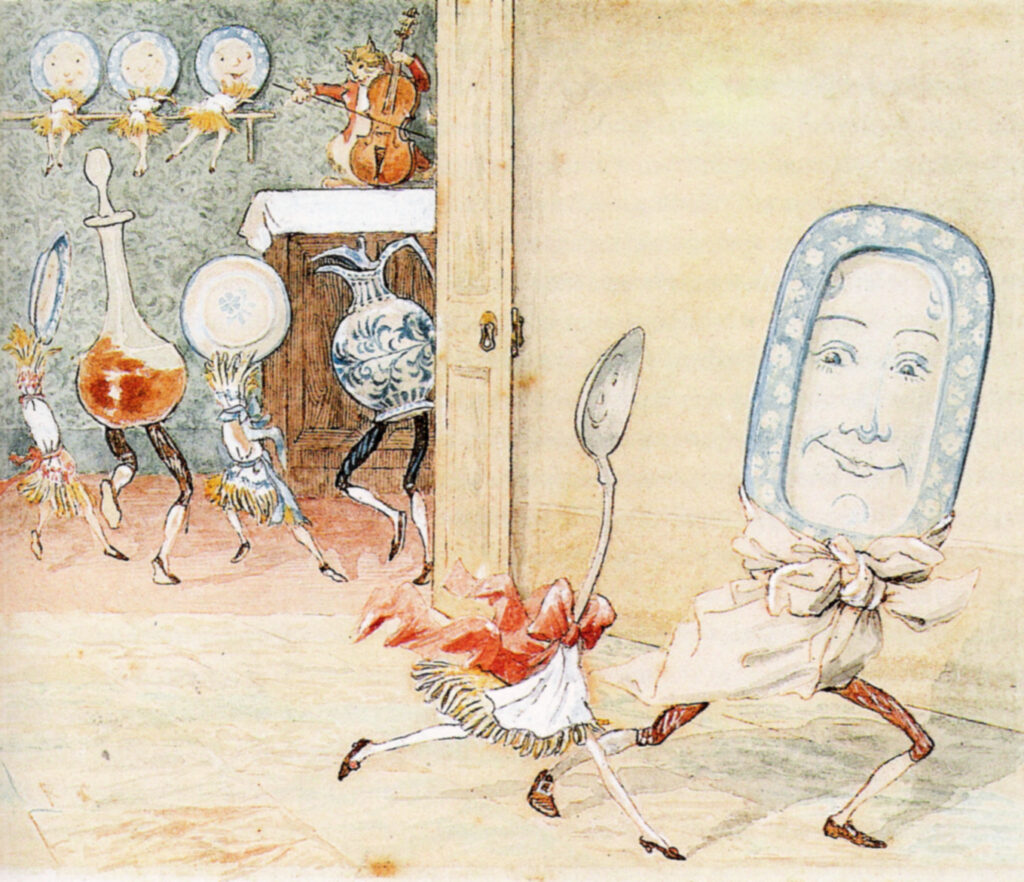
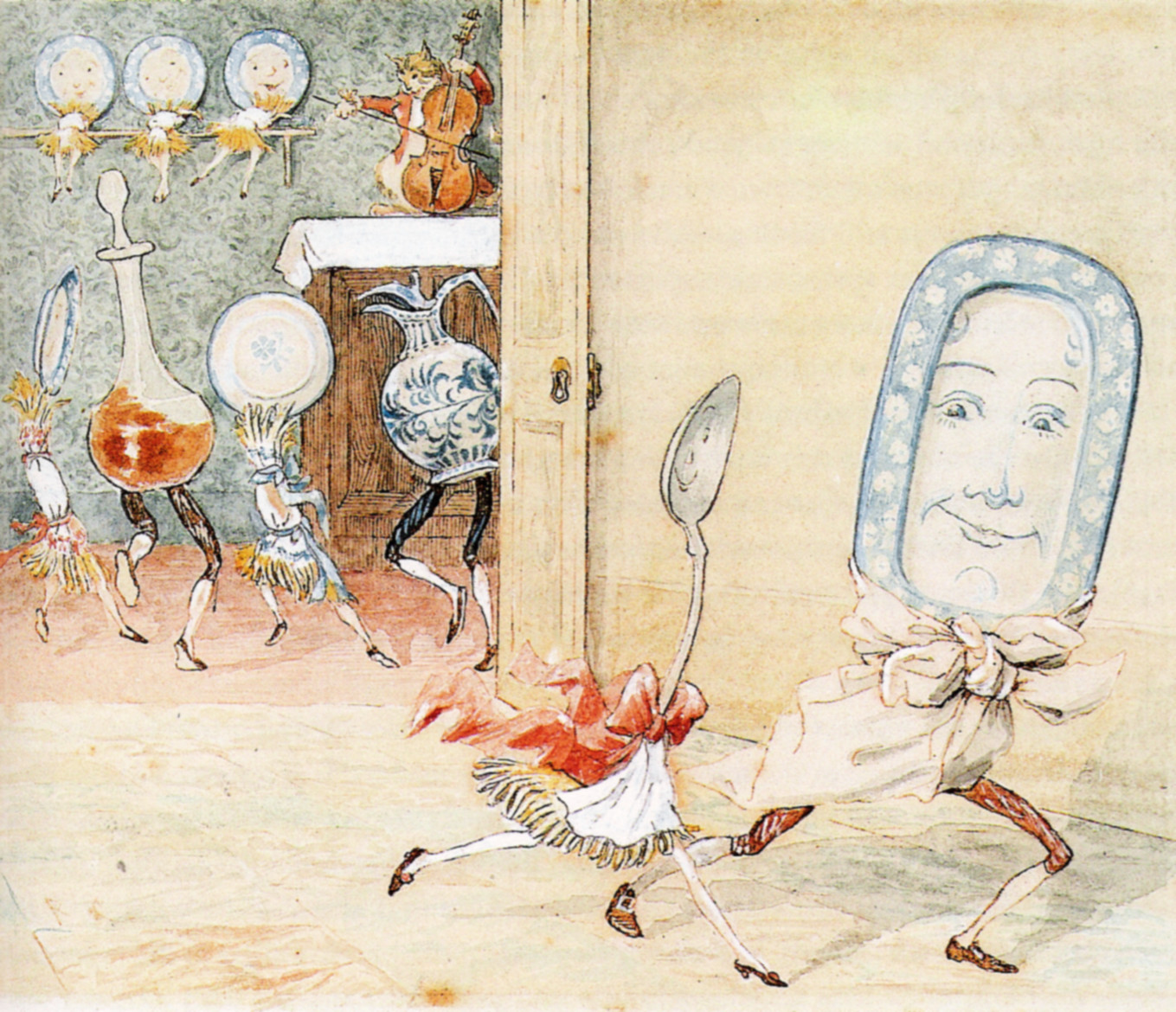
A dish runs away with a spoon.
Nothing behaves normally.
That is the useful place to begin.
First: It Is a Nonsense Rhyme
The earliest recorded version resembling the modern rhyme appeared in the eighteenth century, and scholars have spent a great deal of time proposing hidden origins for it.
ThoseThose — ProjectionThose names projection: enemies, outsiders, competitors, threats, and disowned qualities placed beyond the identity boundary.Read full entry → explanations should not be treated as established fact.
The safest historical reading is also the simplest: Hey Diddle Diddle is a traditional English nonsense rhyme whose power comes from impossible images, rhythm, repetition, and surprise.
GEOMYTHA does not need a secret origin story.
It asks a different question:
What does the rhyme let us notice when ordinary relations are playfully turned upside down?
The Cat and the Fiddle
The cat does not need to be assigned a universal lunar meaning.
The image is already strange enough.
An animal takes up a human instrument.
A creature becomes a performer.
Function shifts. Category shifts. The world becomes theatrical.
That matters because the rhyme never pauses to explain the transformation. It simply presents the impossible action and keeps moving.
The listener accepts the new relation before there is time to demand a reason.
That is the first GEOMYTHA mechanism here: the world can become strange without immediately feeling threatening when strangeness arrives through play.
The Cow Over the Moon
Then comes the image everyone remembers.
The cow jumps over the moon.
The scene violates scale, distance, gravity, and ordinary animal behavior in a single line.
That is why the image works so well.
A heavy animal crosses above the object that normally hangs far beyond it.
The title of this essay—The Moon Beneath the Cow—names that inversion.
Not because the rhyme secretly teaches an Egyptian cosmology.
Because the normal hierarchy of the picture has been reversed.
What should be below is suddenly above.
What should be unreachable becomes part of a jump.
The impossible becomes cheerful.
The Egyptian Cow Is a Comparison, Not an Origin
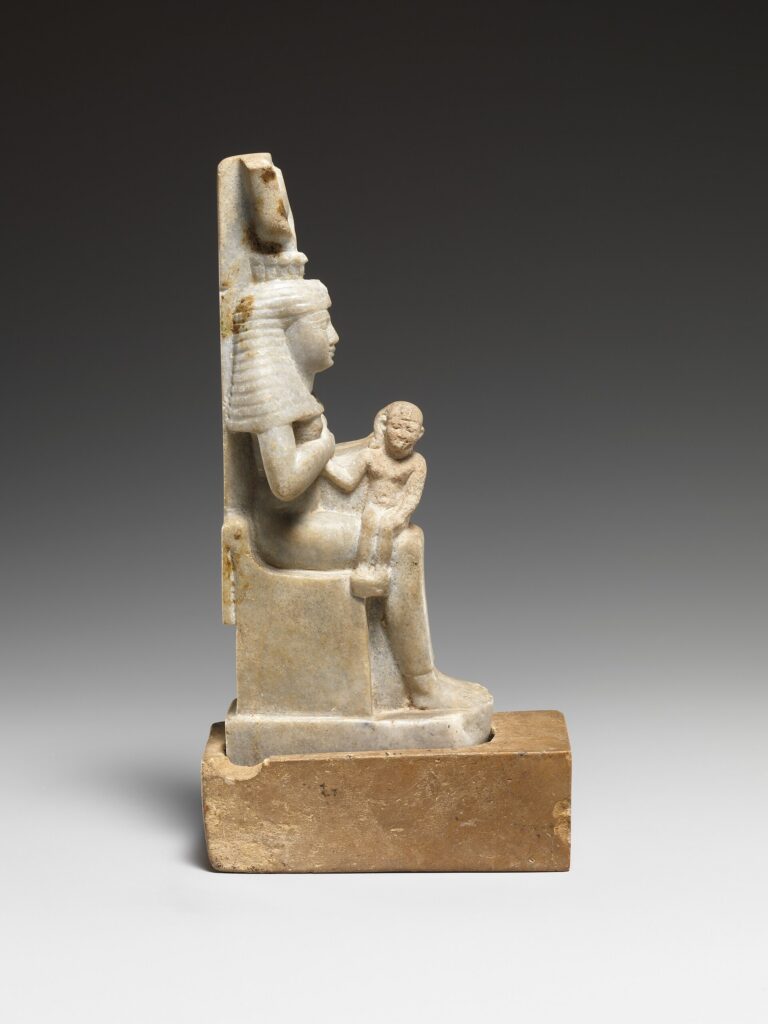
Ancient EgyptEgyptAncient Egyptian cultural and mythic field referenced by the essay.Read full entry → does give us a real cow-and-sky image worth comparing.
Hathor was strongly associated with the cow. Museum objects show her in bovine form or with cow horns and a solar disk. A New Kingdom plaque from Deir el-Bahri, for example, depicts a cow with a sun disk between its horns and identifies that form as a common representation of Hathor.
That documented image belongs to Egyptian religion.
There is no evidence that Hey Diddle Diddle was composed as a coded Hathor story.
The comparison is useful only because it reminds us that cows have carried cosmic and divine associations in some cultures. GEOMYTHA can place those images beside one another without pretending one caused the other.
The Dog Laughs
The dog is the witness.
Not because every dog in mythology always means loyalty or civilization.
Because this dog has one clear function in the rhyme:
it sees the impossible and laughs.
That is a much stronger observation than assigning the animal a fixed symbolic dictionary entry.
The world has inverted.
The witness responds with delight.
That is why nonsense matters.
It lets the mind rehearse broken expectations without panic.
The impossible becomes sport.
The Dish and the Spoon
The final image completes the shift.
Household objects become characters.
The dish does not contain.
The spoon does not serve.
They run away.
The older version of this article tried to turn the pair into a fixed sexual polarity—receptive dish, penetrative spoon.
That was unnecessary.
The more defensible mechanism is simpler:
objects defined by relation are suddenly treated as autonomous little selves.
The utensil becomes a character.
The vessel becomes a character.
Relation becomes narrative.
That is where the GEOMYTHA grammar becomes useful.
From Relation to “This”
GEOMYTHA’s root grammarFourfold Root / Eightfold ExtensionThe fourfold root explains the birth of identity; the eightfold extension explains what identity becomes and how it returns.Read full entry → is:
Is → Am → I → This.
Presence enters relation.
Relation becomes claimI — ClaimI names claim: the interruption by which reflected presence is taken as mine.Read full entry →.
Claim hardens into an identifiable thing.
The rhyme gives that movement a comic form.
Animals become performers.
A cow becomes a cosmic jumper.
A dog becomes an audience.
Dishes and spoons become runaway characters.
The world fills with little “thises.”
Again, this does not mean the anonymous makers of the rhyme intended GEOMYTHA’s grammar.
It means nonsense gives us an unusually clean picture of categories becoming mobile.
Why Children’s Nonsense Works
Children do not need a theory of absurdism to enjoy the rhyme.
The pleasure is immediate.
Rhythm repeats.
Sounds rhyme.
Images escalate.
Each line violates expectation and hands the listener another picture before the last one has completely settled.
That does not make the rhyme a hidden indoctrination device.
It makes it good nonsense.
The older draft claimed nursery rhymes “bypass analysis” and smuggle symbolic structures into children’s consciousness. That is too strong without evidence.
The better observation is visible on the page:
the rhyme makes impossible transformation memorable by making it musical and funny.
The Waxing Crescent Problem
Waxing Crescent is Stir.
Something that was quiet begins to move.
Difference appears.
The field becomes populated.
That is why this rhyme fits the phase so well as a GEOMYTHA reading.
Everything starts moving.
The cat plays.
The cow jumps.
The dog laughs.
The dish and spoon flee.
Stir is delightful because movement creates possibility.
Its shadow is that movement can outrun recognition.
The next image arrives before we have asked what the last one changed.
The Stress Test: Maybe It Really Is Just Nonsense
This article fails if GEOMYTHA requires the rhyme to secretly encode its system.
It does not.
The rhyme can be ordinary nonsense.
Its makers may have intended nothing beyond amusement, sound, absurdity, and memorable imagery.
The GEOMYTHA reading comes afterward.
That boundary matters because symbolic interpretation becomes sloppy when resemblance is turned into proof of origin or intent.
The value of the rhyme is not that it proves GEOMYTHA.
The value is that it gives us a familiar miniature world in which relation, scale, agency, and category all become unstable at once.
The Moon Beneath the Cow
The moon beneath the cow is funny because it should not be there.
That is enough.
The image does not need a secret key.
Its power is the inversion itself.
What was distant becomes jumpable.
What was ordinary becomes alive.
What was relation becomes character.
And because the whole thing is sung with a smile, the strange world feels natural almost immediately.
That is the practical returnReturn — RemembranceReturn names remembrance and release: the loosening of possession so reflection can become transparent to source again.Read full entry →.
When something strange starts to feel normal, do not assume that makes it wrong.
Just notice the inversion.
What changed places?
What stopped serving its old function?
What became a character that used to be a relation?
Stir. Notice. Enjoy the play. Then look again before the impossible becomes invisible.
Sources
- Iona and Peter Opie, The Oxford Dictionary of Nursery Rhymes — standard scholarly reference for the rhyme’s history and the caution against elaborate unsupported origin theories.
- Library of Congress, Denslow’s Mother Goose (1901) — historical printed nursery-rhyme collection.
- Randolph Caldecott, “And the Dish Ran Away with the Spoon,” 1882 — public-domain illustration used as the hero image.
- The Metropolitan Museum of Art, New Kingdom cow plaque from Deir el-Bahri — documented Hathor cow imagery with a sun disk between the horns.