Conceptual Mechanism: Threshold Capture

The interception of consciousness at a moment of transition, return, awakening, or release, redirecting it into a new identity, system, or controlled passage.

  • The Kingdom Searching for Itself

    The Kingdom Searching for Itself

    Last Quarter · Gemini — Return Through Noticing — Forgotten Inheritance: How the Search Conceals What Is Being Sought

    A sailor crosses an ocean searching for a lost city.

    A knight rides across kingdoms searching for a grail.

    A pilgrim travels toward a holy land.

    A mystic seeks enlightenment.

    A treasure hunter searches for gold.

    The stories differ.

    The movement remains remarkably similar.

    Something valuable has been lost.

    Something important lies elsewhere.

    Something essential waits at the end of the journey.

    The assumption is always the same.

    The kingdom is somewhere else.
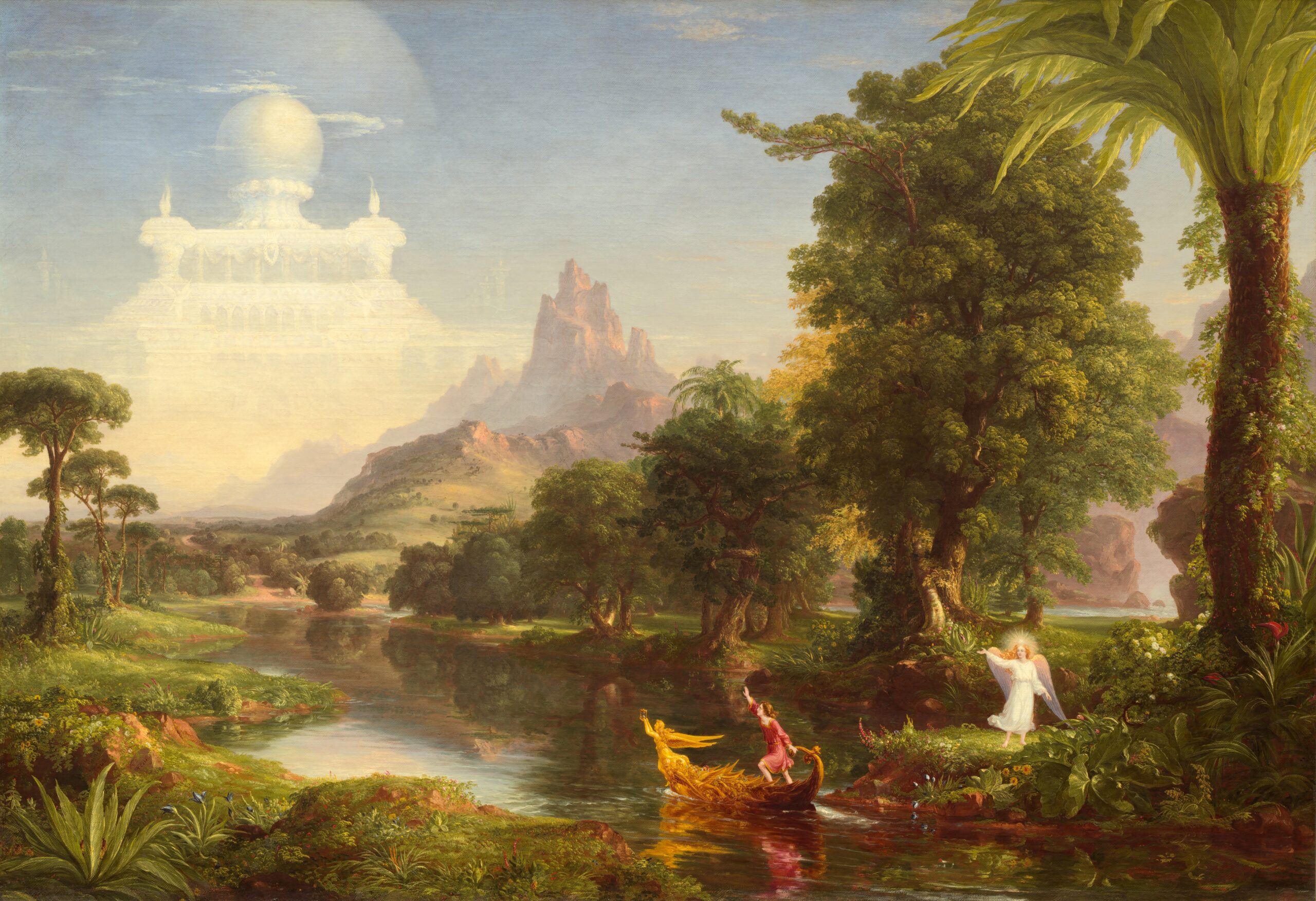
    Thomas Cole's The Voyage of Life: Youth, showing a young traveler in a boat moving toward a luminous palace in the distance.
    Thomas Cole, The Voyage of Life: Youth, 1842. National Gallery of Art. Public domain.

    Human beings have given this kingdom many names.

    Eden.

    Atlantis.

    Zion.

    El Dorado.

    Camelot.

    Shambhala.

    The names change.

    The search remains.

    The Shape of Homesickness

    Every age inherits its own version of the story.

    Some search for paradise.

    Some search for wisdom.

    Some search for truth.

    Some search for freedom.

    Some search for themselves.

    The destination changes.

    The homesickness does not.

    The seeker feels that something essential has been misplaced. The world in front of him seems incomplete, fallen, exiled, corrupted, ordinary, insufficient. Somewhere else there must be a place where the split closes.

    That feeling is not automatically false. A real loss may have happened. A home may be gone. A people may be displaced. A tradition may be broken. A person may be alienated from body, family, land, work, or meaning.

    GEOMYTHA’s question begins one step later:

    What happens when the search for restoration becomes a permanent structure of identity?

    Leo and the Crown

    The older draft of this article was written under a Leo frame, and the image still matters even though the later June 17 version moved into Gemini and Return.

    A crown makes the kingdom visible.

    It says: here is the center. Here is the one who represents the whole. Here is the place where scattered power becomes image.

    That is the useful side of the crown.

    The danger begins when the image of the kingdom becomes more important than the living relations that make a kingdom possible.

    Then the crown is no longer a sign.

    It becomes the object everyone must serve.

    The Kingdom of Heaven

    Christian language intensifies the problem because “kingdom” can name both political power and a radically different order of relation.

    The New Testament does not reduce the Kingdom of God to a hidden geographical country waiting to be discovered by explorers. The language points toward divine rule, nearness, transformation, judgment, reversal, and a way of life that can already begin within the present world.

    GEOMYTHA does not claim that Christianity secretly teaches its system. It notices the same pressure: the kingdom people expect somewhere else repeatedly appears as a demand on the way they see, act, receive, forgive, judge, and belong now.

    The seeker wants coordinates.

    The teaching keeps returning him to relation.

    Zion and the Z-Question

    Zion is first a real historical and biblical place-name, and later a much larger religious symbol. GEOMYTHA must keep that history intact.

    The symbolic question comes second.

    What happens when a living hope becomes a destination the claimant must possess?

    The holy city can become a mirror. The person imagines that completion waits on the other side of arrival: if I reach the place, inherit the land, enter the city, join the right community, recover the lost order, then I will finally be whole.

    The danger is not loving a place.

    The danger is asking the place to finish the self.

    Atlantis

    Plato’s Atlantis is a literary-philosophical story, not archaeological proof of a vanished technological civilization. That distinction matters.

    Yet Atlantis became one of the West’s great lost-world images precisely because it carries the fantasy of a superior order that disappeared.

    The modern seeker does not only look for ruins.

    He looks for confirmation that the better world was once real—and therefore might be recoverable.

    The lost city becomes a memory the present never personally possessed.

    That is a powerful form of homesickness.

    El Dorado

    El Dorado shows what happens when the lost kingdom becomes treasure.

    The search begins with a story of elsewhere and becomes extraction. Gold gives the dream weight. The kingdom can now be measured, seized, carried, priced.

    This is the shadow of the quest: the seeker says he is looking for wonder, but the act of looking converts wonder into possession.

    What was sacred because it could not be owned becomes valuable because it might be.

    Camelot

    Camelot gives the kingdom a moral face.

    The Round Table promises order, fellowship, loyalty, courage, and a center around which different knights can gather.

    But Arthurian literature repeatedly refuses to let the perfect court remain perfect. Desire, rivalry, secrecy, violence, divided loyalty, and the Grail quest expose fractures already inside the ideal.

    The kingdom does not collapse because the ideal was meaningless.

    It collapses because an image of wholeness cannot substitute for wholeness.

    Oz

    Oz turns the mechanism into children’s fantasy.

    The road is visible. The destination shines. The city is green. The ruler appears powerful. Everyone on the road believes that something missing can be supplied at the end.

    Then the journey keeps undoing the premise.

    The Scarecrow already thinks. The Tin Woodman already loves. The Lion already acts courageously. Dorothy’s route home turns out not to depend on the great public image at the center.

    The journey is still necessary.

    But it reveals what the traveler was carrying.

    The Grail Castle

    The Grail gives the search a sharper test.

    The object cannot simply be captured like ordinary treasure. The quest exposes the knight. The closer the seeker moves toward the sacred object, the less ordinary measures of status, strength, reputation, or possession can guarantee success.

    The Grail is valuable precisely because the claimant cannot simply convert it into property.

    The true quest keeps turning back on the quester.

    Manifest Destiny

    This is where the kingdom-search becomes politically dangerous.

    A people can imagine that fulfillment waits somewhere ahead and then turn that imagined destination into entitlement to land, expansion, conversion, conquest, or removal.

    Manifest Destiny is a documented nineteenth-century American ideology tied to continental expansion. GEOMYTHA uses it as a boundary case: the personal sentence “completion is over there” can scale into a national sentence with consequences for actual people.

    The dream of the kingdom can become permission to take someone else’s world.

    The Kingdom Searching for Itself

    Now the title turns around.

    What if the seeker is not an isolated self moving toward a separate kingdom?

    What if the search itself is the kingdom trying to remember what has been divided?

    This is not a historical claim about Eden, Atlantis, Zion, Camelot, Shambhala, Oz, or the Grail. It is the GEOMYTHA synthesis.

    The recurring structure is familiar:

    • wholeness is imagined as lost;
    • the loss is projected elsewhere;
    • the seeker forms around the absence;
    • the journey gathers symbols, trials, enemies, helpers, and maps;
    • the object of the search slowly reveals the structure of the seeker.

    At the deepest point, the kingdom being searched for is what has been searching.

    The journey does not prove that there was never anything outside us worth seeking.

    It reveals that no external object can permanently solve the claimant that turns every object into the next condition for completion.

    The Stress Test: Some Things Really Are Elsewhere

    This idea becomes dangerous if it is used to deny material reality.

    A refugee may genuinely need a safer country. A sick person may need treatment that is not inside them. A family may need housing. A prisoner may need release. A community may need political change. A student may need knowledge they do not yet possess.

    “The kingdom is within” cannot become an excuse for ignoring actual deprivation, danger, injustice, or practical goals.

    The distinction is simpler.

    Seek what truly needs to be sought.

    Do not ask the object to finish the claimant.

    The Hidden Kingdom

    The last movement is Return.

    Not return to an untouched past.

    Not possession of the lost city.

    Not proof that the grail, homeland, enlightenment, treasure, perfect community, or final answer was secretly sitting inside the ego all along.

    Return means the search stops being used to manufacture the seeker.

    The sailor can cross the ocean without needing the ocean to confirm who he is.

    The pilgrim can travel without turning arrival into superiority.

    The knight can seek without demanding possession.

    The mystic can practice without becoming “the enlightened one.”

    The destination can be real without becoming the final sentence of identity.

    The seeker does not find the kingdom.

    The seeker is released by it.

    Remember what was lost.

    Notice what the search keeps asking the destination to provide.

    Then return before the road becomes another way to say:

    I will finally be whole when I get there.

    Sources

  • The Kingdom That Builds Itself

    The Kingdom That Builds Itself

    Paid essay — public preview. This page introduces the original essay. The complete argument, examples, and conclusion are available to paid Geomytha subscribers on Substack.

    Every empire begins with a sentence.

    Not a constitution.

    Not a flag.

    Not an army.

    Not a border.

    A sentence.

    A claim.

    A story about who we are.

    Long before kingdoms appear in stone, they appear in imagination. Long before walls rise from the earth, boundaries rise within the mind. Long before civilizations shape landscapes, identities begin shaping perception.

    The kingdom begins long before the kingdom appears.

    This series began with reflection.

    A reflection became an identity.

    The identity gathered possessions.

    The possessions created outsiders.

    The outsiders helped define a world.

    Now a larger pattern comes into view.

    The same movement that creates a self can eventually create a civilization.

    The scale changes.

    The grammar remains.

    Everything begins with a…

    Read the complete essay on Substack →

    This WordPress page preserves the essay’s place in the Geomytha archive, its original title and subtitle, and its publication date. The full subscriber edition remains protected on Substack.

  • Ophiuchus Is Not the Extra Sign

    Ophiuchus Is Not the Extra Sign

    Paid essay — public preview. This page introduces the original essay. The complete argument, examples, and conclusion are available to paid Geomytha subscribers on Substack.

    Most people who talk about Ophiuchus talk about it as an addition.

    An extra sign. A disruption. A strange thirteenth figure awkwardly inserted into a system that already seemed complete. The serpent-bearer becomes a novelty, a correction, a curiosity, another identity people can claim or reject.

    That is the shallow reading.

    Geomytha reads Ophiuchus differently.

    Ophiuchus is not extra.

    Ophiuchus is the hinge.

    Without it, the zodiac moves too quickly from Scorpio to Sagittarius, from the wound to the quest, from venom to arrow, from pain to philosophy. The sequence looks smoother without Ophiuchus, but it becomes less true.

    Because most people do not suffer and then become wise.

    They suffer and then become certain.

    That is the danger.

    Scorpio…

    Read the complete essay on Substack →

    This WordPress page preserves the essay’s place in the Geomytha archive, its original title and subtitle, and its publication date. The full subscriber edition remains protected on Substack.

  • The Three Kings Before the Claim

    The Three Kings Before the Claim

    Full Moon · Gemini — Claim Through Noticing — Coronation Anxiety: How Recognition Becomes a Political Claim

    The title of this essay is already a warning.

    Matthew does not say there were three kings.

    It says magi from the east came to Jerusalem.

    It does not give their number.

    It does not name them.

    It does not call them kings.

    The familiar Three Kings belong to later Christian interpretation and art.

    That correction does not weaken the article.

    It gives us the mechanism.

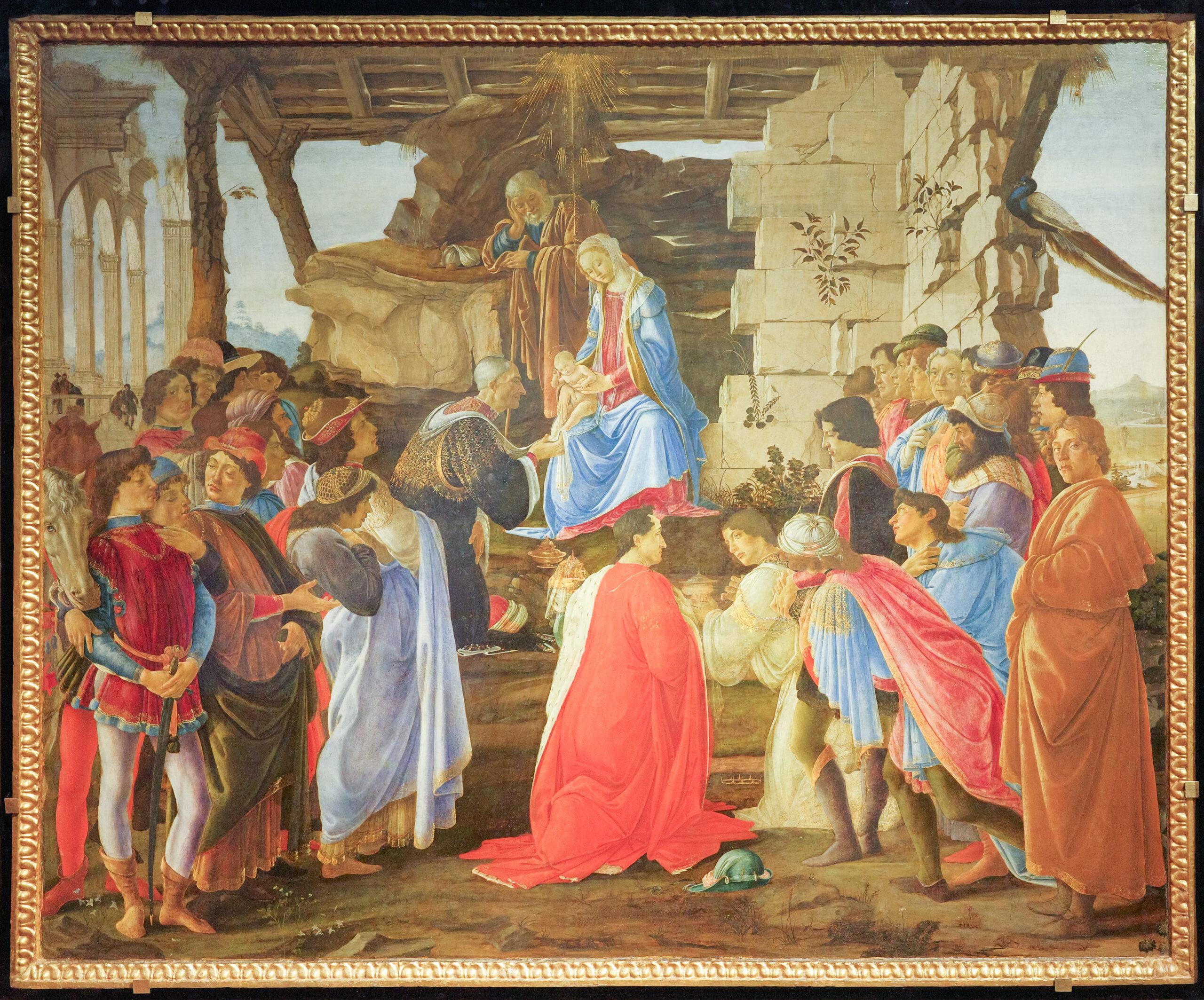
    Sandro Botticelli's Adoration of the Magi, depicting the later Christian tradition of richly dressed Magi honoring the Christ child.
    Sandro Botticelli, Adoration of the Magi, c. 1475. Public domain. The painting shows the later Christian visual tradition in which the Magi have become richly dressed royal figures.

    The Claim Is Already in the Question

    The older version of this essay imagined the Magi arriving before identity or kingship had hardened around the child.

    Matthew’s text is sharper than that.

    The Magi enter Jerusalem asking:

    where is the newborn king of the Jews?

    The claim is already public.

    The child has been named through a political category.

    And another king hears it.

    That is where the scene becomes dangerous.

    Recognition does not remain private.

    It enters a field of existing power.

    Herod Does Not Fear “Pure Awareness”

    The old draft said empire becomes afraid when source becomes visible.

    That was GEOMYTHA language presented too close to the historical layer.

    Matthew’s narrative gives us a more concrete mechanism.

    Herod is troubled because strangers arrive asking about another king.

    The title has political force.

    Existing kingship now has a rival claim in the story.

    Herod gathers priests and scribes, asks where the Messiah is to be born, questions the Magi privately, and later moves against the child.

    Whatever theological meaning Matthew builds around the episode, the narrative pressure is clear:

    a name changes the field.

    Gemini: Recognition Becomes Language

    Gemini is Notice.

    Its gift is distinction.

    Something is seen.

    Then something is said.

    The star is noticed.

    The child is sought.

    The title “king” is spoken.

    That sequence matters because language does more than describe.

    Sometimes it reorganizes relation.

    Call someone a rival and behavior changes.

    Call someone a criminal and institutions move.

    Call someone a savior and expectations gather.

    Call someone king and another king has to decide what that means.

    Full Moon: The Claim Becomes Visible

    Full Moon is Claim.

    The form has become visible enough to point at.

    In this scene, the point is not that the Magi create the child.

    They make a claim about what the child means.

    That is much closer to GEOMYTHA’s real mechanism.

    Experience appears.

    Interpretation gathers.

    The interpretation becomes public.

    Then institutions, rivals, believers, enemies, and witnesses begin responding to the interpreted form.

    This is how a living event can acquire a social identity larger than itself.

    Where the Three Kings Came From

    The later tradition is itself a case study in how interpretation accumulates.

    Matthew lists three gifts:

    gold;

    frankincense;

    myrrh.

    That helped generate the familiar count of three Magi.

    Matthew’s own scriptural echoes also helped later Christians interpret the Magi as kings. The USCCB notes point to Psalm 72 and Isaiah 60, passages in which kings bring gifts and nations come toward divine light.

    Over time, art and devotion stabilize the image.

    The unspecified Magi become three royal visitors.

    The visitors receive names.

    The scene becomes visually familiar enough that many readers remember the tradition more readily than Matthew’s wording.

    That is not necessarily corruption.

    Traditions interpret.

    Art makes interpretation visible.

    But the difference between text and later tradition should remain visible too.

    The Three Gifts Do Not Prove a Hidden Triad

    The older article turned the three gifts and later Three Kings into a GEOMYTHA triad:

    Is × Is × Is.

    That was imaginative.

    It was not supported.

    The number three appears everywhere because three is common in storytelling, rhetoric, religion, ritual, memory, and classification.

    A list of Christian threes does not prove one hidden threefold source-function.

    GEOMYTHA can still use triads symbolically.

    It just cannot turn recurrence into historical proof.

    Recognition Can Become Coronation

    The title survives in a better form.

    The Three Kings are not “before the claim” in Matthew.

    They are the later cultural image of a process that begins with recognition.

    Notice becomes naming.

    Naming becomes claim.

    Claim invites allegiance.

    Allegiance creates rivals.

    Then the image can become crown.

    This mechanism is bigger than religion.

    A musician becomes “the voice of a generation.”

    An activist becomes “the leader.”

    A child becomes “the gifted one.”

    A wounded person becomes “the survivor.”

    The label can begin as recognition.

    Then everyone—including the person named—starts living in relation to the claim.

    The Stress Test: Recognition Is Not the Enemy

    Naming is necessary.

    Titles can clarify responsibility.

    Communities need language for leadership, danger, trust, kinship, and role.

    Matthew’s story itself depends on recognition.

    The Magi notice.

    They travel.

    They ask.

    They give.

    They change course after the dream warning.

    The problem is not that meaning gathers around a person.

    The problem is when the gathered meaning becomes too rigid to revise, too valuable to question, or too threatening for existing power to tolerate.

    A Better Reading of the Magi

    The Magi do not need to be secretly three GEOMYTHA functions.

    The scene is already enough.

    Outsiders notice a sign.

    They name what they believe it means.

    The name enters the center of political power.

    The center reacts.

    The witnesses refuse to return to the king who tried to use them.

    That is a powerful sequence without adding hidden numerology.

    GEOMYTHA’s return is simple:

    notice what you are naming.

    Notice what power the name creates.

    Notice who becomes threatened once the claim is public.

    And notice whether the person or event is still allowed to remain larger than the title placed upon it.

    Witness clearly. Name carefully. Do not let recognition become a crown too quickly.

    Sources

  • The Soft Parade

    The Soft Parade

    Waxing Gibbous · Gemini — Build in Noticing — Soft Vigilance: How Comfort, Attraction, and Design Can Shape a Choice Before It Feels Like One

    The old form of control is easy to recognize.

    A wall.

    A guard.

    A threat.

    A command.

    Do this or suffer the consequence.

    The softer form is harder to see because it often feels like choice.

    Nothing forces the hand.

    The field is simply arranged.

    One option is easier.

    One image is brighter.

    One button is already selected.

    One life looks desirable because everyone around you appears to want it.

    That does not mean the choice is fake.

    It means choices happen inside environments.

    And environments have structure.

    Demonstrators on the Sunset Strip during the November 1966 curfew protest, photographed for the Los Angeles Free Press.
    Sunset Strip curfew protest, November 1966. Los Angeles Free Press. Public domain in the United States. The Strip gives the article its historical doorway: youth, spectacle, nightlife, resistance, and competing forms of social order in the world The Doors inhabited.

    The Doors Give Us the Phrase

    The Doors released The Soft Parade in 1969.

    The title track is not a tidy pop song. It is a long, shifting suite that moves through spoken sermon, sanctuary-seeking, changing rhythms, brass, rock, and psychedelic movement.

    The band’s own official history describes the album as one of the most polarizing records of its career because of the strings and brass that changed the familiar Doors sound.

    Later accounts connect Morrison’s phrase “the soft parade” with the strange, varied human procession of Sunset Boulevard.

    That context is enough for GEOMYTHA.

    A parade is organized movement made visible.

    It has rhythm.

    It has spectators.

    It has sequence.

    But a soft parade does not necessarily look commanded.

    People can appear to drift while still moving through the same field.

    That is the symbolic door.

    Soft Power Is a Real Term—and a Narrow One

    The older version of this essay used “soft power” too broadly.

    Joseph Nye coined the term in international relations for the ability to affect others through attraction rather than coercion or payment.

    Culture can matter.

    Values can matter.

    Prestige can matter.

    A country can gain influence because other people find something about it desirable.

    That is not the same thing as an app default, an advertisement, or an algorithm.

    The distinction matters because “soft power” becomes useless if it means every influence that does not involve a weapon.

    So GEOMYTHA keeps Nye’s term where it belongs.

    Then it asks a broader symbolic question:

    how does attraction shape a person differently from force?

    The Interface Is Not Neutral

    For digital life, Lawrence Lessig gives us a better frame.

    His argument is that code and architecture structure what is possible in cyberspace.

    The user does not arrive in an empty field.

    The field has already been built.

    There are buttons.

    Permissions.

    Defaults.

    Rankings.

    Visible options and invisible options.

    Things the system makes easy and things the system makes hard.

    The old draft called this “software is soft law.”

    That phrase can stay as GEOMYTHA shorthand, but the documented mechanism is architecture.

    The system shapes the space in which action happens.

    Defaults Show How Gentle Design Can Move Behavior

    Choice-architecture research makes the point concrete.

    When one option is preselected as the default, people are more likely to remain with it.

    A meta-analysis of 58 studies found a substantial average default effect, while also finding meaningful variation across settings.

    That is important because it avoids two bad conclusions.

    First bad conclusion:

    people have no agency.

    False.

    Second bad conclusion:

    design does not matter because people are free to click something else.

    Also false.

    Freedom and influence can exist at the same time.

    That is the exact territory of the soft parade.

    A Window Is Not a Door

    Now we can return to GEOMYTHA.

    A door and a window both open a wall.

    But they ask different things from the body.

    A door asks for passage.

    A window allows sight without crossing.

    This is symbolic language, not architectural history.

    But it is useful.

    A screen is an astonishing window.

    You can see a war without entering the country.

    Watch a wedding without knowing the couple.

    Visit a museum without traveling.

    Learn a skill without entering a classroom.

    None of this is inherently false.

    It is one of the great powers of mediation.

    The danger begins when seeing starts to substitute for crossing.

    Watching exercise replaces moving.

    Reading about intimacy replaces risking intimacy.

    Following politics replaces participating in community.

    Collecting insight replaces changing behavior.

    The window shows.

    The door costs something.

    Comfort Is Not Captivity

    This article also fails if it turns comfort into suspicion.

    Convenience can be humane.

    Defaults can protect people from needless friction.

    Accessible interfaces can expand autonomy.

    Recommendation systems can help people find music, books, information, and communities they genuinely value.

    Softness can be mercy.

    That is why the distinction cannot be:

    hard equals honest;

    soft equals manipulation.

    The more useful distinction is whether softness increases or decreases a person’s capacity to notice the structure around the choice.

    Some defaults are transparent and still effective.

    Some reduce cognitive burden.

    Some support welfare.

    Some hide the decision.

    Some make opting out deliberately painful.

    The ethics are in the design and the relation.

    The Parade Becomes Identity

    GEOMYTHA’s deeper concern is what happens when the field does more than shape a choice.

    It begins shaping the chooser.

    A recommendation becomes taste.

    Taste becomes affiliation.

    Affiliation becomes profile.

    Profile becomes identity.

    Now the system does not merely know what the person clicked.

    The person begins using the click as evidence of who they are.

    This is where GEOMYTHA’s root grammar enters:

    Is → Am → I → This.

    The problem is not preference.

    The problem is the moment preference becomes throne.

    I watched this.

    I like this.

    I belong here.

    I am this.

    The Soft Parade Is Not a Conspiracy

    This is the most important stress test.

    A coordinated hidden controller is not required.

    Designers optimize.

    Companies compete.

    Creators chase attention.

    Users imitate one another.

    Markets reward some patterns and punish others.

    Institutions copy what appears to work.

    The field can become directional without one person secretly directing the whole field.

    That is a better model of modern influence than imagining a single machine with one operator.

    Soft Vigilance

    The answer is not hardness.

    It is not paranoia.

    It is not rejecting technology, pleasure, convenience, advertising, music, recommendations, or beautiful things.

    The answer is softer than that.

    Notice the field.

    When something feels effortless, ask what effort has been removed.

    When something is already selected, notice who selected it.

    When something feels attractive, notice whether attraction is replacing judgment.

    When a window keeps opening, ask whether there is a door you have stopped crossing.

    When a preference starts becoming identity, loosen the sentence before it hardens.

    The soft parade does not have to stop.

    You only have to notice that you are in it.

    Build carefully. Notice the route. Enjoy the music without assuming the rhythm chose itself.

    Sources

  • The Spice Must Flow

    The Spice Must Flow

    Waxing Gibbous · Gemini — Build in Noticing — Captive Fascination: How Dune Turns Scarcity Into Power—and Why Attention Now Works the Same Way

    “The spice must flow.”

    The line is so closely associated with Dune that it feels like it must have come from Frank Herbert’s novel.

    It did not.

    The exact phrase comes from David Lynch’s 1984 film adaptation.

    But it captures something Herbert’s world makes unmistakable:

    the whole system depends on a scarce substance that cannot simply stop moving.

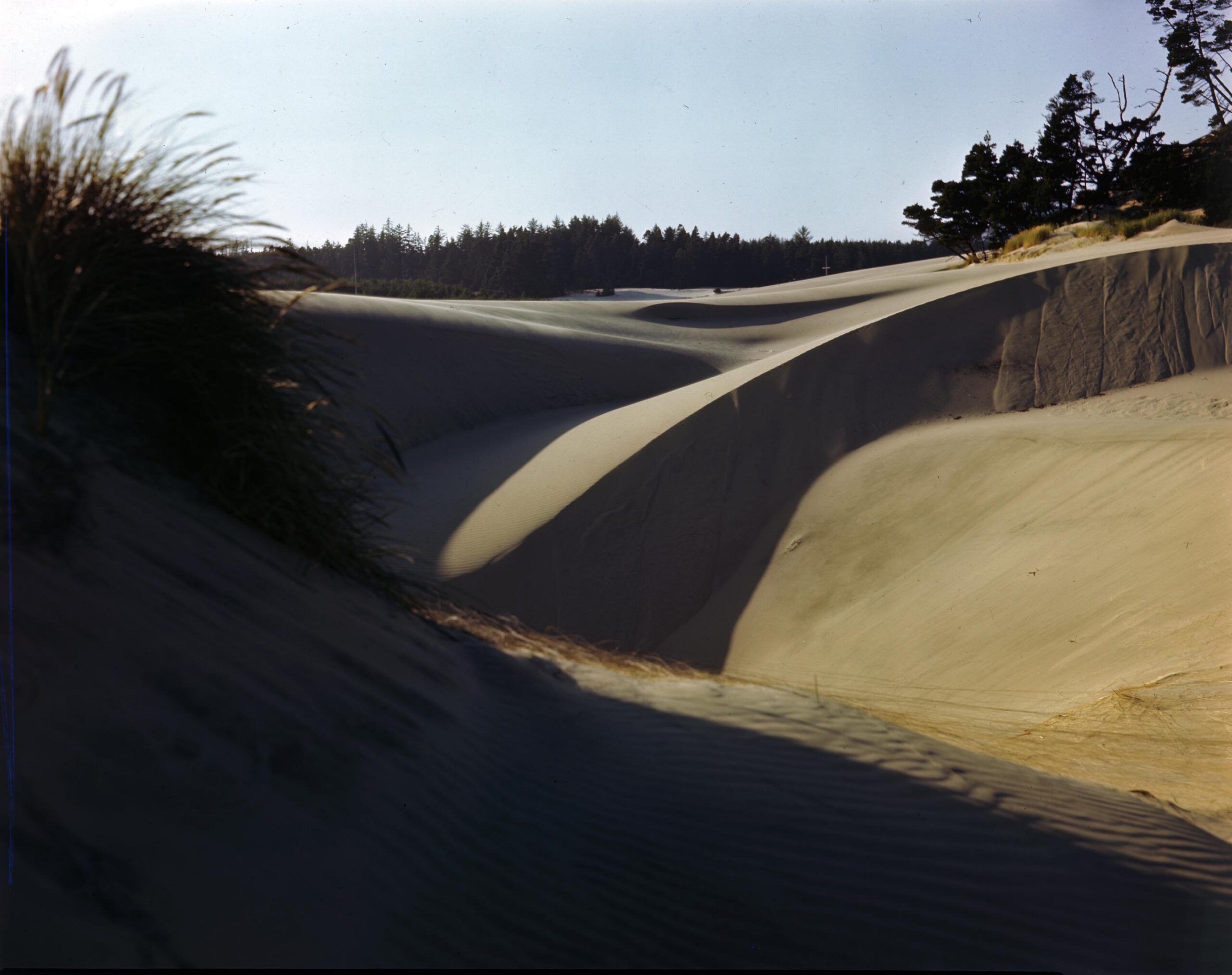
    Historic photograph of coastal sand dunes near Florence, Oregon, the landscape that helped inspire Frank Herbert's Dune.
    Sand dunes near Florence, Oregon. Oregon Historical Society / Wikimedia Commons, no known copyright restrictions. Frank Herbert’s encounter with the Oregon dunes helped generate the ecological world that became Dune.

    What Spice Actually Does in Dune

    Melange is not just a luxury.

    It extends life.

    It alters perception.

    In certain people it expands prescience.

    Guild Navigators depend on spice-enabled prescience to plot safe routes through space.

    It is also addictive.

    That means spice is doing several jobs at once.

    It is medicine.

    Drug.

    Navigation infrastructure.

    Economic choke point.

    Political leverage.

    The important thing is not that everyone in the Imperium literally consumes spice.

    The important thing is that too many essential systems depend on access to it.

    Herbert’s Real Warning Was About Systems

    This is where the old version of this essay overreached.

    It claimed Herbert had “encoded a civilization whose deepest commodity was intensified consciousness itself.”

    That is GEOMYTHA language, not documented Herbert intent.

    Herbert’s own explanation is more concrete and more useful.

    In his 1980 essay “Dune Genesis,” Herbert said that the scarce water of Dune was an exact analogue of oil scarcity and that CHOAM was OPEC. He also described a larger concern with ecological, political, and economic systems that gather power and then keep grinding forward.

    His Oregon-dunes research mattered for the same reason.

    He had gone to Florence, Oregon, to investigate a real effort to control moving sand dunes. The project pushed him toward a story about ecology, intervention, scarcity, and the unintended consequences of systems trying to master environments.

    So the documented spine of Dune is already strong enough:

    when a civilization organizes itself around a controlling minimum, whoever governs that minimum gains extraordinary power.

    Spice Is Not Attention

    Now GEOMYTHA can make its own comparison.

    Spice is not literally attention.

    Frank Herbert did not say it was.

    The modern attention economy is a different system.

    But it has one striking structural resemblance:

    the system becomes more valuable the longer a scarce input can be captured, directed, measured, and sold.

    In advertising-supported social media, that scarce input is human attention.

    Business-ethics research on the attention economy describes the user’s attention as the product sold to advertisers and notes the strong incentive platforms have to keep users active and engaged for long periods.

    That gives the phrase “the spice must flow” a new contemporary use.

    Not as a secret prophecy by Herbert.

    As a comparison we can make now.

    Captive Fascination

    The article’s emotional attunement is Captive Fascination.

    Fascination is not the same as attention.

    Attention can be quiet.

    It can be deliberate.

    It can remain with one thing long enough to understand it.

    Fascination pulls.

    The next post.

    The next outrage.

    The next notification.

    The next identity signal.

    The next promise that something important is happening somewhere just beyond the current screen.

    Now attention is not simply being used.

    It is being kept in circulation.

    That is the modern spice-flow analogy.

    The Feed Has Its Own Controlling Minimum

    A social platform can contain billions of images, arguments, jokes, memories, ads, conversations, and videos.

    But abundance creates its own scarcity.

    There is more content than anyone can consume.

    What becomes scarce is the ability to notice any particular piece of it.

    Creators compete for that notice.

    Advertisers compete for it.

    Platforms allocate it.

    Algorithms rank it.

    Visibility becomes a resource.

    That is not identical to CHOAM controlling spice.

    But both systems become easier to read once we ask:

    what scarce input does the larger machine need in order to keep functioning?

    The Spice Girls Are Not Evidence

    The original essay made a leap from Dune to the Spice Girls.

    That was clever but weak.

    The group’s famous individual nicknames—Posh, Scary, Baby, Sporty, and Ginger—were coined by Top of the Pops magazine after the group had already formed and released “Wannabe.”

    There is no evidence those names have anything to do with Dune.

    The only useful comparison is ordinary branding:

    distinct personalities can be made instantly recognizable through compressed labels.

    That belongs to marketing history.

    It does not belong in the evidentiary spine of this article.

    Prescience Is Power—and a Trap

    Spice does more than move ships.

    It opens possible futures.

    That makes it especially useful for GEOMYTHA because prediction is never neutral.

    The more a system tries to anticipate what comes next, the more attention gets pulled out of the present and organized around possible futures.

    Again, this is our interpretation.

    But the comparison to contemporary feeds is strong enough to be useful.

    Recommendation systems are not prophetic.

    They predict.

    They estimate what someone may click, watch, buy, or respond to next.

    The platform then reorganizes the visible field around those predictions.

    The future is not seen.

    It is continually modeled.

    And the model changes what the user sees now.

    The GEOMYTHA Grammar

    GEOMYTHA’s root grammar is:

    Is → Am → I → This.

    Awareness enters relation.

    The claimant appears.

    The claim hardens into an identity.

    The attention economy makes that last step commercially useful.

    A stable identity produces predictable signals.

    What do you watch?

    What do you hate?

    What do you buy?

    Which group do you defend?

    Which aesthetic do you repeat?

    Which story keeps you engaged?

    The platform does not need a complete theory of who you are.

    It needs enough repeated behavior to predict what may hold you next.

    In GEOMYTHA language, “This” becomes legible to the system.

    The Stress Test: Attention Is Not Automatically Captivity

    This analogy fails if it treats all attention as exploitation.

    People use social platforms to learn, organize, maintain relationships, find communities, make art, run businesses, laugh, and encounter information they would not otherwise see.

    Not every user becomes compulsive.

    Not every platform uses the same business model.

    And not every moment of engagement is manipulation.

    The comparison to spice becomes useful only when dependence develops at the system level:

    the platform needs continued engagement;

    the creator needs continued visibility;

    the advertiser needs continued notice;

    and the user begins to feel that stepping away means disappearing from the world that matters.

    That is captive fascination.

    The Difference Between Spice and Water

    Dune gives us one final correction.

    Spice is not the only scarce thing on Arrakis.

    Water is more basic.

    Herbert himself emphasized that scarcity.

    That distinction matters symbolically.

    One resource keeps the larger imperial system moving.

    The other keeps bodies alive.

    Modern digital life has the same risk of confusion.

    Visibility can feel necessary.

    Engagement can feel necessary.

    Being current can feel necessary.

    But the nervous system still needs sleep, silence, direct relationship, movement, unmeasured time, and places where no one is counting response.

    The empire needs spice.

    The organism needs water.

    The Spice Does Not Have to Stop Flowing

    The practical return is not total withdrawal.

    Herbert’s own work is too suspicious of simple heroic solutions for that.

    The better question is dependency.

    What system has become impossible to imagine without a particular flow?

    Who gains power from keeping that flow necessary?

    What happens when the flow slows?

    And what more basic need has been confused with the thing the system requires?

    That is where Dune and the attention economy finally meet.

    Not because Frank Herbert predicted Instagram.

    Because he understood dependence.

    Notice what keeps the machine moving. Notice what keeps you alive. Do not confuse the two.

    Sources