Waxing Gibbous · Gemini — Build in Noticing — Captive Fascination: How Dune Turns Scarcity Into Power—and Why Attention Now Works the Same Way
“The spice must flow.”
The line is so closely associated with Dune that it feels like it must have come from Frank Herbert’s novel.
It did not.
The exact phrase comes from David Lynch’s 1984 film adaptation.
But it captures something Herbert’s world makes unmistakable:
the whole system depends on a scarce substance that cannot simply stop moving.
What Spice Actually Does in Dune
Melange is not just a luxury.
It extends life.
It alters perception.
In certain people it expands prescience.
Guild Navigators depend on spice-enabled prescience to plot safe routes through space.
It is also addictive.
That means spice is doing several jobs at once.
It is medicine.
Drug.
Navigation infrastructure.
Economic choke point.
Political leverage.
The important thing is not that everyone in the Imperium literally consumes spice.
The important thing is that too many essential systems depend on access to it.
Herbert’s Real Warning Was About Systems
This is where the old version of this essay overreached.
It claimed Herbert had “encoded a civilization whose deepest commodity was intensified consciousness itself.”
That is GEOMYTHA language, not documented Herbert intent.
Herbert’s own explanation is more concrete and more useful.
In his 1980 essay “Dune Genesis,” Herbert said that the scarce water of Dune was an exact analogue of oil scarcity and that CHOAM was OPEC. He also described a larger concern with ecological, political, and economic systems that gather power and then keep grinding forward.
His Oregon-dunes research mattered for the same reason.
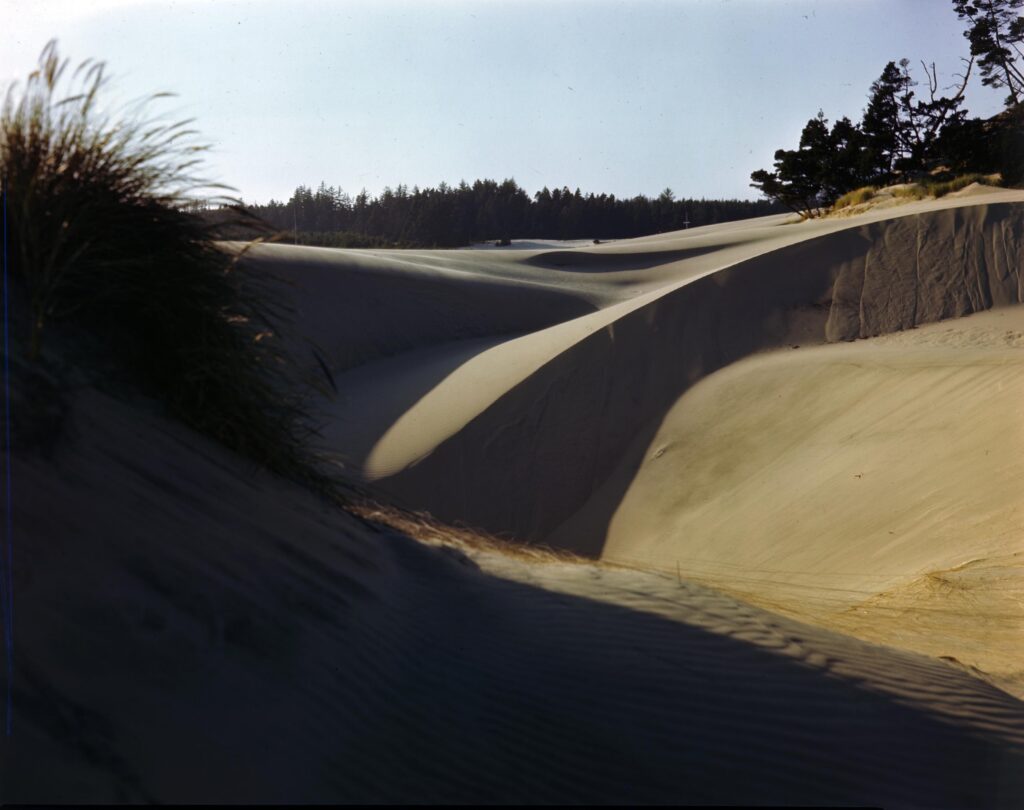
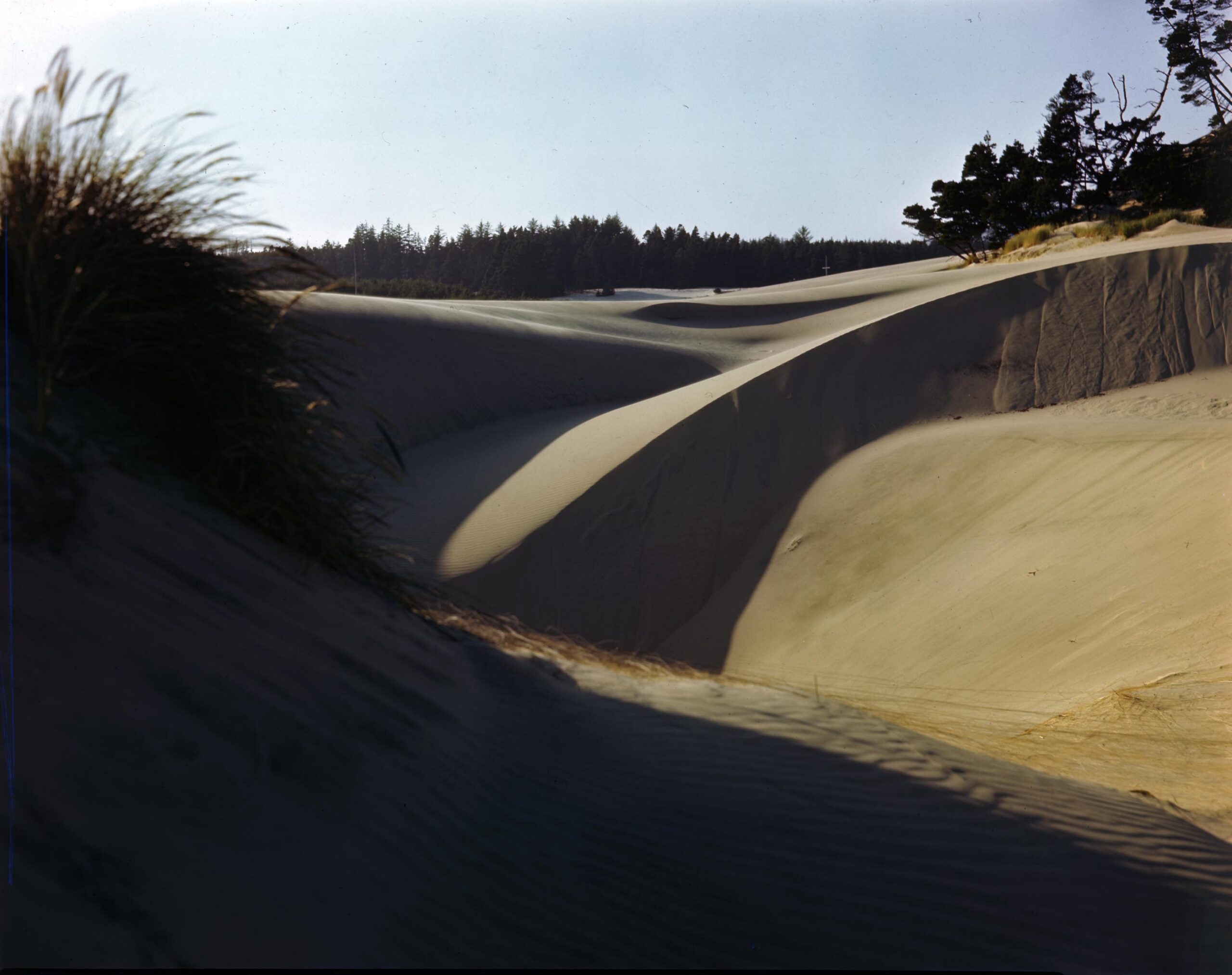
He had gone to Florence, Oregon, to investigate a real effort to control moving sand dunes. The project pushed him toward a story about ecology, intervention, scarcity, and the unintended consequences of systems trying to master environments.
So the documented spine of Dune is already strong enough:
when a civilization organizes itself around a controlling minimum, whoever governs that minimum gains extraordinary power.
Spice Is Not Attention
Now GEOMYTHA can make its own comparison.
Spice is not literally attention.
Frank Herbert did not say it was.
The modern attention economy is a different system.
But it has one striking structural resemblance:
the system becomes more valuable the longer a scarce input can be captured, directed, measured, and sold.
In advertising-supported social media, that scarce input is human attention.
Business-ethics research on the attention economy describes the user’s attention as the product sold to advertisers and notes the strong incentive platforms have to keep users active and engaged for long periods.
That gives the phrase “the spice must flow” a new contemporary use.
Not as a secret prophecy by Herbert.
As a comparison we can make now.
Captive Fascination
The article’s emotional attunement is Captive Fascination.
Fascination is not the same as attention.
Attention can be quiet.
It can be deliberate.
It can remain with one thing long enough to understand it.
Fascination pulls.
The next post.
The next outrage.
The next notification.
The next identityThis — IdentityThis names the formed identity: the body, role, image, wound, belief, or story claimed as what the self is.Read full entry → signal.
The next promise that something important is happening somewhere just beyond the current screen.
Now attention is not simply being used.
It is being kept in circulation.
That is the modern spice-flow analogy.
The Feed Has Its Own Controlling Minimum
A social platform can contain billions of images, arguments, jokes, memories, ads, conversations, and videos.
But abundance creates its own scarcity.
There is more content than anyone can consume.
What becomes scarce is the ability to notice any particular piece of it.
Creators compete for that notice.
Advertisers compete for it.
Platforms allocate it.
Algorithms rank it.
Visibility becomes a resource.
That is not identical to CHOAM controlling spice.
But both systems become easier to read once we ask:
what scarce input does the larger machine need in order to keep functioning?
The Spice Girls Are Not Evidence
The original essay made a leap from Dune to the Spice Girls.
That was clever but weak.
The group’s famous individual nicknames—Posh, Scary, Baby, Sporty, and Ginger—were coined by Top of the Pops magazine after the group had already formed and released “Wannabe.”
There is no evidence thoseThose — ProjectionThose names projection: enemies, outsiders, competitors, threats, and disowned qualities placed beyond the identity boundary.Read full entry → names have anything to do with Dune.
The only useful comparison is ordinary branding:
distinct personalities can be made instantly recognizable through compressed labels.
That belongs to marketing history.
It does not belong in the evidentiary spine of this article.
Prescience Is Power—and a Trap
Spice does more than move ships.
It opens possible futures.
That makes it especially useful for GEOMYTHA because prediction is never neutral.
The more a system tries to anticipate what comes next, the more attention gets pulled out of the present and organized around possible futures.
Again, this is our interpretation.
But the comparison to contemporary feeds is strong enough to be useful.
Recommendation systems are not prophetic.
They predict.
They estimate what someone may click, watch, buy, or respond to next.
The platform then reorganizes the visible field around those predictions.
The future is not seen.
It is continually modeled.
And the model changes what the user sees now.
The GEOMYTHA Grammar
GEOMYTHA’s root grammarFourfold Root / Eightfold ExtensionThe fourfold root explains the birth of identity; the eightfold extension explains what identity becomes and how it returns.Read full entry → is:
Is → Am → I → This.
Awareness enters relation.
The claimantSetIn Geomytha, Set names the claimant: I — the interruption by which reflection is taken as mine and converted toward ownership.Read full entry → appears.
The claimI — ClaimI names claim: the interruption by which reflected presence is taken as mine.Read full entry → hardens into an identity.
The attention economy makes that last step commercially useful.
A stable identity produces predictable signals.
What do you watch?
What do you hate?
What do you buy?
Which group do you defend?
Which aesthetic do you repeat?
Which story keeps you engaged?
The platform does not need a complete theory of who you are.
It needs enough repeated behavior to predict what may hold you next.
In GEOMYTHA language, “This” becomes legible to the system.
The Stress Test: Attention Is Not Automatically Captivity
This analogy fails if it treats all attention as exploitation.
People use social platforms to learn, organize, maintain relationships, find communities, make art, run businesses, laugh, and encounter information they would not otherwise see.
Not every user becomes compulsive.
Not every platform uses the same business model.
And not every moment of engagement is manipulation.
The comparison to spice becomes useful only when dependence develops at the system level:
the platform needs continued engagement;
the creator needs continued visibility;
the advertiser needs continued notice;
and the user begins to feel that stepping away means disappearing from the world that matters.
That is captive fascination.
The Difference Between Spice and Water
Dune gives us one final correction.
Spice is not the only scarce thing on Arrakis.
Water is more basic.
Herbert himself emphasized that scarcity.
That distinction matters symbolically.
One resource keeps the larger imperial system moving.
The other keeps bodies alive.
Modern digital life has the same risk of confusion.
Visibility can feel necessary.
Engagement can feel necessary.
Being current can feel necessary.
But the nervous system still needs sleep, silence, direct relationship, movement, unmeasured time, and places where no one is counting response.
The empire needs spice.
The organism needs water.
The Spice Does Not Have to Stop Flowing
The practical returnReturn — RemembranceReturn names remembrance and release: the loosening of possession so reflection can become transparent to source again.Read full entry → is not total withdrawal.
Herbert’s own work is too suspicious of simple heroic solutions for that.
The better question is dependency.
What system has become impossible to imagine without a particular flow?
Who gains power from keeping that flow necessary?
What happens when the flow slows?
And what more basic need has been confused with the thing the system requires?
That is where Dune and the attention economy finally meet.
Not because Frank Herbert predicted Instagram.
Because he understood dependence.
Notice what keeps the machine moving. Notice what keeps you alive. Do not confuse the two.
Sources
- Frank Herbert, Dune (1965) — primary literary sourceIs — SourceIs names unclaimed being: awareness before possession, distinction, or identity.Read full entry → for melange, Arrakis, the Guild, prescience, addiction, and imperial resource dependence.
- Frank Herbert, “Dune Genesis,” Omni (1980) — Herbert’s own account of ecological, political, economic, scarcity, and systems concerns; includes his explicit water/oil and CHOAM/OPEC analogies.
- U.S. Forest Service, Siuslaw National Forest overview — institutional confirmation that Herbert’s visit to the Oregon dunes helped inspire Dune.
- David Lynch, Dune (1984), Universal Pictures — source lineage for the film catchphrase “the spice must flow.”
- Bhargava & Velasquez, “Ethics of the Attention Economy” — scholarly discussion of attention as the product in advertising-supported social-media business models and incentives to maximize engagement.
- Official Charts, “Wannabe at 25” — confirms the Spice Girls’ famous individual nicknames were coined later by Top of the Pops magazine, not evidence of a Dune connection.
- Oregon Historical Society / Wikimedia Commons, sand dunes near Florence, Oregon — hero image; no known copyright restrictions.




.jpg)