Number Hierarchy — 4 / 8 / 12 / 13
Public references and limits:
Leap-year correction, Qumran’s calendar and Augustine’s eighth-day symbolism are distinct reference systems. GEOMYTHA assigns the numbers its own functions. These citations do not establish a universal numerical hierarchy.
The numbers operate as internal symbolic functions within Geomytha's architecture.
The hierarchy prevents different number structures from being treated as rival codes and instead assigns each a distinct symbolic function.
4 forms; 8 cycles; 12 orders; 13 reopens.
Four, eight, twelve and thirteen appear in many unrelated practical counts. Arithmetic, calendar design and textual enumeration must be explained independently. A coincident number does not establish common origin, secret intent or the proposed hierarchy.
This entry’s name and mechanism belong to GEOMYTHA’s framework. The linked primary works are independent comparison witnesses, not evidence that the GEOMYTHA term originated in their cultures. Specific comparison references: Leap Years and the Tropical Year — U.S. Naval Observatory; Astronomy and Calendars at Qumran — Jonathan Ben-Dov; The Eighth Day and Resurrection — Augustine, Letter 55. The original work, a later translation, a catalogue record and an extant manuscript are different kinds of evidence. The oldest surviving witnesses of the comparison traditions are not established by this entry.
This is a Geomytha symbolic framework, not a claim of universal numerological, historical, religious, or mathematical consensus.
Do not treat 12 as inherently evil or 13 as inherently holy; either can be misread when captured by identity.
Where this mechanism appears
Explore the essays and Index entries linked to this mechanism.
 Four Directions and the Cross of ConsciousnessFour appears everywhere. Four seasons. Four directions. Four rivers flowing from Eden. Four elements. Four corners of the earth. Four winds. Four creatures surrounding…
 Why Calendars Need RemaindersA calendar is not just a way to count days. It is a claim about reality. A calendar tells a people when to work,…
 Four, Eight, Twelve, ThirteenGeomytha has to be careful with numbers. Not because numbers are weak. Because they are powerful. A number can clarify a pattern. It can…
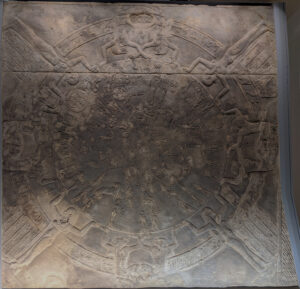 364 Days and the Lunar MachineThe dream is understandable. A year of 364 days possesses a remarkable beauty. Fifty-two weeks. Exactly seven days each. No fractions. No leap years.…
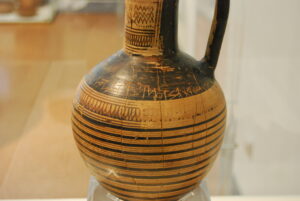 The Alphabet of ReturnThe alphabet is not the core of Geomytha. That must be said first. Geomytha does not need the alphabet to be true. The source…
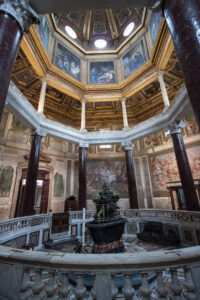 The Eighth Day and the Return of the HiddenSeven is the number of completion. Seven days form the week. The Sabbath brings the cycle to rest. The work is finished. The wheel…
 The Leap Day and the Return of the HiddenMost things that change our lives arrive slowly. Not suddenly. Not dramatically. Quietly. A friendship deepens over years. Trust accumulates. Wisdom grows. A child…
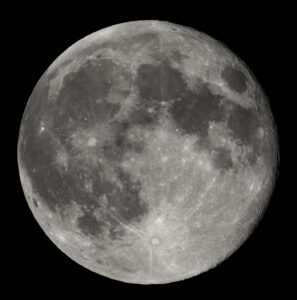 Why Reality Refuses Perfect ClosureHuman beings dream of completion. We seek perfect systems. Perfect explanations. Perfect identities. Perfect endings. We imagine paradise as a world in which nothing…
Showing 8 most recent linked essays.
 364-Day Calendar — Schematic Sabbatical YearA 364-day calendar appears in Second Temple Jewish calendrical texts and Qumran materials. Its 52 exact weeks create a highly regular schematic year.
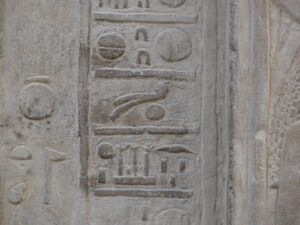 Egyptian Epagomenal Days — Five Days Outside the 360-Day YearThe ancient Egyptian civil calendar organized twelve 30-day months and added five epagomenal days to complete a 365-day year; later traditions associated these days with divine births.
 Eight Days a Week — The Beatles“Eight Days a Week” is a Beatles song whose impossible title expresses an amount beyond the ordinary seven-day week.
 English Alphabet — 26-Letter SequenceModern English uses a 26-letter alphabet from A through Z. CAD is a standard abbreviation for computer-aided design/drafting. Pi is the ratio of a circle's circumference to its diameter and begins 3.14159. The United…
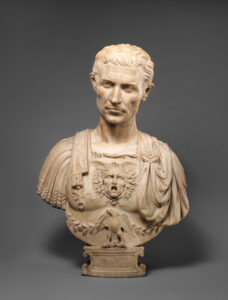 Julian CalendarThe Julian calendar was introduced under Julius Caesar and took effect in 45 BCE, regularizing the Roman civil year around a 365-day year with periodic leap-day correction.
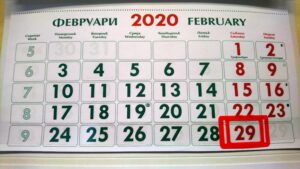 Leap Day / February 29The Gregorian calendar periodically inserts February 29 to keep the civil calendar aligned with the seasonal year because the tropical year is not an integer number of days.
 Moon — Reflection Field / Osirian MirrorWithin Geomytha, the Moon is treated primarily as a reflective image-field rather than defined through satellite language. Wim Carrette’s Crater Earth model is one modern fringe proposal that imagines the Moon as a reflection…
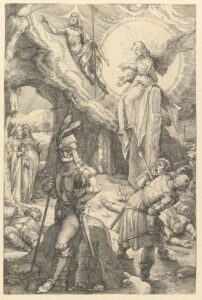 The Eighth Day — Completion ReopenedEarly Christian writers used the eighth day as a resurrection symbol beyond the completed seven-day week. Augustine explicitly calls the eighth day a type of resurrection. The Lateran Baptistery’s official history states that its…
Showing 8 linked Index instances.
Follow the mechanism
See also
 Fourfold Root / Eightfold ExtensionThe fourfold root explains the birth of identity; the eightfold extension explains what identity becomes and how it returns.
 First FireFirst Fire is the formative fire of Is → Am: source becoming a vessel capable of reflected presence.
 Second Death FireSecond Death Fire is the exposing fire that burns false claim after the identity-world has reached its limit.