GEOMYTHAAll stories are the same story

Why Horus Does Not Kill Set

Witnessed Integration: Why the Goal Is Right Kingship, Not Victory

Why Horus Does Not Kill Set

Geomytha Grammar · What
FIELD → REFLECTION → CLAIM → IDENTITY
Why Horus Does Not Kill Set
Stellar Field · When
Libra · Balance
Lunar Action · How
Waning Crescent · Surrender

Witnessed Integration: Why the Goal Is Right Kingship, Not Victory

Geomytha Reading
How to read this →
Stellar Field · When
Libra · Balance
Lunar Action · How
Waning Crescent · Surrender
Geomytha Grammar · What
FIELD → REFLECTION → CLAIM → IDENTITY

Paid essay — public preview. This page introduces the original essay. The complete argument, examples, and conclusion are available to paid Geomytha subscribers on Substack.

Many myths end with the destruction of the enemy.

The dragon dies.

The monster falls.

Chaos is defeated.

Order triumphs.

The story ends.

But tells a stranger story.

fights .

Again and again.

They contend.

They accuse.

They wound one another.

They compete.

They stand before tribunals.

They race boats made of stone.

They struggle in ways that are sometimes profound and sometimes absurd.

And yet one fact remains astonishing.

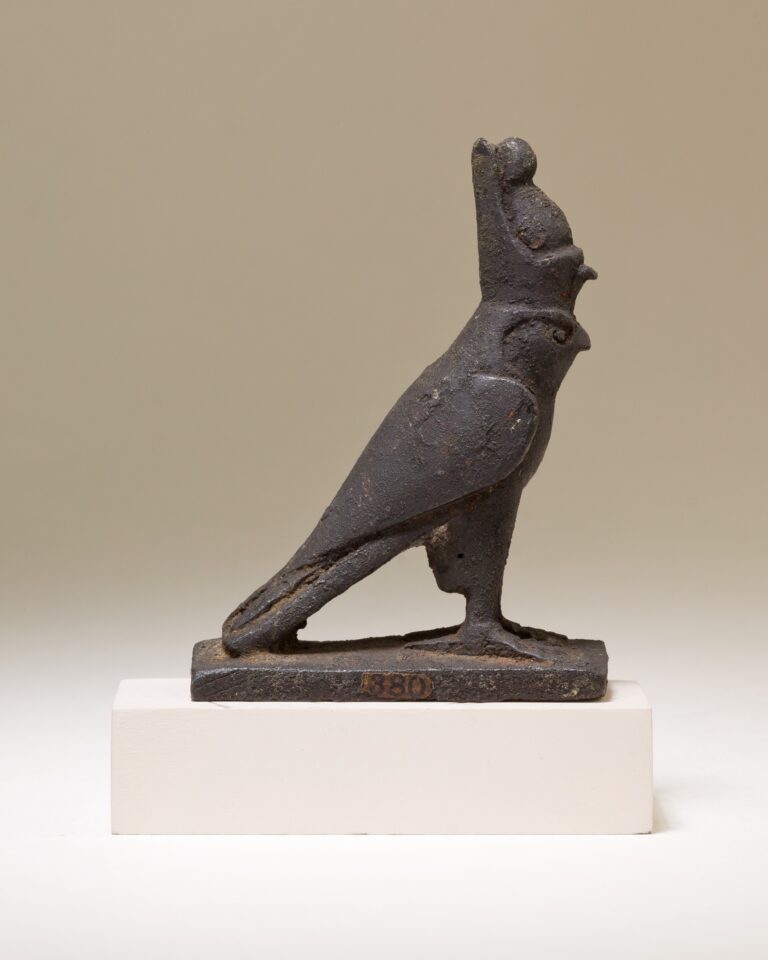
Horus does not kill Set.

Set survives.

Why?

Because perhaps the enemy was never meant to be destroyed.

Perhaps the enemy was meant to remember.

Horus and Set are often misunderstood as good and evil.

But Egypt preserves a much subtler vision.

Set protects Ra against Apophis.

Set…

Read the complete essay on Substack →

This WordPress page preserves the essay’s place in the Geomytha archive, its original title and subtitle, and its publication date. The full subscriber edition remains protected on Substack.

Test the reading

Egypt: Egypt spans millennia of different institutions, texts and religious practices. No standalone symbolic claim about every Egyptian follows from using an Osirian grammar. Date the actual witness and preserve contradictions between periods.

Horus: Horus can represent protective, legitimate kingship rather than an identity prison. A role serving relation without claiming final selfhood is a counterexample. Keep the royal son, Horus the Elder and other manifestations distinct, and do not infer ego merely from falcon imagery. These are tests of the essay's proposed comparisons, not a statement that all its historical or empirical claims have been verified.

Original story and earliest witnesses

The surviving Egyptian record begins with ritual and fragmentary witnesses, not one recoverable original story. The late Fifth-Dynasty Pyramid Texts provide the early inscribed corpus; Middle Kingdom Lahun fragments preserve an early extensive Horus–Seth struggle. Plutarch's On Isis and Osiris, written much later in the Roman period, supplies a connected narrative. Compare versions rather than attributing Plutarch's complete sequence to the earliest inscriptions. GEOMYTHA's grammatical assignments are modern comparisons.

Source trail

Texts and records beneath the interpretation

University College London, Petrie Museum
Plutarch; Loeb Classical Library translation, hosted by University of Chicago
The Metropolitan Museum of Art