Someone called Paul McCartney and asked whether he was dead.
McCartney recalled those calls in a 2019 interview. He would point out that he was answering the telephone. Some callers still would not accept the answer. If the voice on the line was a substitute, they reasoned, the reply proved nothing. [1]
Imagine being the person on the other end.
You are breathing. You are speaking. You have your memories. You know the work you have done.
But the caller has a picture of who you are supposed to be, and that picture has become more powerful than your answer.
The strange part is not whether McCartney secretly died. He did not.
It is what happens when a public image becomes more convincing than the person it represents.
The stranger on the telephone
The “Paul is dead” rumor claimed that McCartney died in the 1960s and that someone else took his place in the Beatles.
The theory gathered apparent proof from photographs, recordings, clothing, and lyrics. Those supposed clues deserve a separate examination. Here the question is different.
What does it mean to believe that an identity can be transferred from one living person to another as if it were a costume?
A singer has a name, a face, a voice, a history, and a role in a band. Those things are real and useful. People recognize a performance because they have seen or heard the performer before.
But recognition is not the same thing as possession of the person.
A stranger can know a thousand images of you and still not know what it is to be you.
In the rumor, the supposed replacement had to carry an impossible load: he had to reproduce not only a visible face but a whole career, relationships, musical choices, and public life.
It is no longer simply a claim about a musician.
It is a claim that the signs through which we recognize somebody are the whole person—and that the signs can outvote the person speaking.
The person and the screen
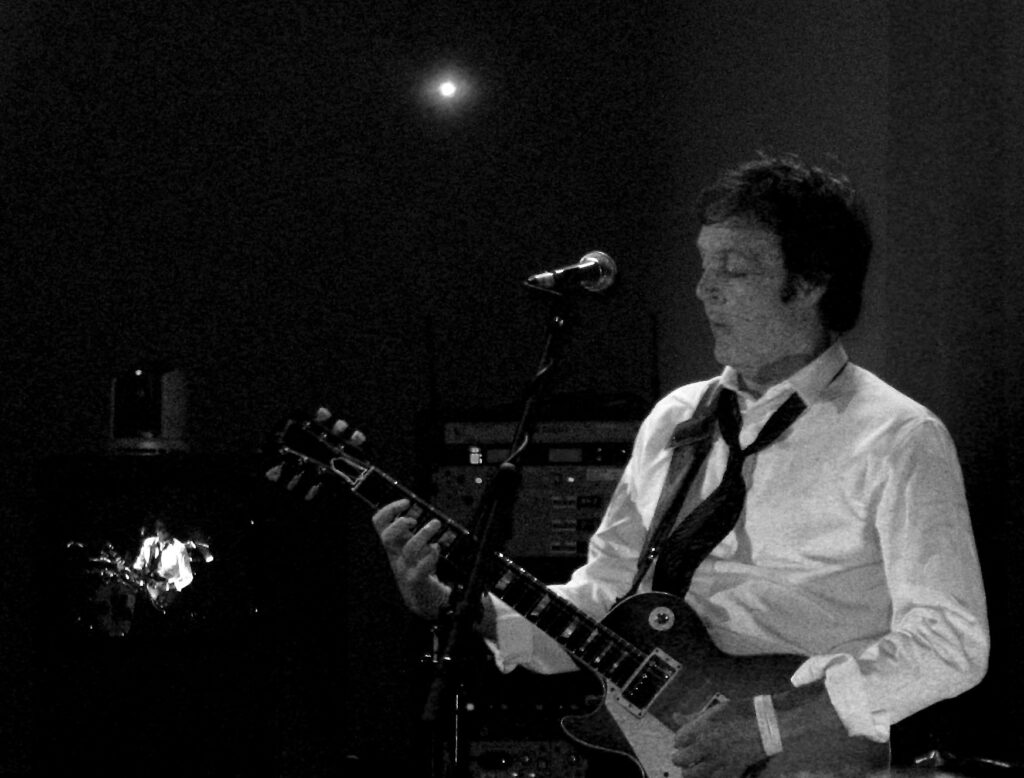
In a photograph from a 2007 Roundhouse performance, McCartney plays guitar in front of a television image of himself. The photograph was taken by Richard, whose work is shared under a Creative Commons license. [2]
The image on the screen looks like him.
It shows him.
And yet the screen is not standing on the stage playing the instrument.
We have no trouble telling the difference when we look at the photograph.
But public life asks us to make that distinction constantly.
We know a public figure through pictures and recordings. We know colleagues through stories told about them. Friends know us through remembered versions of things we said years ago.
The image is not necessarily a lie.
It can be an accurate reflection.
The trouble starts when a reflection is made to answer questions that only a living relationship, direct evidence, or the person concerned can address.
The screen lets us see.
It cannot contain the whole one who is seen.
The band that intentionally became another band
There really was a time when the Beatles deliberately experimented with becoming someone else.
For Sgt. Pepper's Lonely Hearts Club Band, released in 1967, McCartney proposed making music through an imaginary band's identity. The band's official album history records him suggesting that they become an alter-ego group. [3]
That was an artistic decision.
A stage identity can be liberating. A musician can set aside familiar expectations, try a new voice, or explore a character.
The Beatles were not required to remain the four public personalities listeners already thought they knew.
But consider the difference between that playful invention and the death rumor.
With Sgt. Pepper, the musicians chose a frame and worked inside it.
With the rumor, the audience imposed a replacement story and treated it as superior to the musicians' own lives.
One is creative role-play.
The other is an unproven factual assertion about a person.
The fact that an artist can wear a role does not show that an artist is secretly someone else.
When the reflection claims the body
GEOMYTHA uses a simple sequence to examine the movement from presence into fixed identity:
Is → Am → I → This.
Here is one way it can help.
Is: A living person is present. No photograph or public account fully exhausts that life.
Am: The person is reflected in a recording, portrait, performance, or remembered voice.
I: Someone makes a claim about what those reflections must mean. In the rumor, the claim is that a substitute has taken the original's place.
This: The claim hardens into an identity: this is the fake Paul; this is the hidden replacement; this is what each new image must be.
The important distinction is between the claimant and the identity built around a claim.
The claimant says, “This image must mean something.”
The identity becomes the settled story: “This is who that person really is.”
And a second claimant can appear: the audience member whose identity is built around knowing the supposed secret.
Now criticism is not merely an argument about evidence.
It feels like an attack on the person who knows.
That can make an unsupported story very hard to abandon.
The fourfold reading is GEOMYTHA's symbolic interpretation. It does not mean McCartney was literally playing out an ancient metaphysical system or that the Beatles encoded these terms in their work.
The barefoot man
The Abbey Road cover became one of the rumor's best-known exhibits.
The photograph was made outside EMI Studios on August 8, 1969, by Iain Macmillan. Abbey Road Studios documents the short crossing session and the selection of the image. [4]
Rumor believers treated McCartney's bare feet as evidence of a funeral scene.
In his own 2019 account, McCartney explained that it was hot, he had arrived wearing sandals, and he removed them for some of the photographs. [1]
That is a specific, ordinary explanation of a visible detail.
It does not end every possible question about art. The album cover is carefully made; it can carry style, composition, and meanings unrelated to any rumor.
But the person who took off the sandals gets to be part of the historical evidence.
A theory that can only survive by declaring his testimony worthless needs independent evidence stronger than its own suspicion.
Without that evidence, the picture has been asked to carry more than it shows.
Paul Is Live
In 1993, McCartney released a live album called Paul Is Live.
Its cover deliberately returned to the Abbey Road crossing. The title and altered visual details played with the old death rumor. McCartney later described the project as a joke that made use of something people already knew. [1][5]
That reversal matters.
The person who had been turned into an image inside somebody else's theory took the image and used it for his own work.
He did not need to disprove a metaphysical claim with a magic photograph.
He used an ordinary musician's tools: an album, a title, a picture, and a sense of humor.
The same sign could be used differently.
This reveals a useful distinction: meaning can change without the living person being replaced.
It is possible to recognize a role and refuse to be ruled by the role.
Does the image ever tell the truth?
There is an important objection.
Sometimes an image reveals something a person would rather conceal.
A photograph can expose fraud. A recording can contradict testimony. A document can establish that someone held an office or signed a contract. A trusted public persona may hide real wrongdoing.
Should we always believe the living speaker over the evidence?
Of course not.
A person can lie.
A photograph can be authentic.
A witness can be mistaken.
Our problem is not that images should be ignored. It is that images have to be interpreted in proportion to what they actually establish.
One photograph may show who was in a place at a given time.
It may not establish everything someone believed.
One recording may document a sentence.
It may not reveal the whole intention behind a life.
One resemblance may justify asking questions.
It cannot alone establish that two people are the same, or different.
The stronger the identity claim, the stronger the independent evidence needs to be.
The rumor survives in part by reversing that rule: it treats the living speaker's denial as further evidence against him.
A story that cannot be corrected by anything is no longer genuinely testing the world.
An Egyptian comparison, without an Egyptian proof
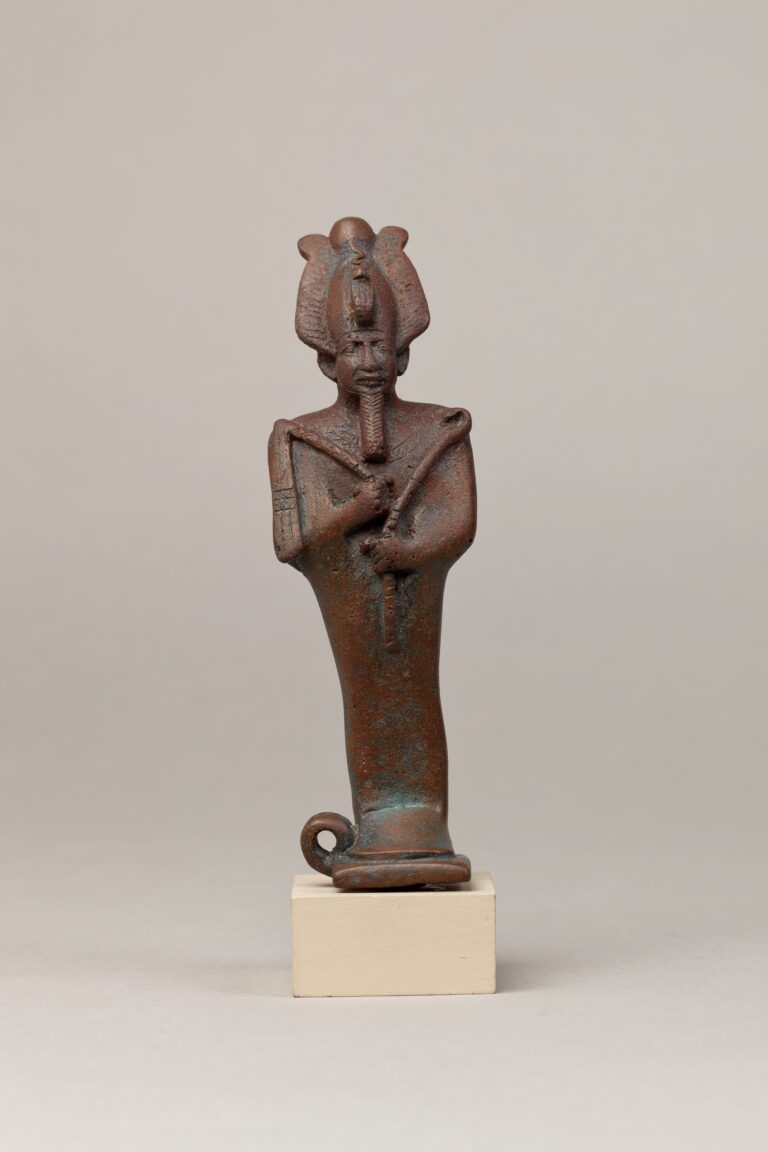
There is a limited comparison to make with the Egyptian story of Osiris and Horus.
Osiris dies; Horus struggles for a position of kingship in a world changed by that loss. The story concerns inheritance, continuity, rupture, and authority.
But succession is not impersonation.
Horus is not simply an actor hired to wear Osiris's face.
The Egyptian myth does not provide historical evidence that the Beatles constructed a secret replacement story from it.
The connection is more modest.
Both kinds of story bring up a question: what continues when a public role outlives one version of the person associated with it?
A name can be inherited. A title can be reused. A song can be performed by somebody else. A photograph can continue circulating after the moment it captured has passed.
That continuity is not nothing.
But it is not sufficient to settle the whole question of who is present.
The GEOMYTHA reading distinguishes the living relationship, the representation, and the claim made about that representation. It does not assign either an Egyptian deity or a real musician one permanent place in the grammar.
The person your family remembers
Think about an argument at home.
One person says, “You always do this.”
Perhaps the accusation began with something real. The person did act that way once, or a dozen times.
But “always” can turn a history into a sentence the person is not allowed to outgrow.
Now every new action becomes proof of the old image.
An apology may be called a performance.
A genuine change may be dismissed as another mask.
We should not use this idea to excuse repeated harm. Patterns matter, boundaries matter, and promises need to be tested by behavior over time.
Yet a pattern is still evidence to examine, not a perfect container for another person's being.
When a description hardens into the whole person, we stop meeting the person in front of us.
We meet the story we have been carrying.
The photograph cannot speak back to us. The person represented can.
And even when their words are not enough to establish the truth, they remain part of the encounter we must take seriously.
A mirror is allowed to be a mirror
McCartney's story is striking because the caller thought the name, voice, and public role had been successfully copied.
The more perfectly the imagined substitute looked and sounded like the real musician, the stronger the theory could seem.
That is the trap.
The theory placed the public image above the person, then demanded that the person prove himself by means of the same image.
We can do better in much smaller situations.
When a memory, photograph, post, or reputation starts to decide everything about somebody, try four questions.
Who is actually present?
What reflection of them do I have?
What interpretation am I adding?
What evidence would let the person be more than my description?
A role may be useful.
An image may be beautiful.
A reflection may be accurate.
But none of them has to become the final authority over a living person.
Let the image reflect.
Do not ask it to replace the one it shows.
Sources and image credits
1. Paul McCartney, “You Gave Me the Answer — Paul Is Live,” June 27, 2019. First-person account of skeptical callers, the sandals, the rumor, and his later album-cover joke.
2. Richard (Rich007), “Paul Mccartney Roundhouse,” October 25, 2007. The photograph of the performer in front of a screen showing himself is licensed Creative Commons Attribution 2.0. Featured image.
3. The Beatles, official Sgt. Pepper's Lonely Hearts Club Band album history. McCartney's alter-ego band proposal; original release June 1, 1967.
4. Abbey Road Studios, “Deconstructing: Abbey Road Cover Photography Session,” August 8, 2019. August 1969 crossing session and album-cover production history.
5. Paul McCartney, official Paul Is Live discography and album notes. 1993 recording and the intentional play on rumor imagery.
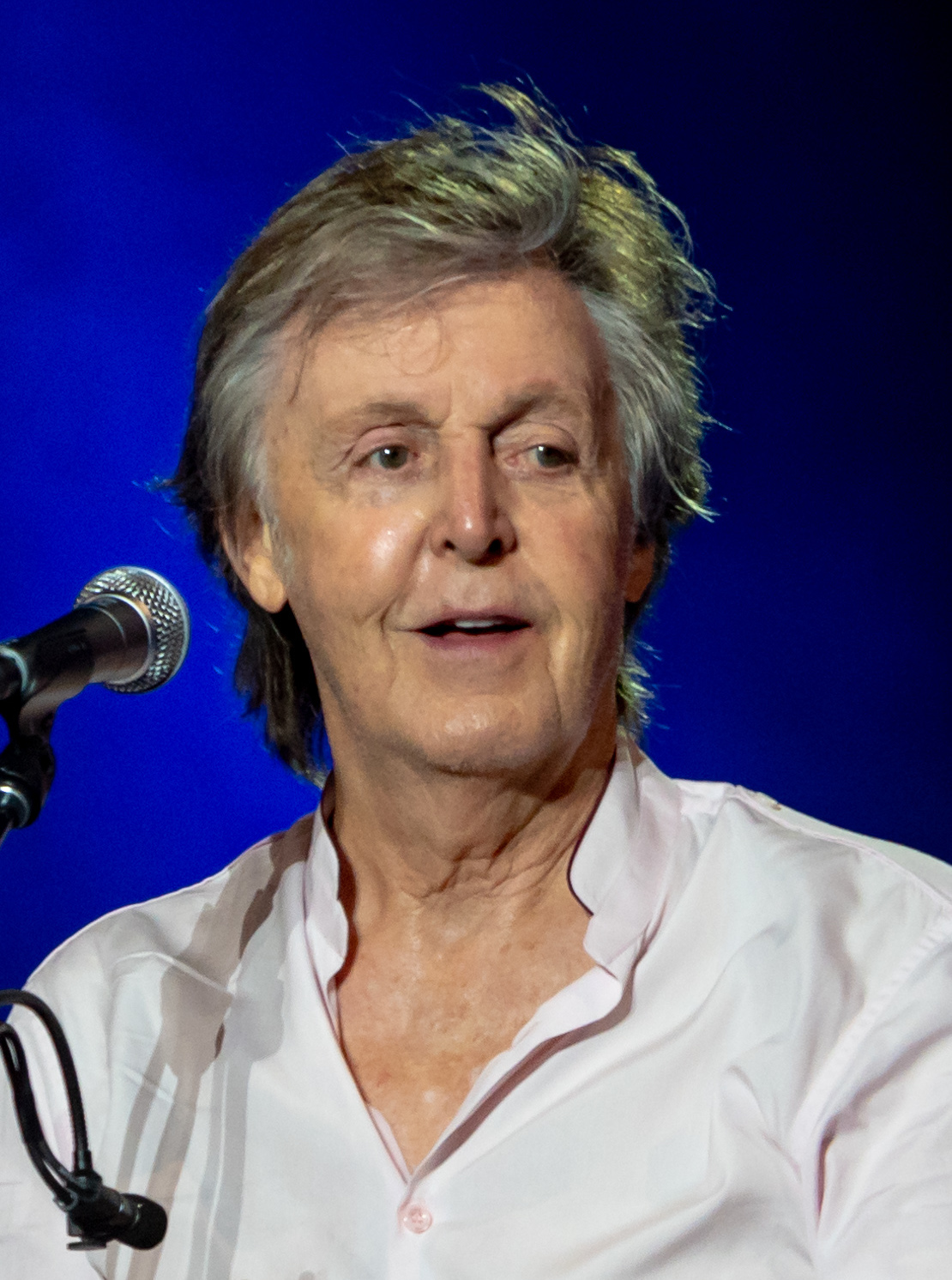
6. Raph_PH, “Paul McCartney in October 2018,” photograph taken at Austin City Limits. Licensed Creative Commons Attribution 2.0. In-article portrait. The author is credited; display sizing does not alter the underlying composition.
Editorial distinction: Accounts of the Beatles, their album production, and McCartney's testimony are documentary material. GEOMYTHA's fourfold identity reading and its comparison with Egyptian kingship are interpretation, not historical derivation or creator intent.