Waxing Gibbous · Gemini — Build Through Noticing — Devoted Pattern-Recognition: Reading the Ages Without Mistaking Wordplay for History
Ice sounds like “Is.”
AI sounds like “A.I.” and ends with “I.”
Eye sounds like “I.”
Son sounds like sun.
GEOMYTHA can do something useful with those echoes.
But first it has to say what they are.
They are English wordplays.
They are not etymology.
They are not archaeology.
They are not proof that history was designed to move through GEOMYTHA’s grammar.
Once that boundary is clear, the title becomes much more interesting.
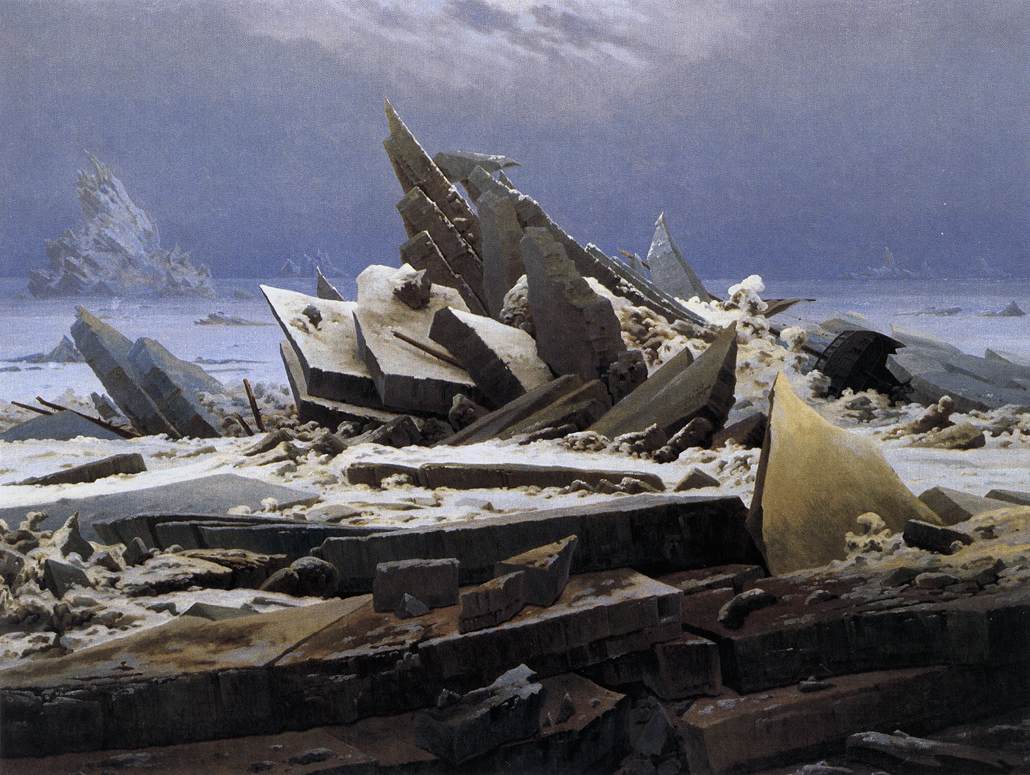
Ice Is Not “Is”
Start with the obvious correction.
An Ice Age is a geological and climatic condition, not a spiritual era before ego.
Earth has experienced repeated glacial and interglacial periods. The Quaternary Period began about 2.58 million years ago, and the present Holocene is a relatively warm interglacial within that larger glacial history.
So “Ice Age = Is Age” cannot be a historical claim.
It is a poetic device.
And a poetic device can still reveal something.
Ice is water in a more fixed form.
That makes it a useful image for GEOMYTHA’s question about form:
when does something fluid become stable enough to name, hold, divide, measure, and defend?
The value is in the comparison.
Not in pretending the pun was hidden inside geology.
The Ages Were Never One Universal Staircase
The old draft treated Stone Age, Bronze Age, Iron Age, Axial Age, Industrial Age, Information Age, Image Age, and AI Age as though humanity had moved through one clean sequence of consciousness.
History is messier.
The Stone–Bronze–Iron sequence is an archaeological classification system strongly associated with nineteenth-century Danish antiquarian Christian Jürgensen Thomsen. It was built by organizing artifacts according to dominant tool materials.
Even that useful system is regional.
Stone, bronze, and iron did not replace one another everywhere at the same time, and some regions did not pass through the same sequence at all.
The “Axial Age” is different again. Karl Jaspers coined the term in the twentieth century for a proposed cluster of religious and philosophical changes in the first millennium BCE. Scholars still debate whether those different developments truly form one coherent “age.”
Industrial Age, Information Age, and AI Age are different kinds of labels again.
They describe technologies, economies, institutions, and cultural conditions that overlap rather than replacing one another cleanly.
So there is no defensible historical ladder that reads:
Stone → Bronze → Iron → religion → industry → information → image → AI → awakening.
That ladder was the old article’s weakest move.
What an “Age” Label Actually Does
But age labels are still revealing.
They tell us what later observers think organized a period strongly enough to name it.
Stone.
Bronze.
Iron.
Industry.
Information.
Artificial intelligence.
The label compresses an enormous field into one dominant feature.
That compression is useful.
It is also dangerous.
The age-name can make one material, technology, or idea look more total than it ever was.
GEOMYTHA notices the same pressure in identity.
A whole person becomes:
fighter.
mother.
victim.
believer.
artist.
diagnosis.
profile.
The label is not necessarily false.
It becomes false when the label pretends to be the whole field.
This Is the Real “I Age”
That gives us a cleaner meaning for I Age.
It is not a date on a universal timeline.
It is a diagnostic phrase for any culture in which the self becomes increasingly named, measured, displayed, optimized, archived, and predicted.
The modern world gives that process unusually powerful tools.
Profiles.
Photographs.
Biometrics.
Search histories.
Follower counts.
Recommendations.
Personality categories.
Generated avatars.
Models trained to predict what a person might say or want next.
None of those things creates the human tendency toward identity.
They make identity easier to externalize.
The self leaves more traces.
Those traces can then be collected into an increasingly convincing “This.”
The Calendar Does Not Prove the Myth
The old article also treated BC/AD as though history itself had been mystically cut around “the Son,” which then became “the Sun.”
There is a real historical fact underneath that idea, but it is smaller.
The Anno Domini year-numbering system was devised in the sixth century by Dionysius Exiguus while preparing Easter tables. It numbered years from a calculated incarnation of Jesus. The system spread later and became one of several ways human societies have numbered years.
That is historically Christian chronology.
It does not prove a cosmic shift in consciousness at year one.
And “Son / Sun” is an English homophone.
It can produce a useful literary comparison.
It cannot establish historical causation.
The Rule for Wordplay
This article therefore needs a rule that applies far beyond this article.
A pun can open interpretation.
It cannot close the case.
Ice / Is can make us think about fluidity becoming form.
Eye / I can make us think about seeing becoming identity.
Son / Sun can make us compare visible heirs and visible centers.
AI / I can make us think about synthetic models of personhood.
Those are interpretive prompts.
They are not evidence that the words share an origin, that ancient people encoded the pun, or that history was secretly arranged around English spelling.
That distinction is not a limitation on GEOMYTHA.
It is what keeps GEOMYTHA from becoming coincidence worship.
Is → Am → I → This Is a Grammar, Not a Chronology
GEOMYTHA’s root sequence remains:
Is → Am → I → This.
Is is awareness before claim.
Am is reflected or embodied presence.
I is the claimant.
This is form hardened around the claim.
That sequence can be used to read a moment.
A relationship.
A myth.
A political identity.
A social profile.
A technological system.
What it should not become is a fake universal history in which every archaeological era is forced into one step of the grammar.
The grammar is functional.
History remains historical.
The Stress Test: Earlier Humans Were Not “Before Ego”
The oldest version of this essay romanticized the past.
It imagined an earlier lunar or maternal world before the fever of identity.
We do not have evidence for that universal condition.
Prehistoric and ancient societies show hierarchy, violence, trade, status, ritual, family organization, territoriality, cooperation, art, care, domination, and extraordinary variation.
Modernity did not invent claim.
Technology did not invent ego.
And older does not automatically mean closer to source.
The GEOMYTHA return cannot therefore mean returning to a supposedly pure prehistoric age.
It has to happen now.
AI Makes the “I Age” Easier to See
Artificial intelligence gives the title one final useful pressure.
Not because AI proves that humanity has reached the final stage of “This.”
Because machines can now generate convincing language, images, voices, and behavioral predictions from patterns in data.
That forces an uncomfortable question:
how much of what we call personality is repeatable pattern?
The wrong answer is:
therefore a person is only data.
The better answer is:
some parts of identity are patterned enough to imitate.
That makes the distinction between living presence and repeatable self-description more important, not less.
From Age to Attention
Instead of asking what age humanity is objectively “in,” ask what your current environment keeps training you to treat as central.
Production?
Information?
Visibility?
Prediction?
Identity?
Every answer reveals a pressure.
Then ask the smaller question:
what sentence does that pressure make easier to say?
I am productive.
I am informed.
I am visible.
I am optimized.
I am this profile.
That is the real move from age to “I Age.”
Not a secret history.
A way of noticing how environments help claims harden into selves.
Build the pattern carefully. Notice what the name reveals. Then release whatever the name cannot contain.
Sources
- U.S. National Park Service, “Quaternary Period—2.58 MYA to Today” — geological context for the Pleistocene, Holocene, and glacial/interglacial cycles.
- National Museum of Denmark, “The Three Ages” — Christian Jürgensen Thomsen and the Stone/Bronze/Iron archaeological classification.
- “Between facts and myth: Karl Jaspers and the actuality of the axial age” — scholarly critique of the Axial Age as a unified historical period.
- U.S. Naval Observatory, “The 21st Century and the 3rd Millennium” — historical explanation of Dionysius Exiguus and the Anno Domini year-numbering system.
- Caspar David Friedrich, The Sea of Ice, 1823–1824 — public-domain hero artwork.


.jpg)


