There are titles that are merely poetic, and then there are titles that function like a diagram.
“Smoke on the Water” is the latter.
Not because it “sounds cool,” but because it names the exact mechanism by which consciousness is displaced:
Water is the IsisIsisIn Geomytha, Isis names the unclaimed field: Is — pure being, awareness before possession, and the ground before the claimant appears.Read full entry →-field: the living, receptive ground of awareness (earth, body, immediacy).
Smoke is SetSetIn Geomytha, Set names the claimant: I — the interruption by which reflection is taken as mine and converted toward ownership.Read full entry →’s medium: the interpretive haze—imagination, compulsive meaning-making, story, reaction.
On the water is the entire tragedy: the veil laid over the mirror, so the mirror is still there, but you can no longer see it clearly.
And unlike most myths, this one is not allegorical by accident. The lyric’s origin is a literal event in Montreux: a flare gun ignited a fire at the casino, and the smoke drifted over Lake Geneva as Deep Purple watched from nearby.
The Four Archetypes Hidden in One Sentence
In the Geomytha lens, the entire human predicament can be read as the interaction of four principles:
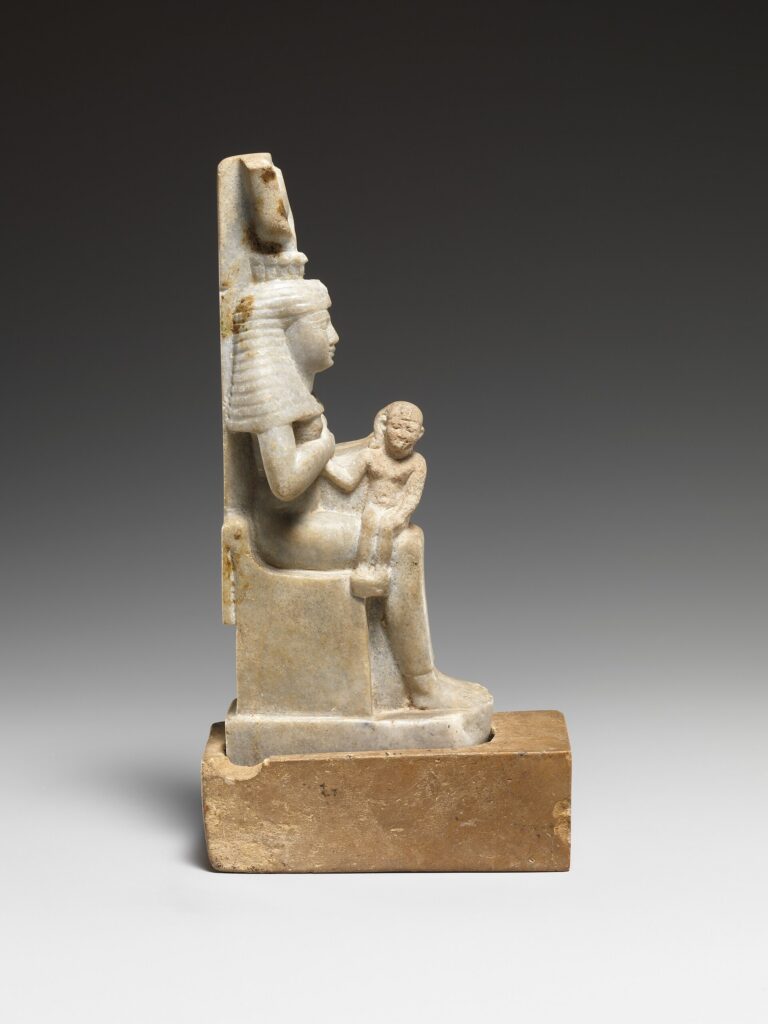
Isis / Earth — awareness as the given: the field before language.
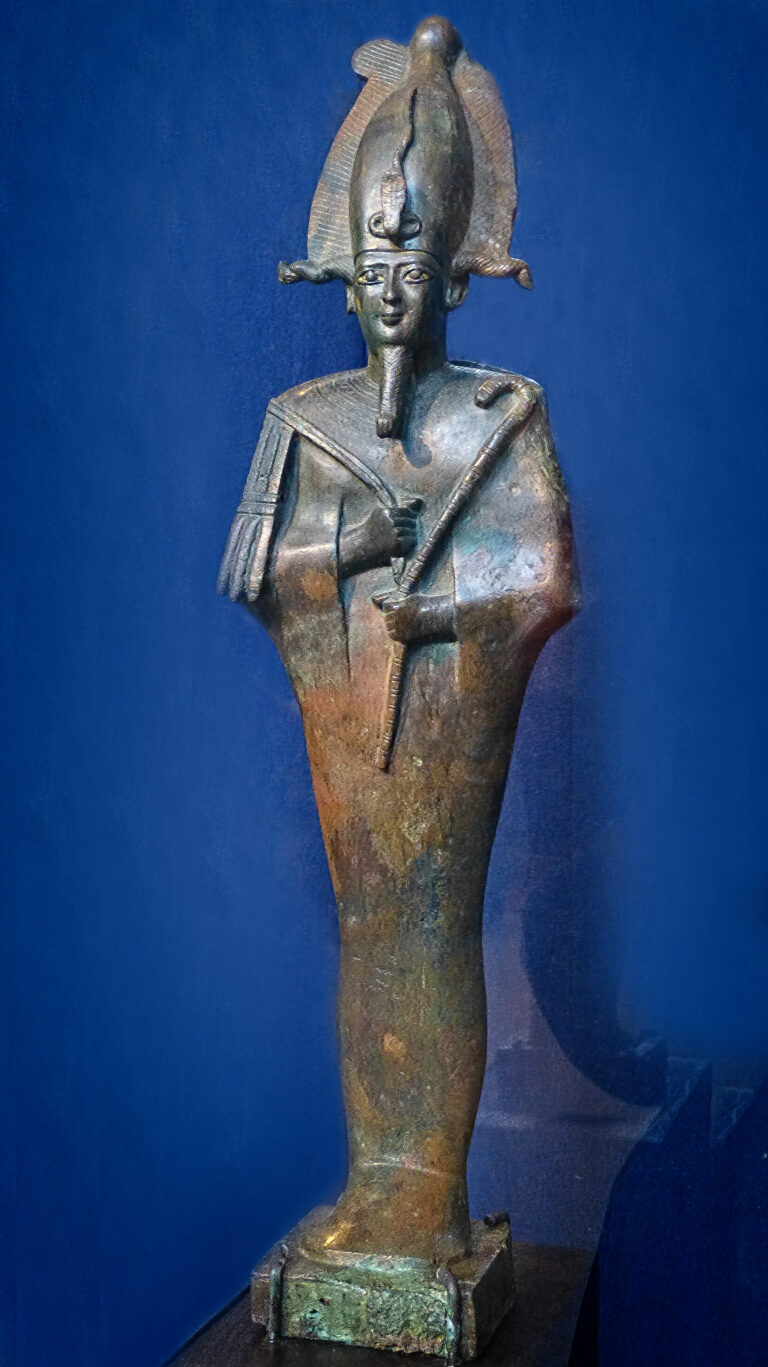
OsirisOsirisIn Geomytha, Osiris names reflected presence: Am — awareness reflected as living consciousness without yet becoming ownership.Read full entry → / Moon — reflecting consciousness: the mirror that can clarify and “perfect.”
Set / Sun — overtaken by imagination: impulse, heat, dopamine, urgency, the hijack.
HorusHorusIn Geomytha, Horus names the identity that forms after claim: This — the body, role, image, wound, belief, or story taken as what the self is.Read full entry → / Illusion of Man — the time-bound ego identityThis — IdentityThis names the formed identity: the body, role, image, wound, belief, or story claimed as what the self is.Read full entry → that crystallizes after the hijack: “me,” “my story,” “my wound,” “my opinion,” “my stance.”
Now watch how the title performs that sequence without explaining it.
Fire in the sky (Set) produces smoke (conceptual haze) that moves over water (Isis).
Then the witness becomes a narrator (Horus): the mind finalizes the event into identity and time.
The song is famous for its riff. But the title is famous because it describes the invisible technology behind the riff: how the mind learns to live on the film instead of the depth.
The True Story Is the Myth Made Visible
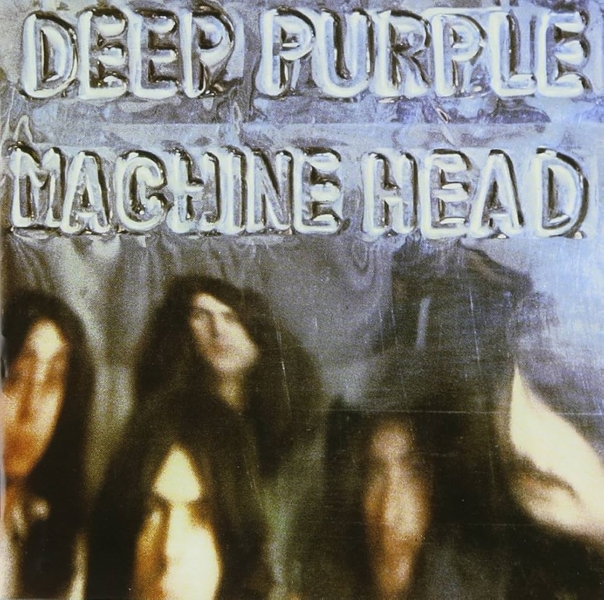
Deep Purple went to Montreux to record what would become Machine Head. They planned to use the casino, but a fire—sparked during a Frank Zappa concert—destroyed the venue, forcing them to improvise locations, including the Grand Hotel, using the Rolling Stones Mobile Studio.
That’s the outer story.
Here is the inner story:
A single impulsive act (“some stupid with a flare gun”) becomes the initiating spark.
The environment turns into urgency, narrative, and reaction.
And then the perfect symbol arrives: smoke drifting across the lake—the visible sign of mind-film overtaking presence.
This is Set’s signature move: not “evil,” but captivation. Attention is pulled upward into heat and storyline, and what was once simple awareness becomes a commentary track.
The Riff as the Loop That Can Awaken or Trap
That riff is minimal, repeatable, almost ceremonial. Which means it functions like a consciousness device:
In Osiris mode, repetition becomes clarification: a mantra without ideology, a returnReturn — RemembranceReturn names remembrance and release: the loosening of possession so reflection can become transparent to source again.Read full entry → to the center, a polishing of reflectionAm — ReflectionAm names reflected presence: awareness embodied or mirrored without yet becoming ownership.Read full entry →.
In Set mode, repetition becomes compulsion: the same circuit re-firing for identity fuel.
In Horus mode, repetition becomes selfhood: “I am the one who knows this riff,” “this is my taste,” “this is my tribe,” “this is my era.”
The same loop can either return you to the convergence point (the unnamable center) or tighten the time-bound persona around the loop.
This is why the song teaches more than it says. It shows how easily the mind can make a home in the smoke—because the smoke feels like meaning.
“Smoke on the Water” as the Tree of KnowledgeTree of KnowledgeGenesis 2–3 identifies a tree of the knowledge of good and bad/evil in the garden and prohibits the human pair from eating from it. After they eat, the narrative says their eyes…Read full entry → Overlay
In this system, the Tree of Life is the living immediacy you never left.
The Tree of Knowledge is the interpretive architecture that claims it has replaced the living.
Smoke is Tree-of-Knowledge behavior: information without contact, naming without seeing, narrative without presence.
Water is Tree-of-Life reality: directness, receptivity, the silent fact of being.
So the title can be read as a warning and a practice:
Do not confuse the film for the field.
Or, more sharply:
The problem is not the fire.
The problem is living in the smoke.
A Practical Use: The “Smoke Check” (30 seconds)
When you notice you are “in the song”—in commentary, in argument, in dread, in identity—do this:
Name it once: “Smoke.” (Not to analyze—just to label the mode.)
Return to the water: feel the body as the ground (breath low, weight, contact).
Let the smoke move: do not swat it away, do not negotiate with it, do not build a case out of it.
Watch what happens: if the story needs you to be Horus, it will try to recruit you again. Let it fail.
This is not self-improvement. It is depossession—Osiris refusing to be overtaken by Set’s cinema.
The Return Point You Never Left
The entire world-systemAll This — World-SystemAll This names the total symbolic environment that has become so complete it is experienced as reality itself.Read full entry → can be summarized as smoke on water: thought-film over living presence.
The work is not to “win” inside the smoke. The work is to remember the water.
Because the return point is not somewhere you travel to.
It is what remains when you stop feeding the veil.
— Geomytha (Mythic Geometry Center)