Rebellion can feel like freedom.
Sometimes it is.
A person leaves an abusive system.
A worker refuses exploitation.
A citizen rejects a lie.
A believer questions an authority that cannot answer honest questions.
Opposition can be necessary.
But there is another possibility.
You can escape the rule and still remain organized around the ruler.
You can reject the church and spend the rest of your life fighting the church.
You can reject a political identity and build your identity around hating it.
You can reject obedience and become obedient to rebellion.
The enemy changes sides.
The structure survives.
That is the problem this article is about.
And that is why Satanism is the wrong word if we use it carelessly.
There is no single thing called “Satanism”
The word carries centuries of accusation, literature, theology, occultism, panic, religion, theater, and rebellion.
Those things are not interchangeable.
Scholars of modern Satanism have traced how the word moved from accusation into positive self-identification, and how different Satanic movements developed very different beliefs and practices.
That alone should make us suspicious of any sentence that begins:
“Satanists believe...”
Some do not believe in a literal Satan at all.
The Church of Satan explicitly describes itself as atheistic. It treats Satan as a symbol of pride, liberty, individualism, and personal potential.
The Satanic Temple also rejects supernaturalism and presents Satan as a symbol of rebellion against arbitrary authority.
Those groups are not identical to one another.
Neither is identical to medieval demonology.
Neither is identical to the Satan of later Christian theology.
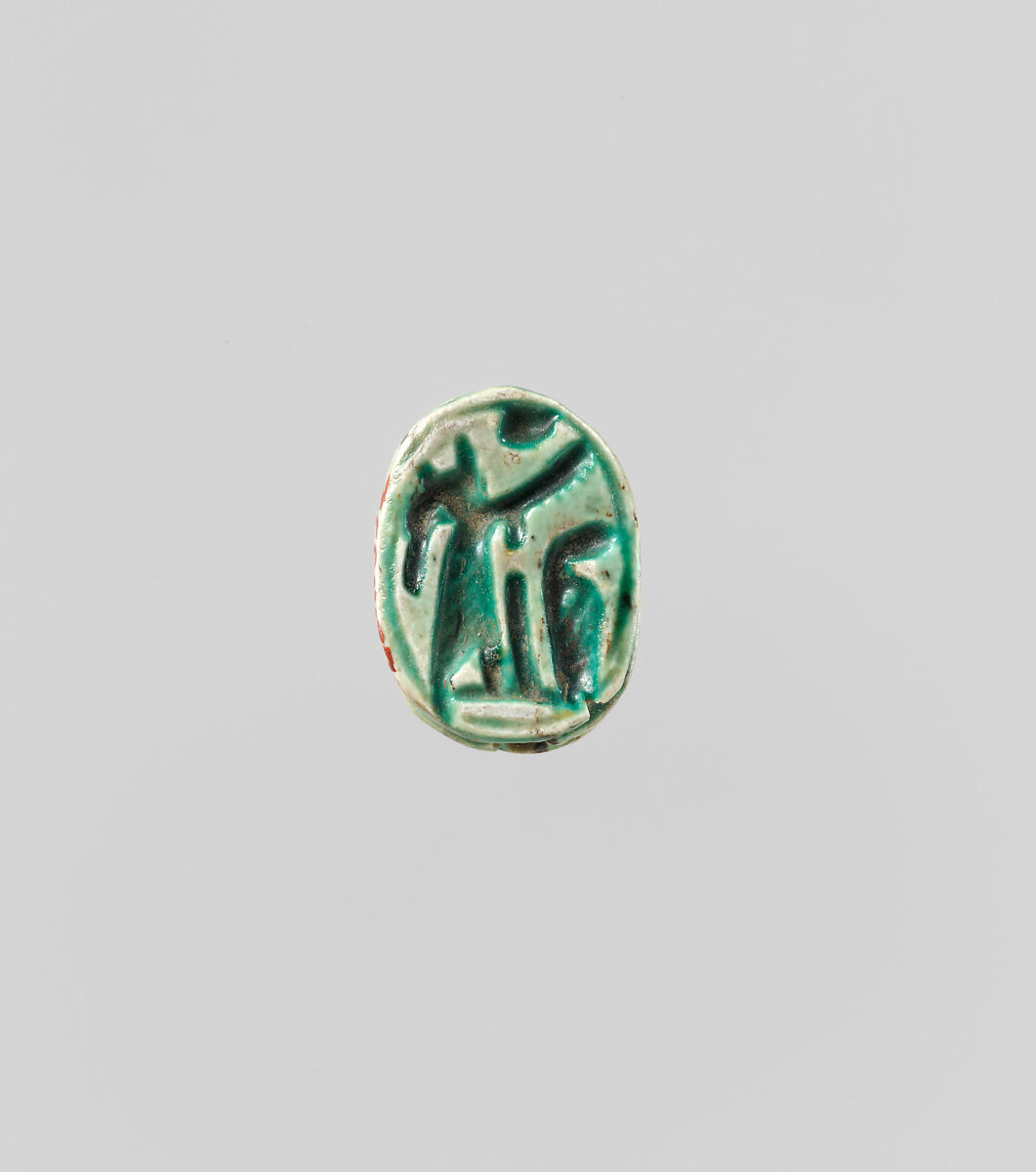
And none of them should be casually equated with the Egyptian deity Set. In ancient Egypt, Set could be an opponent and also a protector; the role varied across stories and periods.
Even the biblical picture changes
The popular image of Satan as one fixed character from the beginning of the Bible to the end is also too simple.
Genesis 3 introduces a serpent.
The text itself does not introduce that serpent as “Satan.”
Later Jewish and Christian traditions connect those images, but the identification comes later.
The figure called the satan in Job and Zechariah also should not simply be projected backward from later Christian images of the devil.
Biblical scholars debate the exact function of that figure, but the important point for us is simpler:
The symbol has a history.
It changes.
It gathers meanings.
It cannot be treated as one timeless cartoon villain.
So what is GEOMYTHA actually looking at?
Not horns.
Not pentagrams.
Not black clothes.
Not shock theater.
Not a religious label.
GEOMYTHA is looking at a movement of consciousness.
Something appears.
Then contrast appears.
Then the contrast becomes a claim.
Then the claim becomes an identity.
In the simplest GEOMYTHA grammar:
relation → opposition → claim → identity.
GEOMYTHA can use Set as a symbolic name for a fracture around a claim. The claim itself appears as I in the grammar. This is a comparison of functions, not the entire historical identity of the Egyptian god.
That does not mean the historical Egyptian Set is Satan.
In this comparison, the question is what happens when a field of relation fractures and the claim takes the center:
I.
Mine.
Not that.
Against them.
This is what I am.
The rebellion trap
Imagine two people.
One says:
“I obey that authority because it tells me who I am.”
The other says:
“I oppose that authority because opposing it tells me who I am.”
They look like opposites.
Structurally, they may still share something.
Both identities depend on the same center.
One kneels toward it.
The other turns its back on it.
But both keep it in the middle of the room.
That is the rebellion trap.
The rebel thinks the opposite direction must be freedom.
Sometimes it is only inversion.
Inversion still depends on what it inverts
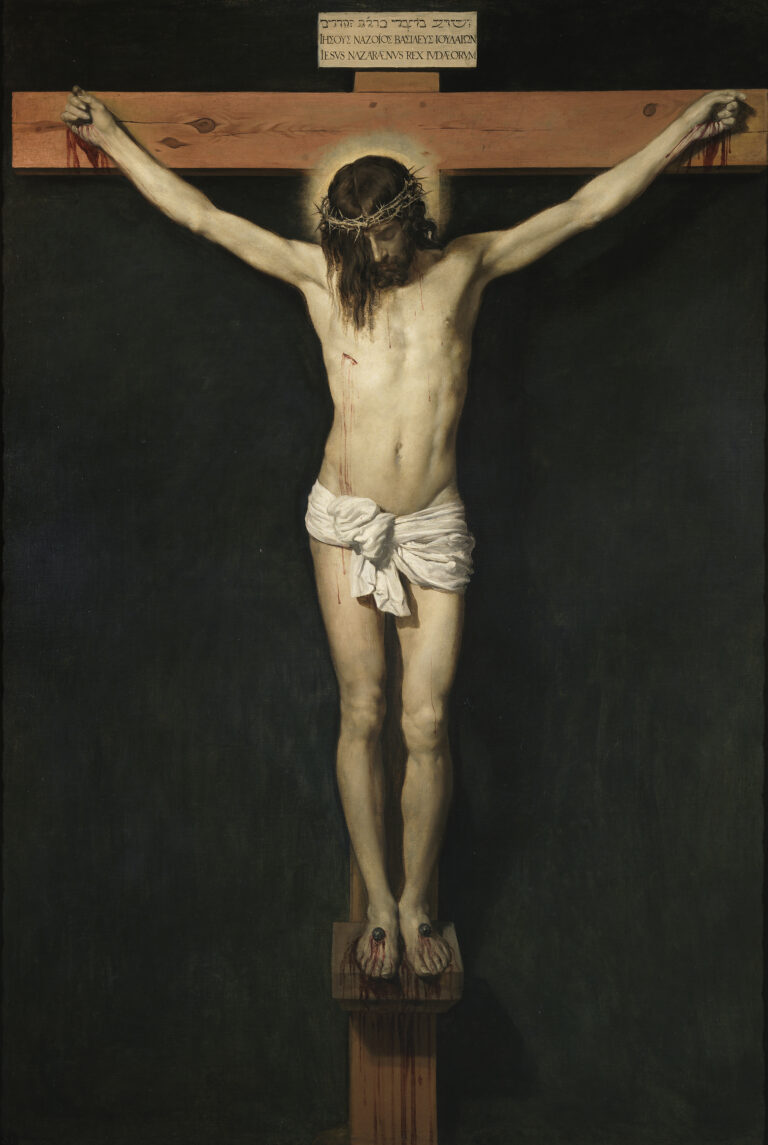
Turn a cross upside down.
The new symbol still depends on the old symbol.
Reverse a rule.
The reversal still depends on the rule.
Build an identity around taboo.
The taboo still tells you where to stand.
This does not make inversion meaningless.
It means inversion is relational.
It still points back to the thing being inverted.
That can be useful.
It can expose hypocrisy.
It can break fear.
It can challenge inherited power.
But if the inverted thing must remain present for the identity to survive, the relationship has not actually ended.
An enemy can become part of the self
This happens far outside religion.
A political movement can become unable to describe itself without naming its enemy.
A family member can organize an entire personality around never becoming like a parent.
A conspiracy community can need the hidden controller because the hidden controller explains the community’s importance.
A spiritual seeker can build a self around being more awake than “the asleep.”
A skeptic can become dependent on having believers to ridicule.
A believer can become dependent on having unbelievers to condemn.
Different costumes.
Same mechanism.
The antagonist becomes structural support.
This is where the critique has to be careful
Opposition is not automatically ego.
Resistance is not automatically captivity.
If someone is being harmed, saying no matters.
If a government lies, opposition matters.
If an institution abuses power, dissent matters.
If a belief is false, contradiction matters.
GEOMYTHA is not asking people to become neutral toward injustice.
The test is different.
Can the value survive after the enemy disappears?
If you oppose cruelty because you value compassion, compassion still makes sense without the cruel person.
If you oppose domination because you value freedom, freedom still makes sense after the tyrant is gone.
If you oppose dishonesty because you value truth, truth does not require the liar.
But if the identity is simply:
I am the one who is against them.
Then “them” has become necessary.
The enemy is now part of the self.
Satan as rebel can be a useful image
This is why modern Satanic movements can use Satan positively without believing in a literal devil.
The rebel image can function as a challenge to arbitrary authority.
That is a real symbolic use, and it should be described accurately.
But GEOMYTHA asks one additional question.
What happens after rebellion?
Does the rebel become capable of standing without the throne?
Or does the rebel need the throne forever so there is always something to rebel against?
That question does not belong only to Satanism.
It belongs to every identity built through opposition.
The deeper mechanism
The old devil image makes the problem look too easy.
Put the horns on the bad guy.
Put the halo on the good guy.
Pick a side.
GEOMYTHA is interested in something less comfortable.
The claimant can wear either costume.
Religion can become identity.
Anti-religion can become identity.
Authority can become identity.
Rebellion can become identity.
Orthodoxy can become identity.
Heresy can become identity.
The mechanism does not care which flag it carries.
It asks only one thing:
What must remain outside me so I can keep knowing who I am?
Freedom does not need an enemy forever
That gives us a practical test.
Name something you oppose.
Then ask what value the opposition is protecting.
Freedom?
Truth?
Dignity?
Compassion?
Autonomy?
Justice?
Now remove the enemy from the picture.
Does the value still have a shape?
If yes, the opposition may be serving something deeper.
If no, the enemy may be holding the identity together.
That is why Satanism is the wrong word for the deeper problem.
The problem is not a devil.
The problem is the self that still needs an opposite in order to exist.
Release the need to keep an enemy alive inside your identity. Give thanks for the value that can stand even when the fight ends.
Sources and image credits
1. Asbjørn Dyrendal, James R. Lewis, and Jesper Aa. Petersen, The Invention of Satanism, Oxford University Press, 2015. Scholarly history of a term of accusation becoming a self-chosen identity; this history does not define every individual modern movement.
2. Church of Satan, “F.A.Q. Fundamental Beliefs.” Its own stated atheistic and symbolic understanding of Satan.
3. The Satanic Temple, FAQ and Seven Fundamental Tenets. Its own distinct statements on non-theism, freedom, compassion, science, and rebellion.
4. Genesis 3, Job 1, and Zechariah 3. Read as separate biblical texts. Genesis 3 calls the Eden figure a serpent; do not assume its later identification with Satan is explicit in that chapter. The function of ha-satan in Job and Zechariah should be interpreted in textual and historical context.
5. British Museum, “Ancient Egyptian gods and goddesses,” section on Seth. Describes both the destructive and protective roles of Seth.
6. Metropolitan Museum of Art, Scarab with Figure of Winged Seth-Baal, ca. 1300–1080 BCE, object 22.1.392. Public Domain / Open Access. In-article archaeological image; not evidence of modern Satanism.
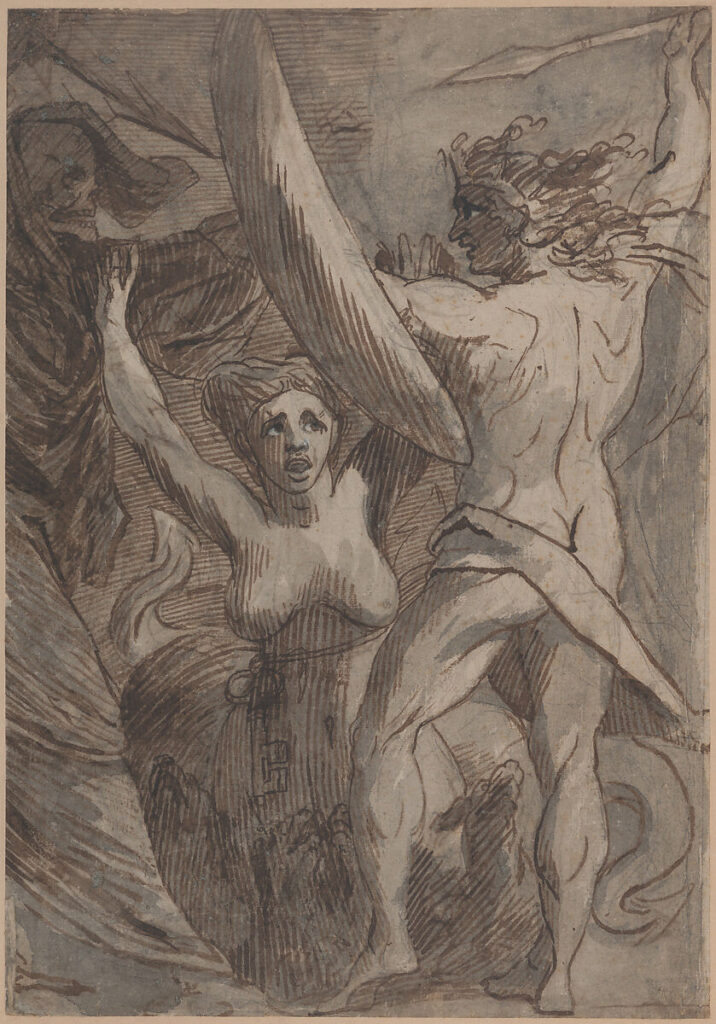
7. Featured image: James Barry, Satan, Sin, and Death: “Death and Sin met by Satan on his Return from Earth”, 1792–95, Metropolitan Museum of Art, 2013.545, Public Domain. This depicts Paradise Lost, not a biblical scene and not the Egyptian Set.
Interpretive boundary: GEOMYTHA's account of dependence on opposition is a proposed mechanism and practical comparison. It is not a historical etymology, a claim that modern Satanists share one psychological motive, or a proof of creator intent.