How Orwell’s fable secretly maps the mechanics of consciousness (and why the “farmers’ returnReturn — RemembranceReturn names remembrance and release: the loosening of possession so reflection can become transparent to source again.Read full entry →” is the heel-grab)
Most people read Animal Farm as a political warning: revolutions can betray themselves, language can be weaponized, and power tends to consolidate. That reading is correct—and it is enough.
But the book is also precise in a second way: it shows how an inner revolution collapses, step by step, when lived truth is replaced by managed perception.
This essay offers a balanced approach: we’ll keep Orwell’s historical/political meaning intact, while also showing how the plot cleanly encodes a deeper pattern—what I call the motor of consciousness.
The standard reading (and why it matters)
Orwell wrote Animal Farm as a satirical allegory of the Russian Revolution and the rise of Stalinism: ideals devolve into a new ruling class; propaganda rewrites memory; fear and scapegoats keep the public compliant; and the oppressed become indistinguishable from their former oppressors.
That political reading is not optional. It’s the book’s public face, and Orwell engineered the story to make that argument memorable.
What I’m proposing is not a replacement—but an additional layer: the same events also map a universal psychological mechanism that repeats in movements, religions, relationships, and even inside one person’s mind.
The four-stage motor: Awareness → ReflectionAm — ReflectionAm names reflected presence: awareness embodied or mirrored without yet becoming ownership.Read full entry → → Imagination → IdentityThis — IdentityThis names the formed identity: the body, role, image, wound, belief, or story claimed as what the self is.Read full entry →
Here is the lens I’m using:
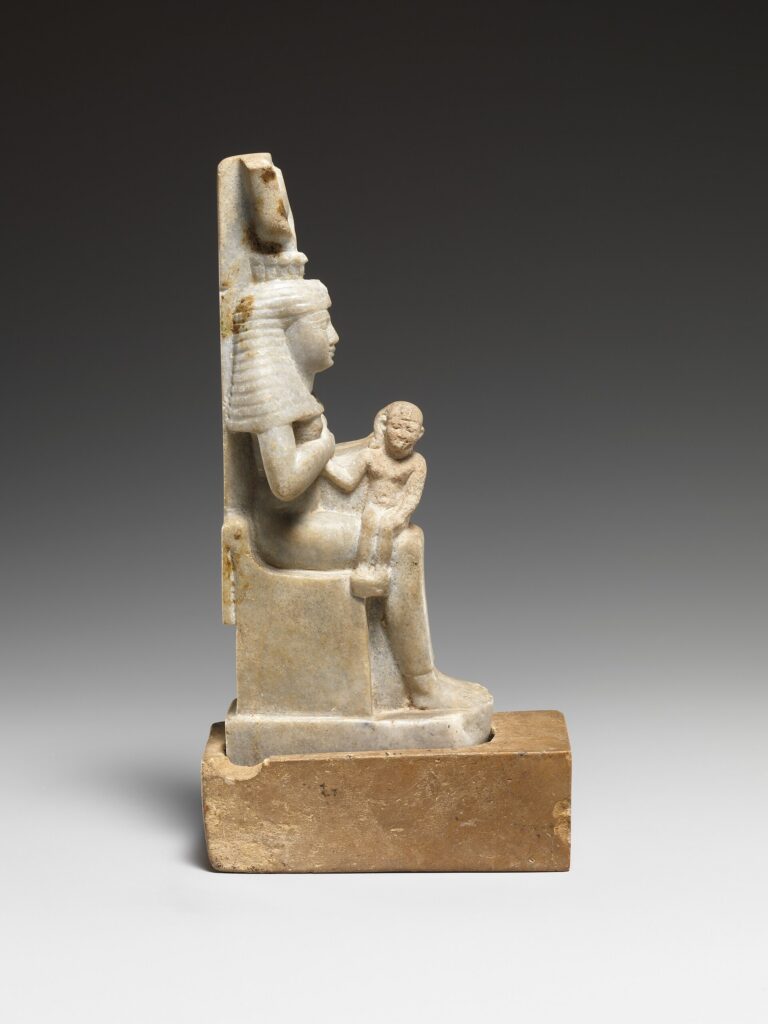
IsisIsisIn Geomytha, Isis names the unclaimed field: Is — pure being, awareness before possession, and the ground before the claimant appears.Read full entry → (Awareness / Earth): direct presence; the lived “is.”
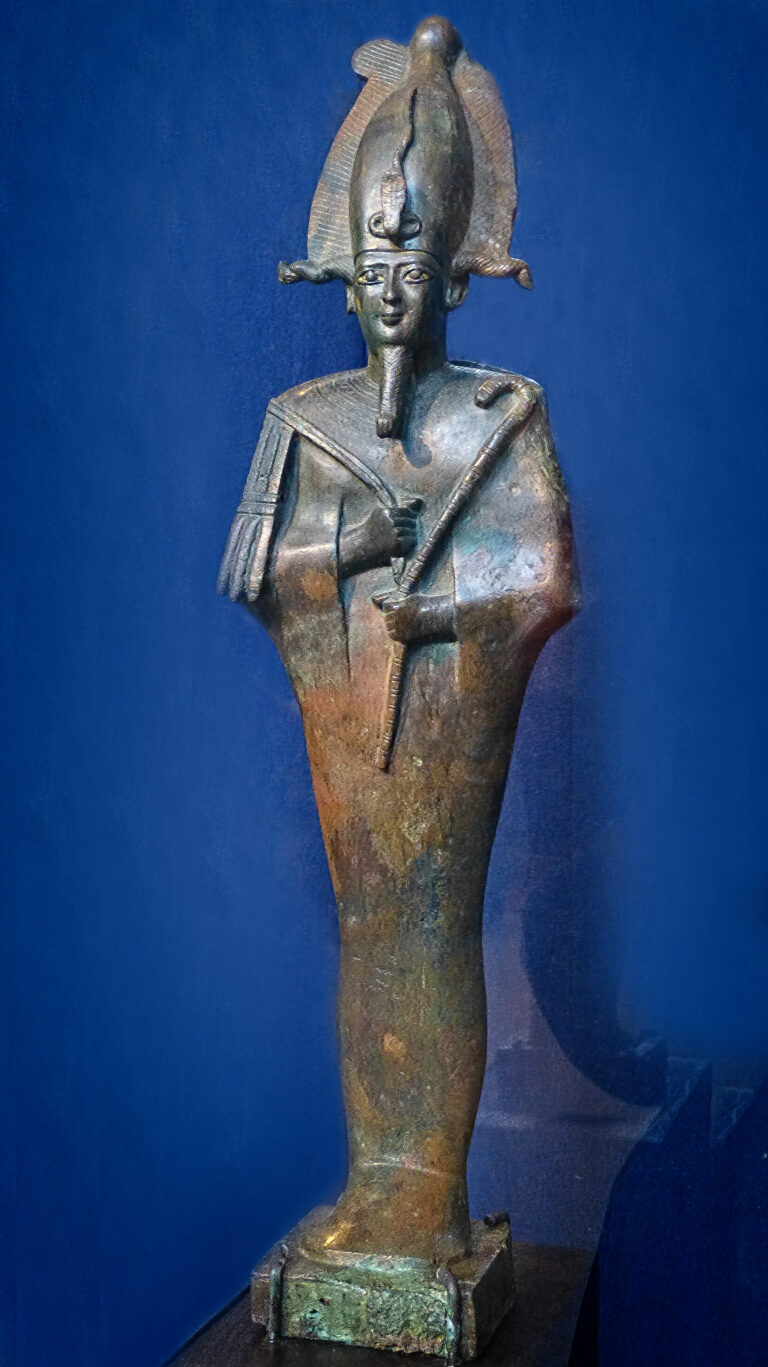
OsirisOsirisIn Geomytha, Osiris names reflected presence: Am — awareness reflected as living consciousness without yet becoming ownership.Read full entry → (Reflection / Moon): the honest mirror; meaning-making that still answers reality.
SetSetIn Geomytha, Set names the claimant: I — the interruption by which reflection is taken as mine and converted toward ownership.Read full entry → (Imagination / Sun): perception hijacked into narrative, fear, and control—where “what’s true” becomes “what’s useful.”
HorusHorusIn Geomytha, Horus names the identity that forms after claim: This — the body, role, image, wound, belief, or story taken as what the self is.Read full entry → (Time-bound identity / Illusion of man): the role-self that lives inside the story—loyalist, leader, traitor, enemy.
Orwell’s farm begins as a lived field. Then it becomes a story. Then the story becomes a system. Then the system produces identities that can be managed.
That is the motor.
Old Major: the sincere mirror that becomes a template
Old Major is not “the villain.” He is Osiris: a legitimate reflection of exploitation and a vision of a better life.
But the trap is embedded in the structure of every utopian dream: it moves attention into future-time.
The moment liberation becomes a promised future—after the revolution, after the windmill, after the plan succeeds—presence is vulnerable. Set thrives in future-time because future-time requires management, interpretation, and authority.
Old Major offers a true mirror. Set later uses that mirror as a blueprint for control.
The Commandments: when language becomes the replacement for reality
At first, the Commandments feel like a stabilizing social mirror. But the genius (and horror) of Orwell’s design is that the Commandments become editable.
When rules can be revised without accountability, the rule is no longer truth; it is a control surface.
The animals are trained to doubt their own memory and outsource discernment to the authorized interpreter. In political terms: propaganda. In psychological terms: the moment your lived experience becomes secondary to the story you are told about your experience.
This is where Set enters fully—not as fantasy, but as managed perception.
Napoleon and Snowball: two modes of the same takeover
Many readers treat Snowball as the “good leader” and Napoleon as the “bad leader.” Orwell is subtler than that. Both are part of the same engine.
Snowball represents visionary Set: plans, diagrams, persuasion, the shining future.
Napoleon represents coercive Set: consolidation, secrecy, fear, enforcement.
Both yield the same outcome: Horus—the time-bound identity roles that define who you are allowed to be: loyalist, dissenter, traitor, defender.
If you can assign a person a role, you can predict them, police them, and punish them.
Squealer: the serpent function
Squealer is the book’s purest mechanism: the translator who converts lived reality into authorized meaning.
Hunger becomes “ration adjustments.”
Failure becomes “necessary sacrifice.”
Memory becomes “misremembering.”
Doubt becomes “traitorous thought.”
He rarely needs to change the material conditions. He changes what the conditions are permitted to mean.
In your own life, this is the voice that says, “Don’t trust what you see—trust the interpretation.”
Boxer: the tragedy of devotion without discernment
Boxer is the farm’s engine and its sacrifice.
He embodies an immense good—strength, sincerity, willingness. But thoseThose — ProjectionThose names projection: enemies, outsiders, competitors, threats, and disowned qualities placed beyond the identity boundary.Read full entry → virtues are harvested when he replaces discernment with slogans:
“I will work harder.”
“Napoleon is always right.”
Politically, it’s the tragedy of the working class being used. Psychologically, it’s the moment reflection surrenders its authority to an external idol.
When that happens, Horus is installed: you become a role inside the story.
The windmill: future-time as a control technology
The windmill is not just an economic project. It is a temporal machine.
It keeps attention permanently in the future, which justifies permanent sacrifice in the present:
Work more now.
Eat less now.
Endure now.
Trust later.
Set loves the windmill because it turns consciousness into a treadmill.
The farmers’ return: why it signifies the heel-grab
What does it mean when the farmers come back to retake the land?
On the surface, it’s a predictable counterattack—those with power attempt to reclaim what they lost. Politically, it’s the external threat that helps justify internal consolidation.
In the motor-of-consciousness lens, it’s a heel-grab.
A heel-grab is the reflex that pulls awareness back into the old loop at the moment it approaches freedom.
Here is the exact mechanism:
A brief opening appears (post-rebellion clarity, possibility, shared purpose).
A threat of regression emerges (“Jones might return”—the old world).
Fear collapses presence into future-time (“we must secure what we have”).
Emergency logic authorizes centralized control (“someone must decide; someone must enforce”).
Identity roles crystallize (defender, loyalist, traitor).
Managed perception becomes permanent (“don’t trust your eyes; trust the line”).
So yes: the farmers’ return functions as the heel-grab because it provides the justification for the entire Set apparatus to become “necessary.”
It does not matter whether the threat is real or exaggerated. Once fear becomes the organizing principle, the takeover is already underway.
“All animals are equal…”: the moment reality splits in two
When the famous line appears—“All animals are equal, but some are more equal than others”—the system has completed its conversion.
There is now:
lived reality (cold, hunger, exhaustion), and
declared reality (progress, equality, necessity).
When declared reality overrides lived reality, Set has won. Horus then survives by becoming the identity that can tolerate contradiction: the loyal animal who learns to doublethink.
The ending: why pigs and men become indistinguishable
The final scene is not merely “power corrupts.” It’s a structural claimI — ClaimI names claim: the interruption by which reflected presence is taken as mine.Read full entry →: a revolution built on perception-management cannot end anywhere but a new mask of the old regime.
When the animals cannot tell pig from man, the book is showing the loop closing:
the new identity becomes indistinguishable from the old identity,
because identity itself—when enthroned—is the medium through which domination repeats.
Why this matters beyond politics
You don’t need a revolution to live this pattern.
You can see it in institutions, families, and personal psychology:
A truthful observation becomes an ideology.
An ideology becomes a narrative machine.
The narrative machine produces roles.
The roles become “who I am.”
And then the original truth is no longer accessible except through authorized interpretation.
Orwell wrote a political fable. He also accidentally wrote an x-ray of how consciousness is overtaken.
The farmers’ return is the heel-grab because fear of going backward is the fastest way to keep a being from going forward.
If this resonates
I’m building a myth-analysis engine that scans scripture, nursery rhymes, films, and songs for repeating archetypal patterns—especially the conversion of presence into thought, and thought into identity.
X: @mythicgeometry
Instagram: @mythicgeometry
TikTok: @Geomytha
Patreon: Geomytha Noir
Substack: Geomytha Noir
YouTube: Geomytha