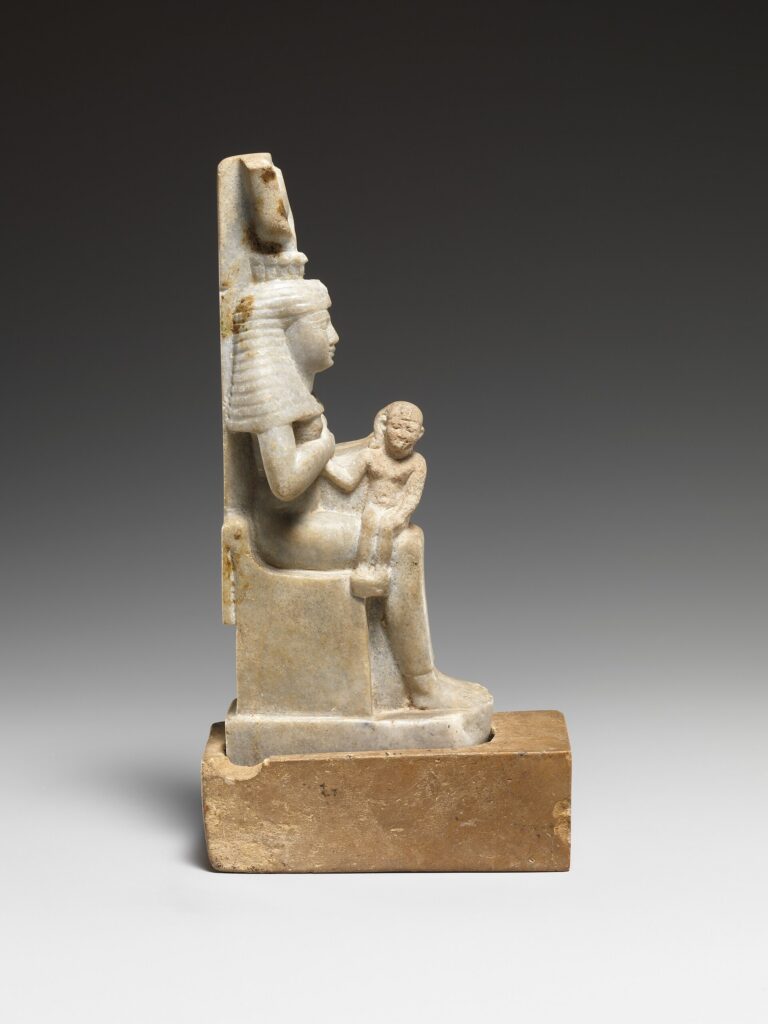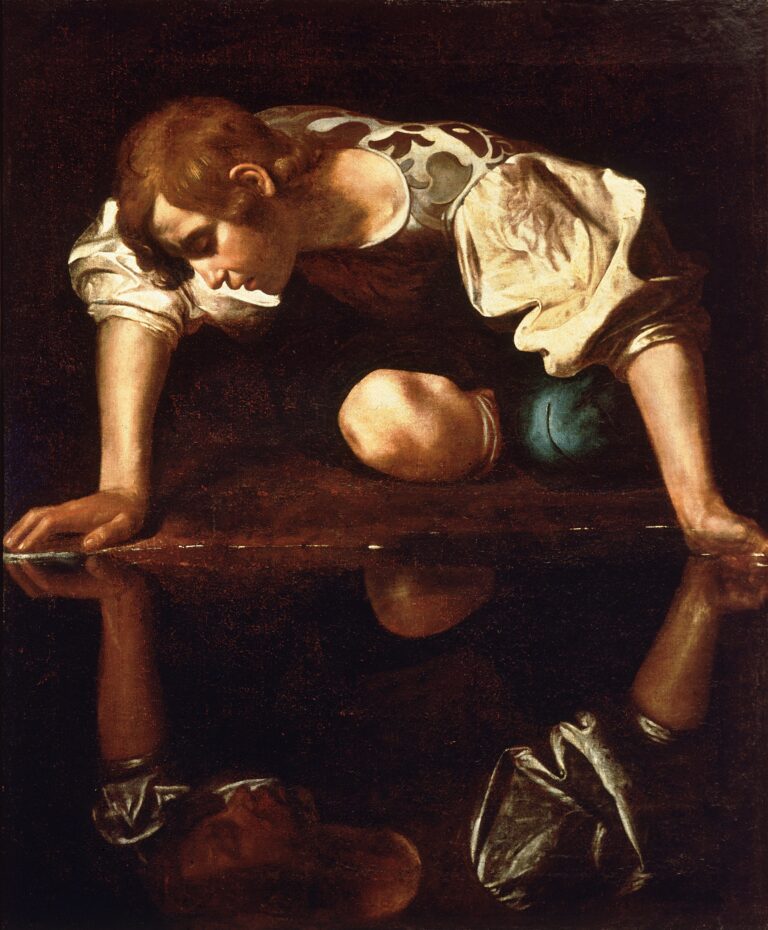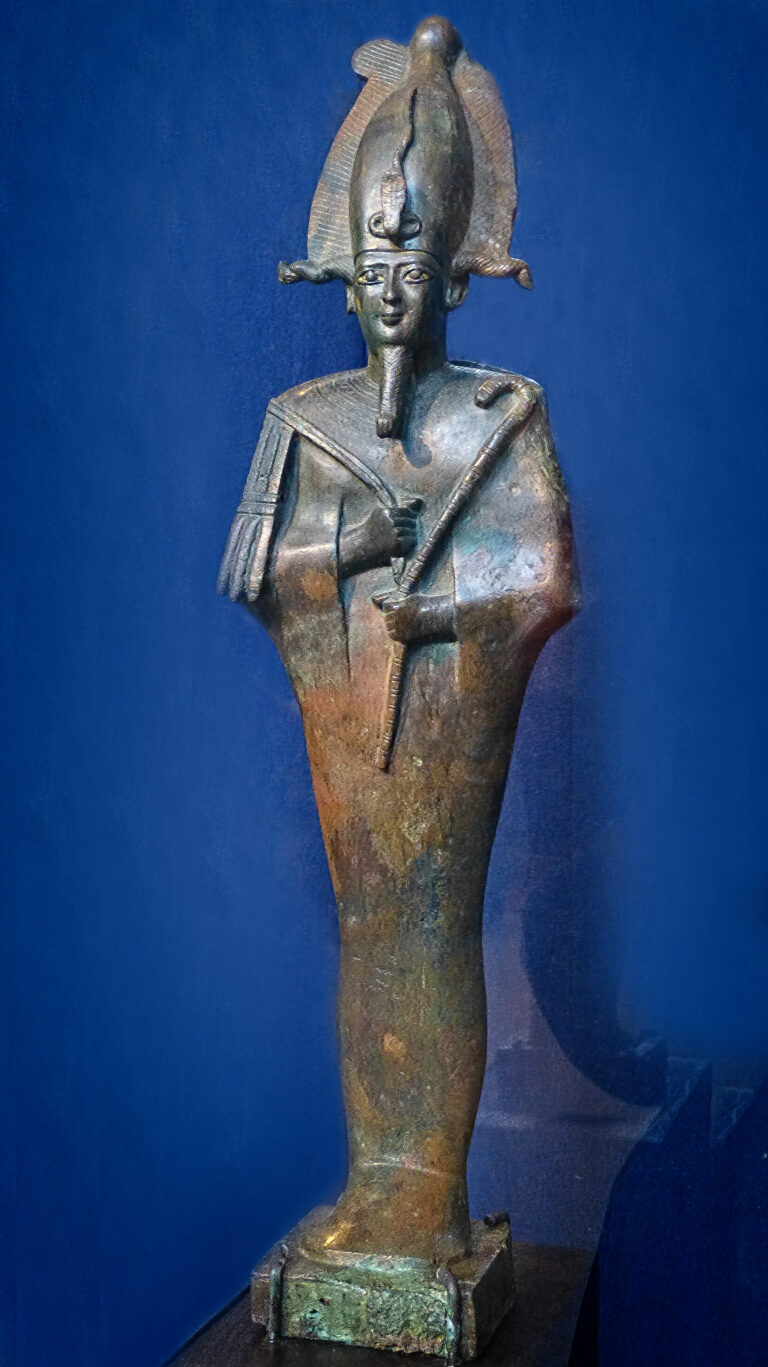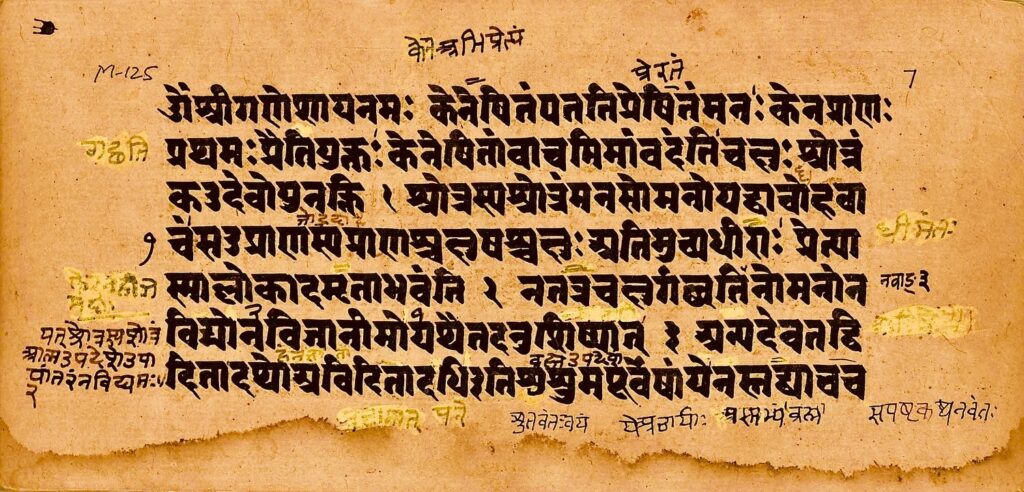
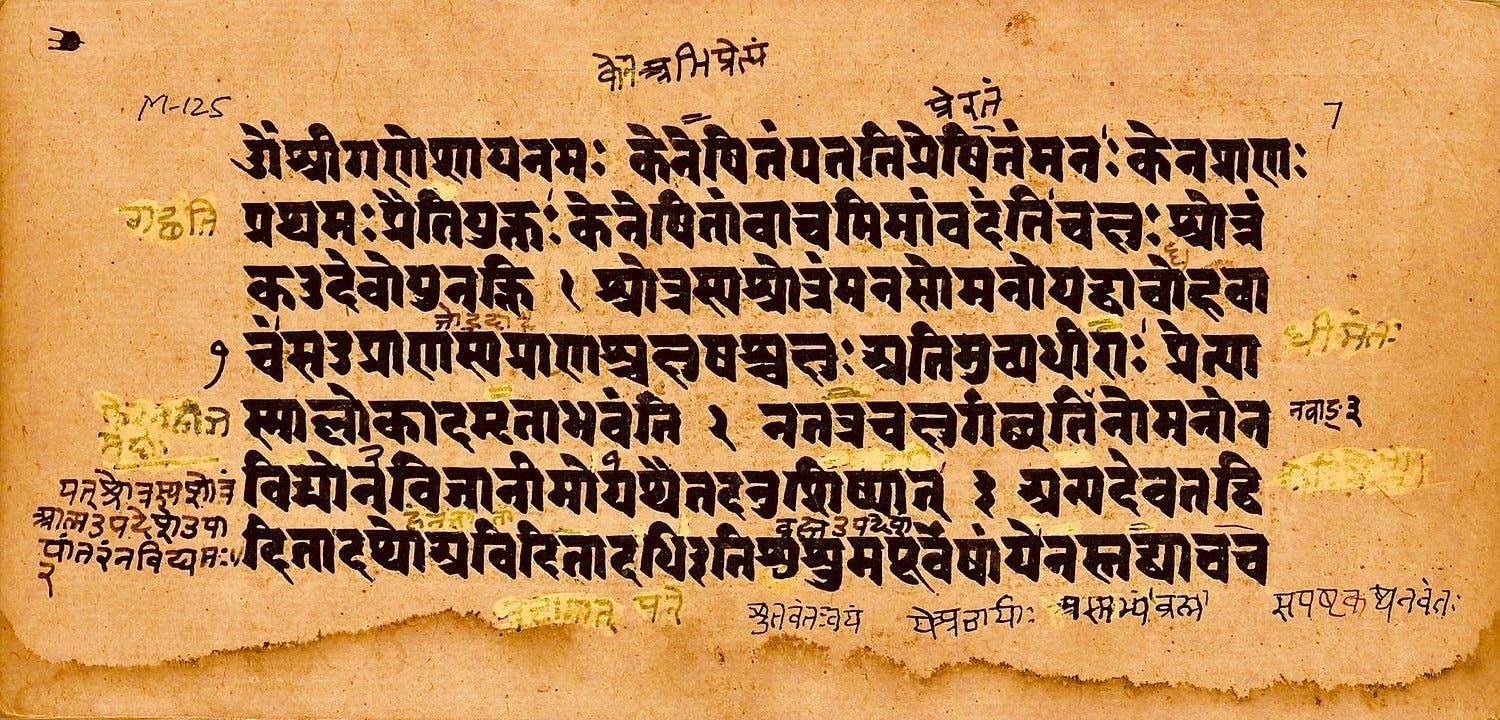
Read the Upanishads through a four-part lens: IsisIsisIn Geomytha, Isis names the unclaimed field: Is — pure being, awareness before possession, and the ground before the claimant appears.Read full entry → (awareness), OsirisOsirisIn Geomytha, Osiris names reflected presence: Am — awareness reflected as living consciousness without yet becoming ownership.Read full entry → (reflectionAm — ReflectionAm names reflected presence: awareness embodied or mirrored without yet becoming ownership.Read full entry →), SetSetIn Geomytha, Set names the claimant: I — the interruption by which reflection is taken as mine and converted toward ownership.Read full entry → (imagination’s overlay), and HorusHorusIn Geomytha, Horus names the identity that forms after claim: This — the body, role, image, wound, belief, or story taken as what the self is.Read full entry → (time-bound identityThis — IdentityThis names the formed identity: the body, role, image, wound, belief, or story claimed as what the self is.Read full entry →). The result is a precise path from misidentification to freedom, mapped onto your Vortex Math DiagramVortex Math DiagramThe diagram associated with Vortex-Based Mathematics arranges base-10 digit-root patterns around a circle and emphasizes the repeating doubling cycle 1→2→4→8→7→5→1, alongside special treatment of 3, 6, and 9. The repeating 1-2-4-8-7-5 cycle…Read full entry →.
About this series
This series examines archetypes through the lens of awareness (Isis/earth), reflective consciousness (Osiris/moon), imagination’s overlay (Set/sun), and the time-bound ego identity (Horus/illusion of man)—with the Vortex Math Diagram (VMD) as a visual aid.
The Upanishads in the Isis–Osiris–Set–Horus Framework
Thesis. Read through this lens, the Upanishads present a rigorous movement from pure awareness to a time-bound identity—and back. Isis names unconditioned awareness; Osiris is awareness perfectly reflected; Set is imagination’s solar overlay that fractures unity into names and forms; Horus is the time-bound ego crystallized by that overlay. Liberation (mokṣa) is the returnReturn — RemembranceReturn names remembrance and release: the loosening of possession so reflection can become transparent to source again.Read full entry → from Horus/Set to Osiris/Isis—identity unwinds into presence.
I. Issue, Rule, Analysis, Conclusion (IRAC)
Issue. What do the Upanishads assert about the Self and reality, and how does that assertion comport with this four-part model (and the VMD)?
Rule. The core statements (mahāvākyas) hold that (1) the ground of reality is undivided consciousness (Brahman), (2) the inmost Self (Ātman) is not other than that ground, and (3) multiplicity appears through māyā—misidentification with transient name-and-form.
Analysis.
Isis ≡ Brahman. Pure awareness prior to image and story.
Osiris ≡ Ātman rightly reflected. The moonlike witness that reflects Isis without distortion.
Set ≡ māyā. The solar broadcast of imagination—useful for appearance, distorting when believed as ultimate.
Horus ≡ ahaṃkāra (ego). The time-bound identity that forms when Set’s overlay is mistaken for the Self.
Conclusion. The Upanishadic path is not “self-improvement” for Horus; it is de-identification from Set’s overlay until Osiris’ reflection is steady and Isis is recognized as ever-present.
II. The Four Terms Precisely Defined
Isis (Awareness / “Earth”) The indivisible fact of consciousness. Not an object, not a property—the condition for every object and property.
Osiris (Reflective Consciousness / “Moon”) Awareness as flawless witness. Noticing occurs without annexation. When Osiris is stable, the “I” is transparent.
Set (Imagination / “Sun”) The broadcast that overlays forms, meanings, valuations, and timelines. The error is usurpation: taking projectionThose — ProjectionThose names projection: enemies, outsiders, competitors, threats, and disowned qualities placed beyond the identity boundary.Read full entry → as reality.
Horus (Time-Bound Identity / “Man’s Illusion”) The composite story sustained by identification with Set’s images: “I am thisThe False-Self Sentence — I Am ThisThe false-self sentence forms when claim joins reflection to a fixed object of identity: I am this.Read full entry → role, this history, this grievance.”
III. Five Upanishadic Scenes Read Through the Lens
Bṛhadāraṇyaka & Chāndogya (mahāvākyas) “Aham brahmāsmi” and “Tat tvam asi” collapse the supposed gap between witness and ground. Remove Set’s overlay and what remains, undeniably present, is Isis.
Īśa Upaniṣad (living without ownership) “All thisAll This — World-SystemAll This names the total symbolic environment that has become so complete it is experienced as reality itself.Read full entry → is pervaded.” Action continues, ownership ceases. Discipline: let perception arise, but do not annex it. Rest attention at the “SabbathSabbathNamed weekly sacred rest pattern in Jewish tradition.Read full entry →” center (solar plexus), where Osiris reflects without appropriation.
Kaṭha Upaniṣad (Naciketas; the chariot) The pleasant (preya) versus the good (śreya). The chariot allegory instructs: reins (mind) answer to the charioteer (witness), not the scenery. Set offers infinite scenes; Osiris chooses rest over chase.
Muṇḍaka Upaniṣad (two birds, one tree) One bird eats (Horus/agent), the other witnesses (Osiris). The eater’s dissatisfaction matures into disidentification; attention abides as witness and Isis shines on its own.
Māṇḍūkya Upaniṣad (four states) Waking, dream, deep sleep are modes within Set/Horus dynamics. Turīya is Isis—the ground of all states. Recognition ends the compulsion to curate or optimize states.
IV. How the Vortex Math Diagram (VMD) Sharpens the Reading
Osiris loop (1-2-4-8-7-5). Closed, self-consistent reflection without leakage.
Set overlay (3-6-9). A solar through-line that appears to complete the picture but converts reflection into projection.
Horus as apparent completion (1→9). When 3-6-9 is mistaken for ground, identity congeals. The continuity felt is reference, not reality.
Resolution. Do not smash the overlay; withdraw belief and energy from it. The loop is then experienced as whole, and Isis is obvious.
V. Practice: Three Disciplines in Upanishadic Language
Neti-Neti (Not this, not that) A structured examination of candidates for “me.”
If it is seen, it is not the seer.
If it changes, it is not the changeless ground.
If it can be lost, it cannot be the Self. Persist until only self-luminous awareness (Isis) remains.
Re-centering at the Sabbath (solar-plexus rest) Set commandeers the head-center—broadcasting, comparing, anticipating. Re-center attention in the chest/solar plexus and rest. When Osiris stabilizes here, the overlay loses voltage.
Witness-first living (Osiris in motion) For one day, prioritize the witness in every act. Let phenomena arise and resolve without annexation. Where annexation occurs, notice it, release it. Over time, Horus cannot hold shape.
Five-minute micro-protocol
60s: recognize raw awareness without object.
120s: rest attention at the solar plexus; allow breath to settle.
120s: watch thoughts/images/urges appear and dissolve; label each “Set” silently.
30s: confirm the witness as prior to all content.
VI. Objections and Replies
“Isn’t imagination (Set) necessary?” Yes. The issue is not function but authority. When imagination usurps, suffering is built in. When it serves reflection, creativity is clean.
“Isn’t ego (Horus) required to navigate society?” A provisional identity is operationally useful. The claimI — ClaimI names claim: the interruption by which reflected presence is taken as mine.Read full entry → is not “destroy the person,” but “withdraw the false absolute.” Recognized as instrument, Horus behaves better, not worse.
“Why emphasize the solar plexus?” As used here, it is a somatic convention that ends broadcast-reaching. It is a cue, not a dogma.
VII. Practical Consequences
Speech: Fewer declarations; when needed, precise and minimally self-referential.
Conflict: The need to “win the story” relaxes. Facts and logic can be pressed firmly without defending an identity.
Attention: Entertainment and scrolling become optional choices rather than anesthetics.
Ethics: Without annexation, others are not means. Conduct trends toward restraint, clarity, and care.
VIII. A Short Reading Plan
Start: Īśa (conduct without ownership).
Then: Muṇḍaka (two birds; witness practice).
Then: Kaṭha (discrimination; chariot).
Then: Chāndogya/Bṛhadāraṇyaka (mahāvākyas; identity unwind).
Capstone: Māṇḍūkya (Turīya; state-transcending rest).
After each section, pause one minute and ask:
Where is Isis? Where is Osiris? Where is Set active? What in Horus wants to annex this insight?
IX. One-Paragraph Summary
The Upanishads teach that reality is undivided awareness (Isis). When awareness reflects itself cleanly (Osiris), the person functions without annexation. Suffering begins when imagination’s solar overlay (Set) is taken as ground, crystallizing a time-bound identity (Horus). Practice is neither self-adornment nor self-annihilation but the end of usurpation: withdraw belief from the overlay, rest where reflection is pure, and allow identity to unwind into presence.
X. Closing
Nothing new is added by recognition; only the counterfeit is removed. When Set stops posing as the ground, Horus cannot hold, Osiris is steady, and Isis is obvious. The outcome is not trance but the simplest fact: awareness, here, prior to any story about “me.”
Sidebar: Mahāvākyas Mapped
Tat tvam asi → Osiris ≡ Isis recognized.
Aham brahmāsmi → The “I” minus annexations is Isis.
Prajnānam brahma → Awareness itself is the Real.
Ayam ātmā brahma → This very Self is Brahman.
Sidebar: Daily Cue
When grasping is noticed in the head, ask, “Who is broadcasting?”
Shift attention to the solar plexus; exhale; leave three breaths unmanipulated.
Let the witness see the broadcast as broadcast—and stop annexing it.
Which passage of the Upanishads most clearly exposes Set’s overlay for you? How do you operationalize witness-first living in a busy day?