Before a child learns who they are, they learn what they are called.
A name arrives first.
The child hears it spoken by parents, relatives, teachers, and strangers. The sound repeats so often that it eventually becomes inseparable from experience itself.
A strange reversal then takes place.
What began as a label gradually starts pretending to be a person.
The name becomes a self.
This process is so ordinary that it rarely attracts attention. Yet it may be one of the most important movements in human life.
Names are among the first tools used to organize reality.
Without names, communication becomes difficult.
Without names, distinctions become difficult.
Without names, memory becomes difficult.
Names are not the problem.
The problem begins when a label is mistaken for the life it describes.
Throughout this series, the same pattern has appeared repeatedly.
A reflection becomes an identity.
The identity gathers possessions.
The possessions create outsiders.
The outsiders help construct a world.
Yet beneath each stage lies something surprisingly simple.
A name.
A role.
A title.
A story.
A label.
Identity often speaks through borrowed names.
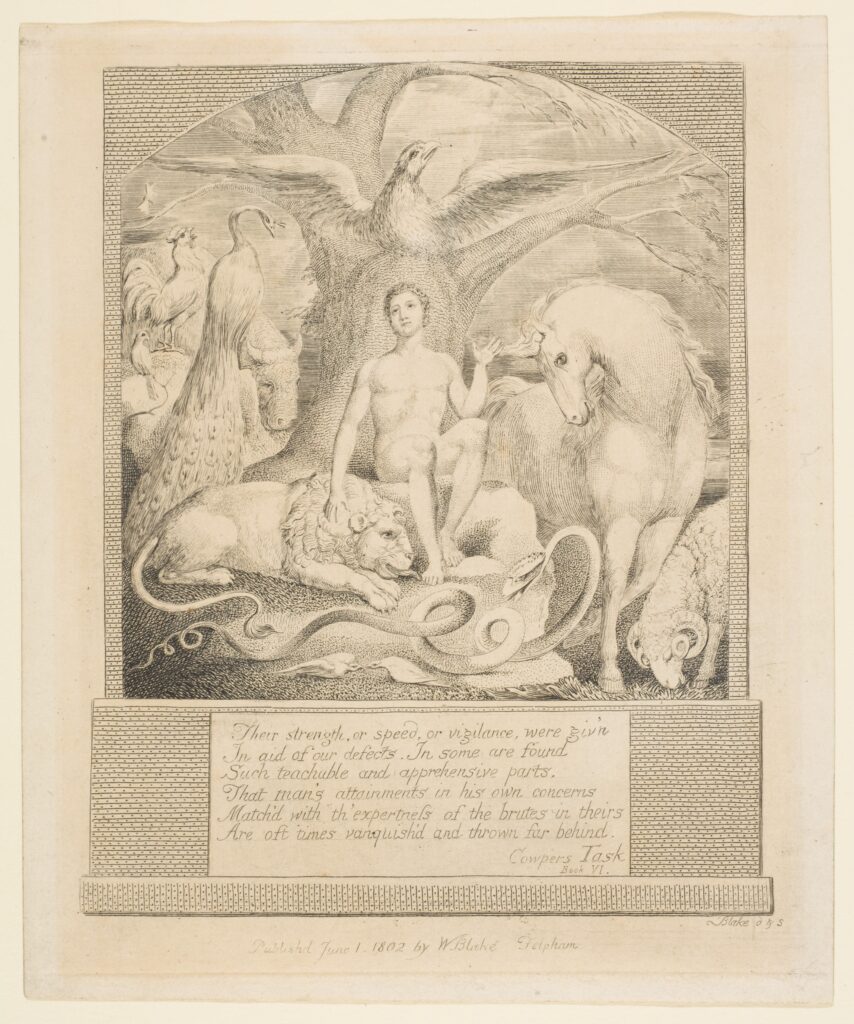
The ancient story of Adam naming the animals offers a useful starting point.
Naming is one of humanity’s earliest symbolic acts.
The world is encountered.
Distinctions are made.
Language is applied.
Order emerges.
The act itself is not a mistake.
Naming allows navigation.
Naming allows relationship.
Naming allows understanding.
Yet naming also introduces a temptation.
The temptation is not to use names.
The temptation is to become them.
A child learns:
I am Philip.
I am Sarah.
I am Michael.
At first these are practical descriptions.
Eventually the name begins collecting stories.
Memories attach themselves.
Achievements attach themselves.
Failures attach themselves.
Expectations attach themselves.
The label grows heavier.
The name becomes a container.
Soon the process expands beyond personal names.
New labels arrive.
Student.
Athlete.
Worker.
Parent.
Citizen.
Believer.
Skeptic.
Success.
Failure.
Victim.
Expert.
The roles accumulate.
Each role serves a purpose.
Each role helps organize experience.
Yet the same question quietly returns.
Who is wearing the role?
The ancient theater understood this distinction clearly.
The Latin word persona could mean a theatrical mask or role.
The audience understood that the mask was not the actor.
The mask revealed a role.
The role served the story.
The problem begins when the actor forgets the mask is a mask.
Many of history’s most powerful identities function in exactly this way.
Consider the Pharaoh.
Pharaoh was not a personal name.
The word first referred to the royal estate—the “great house”—and later became a designation for the king.
A title.
A role.
A symbolic office.
The title survived generations of rulers.
Individuals entered the role.
Individuals left the role.
The title remained.
The mask outlived the wearer.
The same is true today.
Doctor.
Lawyer.
Teacher.
Judge.
President.
Professor.
Parent.
The roles matter.
The responsibilities matter.
The labels are useful.
Yet none of them fully contains the person wearing them.
Suffering often appears when the distinction disappears.
A teacher retires and wonders who they are without teaching.
An athlete ages and wonders who they are without competition.
A parent watches children grow and wonders who they are without constant caregiving.
The role changes.
The identity struggles.
The costume begins believing it is the wearer.
The same pattern scales upward into larger labels.
Nationality.
Religion.
Politics.
Culture.
Ideology.
Entire communities organize themselves around names.
The labels become flags.
The flags become identities.
The identities become kingdoms.
Soon people defend words as though they were defending life itself.
Yet a label remains a label no matter how large it becomes.
This dynamic has intensified in the modern world.
Social media encourages the continual construction of personal identities.
Profiles.
Handles.
Bios.
Brands.
Descriptions.
Labels accumulate faster than ever before.
A person may maintain dozens of names simultaneously.
Professional identity.
Political identity.
Family identity.
Online identity.
Spiritual identity.
Consumer identity.
The collection grows.
The wardrobe expands.
The costumes multiply.
None of this means names are unnecessary.
Quite the opposite.
Names remain useful.
Roles remain useful.
Titles remain useful.
Civilization depends upon them.
The question is whether they are being used as tools or mistaken for reality itself.
A map is valuable.
A map becomes dangerous when it is mistaken for the territory.
A name is valuable.
A name becomes dangerous when it is mistaken for the life it describes.
This is why many traditions place such emphasis on remembering what remains beneath the labels.
Not because labels must be destroyed.
Not because names must disappear.
Because names function best when remembered as names.
The costume functions best when remembered as a costume.
The role functions best when remembered as a role.
The title functions best when remembered as a title.
The label can remain.
The attachment softens.
The mask loosens.
The person remains.
The teacher may continue teaching.
The parent may continue parenting.
The citizen may continue participating in society.
The role does not disappear.
Only the confusion begins to fade.
The journey through reflection, identity, possession, enemies, kingdoms, and civilizations eventually returns to this simple recognition.
Many of the things we call ourselves were borrowed.
Names were given.
Titles were inherited.
Roles were assumed.
Stories accumulated.
The labels arrived.
Then they stayed.
Yet beneath every borrowed name remains the life that first received it.
The costume may change.
The labels may change.
The titles may change.
The kingdoms may change.
The names may change.
What wears them continues.
And perhaps that is why the wisest use of a name is not to become it.
It is to wear it lightly.