
Modern therapy culture often speaks as if the self were the patient, the project, and the prize all at once.
That should make people more uneasy than it does.
Because the most dangerous possibility is not simply that the self suffers. It is that the very structure generating a large share of the suffering is the same structure being stabilized, narrated, optimized, and preserved as though it were the deepest truth in the room. Relief matters. Function matters. Regulation matters. But thoseThose — ProjectionThose names projection: enemies, outsiders, competitors, threats, and disowned qualities placed beyond the identity boundary.Read full entry → goods do not erase the harder question.
What exactly is being healed back into strength?
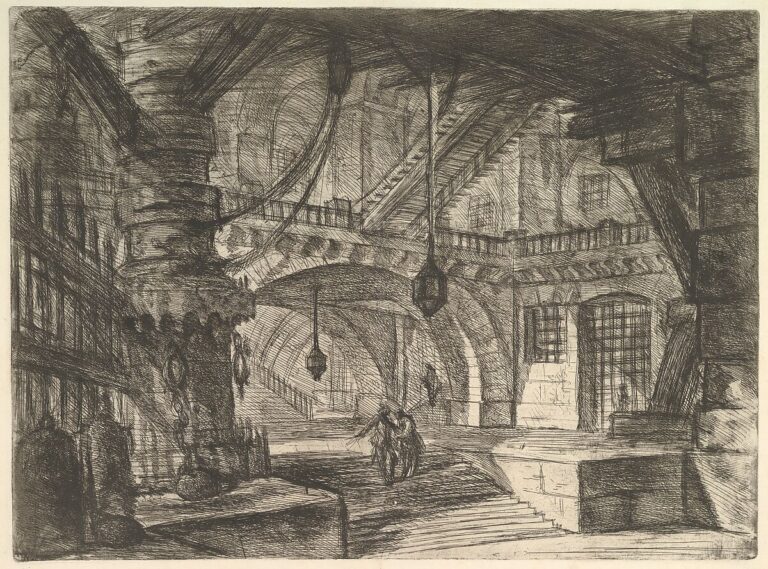
If the answer is the false self, then the process may still soothe pain while leaving the captivity intact. It may produce a more articulate prison. A better-furnished one. A prison with improved lighting and cleaner language around trauma, attachment, boundaries, and self-worth.
Still a prison.
This is why narcissism is such a useful example. It is gaudy enough that the machinery shows. Image-maintenance. Admiration hunger. Fragility under exposure. Life lived before mirrors, real or social. The person cannot rest outside performance because performance has become their evidence of being. But narcissism is only the obvious version. More ordinary people do quieter versions of the same thing every day: they build a self out of wound, memory, diagnosis, grievance, ambition, or healing language, then defend that structure as though the whole point were to make it function more elegantly.
That is what makes modern therapy culture spiritually strange. It can become a place where the false self learns new sophistication. The person gets better words. Better insight. Better self-description. Better emotional literacy. All of that can be genuinely helpful. None of it automatically loosens identification.
That distinction matters more than most people realize.
A person can describe the prison beautifully and still refuse the door. They can become exquisitely insightful about patterns while remaining completely identified with the one who owns the patterns. They can turn healing into one more style of self-preservation.
This is the decisive question beneath the whole article: what does a system think a person is? If a person is assumed to be primarily a narrative identityThis — IdentityThis names the formed identity: the body, role, image, wound, belief, or story claimed as what the self is.Read full entry → in time—a psychological self needing coherence, adaptation, and durable function—then treatment will naturally aim at strengthening that temporal self. If awareness is prior, and identity is derivative, then the task changes. Then the goal cannot stop at improving the story. It has to include loosening the storyteller.
That is where the subject stops being merely clinical and becomes metaphysical.
Because once you see that the ego can survive inside almost anything—religion, politics, spirituality, rebellion, therapy, anti-ego rhetoric—you stop being impressed by surface refinement. The self does not mind being analyzed. It does not mind being soothed. It does not even mind being criticized, as long as it remains the center. What it hates is losing the throne.
That is why this piece belongs under Build / Devote. Real healing requires devotion—not to the endless maintenance of the current self-image, but to the repeated returnReturn — RemembranceReturn names remembrance and release: the loosening of possession so reflection can become transparent to source again.Read full entry → of attention from projection toward presence. It requires discipline. Fidelity. A willingness to stop feeding every mental object with the word “I.”
Breath matters here. Stillness matters. Witnessing thought without instantly becoming it matters. The body matters.The so-called solar plexus is, in this reading, a misnaming. More properly it is the Isis plexusIsis PlexusGeomytha uses “Isis Plexus” as an interpretive name for the embodied receptive center associated with holding, containment, and unclaimed presence before attention is pulled upward into image, anticipation, abstraction, and identity.Read full entry →, or Is-iac plexus: the living convergence point where consciousness can return to grounded presence rather than be drawn upward into image, abstraction, and false identity. What matters here is not allegiance to the solar principle, but restoration of direct reflective relation. And because the false self is rebuilt continuously through fear, desire, memory, and anticipation, the return cannot be a one-time insight. It has to be practiced as continuous seeing.
So the critique is not that psychology is fake. The critique is sharper. It is that many systems stop at management when management is not the same thing as return. They help the false centerFalse CenterA false center forms when sovereignty is assigned to an object, role, institution, future state, identity, or projection that cannot actually serve as source.Read full entry → function more smoothly without asking whether that center is finally trustworthy as a center at all.
That is the uncomfortable practical question the article should leave behind: what in me is being improved, protected, medicated, and endlessly narrated into permanence? If the answer is only the false self, healing may still help me survive. It may not yet have taught me how to come home.
Attention always serves something.
If it keeps serving the self-image, healing becomes ornament.
If it turns back toward presence, healing becomes a way through.