Most people hear the phrase “robbing Peter to pay Paul” and think of money.
One debt is paid by creating another. Nothing is solved. The burden simply moves.
But the phrase becomes far more powerful when Peter and Paul are read not as random names, but as biblical symbols.
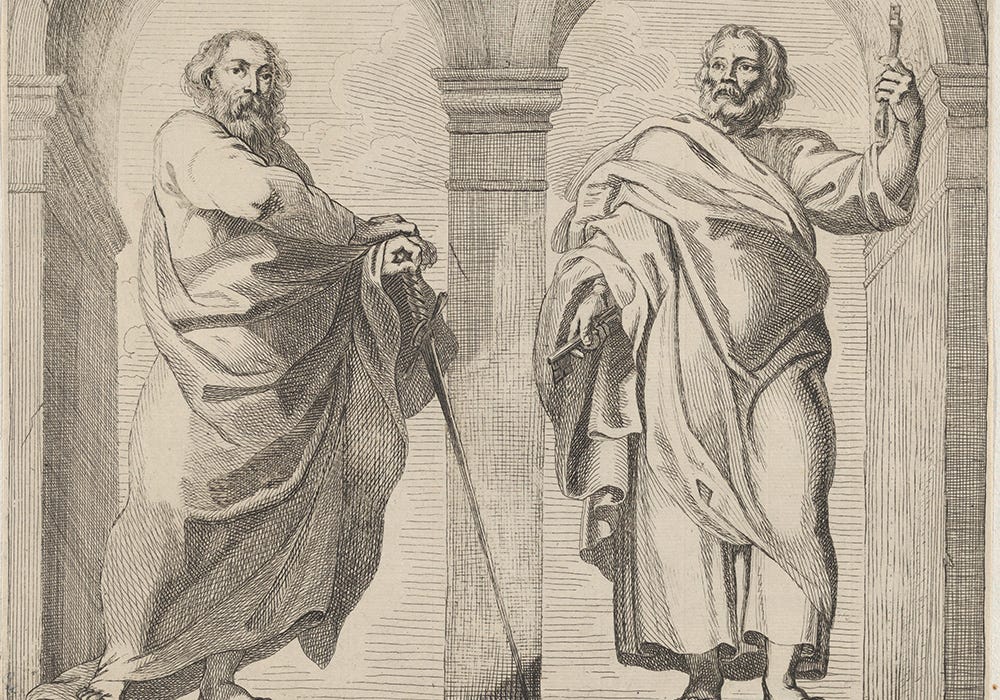
Peter is the rock.
Paul is the missionary.
Peter is foundation.
Paul is expansion.
Peter stays close to the embodied center. Paul carries the message outward into the world.
And before Paul is Paul, he is Saul.
Saul carries a solar resonance. Saul sounds like Sol: the sun, the outward blaze, the radiating force, the power that travels, converts, illuminates, and conquers distance. In strict biblical naming, Saul has its own Hebrew meaning, but symbolically the Saul/Sol echo strengthens the pattern. Before he becomes Paul the apostle, he appears as a solar figure: intense, persecuting, zealous, outward-moving, burning with certainty.
Then he is struck by light.
That matters.
Paul is born from an encounter with overwhelming radiance. His conversion on the road to Damascus is not quiet, lunar, or inward at first. It is solar: a flash, a fall, a rupture, a command, a mission. The old Saul is broken open by light, and Paul emerges as the one who carries the message across the world.
This does not make Paul false.
It makes him dangerous in the way all expansion is dangerous.
The sun can reveal.
The sun can also dry the ground.
The Rock
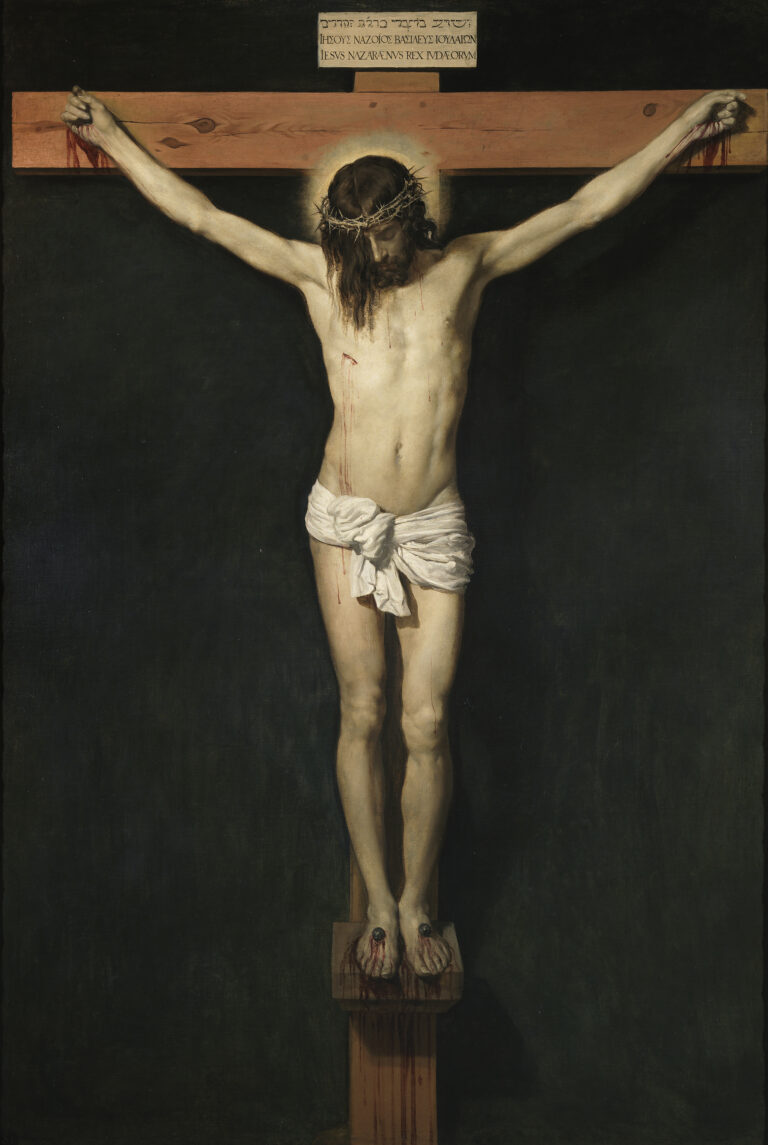
When JesusChristJesus Christ as the central figure of Christianity. Matthew 27 depicts the soldiers' mock coronation with a robe and crown of thorns before crucifixion; Philippians 2 describes Christ humbling himself and becoming…Read full entry → tells Peter, “Upon this rock I will build my church,” Peter becomes the symbolic foundation.
The rock is stability.
The rock is continuity.
The rock is the living centerShell and CenterShell and Center distinguishes the structure built to preserve, transmit, or protect living source from the living center the structure is meant to serve.Read full entry → from which everything else emerges.
Every movement begins with a Peter.
A family begins with trust.
A religion begins with revelationRevelation — Book of RevelationThe final book of the Christian New Testament, also called the Apocalypse of John.Read full entry →.
A nation begins with shared purpose.
A friendship begins with affection.
A work of art begins with inspiration.
Something living exists before the structure built around it.
The foundation comes first.
Peter is not the system.
Peter is the ground that allows the system to stand.
Saul, Sol, and the Mission
Paul represents something equally necessary.
Expansion.
Interpretation.
Transmission.
Movement.
The message cannot remain locked inside a single room forever. It must travel.
Without Paul, the movement never leaves its birthplace.
Without Paul, the message remains local.
Without Paul, the foundation remains hidden.
But Paul begins as Saul, and Saul begins in the heat of zeal. He is not merely curious. He is driven. He is certain. He is moving outward with force. Symbolically, this is the solar archetype before it is corrected: light detached from mercy, certainty detached from presence, mission detached from the living center.
Then the light interrupts him.
The solar force is not abolished. It is redirected.
Saul becomes Paul.
The persecutor becomes the apostle.
The heat becomes message.
The outward force becomes mission.
That is the best version of Paul: solar expansion brought into service of the sourceIs — SourceIs names unclaimed being: awareness before possession, distinction, or identity.Read full entry →.
But the danger remains.
The mission can become so successful that it begins consuming the foundation itself.
The structure grows larger and larger while becoming increasingly detached from the thing that originally gave it life.
Growth becomes its own purpose.
Expansion becomes its own justification.
The machine begins feeding itself.
Robbing the Rock to Fund the Road
This is the deeper meaning of robbing Peter to pay Paul.
It is not only taking from one person to satisfy another.
It is taking from the rock to fund the road.
Taking from foundation to finance expansion.
Taking from embodied presence to maintain the mission.
Taking from the living center to preserve the system that claims to serve it.
The phrase becomes a warning about institutional drift.
At first, the institution protects the source.
Then it represents the source.
Then it manages the source.
Then it consumes the source.
The rock is mined to build the road.
The road grows.
The rock weakens.
Eventually the road may continue for miles while the foundation that gave it meaning has almost disappeared.
Animal Farm
George Orwell tells the same story in Animal Farm.
The animals overthrow the farmer.
The revolution succeeds.
The old order falls.
But eventually the pigs begin acting exactly like the rulers they replaced.
Power changes hands.
The structure remains.
The system survives by consuming the ideals that originally created it.
The revolution begins as Peter.
It ends as Paul.
The foundation is robbed to pay for the mission.
Nothing essential has changed.
The MatrixThe MatrixThe Matrix presents Neo’s ordinary experienced world as a computer-generated or neural-interactive construct maintained by a machine system. The film repeatedly distinguishes the operative rules of that construct from whatever lies outside…Read full entry →
The same pattern appears in The Matrix.
The machines no longer merely control humanity.
They feed on humanity.
The source becomes fuel.
The living body becomes battery.
The foundation exists primarily to sustain the machine built upon it.
The image is exaggerated science fiction, but the symbolic structure is ancient.
Whenever the thing that gives life becomes merely a resource for a larger system, Peter is being robbed to pay Paul.
Whenever presence becomes fuel for projectionThose — ProjectionThose names projection: enemies, outsiders, competitors, threats, and disowned qualities placed beyond the identity boundary.Read full entry →, the rock is being mined to keep the solar machine alive.
The Church of Attention
The modern world may provide the clearest example.
Attention has become one of the most valuable resources on Earth.
Every platform competes for it.
Every notification seeks it.
Every algorithm is trained to capture it.
Presence becomes performance.
Conversation becomes content.
Friendship becomes engagement.
Human attention becomes fuel.
The original purpose of communication was relationship.
The original purpose of technology was assistance.
The original purpose of media was transmission.
Yet increasingly the system survives by consuming the very attention it was designed to serve.
The machine grows stronger while the foundation grows weaker.
Peter pays.
Paul expands.
Saul, as Sol, keeps burning.
The Hidden Pattern
The deeper danger is that this process rarely looks destructive while it is happening.
It usually appears successful.
The organization grows.
The audience expands.
The institution gains influence.
The numbers improve.
The mission spreads.
Everything appears healthy.
Yet the center quietly drains away.
The mission survives.
The source weakens.
The symbol grows larger than the reality it was meant to represent.
This is why civilizations repeatedly become fascinated with size.
More members.
More territory.
More followers.
More visibility.
More production.
More growth.
Rarely does anyone stop to ask whether growth is being funded by the destruction of the foundation itself.
Peter and Paul in the Self
This does not only happen to churches, nations, revolutions, or platforms.
It happens inside a person.
There is a Peter within us: the quiet foundation, the body, the breath, the honest relationship to what is real.
There is also a Paul within us: the interpreter, the explainer, the builder, the one who wants to carry the message outward and make something of it.
And there is Saul before Paul: the burning certainty, the solar claimI — ClaimI names claim: the interruption by which reflected presence is taken as mine.Read full entry →, the part of us that wants to act before it has returned to presence.
The question is not whether Paul should exist.
The question is whether Paul still serves Peter.
Does the mission still serve the foundation?
Does the explanation still serve the truth?
Does the identityThis — IdentityThis names the formed identity: the body, role, image, wound, belief, or story claimed as what the self is.Read full entry → still serve the life beneath it?
Or has the whole system quietly reversed?
When the outer project begins consuming the inner ground, the self becomes another institution feeding on its own source.
The Question
Every living thing eventually faces the same test.
Not whether it can grow.
Almost everything can grow.
The question is whether growth remains connected to its source.
A church can lose the spirit that created it.
A nation can lose the principles that formed it.
A movement can lose the truth that inspired it.
A person can lose the presence that gave meaning to their life.
When that happens, the machine survives while the center disappears.
The mission continues.
The message remains.
The foundation is gone.
Peter has been robbed to pay Paul.
Practical Takeaway
Whenever something is expanding, ask a simple question:
What is funding this growth?
If the answer is attention, presence, relationship, truth, integrity, or the living center that gave birth to the system, caution is required.
Not all growth is healthy.
Not every expansion is progress.
Sometimes the most important act is not building larger structures.
Sometimes it is protecting the rock beneath them.
Because once the foundation becomes fuel, the machine may continue running for a very long time.
But it is no longer serving its source.
It is consuming it.