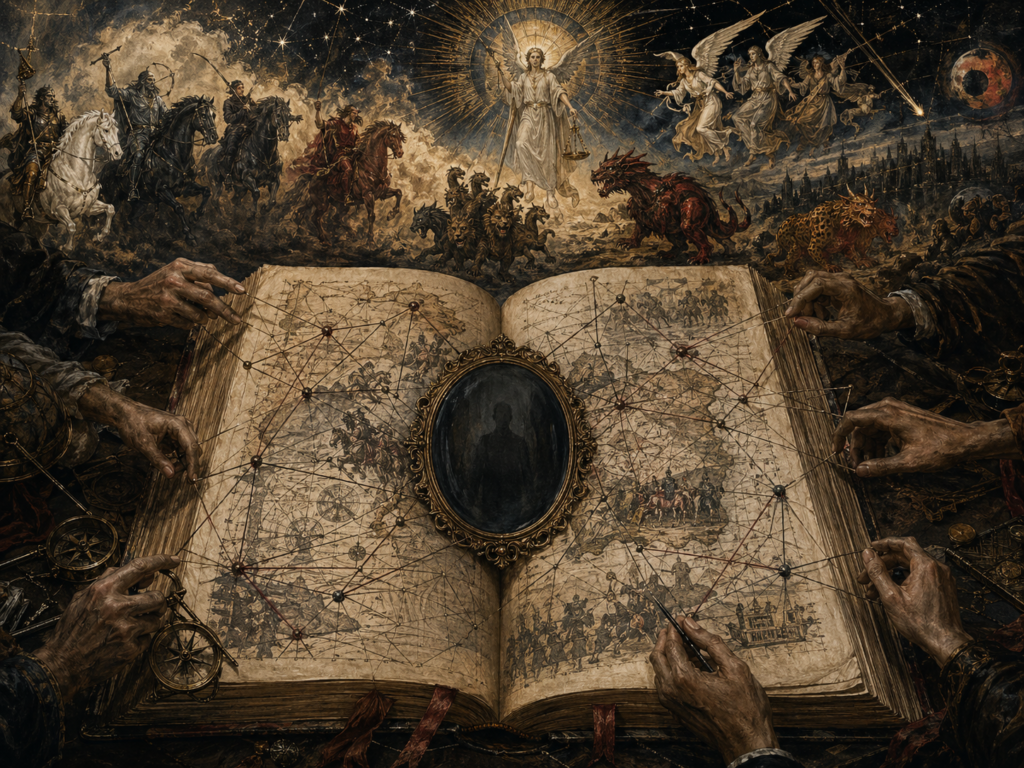
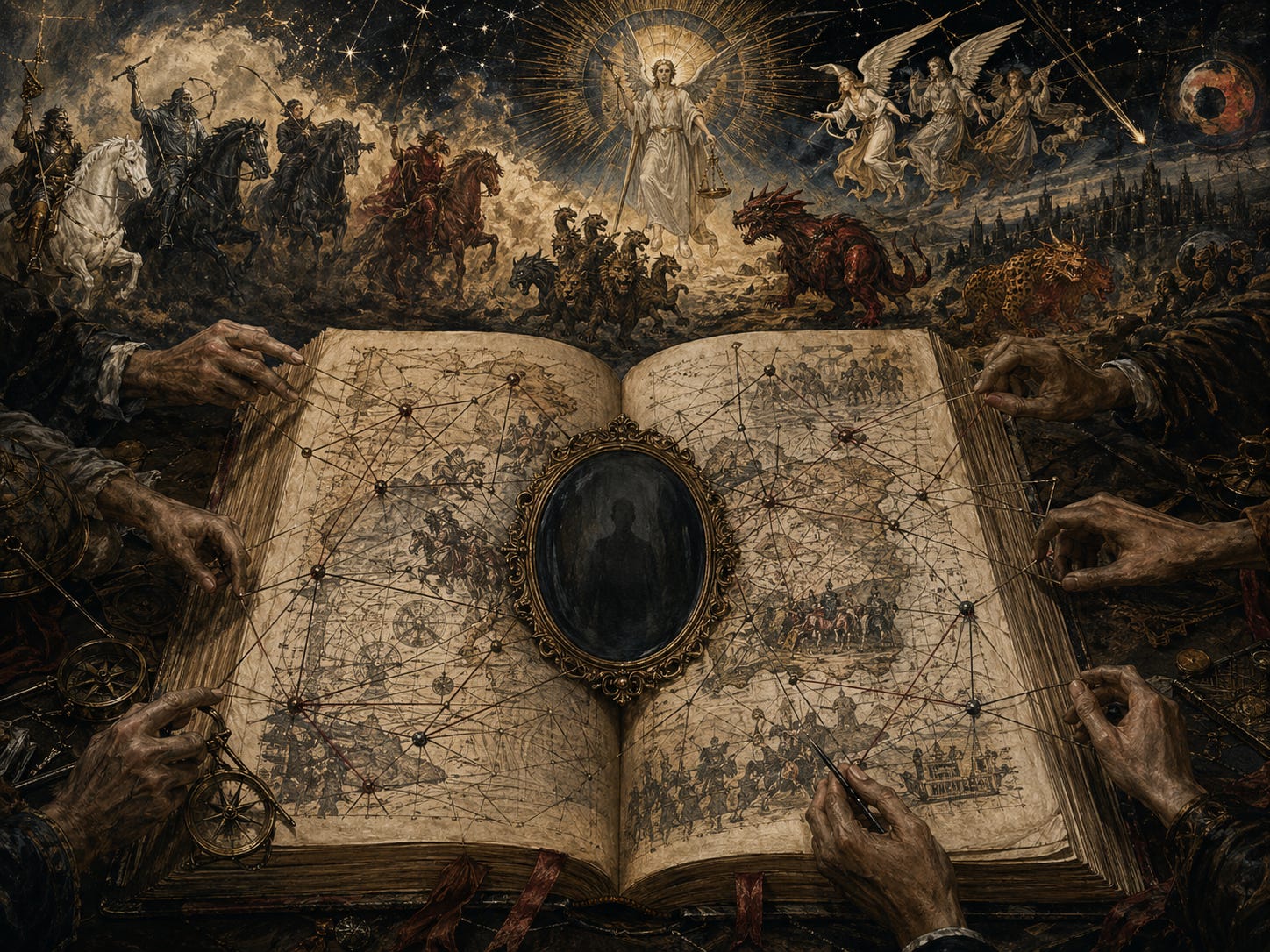
Every generation produces a new “literal forecast” built from biblical fragments: a coming world war, religious factions lined up as modern nation-states, a messiah figure appearing on a global stage, catastrophe quantified into neat percentages, and a timeline pinned to headlines.
This style of reading feels persuasive because it gives the mind something it craves: certainty, sequence, and a villain/hero script. But that is also why it fails.
The literal forecast claimI — ClaimI names claim: the interruption by which reflected presence is taken as mine.Read full entry → in plain terms
The forecast approach typically argues:
The Bible is a coded blueprint for modern geopolitics.
Prophetic passages predict contemporary wars, alliances, and a final global conflict.
Specific figures (“messiah,” “antichrist,” “false prophet”) are treated as future public individuals, identifiable by current events.
Numbers and imagery are converted into literal statistics and timelines.
It is an interpretive move that treats scripture as a predictive spreadsheet.
Why the forecast reading fails
1) It ignores genre and how prophetic language works
Much of the “prophecy” being used is poetic, symbolic, and liturgical—visions, oracles, apocalyptic imagery. ThoseThose — ProjectionThose names projection: enemies, outsiders, competitors, threats, and disowned qualities placed beyond the identity boundary.Read full entry → genres speak in archetypes and patterns, not in the way a modern intelligence brief speaks. The moment you demand newspaper-literal precision from symbolic literature, you force the text to become something it never claimed to be.
2) It cherry-picks images while skipping context
Forecast readings often extract a phrase (“all nations,” “two parts,” “day of the Lord”) and detach it from its literary setting. The result is a collage. A collage can be rhetorically exciting, but it is not responsible interpretation.
3) It produces an endless series of failed timelines
If a method repeatedly generates “now is the moment” certainty in every era, that’s not prophecy—it’s a machine that manufactures urgency. The content changes; the emotional mechanism stays the same.
4) It externalizes the text’s true target: the human being
The forecast approach places the meaning “out there,” in statecraft and armies. But the Bible’s enduring power is not that it successfully predicts tomorrow’s headlines. It’s that it reliably describes what a human mind does—how fear, desire, identityThis — IdentityThis names the formed identity: the body, role, image, wound, belief, or story claimed as what the self is.Read full entry →, resentment, loyalty, and hope organize a life.
The Bible as an allegorical psychology handbook
A more coherent reading treats biblical language as a sophisticated map of inner experience:
“War” becomes the conflict of divided consciousness—competing loyalties inside one psyche.
“Kingdom” becomes the ruling principle within you: what governs attention, value, and action.
“Exile” becomes alienation from presence—living as a stranger to your own direct awareness.
“Redemption” becomes reintegration—returning to wholeness.
This doesn’t deny history. It denies reduction. The text remains meaningful across centuries precisely because it aims deeper than geopolitics.
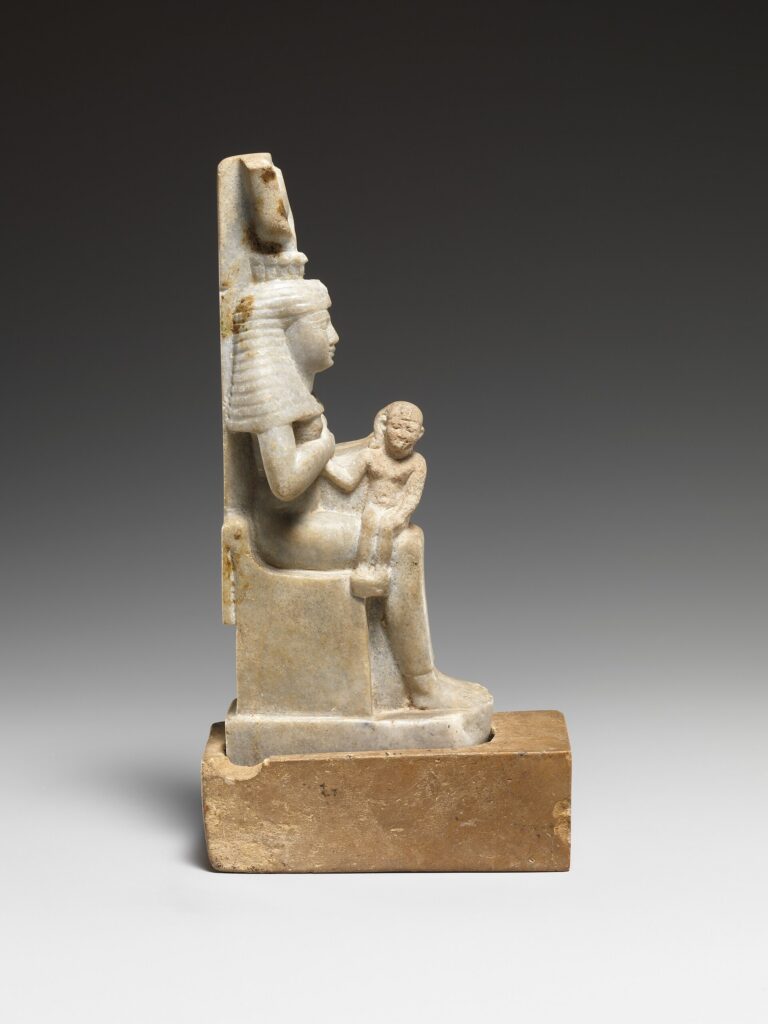
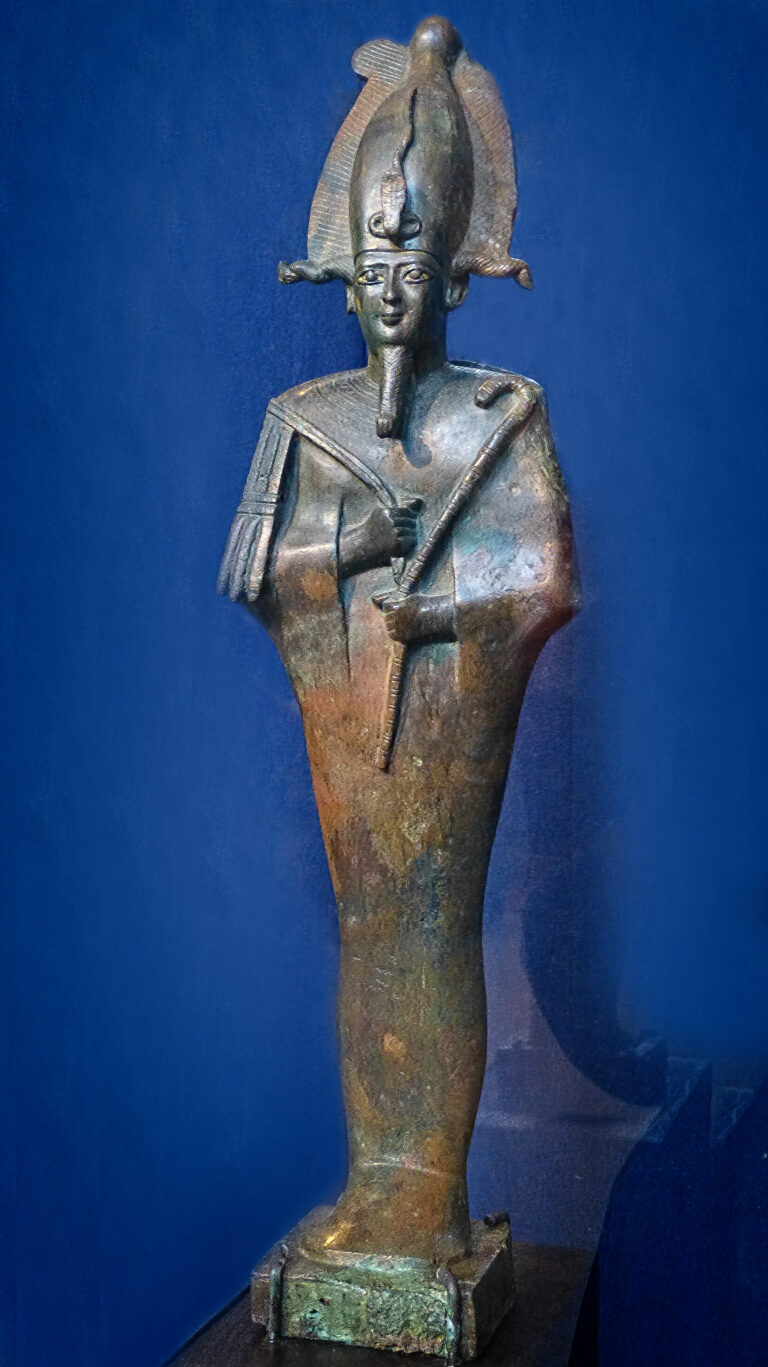
My lens: IsisIsisIn Geomytha, Isis names the unclaimed field: Is — pure being, awareness before possession, and the ground before the claimant appears.Read full entry →, OsirisOsirisIn Geomytha, Osiris names reflected presence: Am — awareness reflected as living consciousness without yet becoming ownership.Read full entry →, SetSetIn Geomytha, Set names the claimant: I — the interruption by which reflection is taken as mine and converted toward ownership.Read full entry →, HorusHorusIn Geomytha, Horus names the identity that forms after claim: This — the body, role, image, wound, belief, or story taken as what the self is.Read full entry →
Through my framework, the Bible’s recurring drama is the transformation of consciousness:
Isis (Earth / Awareness): immediate being, unmediated presence.
Osiris (Moon / Reflective consciousness): clarity, inner coherence, true witnessing.
Set (Sun / imagination overtaking reality): the takeover of attention by narrative, fear, certainty-games, and division.
Horus (time-bound ego identity): the constructed “me” that lives in story, not presence.
Literal end-times forecasting is Set’s specialty: it converts scripture into an external theater that hijacks attention and hardens identity. It turns the sacred text into a justification engine: my group is righteous, their group is doomed, watch the signs, trust the script.
But the deeper function of biblical symbolism is to expose that mechanism—not to crown it.
What “apocalypse” really points to
“Apocalypse” means unveiling. In psychological terms, it is the moment the inner machinery becomes visible:
You see how identity is built.
You see how fear recruits scripture to defend itself.
You see how the mind creates a messiah-thought—an ultimate idea that promises final security.
That “messiah” can be a person, a belief system, a political savior, a perfect doctrine, or a final theory that ends uncertainty. The warning about deception is not mainly about spotting the right public figure. It is about recognizing the mind’s habit of building a counterfeit wholeness out of concepts.
Why this reading matters
If scripture is treated as a geopolitical playbook, it tends to produce:
anxiety,
tribalism,
obsession,
and a constant hunger for “updates.”
If scripture is treated as a psychology handbook, it tends to produce:
self-knowledge,
accountability,
inner sobriety,
and the returnReturn — RemembranceReturn names remembrance and release: the loosening of possession so reflection can become transparent to source again.Read full entry → of attention to presence.
That is the difference between reading the Bible as a surveillance feed versus reading it as a mirror.
Closing
The deepest “prophecy” in the Bible is not that something will happen to the world. It is that something will happen in you whenever consciousness becomes divided: imagination will try to rule, identity will harden, and presence will be offered up for a story.
And the counter-movement is also encoded: refinement, return, and the recovery of direct awareness.
If this resonates, follow and subscribe for more essays that treat myth as consciousness technology rather than entertainment or geopolitics.
X: @mythicgeometry
Substack: Geomytha Noir
Instagram: @mythicgeometry
TikTok: @Geomytha
Patreon: Geomytha Noir