Many spiritual traditions speak of returnReturn — RemembranceReturn names remembrance and release: the loosening of possession so reflection can become transparent to source again.Read full entry →.
They speak of remembrance.
They speak of recovering what has been forgotten.
And often that return takes a lunar form.
The moon receives.
The moon remembers.
The moon reflects.
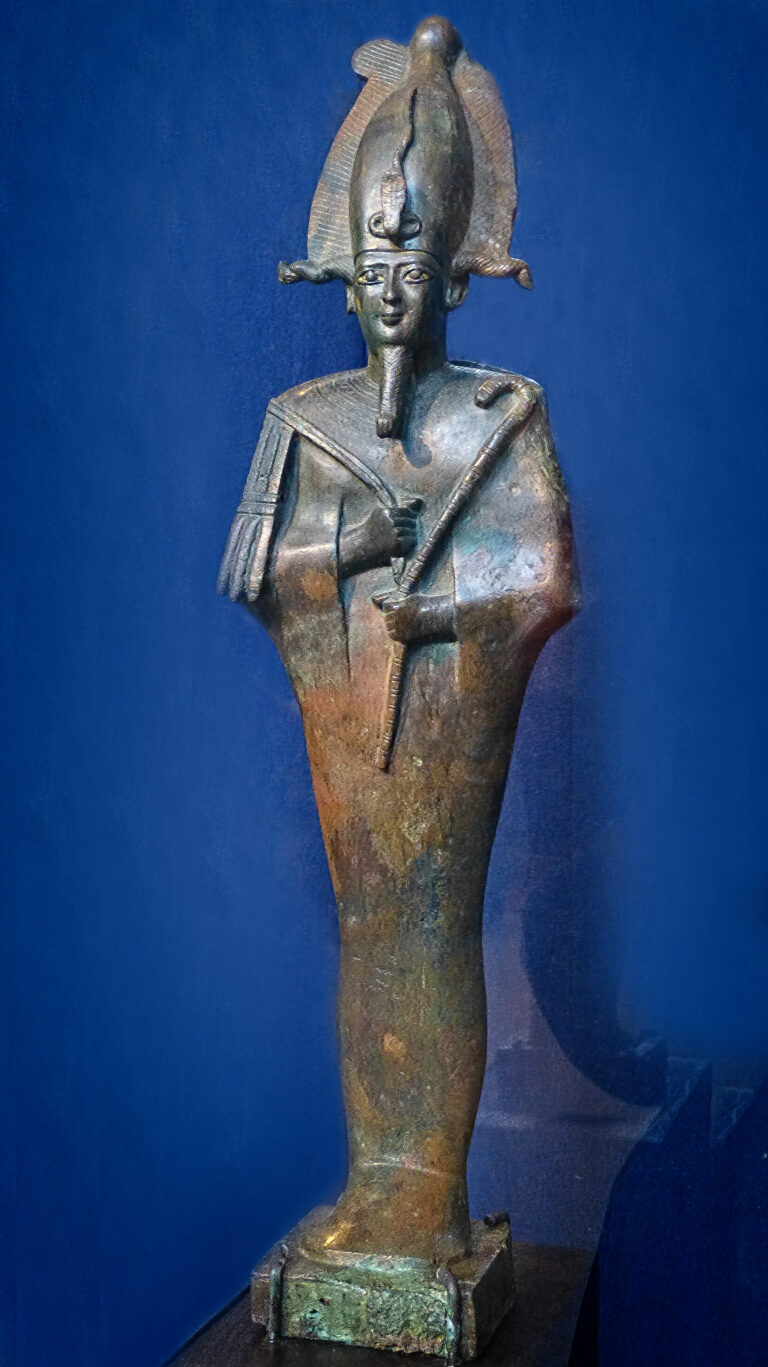
Ancient EgyptEgyptAncient Egyptian cultural and mythic field referenced by the essay.Read full entry → embodied this movement in OsirisOsirisIn Geomytha, Osiris names reflected presence: Am — awareness reflected as living consciousness without yet becoming ownership.Read full entry →.
Osiris dies and returns.
He is gathered and restored.
He becomes the image of memory and reflectionAm — ReflectionAm names reflected presence: awareness embodied or mirrored without yet becoming ownership.Read full entry →.
In human life, this return is profoundly important.
We remember who we are.
We soften.
We become less defensive.
We receive rather than dominate.
This is the lunar return.
And it is real.
But perhaps it is not final.
For the moon possesses a strange limitation.
The moon does not shine by itself.
Its light is borrowed.
Its beauty is relational.
The moon exists within a greater polarity.
Without the sun, the moon would not appear as moon.
This suggests that reflection itself may not be the ultimate destination.
Modern people often romanticize the moon.
They imagine a forgotten lunar age before solar domination.
But symbolically, this may reverse the deeper order.
Before the struggle of sun and moon, there is something older.
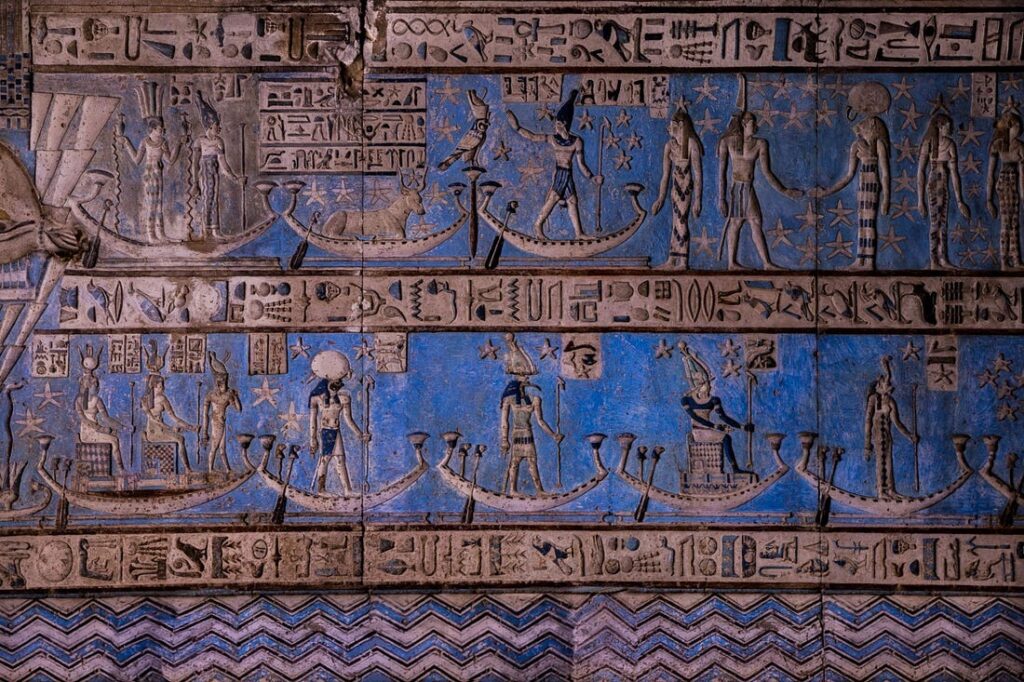
Stars.
The stars do not dominate.
They do not alternate.
They do not compete for the sky.
They simply remain.
For thousands of years, sailors trusted the stars.
Abraham was shown the stars.
The Magi followed a star.
Dante emerged from Hell and once again beheld the stars.
In Tolkien’s mythology, the Elves awoke beneath starlight before the appearance of the sun and moon.
Again and again, myths preserve the same intuition.
The deepest memory is not kingship.
Nor even reflection.
The deepest memory is orientation.
This possibility changes the meaning of return.
The goal is not to replace the sun with the moon.
Nor to exchange one ruler for another.
The moon itself belongs to the royal drama.
It reflects.
It receives.
It remembers.
But stars perform a different function.
Stars orient.
Stars witness.
Stars remain.
Perhaps this is why ancient Egypt remembered HorusHorusIn Geomytha, Horus names the identity that forms after claim: This — the body, role, image, wound, belief, or story taken as what the self is.Read full entry → the Elder.
Before the younger Horus fought for a throne, there was the elder falcon of the sky.
Not king.
Not conqueror.
Not claimantSetIn Geomytha, Set names the claimant: I — the interruption by which reflection is taken as mine and converted toward ownership.Read full entry →.
Witness.
And perhaps this reveals two forms of return.
The lunar return restores memory.
But the stellar return restores orientation.
The first remembers.
The second beholds.
The first heals identityThis — IdentityThis names the formed identity: the body, role, image, wound, belief, or story claimed as what the self is.Read full entry →.
The second loosens identity altogether.
This is why nostalgia can become dangerous.
The ego loves the past when the past becomes another possession.
But genuine return does something stranger.
It makes even memory transparent.
Childhood becomes a doorway.
History becomes a doorway.
Religion becomes a doorway.
The moon itself becomes a doorway.
Until finally the self stands beneath the stars.
No longer trying to rule.
No longer trying to recover some imagined golden age.
Simply remembering how to see.
Perhaps that is why so many myths end beneath the stars.
Not because the stars are kings.
But because they remind us that kingship was never the deepest truth.
Before the throne—
there was the sky.
And beyond the struggle of the throne—
the sky remains.