Double Sacred / Symbolic Doubleness
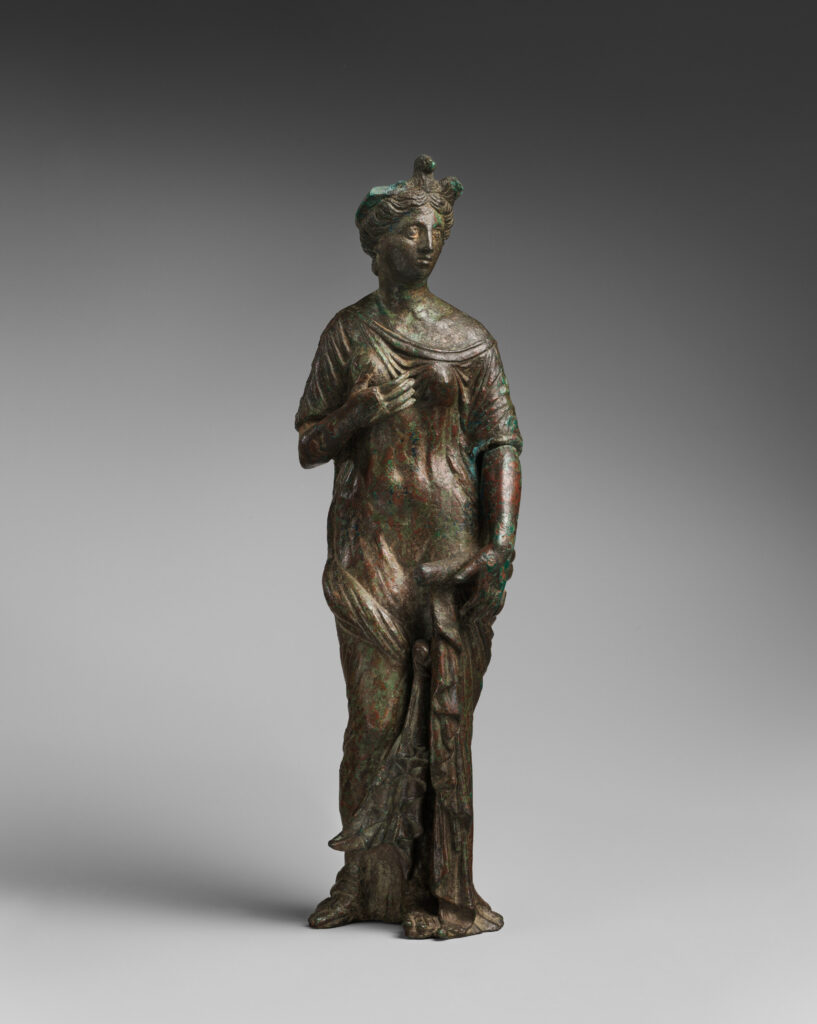
Public references and limits:
The Ark’s exterior and covenant content offer one concrete layered object. GEOMYTHA’s Double Sacred is a comparative category, not an established universal taxonomy of secret and public religion.
Geomytha uses symbolic doubleness for layered sacred forms in which public image and deeper continuity operate together under pressure.
It explains how symbolic continuity can survive rupture by inhabiting a permitted form without being exhausted by that form.
A sanctioned This carries an older Am-current beneath it; surface and depth coexist without becoming identical.
Layered imagery can reflect documented continuity, borrowing, conflict or later retrospective interpretation. Require evidence for the historical layers; resemblance alone cannot prove an older religion survived unchanged beneath another.
This entry’s name and mechanism belong to GEOMYTHA’s framework. The linked primary works are independent comparison witnesses, not evidence that the GEOMYTHA term originated in their cultures. Specific comparison references: Exodus 25 — Ark, sanctuary and carrying poles; Joseph Campbell's Four Functions of Myth — Foundation Commentary and References. The original work, a later translation, a catalogue record and an extant manuscript are different kinds of evidence. The oldest surviving witnesses of the comparison traditions are not established by this entry.
The mechanism does not mean every syncretic or layered tradition contains a secret hidden religion underneath its public form.
Do not flatten distinct traditions into one concealed code or assume every shared image proves equivalence.
Where this mechanism appears
Explore the essays and Index entries linked to this mechanism.
 Why Calendars Need RemaindersA calendar is not just a way to count days. It is a claim about reality. A calendar tells a people when to work,…
 Four, Eight, Twelve, ThirteenGeomytha has to be careful with numbers. Not because numbers are weak. Because they are powerful. A number can clarify a pattern. It can…
 364 Days and the Lunar MachineThe dream is understandable. A year of 364 days possesses a remarkable beauty. Fifty-two weeks. Exactly seven days each. No fractions. No leap years.…
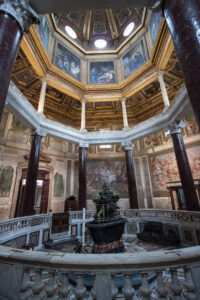 The Eighth Day and the Return of the HiddenSeven is the number of completion. Seven days form the week. The Sabbath brings the cycle to rest. The work is finished. The wheel…
 The Leap Day and the Return of the HiddenMost things that change our lives arrive slowly. Not suddenly. Not dramatically. Quietly. A friendship deepens over years. Trust accumulates. Wisdom grows. A child…
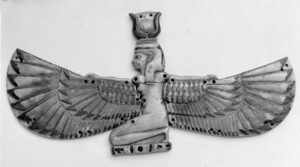 The Five Days Outside TimeHuman beings usually imagine the sacred at the center of things. Ancient Egypt offers a stranger possibility. It places the gods at the edge.…
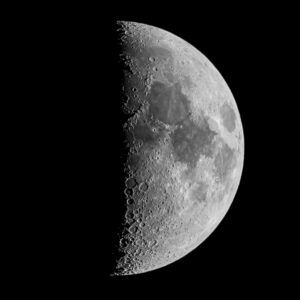 The Eightfold MoonThe grammar of Geomytha does not stay in language. It rises into the sky. In the first article, the structure appeared as words: Is,…
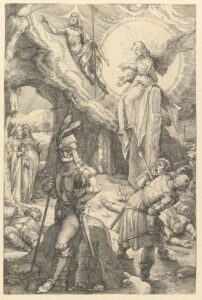 The Eighth Day — Completion ReopenedEarly Christian writers used the eighth day as a resurrection symbol beyond the completed seven-day week. Augustine explicitly calls the eighth day a type of resurrection. The Lateran Baptistery’s official history states that its…
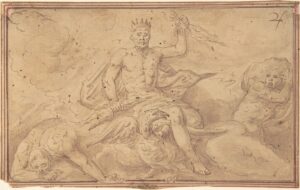 Zodiac Counterparts — Geomytha’s Thirteen-Stage ModelThe IAU distinguishes the conventional twelve-sign zodiac from the Sun’s path across thirteen constellations, including Ophiuchus. Astronomical constellations have unequal boundaries and duration along the ecliptic.
Follow the mechanism
Moves into
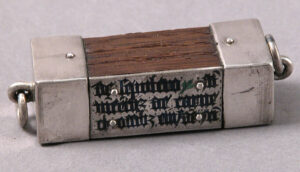 Portable SacredPortable Sacred names the transfer of sacred continuity into an image, text, object, body, story, or ritual form that can move when fixed places and institutions are broken.
 Sacred MigrationSacred Migration names the movement by which functions once carried by one symbolic institution reappear in another medium, practice, ideology, technology, or cultural form.
See also
 Living SymbolA living symbol is a form that continues to mediate depth, relation, and transformation rather than collapsing into a fixed shell or decorative sign.
 Shell and CenterShell and Center distinguishes the structure built to preserve, transmit, or protect living source from the living center the structure is meant to serve.