Human beings usually imagine the sacred at the center of things.
Ancient EgyptEgyptAncient Egyptian cultural and mythic field referenced by the essay.Read full entry → offers a stranger possibility.
It places the gods at the edge.
The Egyptian year was organized into twelve months of thirty days. Three hundred and sixty days. A clean wheel. A measured world. A calendar that looked complete because it behaved like the circle itself.
But the heavens did not fully obey the circle.
The year exceeded the wheel.
Five days remained.
ThoseThose — ProjectionThose names projection: enemies, outsiders, competitors, threats, and disowned qualities placed beyond the identity boundary.Read full entry → five days were not ordinary days. They did not belong neatly to the twelve months. They stood outside the regular calendar, like a threshold between one year and the next. They were not merely extra time. They were time that did not fit.
And in Egyptian myth, that is where the gods were born.
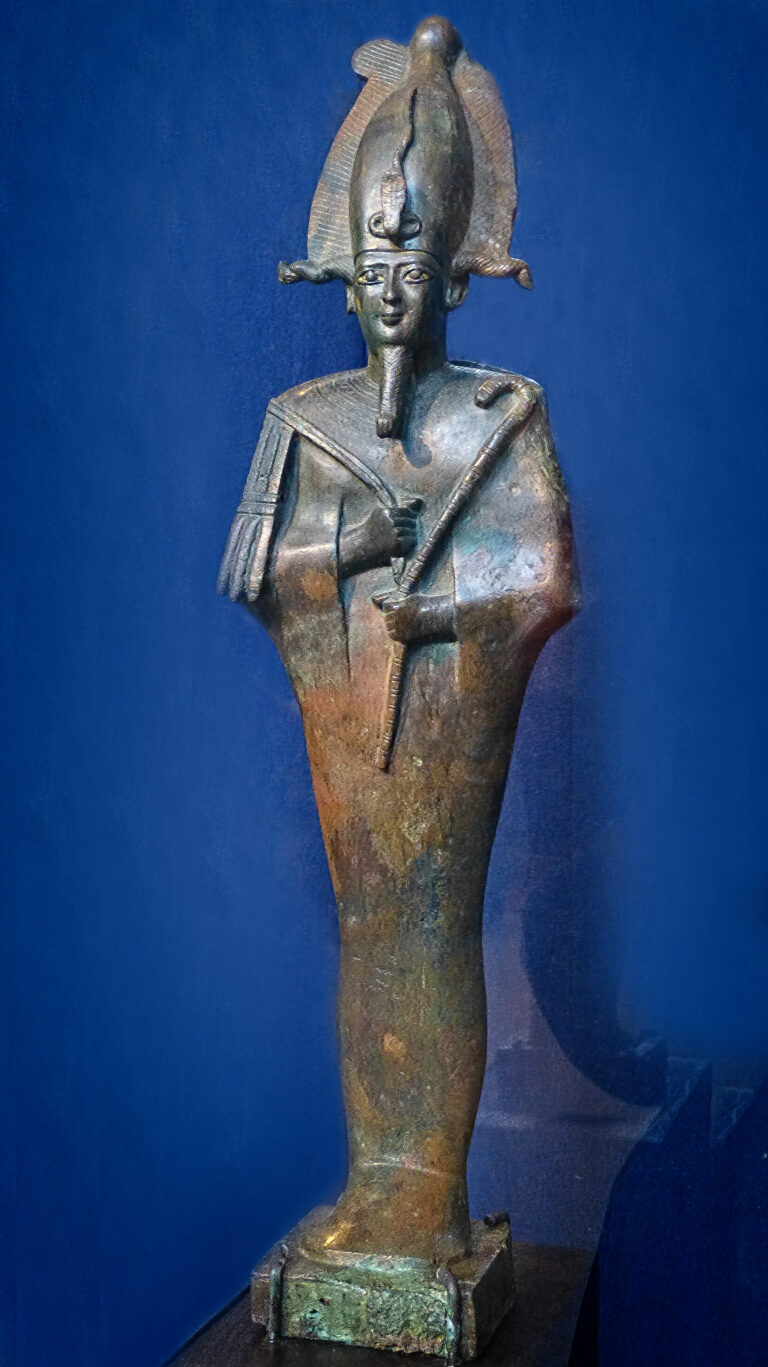
OsirisOsirisIn Geomytha, Osiris names reflected presence: Am — awareness reflected as living consciousness without yet becoming ownership.Read full entry →.
HorusHorusIn Geomytha, Horus names the identity that forms after claim: This — the body, role, image, wound, belief, or story taken as what the self is.Read full entry → the Elder.
SetSetIn Geomytha, Set names the claimant: I — the interruption by which reflection is taken as mine and converted toward ownership.Read full entry →.
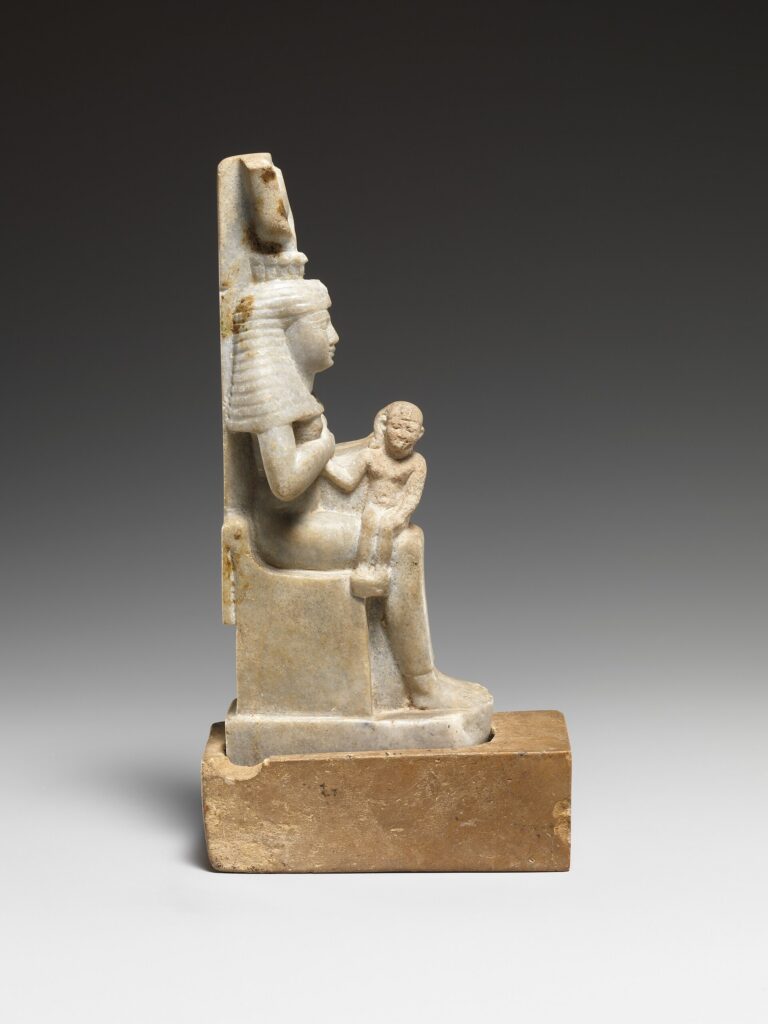
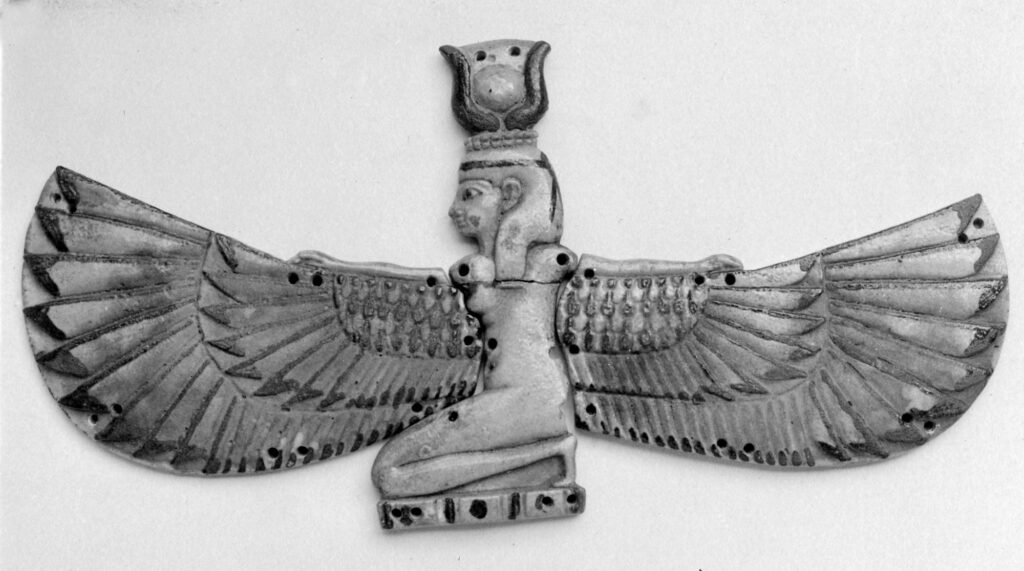
IsisIsisIn Geomytha, Isis names the unclaimed field: Is — pure being, awareness before possession, and the ground before the claimant appears.Read full entry →.
Nephthys.
This is not a small detail. It is a revelationRevelation — Book of RevelationThe final book of the Christian New Testament, also called the Apocalypse of John.Read full entry → hidden in calendar form.
The gods do not appear inside the completed system.
They are born from what the system cannot contain.
The Perfect Year That Was Not Enough
A year of 360 days is beautiful.
It has symmetry. Twelve months of thirty days. The number is easy to divide, easy to measure, easy to arrange into order. It feels complete because it mirrors the geometry of the circle.
But symbolic beauty is not the same as reality.
The seasons kept moving.
The heavens kept correcting the calendar.
The year required more than the wheel allowed.
So Egypt preserved five additional days, often called the epagomenal days. TheseThese — AccumulationThese names accumulation: possessions, titles, achievements, beliefs, communities, and other extensions gathered around identity.Read full entry → days belonged to the overflow. They were the remainderClosed System / Hidden TermA closed system achieves the appearance of completeness by excluding or minimizing something it cannot integrate; the excluded term remains active and returns as strain, contradiction, anomaly, backlash, or breakdown.Read full entry → after order had done all it could do.
That is already the Geomythic lesson.
Order is necessary.
But order is never enough.
The calendar can frame time, but it cannot possess time. The wheel can measure recurrence, but it cannot capture life. Something always exceeds the system, and that excess is where the sacred begins to speak.
Nut, ThothThoth — Egyptian Deity of Writing and ReckoningEgyptian deity shown recording the result in the weighing scene.Read full entry →, and the Hidden Days
The myth gives the calendar a body.
Nut, the sky goddess, was forbidden to give birth on any day of the year. The year was sealed. The law was closed. Birth had been excluded from time.
Then Thoth intervened.
Through wisdom, cunning, and play, he won additional time from the moon. Not months. Not a new season. Not a visible rearrangement of the whole year.
Only five days.
But those five days changed everything.
Because they were not covered by the curse, Nut could give birth. The impossible became possible through the hidden remainder. The sealed year opened. The closed order failed to close completely.
That is where the gods entered.
The sacred did not break the world by force. It entered through the loophole. Through the extra. Through the fraction the system did not know how to govern.
This is one of the oldest symbolic truths: the living thing often arrives through what official order forgot to count.
The Five Births
First comes Osiris.
The dying and returning king. The grain. The flood. The hidden life that disappears and comes back changed. Osiris is the memory that life is not exhausted by death.
Then comes Horus the Elder.
Not the younger Horus born later from Isis and Osiris, but the older sky-form: the heavenly image, the primordial falcon, the king before the conflict. Where the younger Horus belongs to struggle and inheritance, Horus the Elder belongs to the stars, to vision, to the pattern above history.
Then comes Set.
The divider. The desert. The cutting force. The one who separates, disrupts, contests, and makes conflict visible. Set is dangerous, but he is not meaningless. Without distinction, no world appears.
Then comes Isis.
The mother. The field. The hidden sourceIs — SourceIs names unclaimed being: awareness before possession, distinction, or identity.Read full entry →. The one who gathers what has been scattered and remembers what the broken world forgets. If Osiris is life returning, Isis is the deeper presence that makes returnReturn — RemembranceReturn names remembrance and release: the loosening of possession so reflection can become transparent to source again.Read full entry → possible.
Finally comes Nephthys.
The threshold. The twilight sister. The mourner. The one who stands beside the tomb and does not seize the center. Nephthys belongs to endings, edges, transitions, and the quiet passage between worlds.
Together, these five do not merely fill extra calendar space.
They form a hidden sequence.
Life remembered.
Heavenly image.
Division.
Source.
Threshold.
The calendar gives birth to myth. Myth gives birth to a map.
Why Outside the Wheel?
The question matters.
Why are these gods not born inside ordinary time?
Because ordinary time is the wheel of repetition. It measures labor, season, harvest, ritual, kingship, and return. It makes life livable. But the highest mythic powers do not come from mere repetition.
They come from interruption.
The five days outside time reveal that the sacred is not simply the system functioning correctly. The sacred is also what exceeds the system when the system reaches its limit.
This is why the image is so powerful.
A perfect calendar would be closed.
A closed calendar would leave no room for birth.
The gods require excess.
They require a crack in the year.
The Pattern Reappears
This structure does not belong only to Egypt.
The SabbathSabbathNamed weekly sacred rest pattern in Jewish tradition.Read full entry → interrupts the workweek.
The Eighth DayThe Eighth Day — Completion ReopenedEarly Christian writers used the eighth day as a resurrection symbol beyond the completed seven-day week. Augustine explicitly calls the eighth day a type of resurrection. The Lateran Baptistery’s official history states…Read full entry → interrupts the seven.
The hidden thirteenth reopens the twelve.
The leap day interrupts the calendar.
Again and again, sacred time appears where ordinary time fails to contain the whole.
The pattern is simple but severe:
First, order forms.
Then order completes itself.
Then life reveals that completion was not final.
Something remains.
Something opens.
Something enters.
This is why the extra day, the hidden sign, the eighth movement, the thirteenth threshold, and the five days outside the year all belong to the same symbolic family. They are not merely additions. They are refusals of closure.
They say: the system is not source.
The Gods as Remainder
Modern reductionism can explain the epagomenal days as a calendar correction.
That explanation is true as far as it goes.
But it does not go far enough.
Human beings did not merely add five days and move on. They placed divine births there. They mythologized the remainder. They recognized that the excess was not meaningless.
A culture does not place its gods randomly.
Egypt placed these gods in the overflow because the overflow itself had become symbolically charged. The year had revealed a truth: no measured order contains the whole of reality.
The gods are born from the part that escapes.
That is why these five days matter.
They are not just extra days.
They are the proof that life comes from beyond the visible wheel.
The Edge of the Year
At the edge of the year, everything becomes unstable.
The old cycle is ending.
The new cycle has not yet begun.
The ordinary calendar has finished speaking.
But time remains.
That remaining time is dangerous and holy. It belongs to transition. It belongs to the gods because it is not fully claimed by the world.
This is the same emotional space as dusk, breath-pause, threshold, tomb, womb, and doorway.
It is not nothing.
It is the place where the next world gathers before it appears.
The five epagomenal days preserve that mystery in calendar form. They say that between completion and beginning there is an unowned interval, and in that interval the deepest powers are born.
The Crack Is Where Life Enters
The lesson is not that systems are useless.
The wheel matters. The calendar matters. The twelve months matter. Order matters.
But order must remain open.
When order seals itself completely, it becomes sterile. When the world imagines itself finished, it becomes a prison. When identityThis — IdentityThis names the formed identity: the body, role, image, wound, belief, or story claimed as what the self is.Read full entry → believes it has finally explained itself, the living source begins to disappear behind the explanation.
The five days outside time teach a different wisdom.
Do not fear the remainder.
Do not despise the unfinished part.
Do not assume the crack is failure.
The crack may be where the gods enter.
The year exceeded the wheel.
The curse failed to cover the hidden days.
Nut gave birth.
And the sacred came into time through what time could not contain.