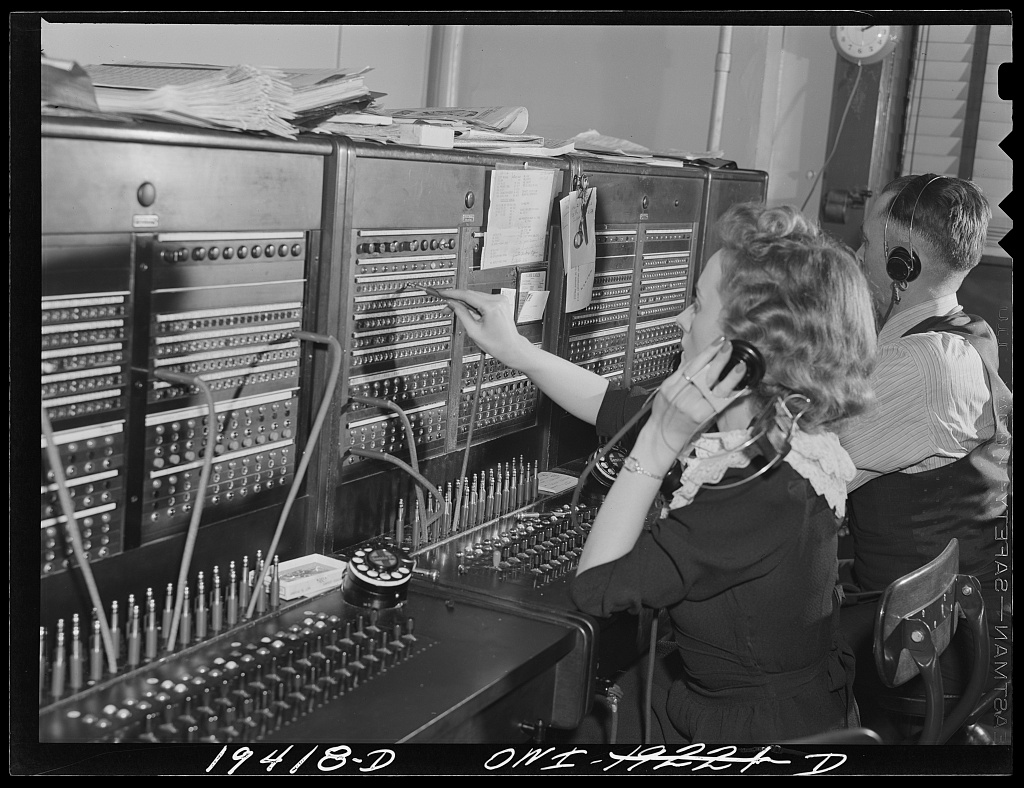
In a 1943 photograph, a woman sits at a telephone switchboard inside a freight depot in Kansas City.
There are rows of sockets and cords in front of her. Each connection is something she can make, route, or end. The board is a tool. Its purpose is not to keep every line connected at once.
Now picture the switchboard inside your own day.
Someone says your name. You turn. A message appears. You answer it. You replay a disagreement, imagine tomorrow's argument, check who noticed your work, then prepare another explanation of yourself. Nothing dangerous has happened. Yet a part of you keeps jumping to attention.
We usually call this normal. We walk around as though we must be an I every second: choosing, defending, proving, comparing, performing.
But what if that kind of I is not our permanent condition? What if it is a remarkable capacity we are supposed to use—and sometimes release?
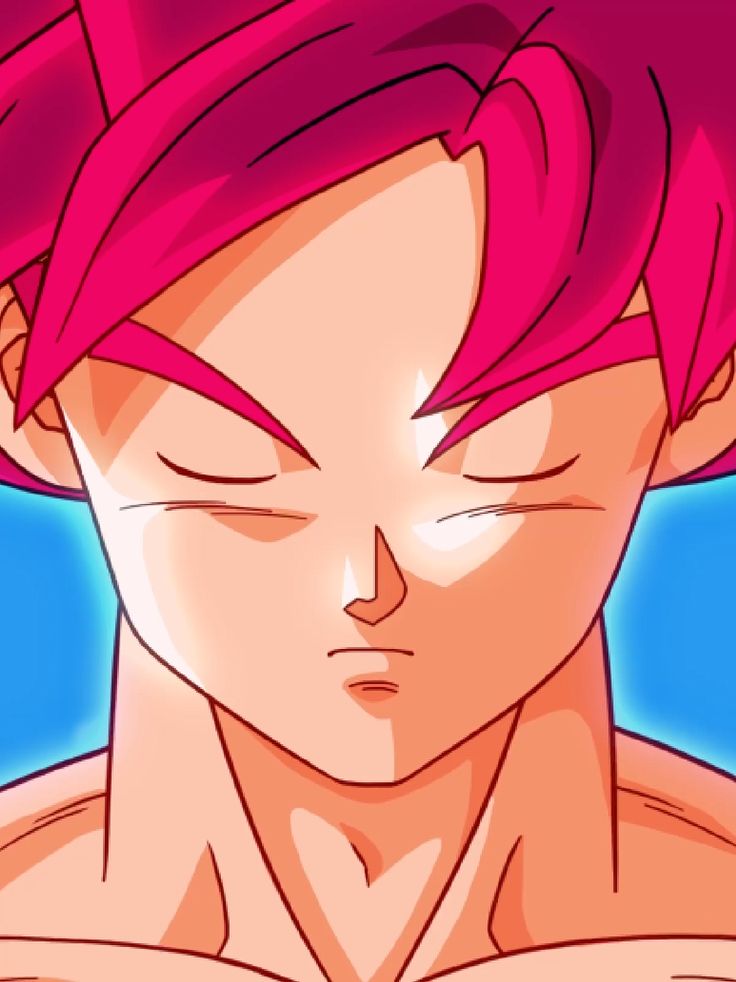
The moment Goku changes
In Dragon Ball Z, Goku's first Super Saiyan transformation comes during his battle with Frieza, after Frieza kills Krillin. The official Dragon Ball site describes the eruption of anger that triggers it.
His appearance changes. His power rises. What he could not do a moment ago becomes possible.
Every fan knows the thrill of that scene. The transformation makes a hidden capacity visible.
We sometimes talk about our own abilities as though they are ordinary because we have used them for so long. We can picture a future that has not happened. We can see a danger, change course, remember a promise, question a story, make a tool, and deliberately become better at a task.
That is extraordinary. A capacity like that deserves more respect, not less.
Here GEOMYTHA asks a different question from the show: What if the ability to say “I will” is a kind of transformation?
Not a glowing body, not a measurable secret power, and not a claim that Goku's creators encoded GEOMYTHA. An ordinary human ability, read through a familiar image.
When you need to decide, protect, plan, or act, the first-person perspective becomes useful. The trouble begins when the person who can use it believes they must stay in that charged state to keep existing.
Before the claim: Is and Am
Consider a simple moment before you describe it.
You hear a bird outside. There is a sound. You notice it. Then language can move in: I heard that bird. I know what kind it is. I should record it. I should tell someone. What does this say about me?
The first movements are not wrong. Naming helps us share what happened. Memory helps us learn. Deciding what to do next can be necessary.
But the last question shows how easily an encounter can turn into a demand about the observer.
GEOMYTHA uses Is for the fact of what is present, and Am for lived participation and recognition. These are terms in a symbolic reading grammar, not experimentally identified compartments inside the brain.
The functional I then says: I can respond to this. It gives intention a direction. It makes an answer or a promise possible.
The claimant I adds something else: This act, insight, victory, or injury tells the world who I am—and I must defend it.
Then comes This. A passing function hardens into a role: I am the responsible one. I am the strong one. I am the person who sees through everything. I am the damaged one. I am the awakened one.
The sequence is the central problem of this essay: Is → Am → functional I → claimant I → defended This.
Notice that the switch is not the word I itself. People use “I” in healthy, simple ways all day. The switch happens when self-reference stops helping us meet the world and starts demanding ownership of it.
A power you can train without worshipping
Dragon Ball offers a serious objection to the idea that the transformed state must always exhaust its user.
During the Cell story, Goku and Gohan train to remain Super Saiyans even during ordinary daily life. The official Gohan character profile says he learned to maintain the form while going about his usual activities.
That matters. A capacity can become easier through practice. Something that first demands full attention can become familiar and well integrated. Playing an instrument, driving, reading, performing a difficult skill, or responding calmly to a crisis may all become more fluent with experience.
So this essay does not claim that spending more time capable or alert is always harmful. It does not say constant first-person awareness literally drains a single battery.
We have to distinguish two things. One is trained competence: the ability is available when needed and does not need to be constantly advertised. The other is compulsory identity maintenance: the fear that, if you stop performing the role, you will stop being somebody.
Those can look identical to an observer. The difference is often in the demand behind the action.
A practiced fighter can stand still without feeling powerless. A worker can be highly competent without volunteering to be everyone's emergency. A good parent can protect a child without needing every moment to prove they are a good parent.
Mastery should give you more freedom in how you respond, not fewer choices about who you must appear to be.
Ultra Instinct is another question—not an answer
In Dragon Ball Super, Ultra Instinct brings a different image. The official franchise describes a combat state in which Goku's body can react automatically to threats. Its official story summary places the development in the Tournament of Power.
We can read this as a contrast between an action that flows through training and one that is crowded by constant self-conscious interference.
But Ultra Instinct is a fictional martial-arts power. It is not a scientific description of the nervous system. It is also not the same thing as awakening in Buddhism or the end of self-claiming. Goku still fights, wants things, chooses things, and exists in a story of opponents and victories.
Used carefully, the comparison gives us one helpful question: Must every response pass through a running speech about the person who is responding?
You can apologize without deciding whether this proves you are good. You can finish a shift without building a whole identity around endurance. You can notice fear without immediately turning it into your defining story.
What the older teaching does—and does not—say
There is a thoughtful parallel in the early Buddhist discourse usually called the Not-Self Characteristic, Saṁyutta Nikāya 22.59. It discusses body, feeling, perception, mental formations, and consciousness. It asks whether these changing experiences can rightly be held as a permanent possession or self.
That is not a hidden prophecy of Dragon Ball, and it is not identical to GEOMYTHA's Is–Am–I–This vocabulary. These are separate traditions with separate purposes.
The parallel is narrow but useful. Both allow us to question the reflex that says: Because this experience happened here, it must define what I am.
We still need a working sense of responsibility. If you made a promise, you made a promise. If you harmed someone, you cannot evade repair by saying there is no self to blame. A claim about identity is not a substitute for action.
Is your battery really being drained?
The battery image helps because it is easy to feel. Some days, repeated decisions and constant watchfulness leave us tired. But an analogy is not a measurement.
Psychologists have debated whether self-control uses up a limited inner resource. A review by Michael Inzlicht and Elliot Berkman challenges a simple fuel-tank account and asks how motivation, changing priorities, and the feeling of effort affect performance. Other researchers defend versions of a limited-resource model. The science has not established that we possess one literal “I battery” that empties whenever we are self-aware.
That does not make the lived question useless. It makes the claim more precise.
Ask not, How many minutes of I do I have left? Ask, What has my attention been asked to serve? Is this effort necessary? Can the task end without my identity feeling threatened?
Sometimes the right answer is more sleep, help, a medical assessment, fairer work conditions, or safer boundaries—not a spiritual lesson about the ego. GEOMYTHA must leave room for those facts.
The hardest test: when you cannot switch off
Suppose someone is standing watch because there is a real threat. Or a parent has a sick child. Or a professional must pay close attention to a dangerous procedure.
That is not someone mistakenly worshipping their personal power. The situation actually demands sustained care. Turning away would make things worse.
And consider the trained Super Saiyan counterexample again: if effort becomes skill, it may require less conscious pushing, not more.
These cases show why “always turn off your I” would be a bad rule.
The better test is whether the directed self still answers to reality. Is there a task? Is there another person's need? Are there consequences to consider? Can you respond proportionately, and can you stop defending a performance once the need has passed?
A skill that is ready is not the same thing as an identity that must continually announce itself.
Return from the performance
In this part of the GEOMYTHA calendar, the Last Quarter Moon says Return / Remember. Scorpio asks us to Penetrate: look underneath the visible behavior and examine what is actually driving it.
Return does not mean become helpless. It means remember the difference between having a capacity and being the claim you built around it.
Try it the next time you notice yourself preparing a speech nobody asked you to give. Or checking whether people appreciate you. Or replaying a victory so you can still feel like the person who won.
First ask: Is something needed from me right now?
If yes, act. Speak. Decide. Protect. Work. Be responsible.
If not, notice the urge to keep the role alive. You do not have to punish it. You do not need another dramatic transformation. Let the moment return to being a moment.
The extraordinary thing is not that you can stay transformed all day. It is that you can use what you have learned without making the performance your permanent name.
Remember the power. Use it when it serves life. Return when the work is done.