Is / Am / I / This

Internal provenance: Is / Am / I / This is a Geomytha-created interpretive grammar. GEOMYTHA CORE GRAMMAR defines the mythic correspondence Isis → Osiris → Set → Horus alongside the grammatical sequence Is → Am → I → This. GEOMYTHA GRAMMAR ENGINE restates the same foundation as Source → Reflection → Claim → Identity and treats later positions as extensions rather than replacements. The framework must therefore be presented as Geomytha’s own comparative symbolic grammar, not as a claim of linguistic, Egyptological, theological, psychological, or historical consensus.
The fourfold grammar is GEOMYTHA's interpretive engine: Is names source; Am names living reflection; I names the claimant's interruption; This names the definite appearance held as identity. The mythic comparison is Isis → Osiris → Set → the royal/Osirian Horus.
The sequence is a reading tool rather than a universal historical law. A convincing application must show a transition: an experience appears, becomes claimed and then governs conduct as a defended identity. Merely finding four characters, four objects or four stages does not demonstrate that transition.
The corrective movements are equally important. Reflection can remain answerable to source; a practical first-person role can remain flexible; a definite form can be used without becoming the whole self. These are counterexamples to capture, not exceptions to be explained away. A reading gains strength when it identifies where the grammar stops fitting and preserves a source's theological, literary or technical meaning alongside the comparison.
Is is awareness before claim. Am is reflected presence. I is the claimant or interruption. This is the identity that hardens after the claim. The false-self sentence is I am this.
Is → Am → I → This. The corrective movement returns from identity toward living reflection and source: This → Am → Is. In practical breath language: inhale Am, exhale Is.
Many stories contain more than four decisive functions, and characters can change functions across scenes. A mapping is weakened when the sequence must be rearranged or inconvenient actions omitted. State which passage supports each step and retain unmatched elements.
Is / Am / I / This is the GEOMYTHA project's own interpretive grammar, documented in its internal core and engine manuscripts. It is not an ancient Egyptian sentence recovered from inscriptions. For the compared Egyptian figures, use the early Pyramid Texts and Lahun witnesses separately from Plutarch's much later connected retelling.
The grammar is Geomytha’s interpretive system. It should not be presented as a universal linguistic, theological, psychological, or historical consensus. It is a comparative symbolic framework used to track the movement from presence to identity and return.
The grammar is a mirror, not a crown. Do not turn understanding Is / Am / I / This into a superior identity, do not treat ordinary functional I as inherently pathological, and do not treat the body or form itself as the problem.
Where this mechanism appears
Explore the essays and Index entries linked to this mechanism.
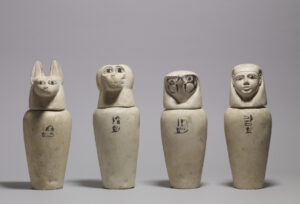 Four Directions and the Cross of ConsciousnessFour appears everywhere. Four seasons. Four directions. Four rivers flowing from Eden. Four elements. Four corners of the earth. Four winds. Four creatures surrounding…
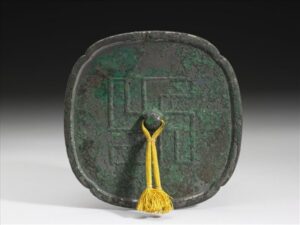 The Turning CrossA symbol must be read by function. Not only by shape. Not only by age. Not only by what it once meant. Not only…
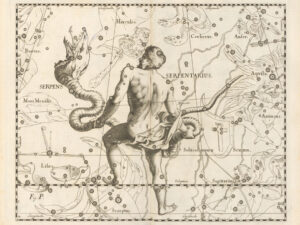 Four, Eight, Twelve, ThirteenGeomytha has to be careful with numbers. Not because numbers are weak. Because they are powerful. A number can clarify a pattern. It can…
 The Grammar of GeomythaBefore Geomytha becomes myth, it is grammar. Before it becomes Isis, Osiris, Set, Horus, Alice, the Minotaur, the moon, the swastika, the Black Sun,…
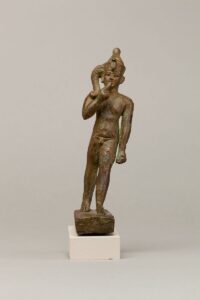 Double Crown of Upper and Lower Egypt — PschentThe Double Crown combines the White Crown associated with Upper Egypt and the Red Crown associated with Lower Egypt. It expresses kingship over both regions and also appears on deities. The selected Met figure…
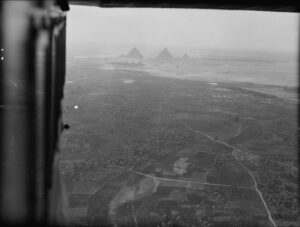 Kemet and Deshret — Black Land / Red LandKemet, Black Land, and Deshret, Red Land, express a contrast between the fertile Nile land and surrounding desert in conventional accounts of Egyptian geography and language. This is different from the Upper/Lower Egypt division:…
Follow the mechanism

See also
 Is — SourceIs names unclaimed being: awareness before possession, distinction, or identity.
 Am — ReflectionAm names reflected presence: awareness embodied or mirrored without yet becoming ownership.
 I — ClaimI names claim: the interruption by which reflected presence is taken as mine.
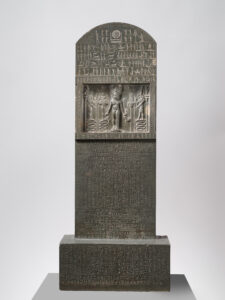 This — IdentityThis names the formed identity: the body, role, image, wound, belief, or story claimed as what the self is.
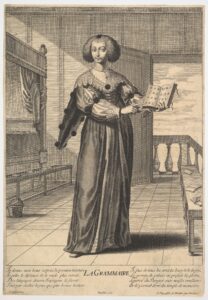 Demonstrative GrammarIdentity expands through demonstrative grammar: This names the claimed self-form, These gathers extensions of that identity as mine, and Those projects difference outward as the people, threats, enemies, or objects defined as not-mine.
 Fourfold Root / Eightfold ExtensionThe fourfold root explains the birth of identity; the eightfold extension explains what identity becomes and how it returns.