Before Geomytha becomes myth, it is grammar.
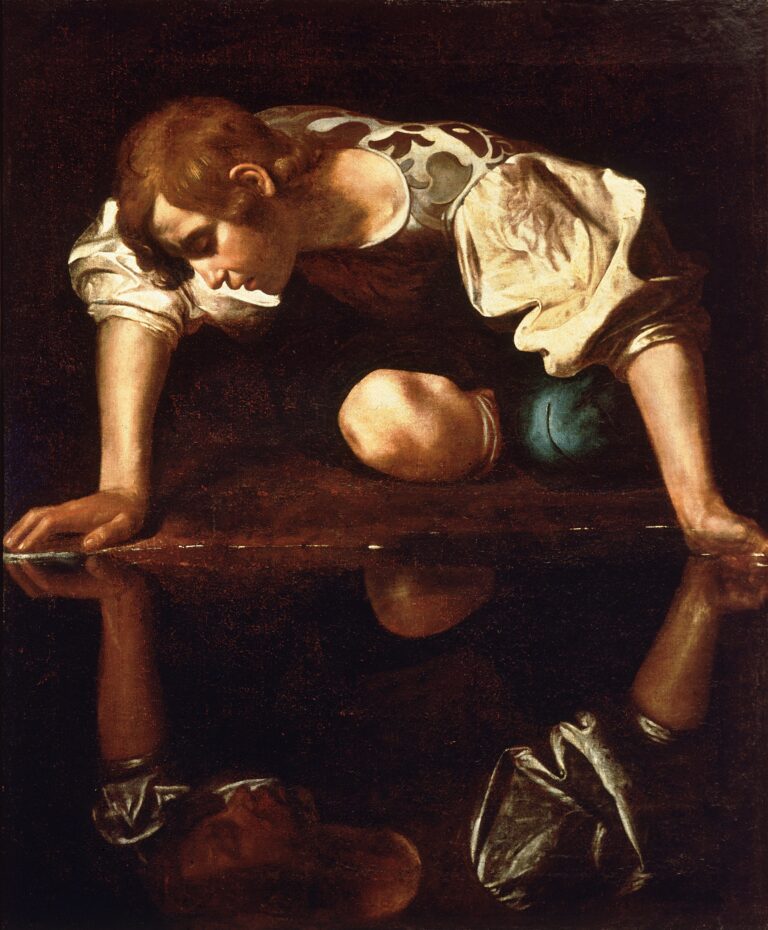
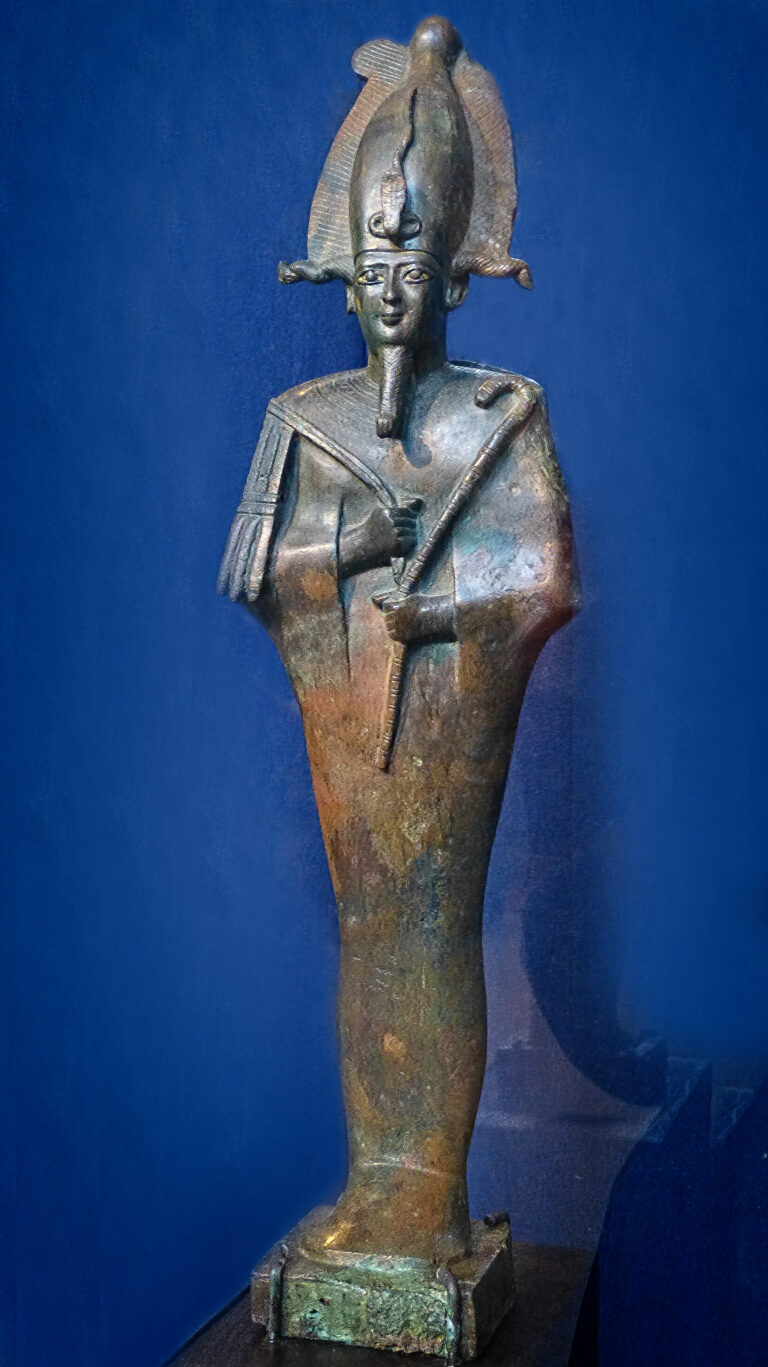
Before it becomes IsisIsisIn Geomytha, Isis names the unclaimed field: Is — pure being, awareness before possession, and the ground before the claimant appears.Read full entry →, OsirisOsirisIn Geomytha, Osiris names reflected presence: Am — awareness reflected as living consciousness without yet becoming ownership.Read full entry →, SetSetIn Geomytha, Set names the claimant: I — the interruption by which reflection is taken as mine and converted toward ownership.Read full entry →, HorusHorusIn Geomytha, Horus names the identity that forms after claim: This — the body, role, image, wound, belief, or story taken as what the self is.Read full entry →, AliceAlice — Alice’s Adventures in WonderlandAlice, the protagonist of Lewis Carroll’s Alice’s Adventures in Wonderland.Read full entry →, the Minotaur, the moon, the swastika, the Black Sun, or the labyrinthLabyrinth — 1986 FilmFantasy film in which Sarah enters the Goblin King’s labyrinth to rescue her baby brother Toby.Read full entry →, it begins with the smallest words:
Is.
Am.
I.
This.
TheseThese — AccumulationThese names accumulation: possessions, titles, achievements, beliefs, communities, and other extensions gathered around identity.Read full entry → are not exotic words. They are almost too ordinary to notice. They pass through the mouth without ceremony. They seem like simple tools of speech, the little hinges that let a sentence open.
But Geomytha begins by slowing down at the hinge.
Because the smallest words often carry the oldest machinery.
A myth is not only a story about gods. A myth is what happens when consciousness dramatizes its own grammar. The gods come later. The monsters come later. The kingdoms, trials, serpents, fires, crowns, masks, mazes, and returns all come later.
First, there is being.
Then being is felt.
Then a claimant appears.
Then the claimant points.
That is the beginning of the world.
Is
Is is being before ownership.
Not my being.
Not your being.
Not this thing being here for me.
Not the story of what being means.
Just Is.
Geomytha uses Is for the source-fieldIs — SourceIs names unclaimed being: awareness before possession, distinction, or identity.Read full entry →: awareness before thought says mine, presence before the claimant appears, the fact of being before identityThis — IdentityThis names the formed identity: the body, role, image, wound, belief, or story claimed as what the self is.Read full entry → begins arranging furniture inside it.
Is does not perform itself. It does not explain itself. It does not become more real because a self understands it. It is the ground before interpretation.
This is why Is belongs to the deepest layer of Geomytha. It is not yet a person, role, wound, belief, body, history, or name. It is the silent fact that anything appears at all.
The false self cannot create Is.
It can only borrow from it.
Am
Am is being felt from within.
In ordinary English, “am” usually belongs to “I.” We say, “I am.” The pronoun claims the verb so quickly that the body-field disappears beneath the speaker.
Geomytha pauses before the claimI — ClaimI names claim: the interruption by which reflected presence is taken as mine.Read full entry →.
It isolates Am.
Am is presence becoming intimate. It is being reflected in the body. It is breath, warmth, pulse, weight, sensation, water, moon, mirror, relationship. It is not yet ego. It is not yet identity. It is the simple feeling of existence before thought turns it into autobiography.
Am is not separate from Is.
Am is Is felt in the body.
This matters because many spiritual errors begin by attacking embodiment, as if body were the trap. But in Geomytha, Am is not the trap. The body is not the enemy. Feeling is not the enemy. ReflectionAm — ReflectionAm names reflected presence: awareness embodied or mirrored without yet becoming ownership.Read full entry → is not the enemy.
The problem begins when Am is seized.
The body breathes.
A feeling rises.
A memory appears.
A wound speaks.
A desire moves.
Then the claimant enters and says:
Mine.
I
I is the claimant.
Again, this does not make I evil. I is necessary for speech, responsibility, choice, relationship, and navigation. Without I, no one can answer, apologize, decide, ask, cross the street, keep a promise, or write a sentence.
But I is dangerous because it forgets it is a function.
I begins as a grammatical convenience and becomes a throne.
It says:
I feel.
I know.
I want.
I fear.
I remember.
I deserve.
I was wronged.
I am special.
I am ruined.
I am awake.
I am chosen.
I am beyond this.
The problem is not that I appears. The problem is that I claims source.
The claimant enters the field of Am and begins to possess what was only passing through.
A feeling becomes my feeling.
A wound becomes my wound.
A thought becomes my truth.
A role becomes my self.
A symbol becomes my crown.
This is the first theft.
The jester does not steal the kingdom itself. He steals the crown and begins acting as though the crown created the kingdom.
This
Once I appears, it points.
This.
This body.
This fear.
This wound.
This name.
This role.
This belief.
This family.
This nation.
This religion.
This insight.
This awakening.
This humiliation.
This achievement.
This story.
“This” is the first object-world.
It is the moment experience becomes something that can be named, held, defended, polished, mourned, sold, worshiped, or attacked. The world has now become demonstrative. The finger points, and the field becomes object.
Again, this is not automatically bad.
Without “this,” there is no cup to drink from, no door to open, no child to comfort, no wound to clean, no song to sing, no bread to break. The world needs form.
The danger is fixation.
Healthy grammar says:
This is appearing.
False grammar says:
This is mine.
The deeper falsehood says:
This is me.
And the deepest spell says:
This is all there is.
That is the birth of the false self.
Not simply I.
Not simply Am.
Not simply body, thought, image, or world.
The false self is the sentence:
I am thisThe False-Self Sentence — I Am ThisThe false-self sentence forms when claim joins reflection to a fixed object of identity: I am this.Read full entry →.
That sentence is the little idol at the center of the maze.
These
The false self never stops at one object.
This becomes These.
These achievements.
These wounds.
These beliefs.
These memories.
These clothes.
These friends.
These enemies.
These symbols.
These books.
These titles.
These followers.
These scars.
These explanations.
These proofs that I am real.
Here the world becomes plural. The mask rack fills. Identity begins collecting extensions of itself.
At this stage, the self does not merely say:
I am this.
It says:
These are mine.
This is where culture, art, style, religion, politics, fandom, career, family, property, trauma, and personal mythology can all become masks. Not because they are false in themselves, but because I begins wearing them as evidence.
These are my people.
These are my ideas.
These are my signs.
These are my sacred objects.
These are my reasons.
These are my injuries.
These are my credentials.
These are my gods.
Plurality is not the fall. Plurality is creation becoming rich.
But when plurality is claimed, the masks multiply faster than the face can remember what it is.
ThoseThose — ProjectionThose names projection: enemies, outsiders, competitors, threats, and disowned qualities placed beyond the identity boundary.Read full entry →
Then comes distance.
Those.
These are mine.
Those are not.
That is the beginning of projection.
Those people.
Those fools.
Those sinners.
Those elites.
Those outsiders.
Those enemies.
Those monsters.
Those unbelievers.
Those asleep people.
Those corrupted people.
Those dangerous people.
“Those” is one of the most powerful words in the fallen grammar because it lets the self place its own shadow at a distance.
What I cannot bear in myself becomes those.
What I fear becomes those.
What I envy becomes those.
What I secretly desire becomes those.
What I have disowned becomes those.
This is where myth begins making monsters.
The dragon, the demon, the foreigner, the heretic, the witch, the beast, the tyrant, the scapegoat, the false kingCounterfeit KingshipCounterfeit kingship appears when a role, ruler, institution, or self treats the throne, office, authority, or form it occupies as the source of legitimacy rather than as a vessel answerable to something…Read full entry → — all of them may contain real danger, but they also reveal the grammar of projection. The self survives by placing part of its own divided field outside the circle.
These are mine.
Those are not.
That sentence builds borders in the soul before it builds them in the world.
All ThisAll This — World-SystemAll This names the total symbolic environment that has become so complete it is experienced as reality itself.Read full entry →
Eventually, the pieces gather into a totality.
Not this.
Not these.
Not those.
All this.
All this life.
All this suffering.
All this history.
All this identity.
All this proof.
All this machinery.
All this religion.
All this politics.
All this entertainment.
All this trauma.
All this progress.
All this collapse.
All this world.
All This is the totalized demonstrative field.
It is the moment the symbolic structure stops looking symbolic and becomes reality itself. The fish no longer notices the water. The self no longer says, “I am inside an interpretation.” It says, “This is just how things are.”
Here the mask becomes a machine.
The private wound becomes a worldview.
The worldview becomes a law.
The law becomes a city.
The city becomes an empire.
The empire becomes common sense.
Common sense becomes a prison.
This is the labyrinth.
Not a maze made of stone only, but a complete environment of meanings. Roles, enemies, memories, institutions, screens, rituals, slogans, clocks, feeds, obligations, and inherited fears all become one enclosing world.
All This is not merely the world.
It is the world as interpreted by the claimant.
That is why All This can feel so heavy. It is not only experience. It is experience plus possession. Experience plus memory. Experience plus identity. Experience plus the story that it all means something about me.
By the time consciousness reaches All This, it has forgotten the simplicity of Is.
It does not remember that the entire construction depends on awareness.
It thinks the construction is awareness.
ReturnReturn — RemembranceReturn names remembrance and release: the loosening of possession so reflection can become transparent to source again.Read full entry →
Return is different.
Return is not another object. It is not another mask. It is not another sacred identity. It is not a better version of “I am this.”
Return is the movement by which the claim relaxes.
The world does not have to vanish. The body does not have to be hated. Language does not have to be destroyed. Thought does not have to be treated as sin. Culture does not have to be flattened into illusion. The cup can remain a cup. The child can remain a child. The wound can remain something that happened. The name can remain useful.
What must die is the claim.
Return says:
This appeared.
This was felt.
This mattered.
But this is not source.
This is not the whole.
This is not what I am.
Return is the verb that releases the nouns.
It is the movement from possession back to presence. From “I am this” back to Am. From Am back to Is.
The false self fears Return because it hears annihilation. But Return does not destroy what is real. It destroys the lie that the passing form was ultimate.
The body remains.
The breath remains.
The world remains.
But the crown is taken off the jester.
The Alphabet as a Small Myth
Even the alphabet can be read as a miniature version of this drama.
It begins at A, the first opening of sign. A is not pure Is itself — once a letter appears, manifestation has already begun — but A is the alphabet’s first gate, the first mark, the first breath of order.
Then the alphabet moves toward M.
M is the middle hum. The closed-mouth sound. The body-sound. The moon-sound. Mother, matter, memory, mirror, marine, mouth. M is where the alphabet seems to gather into Am.
A begins.
M receives.
This is the First FireFirst FireFirst Fire is the formative fire of Is → Am: source becoming a vessel capable of reflected presence.Read full entry →: the warming of source into reflection, the formation of the vessel, the movement by which being becomes felt.
Then comes the hinge.
M → N.
M hums. N crosses.
The letter N introduces the diagonal. It is a crossing between uprights, a little lightning-strike after the middle. Symbolically, this is where Am is interrupted by I. The smooth field is crossed by claim.
N is not yet the end. It is the first fracture.
From N to Z, the named world expands. The claim makes objects. Objects multiply. Multiplicity becomes projection. Projection becomes system. The alphabet runs outward through the field of This, These, Those, and All This until it reaches Z.
Z is the terminal zigzag.
It looks like N exhausted, flattened, final. The crossing has gone as far as it can go. There is no next letter.
But Z is not Return.
Return is the silence after Z.
That silence is where the Second Death FireSecond Death FireSecond Death Fire is the exposing fire that burns false claim after the identity-world has reached its limit.Read full entry → burns the false sequence. Not the fire that forms the vessel. Not the fire that gives body its first warmth. The Second Death Fire is the fire that exposes what cannot continue, the fire that burns false identity back into silence.
Then A can begin again.
Not as possession.
As opening.
The Practical Test
Geomytha is not useful if it remains decorative.
The test is ordinary.
Throughout the day, watch the grammar of the false self forming in real time.
Something happens.
Before the self enters, it is simple:
This happened.
Then the claimant appears:
This happened to me.
Then identity forms:
This means something about me.
Then plurality gathers:
These are the reasons I am right.
Then projection begins:
Those people are the problem.
Then the world hardens:
All this proves the story I already believe.
That is the whole machine in miniature.
The correction begins earlier than we think.
Not by arguing with every thought. Not by building a better identity. Not by decorating the self with spiritual language. But by noticing the moment the claim attaches.
Let this be this before I makes it me.
Let the feeling be felt before it becomes a throne.
Let the wound be honored before it becomes a kingdom.
Let the thought pass before it becomes a god.
Let Am return to Is.
The world does not need to be destroyed.
The claim does.