False Holy Object / Substitute Grail
Public references and limits:
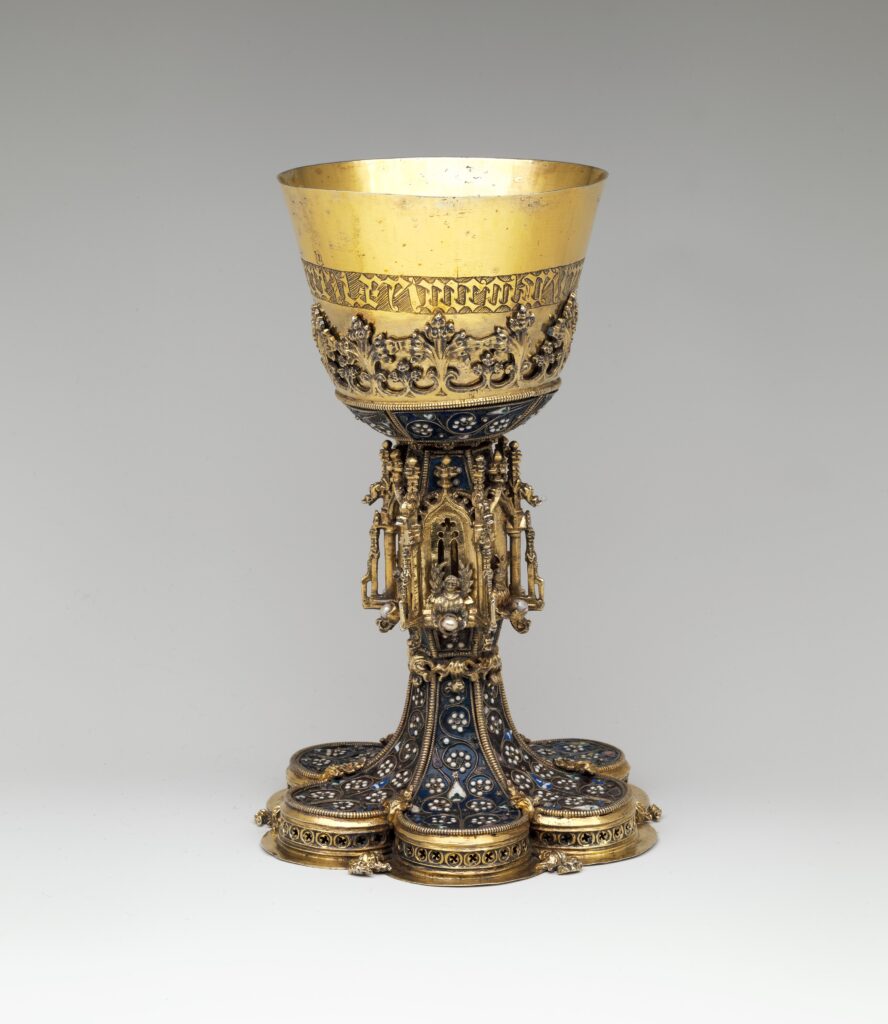
The Grail procession and Exodus 32 offer distinct object-centered comparisons. Substitute Grail is GEOMYTHA’s category. A sacred object is not a substitute merely because it is material, treasured or ceremonially presented.
Geomytha uses the Grail as a vessel-symbol for presence and treats substitute grails as misdirected sacred charge.
It explains why genuine longing can become attached to the wrong target without making the longing itself false.
Longing is captured by I and fixed into This or These; correction separates the longing from the substitute object.
A sought object can actually supply food, shelter or a needed tool. The substitute-Grail reading requires a disproportionate promise of final wholeness. Genuine practical needs are a counterexample to the claim that all seeking is mistaken.
This entry’s name and mechanism belong to GEOMYTHA’s framework. The linked primary works are independent comparison witnesses, not evidence that the GEOMYTHA term originated in their cultures. Specific comparison references: Chrétien de Troyes, Conte du Graal — BnF manuscript witness; Exodus 32 — Golden Calf, Hebrew Text and English Translations. The original work, a later translation, a catalogue record and an extant manuscript are different kinds of evidence. The oldest surviving witnesses of the comparison traditions are not established by this entry.
This is Geomytha's symbolic use of the Grail and should not be presented as the exclusive historical meaning of Grail traditions.
Do not call every ambition, relationship, possession, or achievement a false holy object merely because it matters.
Where this mechanism appears
Explore the essays and Index entries linked to this mechanism.
 The Kingdom Searching for ItselfThe hidden kingdom is not found by claim. It appears when the claim goes quiet.
 The Last Thing You Won’t Put DownThe room is almost empty. The costume is gone. The mirror is covered. The phone is face-down. The candle is out. The quiet room…
 Gollum at the Gate of Eden.Waning Crescent · Surrender The flaming sword that turns every way before the Tree of Life is not just a weapon. It is a…
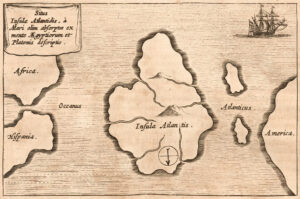 Atlantis — Plato’s Timaeus and CritiasPlato’s Timaeus and Critias are the classical literary sources for the Atlantis tradition. The dialogues present Atlantis as a lost polity in a narrative placed in the distant past; this record uses those passages…
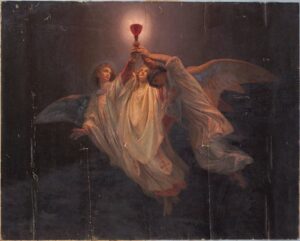 Holy Grail — Arthurian TraditionThe Grail enters the medieval Arthurian literary tradition prominently through Chrétien de Troyes’ Perceval and develops through later Grail romances and retellings. This record treats that literary genealogy as the documented source field.
 One Ring — The Lord of the RingsThe One Ring is Sauron’s Master-ring and the central object of the Ring quest. Frodo and Sam carry it toward Mount Doom to destroy it. Tolkien later wrote that at the final moment the…
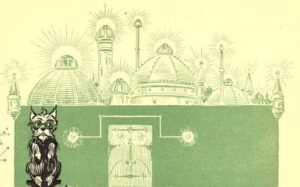 Oz and the Emerald City — The Wonderful Wizard of OzBaum’s The Wonderful Wizard of Oz sends Dorothy and her companions toward the Emerald City and the Wizard in search of help they believe lies at the destination. The first-edition text and illustrations provide…
 Rosebud — Citizen KaneCitizen Kane organizes much of its retrospective investigation around Kane’s final word, “Rosebud.” The film ultimately reveals Rosebud as the sled associated with his childhood before he was taken from his mother. The Library…
Follow the mechanism
Moves from
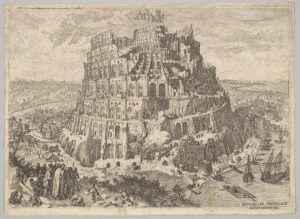 False CenterA false center forms when sovereignty is assigned to an object, role, institution, future state, identity, or projection that cannot actually serve as source.
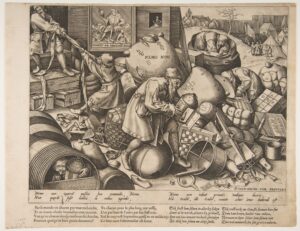 Manufactured LackManufactured Lack occurs when an existing human longing or unease is interpreted through a system that teaches the person what they supposedly lack and how that lack should be filled.
See also
 The Right QuestionThe right question interrupts misdirected seeking by asking what is actually sought, who is seeking, and what remains before the seeker-story begins.
 Recovered CenterRecovered Center names the restoration of right relation after fragmentation, when form becomes ordered around source without pretending to be source.