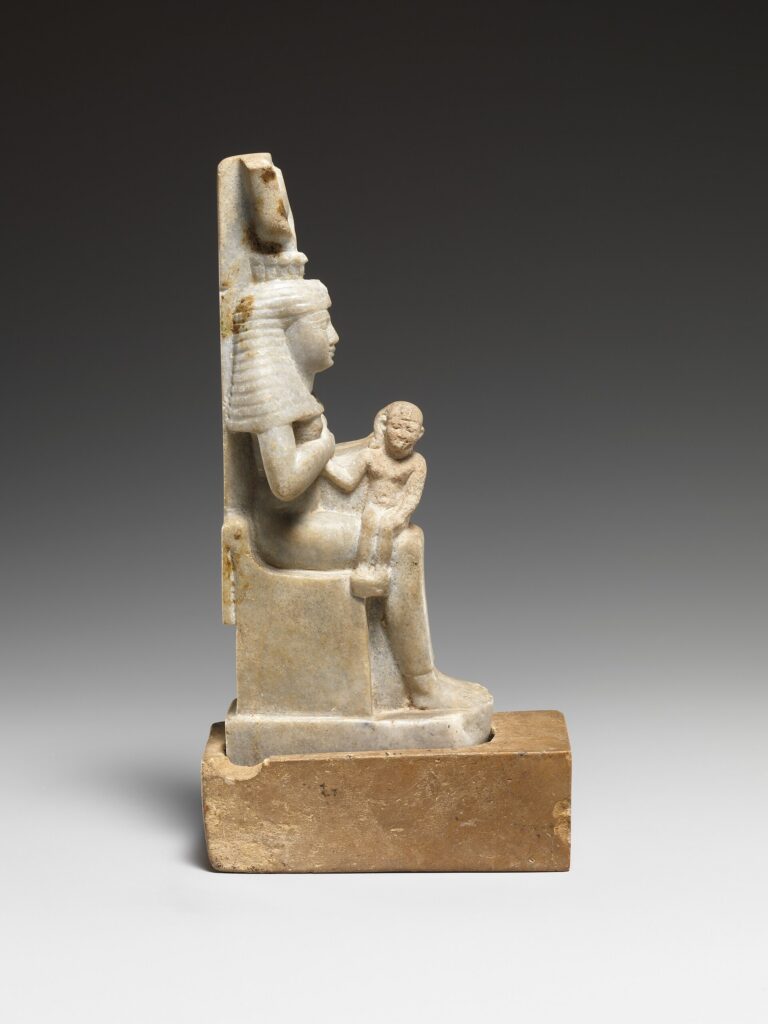

“Everything you own in the box to the left” is not just a breakup line. It is a ritual sentence—an eviction formula aimed at the identityThis — IdentityThis names the formed identity: the body, role, image, wound, belief, or story claimed as what the self is.Read full entry → apparatus itself.
In Geomytha, the ego is not a personality trait. It is a time-bound construct (HorusHorusIn Geomytha, Horus names the identity that forms after claim: This — the body, role, image, wound, belief, or story taken as what the self is.Read full entry →) generated when awareness (IsisIsisIn Geomytha, Isis names the unclaimed field: Is — pure being, awareness before possession, and the ground before the claimant appears.Read full entry →) stops resting as itself and becomes overtaken by projected imagination (SetSetIn Geomytha, Set names the claimant: I — the interruption by which reflection is taken as mine and converted toward ownership.Read full entry →). The result is a self that must prove its reality through continuity, narrative, possession, and control.
That is why the lyric does not say “take your clothes.” It says “everything you own.”
Ownership as the siphon: how Set keeps the current
“Ownership” is one of Set’s cleanest technologies because it converts being into having. The mind begins to whisper an unspoken premise:
I am real because I can claimI — ClaimI names claim: the interruption by which reflected presence is taken as mine.Read full entry →.
Once that premise is accepted, attention is no longer free. It becomes a maintenance contract. If something is “mine,” it must be secured. If it must be secured, the psyche must live in the future. And if the psyche lives in the future, it cannot rest in presence.
This is the battery logic: ownership behaves like a cathode pull—drawing the current of attention out of unmediated awareness and into projectionThose — ProjectionThose names projection: enemies, outsiders, competitors, threats, and disowned qualities placed beyond the identity boundary.Read full entry →, strategy, and fear.
The inventory is not material. It is metaphysical:
the couch becomes “my comfort,”
the keys become “my agency,”
the photos become “my storyline,”
the gifts become “my claim on you,”
the shared space becomes “my entitlement.”
So “everything you own” means: the entire system by which Horus extends itself into the world to remain believable.
The box: identity compressed into contents
The box is the crucial symbol. A box does two things Set cannot tolerate:
1) It imposes finitude.
Set thrives on endlessness: the unresolved, the negotiable, the sentimental, the “maybe.” A box says: there is an edge. The illusion can be contained. The story can be ended.
2) It silences objects as emotional portals.
Loose items in a room keep “speaking.” They leak association—memory, bargaining, nostalgia, guilt. A box turns them into inert contents. The objects stop functioning as hooks by which identity re-enters the space.
In other words, the box is not storage. It is exorcism-by-boundary.
“To the left”: the exit vector of disenchantment
In this lens, “left” is the direction where enchantment collapses—where consciousness stops consenting to the illusion’s claim of centrality.
“Left” does not mean evil. It means unhooking. It is the side of returnReturn — RemembranceReturn names remembrance and release: the loosening of possession so reflection can become transparent to source again.Read full entry →—where projected imagination loses its throne and awareness can resume clean reflectionAm — ReflectionAm names reflected presence: awareness embodied or mirrored without yet becoming ownership.Read full entry → rather than compulsive narration.
So the command “to the left” is not only “get out.” It is:
move your identity-extension system toward the path where it no longer hypnotizes the room.
The deeper strike: irreplaceable is the ego’s lie
The ego’s central demand is to be treated as singular, central, irreplaceable. The refrain breaks that spell by naming the persona as a pattern:
You are replaceable.
Not the soul—the construct. The role. The attachment interface. The imagined sovereign.
And that is why the lyric lands with such finality: it demotes Set/Horus from “the center of reality” to “a boxed inventory.”
Pack up the proofs. Contain the hooks. Exit along the disenchantment path.