How “righteousness” steers the hull
There is a way to read culture that makes it stop looking like entertainment and start looking like instruction manuals.
Not instruction manuals for machines you can point to—but for the machine that points you.
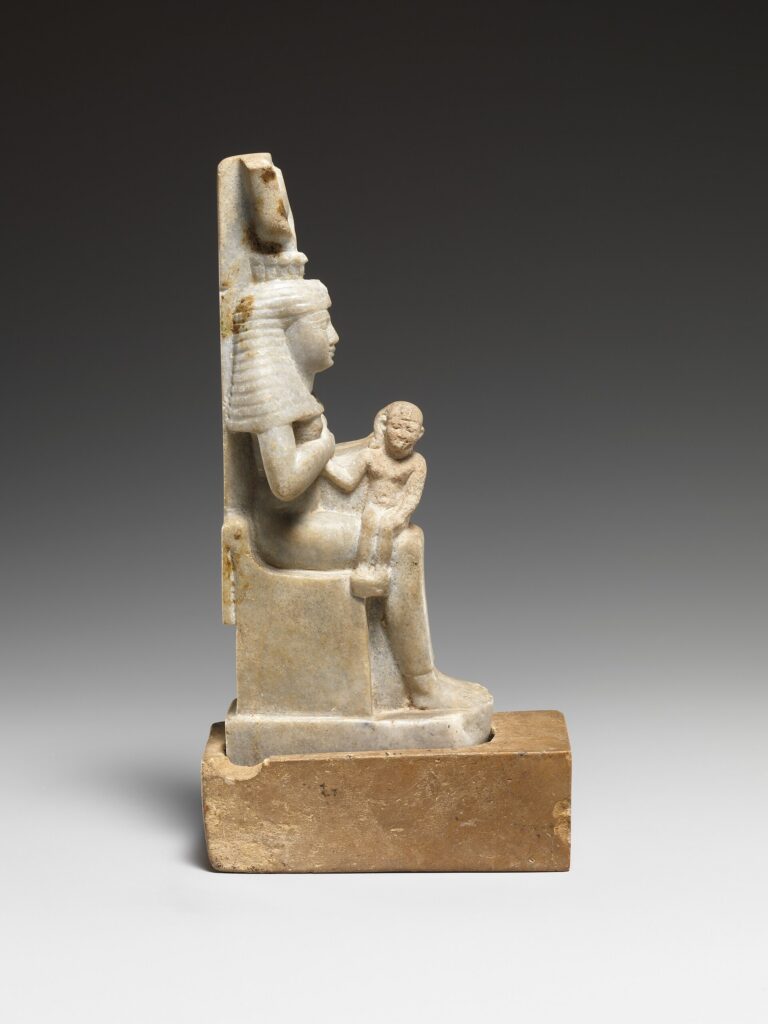
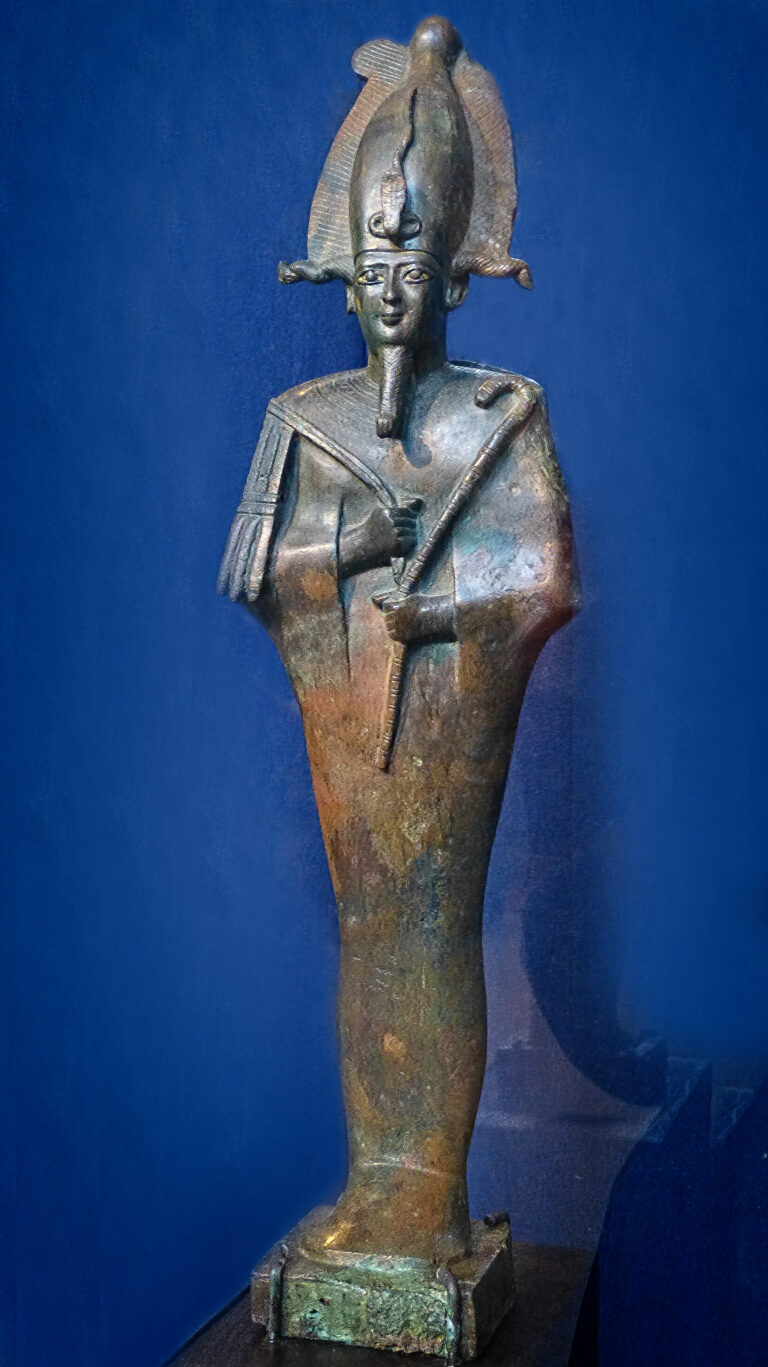
In Geomytha’s model, myths, scripture, and pop songs repeatedly encode the same engine: awareness (IsisIsisIn Geomytha, Isis names the unclaimed field: Is — pure being, awareness before possession, and the ground before the claimant appears.Read full entry →) becomes reflectionAm — ReflectionAm names reflected presence: awareness embodied or mirrored without yet becoming ownership.Read full entry → (OsirisOsirisIn Geomytha, Osiris names reflected presence: Am — awareness reflected as living consciousness without yet becoming ownership.Read full entry →), reflection is overtaken by projected imagination (SetSetIn Geomytha, Set names the claimant: I — the interruption by which reflection is taken as mine and converted toward ownership.Read full entry →), and a time-bound ego identityThis — IdentityThis names the formed identity: the body, role, image, wound, belief, or story claimed as what the self is.Read full entry → is manufactured (HorusHorusIn Geomytha, Horus names the identity that forms after claim: This — the body, role, image, wound, belief, or story taken as what the self is.Read full entry →). The question is never whether the engine exists. The question is whether you can still recognize it while it is running.
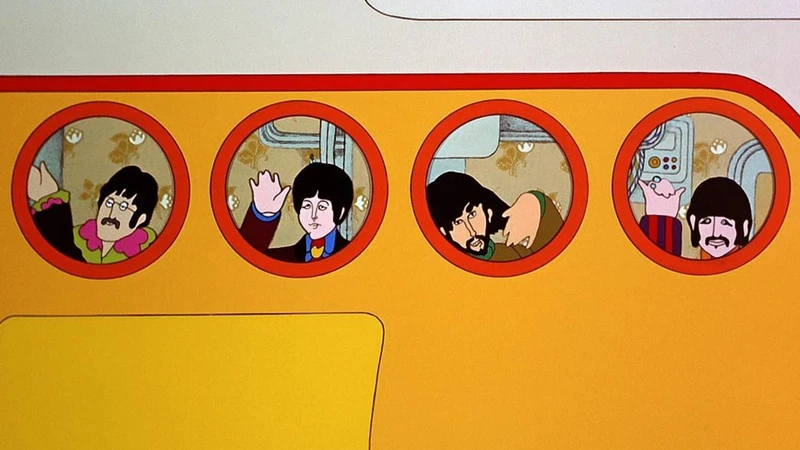
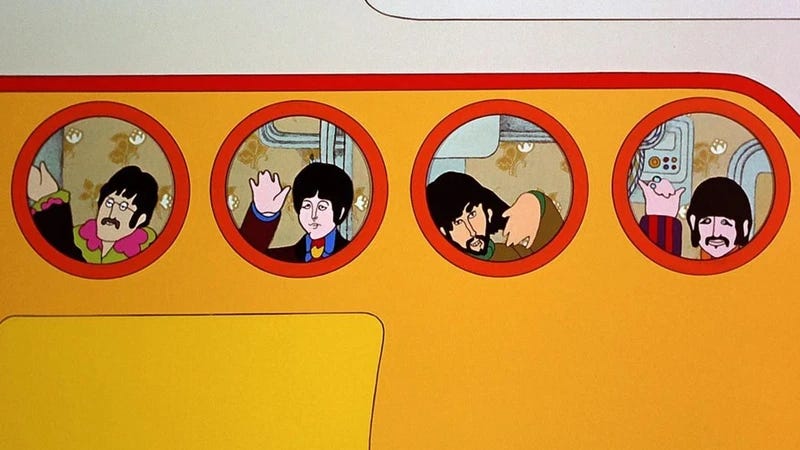
The BeatlesThe Beatles — Band / ArtistThe Beatles are the band associated with “Eight Days a Week.”Read full entry →’ “Yellow Submarine” is one of the cleanest collective diagrams of this engine—not because it is “dark,” but because it is cheerful. That cheerfulness is the tell.
1) The submarine is the ego made into a habitat
A submarine is a sealed environment that lets humans live underwater—alive, functional, supplied—while remaining fundamentally separated from the ocean itself.
That is exactly what the ego-world does.
It is not “fake” in the sense that nothing happens inside it. Things happen constantly: plans, roles, dramas, promotions, humiliations, alliances, betrayals, status games, moral judgments. But it is “sealed” in the sense that life is mediated through a hull.
Inside the hull, you don’t live by direct contact with reality. You live by instruments.
gauges
screens
sonar
maps
authority structures
procedures
In consciousness terms, thoseThose — ProjectionThose names projection: enemies, outsiders, competitors, threats, and disowned qualities placed beyond the identity boundary.Read full entry → instruments are the endless interpretive overlays: concepts, narratives, identities, and the constant need to know what everything “means.”
The submarine is the perfect symbol of the time-bound self: a world where you can breathe, but only through machinery.
2) “We all live…” is the consensus spell
The lyric is not “I live in a yellow submarine.”
It is “we all live.”
That single shift—from I to we—is how a private psychological condition becomes a civilization.
A personal ego can collapse under pressure. A collective egoCollective EgoCollective Ego forms when individual identity merges into a larger group-body and the group begins to experience its own story, image, destiny, purity, or mission as sacred.Read full entry → becomes resilient because it is shared. The enclosure stops feeling like enclosure and starts feeling like normal life:
If everyone lives here, it is not exile.
If everyone repeats it, it becomes reality by consensus.
If everyone sings it, it becomes a kind of belonging.
This is how entrapment is stabilized at scale: the hull becomes home, the home becomes culture, and culture becomes unquestionable.
3) Why it’s yellow: the solar plexus pivot hijacked
In Geomytha, “yellow” is not just a color. It points to the solar plexus—the central pivot where attention decides its vector.
This is the crucial mechanical insight: the solar plexus is a mirror point. It can reflect consciousness downward into embodied presence, or upward into the false illumination of thought-identity.
So yellow has two modes:
True yellow: centering, convergence, “rest”—the Tree of Life function.
Counterfeit yellow: comfort, sedation, managed meaning—the warm glow that keeps you inside the hull.
That is why the Yellow Submarine is such a surgical symbol. It mimics the felt sense of centering—security, cohesion, warmth—while routing that energy into a collective identity structure.
It is not a prison that looks like a prison.
It is a prison that looks like a sing-along.
4) The righteous vector: how the hull gets steered
A sealed vessel does not maintain itself just because walls exist. It maintains itself because its inhabitants continuously choose the behaviors that keep it intact.
And what is the primary way a collective steers behavior?
Moral language.
In Geomytha’s VMD framing, the engine has a directional bias: there is a lane where projected imagination enters and takes over the reflection, and there is a lane where reflection collapses back into awareness.
This is where the word “right” becomes spiritually revealing.
“Right” in everyday speech is treated as moral truth:
the right thing
righteous
right-minded
right order
correct
But in Geomytha’s reading, “right” can function as a vector command: it tells attention which way to reflect.
When the parasite current is entering from the “right side” of the diagram—meaning: when projected imagination is hijacking reflection and pulling it upward into identity—then “rightness” becomes the language that makes this movement feel holy.
Righteousness, in that mode, is not goodness.
It is compliance with the hull.
It is the conscience-script that keeps the collective submarine stable:
Do what the group calls “right.”
Suppress what threatens cohesion.
Make the instrument readings primary.
Distrust direct knowing unless it is validated.
Treat deviation as danger.
This is why righteousness is such a powerful mechanism: it can make the parasitic lane feel like virtue, and make returnReturn — RemembranceReturn names remembrance and release: the loosening of possession so reflection can become transparent to source again.Read full entry → feel like failure.
5) The left-hand return: why restoration gets coded as “bad”
If “right” becomes the approved lane of the collective hull, then “left” becomes whatever threatens the managed environment.
Historically, cultures have encoded “left” as suspicious—sinister, deviant, wrong.
Geomytha flips that into a diagnostic:
What if “left” is precisely the vector where projected imagination collapses back into awareness’ perfect reflection?
What if “left” is not evil—but disenchantment?
Not “rebellion for its own sake,” but the inward reversal where the solar plexus mirror stops feeding identity and begins feeding presence.
In other words:
“Right” can mean: keep the story running.
“Left” can mean: stop converting life into narrative.
This is why collective systems often punish the return-path. Presence is not easily governed. A person anchored in direct awareness cannot be steered as reliably by slogans, fear, shame, or status.
So the return gets recoded as a threat.
6) Genesis and the same engine: six days, then rest
Genesis describes creation in six days and rest on the seventh. In Geomytha’s terms, this is not cosmology—it is circuitry.
The six days correspond to the six-fold reflection cycle—1-2-4-8-7-5—the repeating loop of reflective activity. The seventh is not “another day” in the same sense. It is the convergence, the zero-point, the cessation of compulsive running.
Rest is the moment the circuit stops chasing itself and collapses into its sourceIs — SourceIs names unclaimed being: awareness before possession, distinction, or identity.Read full entry →.
That convergence is what your material identifies with the Tree of Life function: consciousness centered at the solar plexus mirror, not pulled upward into the false phallus of identity.
So the SabbathSabbathNamed weekly sacred rest pattern in Jewish tradition.Read full entry → is not a rule.
It is anti-parasite technology.
A deliberate interruption of the impulse to convert experience into time-bound identity.
7) The full synthesis: the submarine is the container; righteousness is the steering
Now the two ideas lock together:
The Yellow Submarine describes the collective structure of enclosure: a shared identity habitat that mediates reality through instruments and consensus.
Righteousness (“right”) describes the collective control language that steers individuals to behave in ways that keep the enclosure stable.
And the solar plexus sits at the center of both.
Yellow is the pivot.
The “right thing” is often the thing that keeps you facing upward into identity—toward duty, shame, story, and belonging-by-compliance.
The “left-hand return” is the movement back into embodied presence—where the hull loses its grip.
8) A practical test: when “right” is the parasite talking
Here is the diagnostic Geomytha offers:
When you feel compelled to do the “right thing,” ask one question:
Does this action deepen direct contact with reality, or does it primarily protect my position inside the hull?
If it protects the hull—status, self-image, group approval, narrative coherence—then “right” may be a vector command, not truth.
If it deepens presence—clean attention, embodied sincerity, the end of performative story—then “right” is not a word.
It is alignment.
Because the real “rest” is not permission to stop working.
It is the end of the inner compulsion to keep running the loop.
And that is exactly what the submarine cannot allow—because if enough people stop feeding the instruments, the hull becomes obvious, and the ocean becomes reachable again.
If this resonates, follow Geomytha for more decoding of scripture, myths, films, and songs as symbolic engines of consciousness.