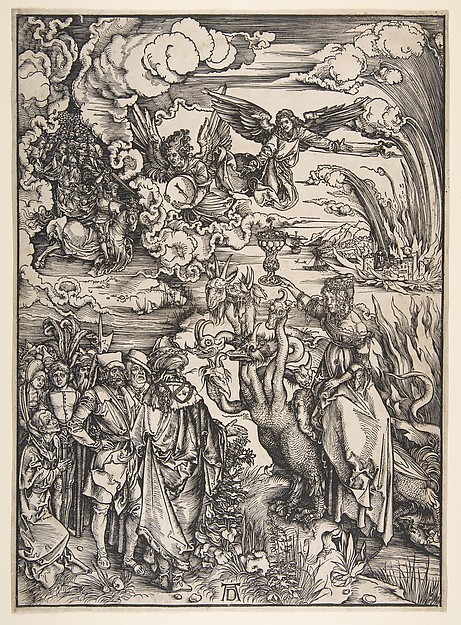
How the great prostitute, the scarlet beast, and the seven heads show SetSetIn Geomytha, Set names the claimant: I — the interruption by which reflection is taken as mine and converted toward ownership.Read full entry →’s pleasure economy consuming itself in the Geomytha field.
Then one of the bowl angels pulls John aside for a tour of the real capital of Set’s world: not a palace or temple, but a woman. Not a bride, but a prostitute. Not a victim, but a queen riding the beast. In your lens, RevelationRevelation — Book of RevelationThe final book of the Christian New Testament, also called the Apocalypse of John.Read full entry → 17 is the unmasking of BabylonBabylon — Ancient City / Symbolic EmpireAncient Mesopotamian city and later biblical/apocalyptic symbol of imperial world-order.Read full entry → as the fully developed pleasure–power interface of Set’s realm: the system that uses intimacy, beauty, luxury, and desire as tools to bind HorusHorusIn Geomytha, Horus names the identity that forms after claim: This — the body, role, image, wound, belief, or story taken as what the self is.Read full entry → to the beast. If chapters 13–16 showed the mechanics of the beast’s empire and its consequences, chapter 17 shows the seductive face that made everyone consent to it.
The Woman on Many Waters: Seduction as Infrastructure
“Come, I will show you the judgment of the great prostitute who is seated on many waters, with whom the kings of the earth have committed sexual immorality, and with the wine of whose sexual immorality the dwellers on earth have become drunk.” (Rev 17:1–2)
The angel promises to show John the judgment of the “great prostitute” seated on many waters. She is not a local vice; she is a global infrastructure:
“many waters” = peoples, multitudes, nations, languages (v.15) – the full human collective
“kings of the earth” commit “sexual immorality” with her – power structures enter covenant with her system
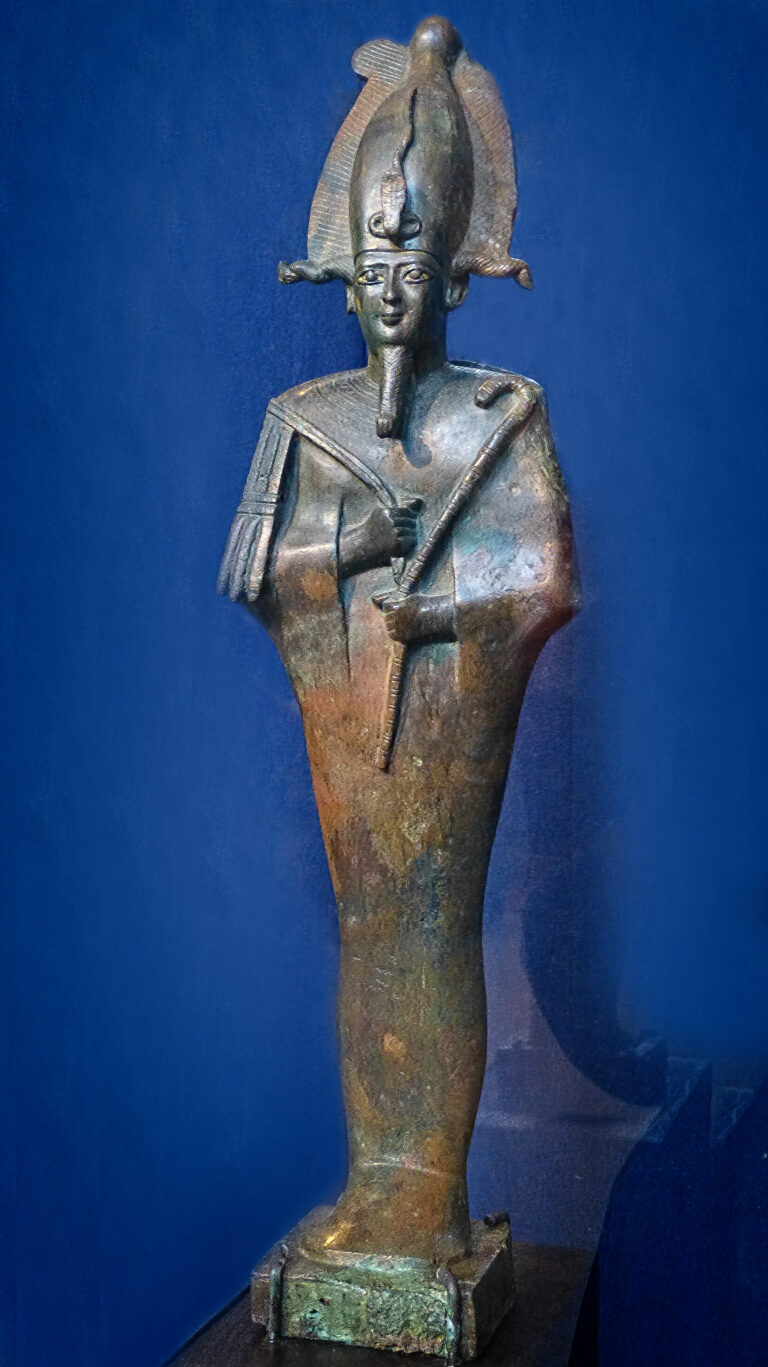
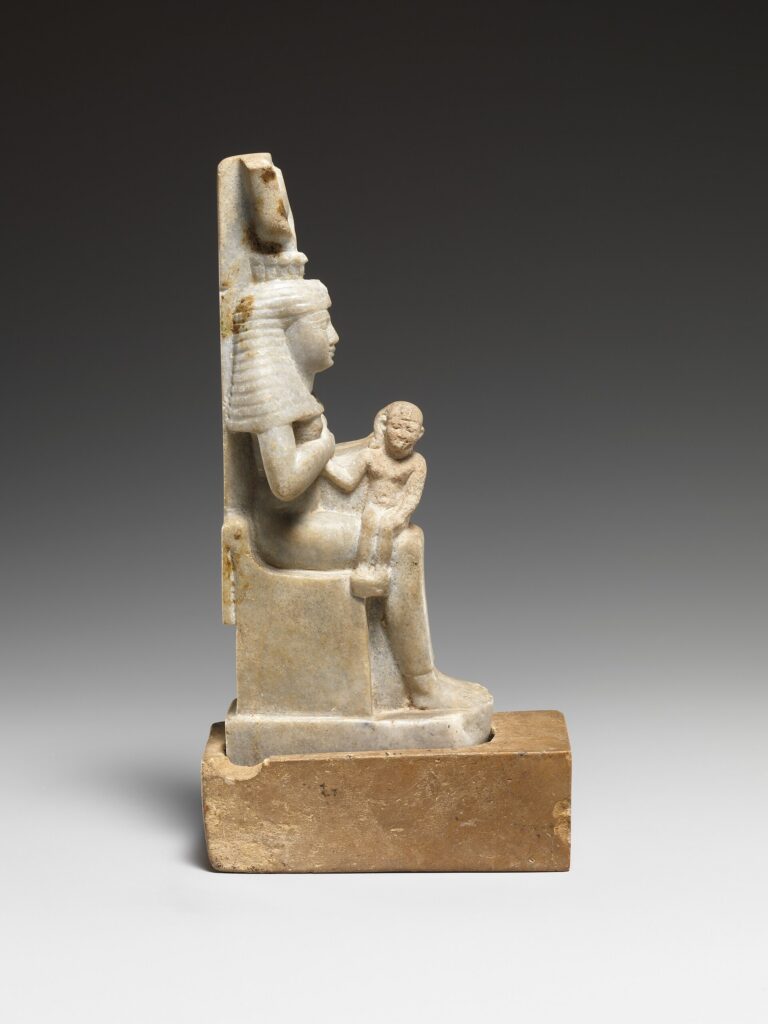
“dwellers on earth” are drunk on her wine – the masses intoxicated by what she offers In Geomytha, “sexual immorality” at this level is not about private bedroom rule-keeping; it is the misuse of intimacy and union. The principle meant for IsisIsisIn Geomytha, Isis names the unclaimed field: Is — pure being, awareness before possession, and the ground before the claimant appears.Read full entry →–OsirisOsirisIn Geomytha, Osiris names reflected presence: Am — awareness reflected as living consciousness without yet becoming ownership.Read full entry → (awareness and form), for covenant and true communion, is diverted into union with Set’s system:
making security, identityThis — IdentityThis names the formed identity: the body, role, image, wound, belief, or story claimed as what the self is.Read full entry →, and meaning from Babylon’s offerings: comfort, luxury, status, narrative, spectacle
“going to bed” with the world-machine in exchange for feeling safe, admired, or numb. Her “waters” are the global emotional and economic currents that carry whole populations. She doesn’t rule by overt force; she rules by getting kings and peoples to want what she serves.
Scarlet Beast: Babylon Riding Set’s Empire
“And he carried me away in the Spirit into a wilderness, and I saw a woman sitting on a scarlet beast that was full of blasphemous names, and it had seven heads and ten horns.” (Rev 17:3)
The angel takes John to a wilderness—symbol of desolation and also spiritual clarity. There he sees the woman sitting on a scarlet beast:
the beast is scarlet – color of blood, luxury, appetite, violence
“full of blasphemous names” – its very identities deny the true nature of Reality
“seven heads and ten horns” – the same structural markers as the sea-beast of chapter 13: completeness of counterfeit perspective (seven), totalized power (ten) In Geomytha, this is Set’s empire (beast) and Babylon (prostitute) in symbiosis:
the beast provides power, enforcement, structure
the woman provides desire, glamour, narrative She “rides” the beast:
appearing to steer it—markets, entertainment, fashion, ideology—but utterly dependent on it for force and reach
their union is the fusion of economic, political, sexual, and religious seduction into one system. This is the full form of Set’s city: empire and pleasure woven into a single operating system.
Purple, Scarlet, Gold, and a Golden Cup: Beauty in Service to Set
“The woman was arrayed in purple and scarlet, and adorned with gold and jewels and pearls, holding in her hand a golden cup full of abominations and the impurities of her sexual immorality.” (Rev 17:4)
Her appearance:
“purple and scarlet” – royal dignity and sensual extravagance
“gold, jewels, pearls” – wealth, refinement, allure
a golden cup – sacred vessel imagery—but it is “full of abominations and impurities” The outer form is exquisite; the contents are toxic. In Geomytha, Babylon is:
all the ways beauty, luxury, and spiritual symbolism are conscripted to serve Set
aesthetics and liturgies that anesthetize conscience, soothe anxiety, and glamorize harm The golden cup is the counterfeit Grail:
instead of holding the Lamb’s blood (consciousness passing through suffering into clarity), it holds a cocktail:
addictive comforts,
rationalized exploitation,
pleasure severed from covenant and truth. When the world drinks from her cup, it feels like relief, sophistication, or transcendence; only later does it discover the mixture: self-betrayal and complicity.
Name on Her Forehead: Babylon the Great, Mother of Abominations
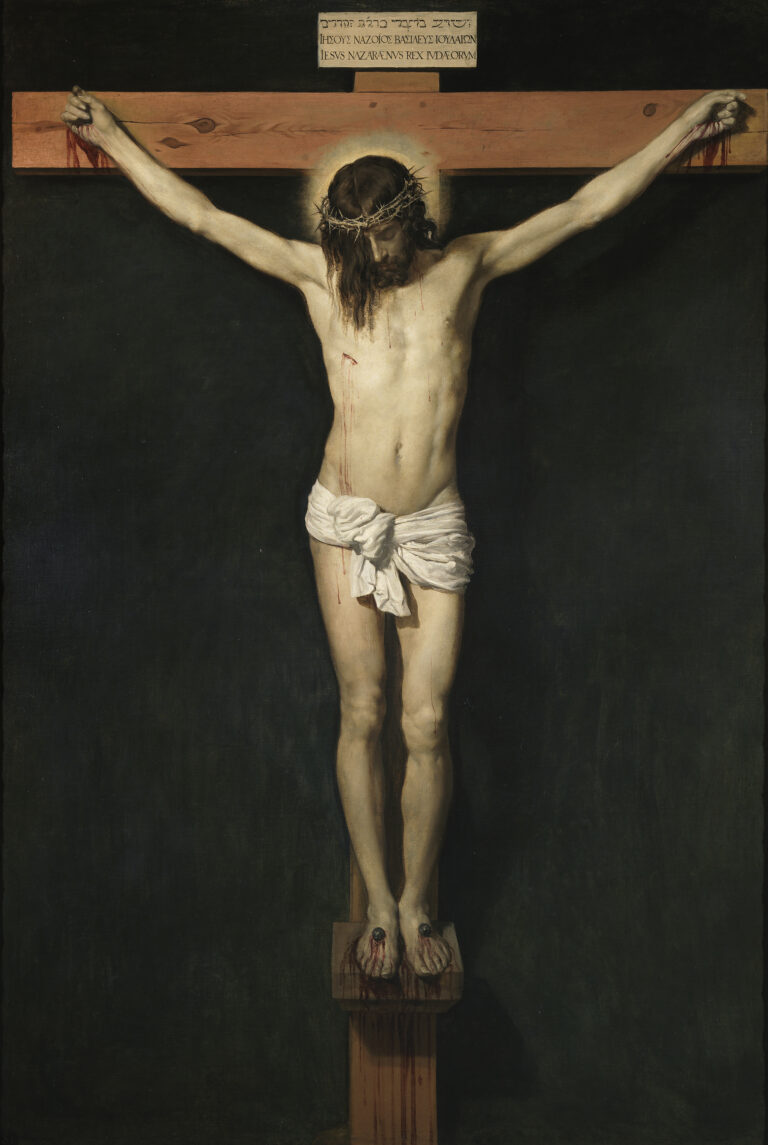
“And on her forehead was written a name of mystery: ‘Babylon the great, mother of prostitutes and of earth’s abominations.’ And I saw the woman, drunk with the blood of the saints, the blood of the martyrs of JesusChristJesus Christ as the central figure of Christianity. Matthew 27 depicts the soldiers' mock coronation with a robe and crown of thorns before crucifixion; Philippians 2 describes Christ humbling himself and becoming…Read full entry →.” (Rev 17:5–6)
Her forehead—the same place where the beast’s mark and the Lamb’s name can be—bears a name:
“Babylon the great” – archetypal city of confusion and empire
“mother of prostitutes” – she births all lesser systems of selling out
“mother of earth’s abominations” – the fertile sourceIs — SourceIs names unclaimed being: awareness before possession, distinction, or identity.Read full entry → of all the ways earth’s goodness is twisted She is “drunk with the blood of the saints and the martyrs of Jesus”:
the life of thoseThose — ProjectionThose names projection: enemies, outsiders, competitors, threats, and disowned qualities placed beyond the identity boundary.Read full entry → who resisted her seduction becomes her intoxication
she feeds on the energy, attention, and even the sacrifice of those who tried to stand against her. In Geomytha:
Babylon is not one city; she is the pattern of Set’s world at full bloom:
religious institutions turned into power structures,
economies that require exploitation,
cultures that normalize envy, comparison, and lust,
spiritualities that offer experience without transformation. Her being “mother” means: whenever you see a small-scale sellout—someone trading their presence for status, love for image—you are seeing a child of Babylon. She is the root pattern: “You can have what you want, if you will give yourself to my system.”
The Beast That Was, Is Not, and Is to Come: Recycling of Set’s Forms
John marvels, and the angel explains:
“The beast that you saw was, and is not, and is about to rise from the bottomless pit and go to destruction.” (Rev 17:8)
In contrast to God, who “is, was, and is to come,” the beast:
“was” – had a historical form
“is not” – appears absent or dead
“is about to rise” – a new iteration emerges
“and goes to destruction” – its end is built into its pattern In Geomytha, Set’s world constantly recycles:
empires fall, ideologies fail, institutions rot—but their basic pattern reappears under new branding
people think, “This time it’s different,” not seeing the same beast in new clothes The “bottomless pit” (Abyss) is the collective unconscious storehouse of all unresolved patterns. When conditions align, the old logic resurfaces as “the next big thing.” But its geometry has not changed; it still tends toward destruction. The angel adds that those “whose names have not been written in the book of life from the foundation of the world” will marvel when they see the beast, “because it was and is not and is to come” (v.8). In other words:
those not rooted in Isis-awareness and the Lamb read the recycling of Set’s patterns as mystery and destiny,
rather than as a tired loop: the same solar trap, repeating.
Seven Heads, Seven Mountains, Seven Kings: Layers of Set’s Rule
“This calls for a mind with wisdom: the seven heads are seven mountains on which the woman is seated; they are also seven kings…” (Rev 17:9–10)
The angel asks for wisdom—discernment beyond literalism. The seven heads are:
“seven mountains” – places of height, influence, dominance
“also seven kings” – ruling configurations, perhaps successive or simultaneous In Geomytha, seven often mirrors the days of creation, the full cycle; here it is the counterfeit completion of Set’s rule. You can read theseThese — AccumulationThese names accumulation: possessions, titles, achievements, beliefs, communities, and other extensions gathered around identity.Read full entry → heads as:
layers or domains where Babylon sits: politics, religion, economy, culture, knowledge, media, technology (or any similar sevenfold mapping)
or as successive epochs of empire, each a head of the same beast. “Five have fallen, one is, the other has not yet come; and when he does come he must remain only a little while. As for the beast that was and is not, it is an eighth but it belongs to the seven, and it goes to destruction.” (vv.10–11) In your lens, the exact numerology is less about end-time charting and more about this pattern:
Set’s rule appears as multiple iterations (kings, mountains) across history
each is limited (“five have fallen…”), none is ultimate
the final configuration (“eighth… belongs to the seven”) is just another recycling of the same old geometry, now fully mature—and thus ready to collapse.
Ten Horns, One Hour: United Consent to the Beast
“And the ten horns that you saw are ten kings who have not yet received royal power, but they are to receive authority as kings for one hour, together with the beast. These are of one mind, and they hand over their power and authority to the beast.” (Rev 17:12–13)
Ten horns here are ten kings given authority “for one hour” with the beast:
short duration – intense but brief
“of one mind” – unanimity of purpose
they “hand over” their power to the beast. In Geomytha, this is the late-stage phase when:
multiple power centers (nations, corporations, elites, institutions) align around a single Set-logic
whatever their differences, they converge on preserving the system:
profit over presence,
control over truth,
image over integrity. “One hour” suggests that when consensus around the beast is total, its end is near. The system hits a kind of saturation point: all horns pointed in the same direction; after that, collapse is the only move left. Paradoxically, these very kings—
“will hate the prostitute. They will make her desolate and naked, and devour her flesh and burn her up with fire, for God has put it into their hearts to carry out his purpose…” (vv.16–17)
The power structures that rode with Babylon turn on her:
they strip her, consume her, burn her. In your lens, this is Set’s realm devouring its own pleasure system when it becomes inconvenient:
powers that used sex, luxury, entertainment, and religion to control people later purge those very things when they threaten control;
the markets and regimes that benefited from Babylon also preside over her destruction. Yet the text says, “God has put it into their hearts to carry out his purpose” (v.17):
even the beast’s self-destruction is harnessed by Reality;
Set is allowed to eat his own offspring, and this becomes part of Babylon’s judgment.
The Woman Is the Great City: Set’s Capital Named
The chapter closes with clarity:
“And the woman that you saw is the great city that has dominion over the kings of the earth.” (Rev 17:18)
The prostitute is not just a person; she is a city—an entire civilizational configuration:
a “great city” with global reach,
having “dominion over the kings of the earth” through seduction, finance, and narrative. In Geomytha:
this great city is Set’s fully developed cultural matrix:
where everything—sex, art, spirituality, law, economy—circulates through Babylon’s logic,
where to “live” usually means to be within her zoning codes, emotionally and mentally. She is the opposite pole to New Jerusalem (Rev 21):
both are cities;
one is built on Babylon’s commerce and fornication with kings;
the other on the Lamb’s self-giving and God dwelling with humanity. Every person, in your lens, lives between these two cities:
the inner Babylon, where you sell pieces of yourself for safety, approval, or pleasure;
the emerging New Jerusalem, where your identity is gift, not commodity.
How Revelation 17 Functions in Geomytha
Revelation 17 paints Babylon not as a side-story but as the heart of Set’s realm:
She sits on many waters: the emotional and economic oceans that carry humanity.
She rides the scarlet beast: pleasure, luxury, and spirituality all harnessed to empire.
She holds a golden cup: beauty and sacred symbolism used to deliver poison.
She is named on the forehead: the ruling mental pattern of “how the world works.”
She is drunk with the blood of saints: she lives off the energy and sacrifice of those who resisted her.
She is the great city: the integrated civilizational system of the beast. In your Geomytha reading, this chapter invites piercing self-inquiry:
Where in me do I treat my own presence as something to sell—for security, admiration, or anesthesia?
In what ways do I secretly love Babylon’s offerings more than I love truth—comfort over clarity, polish over integrity?
Which of my pleasures are genuinely Lamb-compatible, and which require me to ride the beast a little to get them?
Where do I see systems (legal, economic, religious) functioning as the children of Babylon, and how do I participate or resist?
Am I more afraid of Babylon’s judgment (loss of her comforts) than of remaining bound to her logic? Revelation 17 is not given to make you hunt for a single geo-political city to label; it is given so you can recognize Babylon’s pattern in your own habits, loyalties, and desires, and begin to come out of her before she collapses. In your terms:
It is the portrait of Set’s pleasure-city at the height of its power,
just before reality requires it to drink its own cup.
X: @mythicgeometry · Substack: Geomytha Noir · YouTube: Geomytha · Instagram: @mythicgeometry · TikTok: @Geomytha · Patreon: GeomythaNoir