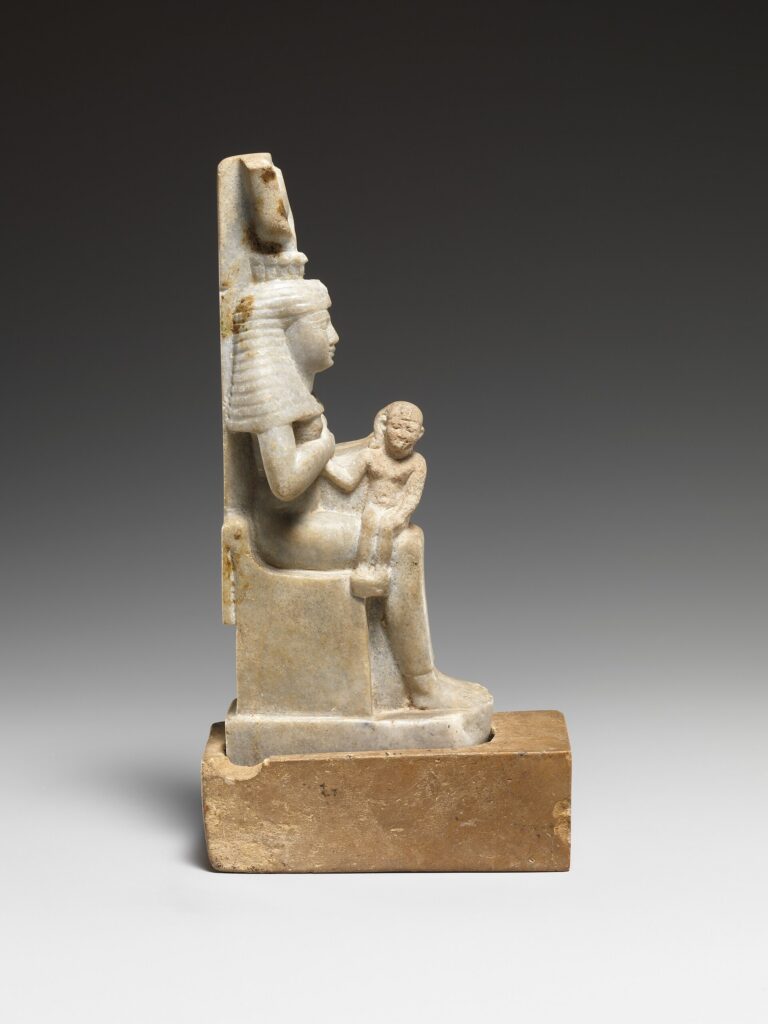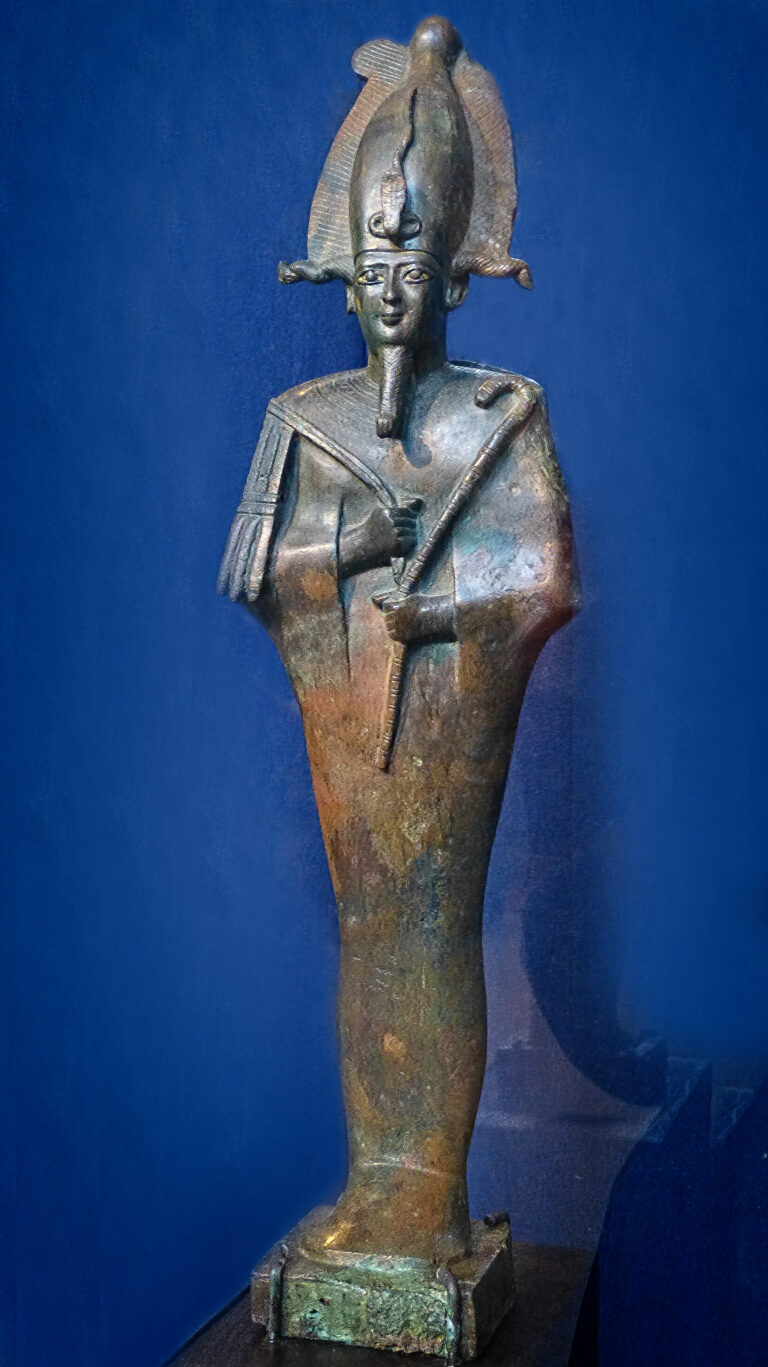
Ephesus, Smyrna, Pergamum, and Thyatira through the Geomytha archetypes of IsisIsisIn Geomytha, Isis names the unclaimed field: Is — pure being, awareness before possession, and the ground before the claimant appears.Read full entry →, OsirisOsirisIn Geomytha, Osiris names reflected presence: Am — awareness reflected as living consciousness without yet becoming ownership.Read full entry →, SetSetIn Geomytha, Set names the claimant: I — the interruption by which reflection is taken as mine and converted toward ownership.Read full entry →, HorusHorusIn Geomytha, Horus names the identity that forms after claim: This — the body, role, image, wound, belief, or story taken as what the self is.Read full entry → – and the old brother dramas playing out inside you.
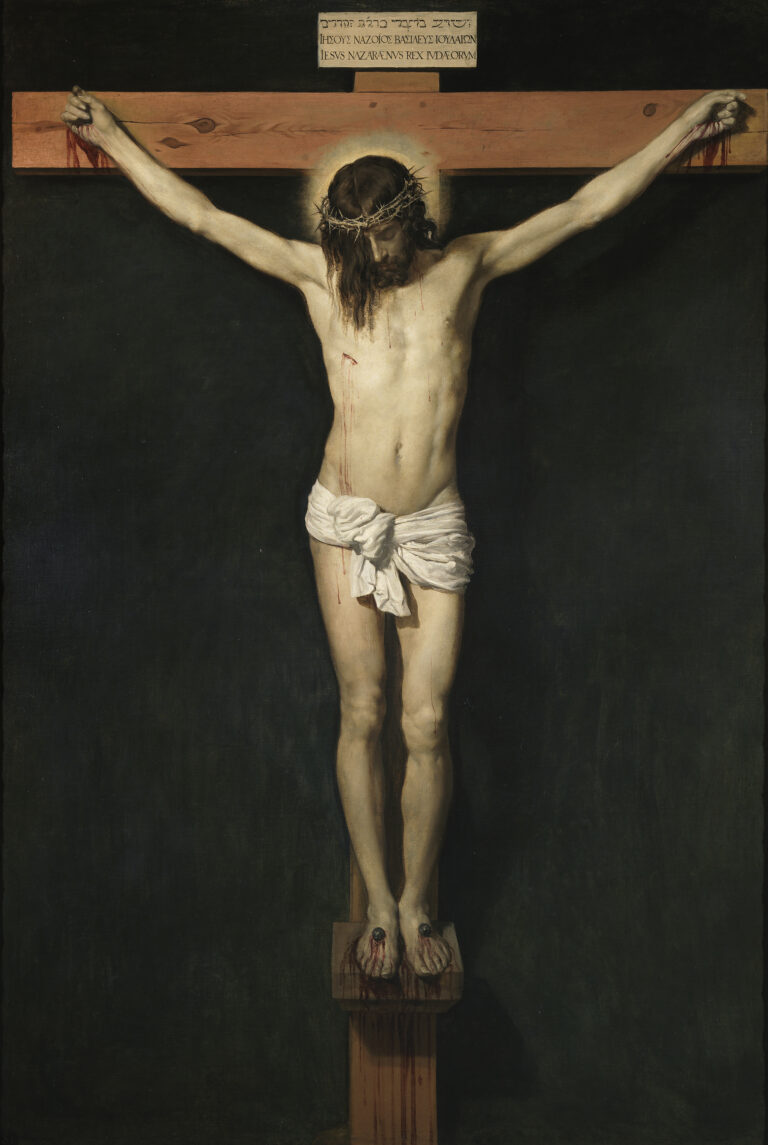
RevelationRevelation — Book of RevelationThe final book of the Christian New Testament, also called the Apocalypse of John.Read full entry → 1 ended with John turning to “see the voice” and collapsing in front of a solar ChristChristJesus Christ as the central figure of Christianity. Matthew 27 depicts the soldiers' mock coronation with a robe and crown of thorns before crucifixion; Philippians 2 describes Christ humbling himself and becoming…Read full entry → who is no longer in service to the system.
Revelation 2 shows what that vision does next.
The Christ-figure walks among four churches – Ephesus, Smyrna, Pergamum, and Thyatira – and delivers an x-ray report to each.
In the usual reading, theseThese — AccumulationThese names accumulation: possessions, titles, achievements, beliefs, communities, and other extensions gathered around identity.Read full entry → are first-century congregations in Asia Minor. In Geomytha, each “church” is an inner center of consciousness, and each one corresponds to a familiar brother-dynamic from myth and scripture:
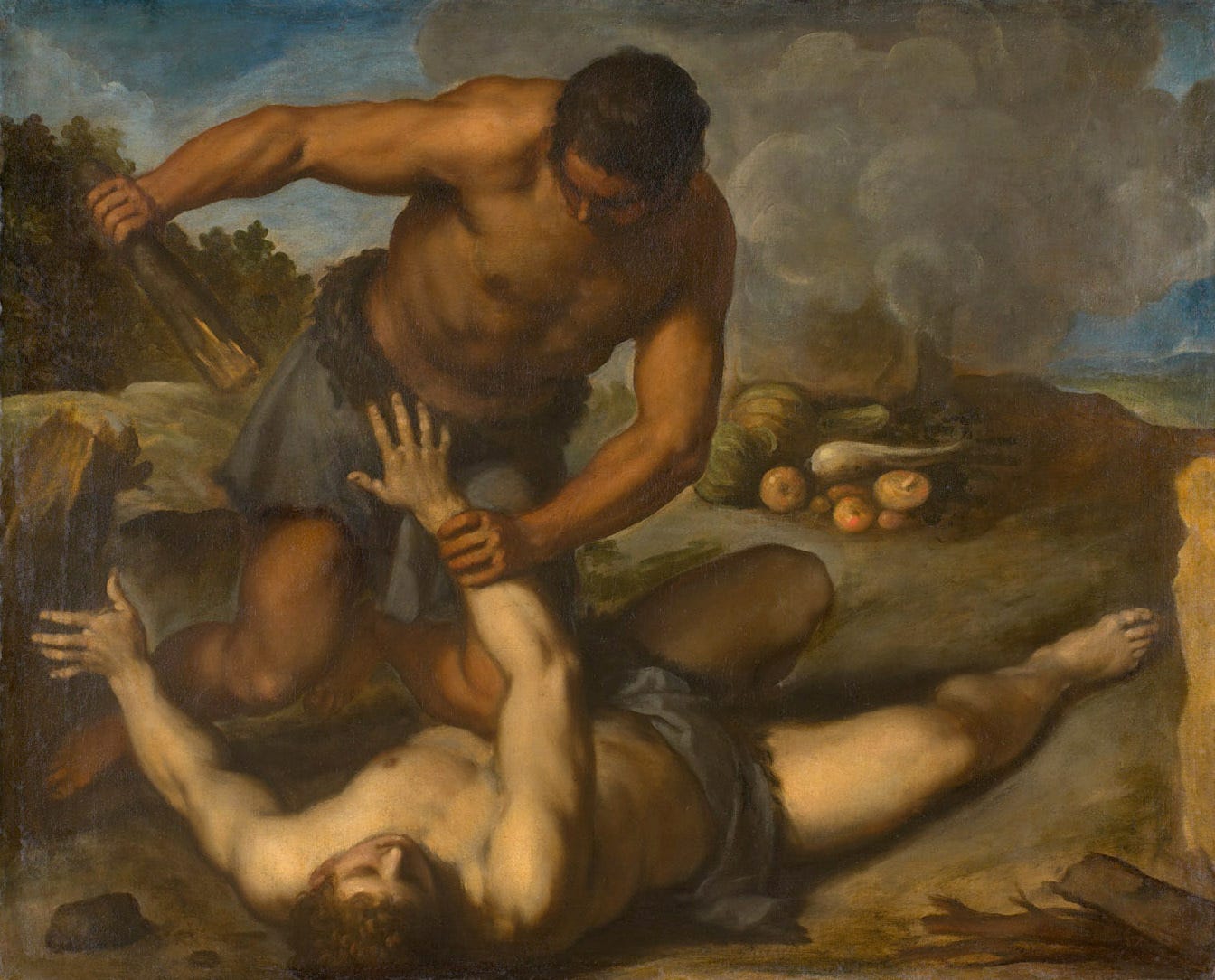
Cain and Abel
Jacob and Esau
Joseph and his brothers
Osiris and Set
Underneath all of them, the same pattern repeats:
Presence versus strategy.
Simple devotion versus clever survival.
Isis and Osiris versus Set and Horus.
Revelation 2 is what it looks like when the solar Christ walks through thoseThose — ProjectionThose names projection: enemies, outsiders, competitors, threats, and disowned qualities placed beyond the identity boundary.Read full entry → rooms in your own house and tells the truth.
Ephesus: Cain’s Correctness and Abel’s Missing Heart
“I know your works, your toil and your patient endurance…
…But I have this against you, that you have abandoned the love you had at first.” (Rev 2:2,4)
Ephesus is the part of you that:
works hard,
sniffs out error,
refuses obvious falsehood,
and takes pride in getting things right.
It is doctrinally sharp, ethically serious, and, on the surface, very impressive.
In Geomytha terms, this is Horus trained by Set to defend the “truth” as a weapon. It knows how to identify the wrong priests, the wrong doctrines, the wrong moves. What it has lost is Abel.
In the Cain and Abel pattern:
Abel’s offering is simple: firstborn of the flock. Raw presence.
Cain’s offering is managed: the fruit of the ground, arranged. Correctness.
When Cain feels his offering is not regarded, he kills Abel rather than face the wound to his ego.
Ephesus has become Cain with good theology:
It can no longer tolerate being wrong,
It’s exhausted from testing everyone else,
And somewhere along the way, its own first love was sacrificed on the altar of being right.
The voice in Revelation doesn’t deny Ephesus’ strengths:
“I know you are enduring patiently and bearing up for my name’s sake…”
But then comes the indictment:
“You left your first love.”
Geomytha translation:
Isis (simple awareness, devotion without agenda) has been pushed out.
Osiris (reflectionAm — ReflectionAm names reflected presence: awareness embodied or mirrored without yet becoming ownership.Read full entry →) has been conscripted into Set’s war games.
Horus spends its life fighting for truth while becoming hollow inside.
The remedy is strikingly gentle:
“Remember therefore from where you have fallen; repent, and do the works you did at first.”
“Repent” here is not shame; it is remembering Abel – the simple, non-defensive relationship to the sacred you had before everything became a debate.
Smyrna: Joseph in Prison and the Truth About Poverty
“I know your tribulation and your poverty (but you are rich)…
…Be faithful unto death, and I will give you the crown of life.” (Rev 2:9–10)
Where Ephesus is overconfident, Smyrna is under siege.
This center:
feels poor,
feels persecuted,
gets slandered by those who “say they are Jews and are not,”
and is warned of more suffering ahead.
On the surface, this is the weakest of the four churches. It has no rebuke, only warning and promise.
This is your Joseph center.
In Genesis:
Joseph has real dreams (Osiris insight),
but his brothers, loyal to Set’s scarcity logic, cannot tolerate it.
They throw him into a pit, sell him into slavery, and he ends up in prison in EgyptEgyptAncient Egyptian cultural and mythic field referenced by the essay.Read full entry →.
From the outside, Joseph’s life is a long Smyrna-phase: tribulation and poverty. Yet at each stage, something is quietly building in him that the outer plot cannot see.
Revelation speaks to Smyrna in exactly that tone:
“I know your tribulation and your poverty” – Set has run you over.
“But you are rich” – Something in you has not been claimed by the system.
In Geomytha language:
Isis is still alive in Smyrna, almost in hiding.
Osiris here is under pressure; its reflection is distorted by fear and pain but not destroyed.
Horus in Smyrna does not look heroic; it looks humiliated.
Set whispers: “See? You trusted, and look where it got you.”
The text does not promise an escape from the experience. It promises a way through it that does not kill the core:
“Be faithful unto death, and I will give you the crown of life.”
That “death” can be literal, but it is also psychological:
the death of the story that suffering and poverty automatically mean abandonment.
Smyrna is the part of you that must discover:
“Even when Set’s world strips me down, awareness has not left.
Pergamum: Jacob in the Land of the Throne
“I know where you dwell, where Satan’s throne is.
Yet you hold fast my name…” (Rev 2:13)
Pergamum is a different problem.
This is the center that:
lives at the heart of the system,
is immersed in Set’s narratives (political, religious, cultural),
yet has genuinely held on to something real.
“You dwell where Satan’s throne is” is blunt:
Your mind has been living at the capital city of the story machine.
In Geomytha, this is the interpretive center – the part of you that builds frameworks, worldviews, philosophies. It is where Horus learns to explain the world to itself.
The brother archetype here is Jacob.
Jacob has a real encounter at Bethel:
He dreams of a ladder between heaven and earth,
receives a promise,
names the place “house of God.”
And then… he keeps right on living under his old patterns – tricking, bargaining, manipulating – for many years. He had a real experience of Isis/Osiris, but his life remained in Set’s mode.
Pergamum is like that:
You have had genuine flashes of truth.
You’ve “held fast the name.”
But your mind is still living where “Satan’s throne is” – inside the mental capital of your culture’s fear, status, and control narratives.
Revelation commends Pergamum for fidelity, but then exposes the compromise:
“But I have a few things against you: you have some there who hold the teaching of Balaam…”
Balaam is the prophet who knows better and sells his gift anyway.
In Geomytha terms:
Osiris in Pergamum has tasted real vision,
but lets that vision be rented out to Set’s interests – power, manipulation, alliance with the dominant order.
The call is sharp:
“Repent, or I will come to you soon and war against them with the sword of my mouth.”
The sword (discerning word) will cut through the mixed motives of this center. Jacob eventually has his own version of this at the Jabbok: wrestling all night and walking away with a limp and a new name.
Pergamum is the place where your mind must stop renting its insights to the throne it secretly lives under.
Thyatira: Jezebel in the Heart
“I know your works, your love and faith and service…
But I have this against you, that you tolerate that woman Jezebel…” (Rev 2:19–20)
If Ephesus is Cain’s correctness and Smyrna is Joseph’s suffering, Thyatira is your heart center.
It is the most relational of the four:
“love and faith and service and patient endurance” are all present.
Your capacity for devotion, affection, and commitment lives here.
But it has a problem: Jezebel.
Jezebel is an archetype, not merely a historical queen:
spiritual charisma used as a control mechanism,
sexuality and emotional intensity used to bind and direct others,
“deep things” that fascinate but do not free.
In Geomytha, Jezebel is Set wearing Isis’ clothes.
She mimics intuition, revelation, and nurturing, but the energy underneath is possessive and hungry: “I will keep you orbiting around me or around my system.”
Thyatira’s heart is real. The contamination is in what it tolerates:
“You tolerate that woman Jezebel, who calls herself a prophetess and is teaching and seducing my servants…”
Inside you, this can look like:
staying in relationships that drain your life because the drama feels like love,
confusing intensity with intimacy,
attaching to “teachers” or systems that flatter your specialness while quietly consuming your time, money, and attention.
Osiris in Thyatira can feel what is off, but does not want to lose the emotional bond, so it looks away. Horus enjoys being needed, feared, desired. Set feeds.
The letter does not tell Thyatira to stop loving. It warns that Jezebel’s pattern leads to a bed of sickness – an image of emotional and spiritual exhaustion – and that what she births is “children” (sub-patterns) that must also be confronted.
The medicine is clean separation:
love that is not entangled,
devotion that is not possessed,
heart that is not for sale.
The Four Churches as Inner Brothers
Seen as a set, Revelation 2 is not a random tour of ancient congregations. It is four brothers inside you, each repeating an old story:
Ephesus – Cain’s correctness without Abel’s heart.
Strong discernment, lost devotion.
Smyrna – Joseph’s suffering before his rise.
Real tribulation that does not define your true richness.
Pergamum – Jacob at Bethel but still in exile.
Authentic visions coexisting with compromise at the very center of the system.
Thyatira – the heart entangled with Jezebel.
Genuine love tolerating manipulative patterns in the name of connection.
Underneath them:
Isis (awareness) has been partly exiled.
Osiris (reflection) is split: sometimes crystal, sometimes sold.
Set (solar imagination) runs most of the frameworks, both religious and secular.
Horus (ego) tries to keep everyone alive and respectable inside that environment.
Revelation 2 is the solar Christ walking through these rooms and telling each brother the truth it most does not want to hear.
Where This Is GoinG
Chapter 3 will continue the audit with three more centers, including Philadelphia, literally “brotherly love,” which functions in Geomytha as the small, sincere “open door” the system cannot fully shut.
For now, Revelation 2 asks a simpler, sharper set of questions:
Where have I traded my first love for being right?
Where am I suffering and assuming it means I am abandoned, when a deeper richness is still present?
Where am I living “where Satan’s throne is,” mentally – holding truth but still renting my insight to the system?
Where does my heart tolerate Jezebel-patterns because I’m afraid to lose the intensity?
The Apocalypse is not only about beasts and plagues. It begins here, with the willingness to let each of these inner churches hear its own letter.
X: @mythicgeometry · YouTube: Geomytha · Instagram: @mythicgeometry · TikTok: @Geomytha · Patreon: GeomythaNoir