Geomytha and the Apocalypse of Awareness
Most readings of the Book of RevelationRevelation — Book of RevelationThe final book of the Christian New Testament, also called the Apocalypse of John.Read full entry → treat it as a timetable: a sequence of events that will someday happen “out there” at the end of the world.
In Geomytha, Revelation is not a forecast but a diagnosis. It describes what happens in consciousness when awareness finally turns and looks directly at the system that has been running it.
To name that system, I use four core archetypes:
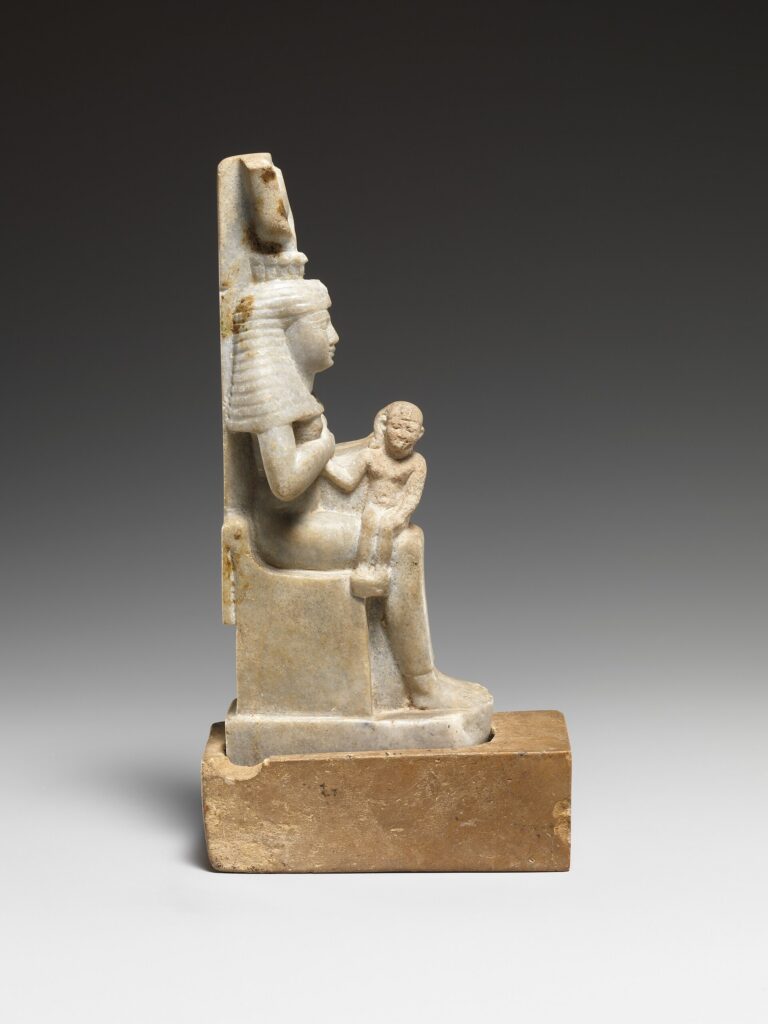
IsisIsisIn Geomytha, Isis names the unclaimed field: Is — pure being, awareness before possession, and the ground before the claimant appears.Read full entry → – simple, wordless awareness; the living fact of “I am” before any story.
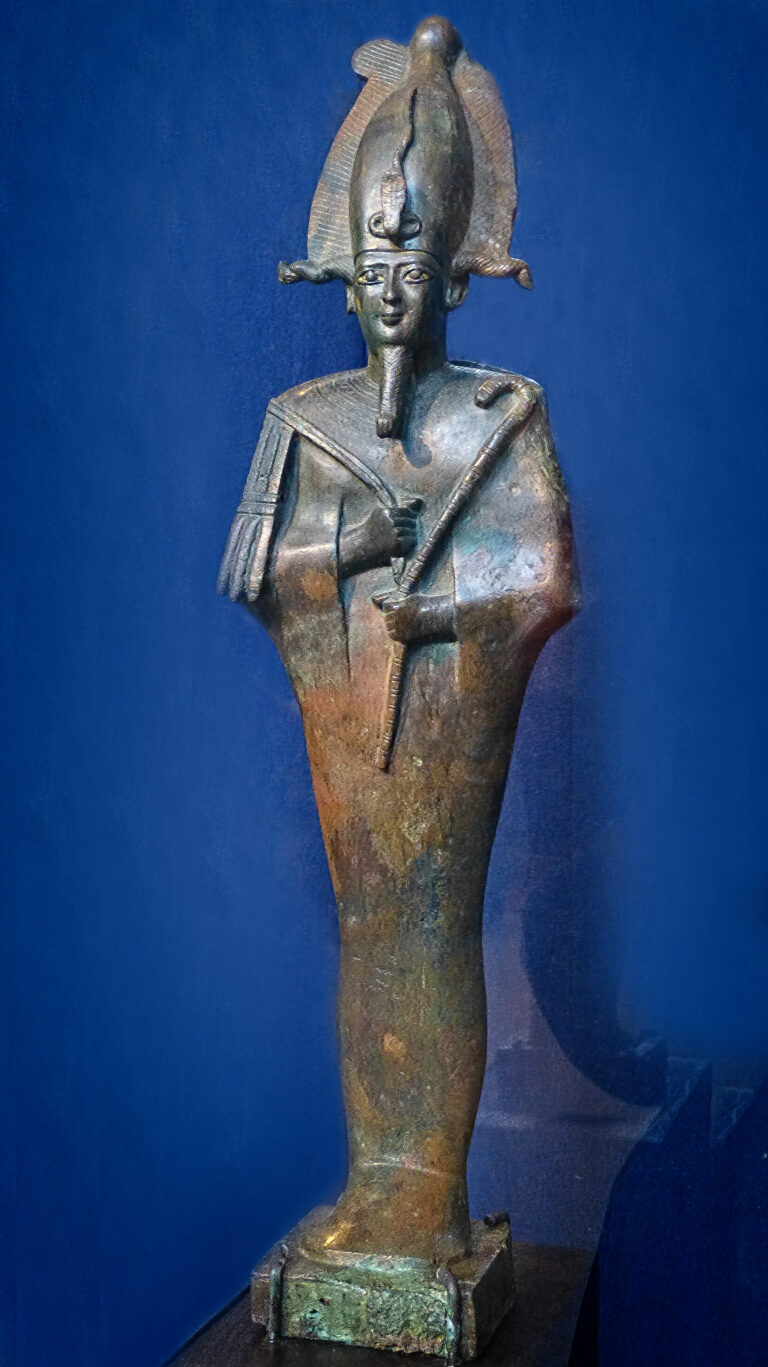
OsirisOsirisIn Geomytha, Osiris names reflected presence: Am — awareness reflected as living consciousness without yet becoming ownership.Read full entry → – reflective consciousness; the inner mirror that can see and name what arises in awareness.
SetSetIn Geomytha, Set names the claimant: I — the interruption by which reflection is taken as mine and converted toward ownership.Read full entry → – solar imagination; the engine that spins stories, timelines, institutions, religions, empires.
HorusHorusIn Geomytha, Horus names the identity that forms after claim: This — the body, role, image, wound, belief, or story taken as what the self is.Read full entry → – the time-bound ego; the “I” that believes it is the main character in Set’s story.
Revelation 1 is the moment when Osiris turns around. The mirror stops reflecting passively and swivels to face the light sourceIs — SourceIs names unclaimed being: awareness before possession, distinction, or identity.Read full entry → itself.
John as Osiris: The Witness Wakes Up
“I, John, was in the Spirit on the Lord’s Day…” (Rev 1:10)
In the Geomytha lens, John is not only a historical writer. He is the Osiris function inside you:
the capacity to step slightly out of identification,
to notice what is happening,
and to bear witness rather than merely react.
“In the Spirit” does not mean “out of the body and far away.” It means: John is no longer fully fused with his circumstances and emotions. A bit of space has opened. There is enough stillness for seeing.
This is the same pattern that hides inside many “brother” stories:
When Cain is warned that “sin is crouching at the door” before he kills Abel. There is a brief moment of possible seeing.
When Jacob lays his head on a stone and dreams of a ladder connecting heaven and earth. He wakes and says, “Surely the LORD is in this place, and I did not know it.”
When Esau meets Jacob years later and, instead of killing him, embraces him.
Each of theseThese — AccumulationThese names accumulation: possessions, titles, achievements, beliefs, communities, and other extensions gathered around identity.Read full entry → is a tiny Apocalypse: a moment when consciousness, usually lost in the role of one brother or the other, suddenly sees the pattern it has been playing out.
Revelation 1 begins at exactly that kind of moment.
“I Turned to See the Voice”: Facing the Narrator
“Then I turned to see the voice that was speaking to me…” (Rev 1:12)
This one line is the hinge of the entire book.
Most of the time, your inner “voice” — the narrator in your head — speaks from just behind your attention. It comments on your day, judges you, explains other people’s motives, speculates about the future. You listen to it. You argue with it. You rarely turn and look at it.
John does.
He “turns to see the voice.” In Geomytha terms, Osiris turns to look at Set’s broadcast, instead of simply transmitting it.
That shift is the real beginning of Revelation. Everything that follows — the visions, symbols, beasts, and plagues — unfolds from the simple act of no longer taking the inner narrator for granted.
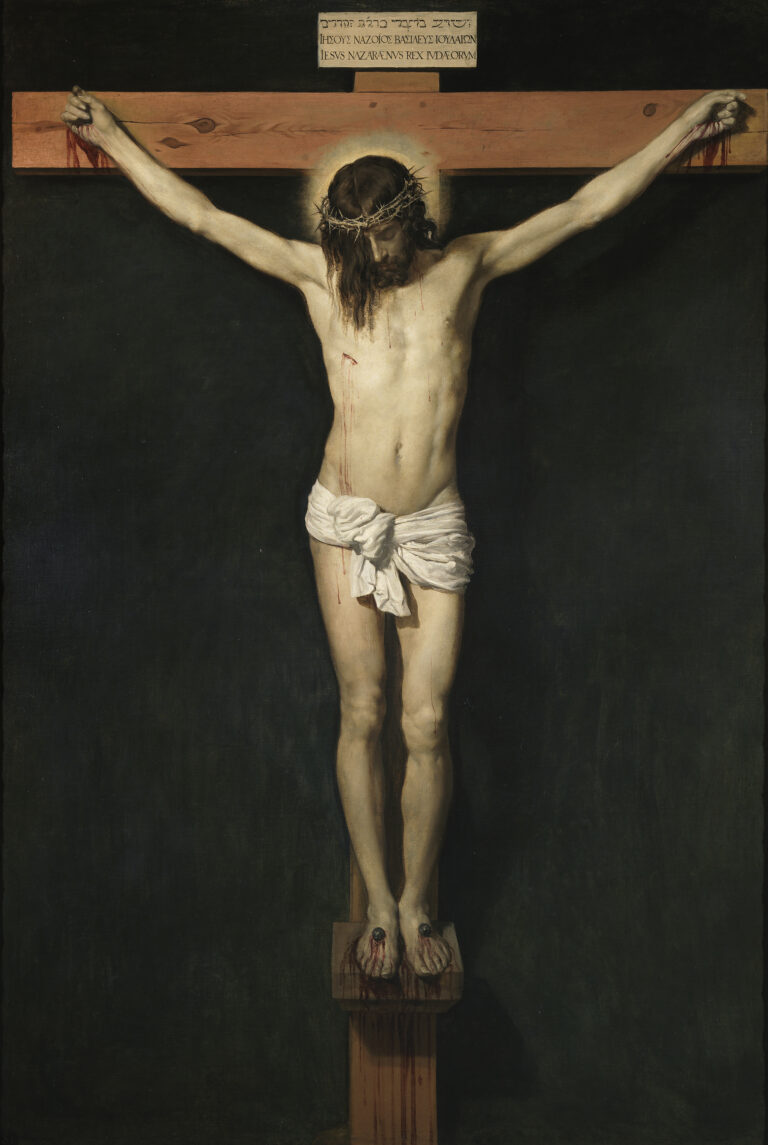
The Solar ChristChristJesus Christ as the central figure of Christianity. Matthew 27 depicts the soldiers' mock coronation with a robe and crown of thorns before crucifixion; Philippians 2 describes Christ humbling himself and becoming…Read full entry → Among the Lampstands
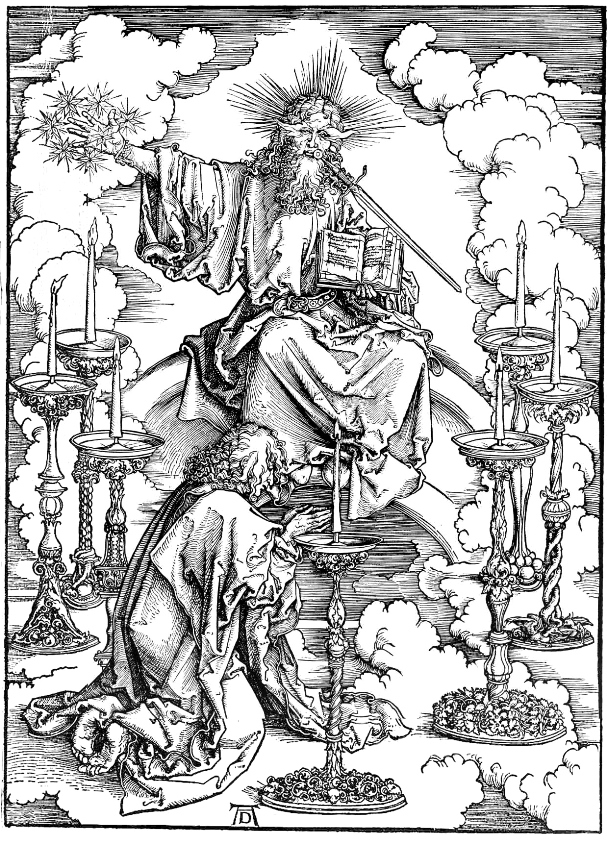
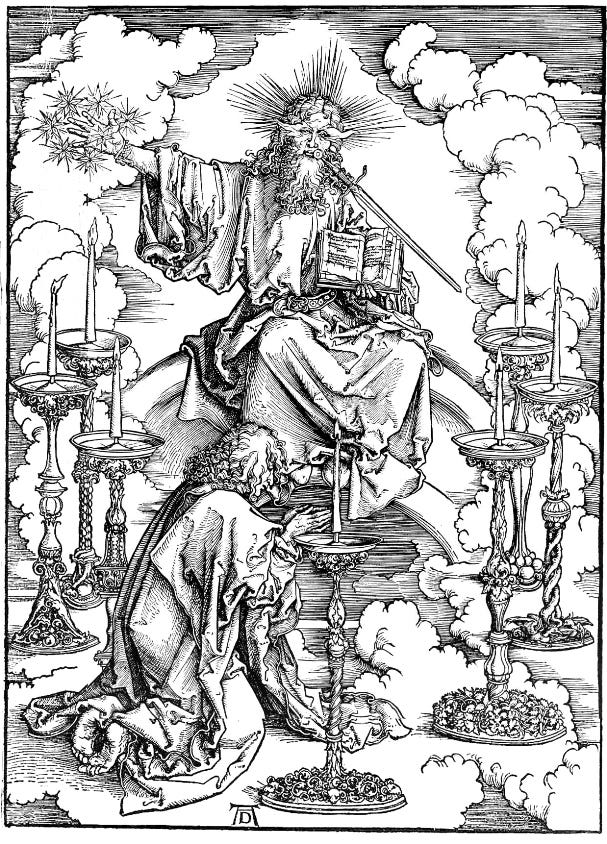
When John turns, this is what he sees:
“One like a son of man… his eyes were like a flame of fire, his face was like the sun shining in full strength… and in the midst of the lampstands one like a son of man…” (Rev 1:13–16, condensed)
This figure is a Horus-Christ archetype seen in a new way:
“Like a son of man” – fully inside the human field.
“Face like the sun” – solar, bright, radiating force.
“Eyes like fire” – perception that burns through pretense.
“A sharp two-edged sword” from his mouth – speech that cuts illusion instead of defending it.
In everyday life, Horus (ego) stands at the center of your inner world running errands for Set:
trying to secure safety,
maintain an identityThis — IdentityThis names the formed identity: the body, role, image, wound, belief, or story claimed as what the self is.Read full entry →,
negotiate with other egos,
and build a future that will finally make everything “make sense.”
In Revelation 1, John sees a version of Horus that is no longer in Set’s service. The same solar energy that once powered the system of illusion has been reclaimed.
This figure stands “among seven golden lampstands.” A few verses later, we are told:
“The seven lampstands are the seven churches.” (Rev 1:20)
In Geomytha language, these seven churches are seven inner centers — roughly parallel to the chakra model — seven “brothers” inside you, each with its own strengths and distortions:
Survival / root
Creative / sexual
Power / solar plexus
Heart / relational
Expression / throat
Interpretation / brow
Spiritual identification / crown
Horus-Christ appears in the middle of them. Consciousness is still centered in a human figure, but that center is no longer fully hypnotized by Set’s stories. It is filled with a different kind of fire.
The Fall of the Old Identification
John’s reaction is immediate:
“When I saw him, I fell at his feet as though dead.” (Rev 1:17)
This is not theatrical piety. It is an accurate description of what happens when Osiris truly sees the pattern it has been supporting.
The old identification cannot bear the sight of itself.
Up to this point, John/Osiris has been aligned with an image of God, an image of Christ, an image of himself, all largely defined by Set’s solar imagination — by the religious, cultural, and personal stories of his time. When the true structure comes into view, that entire self-image collapses.
Geomytha treats this as the brother drama turned inward:
Cain cannot bear Abel’s favor and kills him.
Jacob cannot trust Esau’s blessing and steals it.
Joseph’s brothers cannot tolerate his dreams and sell him.
In each case, a structure collapses eventually: famine drives the brothers back to Joseph; Jacob must wrestle all night and limp away with a new name; Cain is driven east of Eden.
Revelation 1 describes the collapse happening in consciousness itself. When you really see the solar Christ — the reclaimed Horus no longer serving Set — the version of “you” that was built to navigate Set’s world falls “as though dead.”
“Fear Not”: Isis Speaks Through the Mask
What happens next is crucial:
“But he laid his right hand on me, saying, ‘Fear not, I am the first and the last, and the living one. I died, and behold I am alive forevermore…’” (Rev 1:17–18)
The same figure that just shattered John’s identification now reassures him.
In Geomytha terms, this is Isis speaking through the Horus-mask:
the deeper awareness behind all forms saying,
“Yes, the identity you knew is dying. No, you are not.”
“I am the first and the last” is not merely a claimI — ClaimI names claim: the interruption by which reflected presence is taken as mine.Read full entry → of supremacy. It is a description of awareness itself:
present at the “beginning” of every experience,
present at the “end” of every experience,
unchanged by the rise and fall of stories.
The brothers’ myths hint at this:
Esau and Jacob are reconciled; the feud was never the whole truth of either of them.
Joseph and his brothers weep together; the famine exposes a deeper kinship beneath the betrayal.
Even Cain is spoken to, warned, and marked; he is not simply erased.
Revelation 1 places that reconciliatory voice inside the most terrifying vision. The hand that unravels the old structure is the same hand that says, “Fear not.”
“Write What You See”: From Being the Story to Documenting It
The chapter ends with a command:
“Write therefore the things that you have seen, thoseThose — ProjectionThose names projection: enemies, outsiders, competitors, threats, and disowned qualities placed beyond the identity boundary.Read full entry → that are and those that are to take place after this.” (Rev 1:19)
This is where Revelation becomes Geomytha-relevant in a very practical way.
To “write what you see” is to move from being unconsciously lived by a pattern to consciously documenting it:
noticing where Set’s voice speaks in your mind,
noticing how Horus (ego) responds,
noticing which “church” (inner center) is being used,
and putting that into language.
In terms of the brother archetypes:
It is the difference between acting Cain and Abel, Jacob and Esau, Joseph and his brothers
and recognizing that those sibling dynamics are playing out in your own thoughts, relationships, and spiritual life.
Revelation 1 is that moment of recognition. John is told that the visions to come are not just events; they are “things that are” — existing structures in consciousness — and “things that will take place,” the natural consequences when those structures are allowed to complete their cycle.
How Revelation 1 Functions in Geomytha
Through the Geomytha lens, Revelation 1 is not a prologue to a distant catastrophe. It is a description of an inner turning that can happen at any time:
Awareness (Isis) allows reflectionAm — ReflectionAm names reflected presence: awareness embodied or mirrored without yet becoming ownership.Read full entry → (Osiris) to step slightly out of the stream.
Osiris “turns to see the voice” of Set instead of passively repeating it.
The Horus-Christ figure appears: ego seen in its solar dimension, no longer fully in service to illusion.
The old identification collapses (“as though dead”).
Awareness reassures itself through the mask: “Fear not.”
The instruction comes: “Write what you see.”
From that point on, everything in Revelation — the seals, trumpets, beasts, BabylonBabylon — Ancient City / Symbolic EmpireAncient Mesopotamian city and later biblical/apocalyptic symbol of imperial world-order.Read full entry →, New Jerusalem — unfolds as a systematic exposure of how Set’s world is built and how it unravels.
But the Apocalypse begins here, with a very small but radical movement:
You stop listening only to the inner voice,
and you turn to see it.
In tomorrow’s article, I will take this same Geomytha lens into Revelation 2, where the first four “churches” appear as four inner siblings, each repeating a different version of the brother dramas — Cain and Abel, Jacob and Esau, Joseph and his brothers, Osiris and Set — inside your own field.
X: @mythicgeometry · YouTube: Geomytha · Instagram: @mythicgeometry · TikTok: @Geomytha · Patreon: GeomythaNoir