How New Heaven, New Earth, and New Jerusalem reveal the perfected Lamb-field in Geomytha.
RevelationRevelation — Book of RevelationThe final book of the Christian New Testament, also called the Apocalypse of John.Read full entry → 20 ended with all of SetSetIn Geomytha, Set names the claimant: I — the interruption by which reflection is taken as mine and converted toward ownership.Read full entry →’s architecture dismantled:
beast, false prophet, dragon in the lake of fire,
Death and HadesHades — Greek UnderworldThe underworld realm of ancient Greek myth, conventionally called Hades.Read full entry → themselves dissolved,
the books opened,
the second death defined.
Revelation 21 asks the only question left:
If everything built on Set is gone,
what remains?
The answer is not a cloud-kingdom. It is a city,
a city that is also a Bride,
a cube that is also a Holy of Holies,
a luminous field where God and humanity dwell without mediation.
In Geomytha, Revelation 21 is the full pattern of Lamb-aligned consciousness:
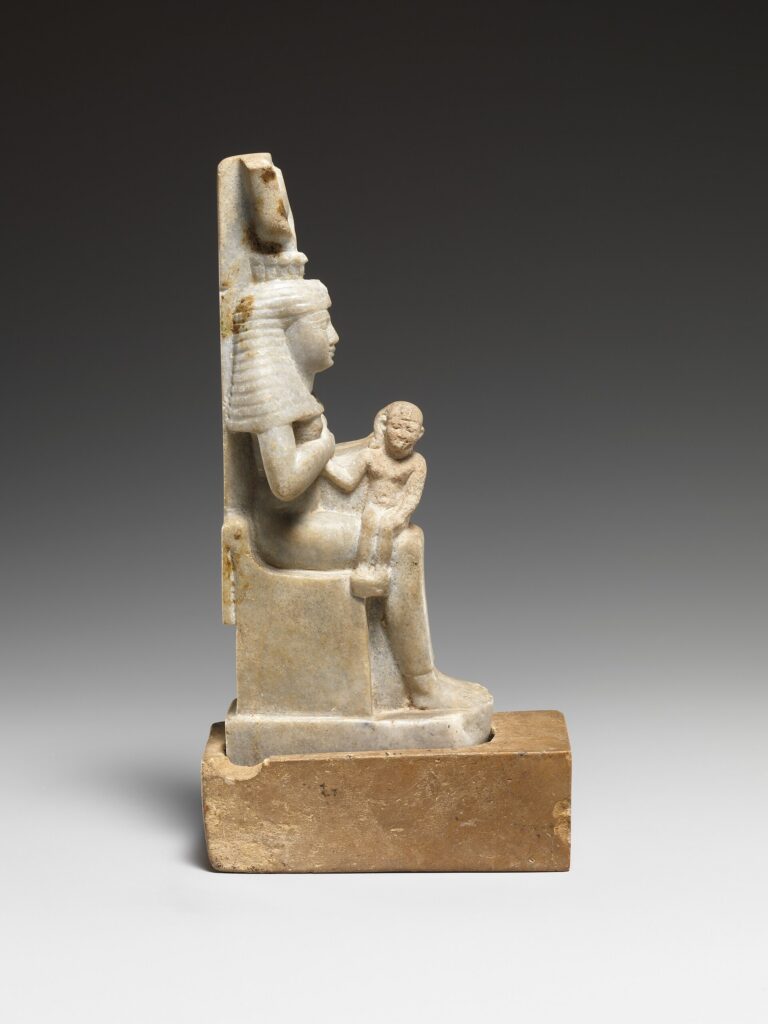
IsisIsisIn Geomytha, Isis names the unclaimed field: Is — pure being, awareness before possession, and the ground before the claimant appears.Read full entry →-awareness no longer exiled,
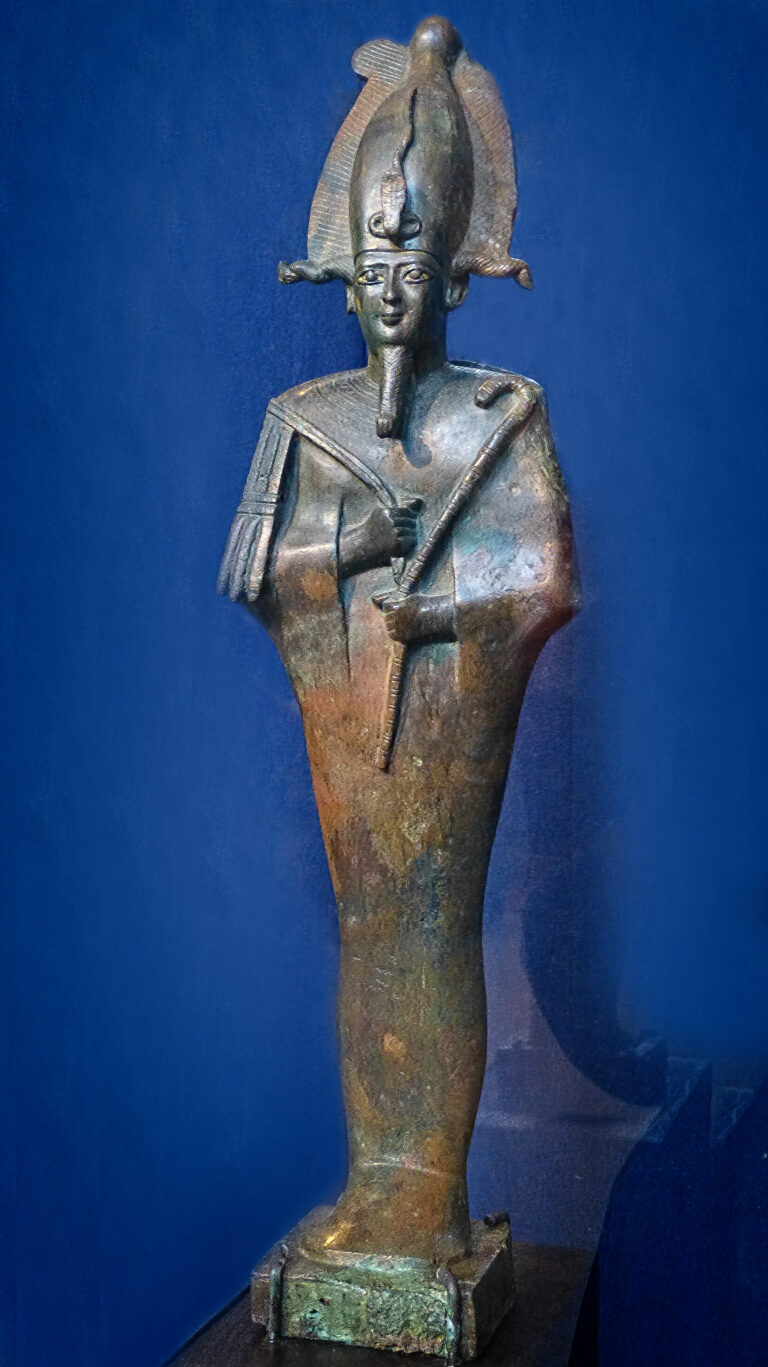
OsirisOsirisIn Geomytha, Osiris names reflected presence: Am — awareness reflected as living consciousness without yet becoming ownership.Read full entry →-reflectionAm — ReflectionAm names reflected presence: awareness embodied or mirrored without yet becoming ownership.Read full entry → healed and complete,
Set’s sun-loop extinguished,
HorusHorusIn Geomytha, Horus names the identity that forms after claim: This — the body, role, image, wound, belief, or story taken as what the self is.Read full entry → no longer beast or Babylonian consumer, but a citizen of a different geometry: New Jerusalem.
BabylonBabylon — Ancient City / Symbolic EmpireAncient Mesopotamian city and later biblical/apocalyptic symbol of imperial world-order.Read full entry → was a city built on Set’s logic.
New Jerusalem is a city built on the Lamb’s.
New Heaven, New Earth, and “No More Sea”
“Then I saw a new heaven and a new earth, for the first heaven and the first earth had passed away, and the sea was no more.” (Rev 21:1)
“New heaven” and “new earth” are not a replacement plane; they are renewed fields:
Heaven – the pattern of meaning, symbol, law, invisible structures.
Earth – embodied life, matter, history.
Under Set, theseThese — AccumulationThese names accumulation: possessions, titles, achievements, beliefs, communities, and other extensions gathered around identity.Read full entry → were split and distorted:
heaven = weaponized theology, ideology, narrative;
earth = exploited resource, body as commodity.
“New” heaven and earth are these same domains re-knit around the Lamb:
heaven’s patterns no longer lie about reality;
earth’s embodiment is no longer treated as expendable.
“The sea was no more” is not a hatred of water. In Revelation, the sea has been:
the sourceIs — SourceIs names unclaimed being: awareness before possession, distinction, or identity.Read full entry → of the beast (ch. 13),
the symbol of chaotic, unconscious, collective emotion.
In Geomytha, “no more sea” means:
the chaotic unconscious that kept birthing Set’s empires is stilled;
the field is no longer ruled by undigested fear and desire;
nothing new rises from the deep to attack the city.
This is not a sterile world; it is a world where unconscious chaos no longer governs.
“Behold, the Dwelling of God Is with Humanity”
“And I saw the holy city, new Jerusalem, coming down out of heaven from God, prepared as a bride adorned for her husband.” (Rev 21:2)
“Behold, the dwelling place of God is with man. He will dwell with them, and they will be his people…” (v.3)
New Jerusalem “comes down out of heaven”:
it is not humanity’s tower to God (Babel),
it is God’s geometry descending into the human field.
The city is “prepared as a bride”:
this is not a fortress first; it is a relationship.
the city is the corporate form of the Bride:
creation and consciousness in stable union with the Lamb.
“The dwelling place (tabernacle) of God is with humanity”:
no more distant sky-god,
no more holy of holies behind curtains and priests,
no more separation between Presence and life.
“He will wipe away every tear from their eyes, and death shall be no more, neither shall there be mourning nor crying nor pain anymore, for the former things have passed away.” (v.4)
This is not denial of the past; it is the end of Set’s cycle:
the kind of death that ruled under Set is gone,
the kind of pain born from deception and domination has no more foothold.
The One on the throne says:
“Behold, I am making all things new.” (v.5)
Not: “I am making all new things.”
The same creation, reconfigured.
The same Horus, now aligned with the Lamb instead of the beast.
“It Is Done”: Alpha, Omega, and the Thirsty
“And he said to me, ‘It is done! I am the Alpha and the Omega, the beginning and the end. To the thirsty I will give from the spring of the water of life without payment.’” (v.6)
“It is done” corresponds to:
“It is finished” at the cross,
“It is done” at the seventh bowl (ch. 16).
There, it was the completion of Set’s consequence.
Here, it is the completion of Lamb’s renewal.
“Alpha and Omega” in Geomytha confirms:
the I AM (Isis) is the origin and end of every cycle;
Set has never been the first principle nor the last word.
“To the thirsty I will give… without payment”:
Babylon sold wine (her intoxicating mixture of desire and anesthesia).
The Lamb gives water of life freely:
no exploitation,
no spiritual marketplace,
no paywall to Presence.
“The one who conquers will have this heritage, and I will be his God and he will be my son.” (v.7)
Conquering, in this book, is not empire; it is refusal to yield to Set’s mark.
To “conquer” is to stay loyal to the Lamb through collapse.
By contrast:
“But as for the cowardly, the faithless, the detestable… their portion will be in the lake that burns with fire and sulfur, which is the second death.” (v.8)
The “cowardly” are listed first, not the spectacularly wicked:
thoseThose — ProjectionThose names projection: enemies, outsiders, competitors, threats, and disowned qualities placed beyond the identity boundary.Read full entry → who collapse back into Set’s realm out of fear,
those who choose Babylon’s security over reality.
In Geomytha, this is the final statement:
anything that clings to Set’s geometry cannot cross into this city;
it belongs to the fire that un-makes unreality.
The City as Bride: Measured Light
“Come, I will show you the Bride, the wife of the Lamb.” (v.9)
“And he… showed me the holy city Jerusalem coming down out of heaven from God, having the glory of God, its radiance like a most rare jewel…” (vv.9–11)
The angel offers to show the Bride and shows a city.
In Geomytha, this fusion is central:
The Bride is not a disembodied group of souls.
The Bride is a social geometry:
a way of being together,
a pattern of relation,
an ordered, luminous environment.
The city’s radiance is “like a most rare jewel”:
Babylon radiated neon, gold, and spectacle from Set’s core,
New Jerusalem radiates God’s own clarity, refracted through matter.
The city has:
a great, high wall – boundary, protection, form,
twelve gates with the names of the tribes of Israel,
twelve foundations with the names of the apostles of the Lamb (vv.12–14).
In Geomytha:
the twelve gates = full inclusion of the original people of the covenant;
the twelve foundations = full inclusion of the apostolic Lamb-witness;
the city is the completion of the story begun in Israel and the early church, not a replacement.
The measuring angel uses a golden reed:
“The city lies foursquare, its length the same as its width… 12,000 stadia. Its length and width and height are equal.” (v.16)
A cube:
the shape of the Holy of Holies in the temple,
here expanded to city-scale.
In Geomytha, the cube means:
the whole environment is holy of holies,
there is no inner chamber reserved for a few;
all of life is now the place where Presence meets creation.
The measurements (12,000; walls 144 cubits) express completeness and rootedness in the twelvefold pattern. This is order without oppression: form that serves life, not Set’s control.
The foundations are decorated with twelve kinds of precious stones (vv.19–20), and each gate is “a single pearl” (v.21).
Stones and pearls here are the solidified story:
everything the Lamb has done in and through people,
all the costly transformations, are now part of the city’s visible structure.
No Temple, No Sun: the Lamb as Light
“And I saw no temple in the city, for its temple is the Lord God the Almighty and the Lamb.” (v.22)
Under Set-coded religion, the temple is a controlled access point:
power brokers,
sacred vs profane spaces,
intermediaries gatekeeping God.
In New Jerusalem:
there is no separate temple:
the entire city is already direct contact,
God and the Lamb themselves are the “temple.”
“And the city has no need of sun or moon to shine on it, for the glory of God gives it light, and its lamp is the Lamb.” (v.23)
This is not the denial of physical sun and moon as creatures; it is the end of Set’s appropriation of the sun as the primary source of meaning.
In Geomytha:
Set’s solar overdrive is no longer needed;
the Lamb—slain and risen consciousness—now functions as the lamp:
light that does not burn,
guidance that does not enslave.
The glory of God is no longer filtered through Babylon’s spectacle or Set’s overexposure.
Light emanates from Presence itself, and the city is transparent to it.
Nations, Kings, and the Gates That Never Close
“By its light will the nations walk, and the kings of the earth will bring their glory into it… its gates will never be shut by day—and there will be no night there.” (vv.24–25)
The nations are not erased; they are healed:
diversity of cultures, histories, and glories are not flattened;
they are reoriented to walk “by its light.”
The kings of the earth, who in Babylon’s day fornicated with the prostitute, now “bring their glory into it”:
rulership itself is redeemed,
authority no longer stands against the Lamb but flows into his city.
“The gates will never be shut by day”—and there is “no night”:
no threat that requires closing the city off;
no “night” of deceptive unconsciousness for Set to work in.
In Geomytha, this is the end of fortress mentality:
the city is secure, but not defensive;
boundaries remain (walls, gates), but they are not used to create exclusion or fear;
the only exclusions are of what cannot live in truth.
“But nothing unclean will ever enter it, nor anyone who does what is detestable or false, but only those who are written in the Lamb’s book of life.” (v.27)
The criterion is not ethnicity, status, or spiritual technique.
The criterion is alignment:
nothing that insists on falsehood can pass into this geometry;
only those whose identityThis — IdentityThis names the formed identity: the body, role, image, wound, belief, or story claimed as what the self is.Read full entry → is inscribed in the Lamb’s life-field belong.
This is the final refusal of Set’s compromise.
Revelation 21 in Geomytha: Living Toward the City
Seen through Geomytha, Revelation 21 is not escapist fantasy; it is the finished pattern of what Lamb-alignment has always been moving toward:
New heaven and new earth: heaven (pattern) and earth (body) reconciled and renewed.
No sea: the unconscious chaos that bred beast-empires calmed, no new Set rising from the deep.
The dwelling of God with humanity: Isis and embodied life united with no exile zones.
The city as Bride: not disembodied souls, but a social geometry built on presence, truth, and love.
Cube-city: the entire environment is Holy of Holies; there is no dividing wall between sacred and ordinary.
No temple, no need of sun: no more religious control; no more Set-coded solar tyranny; the Lamb himself is illumination.
Open gates, healed nations: diversity without domination; boundaries without fear; exclusion only of what will not stop lying.
For your actual life, this chapter asks:
Where, in my world, am I still trying to rebuild Babylon instead of moving toward this city?
Which of my habits, economies, and relationships are already tasting something of New Jerusalem (shared presence, honest boundaries, light that does not burn)?
Where do I still rely on Set’s sun—overwork, image, constant exposure—instead of letting the Lamb be my lamp?
What, in me, clearly cannot live inside this city’s geometry (compulsions, deceptions, patterns of harm)? How can those begin to pass through fire now, instead of later?
How can my home, my work, my parenting, and my art become small sketches of this city’s pattern, even in the middle of a world that still looks like Babylon?
Revelation 21 is not asking you to wait passively for a distant future.
It is handing you the blueprint of the Lamb’s city and asking:
Will you keep volunteering for Set’s architecture,
or will you begin, in whatever ways you can,
to live as a citizen of New Jerusalem now?
X: @mythicgeometry · Substack: Geomytha Noir · YouTube: Geomytha · Instagram: @mythicgeometry · TikTok: @Geomytha · Patreon: GeomythaNoir