Human beings often fear repetition.
The same mistakes.
The same arguments.
The same grief.
The same memories.
The same questions.
Nothing frightens us more than the suspicion that life is merely going in circles.
Because circles feel mechanical.
Clocks go in circles.
Engines go in circles.
Programs repeat.
Machines returnReturn — RemembranceReturn names remembrance and release: the loosening of possession so reflection can become transparent to source again.Read full entry → to exactly the same point.
And if life itself is only a circle, then perhaps nothing really changes.
Perhaps history is meaningless.
Perhaps growth is an illusion.
Perhaps we are trapped.
The ancient world repeatedly rejected this conclusion.
Not because it denied recurrence.
But because it saw something the machine cannot see.
Life does not move in circles.
Life moves in spirals.
The Circle and the Machine
A circle is perfect.
Beautiful.
Predictable.
Complete.
Return to the same point.
Again.
And again.
And again.
There is comfort in such order.
But there is also danger.
Because perfect repetition eventually becomes imprisonment.
The machine repeats because it remembers nothing.
It possesses no history.
No gratitude.
No grief.
No love.
No scars.
No forgiveness.
It returns to the same point because nothing inside it changes.
This is why clocks can circle endlessly.
Clocks do not mourn.
Clocks do not hope.
Clocks do not remember.
Machines repeat.
Life returns.
The difference is memory.
The Pattern Hidden in Nature
Nature itself seems to prefer spirals.
Galaxies spiral.
Hurricanes spiral.
Shells spiral.
Vines spiral.
Flowers unfold according to spirals.
Even DNA twists.
The universe appears strangely reluctant to repeat itself perfectly.
Instead, it revisits.
It circles.
Yet each revolution unfolds something new.
Spring returns.
But not the same spring.
Children resemble their parents.
But they are not their parents.
The old man remembers the dreams of the child.
The child becomes the old man.
Life revisits familiar places.
But never as the same traveler.
The spiral remembers.
The Labyrinth
Ancient labyrinths preserve this mystery.
Unlike mazes, labyrinths possess no dead ends.
There is only one path.
The traveler approaches the center.
Moves away.
Approaches again.
Retreats.
Returns.
At times the center seems close.
Then suddenly distant.
Progress feels uncertain.
Yet the path continues.
The pilgrim eventually discovers something astonishing.
Distance was never the point.
Transformation was.
The center is reached.
Not by escaping the pattern.
But by trusting it.
Chartres Cathedral preserved this image in stone.
Pilgrims who could not travel to Jerusalem walked the labyrinthLabyrinth — 1986 FilmFantasy film in which Sarah enters the Goblin King’s labyrinth to rescue her baby brother Toby.Read full entry → instead.
The journey outward became inward.
Movement became memory.
The path became prayer.
History Remembers
Civilizations themselves seem to spiral.
Empires rise.
Collapse.
Return.
Ideas disappear.
Reappear.
Old myths wear new clothing.
Forgotten truths emerge again.
Not identical.
Transformed.
ChristianityChristianity — Religious TraditionThe Christian religious tradition referenced through resurrection, baptism, and the symbolic Eighth Day.Read full entry → inherited Judaism.
The Renaissance rediscovered Greece.
Modernity rediscovered ancient questions.
The digital age revives old forms of myth.
Again and again history circles.
Yet it does not merely repeat.
It remembers.
The spiral gathers memory.
And memory transforms recurrence into meaning.
The False Dream of Escape
Modern people often dream of escape.
Reinvent yourself.
Start over.
Leave the past behind.
Become someone new.
But the soul rarely works that way.
The themes return.
The wounds return.
The questions return.
The relationships return.
Not because we are cursed.
But because growth occurs through revisiting.
Forgiveness requires memory.
Wisdom requires memory.
Love requires memory.
Without return, there is no deepening.
Without recurrence, there is no recognition.
Without memory, there is no homecoming.
The desire to escape often hides the refusal to remember.
Return Without Repetition
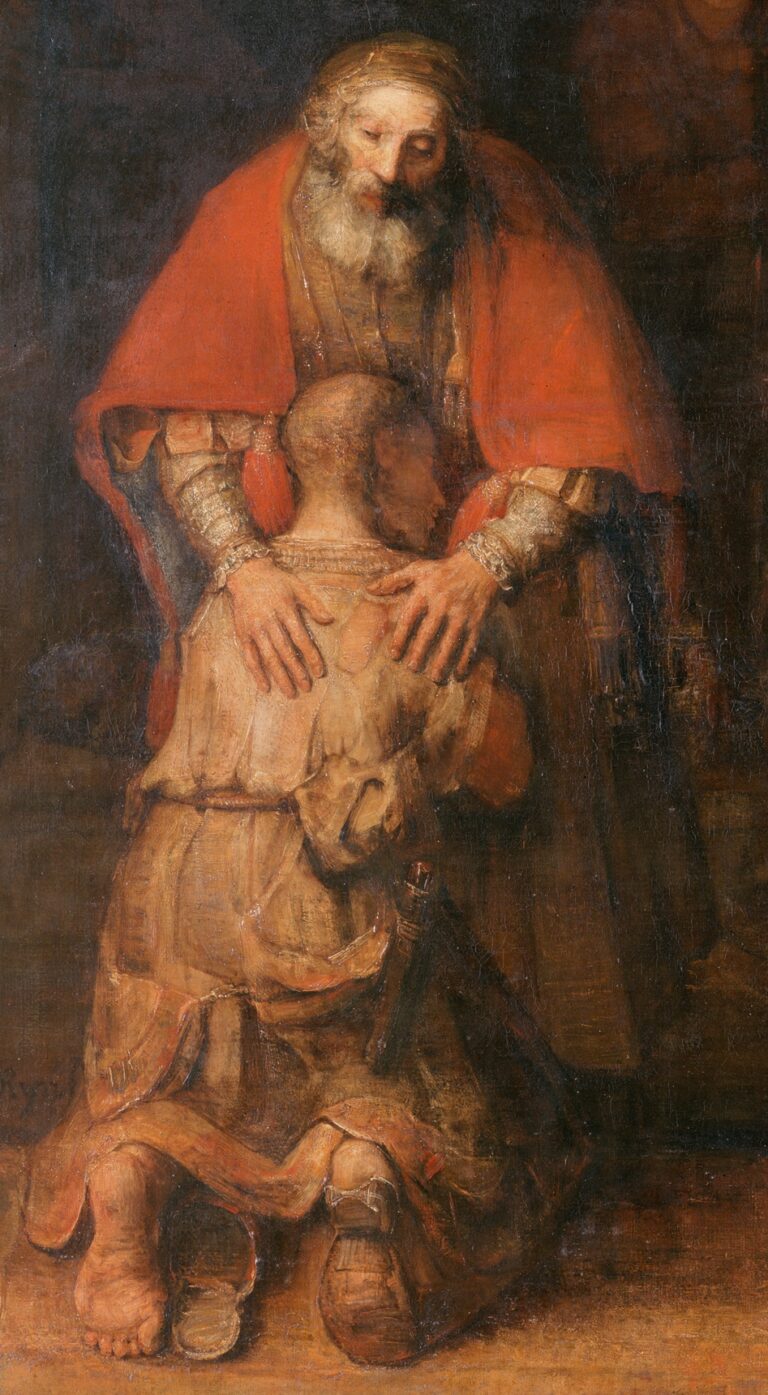
The prodigal sonProdigal Son — Luke 15The Prodigal Son is the younger son in Luke 15:11–32 who asks for his share of the estate, leaves for a distant country, spends what he has, falls into need, comes to…Read full entry → returns.
Odysseus returns.
Arthur returns.
Spring returns.
The breath returns.
Morning returns.
Yet none of theseThese — AccumulationThese names accumulation: possessions, titles, achievements, beliefs, communities, and other extensions gathered around identity.Read full entry → are repetitions.
They are homecomings.
Homecoming is not the same as repetition.
Homecoming means the traveler has changed.
The house has changed.
Memory has changed.
The return itself has become meaningful.
This is the secret hidden inside the spiral.
Life revisits.
But it revisits transformed.
Why the Soul Loves Stories
Perhaps this explains why stories matter so deeply.
Why myths endure.
Why songs become more beautiful with age.
Why old memories acquire new meanings.
Why childhood places feel different when revisited decades later.
The spiral gathers significance.
Meaning accumulates.
The heart remembers.
And because the heart remembers, the world becomes deeper.
Not newer.
Deeper.
The Shape of Return
Perhaps salvation itself is not escape.
Perhaps wisdom is not novelty.
Perhaps enlightenment is not departure.
Perhaps the goal was never to leave the circle behind.
Perhaps the goal was to discover that the circle was always a spiral.
That the seasons were teaching memory.
That the years were teaching gratitude.
That the recurring questions were teaching depth.
And that the familiar places were quietly preparing us for recognition.
Because life does not merely repeat.
Life remembers.
And wherever memory becomes gratitude, the spiral begins to resemble home.
For the soul was never meant to move like a machine.
The soul was meant to return.
And return, unlike repetition, is alive.