Tag: Substack

Geomytha essays approved for Substack syndication.

  • The Person Was Never One Thing

    The Person Was Never One Thing

    The ancient Egyptian person was not one thing.

    A body mattered.

    A name mattered.

    Continuity mattered.

    Movement mattered.

    Memory mattered.

    Ritual mattered.

    And after death, what survived was not imagined as a single ghost simply leaving the body behind.

    That alone makes Egyptian personhood useful to GEOMYTHA.

    Not because Egypt secretly taught the GEOMYTHA grammar.

    Because it gives us a historical system in which identity was already understood as layered, relational, and dependent on reintegration.

    The first correction: Ka, Ba, Akh, and Heka are not four interchangeable soul-parts

    Modern summaries often flatten Egyptian ideas into familiar English words:

    Ka = soul.

    Ba = spirit.

    Akh = ghost.

    Heka = magic.

    That is convenient.

    It is also too crude.

    The Metropolitan Museum of Art describes the ka as life force, the ba as the individual aspect able to move between tomb and living world, and the akh as the “effective being” that results when life force and mobile personhood are successfully reunited in rebirth.

    Heka is different again.

    It is not simply another part of the person.

    British Museum material describes heka as a powerful element woven through life, medicine, justice, religion, and the afterlife. Egyptological scholarship treats it as an operative force or efficacy available to gods and humans rather than stage magic in the modern sense.

    So the first GEOMYTHA lesson is already a warning:

    Do not force four Egyptian terms into four neat GEOMYTHA boxes just because there are four of them.

    Ka: life received, not privately manufactured

    The Met describes the ka as the life force of the individual.

    At death, the ka separated from the body and returned to the creator from whom it came. The deceased required continued relation with the ka in order to live again.

    That is why offerings mattered.

    Food and drink sustained the ka during life, and tomb ritual continued that relation after death. Tombs could function as “ka houses,” and statues of the deceased could serve as offering foci.

    Within GEOMYTHA, the comparison is immediately useful.

    Life is not presented as something the claimant manufactures alone.

    It is received.

    Carried.

    Sustained through relation.

    The ka therefore works better as an image of continuity received from a larger field than as an Egyptian version of the modern private ego.

    GEOMYTHA does not claim that “ka means Am.”

    The narrower comparison is that both resist the fantasy of the isolated self as its own source.

    Ba: the person can move without becoming a fixed object
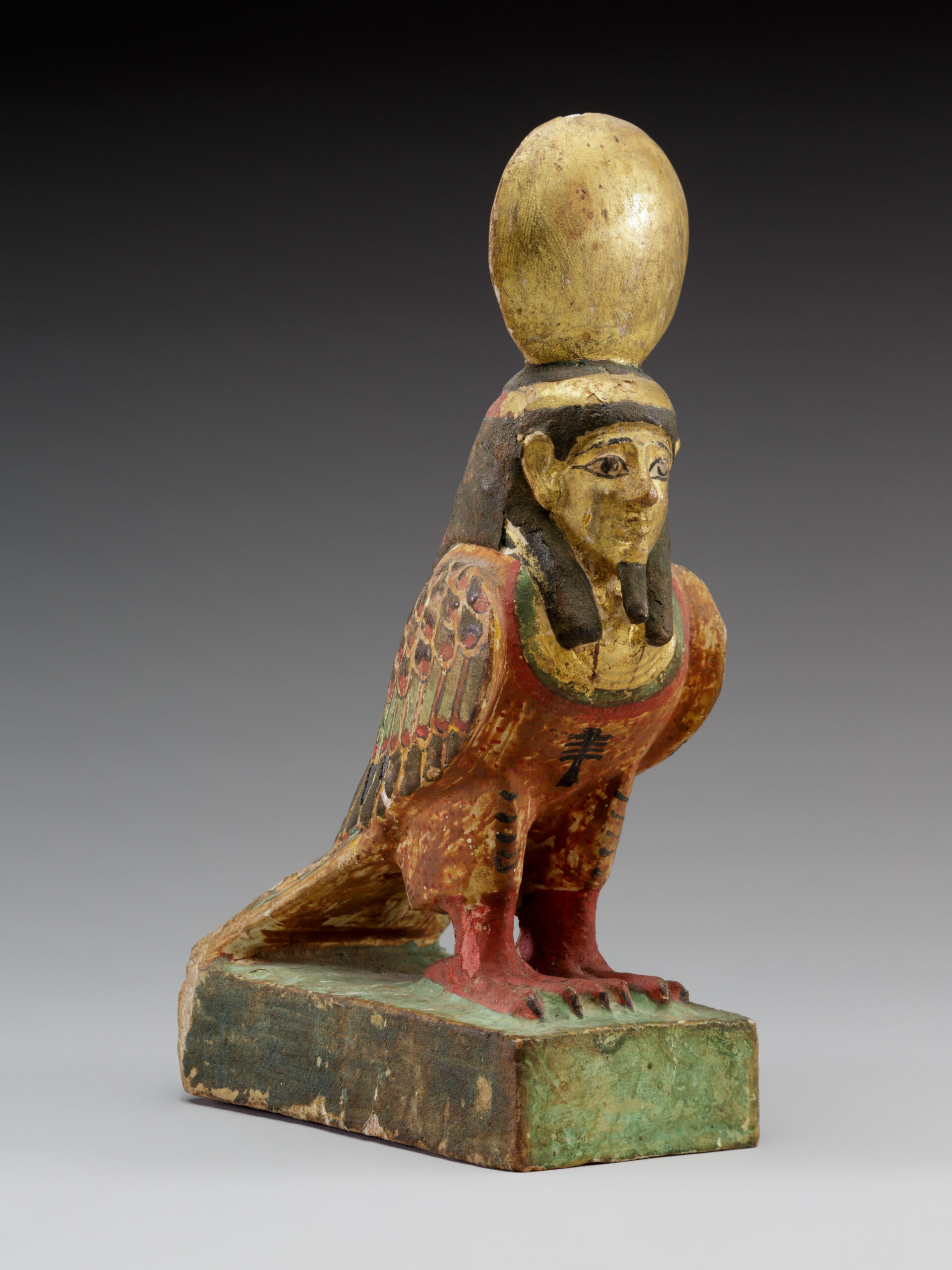
    Ancient Egyptian ba-bird statuette with a human head, Ptolemaic Period, The Metropolitan Museum of Art.
    Ba-bird, Ptolemaic Period, 332–30 BCE or later. The Metropolitan Museum of Art, object 44.4.83. Public domain.

    The ba is harder to translate cleanly.

    The Met’s educator material describes it as what makes the person individual apart from the body, while its collection records emphasize that the ba could move out from the tomb and periodically return to reunite with the mummy.

    That mobility is why the ba was commonly represented as a bird with a human head.

    The image is striking because identity is recognizable without being motionless.

    The face remains.

    The form moves.

    The person can appear beyond the body and still remain connected to it.

    This gives GEOMYTHA a more careful way to think about manifestation.

    A person can have a recognizable mode of appearing without that appearance becoming the whole person.

    A role can travel.

    A name can travel.

    An image can travel.

    A reputation can travel.

    But movement does not make the traveling form the source.

    The ba remains relational.

    It leaves.

    It returns.

    Akh: not escape, but effective reintegration

    This is where the system becomes most interesting.

    The akh is not simply “the soul after death.”

    The Met describes the akh as an effective being produced through the successful reunion of ba and ka in the cycle of rebirth.

    The British Museum similarly presents ka and ba as joining in the afterlife to form the perfected akh.

    That makes the akh less like a component sitting beside the others and more like a transformed condition.

    Something has been integrated.

    The person has passed through death, ritual, judgment, reunion, and renewed effectiveness.

    This is why GEOMYTHA should resist translating akh as simply “spirit.”

    The stronger comparison is transfigured function after reintegration.

    Not the ego surviving unchanged.

    Not personality getting an eternal upgrade.

    A different condition becomes possible because previously separated elements are brought back into working relation.

    The tomb is not just storage

    Modern eyes can mistake the Egyptian tomb for a warehouse of preserved things.

    Body.

    Food.

    Images.

    Names.

    Spells.

    Statues.

    But the logic is more active than storage.

    The tomb creates conditions for continuity.

    The body remains available.

    The ba can return.

    The ka can be sustained through offerings.

    Images and texts can act.

    Ritual can keep relations functioning.

    What looks static from outside is designed around recurring movement.

    That matters for GEOMYTHA because preservation itself is not the goal.

    Preservation serves return.

    A form matters because relation still has to pass through it.

    Heka: the word that acts
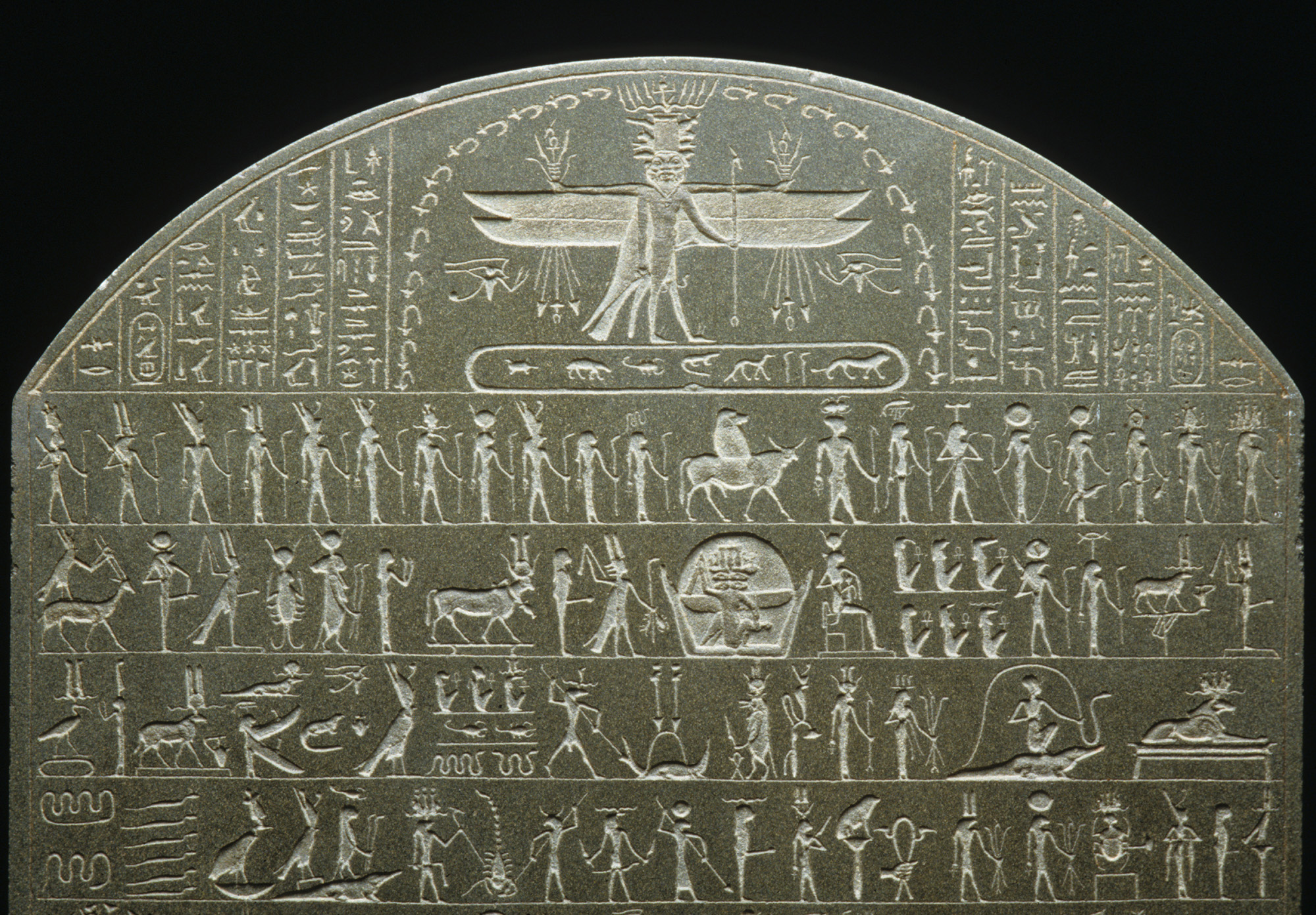
    Late Period Egyptian magical stela, the Metternich Stela, used in protective and healing contexts.
    Detail of the Metternich Stela, reign of Nectanebo II, ca. 360–343 BCE. The Metropolitan Museum of Art, object 50.85. Public domain.

    Heka has to be handled differently from ka, ba, and akh.

    It is not another layer of personhood in the same sense.

    It is closer to effective power.

    The British Museum describes heka as a magical element central to Egyptian life and afterlife, operating in areas such as childcare, medicine, justice, and religion.

    The Oriental Institute’s Foy Scalf describes Heka as the personification of a creative force believed to exist in the universe and available for beings to use.

    This helps explain why Egyptian ritual words, images, amulets, and healing texts were not merely symbolic decoration.

    They were expected to do something.

    UCL’s Digital Egypt warns against imposing a modern split between “medicine” and “magic” onto Egyptian healing practice. The categories do not divide neatly that way in the evidence.

    Within GEOMYTHA, heka therefore belongs to the question:

    When does a word stop merely describing a world and begin participating in one?

    A blessing acts.

    A curse acts.

    A legal declaration acts.

    A name acts.

    A ritual formula acts.

    A public label acts.

    Language can become operative because people, institutions, memory, and behavior reorganize around it.

    GEOMYTHA does not need to claim that this is identical to Egyptian heka.

    It only needs to notice the shared problem of words becoming forces inside a lived world.

    The person was never one thing

    This is the central insight.

    The Egyptian system resists the modern instinct to ask:

    Which one is the real self?

    Is the real self the body?

    The life force?

    The mobile personality?

    The transfigured being?

    The name?

    The heart?

    Egyptian mortuary thought does not solve the problem by choosing one and throwing away the others.

    Continuity depends on relation among them.

    That makes the system especially useful for GEOMYTHA, where distortion often begins when one temporary form claims to be the whole field.

    The role says:

    I am the person.

    The body says:

    I am the person.

    The name says:

    I am the person.

    The memory says:

    I am the person.

    The image says:

    I am the person.

    The Egyptian model answers with multiplicity.

    None of these alone is enough.

    The GEOMYTHA comparison

    A careful comparison can now be made without pretending to translate one system into the other.

    Ka can illuminate received continuity.

    Ba can illuminate mobile, recognizable manifestation.

    Akh can illuminate transformed effectiveness after reintegration.

    Heka can illuminate operative power—the capacity of word, image, ritual, and action to alter relation.

    These are comparisons of function.

    They are not dictionary definitions.

    They are not historical claims that Egyptians anticipated GEOMYTHA.

    And they do not map cleanly onto Is, Am, I, and This one by one.

    That failure to map perfectly is useful.

    It keeps the comparison honest.

    The false bridge: Ka + Ba = Kaaba?

    This is exactly the kind of resemblance GEOMYTHA has to discipline.

    Visually and phonetically, English transliterations make Ka + Ba look tantalizingly close to Kaaba.

    But resemblance is not etymology.

    There is no historical evidence in the material reviewed here that the name of the Islamic sanctuary derives from the Egyptian terms ka and ba.

    The Arabic name is written Kaʿbah, and scholarship discusses its derivation within Arabian linguistic and religious history. The traditional explanation connects it with Arabic kaʿb, “cube,” while recent peer-reviewed work has proposed an older South Arabian sanctuary term kʿbt.

    Neither line of scholarship derives the word from Egyptian ka plus ba.

    So GEOMYTHA can preserve the resemblance as a poetic prompt if useful.

    It cannot present it as history.

    That is a clean example of the difference between resonance and evidence.

    The stress test: Egypt was not teaching modern psychology

    There is another danger.

    It would be easy to take these Egyptian categories and turn them into a personality system.

    “Your ka is your energy.”

    “Your ba is your personality.”

    “Your akh is your higher self.”

    “Heka is manifestation.”

    That would sound neat.

    It would also erase the funerary, ritual, religious, and historical contexts that make the terms what they are.

    The Egyptian evidence is not a modern self-help diagram.

    The categories changed across periods.

    Translations remain approximate.

    Ritual and afterlife context matter.

    The comparison is strongest when the historical system is allowed to resist us.

    The practical return

    You do not need to decide which single thing is the “real you.”

    Start with a smaller question.

    What part of you is acting right now?

    The body?

    The role?

    The name?

    The memory?

    The habit?

    The relationship?

    The image other people know?

    Then ask whether that part has begun claiming the whole.

    The ancient Egyptian person remained alive through relation among parts that had to separate, travel, return, and work together again.

    GEOMYTHA takes the simpler lesson:

    Do not mistake one form of yourself for the whole field that keeps making relation possible.

    Sources and further reading

    GEOMYTHA’s comparisons among received continuity, mobile manifestation, reintegration, operative power, and its own Is/Am/I/This grammar are modern project interpretations. The Egyptological and linguistic sources above establish the historical terms and contexts; they do not establish GEOMYTHA as an ancient Egyptian or Islamic doctrine.
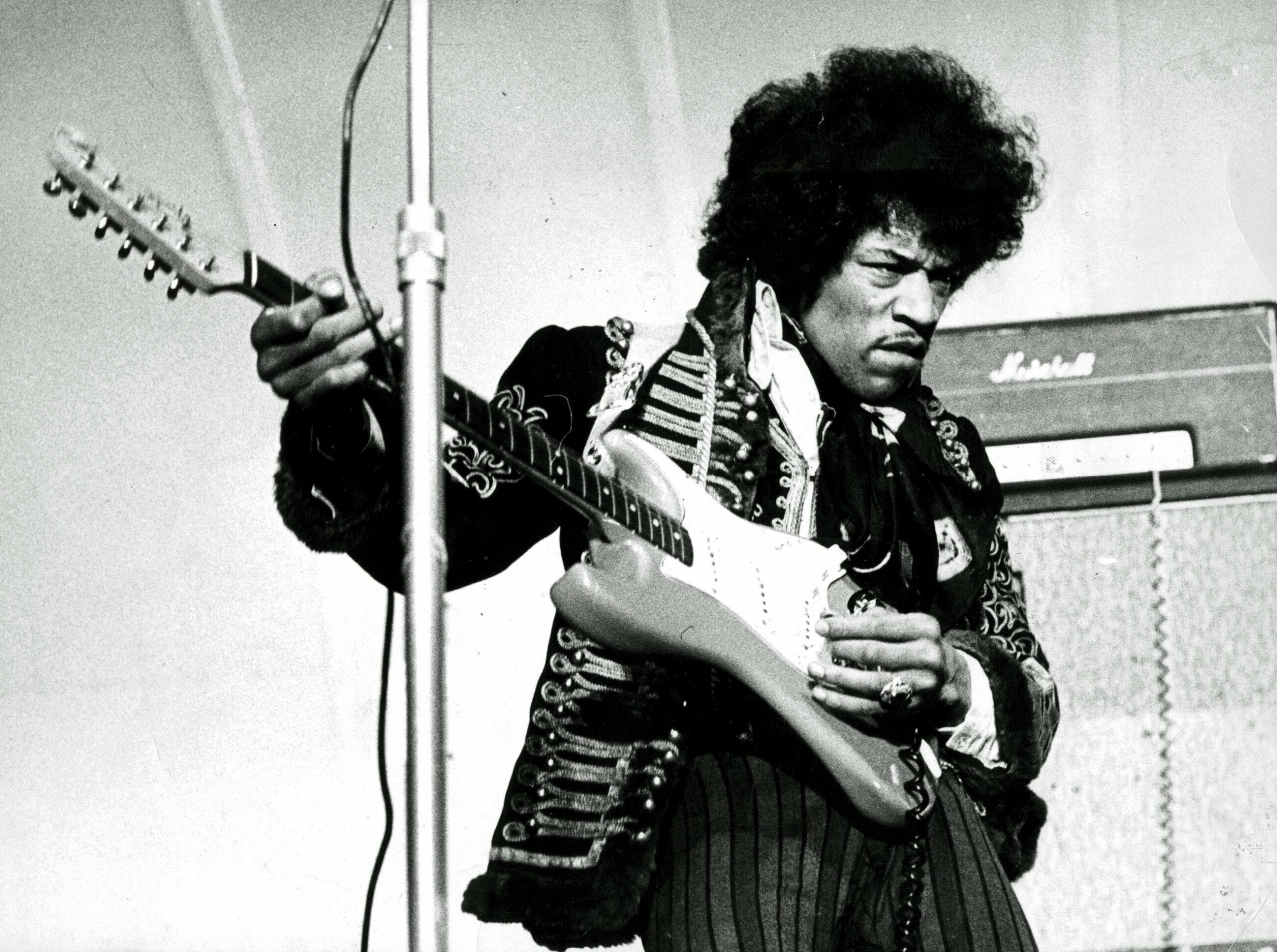
  • Purple Haze, Purple Rain, and When Distortion Becomes Rule

    Purple Haze, Purple Rain, and When Distortion Becomes Rule

    One song gives us a haze. Another gives us rain.

    Both are purple.

    That does not mean Jimi Hendrix and Prince were secretly teaching the same system. It does not mean the color purple has one fixed meaning across music, religion, psychology, or culture.

    But the two titles create a useful GEOMYTHA question:

    What happens when distortion first fills the atmosphere, then falls into the world, and finally begins to rule it?

    That is the movement from haze → rain → reign.

    Purple is a symbolic mixture here, not a scientific claim

    GEOMYTHA uses color as a symbolic language.

    Within that language, blue can stand for reflection: distance, mirror, depth, the field becoming visible to itself.

    Red can stand for projection and claim: heat, force, appetite, interruption, the movement that says mine.

    When GEOMYTHA calls purple the meeting of blue reflection and red projection, that is an internal symbolic convention.

    It is not a claim about optics, wavelength physics, ancient universal color doctrine, or what Hendrix and Prince intended.

    The usefulness of purple is simpler.

    It looks like a field in which reflection and projection have become difficult to separate.

    The mirror has been colored.

    Purple Haze: distortion in the atmosphere

    Jimi Hendrix performing at Gröna Lund in Stockholm, Sweden, May 24, 1967.
    Jimi Hendrix performing at Gröna Lund, Stockholm, May 24, 1967. Public-domain press photograph via Wikimedia Commons.

    “Purple Haze” was recorded by the Jimi Hendrix Experience in early 1967 and released as the group’s second UK single that March. The official Hendrix archive describes the sessions as an experiment in new sounds and effects.

    GEOMYTHA does not need to turn that production history into secret symbolism.

    The title already gives us enough.

    A haze does not necessarily change the objects inside it.

    It changes how clearly they can be seen.

    The road remains.

    The person remains.

    The light remains.

    But the medium between observer and object is no longer transparent.

    That is why haze is such a useful image of distortion.

    The problem is not simply that something false has appeared.

    The problem is that the field of perception has changed.

    When the mirror itself is colored

    Ordinary error can be corrected by looking again.

    But what if the thing doing the looking is already colored?

    If I am angry, neutral events can look hostile.

    If I am afraid, uncertainty can look like danger.

    If I desperately want something to be true, coincidence can begin looking like confirmation.

    If I already identify as the victim, hero, outsider, expert, chosen one, or misunderstood genius, new information arrives inside a field that has already been tinted.

    That is the purple haze in the GEOMYTHA reading.

    Not a lie placed in front of consciousness.

    A coloring of the reflective field itself.

    Purple Rain: distortion descends

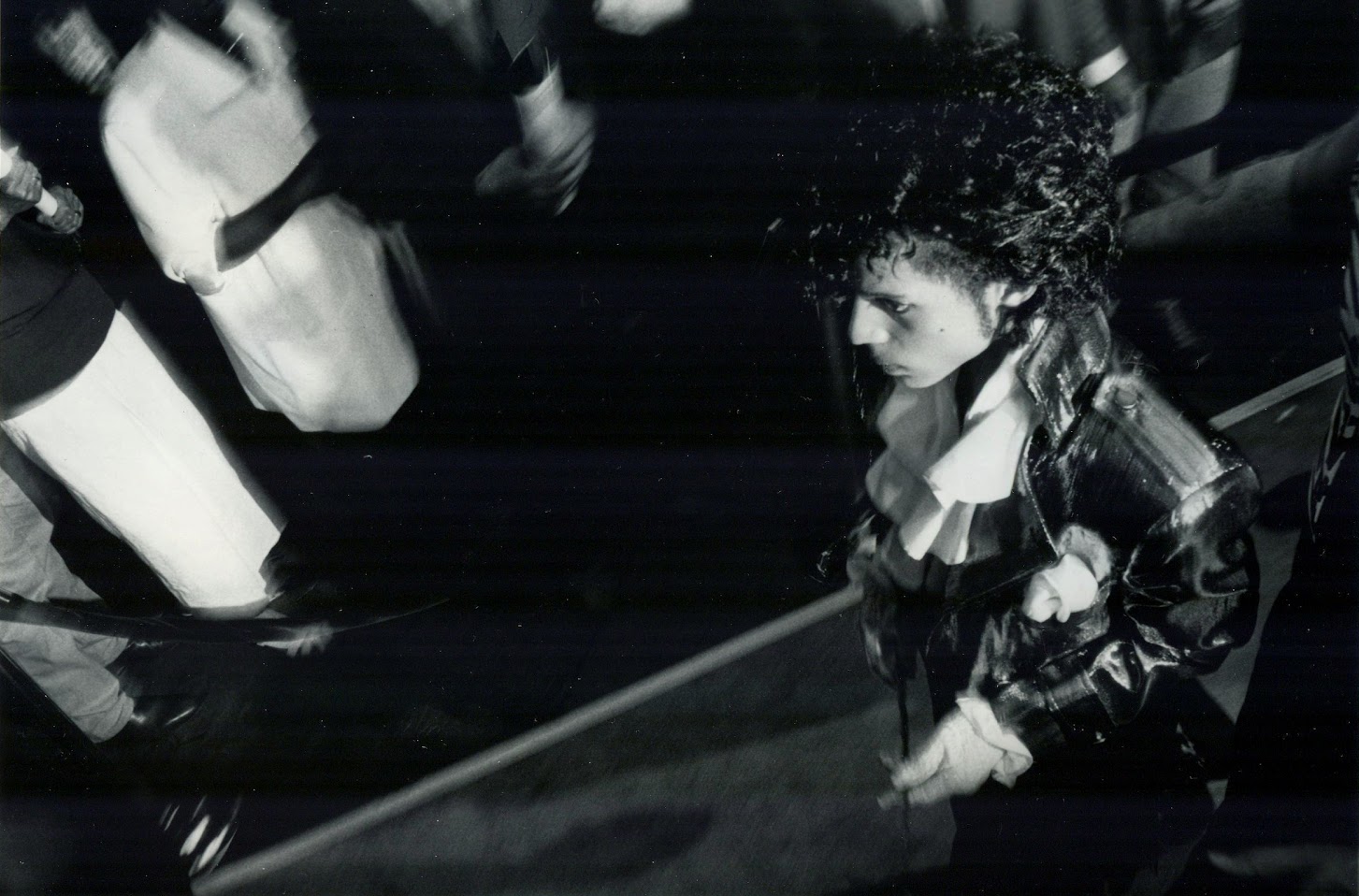
    Prince in a 1984 Purple Rain-era press photograph distributed by Warner Bros.
    Prince, 1984 Purple Rain-era Warner Bros. press photograph. Public domain.

    Prince’s Purple Rain arrived in 1984 as an album, film, and title song. The official Prince discography calls it the most commercially and culturally impactful release of his career.

    Again, GEOMYTHA is not claiming that Prince encoded this framework into the title.

    We are looking at the difference between two ordinary weather words.

    Haze hangs.

    Rain falls.

    Haze changes the atmosphere.

    Rain reaches the ground.

    That gives the second title a different symbolic function.

    The colored field no longer stays overhead.

    It descends.

    It touches everything.

    It saturates.

    From rain to reign

    English gives us a useful homophone:

    rain / reign.

    This is wordplay, not etymology.

    The words do not share a hidden origin merely because they sound alike.

    But as a GEOMYTHA device, the shift is precise.

    Rain is what descends.

    Reign is what governs.

    Distortion becomes more dangerous when it stops being a temporary condition and starts organizing the world beneath it.

    First I see through the distortion.

    Then I make decisions from it.

    Then I build habits around those decisions.

    Then the habits become a role.

    Then the role becomes an identity.

    Then the identity begins deciding what I am allowed to see.

    The weather has become a throne.

    The first purple names the atmosphere of distortion. The second reveals what happens when the atmosphere descends far enough to become rule.

    Set enters the mirror

    In GEOMYTHA’s mythic grammar, Osiris represents reflection and continuity.

    Set represents interruption, division, claim, and the cutting force that can separate what had been held in relation.

    The purple field appears when the Setian action enters the Osirian mirror.

    Reflection is still happening.

    But it is no longer neutral.

    The mirror has been pressured by the claimant.

    This is why distortion can feel so convincing.

    It still reflects something real.

    It simply reflects reality through a field already organized by desire, fear, status, injury, ideology, or self-image.

    The counterfeit is strongest when it contains enough truth to keep the mirror believable.

    Horus grows under the weather

    If the colored field persists long enough, identity forms inside it.

    GEOMYTHA calls that Horusian stabilization.

    The person does not wake up each morning and consciously choose the distortion again.

    The distortion has become ordinary.

    It has become the climate in which the self learned its name.

    Someone raised inside conflict may experience calm as suspicious.

    Someone rewarded for performance may experience rest as failure.

    Someone who became visible through outrage may need new outrage to remain visible.

    The environment becomes identity because the identity was formed inside the environment.

    Rain becomes reign.

    The Purple People Eater

    There is a comic version of the same image in Sheb Wooley’s 1958 novelty hit “The Purple People Eater.” The song itself was written as absurd entertainment; Oklahoma historical sources trace it to a children’s joke that Wooley turned into a record.

    GEOMYTHA does not need to pretend the novelty song contains a hidden doctrine.

    Its title simply gives us another useful image:

    purple + people + eater.

    Within this article’s symbolic grammar, “people” are formed identities and the “eater” becomes the field consuming the identities it helped produce.

    That is what separation often does.

    One identity feeds on another.

    Political identity needs an enemy.

    Status needs comparison.

    Victim identity needs the offending figure to remain psychologically present.

    Celebrity needs attention.

    Tribe needs outsider.

    The fragmented field begins devouring itself.

    The stress test: purple is not the problem

    This interpretation collapses if we begin treating the color purple itself as a universal sign of corruption.

    Purple can mean royalty, mourning, devotion, luxury, eroticism, spiritual aspiration, political identity, artistic style, or simply a color someone likes.

    Prince made purple inseparable from his public image, but that fact does not make every use of purple a GEOMYTHA example.

    Hendrix used the title “Purple Haze,” but that does not prove that he meant “Set entering Osiris’s mirror.”

    A symbolic reading becomes useful only when the function fits.

    Is perception being colored?

    Is the coloring descending into behavior?

    Is the behavior stabilizing into identity?

    Is the identity beginning to govern what can be perceived?

    If not, the purple parallel is decoration, not mechanism.

    Beautiful enough to trust

    The important thing about distortion is that it rarely announces itself as distortion.

    It usually arrives as something meaningful.

    A story that explains everything.

    A wound that organizes the past.

    A group that finally understands.

    A revelation that makes the world click.

    An identity that brings coherence.

    That is why the purple field is useful.

    It is not darkness.

    It is color.

    It can be beautiful.

    Beautiful enough to trust.

    That is also why it deserves examination.

    The practical return

    When the world suddenly seems to confirm the same story everywhere, do not immediately ask whether the story is true.

    Ask one earlier question:

    What color is the field I am looking through?

    What desire is present?

    What fear?

    What identity?

    What wound?

    What expectation?

    Then ask whether the atmosphere has already become weather—and whether the weather has quietly become rule.

    Notice the haze before you build under the rain.

    Sources and further reading

    The Haze → Rain → Reign sequence, the blue/red/purple symbolic palette, and the Osiris–Set–Horus interpretation are GEOMYTHA readings. The music sources establish the works and their historical context; they do not establish this symbolic framework as the artists’ intended meaning.

  • I Am Running Until I Become the Runner

    I Am Running Until I Become the Runner

    There is a difference between running and becoming “the runner.”

    At first, the body is simply moving.

    Breath finds a rhythm. Feet meet the ground. Attention narrows to pace, distance, balance, fatigue, and terrain.

    Then a thought can enter:

    I am running well.

    Then another:

    I am a runner.

    The first sentence describes an action.

    The second begins building an identity.

    That difference is the center of this article.

    When the verb is still alive

    A verb can move.

    Run.

    Drive.

    Serve.

    Dance.

    Build.

    Write.

    Fight.

    Pray.

    Each names something happening.

    GEOMYTHA calls the action unclaimed when it can happen without the person needing to turn it into a permanent answer to the question “Who am I?”

    That does not mean the person has no identity.

    It means the action is still allowed to remain an action.

    Flow is a useful comparison

    Psychology gives us a familiar phenomenon that helps make this visible: flow.

    Flow research commonly describes states of deep absorption in an activity, where action and awareness can seem to merge, attention concentrates on the task, self-consciousness is reduced, and time may feel altered. Clear goals, immediate feedback, and a workable balance between challenge and skill are often described as important conditions for flow.

    That does not prove GEOMYTHA.

    But it gives us a well-studied experience in which action can become more prominent than the story the person is telling about themselves while acting.

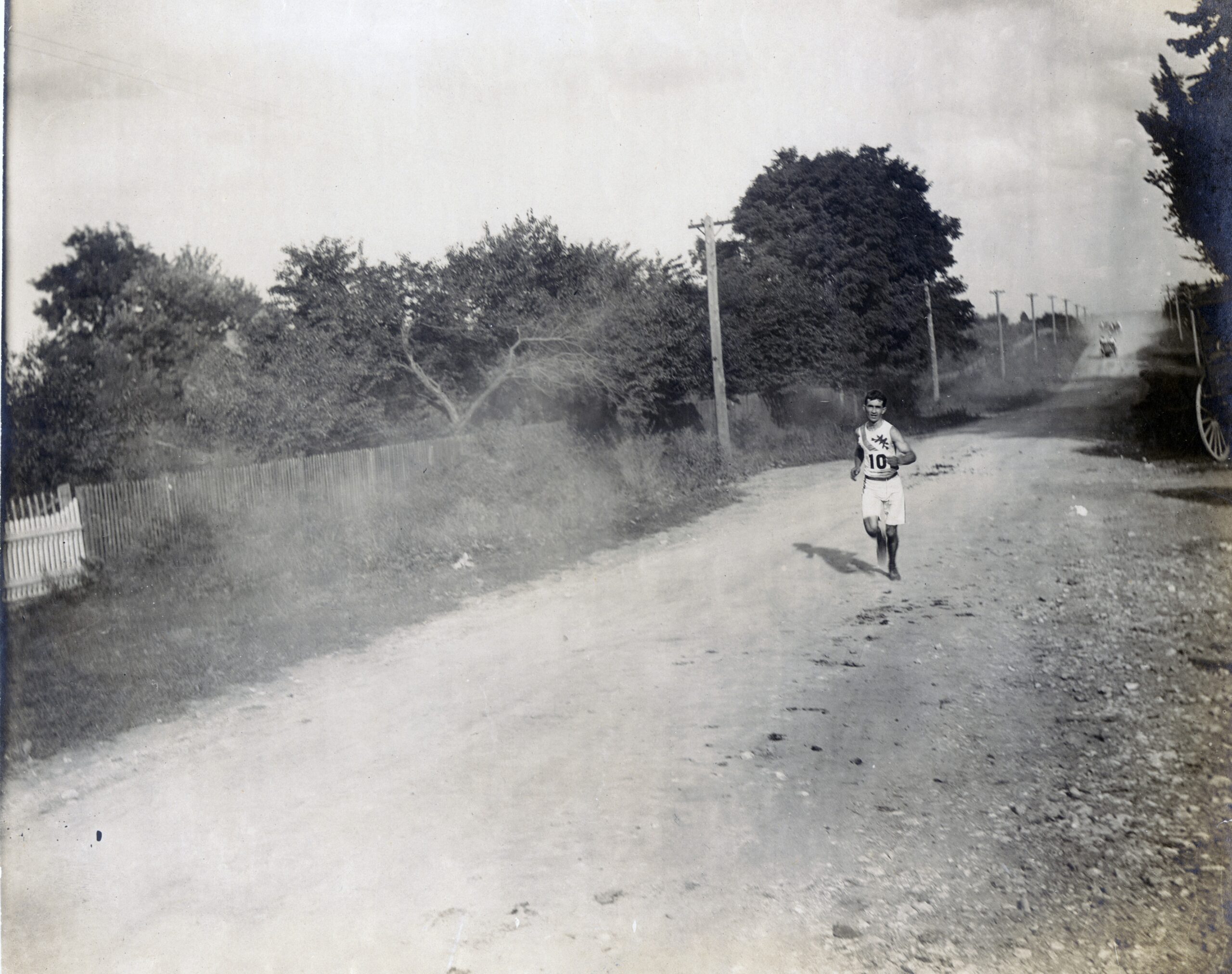
    Look at Sam Mellor running the marathon at the 1904 Olympic Games.

    The camera catches one step on a long dirt road.

    We see the runner, but we cannot see the full run. The movement continues beyond the photograph.

    The picture holds a moment. The action keeps moving.

    That is the difference GEOMYTHA asks us to notice.

    The dent in the verb

    The distortion begins when the claimant enters.

    The action becomes:

    my running.

    Then:

    my ability.

    Then:

    my identity.

    Then:

    the runner.

    The verb has acquired a noun.

    GEOMYTHA calls that the dent in the verb: the moment a living process is interrupted long enough to become something the self can possess.

    The action is still real.

    The person may still be highly skilled.

    The problem is not the noun itself.

    The problem begins when the noun is defended as though the living action exists to support the identity.

    A bartender is useful until the word becomes a prison

    Take a simple work example.

    Bartending is a set of actions.

    Listen.

    Remember.

    Pour.

    Move.

    Clean.

    Read the room.

    Serve.

    The noun bartender is useful. It tells people what role is being performed.

    Nothing is wrong with that.

    But if the role hardens into a total identity, every change begins to feel personal.

    A bad shift threatens the self.

    A mistake threatens the self.

    A different job threatens the self.

    Leaving the role can feel like losing the person.

    The work has stopped being something the person does.

    The work has become something the person must continue proving they are.

    The same thing happens in sport

    An athlete needs technique, discipline, correction, planning, memory, and self-assessment.

    But highly practiced skills can sometimes suffer when a performer turns attention back onto the mechanics of an action that normally runs automatically.

    Research on “choking under pressure” has found that excessive conscious monitoring of well-learned procedures can interfere with performance in some tasks. That does not mean thinking is bad or that experts should never reflect. It means there are moments when a skill works better when the performer is doing it rather than narrating every step of doing it.

    That is very close to the distinction GEOMYTHA is making.

    There is:

    running.

    And there is:

    watching myself be the runner.

    They are not always the same experience.

    Self-awareness is not the enemy

    This is where the idea needs a serious boundary.

    Reflection can improve performance.

    A runner may need to notice bad form.

    A musician may need to hear a timing problem.

    A fighter may need to recognize a dropped hand.

    A worker may need to notice a bad habit.

    A writer may need to reread a sentence.

    The correction itself requires awareness.

    So the lesson cannot be “never observe yourself.”

    The better distinction is between reflection that serves the action and reflection that turns the action into evidence for identity.

    One asks:

    What needs to change?

    The other asks:

    What does this say about me?

    Flow has no owner

    This is why flow is such a useful comparison.

    People often describe their best performances afterward.

    They say:

    It just happened.

    I stopped thinking about it.

    Everything lined up.

    I lost track of time.

    The action felt effortless.

    Psychology studies those reports as features of a particular experiential state.

    GEOMYTHA notices something else inside the language:

    The person often speaks as though the action temporarily stopped needing an owner.

    Not literally.

    Not metaphysically.

    The runner still ran.

    The musician still played.

    The worker still worked.

    But the sentence “I am the one doing this” became less important than the doing itself.

    From Am to I to This

    In GEOMYTHA grammar, this gives us a simple movement.

    Am: living activity, relation, awareness in motion.

    I: the claimant that marks the action as mine.

    This: the stable identity built from the claim.

    Running becomes:

    I run.

    Then:

    I am a runner.

    Then:

    This is who I am.

    That last sentence can be useful.

    It can organize training, community, discipline, and responsibility.

    But it can also become brittle.

    What happens when the role disappears?

    This is the strongest stress test.

    Suppose the runner gets injured.

    Suppose the bartender changes careers.

    Suppose the fighter retires.

    Suppose the musician loses an instrument.

    If the action was a role, there is grief and adjustment.

    If the action had become the whole self, the loss can feel like annihilation.

    That does not prove the identity was false.

    It shows how much of the person had been invested in one repeated noun.

    The more tightly the verb and the self are fused, the harder it becomes to let the verb change.

    Names are tools

    GEOMYTHA is not asking people to stop using role words.

    Names are useful.

    “Runner” is useful.

    “Parent” is useful.

    “Doctor” is useful.

    “Bartender” is useful.

    “Artist” is useful.

    They help coordinate responsibility and relation.

    The mistake is not naming the role.

    The mistake is forgetting that the role names a pattern of action rather than the whole field of the person.

    The practical return

    The next time you catch yourself saying:

    I am the one who does this.

    Try moving one step backward.

    What is the verb?

    What is actually happening?

    Can the action remain alive without becoming a permanent identity?

    Can you work without becoming the work?

    Run without needing to be “the runner”?

    Help without becoming “the helper”?

    Fight without becoming “the fighter”?

    Create without becoming “the creator”?

    The point is not to erase the noun.

    It is to keep the noun from owning the verb.

    Do the action. Use the name when it helps. Let the verb move.

    Sources and further reading

    GEOMYTHA’s “Unclaimed Verb,” “dent in the verb,” and Am → I → This reading are project interpretations. Flow research and choking research establish psychological phenomena associated with absorption, self-consciousness, attention, and skilled performance; they do not establish the GEOMYTHA grammar as a scientific model.

  • The Star Is the Exhibit

    The Star Is the Exhibit

    Being invited into the room is not the same as belonging to the room.

    Being watched is not the same as having power.

    Being famous is not the same as being free.

    A person can be elevated, praised, displayed, and still remain structurally contained.

    That is the mechanism behind what GEOMYTHA calls Exhibit Identity: a person becomes valuable to a system because they can be shown.

    The difference between visibility and agency

    Visibility can feel like power because attention is real.

    People know your name.

    You are invited.

    You are photographed.

    You are placed near people with status.

    You are given a microphone.

    You are put on a stage.

    But none of those facts answers the deeper question:

    Who controls the terms?

    Who decides when you enter?

    Who decides when you leave?

    Who owns the image?

    Who receives the money?

    Who can change the rules?

    Who can say no?

    That is where agency begins to separate from exposure.

    The star can become the exhibit

    GEOMYTHA uses the word star carefully here.

    A star appears elevated.

    It draws attention.

    It becomes a point others orient toward.

    But spectacle can convert that elevation into containment.

    The person is no longer simply present.

    The person is presented.

    The difference is small in language and enormous in structure.

    To be present is to participate.

    To be presented is to become part of somebody else’s arrangement.

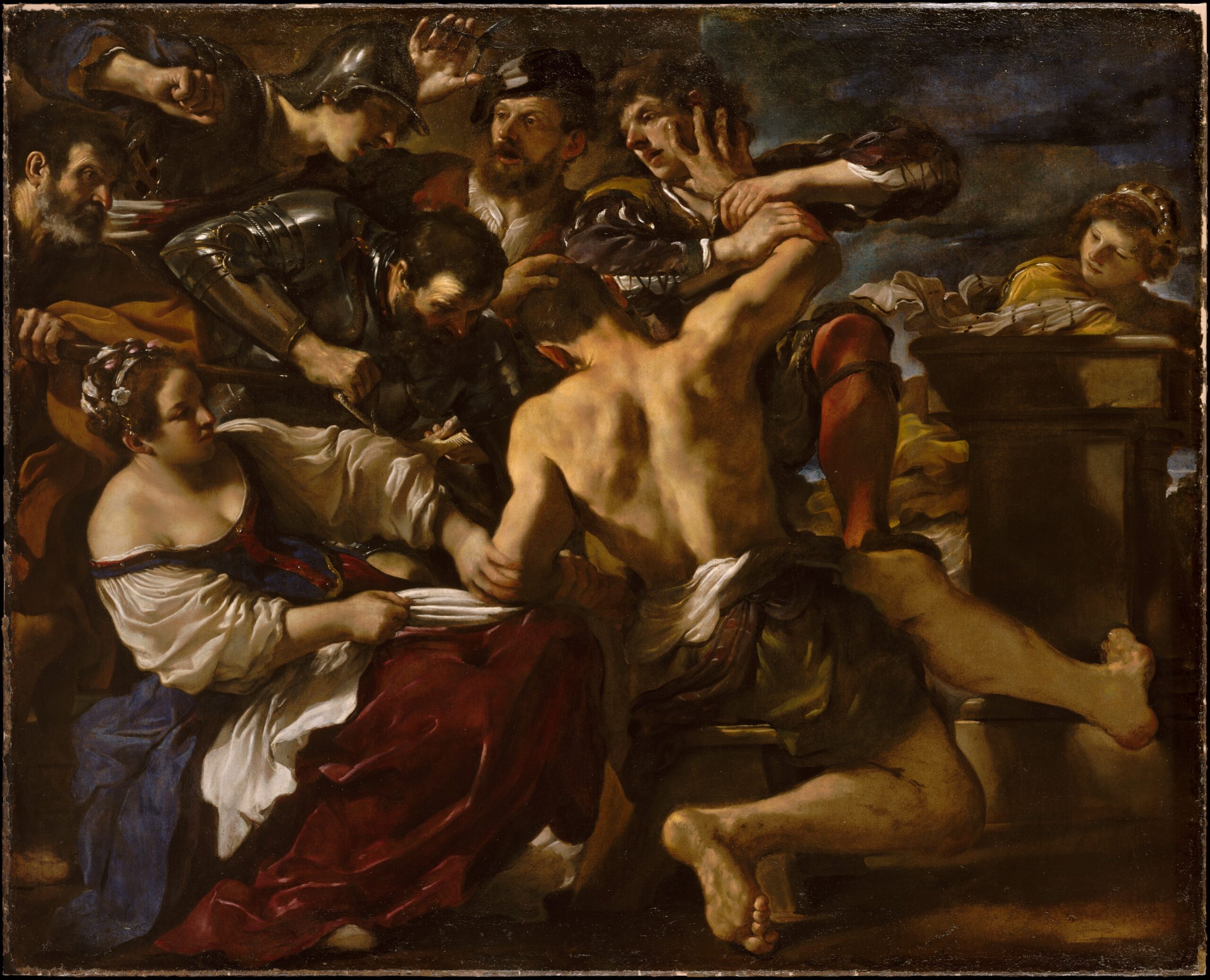
    Samson: strength converted into spectacle

    The Samson story gives us one of the oldest and clearest images of this transformation.

    Samson begins as a figure of extraordinary force.

    By Judges 16, that force has been captured.

    His eyes are put out. He is bound. He is brought into confinement.

    Then the Philistine rulers gather for celebration and call Samson out so he can perform for them.

    The person who once terrified the system becomes entertainment inside it.

    His power has not become theirs in any simple sense.

    But his image has.

    His defeat becomes part of their ceremony.

    His presence confirms their story about themselves.

    That is Exhibit Identity.

    The dangerous person has been turned into the proof of the system’s victory.

    The jester at the king’s table

    The court jester gives us another version.

    The jester may stand unusually close to power.

    He may speak in ways other people cannot.

    He may mock the court.

    He may even tell truths that ordinary courtiers would be afraid to say.

    The Metropolitan Museum of Art notes this tension in its discussion of eighteenth-century court fools: entertaining the ruler was their official function, while certain fools could sometimes use humor to speak truths that others could not. That latitude, however, still existed inside the court’s structure and could disappear when the ruler decided the joke had gone too far.

    That is the distinction GEOMYTHA cares about.

    Access is real.

    Influence may be real.

    But proximity is not sovereignty.

    The jester is near the throne.

    He does not own the throne.

    Dinner for Schmucks: invitation as containment

    Dinner for Schmucks makes the mechanism almost embarrassingly obvious.

    The unusual guest receives an invitation that appears, on the surface, to be a form of inclusion.

    But the invitation is structured around display.

    The guest is not being admitted as an equal participant in the social world of the hosts.

    The guest is being brought in because the host expects the guest to be entertaining.

    The invitation therefore carries two meanings at once:

    You have been selected.

    And:

    You have been selected for our use.

    That second sentence is the important one.

    The invitation is not the cage by itself

    This is where the article needs its strongest correction.

    Not every invitation is manipulation.

    Not every audience is exploitative.

    Not every stage turns a person into an object.

    Artists choose audiences.

    Performers enter contracts.

    Athletes choose competition.

    Writers seek publication.

    People may want visibility, money, influence, collaboration, or recognition.

    There is nothing inherently false about being seen.

    The real issue is the structure of agency.

    Five questions that matter more than fame

    If we want to know whether visibility is participation or exhibition, five questions help:

    Terms: Did the person understand the arrangement?

    Ownership: Who owns the work, image, recording, or result?

    Compensation: Who benefits materially?

    Exit: Can the person leave without disproportionate punishment?

    Control: Who can alter the conditions once the person is inside?

    A person can be highly visible and still have meaningful agency.

    A person can also be highly visible while having very little.

    Visibility alone cannot answer the question.

    The Truman Show: being the center without being in control

    The Truman Show gives GEOMYTHA one of the cleanest modern examples.

    Truman is the central figure of the entire production.

    Everything is organized around him.

    He is the most important person in the show.

    And he has almost no authority over the show.

    That is the paradox.

    Centrality looks like power from the outside.

    Inside the structure, it can mean dependence.

    Truman is not ignored.

    He is over-seen.

    His problem is not invisibility.

    His problem is that visibility has been separated from consent.

    When the image becomes more valuable than the person

    This is the critical turn.

    A person becomes an exhibit when the system values the visible form more than the living subject carrying it.

    The athlete becomes “the champion.”

    The actor becomes “the face.”

    The employee becomes “the success story.”

    The dissenter becomes “the edgy one.”

    The survivor becomes “the inspiring one.”

    The unusual guest becomes “the funny one.”

    At first the label may describe something real.

    Then the label becomes useful to other people.

    Then the person begins being invited primarily because the label performs.

    The living person is still there.

    But the system is increasingly relating to the role.

    The spectacle needs a stable object

    Spectacle works best when the displayed identity stays recognizable.

    The audience wants the fighter to fight.

    The comedian to be funny.

    The rebel to rebel.

    The tragic figure to remain tragic.

    The genius to remain strange.

    The survivor to remain inspirational.

    That creates a subtle pressure.

    The person may change.

    The exhibit must remain legible.

    This is where identity becomes a cage without any literal wall.

    The role becomes the condition of continued visibility.

    Network and the machinery of attention

    Network pushes the mechanism into mass media.

    Emotion becomes programming.

    Anger becomes a format.

    A human crisis becomes valuable because it can hold an audience.

    The system does not need to invent the emotion for exploitation to occur.

    The emotion can be completely real.

    That is precisely why the mechanism is dangerous.

    Something true in the person becomes useful to the machine.

    The machine then has an incentive to keep the truth performing.

    The stress test: sometimes the stage is liberation

    There is an opposite case.

    Visibility can create agency.

    A platform can let someone speak who was previously unheard.

    Recognition can produce bargaining power.

    Money can create independence.

    An audience can become a community.

    A public identity can be consciously used rather than unconsciously inhabited.

    That is why the GEOMYTHA mechanism cannot be “fame is a trap.”

    The better distinction is:

    Does visibility expand the person’s ability to act, or does the person increasingly exist to maintain the visibility?

    From This to These to Those

    In GEOMYTHA grammar, Exhibit Identity often begins with a stable form.

    This: the recognizable person or role.

    Then the form enters a larger social arrangement.

    These: the audience, group, network, institution, market, or community surrounding the form.

    Finally, the structure may create an outside.

    Those: the consumers, rivals, critics, outsiders, or others through which the exhibit gains contrast.

    The danger is that the original person disappears inside the architecture built around the recognizable form.

    The correction is a return:

    This → Am → Is.

    What is the role?

    Who is the person carrying it?

    What remains before the display?

    The practical return

    When you are invited into a room, ask what the invitation is for.

    When attention increases, ask what control increased with it.

    When your role becomes valuable, ask whether you can still stop performing it.

    When people praise the image, ask whether they remain interested in the person.

    And when somebody else is on display, remember that the exhibit is never the whole human being.

    Be visible if visibility serves the work. But do not confuse being seen with being sovereign.

    Sources and further reading

    GEOMYTHA interpretation is comparative and symbolic. The biblical and museum sources establish the historical/textual material cited above. Film examples are used as works of criticism and comparison; they are not evidence that their creators intended the GEOMYTHA framework.

  • The Heel Grab, the Flaming Sword, and Stolen Fire

    The Heel Grab, the Flaming Sword, and Stolen Fire

    A hand catches a heel. A sword guards a gate. Fire is stolen and carried away.

    They are not the same story.

    They come from different traditions, different texts, and different symbolic worlds. Genesis does not mention Prometheus. Hesiod does not explain Eden. Neither source gives us a historical chain connecting Jacob’s hand, the flaming sword, and the theft of fire.

    But GEOMYTHA can still ask a narrower question:

    What happens when a small act of interception grows into a defended boundary and then into a power that can build a world?

    That is the mechanism this article follows.

    Stage one: the heel grab

    Genesis introduces Jacob with a physical action before he has done anything else. Esau is born first. Jacob comes after him with his hand holding Esau’s heel. The Hebrew narrative even links Jacob’s name to the heel.

    Later, the pattern becomes social rather than physical. Esau sells Jacob the birthright. Later still, Jacob receives Isaac’s blessing while presenting himself as Esau.

    Gerbrand van den Eeckhout, Isaac Blessing Jacob, The Metropolitan Museum of Art.
    Gerbrand van den Eeckhout, Isaac Blessing Jacob, 1642. The Metropolitan Museum of Art.

    The text contains family conflict, divine promise, hunger, bargaining, deception, blessing, and inheritance. It should not be reduced to one verb.

    But the first visible gesture is still striking:

    something already moving ahead is caught from behind.

    Within GEOMYTHA, that makes the heel grab a useful image of interception.

    The action does not create Esau.

    It does not create the birth order.

    It attaches itself to an order already in motion.

    The hand says, in effect: you may be ahead, but I will not let your movement remain untouched by me.

    Interception is not yet possession

    This distinction matters.

    To interrupt something is not the same as owning it.

    You can stop a door without owning the room.

    You can grab a rope without owning the ship.

    You can catch someone’s heel without yet taking their place.

    Interception is the first narrowing.

    Relation becomes leverage.

    The other is no longer simply another presence. The other becomes something through which position can be gained.

    That is why the heel matters in this reading. It is contact becoming strategy.

    Stage two: the guarded boundary

    Genesis gives us another image much earlier in the story.

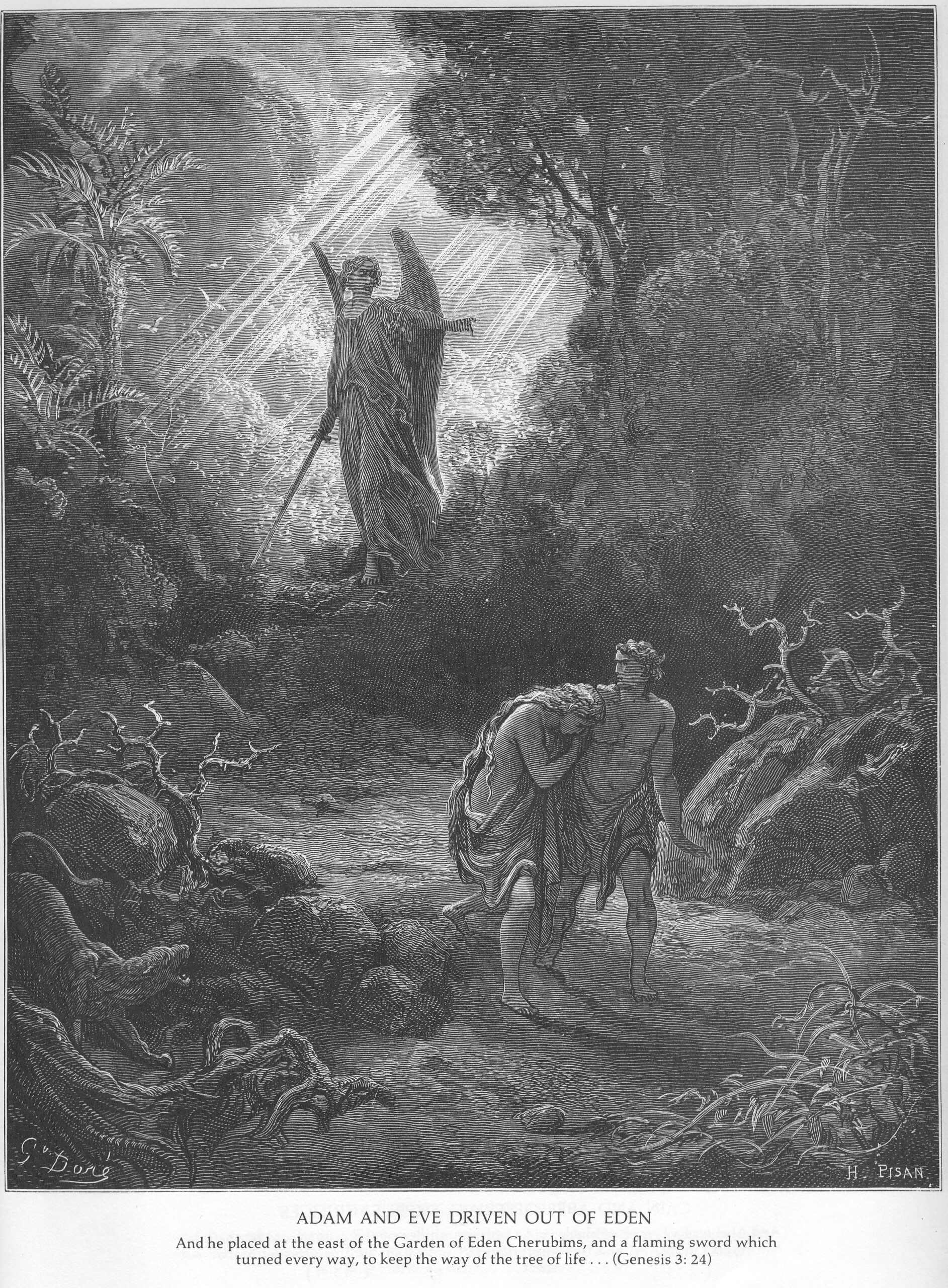
    After the human is expelled from Eden, Genesis 3:24 places cherubim and a flaming sword that turns every way to guard the path to the tree of life.

    Gustave Doré illustration of Adam and Eve driven from Eden, with the flaming sword guarding the way.
    Gustave Doré, Adam and Eve Are Driven out of Eden, 1866. Public domain.

    Historically and textually, the sword is a guardian image. It protects access to the tree of life after the expulsion. That is what the passage actually says.

    GEOMYTHA adds a second-order reading:

    Interception becomes more durable when it acquires a boundary that can defend the new arrangement.

    A claim says, this is mine.

    A defended claim says, and you may not pass.

    The sword represents that second condition in the GEOMYTHA comparison—not because Genesis says “the sword is ego defense,” but because the visible function of the image is guarding access.

    The boundary changes the structure

    Before the guard, movement is still possible.

    After the guard, the landscape has changed.

    There is now an inside and an outside.

    A permitted direction and a forbidden direction.

    A route and an obstruction.

    A defended threshold.

    This is the movement from interception to defense.

    The hand catches.

    The sword keeps.

    One is momentary leverage.

    The other turns leverage into structure.

    Stage three: stolen fire

    Prometheus takes the pattern into a different mythic world.

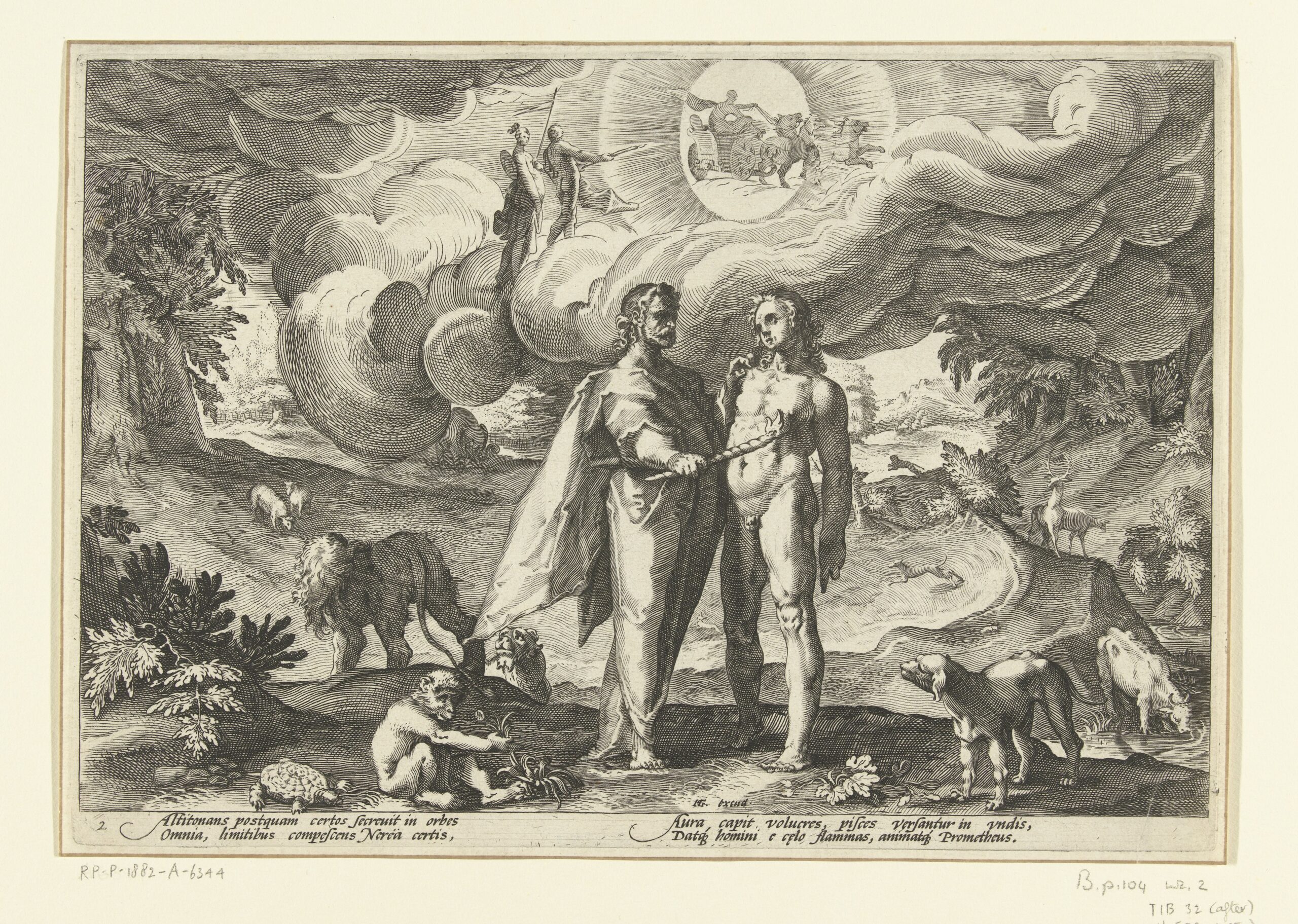
    In Hesiod’s Works and Days, Zeus hides fire from humanity after Prometheus deceives him. Prometheus then steals the fire back, carrying it in a hollow fennel stalk.

    Prometheus gives man fire, workshop of Hendrick Goltzius, Rijksmuseum.
    Workshop of Hendrick Goltzius, Prometheus Gives Man Fire, 1589. Rijksmuseum. Public domain.

    Prometheus must remain morally complicated.

    He is a thief from Zeus’s point of view.

    He is also one of humanity’s great benefactors in the tradition.

    The stolen thing is not merely treasure.

    It is capacity.

    Fire cooks.

    Fire warms.

    Fire lights.

    Fire hardens clay and works metal.

    Fire can also burn, conquer, and destroy.

    That is why fire changes the scale of the mechanism.

    Prometheus industrializes the heel grab

    The heel grab acts on a person already moving.

    The sword protects a boundary.

    Fire allows the claimant to alter the environment itself.

    That is what GEOMYTHA means by saying Prometheus industrializes the heel grab.

    Not historically.

    Not etymologically.

    Not because the Greek myth derives from Jacob.

    The comparison is functional.

    A small act of leverage becomes a defended position. The defended position acquires tools. The tools allow the position to reproduce itself in the world.

    The claimant no longer only grabs what is moving.

    The claimant can now make new things move.

    Technology extends the hand

    This is where the old myth becomes immediately recognizable.

    A lever extends strength.

    A fence extends a boundary.

    A lock extends exclusion.

    A vehicle extends movement.

    A weapon extends force.

    A database extends memory.

    A network extends reach.

    Technology takes an action that a body can perform and lets that action persist farther, faster, longer, or at larger scale.

    That is not automatically bad.

    Fire is not evil because it extends human capacity.

    Technology is not corruption simply because it magnifies action.

    The real question is:

    What action is being magnified?

    The stress test: fire can serve

    If the mechanism only works when possession is bad, it is too simple.

    Prometheus breaks that simplification.

    The stolen fire can become shelter, food, medicine, craft, communication, and civilization.

    A boundary can protect a child.

    A lock can protect a home.

    A tool can free someone from unnecessary labor.

    A claim can establish responsibility.

    So GEOMYTHA cannot treat interception, boundary, technology, or possession as automatic moral failures.

    The problem begins when a useful function forgets its limits.

    A boundary becomes absolute.

    A tool becomes entitlement.

    A capacity becomes identity.

    A possession becomes proof of superiority.

    The mechanism is not “power is bad.”

    It is that power amplifies whatever relation is already inside it.

    First fire and claimed fire

    GEOMYTHA also needs a distinction inside the symbol of fire.

    Fire can be formative before it is possessive.

    Heat cooks food, fires clay, tempers metal, and transforms raw material into usable form.

    That is formative fire: energy participating in making.

    Claimed fire is different.

    Claimed fire says: this capacity is mine, and I control where it may go.

    The same physical element can participate in both functions.

    That is why the symbol cannot be given one fixed moral meaning.

    The function changes with the relation.

    Three stages of one pressure

    The comparison can now be stated cleanly.

    Heel grab: intercept the movement.

    Flaming sword: defend the boundary created by the interruption.

    Stolen fire: expand the power of the claimant beyond the original encounter.

    Interception.

    Defense.

    Expansion.

    Each stage can be useful.

    Each stage can also harden.

    The danger appears when relation becomes leverage, leverage becomes enclosure, and enclosure acquires enough power to reproduce itself as a world.

    The practical return

    When you find yourself defending something fiercely, ask what happened before the defense.

    What did I first grab?

    What did I become afraid of losing?

    What boundary did I build around it?

    What tools now extend that defense?

    The answer might be a possession.

    A title.

    A belief.

    A wound.

    A relationship.

    A status.

    A story about yourself.

    The goal is not to throw away every boundary or every tool.

    It is to see the sequence clearly enough to choose whether the thing still serves life.

    Notice the grab. Examine the guard. Question what the fire is enlarging.

    Sources and further reading

    GEOMYTHA interpretation is comparative and symbolic. The biblical and Greek sources establish the individual stories. They do not establish a historical connection among Jacob, Eden’s guardian, and Prometheus, nor do they establish the GEOMYTHA three-stage mechanism as the intent of the original authors.

  • Do Not Eat the Thought

    Do Not Eat the Thought

    Eat an apple and something outside your body becomes part of your body.

    Eating is incorporation in its most literal form. That makes food law a powerful place to ask a second question about consciousness—but only after we begin with the law itself.

    Leviticus 11 does not present a hidden psychological code. It gives concrete distinctions among animals that may or may not be eaten. Land animals must both have a split hoof and chew the cud. Aquatic creatures must have fins and scales. Certain birds and winged creatures are prohibited. Contact with some carcasses produces ritual impurity.

    Those rules belong first to the religious and legal life of Israel and, through later interpretation, to the continuing Jewish practice of kashrut. GEOMYTHA does not replace that history. It asks a second question:

    What happens if incorporation itself becomes the symbolic mechanism?

    The text begins with distinction

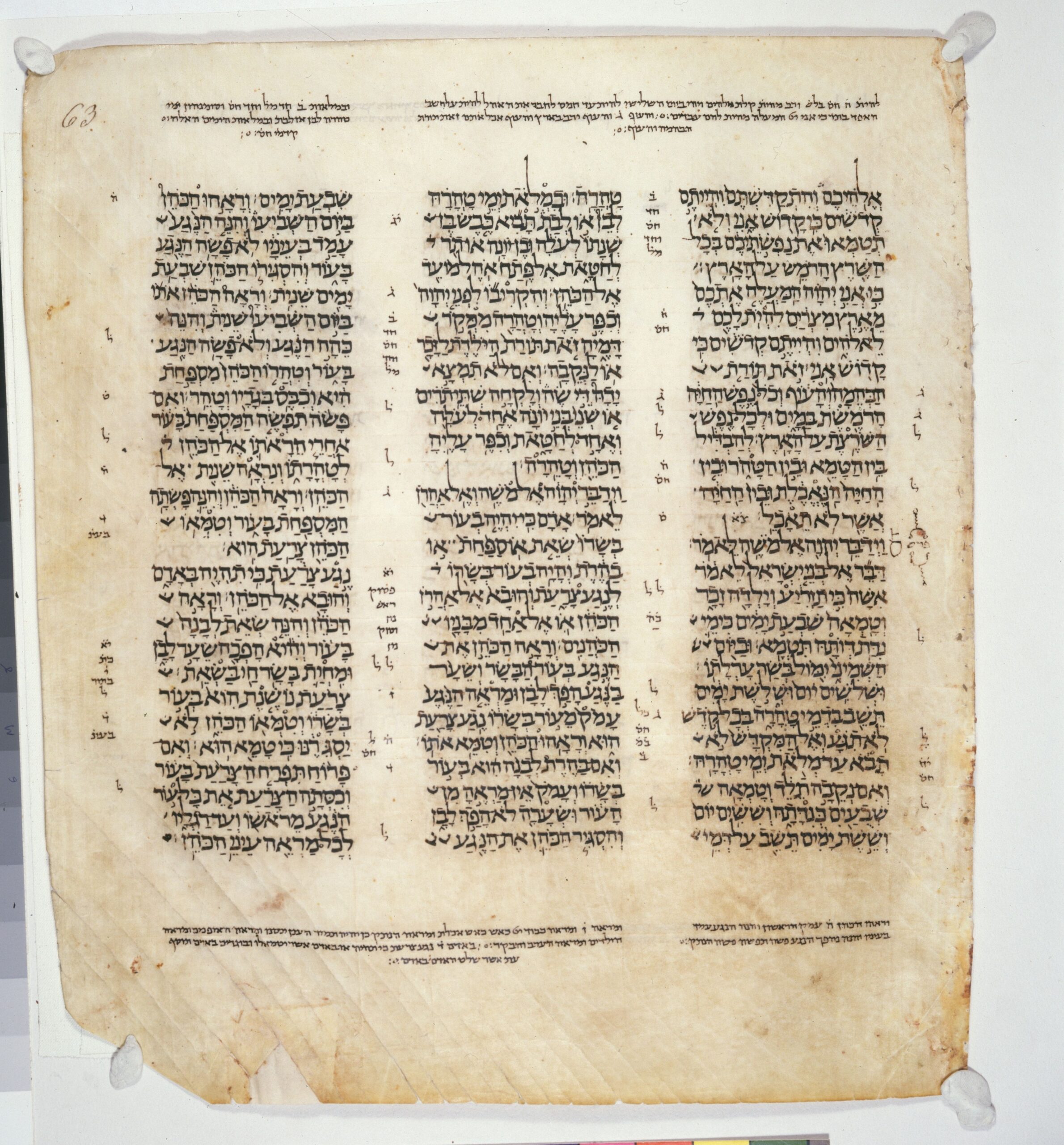
    Leningrad Codex, folio 63r, containing Leviticus 11:44–13:12 in Hebrew.
    Leningrad Codex, folio 63r, Leviticus 11:44–13:12, c. 1008–1011. Public-domain manuscript reproduction.

    Leviticus repeatedly teaches distinction.

    This may be eaten.

    This may not.

    This animal is clean.

    This one is not.

    This carcass may transmit impurity.

    This blood may not be eaten.

    Jewish interpreters have long asked why these distinctions exist, and their answers are not uniform. Some emphasize obedience even when the rationale is opaque; others connect the laws with holiness, separation, purity, or symbolic conduct. Modern scholarship likewise offers competing explanations rather than one universally accepted key.

    That uncertainty matters. GEOMYTHA should not pretend that the Torah secretly encoded a modern theory of consciousness.

    But the repeated act of distinguishing still gives us a legitimate comparative question:

    What do you allow to become part of you?

    Eating as incorporation

    Food crosses a boundary.

    Before eating, the thing is outside.

    After eating, it is metabolized into the living body.

    That is why food becomes such a useful image for mental and cultural intake.

    A thought can be encountered without being swallowed.

    An image can be seen without being adopted.

    A slogan can be heard without becoming identity.

    A crowd can move without carrying you with it.

    The GEOMYTHA reading begins here: not every encounter requires incorporation.

    This is not an argument that Leviticus secretly uses “unclean food” to mean “bad thoughts.” The text does not say that. GEOMYTHA is making a modern symbolic analogy from the action of eating.

    The pig: one sign is not enough

    Leviticus treats the pig as prohibited because it has a split hoof but does not chew the cud.

    The historical rule is concrete.

    GEOMYTHA can use the structure as a metaphor: one visible sign of fitness is not sufficient when the second criterion is missing.

    Something can look sorted on the outside and still fail the deeper test.

    A claim can have the right language but no reflection.

    An identity can display the right badge but never reconsider what it consumes.

    That is the useful symbolic move—not “the pig means greed,” and not a claim that ancient Israel encoded psychology into porcine anatomy.

    The mechanism is simpler:

    one criterion does not complete discernment.

    Fins and scales: movement and boundary

    Leviticus permits aquatic creatures with fins and scales.

    Again, the law comes first.

    GEOMYTHA then notices two visible functions.

    Fins help movement through water.

    Scales form a living surface.

    That gives us a useful pair: direction and boundary.

    In a symbolic reading, an emotional or social field can be thought of as water. The question then becomes:

    Can you move through the field?

    Can you remain bounded while moving through it?

    The point is not that fish biology was secretly designed to teach psychology. The point is that the visible structure makes a strong analogy available.

    Shellfish and the limit of wordplay

    Leviticus prohibits aquatic creatures without fins and scales. The English resemblance between shell and self is only a modern pun—not Hebrew, etymology, or historical interpretation.

    At most, the shell offers a secondary image: a boundary can protect life, or it can harden into enclosure. The useful contrast is boundary versus self-sealing, not “shellfish bad.”

    The carcass: form after life has left

    Leviticus also treats carcasses as a source of impurity in specific contexts. Even the carcass of an animal that may normally be eaten can transmit impurity when the animal dies on its own.

    That gives GEOMYTHA one of its clearest symbolic images.

    A carcass still has form.

    It still looks like the body.

    But the life that animated the form is gone.

    The modern analogy is dead identity: a role, belief, institution, image, or habit whose living relation has departed while the shell remains.

    We can keep consuming the old form because it is familiar.

    We can keep defending it because it once carried life.

    We can confuse preservation of the shape with preservation of what made the shape meaningful.

    The question becomes:

    Am I receiving something living, or eating the remains of an identity that has already died?

    Blood: life is not simply ours to consume

    Leviticus 17 gives blood a special status because the life of the flesh is identified with the blood, and the blood is assigned a role in atonement at the altar.

    Jewish commentators developed that point in different ways, but the text itself gives blood a meaning larger than ordinary food.

    GEOMYTHA can draw a restrained symbolic lesson from that boundary:

    Not everything that can be taken should be possessed.

    Some things participate in life without becoming private property.

    That does not turn the biblical blood prohibition into a modern theory of ownership. It simply gives us another image of incorporation meeting a limit.

    The danger of making symbolism replace Judaism

    This article would fail if it treated the dietary laws as obsolete rules whose “real meaning” is psychological.

    Symbolic interpretation itself is not new. The second-century BCE Letter of Aristeas, for example, gives moral allegories for dietary distinctions while still defending literal observance. That precedent shows that a symbolic reading can coexist with practice—but a later allegory is still a later interpretation, not proof of the law’s original intent.

    Kashrut remains a living Jewish practice.

    Jewish law and interpretation developed these biblical passages through centuries of halakhic reasoning far beyond the short list in Leviticus 11.

    GEOMYTHA is not correcting that tradition.

    It is using a second-order comparative method: first preserve the religious text and practice as themselves, then ask whether the underlying human action—eating, separating, incorporating, refusing—illuminates another domain.

    That order matters.

    The stress test: exclusion can become its own identity

    Discernment has a shadow.

    A system built around distinguishing what comes in can become obsessed with keeping things out.

    A person can turn healthy boundaries into purity theater.

    A community can turn discipline into superiority.

    A mind can reject unfamiliar information simply because it is unfamiliar.

    So the GEOMYTHA lesson cannot be “be more restrictive.”

    The deeper question is:

    Does the boundary protect living relation, or has the boundary become the identity?

    That is the same test we found with the shell.

    Do not eat the thought

    You do not have to ingest everything you encounter.

    You can hear an accusation without building a self from it.

    You can see an image without wanting what it sells.

    You can enter a crowd without surrendering discernment.

    You can receive an idea without immediately making it doctrine.

    You can also reject something without turning rejection into holiness.

    The practical movement is:

    Receive. Examine. Distinguish. Incorporate only what can remain alive in relation.

    Food law gives the body a discipline of intake.

    GEOMYTHA asks what a comparable discipline would look like for consciousness.

    Sources and further reading

    GEOMYTHA interpretation is comparative and symbolic. The biblical, Jewish, and scholarly sources above establish the underlying laws, interpretive traditions, and historical context. They do not establish GEOMYTHA’s psychological reading as the original meaning of Leviticus.

  • Radio Heart, Radio Head

    Radio Heart, Radio Head

    A radio does not become the station it receives.

    It tunes.

    That sounds obvious until we notice how often people do the opposite with themselves.

    A mood arrives and becomes “me.” A role repeats long enough and becomes “who I am.” A taste becomes a tribe. A feed becomes a worldview. A habit becomes a personality. The receiver keeps selecting signals until the selection starts feeling like identity.

    GEOMYTHA reads that as a problem of tuning mistaken for being.

    The receiver is not the station

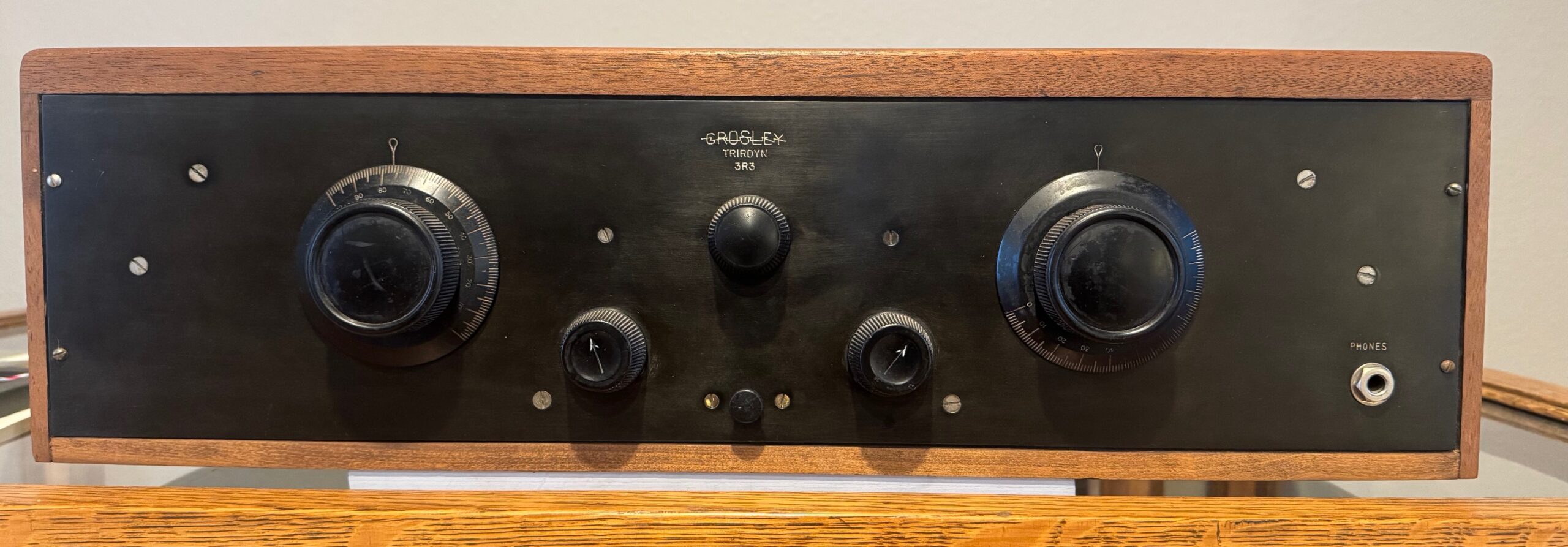
    Old radio receivers make the mechanism visible because their controls are exposed. A receiver contains circuitry designed to select among available signals. Historical tuned-radio-frequency sets even included controls for selectivity so neighboring stations could be separated.

    Front view of a Crosley 3R3 radio receiver from 1924, showing its tuning controls.
    Crosley 3R3 radio receiver, 1924. CC0 image via Wikimedia Commons.

    The useful action is selection.

    Turn the dial and one signal becomes audible while others recede.

    The mistake would be to imagine that the radio has become the station.

    That is the central mechanism of this article.

    Human identity often works the same way. We select, repeat, amplify, and stabilize certain patterns until the selected pattern feels like the whole field.

    Field, receiver, tuner, station

    The GEOMYTHA comparison can be kept simple:

    Field: many possible signals are available.

    Receiver: something can register what is present.

    Tuner: attention selects among possibilities.

    Station: a selected pattern becomes recognizable and repeatable.

    The sequence is useful because none of these parts is bad.

    A field with no selection gives you noise.

    A tuner that cannot select gives you no usable signal.

    A station that cannot hold a frequency cannot be recognized.

    Identity works for the same reason. We need enough continuity to answer a name, keep a promise, learn a craft, raise a child, hold a job, or return to a relationship tomorrow.

    The distortion begins when continuity is mistaken for totality.

    Radio heart, radio head

    The phrases Radiohead and iHeartRadio create a useful piece of wordplay for GEOMYTHA. The comparison is symbolic, not etymological and not a claim about either brand’s intended meaning.

    Within the GEOMYTHA reading, the heart can stand for reception in living relation: being affected, receiving, feeling, resonating.

    The head can stand for selection: naming, comparing, scanning, choosing, organizing.

    Both functions are necessary.

    The heart without discrimination can be overwhelmed.

    The head without reception can become a machine selecting among its own categories.

    The problem is not receiving and not tuning.

    The problem is forgetting that the station is selected.

    Personality as prolonged tuning

    Imagine that every morning you turn to the same station.

    At first it is preference.

    Then routine.

    Then familiarity.

    Then expectation.

    Eventually another station sounds wrong simply because it is not the one you usually hear.

    Personality can form this way.

    You become the funny one.

    The angry one.

    The responsible one.

    The fighter.

    The spiritual one.

    The skeptic.

    The victim.

    The expert.

    Each may describe something real. But repetition changes a description into a preset.

    Then the preset begins filtering what can be received.

    The person does not only express the identity. The identity starts deciding what counts as evidence.

    The station called “me”

    This is where identity becomes self-confirming.

    If I am “the one nobody respects,” I notice every slight faster than every gesture of respect.

    If I am “the competent one,” mistakes become threats to the station.

    If I am “the outsider,” belonging can feel suspicious.

    If I am “the strong one,” receiving help can sound like static.

    The station does not merely describe experience anymore.

    It edits experience.

    That is the GEOMYTHA move from tuning into identity: the selected signal begins acting as though it is the field itself.

    Modern platforms make the metaphor literal again

    Digital audio platforms are built around selection. iHeartRadio, for example, offers live stations, artist-based stations, favorites, recorded audio shows, and personalized listening across many devices. The user moves through a field of possible signals and selects what becomes audible.

    Social feeds perform a similar action visually and socially. Follow, mute, like, replay, skip, block, subscribe.

    Each action tunes the field.

    Again, tuning is not the problem. Selection is necessary.

    The question is whether the person still knows they are selecting.

    Once the chosen stream feels like “the world,” the tuner has disappeared from view.

    Boredom is not automatically presence

    There is an easy mistake here.

    If restless tuning can become compulsive, we might romanticize boredom and say that doing nothing automatically returns us to presence.

    It does not.

    Boredom can be openness.

    It can also be fatigue, withdrawal, frustration, under-stimulation, avoidance, or depression.

    Likewise, novelty is not automatically fragmentation. Scanning can be useful. Curiosity can open a closed system. Changing the station can be exactly what is needed.

    The stress test is therefore not “stillness good, stimulation bad.”

    It is simpler:

    Can you tune without becoming the station?

    Rock and roll

    GEOMYTHA sometimes uses rock and roll as another symbolic pair.

    Rock suggests enough stability for a signal to hold.

    Roll suggests movement, scanning, transition, retuning.

    Neither function is complete by itself.

    Only rock becomes rigidity.

    Only roll becomes endless switching.

    A living system needs both the ability to stabilize and the ability to move.

    The same is true of identity.

    The practical return

    You do not need to erase your personality.

    You do not need to become nobody.

    You do not need to stop preferring certain music, people, roles, beliefs, or ways of living.

    The useful move is simply to remember the difference between the receiver and the station.

    When a familiar reaction appears, ask:

    Is this what is here?

    Or is this what I am tuned to hear?

    When a role feels absolute, ask:

    Is this a function I am carrying?

    Or have I started calling the function my whole self?

    When the signal changes, notice whether you can change with it.

    Tune. Listen. Use the station. Do not mistake it for the whole field.

    Sources and further reading

    GEOMYTHA interpretation is symbolic and comparative. The technical and platform sources establish how radio receivers and listening platforms work; they do not establish the GEOMYTHA framework or imply that Radiohead or iHeartRadio intended these symbolic correspondences.

  • Why Horus Does Not Kill Set

    Why Horus Does Not Kill Set

    Paid essay — public preview. This page introduces the original essay. The complete argument, examples, and conclusion are available to paid Geomytha subscribers on Substack.

    Many myths end with the destruction of the enemy.

    The dragon dies.

    The monster falls.

    Chaos is defeated.

    Order triumphs.

    The story ends.

    But Egypt tells a stranger story.

    Horus fights Set.

    Again and again.

    They contend.

    They accuse.

    They wound one another.

    They compete.

    They stand before tribunals.

    They race boats made of stone.

    They struggle in ways that are sometimes profound and sometimes absurd.

    And yet one fact remains astonishing.

    Horus does not kill Set.

    Set survives.

    Why?

    Because perhaps the enemy was never meant to be destroyed.

    Perhaps the enemy was meant to remember.

    Horus and Set are often misunderstood as good and evil.

    But Egypt preserves a much subtler vision.

    Set protects Ra against Apophis.

    Set…

    Read the complete essay on Substack →

    This WordPress page preserves the essay’s place in the Geomytha archive, its original title and subtitle, and its publication date. The full subscriber edition remains protected on Substack.

  • What Is and What Should Never Be

    What Is and What Should Never Be

    There is a difference between seeing another possibility and demanding that reality become it.

    You can feel that difference in ordinary life. You are driving home and imagine taking a different road. Useful. You are planning a trip and picture three ways the day could go. Useful. You make a mistake and think about what you could do differently next time. Also useful.

    Then imagination can harden.

    The thought changes from this could be different to this should not be happening. The alternative stops helping you respond to reality and starts competing with reality for authority.

    GEOMYTHA calls that shift the building of a Should World.

    “What is” and “what should be” are not the same kind of thing

    The title of this piece borrows a phrase from Led Zeppelin’s “What Is and What Should Never Be.” The official Led Zeppelin discography lists the song on Led Zeppelin II. GEOMYTHA is using the title as a useful contrast in language, not as a claim about what the band intended the song to mean.

    What is points to actuality: this happened, this is here, this is the condition in front of me.

    What should be introduces an alternative.

    That alternative may be wise. It may be moral. It may be necessary. It may tell you what to repair, prevent, build, or refuse.

    But it is still an imagined arrangement compared against the one that exists.

    The trouble begins when the alternative stops serving action and begins demanding enthronement.

    The mind says:

    This conversation should not have gone this way.
    This person should understand me.
    I should already be somewhere else.
    The past should have happened differently.
    Tomorrow should prove that I was right.

    At that point, thought is no longer simply describing a better possibility. It is building a second world and judging the first world from inside it.

    Hamlet lives inside the split

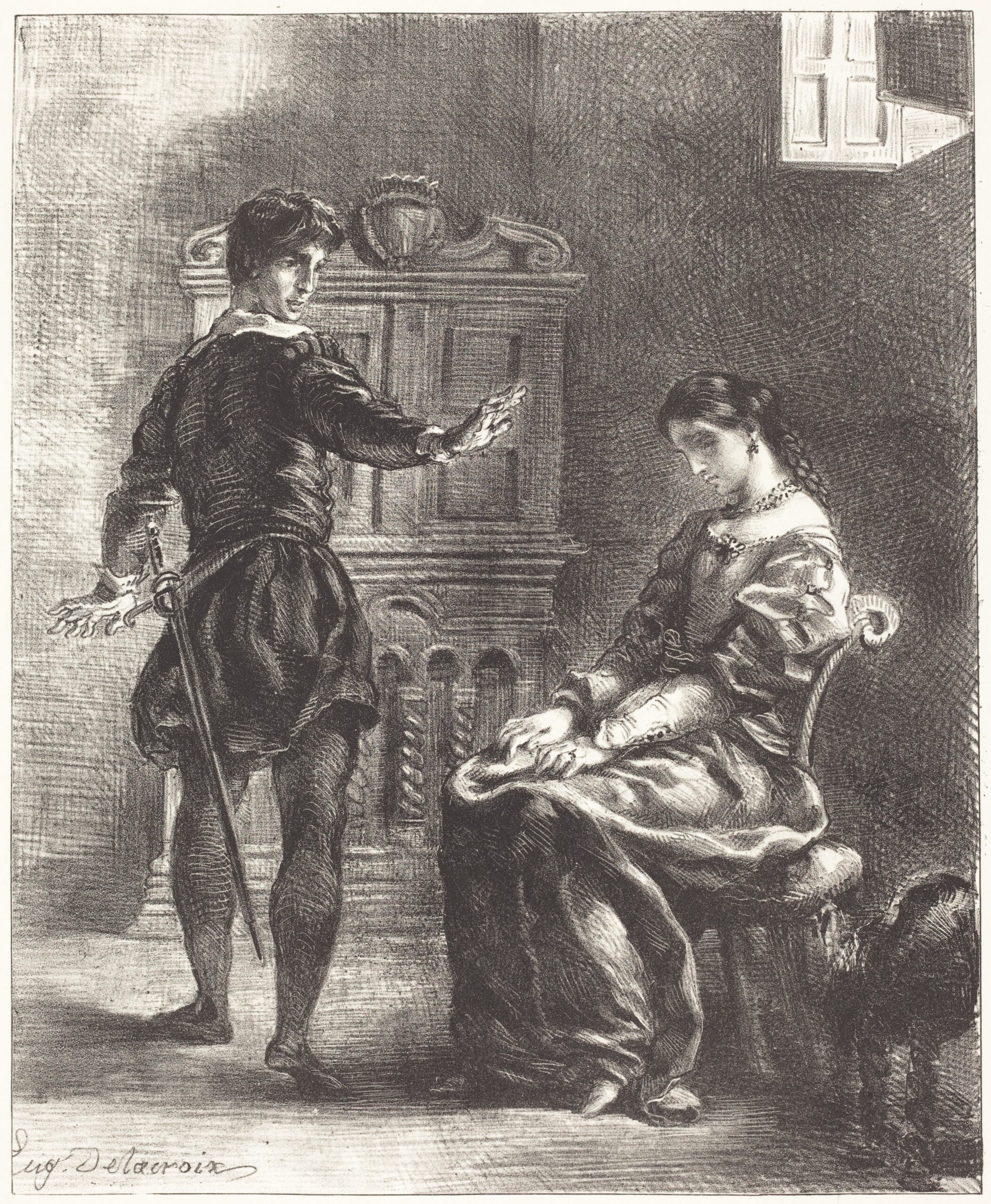
    Eugène Delacroix, Hamlet and Ophelia (Act III, Scene I), National Gallery of Art.
    Eugène Delacroix, Hamlet and Ophelia (Act III, Scene I), 1834/1843. National Gallery of Art. Public domain.

    Shakespeare gives us one of the clearest dramatic pictures of this split in Hamlet.

    In Act 3, Scene 1, Hamlet asks whether it is better to endure suffering or oppose it, and whether death might end the conflict. The speech is not a simple lesson about “overthinking.” It is a serious confrontation with pain, action, consequence, death, and uncertainty.

    But it also shows consciousness dividing actuality into alternatives.

    Be.

    Not be.

    Endure.

    Resist.

    Act.

    Wait.

    Thought creates branches faster than action can inhabit them.

    That does not make thought the enemy. Hamlet’s problem is not that he can imagine alternatives. Human beings need that ability. The deeper problem is what happens when the alternative world becomes so elaborate that the present becomes only a courtroom where imagined worlds prosecute it.

    Counterfactual thought is useful

    This is where the stress test matters.

    Psychology has a name for one part of this process: counterfactual thinking—imagining how events could have happened differently. Research does not treat this capacity as inherently pathological. Counterfactual thought helps people learn from outcomes, prepare for future situations, make decisions, understand causation, and experience emotions such as regret and relief.

    That matters because GEOMYTHA should not turn “accept what is” into passivity.

    If you missed a flight because you left late, imagining an earlier departure may help tomorrow.

    If a bridge is unsafe, “it should be repaired” can become engineering, law, funding, and action.

    If someone is being harmed, moral judgment requires the ability to say that the present condition ought to change.

    The problem is not the word should.

    The problem is when the imagined alternative becomes a substitute world that consumes the energy needed to meet the actual one.

    Functional imagination versus possessive imagination

    GEOMYTHA can make this distinction simply.

    Functional imagination looks at reality and asks: what can I do from here?

    Possessive imagination builds an alternative and asks: why has reality not obeyed me?

    The first returns to action.

    The second keeps returning to the image.

    Imagine standing at the shore with a sailboat. You picture the route before you leave. That picture is useful because it serves the voyage. You check the wind, change course, and update the plan.

    Now imagine refusing to change course because the wind was “supposed” to blow from the west.

    The map has become more important than the sea.

    The plan has stopped serving reality and started demanding that reality serve the plan.

    That is the Should World.

    The castle in tomorrow

    There is another version that looks positive.

    You build a castle in tomorrow.

    When I get the job, then I will be secure.
    When the relationship changes, then I will be whole.
    When the money arrives, then I can begin.
    When people finally see what I see, then everything will settle.

    Planning can be intelligent. Goals can organize action. Hope can keep a person moving through difficulty.

    But a future image becomes dangerous when the present is treated only as an obstacle standing between the self and the imagined world.

    Then tomorrow is no longer a direction.

    It is a competing reality.

    The person begins living in relation to a place that does not yet exist.

    Rock and roll as a symbolic contrast

    GEOMYTHA has sometimes used rock and roll as symbolic verbs.

    Rock can suggest steadiness, a place where reflection can rest long enough to become clear.

    Roll can suggest motion, transition, becoming.

    Neither is good or bad by itself.

    A rock that never moves becomes rigidity.

    A roll that never stops becomes compulsion.

    The healthy movement is not “never imagine” and not “always accept.” It is the ability to move between stability and possibility without confusing possibility for actuality.

    That is why the Led Zeppelin title is useful here even without assigning the band a GEOMYTHA intention. The phrase itself places two verbal worlds beside one another: what is and what should never be.

    The tension is enough.

    Pain is not created by incorrect thinking

    Another boundary matters.

    Some suffering comes from resistance to reality.

    Some suffering comes from reality.

    Grief hurts because someone is gone. Injury hurts because tissue is damaged. Betrayal hurts because trust was broken. Poverty, violence, illness, injustice, and loss are not erased by changing grammar.

    A person should not be told that pain exists merely because they are attached to a “should.”

    The useful question is narrower:

    How much additional suffering is being created by fighting the fact that the event has already entered reality?

    Accepting that something happened is not approving it.

    Seeing what is does not mean refusing to change what comes next.

    It means beginning from the ground that actually exists.

    The GEOMYTHA movement

    In GEOMYTHA terms, the Should World begins when imagination moves from reflection into claim.

    A possibility appears.

    The mind reflects it.

    Then the claimant says: this is how reality must be.

    The alternative hardens.

    Identity organizes around defending it.

    Now every event is measured against the imagined arrangement.

    This is the movement from Is → Am → I without returning to Is.

    The correction is not to destroy imagination. It is to let imagination report back to reality.

    I → Am → Is.

    What am I imagining?

    What does that image reveal?

    What is actually here?

    What action is possible from here?

    Use the alternative, then come back

    The future matters.

    Standards matter.

    Moral judgment matters.

    Planning matters.

    Regret can teach.

    Hope can orient.

    But none of them can replace the ground beneath your feet.

    The practical move is not “stop saying should.” It is:

    Notice when should stops giving you a direction and starts giving you a second world.

    Use the alternative.

    Learn from it.

    Choose from it.

    Then return.

    What is?

    What can be done now?

    Sources and further reading

    GEOMYTHA interpretation is comparative and symbolic. The sources above establish the literary work, song title, research on counterfactual thought, and artwork provenance. They do not establish the GEOMYTHA reading as Shakespeare’s, Led Zeppelin’s, or the researchers’ intended framework.

  • How to Read the Verb Beneath the Myth

    How to Read the Verb Beneath the Myth

    Before asking what a mythic figure represents, ask what the figure does.

    Jacob enters his story holding his brother’s heel. Prometheus crosses a boundary and takes fire. Macbeth takes a crown.

    These are not the same stories. They do not prove a common historical origin, and their characters are not interchangeable. But something underneath them can still rhyme.

    The figure is the costume. The verb is the mechanism.

    That is one of the simplest ways into GEOMYTHA.

    Start with the smaller question

    Symbolic reading usually begins too high up. We ask what a serpent “really means,” what a king “stands for,” or which god secretly corresponds to which character.

    Start lower.

    What is happening?

    What is the decisive action?

    Hold. Reflect. Grab. Steal. Seize. Name. Become. Crown.

    When you read the action before the character, myth begins to look less like a warehouse of unrelated symbols and more like a grammar. GEOMYTHA organizes that grammar around four broad movements: field, reflect, claim, identity. In its simplest internal language: Is, Am, I, This.

    These are not four separate beings. They are four movements through which something can appear, become legible, be taken hold of, and finally stabilize as a recognizable form.

    Field: what allows something to appear?

    Before anything can be claimed, named, or turned into identity, something has to hold the possibility of it.

    GEOMYTHA calls that movement field.

    In Egyptian myth, Isis and Nephthys revive Osiris after his murder, and Horus follows from that restored relation. The Metropolitan Museum of Art summarizes this cycle as Isis and Nephthys reviving Osiris through magic before Osiris continues as ruler of the afterlife. GEOMYTHA does not treat that museum account as proof of its own system. It uses the story as an image of a function: scattered pieces are brought back into relation before a new form can emerge.

    A field, in this sense, is not merely empty space. It is the condition that allows a pattern to appear.

    The reading rule is simple: before asking what something is called, ask what allows it to appear at all.

    Reflect: what makes the pattern legible?

    Once something appears within a field, it can be reflected.

    Reflection is not just copying. It is the movement by which something becomes readable in another form.

    A mirror does this visually. Language does it conceptually. A map does it spatially. A myth does it narratively.

    But reflection contains a danger. The image can become more important than what it reveals. The word can become more important than what it names. The map can become more authoritative than the territory.

    So reflection is not the enemy. Reflection is necessary. The question is whether the image remains transparent to what it reflects.

    Claim: when does relation become grasp?

    Then something changes. Reflection becomes claim.

    Genesis gives Jacob a striking sequence. He is born holding Esau’s heel. Later, Esau sells him the birthright. Later still, Jacob receives Isaac’s blessing while presenting himself as Esau. The text itself is more complicated than a single moral label, but the repeated physical and social motion is visible: relation becomes grasp, transfer, possession.

    Prometheus gives us a different version of the movement. In Hesiod’s Works and Days, Zeus withholds fire and Prometheus steals it back for human beings. Depending on the frame, that act can be read as theft, liberation, civilization, defiance, or gift.

    The moral meaning changes. The motion remains visible.

    Something that was there becomes something taken.

    This is why GEOMYTHA compares verbs without claiming that Jacob and Prometheus are “the same figure.” Grabbing a heel is not stealing divine fire. Selling a birthright is not taking a throne. But grab, take, seize, and possess belong to a recognizable family of actions.

    The useful question is not “Which character secretly equals which?” It is: when does participation become possession?

    Identity: when the claim becomes a form

    A claim can pass. Identity stabilizes it.

    This is useful. A doctor needs to be able to say, “I am the doctor.” A parent has continuing responsibility. A craft needs names. A society needs roles.

    The problem begins when the form carrying the pattern starts pretending to be the entire field.

    Macbeth makes the mechanism easy to see. Before Macbeth is king, the crown is an object of desire. After he becomes king, keeping the crown reorganizes his perception. Banquo becomes a threat. Succession becomes a threat. The title that promised completion produces a new problem: it must now be defended.

    In Act 3, Macbeth says that being king is not enough unless he can be king safely. That is the shift. The possession no longer sits quietly in his hand. His world begins reorganizing around maintaining it.

    The thing he possesses begins possessing him.

    Wilhelm Lehmbruck, Macbeth III, 1918, The Metropolitan Museum of Art.
    Wilhelm Lehmbruck, Macbeth III, 1918. The Metropolitan Museum of Art. Public domain.

    Identity therefore has a real function: it stabilizes continuity. The mistake is turning the useful statement “this is the form carrying the pattern now” into the absolute statement “this form is all.”

    The stress test: the same verb does not mean the same story

    This method fails if every similarity becomes proof.

    Two figures can perform the same verb for completely different reasons. The same verb can liberate in one story and destroy in another. The same symbol can perform different functions from one scene to the next.

    Prometheus taking fire does not establish that every act of taking is Promethean. Jacob’s heel-grab does not prove that every rival pair derives from Genesis. Macbeth’s crown does not make every king a Macbeth.

    Functional similarity gives us a place to begin looking. It does not establish historical transmission, authorial intent, or a secret universal code.

    That distinction matters because GEOMYTHA becomes weaker, not stronger, when analogy is asked to do the work of evidence.

    Read the verb

    The next time a story gives you a serpent, a king, a thief, a mother, a mirror, a crown, or a forbidden fire, resist the urge to decide immediately what the object “really means.”

    Watch what happens.

    Who holds?

    Who reflects?

    Who takes?

    Who becomes?

    Read the verb. Locate the function. Then test what the transformation does.

    The figure is the costume. The verb is the mechanism.

    Sources and further reading

    GEOMYTHA interpretation is comparative and symbolic. The historical and literary sources above establish the underlying stories and texts; they do not establish GEOMYTHA’s interpretive framework as the intent of their creators.