The seed is in the soil.
The bowl has received.
The hand has opened.
The hollow did not get filled by panic.
Something real has entered.
And nothing looks different.
That is where the claimantSetIn Geomytha, Set names the claimant: I — the interruption by which reflection is taken as mine and converted toward ownership.Read full entry → begins to worry.
It looks at the ground and says:
Where is the proof?
Where is the sprout?
Where is the new life I was promised?
Where is the evidence that this beginning was worth it?
That is the danger after the first true gathering. The beginning has begun, but it has not yet become visible. The seed is alive, but it has not become a tree. The first movement is real, but it has not become achievement.
This is where many new things die.
Not because they were false.
Because they were forced to prove themselves too soon.
At this timestamp, the deterministic calendar still places the essay in New Moon / Gather. That timing sharpens the image: the beginning is real, but its first movement remains mostly hidden. It is not harvest. It is not display. It is not mastery. It is not the full plan. It is not the public identityThis — IdentityThis names the formed identity: the body, role, image, wound, belief, or story claimed as what the self is.Read full entry → of transformation.
It is the first quiet motion under the surface.
A pulse.
A reach.
A slight pressure in the dark.
The beginning has moved, but it has not yet arrived as form.
That is why the first stir must be protected.
The ego does not like hidden life. It wants visible life. It wants proof. It wants metrics. It wants the seed to report progress. It wants the first week of the new practice to become evidence that the self has finally changed.
But life does not begin by satisfying the claimant.
Life begins by rooting.
The seed is not the tree yet.
That sounds obvious until the self is the one waiting.
Then the obvious thing becomes unbearable.
In Geomytha, the false self forms through a simple grammar: Is, Am, I, This.
Is is awareness before claimI — ClaimI names claim: the interruption by which reflected presence is taken as mine.Read full entry →.
Am is reflected presenceAm — ReflectionAm names reflected presence: awareness embodied or mirrored without yet becoming ownership.Read full entry →.
I is the claimant that interrupts the current.
This is the identity that hardens after the claim.
The false-self sentenceThe False-Self Sentence — I Am ThisThe false-self sentence forms when claim joins reflection to a fixed object of identity: I am this.Read full entry → is:
I am this.
At the beginning of a cycle, the claimant wants to attach that sentence to the first sign of life.
I am this new practice.
I am this recovery.
I am this discipline.
I am this healing.
I am this new relationship.
I am this person who has started over.
But the first living thing cannot survive that much identity.
It is too small.
It needs warmth before witness.
Water before explanation.
Rhythm before proof.
Protection before display.
A beginning does not need pressure.
It needs conditions.
Taurus understands this better than the mind does.
Taurus knows soil. It knows body. It knows food, weight, warmth, patience, and repetition. It knows that a thing becomes real by being tended, not by being announced. It knows that roots come before height.
A seed does not care about your timeline.
A starter does not care about your ambition.
A newborn animal does not care about your productivity plan.
A candle flame does not care about your announcement.
If the wind is too strong, it goes out.
If the soil is too dry, it dies.
If the hand keeps digging it up to see whether it is growing, the root breaks.
That is the cruelty of premature proof.
It pretends to be care, but it is often anxiety with a measuring stick.
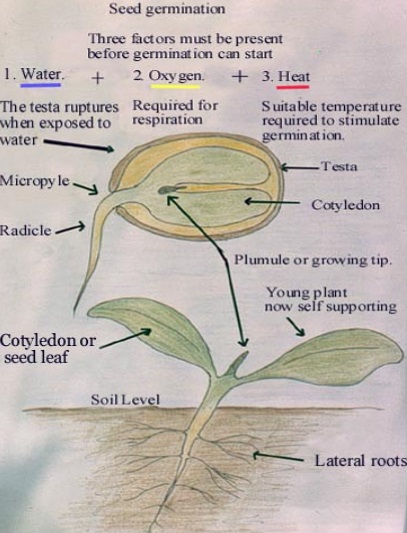
The seed underground is the central image.
A seed begins by breaking.
That crack is not failure. It is the first consent to growth. The shell opens. The hidden life inside begins to push downward and upward. Root and shoot separate. A tiny intelligence begins its work in darkness.
From above, nothing appears to be happening.
The ground looks the same.
No leaf.
No stem.
No flower.
No fruit.
No visible reward.
Only soil.
But underneath, the first real violence of life is occurring: the seed is surrendering its sealed form.
The seed breaks before it rises.
That is a hard teaching.
Most people want growth without cracking. They want change without the first unmaking. They want the new life to appear as improvement, not rupture. But the seed does not become itself by remaining intact.
It breaks open.
Quietly.
Hiddenly.
Without applause.
This is why the first stir must not be judged by appearance. If you demand visible fruit while the seed is still breaking, you will call the most important moment a failure.
The ground is not empty.
It is concealing the work.
The Little Prince’s rose gives the emotional version.
The roseThe Rose — The Little PrinceThe Little Prince cares for a particular rose and comes to understand her as unique through the time and attention he has given her. Official Little Prince materials emphasize watering, protecting, attending…Read full entry → is not important because it is objectively the greatest rose in the universe. There are other roses. Many roses. A whole garden of roses. The shock of that discovery is part of the story. The beloved thing is not unique because no other thing resembles it.
It becomes unique because it has been tended.
Watered.
Protected.
Listened to.
Returned to.
Worried over.
Waited with.
The rose becomes meaningful through attention and responsibility.
But here too there is danger.
Care can become possession.
The claimant can say:
This is my rose.
Then care hardens into ownership. Responsibility becomes control. Tenderness becomes identity. The living thing becomes another This.
That is not love.
That is the claimant wrapping itself around a fragile life and calling the grip devotion.
The rose teaches a better distinction.
What you tend becomes meaningful.
What you possess becomes heavy.
The first seed after surrender must be tended like the rose, but not owned like a trophy. A new practice, a new love, a new discipline, a new truth, a new silence, a new body-rhythm — all of theseThese — AccumulationThese names accumulation: possessions, titles, achievements, beliefs, communities, and other extensions gathered around identity.Read full entry → become real through time and returnReturn — RemembranceReturn names remembrance and release: the loosening of possession so reflection can become transparent to source again.Read full entry →.
Not through possession.
Not through public proof.
Not through making them serve the self-image.
The rose does not need to become a crown.
It needs care.
The mustard seed gives the scale.
Smallness is not evidence of failure.
Some beginnings are small because they carry concentrated life.
The ego despises smallness because smallness cannot crown it yet. It cannot stand before others and say, look at my enormous transformation. It cannot turn the first quiet movement into reputation. It cannot wear a seed like a throne.
But the seed is not weak because it is small.
It is compressed.
It carries more than it shows.
That is why the claimant often misses real beginnings. It looks for the large, dramatic, emotionally intense thing. It expects a sign big enough to flatter the self that found it. But life often begins below the threshold of spectacle.
One honest sentence.
One day without the old habit.
One meal eaten without turning it into control.
One walk.
One page.
One breath completed.
One apology.
One boundary kept.
One small act of not checking.
One evening where the phone stays down.
One moment where the claimant almost forms, and then does not.
The ego wants size.
Life often begins as concentration.
That is why the first stir must be honored without being inflated. Do not make the mustard seed pretend to be a forest. Do not despise it because it is small. Do not worship it because it is symbolic.
Plant it.
Water it.
Leave it alone long enough to become what it is.
A sourdough starter gives the domestic Taurus version.
A starter is alive, but it is not bread yet.
It needs feeding. It needs warmth. It needs rhythm. It needs time. It needs attention that is regular but not hysterical. Ignore it completely, and it weakens. Fuss over it constantly, and you still cannot force it to rise before its time.
That is the balance.
Patience is not neglect.
Tending is not control.
This is exactly the discipline of late New Moon / Gather. The living thing has begun, but it requires humble repetition before visible proof. Feed the living thing. Do the small act again. Return at the right time. Do not demand that the starter become a loaf because your identity is hungry.
There is something almost comic about this.
The self wants revelationRevelation — Book of RevelationThe final book of the Christian New Testament, also called the Apocalypse of John.Read full entry →.
The starter wants flour and water.
The self wants proof.
The starter wants time.
The self wants to become someone.
The starter wants a warm place on the counter.
This is why ordinary images are often more spiritually exact than grand ones. They expose the claimant’s impatience. They bring the cosmic drama down to a kitchen, a bowl, a jar, a spoon, a little bubbling life that cannot be bullied into maturity.
A living beginning needs feeding, not force.
The candle flame adds the final warning.
A new flame is real even if it is small. It gives light. It gives warmth. It has crossed the threshold from unlit to lit.
But it is still vulnerable.
A careless breath can kill it.
A sudden wind can kill it.
A hand moving too quickly can kill it.
Not everything alive is ready to be shown.
That line matters in an age where every beginning is tempted toward public display. The first day of change becomes a post. The first week of recovery becomes an identity. The first spiritual insight becomes a thread. The first fragile practice becomes a declaration. The candle has barely caught, and already the self carries it into the wind to prove it exists.
Then it goes out.
And the claimant calls the flame false.
But maybe the flame was real.
Maybe it was only unprotected.
This happens constantly.
Someone begins writing.
Someone begins walking.
Someone begins praying.
Someone begins saving.
Someone begins eating differently.
Someone begins resting.
Someone begins telling the truth.
Someone begins leaving the old wound alone.
Someone begins learning how not to react.
Someone begins loving without performing.
And almost immediately, the claimant asks:
What does this say about me?
Can I measure it?
Can I post it?
Can I explain it?
Can I make it a plan?
Can I make it proof?
Can I make it identity?
Can I turn this first stir into evidence that I am now different?
That is how hope becomes pressure.
That is how a seed becomes a burden before it becomes a plant.
That is how the first movement is killed by the demand that it become evidence.
Modern productivity culture intensifies this. Nothing is allowed to begin quietly. Every movement must be tracked, optimized, named, scheduled, measured, shared, monetized, improved, and justified. A walk becomes step data. Prayer becomes a streak. Writing becomes content. Rest becomes a routine. Healing becomes a brand. Sobriety becomes public identity before the body has stabilized. Love becomes announcement before trust has roots.
Some tracking helps.
Some structure helps.
Some public accountability helps.
But there is a difference between supporting life and extracting proof from it.
The first stir cannot carry a full identity.
It is too young.
It should not be asked to answer for the entire future.
The first week of a new habit does not need to prove you are disciplined forever.
The first honest conversation does not need to prove the whole relationship is healed.
The first saved dollar does not need to prove financial rebirth.
The first clean meal does not need to prove bodily purity.
The first prayer does not need to prove holiness.
The first page does not need to prove you are a writer.
The first breath does not need to prove you are awake.
Let the first movement be first movement.
That is the mercy.
New Moon here is Receive, but receiving is not pressure.
Hope is not the demand that the future justify the present.
Hope is the willingness to protect what has barely begun.
That kind of hope is quiet. It does not yell at the seed. It does not threaten the sprout. It does not keep pulling back the soil to check for roots. It does not confuse patience with failure.
It stays near.
It waters.
It warms.
It waits.
This is where the breath practice belongs.
Before measuring the new beginning:
Inhale: Am.
Exhale: Is.
Before announcing it:
Inhale: Am.
Exhale: Is.
Before checking whether it has made you different yet:
Inhale: Am.
Exhale: Is.
Before turning the practice into identity:
Inhale: Am.
Exhale: Is.
Then ask:
Am I tending this?
Or claiming it?
Am I protecting life?
Or demanding proof?
Am I feeding the beginning?
Or forcing it to perform?
Can this remain small long enough to root?
ThoseThose — ProjectionThose names projection: enemies, outsiders, competitors, threats, and disowned qualities placed beyond the identity boundary.Read full entry → questions are more useful than a grand vow.
For the first few days of a true beginning, keep it simple.
Do it quietly.
Keep it small.
Repeat it once.
Feed it.
Do not overexplain it.
Do not build a public self around it.
Do not demand that it make you new immediately.
Let the first movement live before the claimant makes it perform.
This is not weakness.
It is protection.
The first stir is not fragile because it is false. It is fragile because all living things begin in vulnerability. A seed, a child, a flame, a practice, a trust, a sentence, a love, a sobriety, a faith, a body returning from exhaustion — none of these become strong by being thrown immediately into the weather.
They become strong by being protected until they can meet the weather honestly.
There will be a time for Form.
There will be a time for structure.
There will be a time for stronger boundaries, sharper decisions, visible commitments, and outer shape.
But this is not that moment yet.
This is Stir.
The first reach.
The small pressure beneath the soil.
The candle cupped between two hands.
The rose watered without being owned.
The starter fed without being rushed.
The mustard seed trusted without being inflated.
Nothing needs to be crowned yet.
The seed is in the ground.
The flame is lit.
The rose has been watered.
The starter has been fed.
The first practice has been done once.
Let that be enough.
The tree will come later.
Protect the first stir.