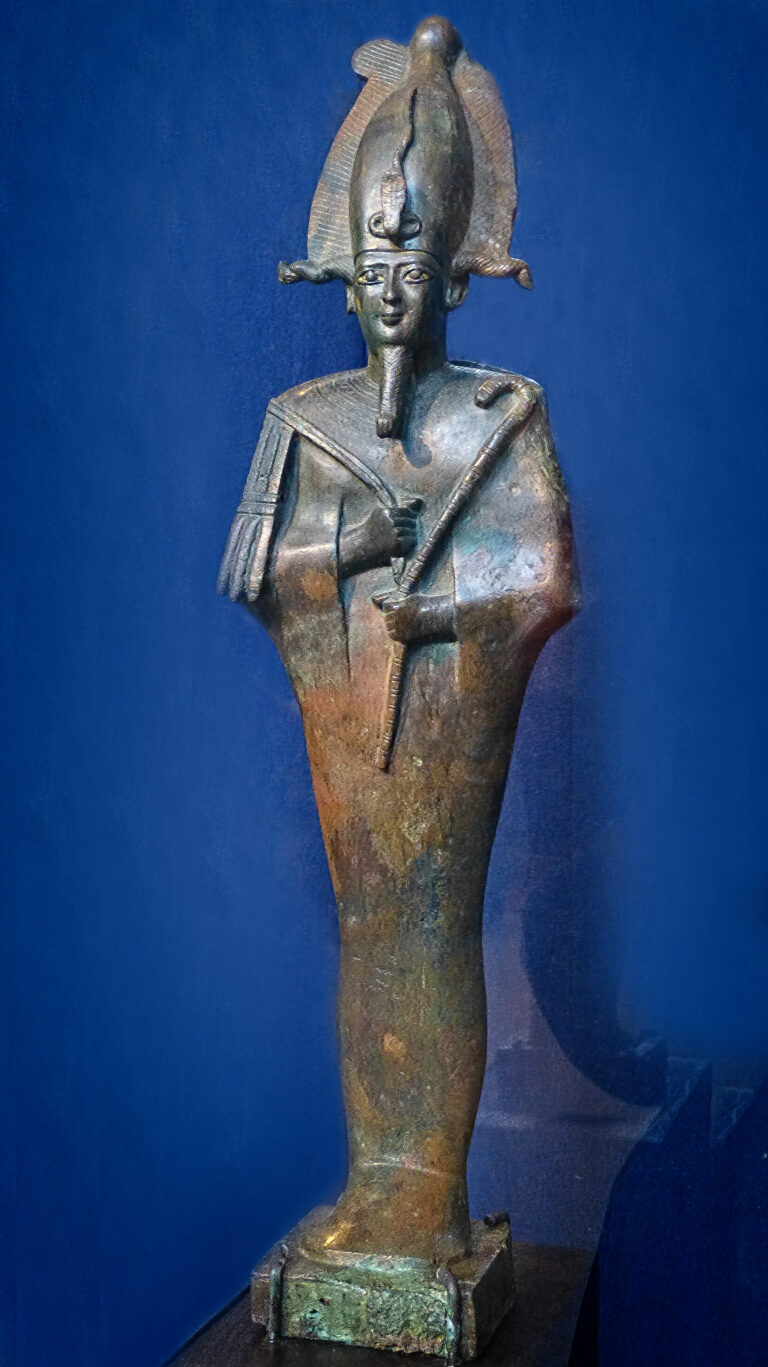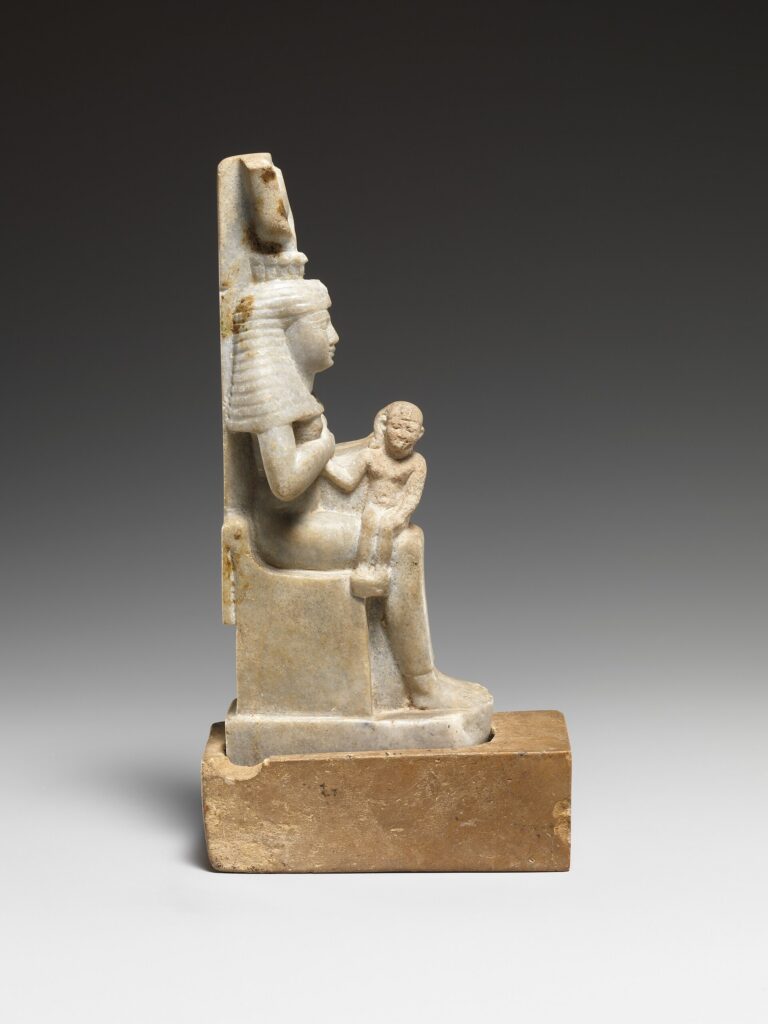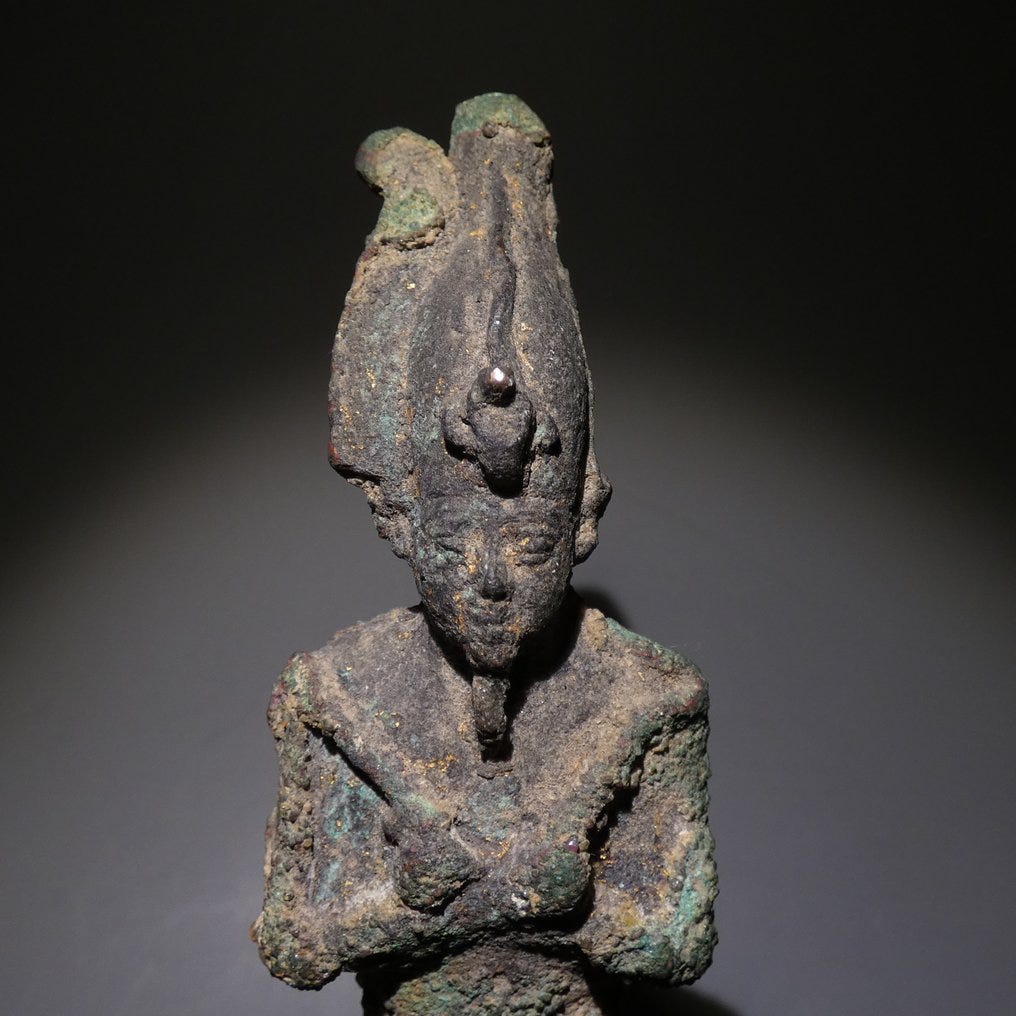
Most people remember only one thing about OsirisOsirisIn Geomytha, Osiris names reflected presence: Am — awareness reflected as living consciousness without yet becoming ownership.Read full entry →.
He is murdered by SetSetIn Geomytha, Set names the claimant: I — the interruption by which reflection is taken as mine and converted toward ownership.Read full entry →, cut into fourteen pieces, scattered across the land, and painstakingly gathered again by IsisIsisIn Geomytha, Isis names the unclaimed field: Is — pure being, awareness before possession, and the ground before the claimant appears.Read full entry →.
The story is so familiar that the number often passes unnoticed. Yet the more closely one examines the myth, the stranger it becomes.
Why fourteen?
Why not ten?
Why not twelve?
Why not thirteen?
The remarkable thing is that Egyptian tradition preserves the number of pieces far more carefully than it preserves the identityThis — IdentityThis names the formed identity: the body, role, image, wound, belief, or story claimed as what the self is.Read full entry → of the pieces themselves. There is no universally agreed list. The myth remembers the fragmentationDismemberment / FragmentationDismemberment names the symbolic breaking of a previously integrated reflection into separate parts, roles, objects, or powers.Read full entry →. It remembers the gathering. It remembers the number.
The number seems to matter more than the anatomy.
That raises an uncomfortable possibility.
Perhaps the story was never primarily about a body.
Perhaps it was always about something else.
The first clue is the moon.
Throughout Egyptian religion, Osiris is repeatedly associated with death and returnReturn — RemembranceReturn names remembrance and release: the loosening of possession so reflection can become transparent to source again.Read full entry →, disappearance and reappearance, loss and restoration. TheseThese — AccumulationThese names accumulation: possessions, titles, achievements, beliefs, communities, and other extensions gathered around identity.Read full entry → same rhythms are visible every month above our heads. The moon grows toward fullness, diminishes toward darkness, vanishes, and returns.
A lunar month is roughly twenty-eight days.
Fourteen days carry the moon from darkness toward fullness.
Fourteen days carry it back again.
Suddenly the number no longer feels arbitrary.
The moon itself appears to be divided into fourteen visible stages of increase and fourteen visible stages of decrease. What appears whole becomes fragmented. What appears fragmented becomes whole again.
The sky reenacts the Osiris myth every month.
Yet the lunar connection only deepens the mystery.
Why would the Egyptians choose the moon to symbolize Osiris in the first place?
The usual answer is fertility, agriculture, or seasonal cycles. ThoseThose — ProjectionThose names projection: enemies, outsiders, competitors, threats, and disowned qualities placed beyond the identity boundary.Read full entry → explanations are true as far as they go, but they do not go far enough.
The deeper answer may be reflectionAm — ReflectionAm names reflected presence: awareness embodied or mirrored without yet becoming ownership.Read full entry →.
The moon produces no light of its own.
Everything visible upon its surface is borrowed radiance.
The moon shines only because something else shines first.
It is reflection made visible.
This is where the myth begins to reveal a different layer.
A sourceIs — SourceIs names unclaimed being: awareness before possession, distinction, or identity.Read full entry → is one.
A reflection is many.
One face can appear in a thousand mirrors.
One moon can appear in a thousand lakes.
One landscape can appear in a thousand droplets of water.
Reflection naturally multiplies what source does not.
The moon therefore becomes the perfect symbol for reflected consciousness.
Not source itself.
Not identity.
Reflection.
The Egyptian drama can be read through the same pattern.
Isis is the hidden field.
Osiris is the reflection of that field.
Set interrupts and divides.
HorusHorusIn Geomytha, Horus names the identity that forms after claim: This — the body, role, image, wound, belief, or story taken as what the self is.Read full entry → emerges within the divided world.
In this reading, Osiris is not merely a dying god. He is reflected awareness itself. He is consciousness before it hardens into identity.
The fourteen pieces now begin to make sense.
The myth is not interested in teaching anatomy. It is interested in teaching fragmentation.
If the pieces themselves were the point, EgyptEgyptAncient Egyptian cultural and mythic field referenced by the essay.Read full entry → would likely have preserved a canonical inventory.
Instead, what survives is the scattering.
The important thing is not which pieces.
The important thing is that reflection appears divided.
The same thing happens in ordinary life.
Awareness appears as thoughts.
Attention appears as memories.
Presence appears as roles.
The one seems to become many.
The original unity seems to fracture into countless separate pieces.
Like Osiris, consciousness appears scattered throughout its own reflections.
This is why Isis spends the myth gathering rather than conquering.
She searches.
She remembers.
She restores relation.
She does not create Osiris.
She recognizes him.
The work is recovery, not invention.
Even the famous missing piece supports this reading.
The myth refuses complete reconstruction.
Something remains absent.
Something remains beyond possession.
The restoration is real, yet it is not mechanical. It cannot be completed merely by collecting enough fragments.
A mystery remains at the center.
That refusal may be one of the most important details in the entire story.
Modern readers often feel compelled to turn every sacred number into a new system. Fourteen pieces must become fourteen gates, fourteen virtues, fourteen chakras, fourteen stages, or fourteen hidden laws.
But the Osiris myth seems to resist that temptation.
The number points somewhere.
It does not become the destination.
Fourteen appears less like a new architecture and more like evidence.
Evidence that Osiris is lunar.
Evidence that Osiris is reflective.
Evidence that the moon and consciousness have been linked symbolically for thousands of years.
The question was never really, “What are the fourteen pieces?”
The deeper question is, “Why does reflection always appear as many?”
The moon answers that question every month.
It grows.
It fragments.
It disappears.
It returns.
Osiris does the same.
Not because he is the moon alone.
But because both are symbols of the same mystery:
reflection remembering itself.