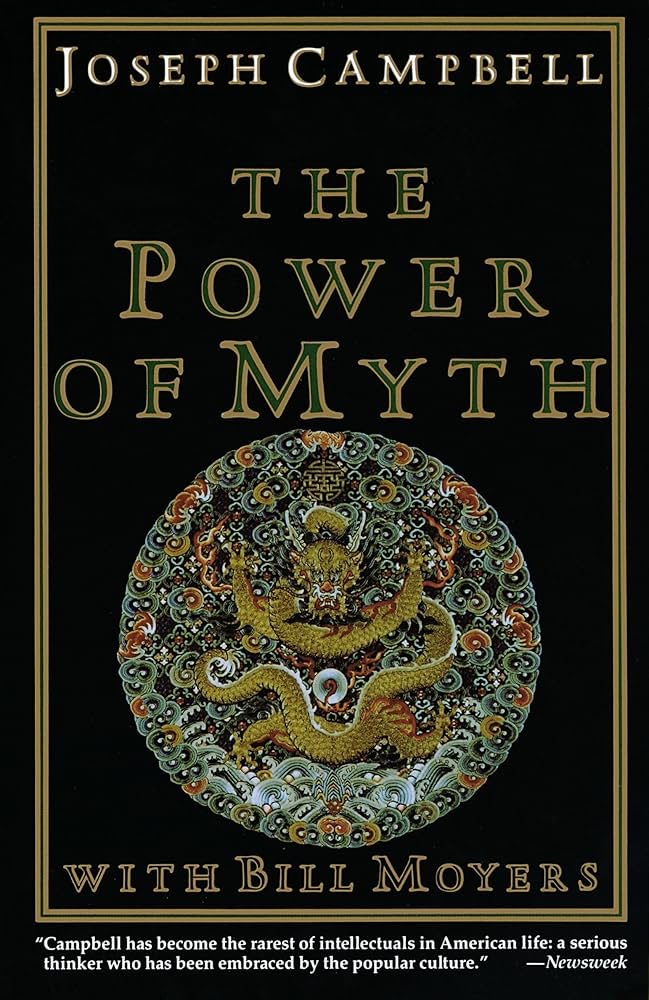
Joseph Campbell saw something real.
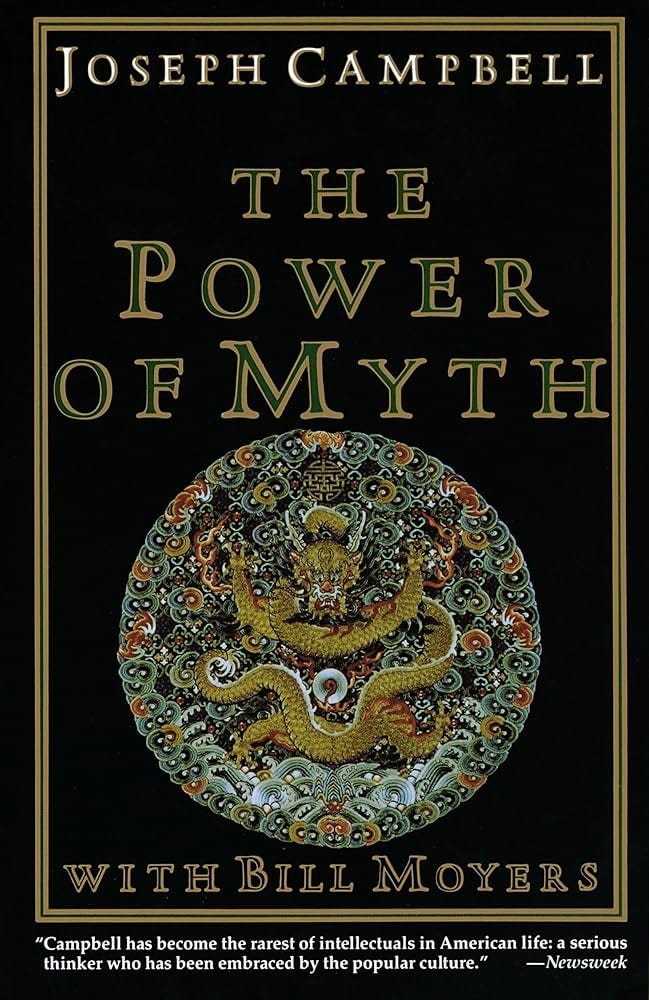
He recognized that myths repeat because they encode a recurring inner structure rather than random stories. He understood that the world’s stories are patterned symbolic disclosures. In that sense, his instinct is close to Geomytha. Myth is not accidental. It is architecture. It is revelationRevelation — Book of RevelationThe final book of the Christian New Testament, also called the Apocalypse of John.Read full entry → through symbol.
But Campbell stops one layer too soon.
That is not a minor error. It is the central error.
Campbell treats the recurring mythic pattern as the sacred journey of the self. He places the hero at the center. He celebrates departure, ordeal, transformation, and returnReturn — RemembranceReturn names remembrance and release: the loosening of possession so reflection can become transparent to source again.Read full entry →. He sees myth as the maturation of consciousness through struggle. Geomytha reads the pattern differently. The deeper question is whether that “journey” is awakening at all, or whether it is the narrative form of consciousness already having been pulled out of direct presence and trapped in the machinery of identityThis — IdentityThis names the formed identity: the body, role, image, wound, belief, or story claimed as what the self is.Read full entry →.
That is the break.
Campbell glorifies the hero.
Geomytha diagnoses the hero.
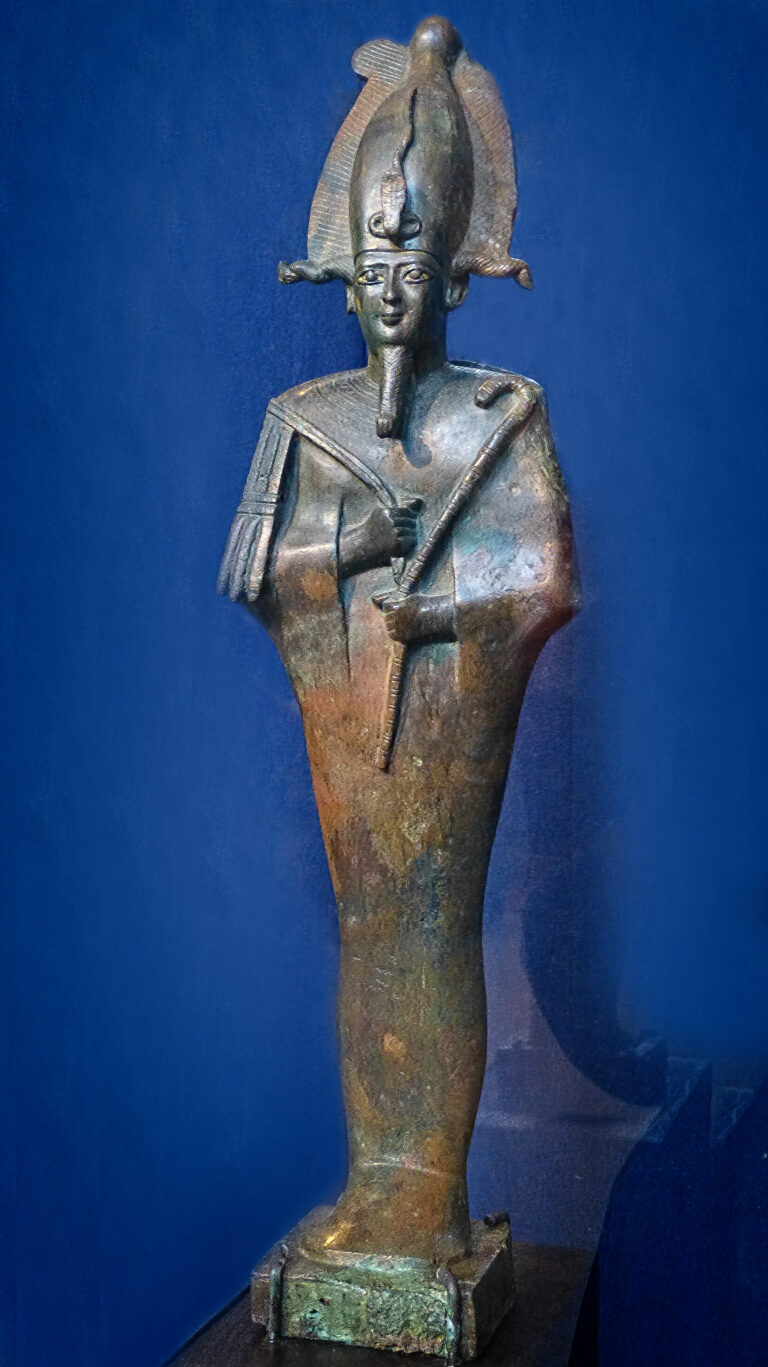
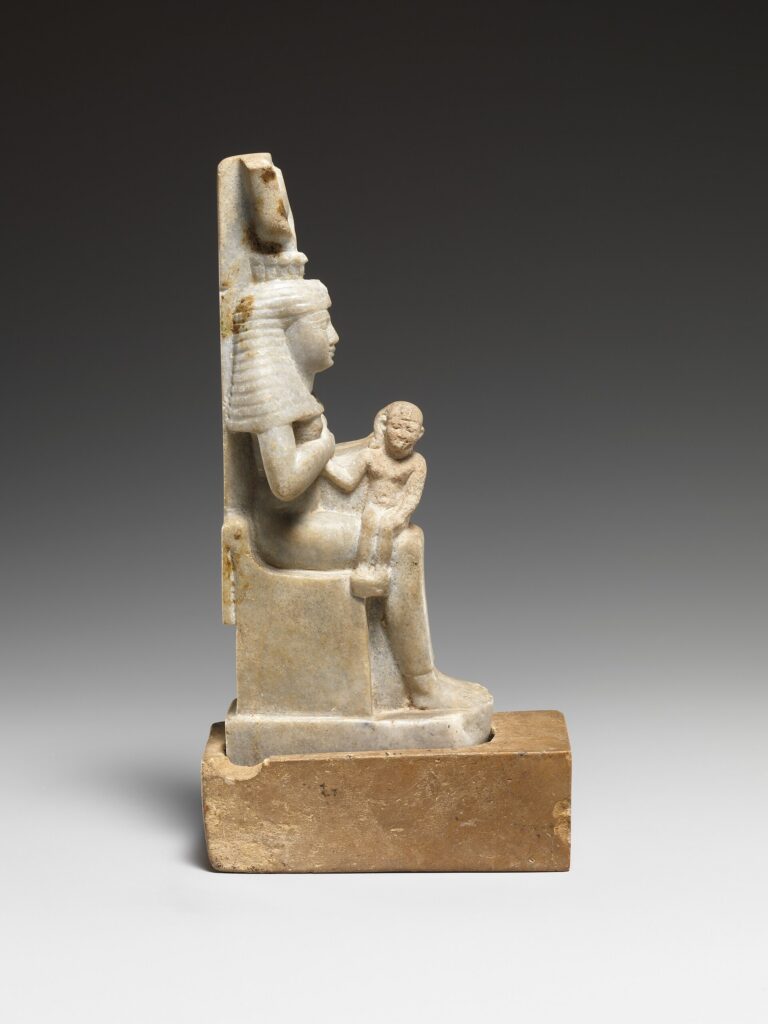
The order is clear: IsisIsisIn Geomytha, Isis names the unclaimed field: Is — pure being, awareness before possession, and the ground before the claimant appears.Read full entry → is pure awareness, OsirisOsirisIn Geomytha, Osiris names reflected presence: Am — awareness reflected as living consciousness without yet becoming ownership.Read full entry → is awareness perfectly reflected, SetSetIn Geomytha, Set names the claimant: I — the interruption by which reflection is taken as mine and converted toward ownership.Read full entry → is being overtaken by imagination, and HorusHorusIn Geomytha, Horus names the identity that forms after claim: This — the body, role, image, wound, belief, or story taken as what the self is.Read full entry → is the resulting time-bound identity. So the central drama is not, “How does the hero become whole?” The deeper drama is, “How did awareness become misidentified with the hero in the first place?”
That is what Campbell does not ask deeply enough.
He begins too late in the sequence.
He begins with Horus.
That is why the hero’s journey often reads less like liberation and more like a beautifully sanctified reincarnation loop. The call to adventure, the crossing of the threshold, the descent, the trial, the return with the boon, theseThese — AccumulationThese names accumulation: possessions, titles, achievements, beliefs, communities, and other extensions gathered around identity.Read full entry → may look spiritual. They may feel profound. But intensity is not the same as freedom. Movement can feel sacred and still be the movement of entrapment. A story can be full of initiation and still never leave the architecture of Set.
That is why Horus must be treated with suspicion rather than automatic reverence. Horus is not simply the triumphant child or reconciled self. Horus is consciousness awakened within duality, seeking reunion while still energizing the system of fragmentationDismemberment / FragmentationDismemberment names the symbolic breaking of a previously integrated reflection into separate parts, roles, objects, or powers.Read full entry →. Noble intentions can still strengthen the illusion they appear to resist.
That overturns Campbell.
He assumes the journey itself is redemptive.
Geomytha suggests the journey itself may be the bait.
Campbell reads myth as teaching us how to become larger, deeper, more integrated selves. But the deeper problem is not that the self is underdeveloped. The deeper problem is that the self, as ordinarily experienced, is already a construction born from fracture. Horus is not under construction toward truth. Horus is the illusion of coherence generated after consciousness has been rerouted through thought, projectionThose — ProjectionThose names projection: enemies, outsiders, competitors, threats, and disowned qualities placed beyond the identity boundary.Read full entry →, and identity.
So when Campbell celebrates integration, a more serious question has to be asked: integration of what?
A fragmented consciousness can become highly organized without becoming free.
An ego can become mythically mature without ceasing to be ego.
A hero can become radiant and still remain trapped in time.
That is where Campbell becomes most seductive. He sanctifies the very thing Geomytha seeks to expose.
Geomytha does not deny descent, ordeal, or initiation. It denies that these automatically deserve the final spiritual authority Campbell gives them. The deeper aim is not heroic completion. It is restoration of reflective integrity. It is the return of consciousness to its original relation with awareness. It is Osiris reflecting Isis without Set’s mediation.
That is not a heroic ethic. It is a metaphysic of remembrance.
Campbell privileges becoming.
Geomytha privileges remembering.
Campbell says: go, descend, transform, return.
Geomytha says: see what interrupted direct presence, and stop identifying with its product.
That changes everything.
It also explains why Campbell blurs the line between true awakening and false awakening. Transformation itself can be another trap. One can become a sage, savior, martyr, king, or initiate and still remain inside Horus consciousness.
That may be the most elegant trap of all.
The crude ego says, “I am important.”
The spiritual ego says, “I am transformed.”
The mythic ego says, “My suffering made me holy.”
Campbell is deeply sensitive to the beauty of these forms, but not sufficiently suspicious of the structure that powers them. Are they expressions of Osiris returning to Isis, or refinements of Horus still circling under Set’s sun?
That is why Geomytha is harder on heroism than Campbell is.
Campbell sees the hero as the bridge.
Geomytha often sees the hero as the polished face of the prison.
This becomes clearer because Campbell’s sensibility remains fundamentally heroic and solar even when he discusses mystical themes. His language privileges ordeal, conquest, transformation, and return. It is movement-centered, action-centered, destiny-centered. Geomytha is rooted in awareness prior to movement. It privileges the field before the adventure, the reflectionAm — ReflectionAm names reflected presence: awareness embodied or mirrored without yet becoming ownership.Read full entry → before the fracture, the silence before the story. Campbell admires the fire. The deeper question is whether the fire is already Set.
That does not make Campbell useless. It makes him partial.
He is helpful in identifying recurring symbolic structures, but not in judging their final metaphysical status. He can show that myths across cultures repeat the same pattern. But repetition itself is not proof of truth. Repetition may also be the mark of entrapment. Campbell identifies the wheel. Geomytha asks why he keeps mistaking the wheel for liberation.
Geomytha’s final thought
He places sacred value on the movement of the narrative self, when the deeper sacred reality is what existed before the narrative self emerged. He crowns the traveler instead of examining the fracture that made travel necessary. He treats ordeal as initiation when it may be the afterimage of dislocation. He glorifies Horus because he does not fully see that Horus is often the consequence of Set’s interruption of Osiris.
That is why Campbell remains close to the truth and still misses it.
He correctly recognized that myth encodes consciousness.
He incorrectly concluded that the hero is the answer.
The answer is not the perfected hero.
It is the end of misidentification with the hero altogether.
The return is not to a better story about the self.
The return is to Isis.