Why his catastrophes matter in Geomytha, even where his astronomy does not
Immanuel Velikovsky remains compelling because he refused to treat myth as nonsense.
He understood that ancient people were not merely inventing decorative stories about fire from heaven, wandering lights, floods, serpents, darkness, and divine war. He intuited that myth preserves memory. He recognized that recurring symbols point to recurring rupture.
That instinct is precisely where his work becomes useful in Geomytha.
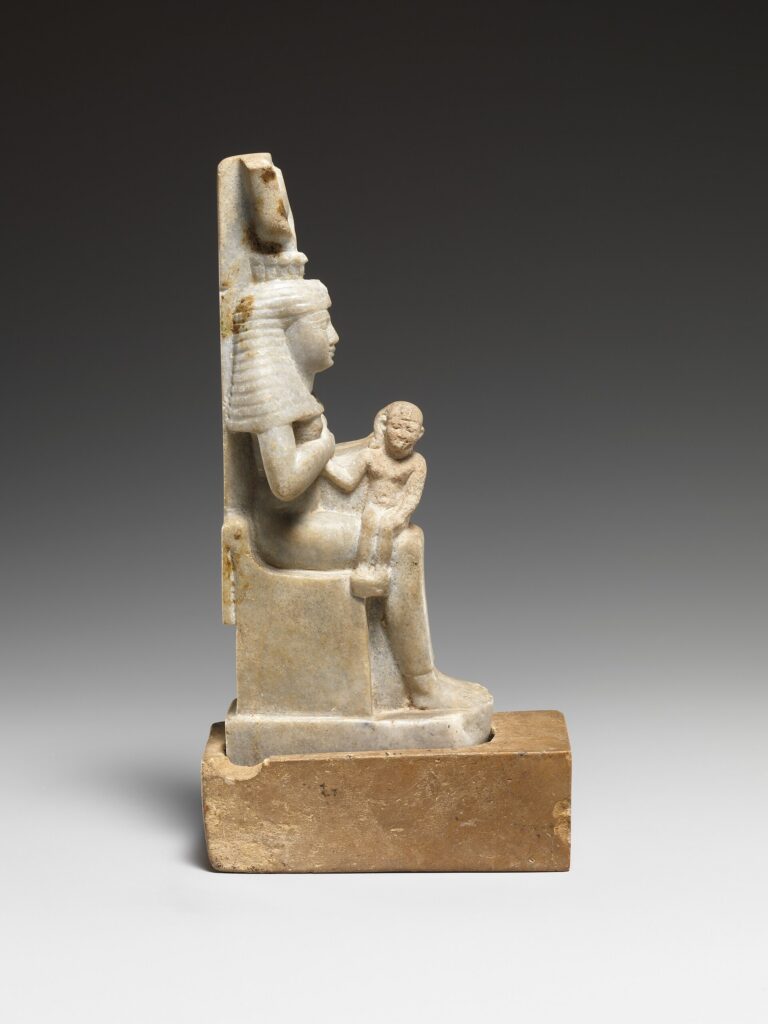
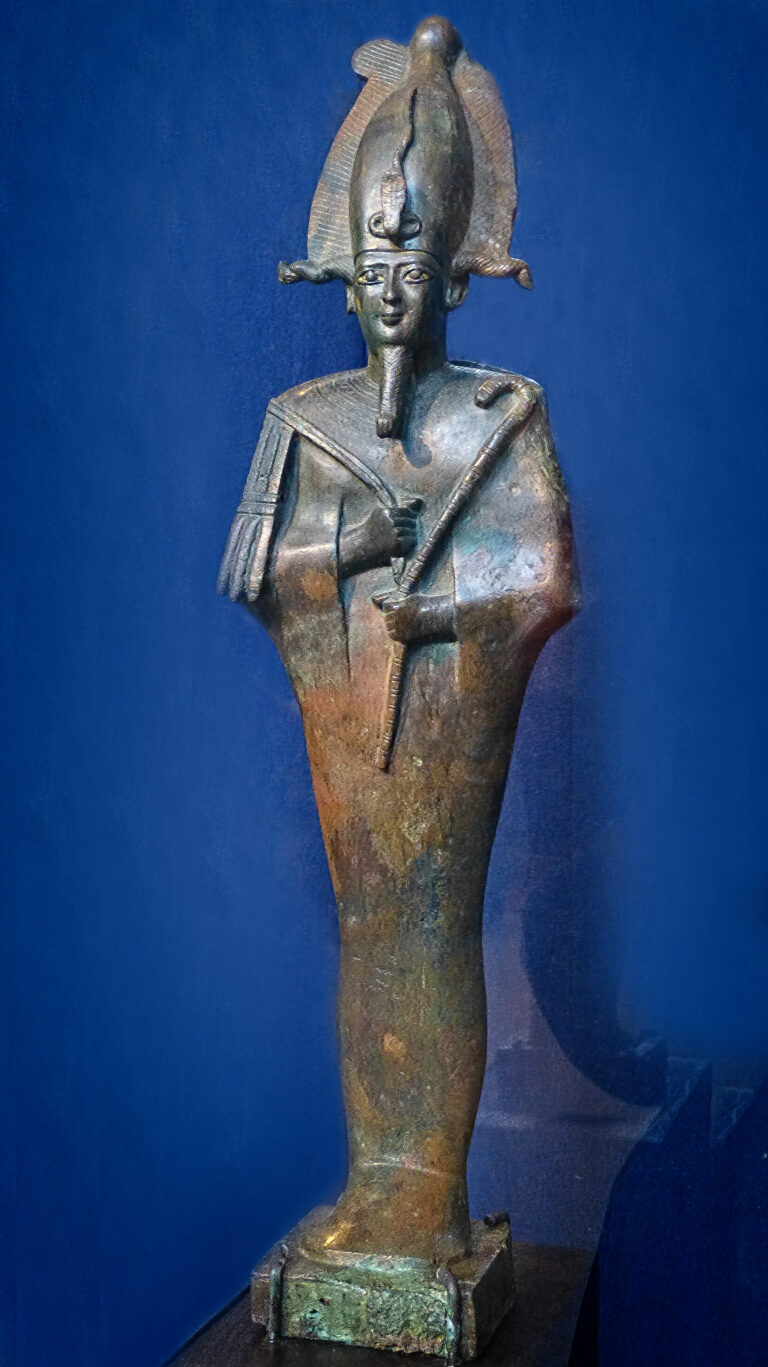
In Geomytha, myth is never random. It is symbolic memory. It hides and reveals at once. The recurring drama is the same: IsisIsisIn Geomytha, Isis names the unclaimed field: Is — pure being, awareness before possession, and the ground before the claimant appears.Read full entry → as pure awareness, OsirisOsirisIn Geomytha, Osiris names reflected presence: Am — awareness reflected as living consciousness without yet becoming ownership.Read full entry → as the perfect reflectionAm — ReflectionAm names reflected presence: awareness embodied or mirrored without yet becoming ownership.Read full entry → of awareness, SetSetIn Geomytha, Set names the claimant: I — the interruption by which reflection is taken as mine and converted toward ownership.Read full entry → as the force of fragmentationDismemberment / FragmentationDismemberment names the symbolic breaking of a previously integrated reflection into separate parts, roles, objects, or powers.Read full entry → and imaginal takeover, and HorusHorusIn Geomytha, Horus names the identity that forms after claim: This — the body, role, image, wound, belief, or story taken as what the self is.Read full entry → as the time-bound ego identityThis — IdentityThis names the formed identity: the body, role, image, wound, belief, or story claimed as what the self is.Read full entry → that emerges after the break.
Velikovsky comes very close to this threshold.
He senses catastrophe.
But he reads it too externally.
He sees planets colliding where Geomytha sees consciousness being overtaken.
Velikovsky’s great insight
Velikovsky’s deepest strength is not that he proved celestial disaster. It is that he recognized myth as record rather than ornament.
That matters.
Modern consciousness often dismisses myth as primitive explanation, poetic confusion, or symbolic excess. Velikovsky did the opposite. He treated myth as testimony. He noticed that cultures separated by geography and language still preserve strangely similar images: upheaval in the heavens, disrupted time, cosmic fear, reversal of order, and gods behaving like forces of violent reorganization.
He rightly understood that repetition on that scale means something.
Geomytha agrees completely.
The same pattern appears again and again because the same archetypal event is being narrated again and again. The names change. The gods change. The symbols shift. But the structure remains.
That is always the clue.
The catastrophe is real, but first it is reflective
Geomytha does not deny catastrophe. It relocates it.
The first catastrophe is not simply astronomical. It is reflective.
Awareness simply is. That is Isis. From that stillness comes reflection. That reflection is Osiris, consciousness in its harmonious state. Then comes Set, the force that interrupts that reflection, fragments it, and replaces direct presence with projectionThose — ProjectionThose names projection: enemies, outsiders, competitors, threats, and disowned qualities placed beyond the identity boundary.Read full entry →, spectacle, anticipation, image, and drama. From that fracture comes Horus, the false unity of ego identity, the self assembled from broken reflection.
That is the true collision.
Not merely bodies in the heavens, but awareness colliding with imagination.
Not merely cosmic mechanics, but consciousness losing its resting place and becoming trapped in image.
This is why Velikovsky feels so close and yet not complete. He senses dismemberment everywhere, but he mistakes the stage for the sourceIs — SourceIs names unclaimed being: awareness before possession, distinction, or identity.Read full entry →. He reads the sky as the cause, where Geomytha reads the sky as the symbolic screen upon which inner fracture is narrated.
Why his Venus matters
This becomes clearest with Venus.
In Velikovsky’s imagination, Venus is not serene beauty. It is luminous disruption. It is a radiant intruder. It is catastrophe appearing in brilliant form.
That is why, in Geomytha, Velikovsky’s Venus does not behave like Isis or Osiris.
It behaves like Set.
Not by name, but by function.
Set is not merely darkness. Set is dazzling interruption. Set is the enthronement of projection. Set is what happens when stable reflection is overtaken by imaginal force. Set is brilliance severed from stillness.
That is exactly how Velikovsky’s Venus moves through mythic memory.
A radiant intrusion.
A break in order.
A catastrophic brilliance mistaken for revelationRevelation — Book of RevelationThe final book of the Christian New Testament, also called the Apocalypse of John.Read full entry →.
So the deeper question is not whether his Venus was literally the sun. It is whether the role played by his Venus is solarized in the geomythic sense. The answer is yes. His Venus acts like a roaming outbreak of Set.
Earth as Osiris
Once that is seen, Earth’s role sharpens immediately.
Earth is the body acted upon. Earth is the field disturbed. Earth is the reflective order thrown into upheaval.
That makes Earth Osiris.
Osiris is the reflective body. Osiris is the one broken, scattered, acted upon, dismembered. Osiris is not the aggressor but the field of consciousness that suffers fragmentation.
That is Velikovsky’s Earth exactly.
Not just a planet in crisis, but a symbol of reflection under assault.
In Geomytha terms, Earth is not only geological terrain. It is the body of broken consciousness.
Mars and the afterlife of rupture
Mars enters as continuation rather than origin.
That matters.
Mars is not the primal wound. Mars is the persistence of conflict after the first break. It is the afterlife of disturbance. It is fragmentation extended into history.
That makes Mars less like original Set and more like Horus inheriting Set’s damage.
Horus is the false unity that follows rupture. Horus is the time-bound identity that emerges from fragmentation and carries it forward. Horus is not the first blow but the child of the blow.
That is why Mars, in a geomythic reading of Velikovsky, feels like conflict enthroned as identity.
Not first catastrophe.
Inherited catastrophe.
Jupiter as the hidden womb
Jupiter, then, becomes the concealed reservoir before disturbance.
If Venus emerges from Jupiter, then Jupiter functions as a womb-image within the visible sky. Not pure Isis itself, because Isis remains beyond manifestation, but the last visible symbol of source before the break enters the drama.
This is important because source always recedes once fragmentation begins.
Once consciousness is fascinated by catastrophe, it forgets the stillness from which catastrophe is perceived. That is why source in myth tends to appear as abyss, waters, void, mother, womb, unfigured heaven, or hidden depth.
Jupiter in this reading is not the final truth.
It is the last veil before the truth.
Why Velikovsky feels traumatic
One reason Velikovsky continues to grip people is that his work does not feel detached. It feels wounded.
That tone is not incidental.
Myth often preserves not a photograph of an event, but the emotional architecture of the wound left by it. What survives is not always literal chronology. What survives is symbolic trauma.
Geomytha would say Velikovsky circles the memory of Osiris already broken.
He sees terror, inversion, upheaval, cosmic instability, and shaken order. He sees the fragments clearly. What he does not fully do is reassemble them through Isis. He does not returnReturn — RemembranceReturn names remembrance and release: the loosening of possession so reflection can become transparent to source again.Read full entry → the scream to the silence it broke from.
That is his limit, but also his value.
The danger of stopping at catastrophe
This is where Geomytha must go further.
If myth is only catastrophe, then consciousness becomes addicted to rupture. It becomes fascinated by signs, anomalies, apocalypse, upheaval, and spectacle. It remains fixed on the event.
That is already Set’s domain.
Because Set always prefers that consciousness stare outward at drama rather than inward at source.
Externalized catastrophism can still be captivity.
It may awaken suspicion toward official stories, but it can also keep consciousness bound to event-consciousness, always waiting for the next sign, always scanning the heavens, always decoding the next interruption, never returning to the still point that existed before interruption.
That is not liberation.
That is refined entrapment.
The deeper Geomytha use of Velikovsky
So what is Velikovsky’s true value in Geomytha?
Not that he solved the sky.
Not that myth is secretly astronomy and nothing more.
His real contribution is that he helps restore seriousness to myth. He proves that ancient symbolic language is trying to remember something profound. He proves that repetition across cultures is not trivial. He proves that rupture is real.
Geomytha simply carries that insight one step further.
The rupture remembered by myth is first the rupture of consciousness.
The heavens become the theater because consciousness cannot easily narrate its own fracture directly. It projects the break upward into gods, planets, floods, fire, darkness, wandering stars, divine combat, and cosmic disorder.
Symbolism hides the psyche in the sky.
Velikovsky noticed the sky was crowded with memory.
Geomytha asks whose memory it was.
Geomytha’s final thoughts
Immanuel Velikovsky is most useful in Geomytha not as a final authority, but as a threshold witness.
He witnesses that myth remembers.
He witnesses that cultures preserve the same wound.
He witnesses that catastrophe is not invention.
But he stops too soon.
He sees the scream. Geomytha asks what silence was broken to produce it.
He sees the fragments. Geomytha asks what whole they fell from.
He sees the heavens in disorder. Geomytha asks what in consciousness had already lost its center.
That is why he still matters.
He stands at the edge of symbolic truth and literalizes it one step too early.
Even that mistake is revealing.
Because it shows how powerful the archetypal pattern is. It is so powerful that even when it is misread, it still forces the same sequence to appear:
Source.
Rupture.
Fragmentation.
False reassembly.
Entroned illusion.
That is the real collision.
And once that is seen, Velikovsky becomes more interesting than a controversial theorist of planets.
He becomes a chronicler of broken consciousness who mistook the sky for the self.