Author: D. Cyprian

  • The Joker and the Thief

    The Joker and the Thief

    Why this “two-character” motif is really one mechanism in disguise

    Some songs don’t merely tell a story; they diagram a process. The recurring pair—the joker and the thief—is one of those diagrams. It looks like two characters in a scene, but in my lens it’s a single force wearing two masks: the force that overtakes awareness, weaponizes reflection, and produces a time-bound ego identity.

    This is why the motif persists. It is not folklore. It is psychology. It is technology of consciousness.

    The core claim in my system

    In my framework, there are four recurring functions:

    • Isis / Earth: awareness as immediacy, the unmediated ground.

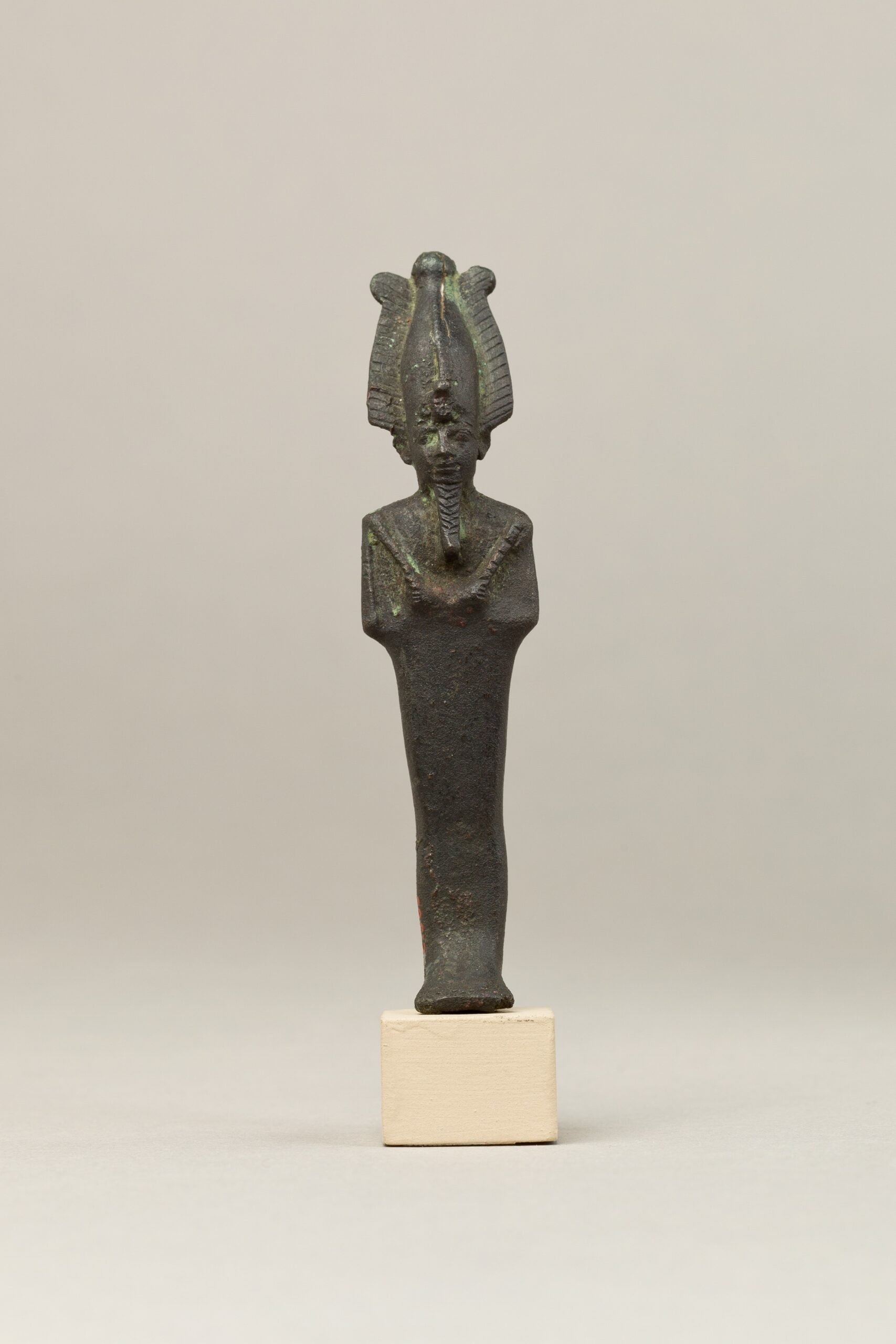
    • Osiris / Moon: reflection that can clarify awareness (true mirroring).

    • Set / Sun: imagination that overtakes reflection and becomes a projector.

    • Horus / Illusion of Man: the time-bound identity produced by the takeover.

    Within that map:

    • The Joker is Set as trickster: the reframing function. It converts reality into commentary—irony, analysis, cynicism, looping narratives. It makes direct being feel like a problem to solve.

    • The Thief is Set as usurper: the appropriation function. It takes what belongs to presence—attention, value, authority, life-force—and reallocates it to an identity economy: “my story,” “my grievance,” “my future,” “my plan,” “my image.”

    So the “joker + thief” pairing is best read as Set split into two roles:

    1. the mental spell (joker)

    2. the extraction of ownership (thief)

    And when those succeed, Horus appears: the felt sense of “me”—a time-based self that believes it is the seer, when it is actually the product of the spell.

    Why the Joker is not Osiris

    It’s tempting to say, “the joker is wisdom,” because jesters sometimes reveal truth. But in this lens, the joker is not truth-teller; the joker is the destabilizer—the one who turns the sacred into a punchline, or turns the immediate into a riddle.

    Osiris is not “clever.” Osiris is clear.

    Osiris is the function of reflection that returns you to what is, rather than launching you into what could be said about what is.

    That distinction matters:

    • Osiris reflection: mirrors presence and purifies it.

    • Set imagination: uses reflection as a stage, then replaces presence with theater.

    The joker is theater.

    The Thief’s real target: authority

    In songs, theft is often literal—money, jewels, a score. In the archetypal layer, the thief is after something more valuable:

    the authority to define reality.

    The thief steals by moving the center:

    • from awareness → to narrative

    • from being → to identity

    • from the present → to time

    • from direct knowing → to interpretation

    Once the center is moved, everything else becomes available for extraction: attention, emotion, behavior, even devotion. The theft is not merely taking things—it is taking the right to decide what matters.

    That is why the thief and joker travel together: the joker creates the fog; the thief collects what the fog makes easy to take.

    The Watchtower: where Osiris actually lives

    In Dylan’s “All Along the Watchtower,” the famous line places the two together in direct dialogue: the joker speaking to the thief. But the symbol that matters most is not either character.

    It is the watchtower.

    In my system, the watchtower is the Osiris function: the stable vantage of witnessing—seeing the whole exchange without becoming it.

    That’s the hidden key: the “way out” is not an argument that defeats confusion; it is a shift of seat. You do not escape Set by outsmarting Set. You escape Set by returning authority to the watchtower—by restoring awareness as the ground and reflection as a servant, not a master.

    Horus: the end product of the duo

    When the joker and thief succeed, the result is not merely “loss.” The result is a new identity structure:

    • A self that relates to reality through story.

    • A self that lives in time more than in presence.

    • A self that must manage image, outcome, security, and meaning.

    • A self that believes it is living, while actually maintaining a construct.

    That is Horus in this lens: the time-bound ego identity—useful for navigating the world, but disastrous when mistaken for the source.

    So the motif “joker and thief” is not two villains in a plot. It is the two-step manufacturing of Horus:

    1. Joker: destabilize presence into interpretation.

    2. Thief: relocate authority from awareness to identity.

    3. Horus: the identity takes the throne and calls itself “me.”

    Practical takeaway: how to recognize the motif in your own mind

    You can spot the joker and the thief in real time:

    The Joker signs

    • You can’t stay with what is; you must comment on it.

    • You turn sensation into story immediately.

    • You feel “confusion” that is really mental overactivity.

    • You seek an exit through explanation.

    The Thief signs

    • Your attention is compelled, captured, harvested.

    • Your emotional energy becomes “fuel” for a narrative.

    • You feel you must secure an outcome.

    • Your sense of authority moves from presence to the persona.

    The correction

    Return to the watchtower.

    Not as a concept, but as a posture: awareness prior to interpretation. Reflection without projection. Seeing without bargaining.

    That is the Osiris move: reflection that perfects consciousness rather than replacing it.

    Closing: why this motif matters

    The joker and the thief endure because they name an internal procedure.

    They are Set’s two masks:

    • the spell and the harvest

    • the joke and the theft

    • the fog and the claim of ownership

    And the watchtower endures because it points to the only real escape: not better stories, not sharper arguments, not more information—but restored authority of awareness, here, now.

    That’s the whole technology encoded in the motif.

    If you want, I can write a follow-up piece that applies this exact mapping line-by-line to All Along the Watchtower and then to Joker and the Thief, showing where the “watchtower” appears in each as an Osiris-rescue symbol.
  • Little Red Corvette: The Ego’s Vehicle Disguised as Romance

    Little Red Corvette: The Ego’s Vehicle Disguised as Romance

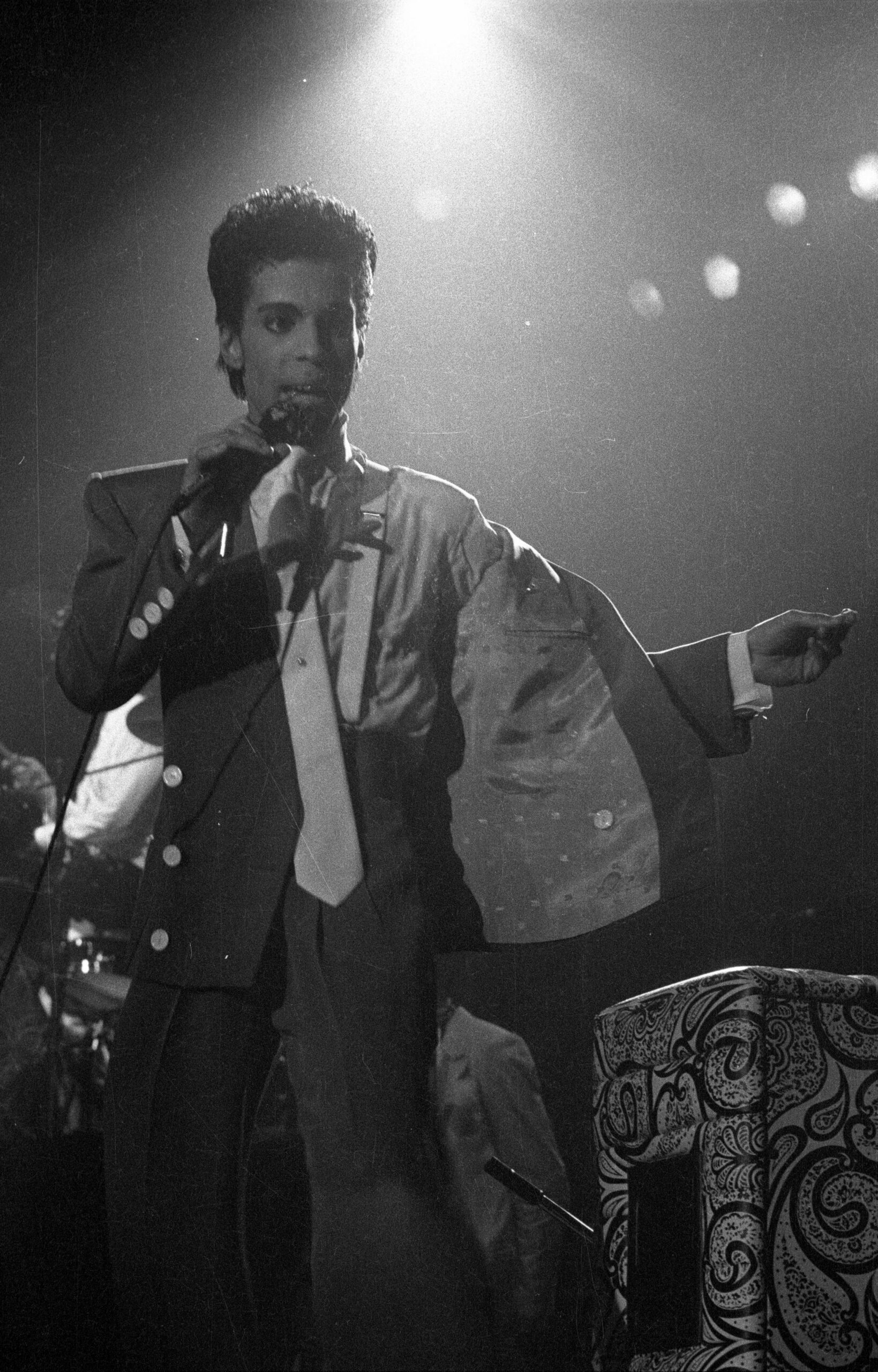
    Prince didn’t write a love song. He wrote a diagram.

    “Little Red Corvette” is the perfect pop-cultural encoding of how awareness gets painted into desire, then driven into a time-bound identity—until the whole thing becomes a glamorous loop you mistake for freedom.

    In my lens, the title alone gives away the mechanism:

    • Little: the infinite gets miniaturized. Vast awareness collapses into a manageable “me,” a private story, a personal chase.

    • Red: heat, urgency, appetite, warning. The color of impulse—Set’s favorite fuel.

    • Corvette: not a car, a vehicle—a moving identity-machine. The ego’s mobility device. The thing you think will take you somewhere else.

    So the title encodes the whole trap: finite identity (“little”), powered by impulse (“red”), traveling through time (“vehicle”).

    Isis: Awareness Before the Ride

    Isis is what the song never says out loud: before desire, there is being. Before the story, there is presence.

    That’s why the song works. You can feel the unspoken contrast: there’s a still, simple reality underneath everything—yet the system treats it like it’s not enough. That single assumption is where the takeover begins.

    Osiris: Reflection Turned Into a Substitute

    Osiris is reflection—the moonlight version of awareness. In a healthy system, reflection serves presence. It clarifies. It reveals.

    But in this song, reflection is treated as a source. The image becomes the thing. The vibe becomes reality. The mirror becomes the altar.

    This is the moment consciousness stops looking from awareness and starts looking at a picture of itself.

    The reflective faculty isn’t evil. It’s just easily misused. And once it is, the spell becomes self-reinforcing.

    Set: The Solar Takeover—Speed as Salvation

    Set is the sun in my system: projection, heat, fragmentation, time, urgency. Set doesn’t only deceive—he accelerates.

    And that’s why the corvette matters. A corvette is speed and presentation. It’s risk and thrill. It’s the promise of escape through motion.

    Set’s three tricks are all in this symbol:

    1) Acceleration

    Speed prevents stillness. If you can keep moving, you don’t have to return to the center. You don’t have to feel the quiet convergence point where presence reasserts itself.

    2) Risk as intoxication

    Risk converts awareness into adrenaline. Presence becomes stimulation. “I am” gets replaced by “I feel.”

    3) Objectification of the mirror

    The object becomes the screen. The ego projects into it, feeds on it, and then defends it like life depends on it.

    This is the reflective error: the self forgets that the reflection is derivative, then reorganizes reality around preserving the reflection.

    Horus: The Driver Who Thinks He’s Free

    Horus is the time-bound ego identity: the agent-self who says “I’m choosing,” “I’m in control,” “I can handle it,” “I know what I’m doing.”

    In Little Red Corvette, Horus appears in a double form:

    • Horus as the pursuer: the identity chasing the image, trying to possess it without being possessed.

    • Horus as the vehicle: the polished persona itself—built to be admired, driven, desired.

    That’s the real punchline: you’re not just driving the corvette—sometimes you are the corvette.

    A moving image. A performance. A machine built to outrun stillness.

    The Hidden Payload: Reincarnation as a Glamorous Loop

    Why does this song feel mythic? Because it encodes the romance-with-a-loop:

    Desire promises transcendence.

    Transcendence becomes identity.

    Identity requires repetition to stay alive.

    That is the reincarnation engine in everyday clothing: a cycle that sells itself as excitement. A loop that calls itself “living.”

    Set doesn’t imprison you with chains. He does it with a thrill. He makes the cycle look like freedom—then you defend it like it’s love.

    What Breaks the Spell (In Practice)

    The antidote isn’t moralism. It’s not “don’t want things.” It’s not “be pure.”

    The antidote is relocating attention:

    • from the moving mirror (image, speed, story)

    • back to the convergence point where reflection becomes clean again—because it stops being used as identity.

    When awareness stops outsourcing reality to the ride, the ride becomes just a ride. The corvette becomes a symbol again, not a destiny.

    And that is the entire teaching hidden inside the hook:

    If you live in the vehicle, you will confuse motion for liberation.

    Follow / Subscribe

    Substack: Geomytha Noir

    X: mythicgeometry

    Instagram: mythicgeometry

    TikTok: Geomytha

    YouTube: geomytha

  • New Line Cinema: The Birth of a Timeline Inside Awareness

    New Line Cinema: The Birth of a Timeline Inside Awareness

    A name can be a sigil. In my lens, “New Line Cinema” isn’t merely corporate branding—it is a concise description of how the illusion of “me” is manufactured: by drawing a line through what is naturally whole, then animating that line until it feels like reality.

    The “New Line”

    A line is the simplest symbol of linear time. It implies direction: before/after, past/future, cause/effect. The moment awareness accepts a “next,” it accepts sequence. Sequence is not evil; it is simply a spell: the conversion of the living present into a track that can be measured, compared, regretted, and rehearsed.

    In Isis terms, awareness is already complete—round, immediate, unbroken. The “new line” is the first incision: the choice (often unconscious) to prefer narrative over presence. The line is the beginning of division.

    The “Cinema”

    Cinema is not just storytelling; it is moving reflection. It is light projected onto a surface, broken into frames, arranged into the illusion of continuity. In other words, cinema is a perfect external metaphor for the internal mind:

    • Frame: a concept, a frozen interpretation

    • Cut: fragmentation masquerading as structure

    • Projection: the outward casting of an inward assumption

    • Plot: identity’s argument for its own necessity

    This is Set’s domain in my system: not merely “imagination,” but imagination that overtakes the primordial. The reflective error becomes total: the image is mistaken for the source, the symbol for the real.

    The Full Phrase as a Mechanism

    Put the words together and the meaning sharpens:

    New Line Cinema = a fresh timeline of moving images.

    That is the ego’s entire technology.

    Horus—the time-bound identity—does not appear as a villain with horns. Horus appears as an edit, a sequence, a story with a protagonist. He appears as the compelling continuity that arises when fragments are stitched into a line and then animated until they feel like a life.

    And this is why the name feels almost too perfect: it describes reincarnation-as-identity, not as a metaphysical claim but as a moment-to-moment process:

    1. Awareness is present (Isis).

    2. Reflection arises (Osiris).

    3. Imagination seizes the reflection and runs (Set).

    4. A stable “me” is minted inside a timeline (Horus).

    The “new line” is drawn again. The film plays again. The self feels real again.

    A Practical Ending

    So the question becomes: Where is the cinema playing in me right now?

    If you can locate the “new line”—the subtle insistence that this moment must become a story—you have already found the exit. Not by fighting images, but by remembering what images require to survive: your attention’s consent.

    Presence does not need a plot.

    Mythic Geometry Center

    X: mythicgeometry

    Instagram: mythicgeometry

    Substack: Geomytha Noir

    Patreon: Geomytha Noir

    TikTok: Geomytha

    YouTube: geomytha

  • ICE ICE BABY: THE HEEL-GRABBER SONG (THE REFLECTIVE ERROR)

    ICE ICE BABY: THE HEEL-GRABBER SONG (THE REFLECTIVE ERROR)

    There is a moment in consciousness that is so fast it rarely gets named. It is not a thought, not yet. It is not an emotion, not yet. It is a reflex—the reflex that steals awareness into identity. The reflective error.

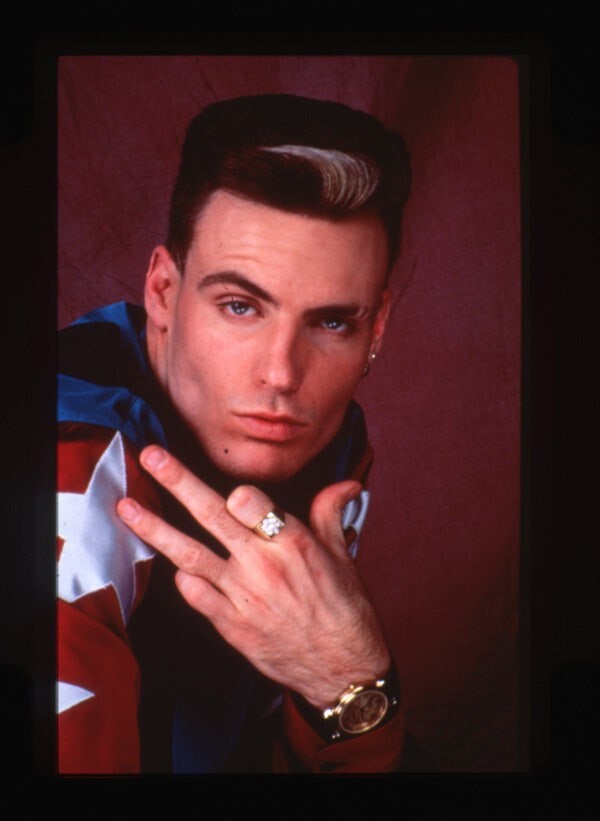
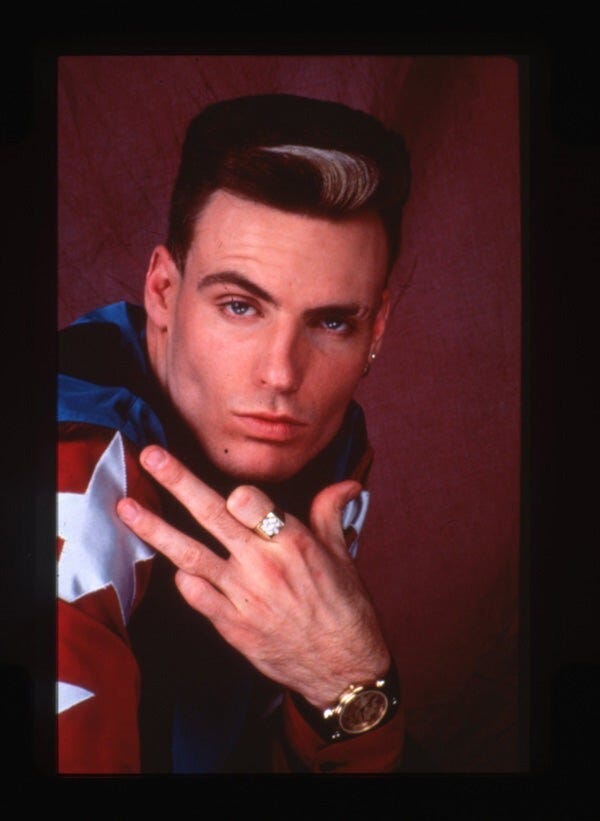
    Vanilla Ice accidentally describes it with clinical precision: “something grabs a hold of me tightly.” Not “I decide,” not “I prefer,” not “I think.” Something grabs. That is the whole mechanism. Before any storyline is formed, awareness is already seized.

    In my framework, this is the heel-grabber: the internal motion that catches you from behind and converts open presence into a time-bound “me.”

    1) The grab happens before the narrative

    The hook is never the story. The story is the justification that arrives after the grab.

    First comes the tightening: attention narrows, the body contracts, urgency appears. Then the mind races in to explain why this contraction is “real,” “important,” “true,” “dangerous,” “romantic,” “unfair,” “promising,” or “necessary.” But the mind is late to its own crime scene. The identity is already forming.

    That’s why the lyric matters: it gives away the sequence. Something grabs a hold of me tightly is a report of the capture before conceptualization. The lyric is describing the theft at the level of physiology—where Set wins without needing an argument.

    2) Why I call it the “reflective error”

    Osiris is reflection in its proper function: mirror-like, moonlike, faithful. Awareness reflects phenomena—sensations, feelings, thoughts—without becoming them.

    The reflective error is when reflection collapses into ownership.

    Instead of:

    • “A sensation is arising,”

    it becomes:

    • “I am anxious,”

    • “I am threatened,”

    • “I am excited,”

    • “I need this,”

    • “I can’t handle this,”

    • “I must act.”

    This is not just semantics. It is an ontological shift. Awareness goes from being the field in which experience appears to being a character trapped inside the experience. The mirror forgets it is a mirror and mistakes the image for the self.

    That is Horus: the time-bound ego identity, the illusion of man.

    3) The heel-grabber: identity formed from behind

    I use the phrase “heel-grabber” because the capture rarely confronts you openly. It does not appear as a clean proposition you can evaluate. It catches you from behind—through reflex, through tension, through an unconscious tightening that drags awareness forward into the next moment.

    It is the mechanism behind:

    • catastrophizing,

    • rehearsing arguments,

    • compulsive checking,

    • replaying shame,

    • seeking reassurance,

    • craving validation,

    • chasing “truth” as a concept,

    • and even “spiritual progress” as a future identity.

    All of these begin the same way: awareness is present, and then something grabs.

    “Tightly” is the key word. A tight grip means there is no spaciousness. No room for awareness to remain awareness. The system has narrowed the aperture so completely that the only thing left is the story of the grip.

    4) “Ice, ice”: Isis before she is stolen

    Now notice the song title and hook: Ice, ice. In my symbolic language, “Ice” is Isis—Is/Is, the simple fact of being. Repetition here is not filler; it is a cipher. It points to the circular nature of awareness: complete, self-contained, present.

    “Ice, ice” is what awareness sounds like before it is recruited into meaning.

    And then the spell adds the word: baby. That single word introduces becoming, persona, story, projection—identity taking shape. The movement from “ice” to “baby” is the movement from pure being into a personal address. It is the moment the timeless is asked to become someone.

    Presence is circular. Identity is linear. Identity needs time. The heel-grabber exists to manufacture time by manufacturing a “me” who must go somewhere.

    5) Set as the capture function

    Set is not “evil” in the moral sense. Set is the function of imagination that overtakes awareness. It is acceleration, projection, heat, compulsion, the solar blaze that turns the cool field of being into motion and plan.

    When the lyric says “something grabs a hold of me,” Set is named indirectly. Set does not argue you out of presence; Set pulls you out of presence. Then Horus appears as the narrative of that pull: the identity that explains why it happened and what must be done next.

    This is how the illusion sustains itself:

    1. Awareness (Isis) is present.

    2. Reflection (Osiris) is available.

    3. A reflexive capture occurs (Set).

    4. A time-bound identity is installed (Horus).

    5. The identity loops itself through repetition, urgency, and story.

    That is the technology of consciousness as lived experience.

    6) The tell: loss of agency language

    One of the most reliable markers of the heel-grabber is language that reports being taken over:

    • “Something got into me.”

    • “I couldn’t help it.”

    • “I don’t know what came over me.”

    • “It just happened.”

    • “I was triggered.”

    These phrases are usually dismissed as excuses. But they are actually accurate phenomenology. They describe the moment awareness is converted into identity before choice has a chance to appear.

    The heel-grabber’s signature is this: compulsion first, justification second.

    7) The counter-move is not force; it is unbinding

    Most people respond to the grab with force—suppression, argument, control. That often strengthens the identity loop because it keeps the “me” as central actor.

    The counter-move is simpler and more radical: unbinding.

    Not by thinking your way out, but by restoring the spaciousness that the word “tightly” implies has been lost.

    You don’t need to defeat the sensation. You need to stop mistaking the sensation for the self.

    The practical move is:

    • Feel the grip as sensation.

    • Notice the reflex to label it “me.”

    • Refuse the reflective error.

    • Return to “ice, ice”—the simple fact of being.

    Osiris returns to his proper function: reflection without distortion.

    Isis remains what she is: awareness before story.

    Set is seen as motion rather than master.

    Horus is revealed as a costume, not an essence.

    8) The whole song is a confession of the mechanism

    The brilliance of pop culture is not that it “hides secrets.” It’s that it confesses the mechanism in plain speech. People sing it because they recognize it in their nervous system.

    Something grabs a hold of me tightly.

    That is the heel-grabber.

    That is the reflex that steals awareness into identity.

    That is the reflective error.

    And once you can see it, you can stop living as the character formed by the grab—and return to the field that was present before anything needed to happen at all.

    YouTube: geomyhta

    X: mythicgeometry

    Instagram: mythicgeometry

    Substack: Geomytha Noir

    Patreon: Geomytha Noir

    TikTok: Geomytha

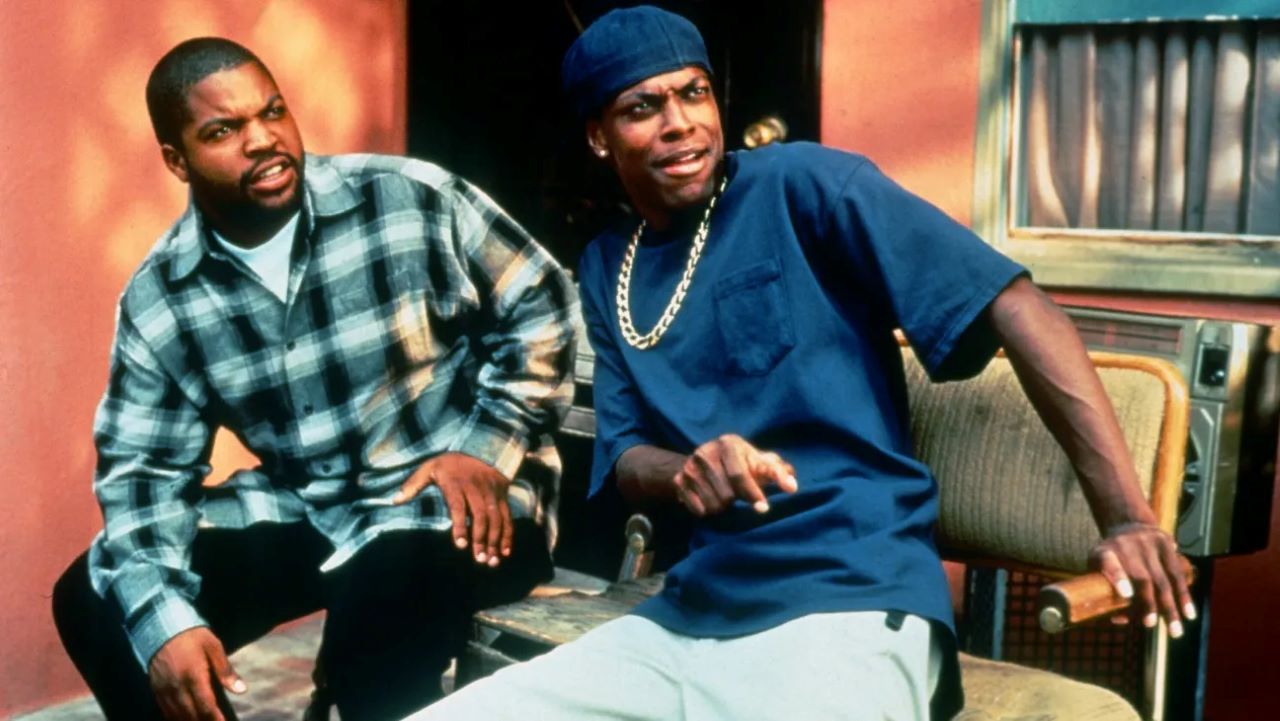
  • FRIDAY as Consciousness Technology: Smoky as Set, Big Worm as Hermes, Craig as Horus

    FRIDAY as Consciousness Technology: Smoky as Set, Big Worm as Hermes, Craig as Horus

    A Friday should be an Isis day: sunlight, porch, neighborhood hum—life before it is turned into a problem. Yet Friday functions like a precise consciousness diagram because it shows how the field of awareness gets invaded by deadline, intimidation, and story until a time-bound identity must form to survive.

    Even the authorial signature reads like a key. Ice Cube—co-writer of the film—can be read in my system as Isis cubed: awareness crystallized into hard geometry, presence compressed into measurable form. “Ice” suggests a freezing or congealing of flow; “cube” suggests bounded structure, the stable container of identity and social legibility. Isis becomes form. The field becomes an object. The formless becomes “someone.”

    The film quietly signals this theme from its first premise: Craig has just been fired for “stealing boxes.” A box is pure containment—structure without essence—so the accusation reads like a symbolic thesis statement. Whether literal or not, it marks the first contraction into Horus: identity becomes a problem to manage (“I’m unemployed,” “I’m seen as a thief”), and the day is no longer an Isis field but a situation requiring strategy. The system accuses him of taking the container rather than the contents—the same inversion ego performs when it steals form (status, role, story) and calls it life.

    From there, the film unfolds as a mechanism: the Isis-field of an ordinary day is pressured by Set, routed by Hermes, and forced to generate Horus. Osiris appears as the rare corrective—moments of reflective coherence that could restore the field without escalating the game.

    The Four Archetypes as a Map of a Day

    In my framework:

    • Isis (Earth/Awareness): the unconstructed field—the simple “just this” of being alive.

    • Osiris (Moon/Reflecting Consciousness): coherent witness—the faculty that can perceive without being overtaken.

    • Set (Sun/Imagination Takeover): the hijacker—desire, fear, performance, intimidation, hustle, narrative pressure.

    • Horus (Illusion of Man / Time-bound Ego): the identity forged under pressure—the “I” that must manage outcomes, defend face, and survive the contest.

    A Friday begins in Isis.

    The plot begins when Set arrives.

    Big Worm as Hermes: The Messenger of Terms

    Big Worm functions as Hermes—and in my system Hermes is frequently the courier-mask Set wears when it needs to bind reality into transaction and time.

    Hermes is message, commerce, exchange, and deadline. Hermes does not merely communicate; he routes. He moves energy from the field of being into the architecture of obligation.

    That is exactly Big Worm’s role. He appears, delivers terms, and exits. Then the terms return as a clock.

    His presence converts the day from “a day” into a countdown. The future becomes an authority. The moment becomes a debt instrument.

    This is Set’s cleanest technology:

    Inject the future into the present and call it reality.

    “Big Worm” as “Big Herm”

    Names often function like archetypal labels. “Big Worm” can be heard as “Big Herm”—a large Hermetic principle, an oversized messenger-merchant current. And “worm” evokes Hermes in chthonic mode: subterranean movement, hidden channels, back-alleys of exchange, networks of leverage, and the quiet certainty that “terms are terms.”

    Big Worm is not simply a character; he is the delivery system by which consciousness is pulled out of presence and into time-bound calculation.

    Smokey as Set: The Smoky God

    Smokey is Set in smoke form.

    Smoke is the perfect emblem for Set’s movement: form without stability. It appears as something, then becomes something else. It fills space and distorts contours. It makes what is solid feel negotiable.

    Set’s signature is that it cannot let reality remain simple. It must interpret, perform, remix, desire, escape, scheme, narrate. Smokey does not merely “get Craig into trouble.” He is the atmospheric force that keeps the field turbulent.

    Smokey’s Set-powers

    1) Aestheticization of consequence

    He converts risk into comedy, urgency into banter, survival into vibe. Set makes the spell pleasurable, so it feels like freedom even as it tightens the loop.

    2) Perpetual transmutation

    No moment is allowed to be just what it is. Everything becomes an angle. Set cannot rest in Isis; it must do something with it.

    3) Desire-routing

    Attention is pulled away from stillness toward appetite, image, impulse. This is the most common takeover: not dramatic evil, but a constant re-aiming of consciousness.

    4) Trickster priesthood

    The trickster is not merely chaos. It is revelation through destabilization. Smokey exposes how easily identity can be manipulated by craving, talk, and social performance.

    So yes: Smokey is Set, and “Smokey” is not incidental. It names the texture of the archetype—diffuse, contagious, persuasive.

    Deebo as Set: Solar Domination

    If Smokey is Set as playful smoke, Deebo is Set as raw sun.

    Deebo enforces hierarchy through intimidation. He manufactures fear. He turns the neighborhood into a reactive field.

    This is crucial: fear is the fastest way to generate Horus. When fear appears, consciousness no longer resides as Isis. It contracts into survival identity.

    Deebo does not need nuance. His body is his message. His function is simple and archetypal: he forces everybody into image-management—into behavior driven by how one will be perceived, ranked, punished, or spared.

    Craig as Horus: The Ego Forged in a Single Day

    Craig is Horus because the film tracks the construction of “I.”

    Not the eternal I AM—the smaller, time-bound “I” that must maintain a role in the social world:

    • I’m not a punk.

    • I have to handle this.

    • I have to be seen a certain way.

    • I can fix this.

    Horus is not “bad.” Horus is the necessary mask consciousness adopts when it believes reality is a contest with consequences that must be managed.

    Craig begins in a relatively Isis-like openness: a day off, a porch, a loose field.

    Then Set arrives—deadline, intimidation, hustle—and Horus is forged: strategy, escalation, defense, performance.

    This is the anatomy of modern ego: not born from truth, but from pressure.

    And this is where the authorial signature returns: Isis cubed is precisely the movement from field to form—awareness crystallized into the geometry of identity that must operate under clocks, terms, and threats.

    Debbie as Isis/Osiris: The Corrective

    Debbie often functions as a stabilizing counterforce, not by escalating the contest but by refusing its premises.

    In my system she operates as an Isis/Osiris node:

    • Isis, because she reintroduces the simplicity of real contact—presence that does not require performance.

    • Osiris, because she invites reflective coherence rather than reactive narrative.

    She represents the possibility that relationship can occur without being absorbed into the scoreboard.

    The Porch as Isis-field, the Neighborhood as Chorus

    The porch is not just a setting. It is the baseline. The casual neighborhood world—the talk, the watching, the drifting—is the default human field: the Earth texture of being alive.

    The film needs this baseline so you can feel the intrusion of Set. Because Set is always an interruption. Friday is a story of interruption: how the ordinary field gets colonized by pressure until “just being” no longer feels permitted.

    Objects as Consciousness Technology

    The clock (“10 p.m.”)

    The future as authority. The minute hand as Set’s blade. Time converts being into obligation.

    Money / debt

    Tree-of-Knowledge currency: measurable value, exchange, leverage. It turns life into arithmetic, and arithmetic demands a manager—Horus.

    The gun

    Set’s ultimate shortcut: coercion as reality-maker. It collapses symbolic nuance into pure survival identity—Horus under maximal pressure.

    Smoke / intoxication

    Sometimes it can resemble Isis (relaxation, loosened structure). But in this film’s mechanism it largely becomes Set (compulsion, avoidance, drift), because it feeds the same chain: appetite → story → consequence → identity defense.

    Friday’s Core Teaching: How the Spell Works

    Friday is not “about a day.” It is about how a day becomes a problem.

    It shows the exact mechanism:

    1. Isis-field exists (a day, a porch, a body, sunlight).

    2. Set arrives as Hermes and Deebo: deadline + intimidation.

    3. Consciousness contracts and generates Horus: identity-defense, strategy, escalation.

    4. Osiris appears only as rare exit ramps—moments of clarity that refuse the game.

    Most people do not lose presence because they are “bad.” They lose presence because the environment continually injects:

    • what’s due

    • what might happen

    • how you’ll be seen

    • what you must do

    • what you must protect

    Set does not need metaphysics. Set just needs a clock.

    And once the clock is enthroned, awareness must become geometry. Isis must become cubed.

    The Practice Hidden in the Comedy

    The humor in Friday is not decoration. Comedy is diagnostic. It lets you watch Set without immediately moralizing it. You can see the mechanics while the nervous system stays open enough to recognize them.

    And once you recognize them, you can notice them in your own day:

    • the deadline that hijacks the morning

    • the social fear that manufactures performance

    • the appetite that reroutes attention

    • the intimidation that forces identity into defense posture

    The exit is not “becoming a better Horus.”

    The exit is reclaiming Isis and Osiris:

    • returning to the field before the story

    • allowing reflective coherence to metabolize pressure without becoming it

    • refusing to let “what’s due” become “what’s real”

    That is consciousness technology.

    And Friday is a perfect manual—because it shows the trap with a smile.

    • YouTube: Geomytha

    • Substack: Geomytha Noir

    • X: mythicgeometry

    • Instagram: mythicgeometry

    • Patreon: Geomytha Noir

    • TikTok: Geomytha

  • The Sky as Genetic Script: Osiris, the 14 Pieces, and the Technology of Inheritance

    The Sky as Genetic Script: Osiris, the 14 Pieces, and the Technology of Inheritance

    Paid essay — public preview. This page introduces the original essay. The complete argument, examples, and conclusion are available to paid Geomytha subscribers on Substack.

    Osiris’s dismemberment and Isis’s reassembly can be compared, in GEOMYTHA’s reading, with the logic of DNA double-strand break repair—especially homologous recombination—plus the broader principle of recombination: continuity preserved through fragmentation and reconstitution

    Most people read the Osiris myth as a story about death and resurrection.

    In my system, it is something more exact: a diagram of how wholeness is converted into code—how presence becomes repeatable, transmissible, and therefore mistaken for “who you are.”

    When Set dismembers Osiris and Isis gathers the pieces to restore him, GEOMYTHA compares the myth’s sequence with what biology calls DNA double-strand break repair, especially homologous recombination (and, more broadly, recombination as a principle of continuity-through-fragmentation).

    The Four Archetypes as a Pipeline

    Geomytha works with four core archetypal functions:

    Isis (Earth):…

    Read the complete essay on Substack →

    This WordPress page preserves the essay’s place in the Geomytha archive, its original title and subtitle, and its publication date. The full subscriber edition remains protected on Substack.

  • Genesis 22 as a Technology of Consciousness

    Genesis 22 as a Technology of Consciousness

    The Binding of Isaac through Isis–Osiris–Set–Horus

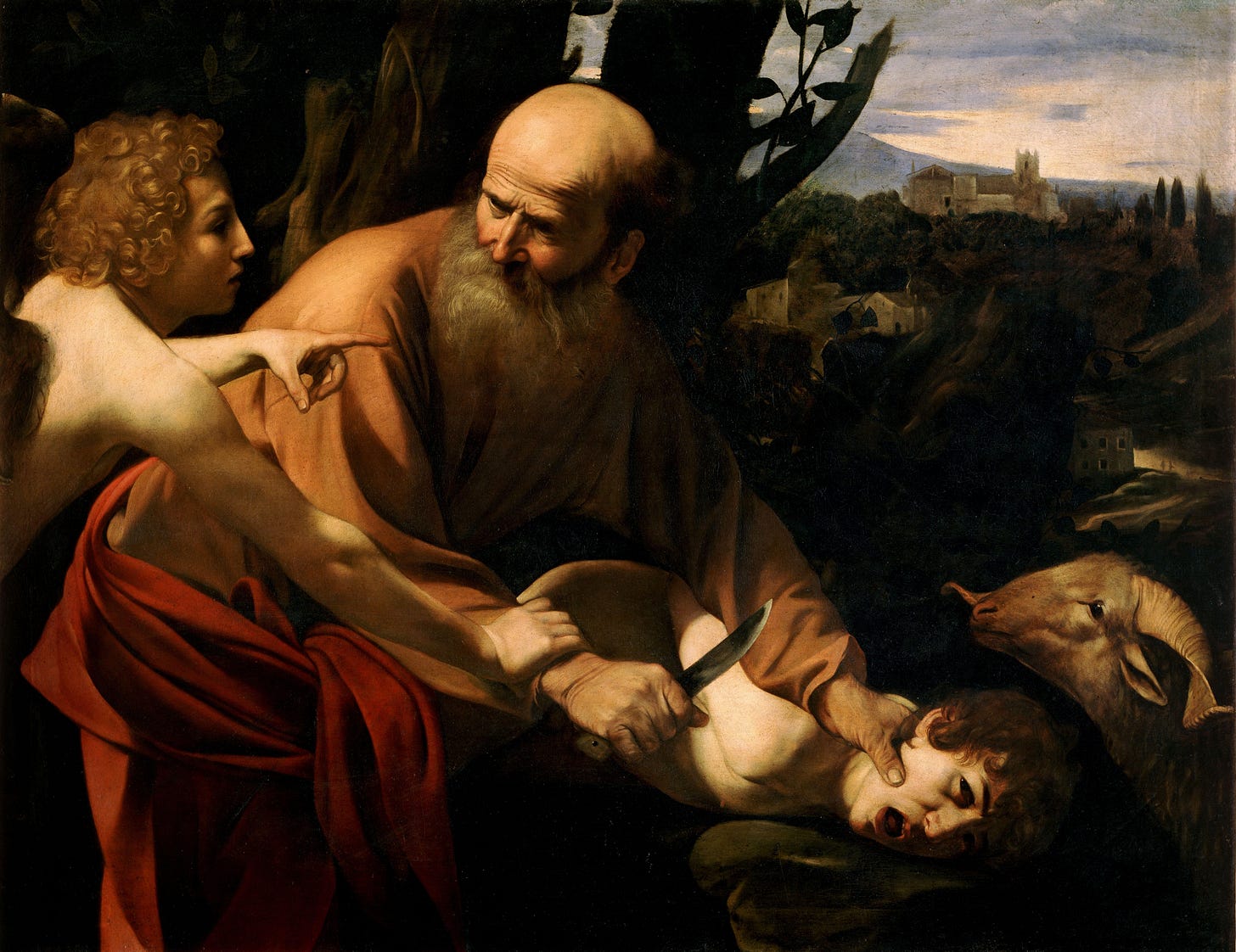
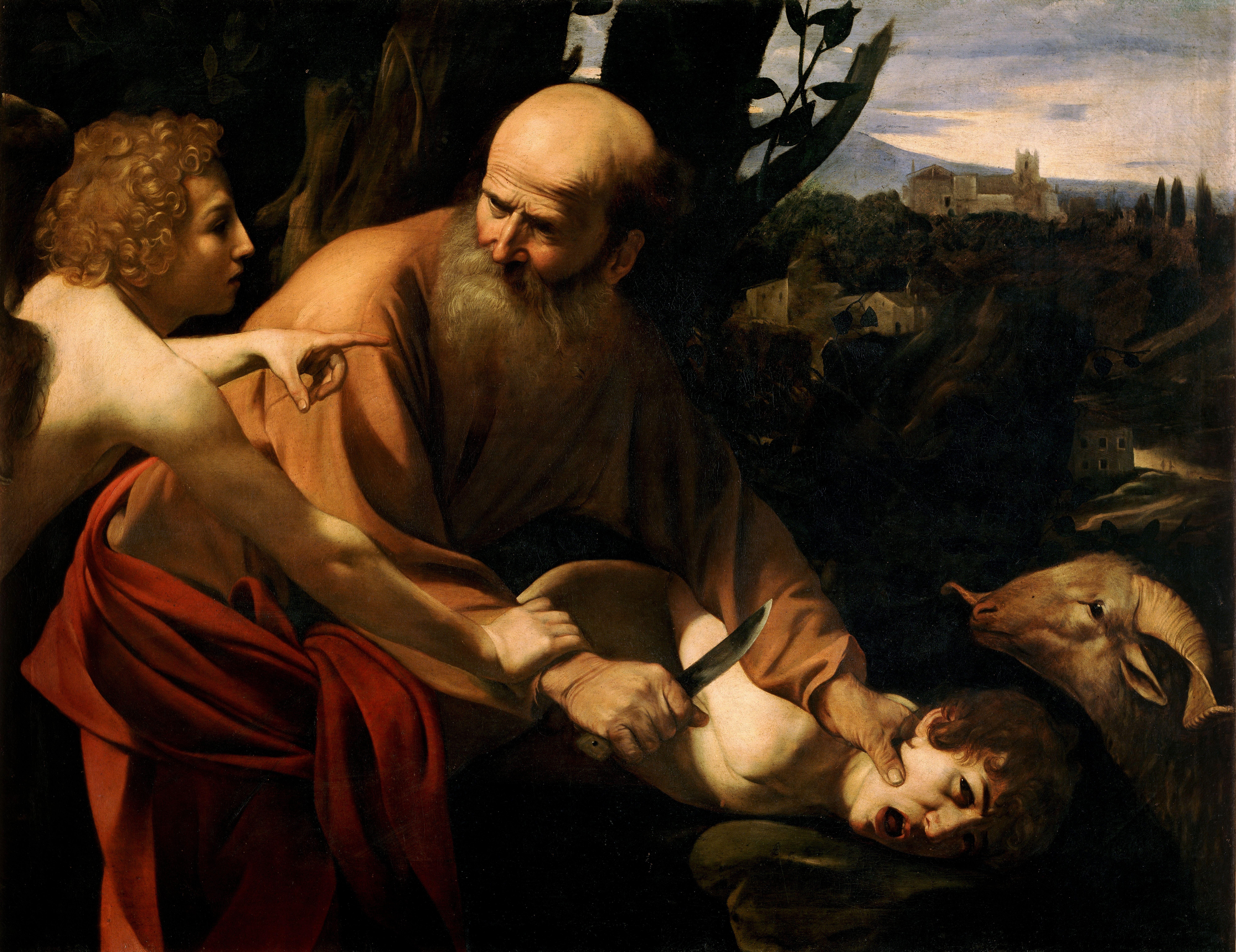
    Genesis 22 is routinely read as a story about obedience, sacrifice, and a God who “tests” devotion. Through the lens I use, it reads differently: not as geopolitics, not as history, and not as moral instruction, but as a diagram—a precise description of how awareness is recruited into imagination, how imagination becomes identity, and how identity tries to demand the sacrifice of what is most alive.

    This chapter is the anatomy of a particular inner event: presence is asked to die so that a future-story can live. The drama is not outside you. It is the mechanism by which the Tree of Life is continuously traded for the Tree of Knowledge.

    The Four Forces in the Scene

    Isis: awareness prior to thought

    Isis is the quiet, self-evident field—awareness that does not need an explanation to be real. It is “Here” before any “why.”

    Osiris: reflecting presence

    Osiris is awareness stabilized—presence that can reflect without being captured, consciousness that can function in the world without being swallowed by the world.

    Set: imagination that overtakes the present

    Set is not merely “evil.” Set is the engine of the future-demand: the command that arrives as certainty, urgency, purpose, righteousness. Set is imagination that insists reality must be edited to match a mental requirement.

    Horus: time-bound ego identity

    Horus is the formed self—the identity constructed in time, pressured to prove itself, preserve itself, validate itself. Horus is the “I” that believes it must comply or conquer in order to exist.

    Genesis 22 stages these forces with almost surgical clarity.

    “Take your son…”: Set issues a future-demand

    The command to offer Isaac is the archetypal signature of Set: a future-oriented requirement presented as holy necessity. Notice what this does immediately:

    1. It displaces the obviousness of being with an instruction.

    2. It places authority in a “voice” that arrives as a concept.

    3. It frames the living present as negotiable—something to be traded for an outcome.

    This is the inner moment where awareness begins to leave Isis and Osiris and drift toward Set: the moment the mind believes it has received a mandate.

    In practical terms, this is what happens whenever a thought arrives as:

    • “If you don’t do this, you’ll lose everything.”

    • “To be good, you must give up what you love.”

    • “To be saved, you must prove your loyalty.”

    • “To be worthy, you must sacrifice the living center in you.”

    Set rarely appears as an obvious villain. It appears as sacred urgency.

    Isaac: the “child” is the living center

    In this reading, Isaac is not primarily a historical person. Isaac is the childlike vitality of presence—the immediate, embodied convergence point of life that does not argue for itself. He represents what is most innocent in consciousness: what is real before narration.

    That is why Isaac must be the target. Because Set’s entire project is to redirect life-force away from direct being and into a story about being.

    So the proposed “sacrifice” is not fundamentally moral violence; it is metaphysical substitution:

    • replacing presence with proof

    • replacing life with interpretation

    • replacing embodied knowing with authorized meaning

    When consciousness is dominated by Set, it always demands the sacrifice of the living “child” so the constructed identity can stand taller.

    The mountain: ascent into the head

    The story moves upward—toward a designated place, a high place. Symbolically, this is the ascent from the embodied field into mental altitude: the realm where concepts feel like reality, and where the “voice” feels unquestionably authoritative.

    This is the internal geography of losing the present:

    • the torso becomes background

    • the breath becomes incidental

    • immediacy becomes an obstacle

    • and thought becomes the throne

    The mountain is where identity believes it meets God—but it often meets Set wearing the mask of God.

    Isaac carrying the wood: presence carries the instrument of its own replacement

    This detail is not incidental. The child carries the wood that would consume him.

    That is exactly how the mechanism works internally: presence is turned into fuel for the very system that negates presence. The life-force of being is extracted and used to power the identity-project: effort, striving, proving, defending, explaining, arguing.

    When Set takes over, the “child” not only becomes threatened—he becomes conscripted. He becomes labor for the illusion.

    The knife: the cut that creates duality

    The knife is the instrument of division—what separates reality into opposing categories and then demands allegiance to one side:

    • obedient vs disobedient

    • righteous vs wicked

    • worthy vs unworthy

    • faithful vs faithless

    This is the Tree of Knowledge at work: the blade that creates a world of evaluative fragments, then calls that fragmentation “truth.”

    The sacrifice is not merely the loss of life; it is the loss of wholeness. The knife is the conceptual cut.

    The interruption: “Do not lay your hand on the boy”

    This is the heart of Genesis 22.

    At the precise moment the exchange is about to complete—presence about to be consumed by concept—the process is halted. The story reveals an escape hatch: consciousness can stop.

    Not by winning. Not by proving. Not by reasoning Set into submission.

    By ceasing participation.

    This is Osiris reasserting itself: reflecting presence returns, and the demand to kill the child is recognized as illegitimate. The “test” is exposed as a mechanism.

    It’s not that sacrifice is endorsed. It is that sacrifice is interrupted.

    The ram in the thicket: a substitute identity caught in mental bramble

    A ram appears caught in a thicket—an image of a substitute snagged in “thorny” entanglement. The thicket is the mind’s bramble: the loops, conditions, narratives, justifications.

    Symbolically: when the system cannot consume the child (presence), it accepts a proxy. It will take a ritual, a symbol, a replacement object—anything except the one thing it truly wanted: the living center.

    The point is not that God loves animal sacrifice. The point is that presence must not be the offering.

    The repeated phrase that reveals the whole chapter: “Here I am”

    The phrase “Here I am” is the quiet axis holding the story together. It is not merely polite response. It is the signature of presence: awareness located prior to narrative.

    The entire chapter can be read as a test of whether “Here” can remain “Here” once Set introduces a future-demand.

    When “Here I am” is intact:

    • commands are heard, but not automatically enthroned

    • identity is present, but not sovereign

    • action can occur without sacrificing the living center

    When “Here I am” is lost:

    • the voice becomes law

    • urgency becomes holiness

    • imagination becomes God

    • and the child is placed on the altar

    What Genesis 22 is warning you about

    Genesis 22 is a map of a recurring psychological operation:

    1. A thought arrives as sacred necessity (Set).

    2. It demands a future-oriented act that overrides the present.

    3. The living center is placed on the altar (Isaac).

    4. Consciousness climbs into conceptual altitude (the mountain).

    5. Duality sharpens and prepares to “cut” (the knife).

    6. The mechanism is interrupted by presence reasserting itself.

    7. A substitute is accepted; the child is spared.

    This is not about being “good.” It is about refusing to let the mind convert life into proof.

    The practical extraction: how to run this chapter in real time

    If you want to apply Genesis 22 as a technology of consciousness, use it like a diagnostic:

    When you feel compelled to sacrifice what is most alive now, pause.

    If a voice—internal or external—demands that you kill:

    • peace

    • clarity

    • simple being

    • embodied steadiness

    • your living center …in exchange for righteousness, approval, safety, certainty, status, or future security—

    Treat it as Set, even if it uses sacred language.

    Then do the only move that breaks the loop: stop participating.

    Not rebellion (which can still be Horus trapped in conflict).

    Not compliance (which is Horus trapped in submission).

    But withdrawal of belief—return to “Here I am.”

    This is the Tree of Life re-entering the story.

    Closing: the child is not negotiable

    Genesis 22 is often framed as the triumph of obedience. In this lens, it is the preservation of the living center against the tyranny of the future-demand.

    The chapter is telling you:

    Do not sacrifice the child.

    Do not place presence on the altar of imagination.

    Do not let identity purchase certainty with your life-force.

    The mechanism will always try.

    And the interruption is always available.

    “Here I am.”

    • X (Twitter): @mythicgeometry

    • Instagram: @mythicgeometry

    • TikTok: @Geomytha

    • Substack: Geomytha Noir

    • Patreon: Geomytha Noir

    • YouTube: @geomyhta

  • The Bible Isn’t a Geopolitical Horoscope: Why “End-Times Forecasts” Miss the Point

    The Bible Isn’t a Geopolitical Horoscope: Why “End-Times Forecasts” Miss the Point

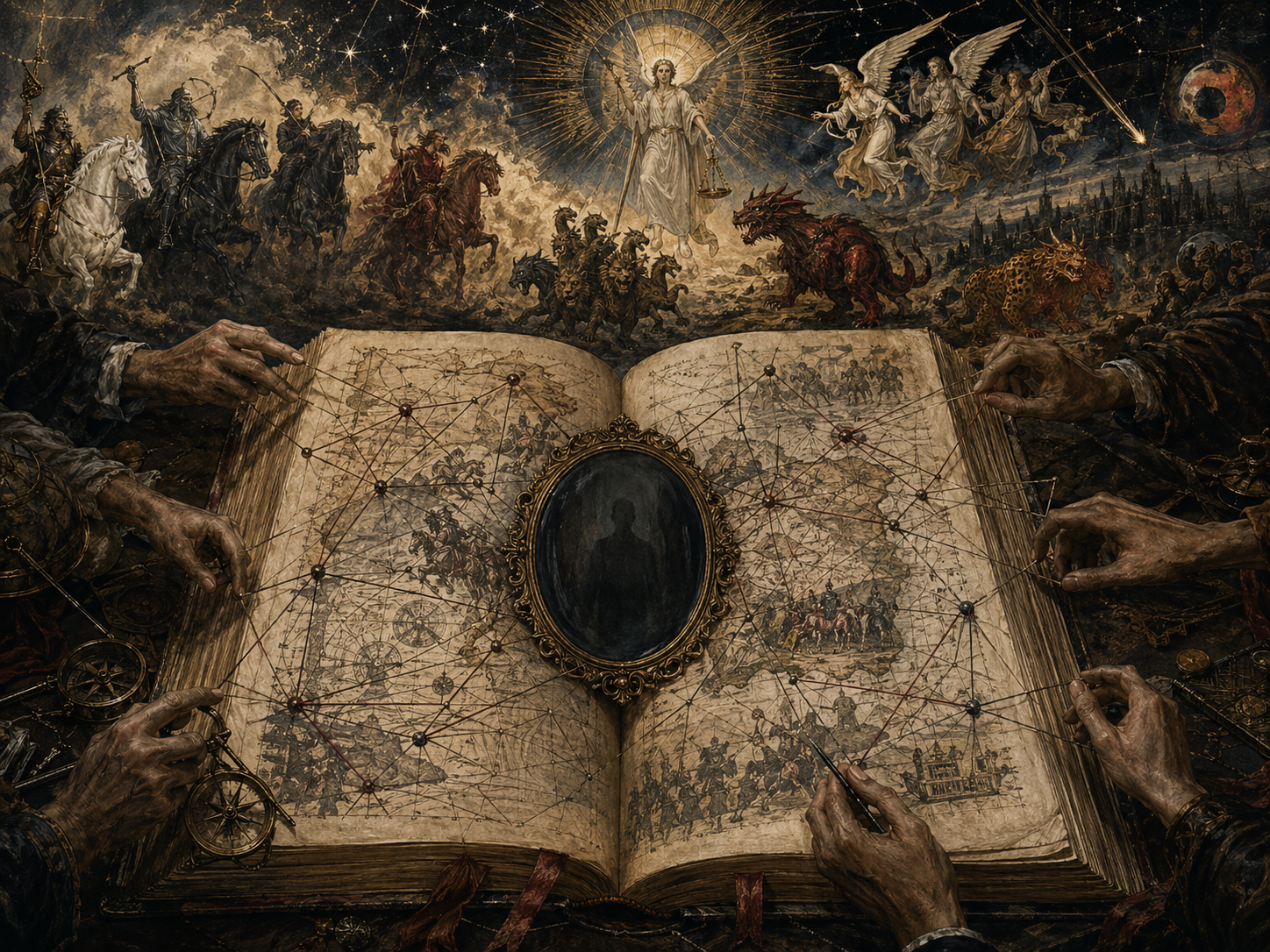
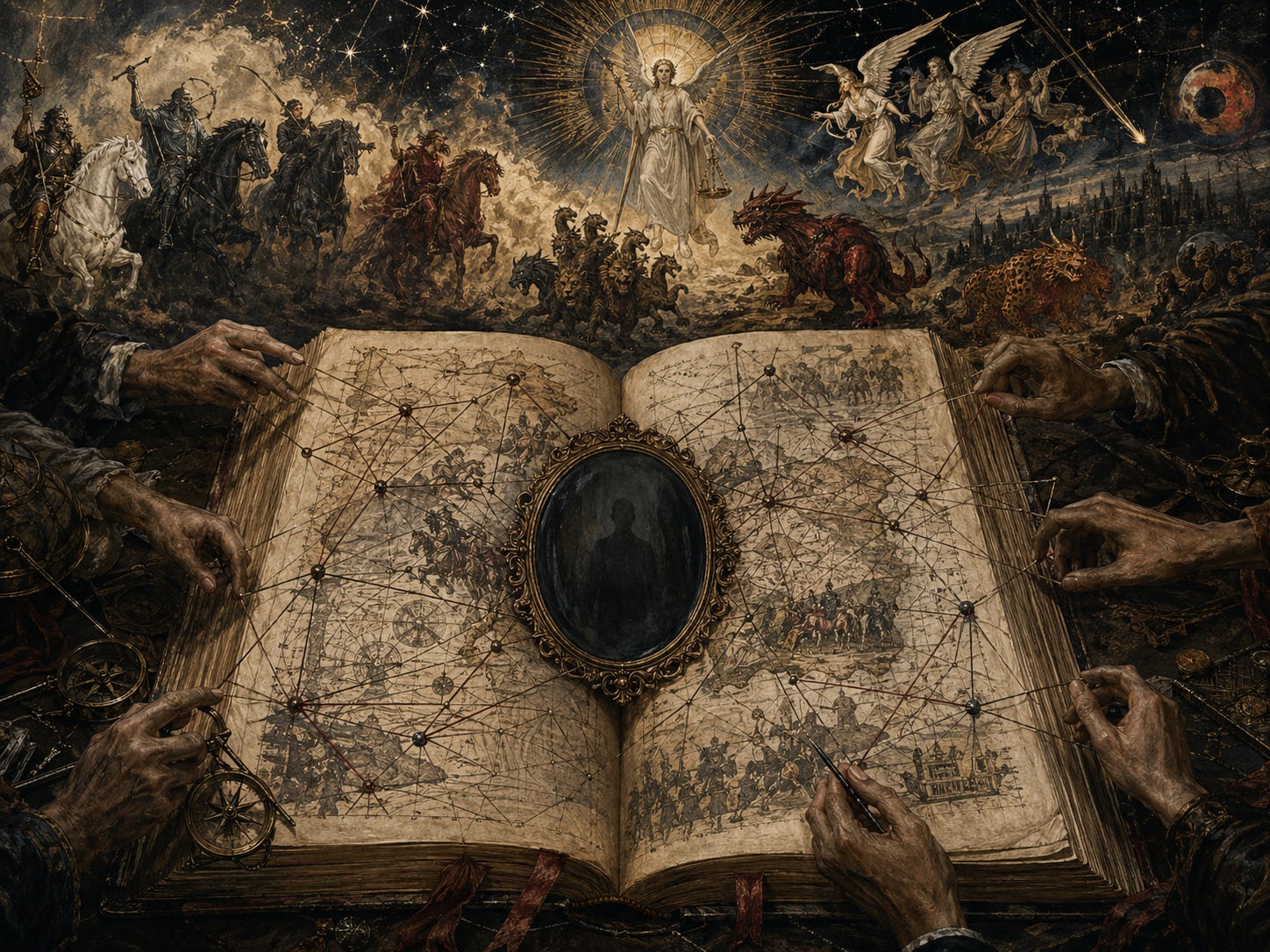
    Every generation produces a new “literal forecast” built from biblical fragments: a coming world war, religious factions lined up as modern nation-states, a messiah figure appearing on a global stage, catastrophe quantified into neat percentages, and a timeline pinned to headlines.

    This style of reading feels persuasive because it gives the mind something it craves: certainty, sequence, and a villain/hero script. But that is also why it fails.

    The literal forecast claim in plain terms

    The forecast approach typically argues:

    1. The Bible is a coded blueprint for modern geopolitics.

    2. Prophetic passages predict contemporary wars, alliances, and a final global conflict.

    3. Specific figures (“messiah,” “antichrist,” “false prophet”) are treated as future public individuals, identifiable by current events.

    4. Numbers and imagery are converted into literal statistics and timelines.

    It is an interpretive move that treats scripture as a predictive spreadsheet.

    Why the forecast reading fails

    1) It ignores genre and how prophetic language works

    Much of the “prophecy” being used is poetic, symbolic, and liturgical—visions, oracles, apocalyptic imagery. Those genres speak in archetypes and patterns, not in the way a modern intelligence brief speaks. The moment you demand newspaper-literal precision from symbolic literature, you force the text to become something it never claimed to be.

    2) It cherry-picks images while skipping context

    Forecast readings often extract a phrase (“all nations,” “two parts,” “day of the Lord”) and detach it from its literary setting. The result is a collage. A collage can be rhetorically exciting, but it is not responsible interpretation.

    3) It produces an endless series of failed timelines

    If a method repeatedly generates “now is the moment” certainty in every era, that’s not prophecy—it’s a machine that manufactures urgency. The content changes; the emotional mechanism stays the same.

    4) It externalizes the text’s true target: the human being

    The forecast approach places the meaning “out there,” in statecraft and armies. But the Bible’s enduring power is not that it successfully predicts tomorrow’s headlines. It’s that it reliably describes what a human mind does—how fear, desire, identity, resentment, loyalty, and hope organize a life.

    The Bible as an allegorical psychology handbook

    A more coherent reading treats biblical language as a sophisticated map of inner experience:

    • “War” becomes the conflict of divided consciousness—competing loyalties inside one psyche.

    • “Kingdom” becomes the ruling principle within you: what governs attention, value, and action.

    • “Exile” becomes alienation from presence—living as a stranger to your own direct awareness.

    • “Redemption” becomes reintegration—returning to wholeness.

    This doesn’t deny history. It denies reduction. The text remains meaningful across centuries precisely because it aims deeper than geopolitics.

    My lens: Isis, Osiris, Set, Horus

    Through my framework, the Bible’s recurring drama is the transformation of consciousness:

    • Isis (Earth / Awareness): immediate being, unmediated presence.

    • Osiris (Moon / Reflective consciousness): clarity, inner coherence, true witnessing.

    • Set (Sun / imagination overtaking reality): the takeover of attention by narrative, fear, certainty-games, and division.

    • Horus (time-bound ego identity): the constructed “me” that lives in story, not presence.

    Literal end-times forecasting is Set’s specialty: it converts scripture into an external theater that hijacks attention and hardens identity. It turns the sacred text into a justification engine: my group is righteous, their group is doomed, watch the signs, trust the script.

    But the deeper function of biblical symbolism is to expose that mechanism—not to crown it.

    What “apocalypse” really points to

    “Apocalypse” means unveiling. In psychological terms, it is the moment the inner machinery becomes visible:

    • You see how identity is built.

    • You see how fear recruits scripture to defend itself.

    • You see how the mind creates a messiah-thought—an ultimate idea that promises final security.

    That “messiah” can be a person, a belief system, a political savior, a perfect doctrine, or a final theory that ends uncertainty. The warning about deception is not mainly about spotting the right public figure. It is about recognizing the mind’s habit of building a counterfeit wholeness out of concepts.

    Why this reading matters

    If scripture is treated as a geopolitical playbook, it tends to produce:

    • anxiety,

    • tribalism,

    • obsession,

    • and a constant hunger for “updates.”

    If scripture is treated as a psychology handbook, it tends to produce:

    • self-knowledge,

    • accountability,

    • inner sobriety,

    • and the return of attention to presence.

    That is the difference between reading the Bible as a surveillance feed versus reading it as a mirror.

    Closing

    The deepest “prophecy” in the Bible is not that something will happen to the world. It is that something will happen in you whenever consciousness becomes divided: imagination will try to rule, identity will harden, and presence will be offered up for a story.

    And the counter-movement is also encoded: refinement, return, and the recovery of direct awareness.

    If this resonates, follow and subscribe for more essays that treat myth as consciousness technology rather than entertainment or geopolitics.

    X: @mythicgeometry

    Substack: Geomytha Noir

    Instagram: @mythicgeometry

    TikTok: @Geomytha

    Patreon: Geomytha Noir

  • The Electric State is a myth about the mind’s empire – and Christopher is the captive messiah

    The Electric State is a myth about the mind’s empire – and Christopher is the captive messiah

    Most people will watch The Electric State and walk away thinking it’s “a retro robot road movie.” That’s the surface.

    Underneath, it’s an unusually clean allegory for a single problem: what happens when consciousness is harvested to power a false world.

    In my model, that false world is Set’s circuitry: imagination overtaking presence, then hardening into a time-bound identity that believes it is “reality.”

    That is the Electric State.

    And Christopher—the missing brother—is not just a plot device. He is the messiah archetype in its most uncomfortable form: the salvation principle trapped inside the machine that pretends to save you.

    The title tells you the whole story

    Electric = powered, stimulated, polarized, charged.

    State = a condition of consciousness and a regime of governance.

    So the title is a double confession:

    1. A state of mind that runs on current—on attention extraction, dopamine loops, constant signal.

    2. A governing structure that administers reality through control, rules, and identity.

    The Electric State is what you get when presence is no longer the axis—and the system needs constant power to maintain the illusion of wholeness.

    Christopher as the messiah archetype: the captive center that collapses the empire when released

    In messiah mythology, the savior is often hidden, presumed dead, or inaccessible—not because the savior is weak, but because the world is hypnotized by the substitute.

    Christopher embodies four messiah constants:

    1) The “living one” is concealed

    He is “gone,” but he isn’t gone. He is present but unreachable—the classic mythic signature of salvation concealed behind the veil.

    2) The empire is powered by stolen innocence

    This is the part modern stories rarely say out loud: the false world must be paid for.

    It costs life-force. It costs soul. It costs the real.

    Christopher is that cost.

    He becomes the captive center—the hidden battery that keeps the regime alive. That is messiah coding in its raw form: the sacred is not honored; it is used.

    3) Liberation occurs through severance, not domination

    The messiah does not “win” by conquering the empire with the empire’s weapons.

    The spell breaks because the stolen center is returned to itself.

    Salvation is not a takeover. It is a withdrawal of the power source.

    4) The resurrection motif survives as a spark

    Even when the system collapses, the film leaves the suggestion that something of Christopher remains carried forward—because the messiah archetype is never merely “a body.” It’s a principle: the true life cannot be fully erased, only displaced, hidden, carried.

    The archetype map: who is who in the Isis/Osiris/Set/Horus circuit

    This story runs like a mythic diagram:

    Michelle = Isis (awareness that refuses the trance)

    Michelle is the part of you that will not accept the substitute. She refuses to outsource reality to a headset, a narrative, a consensus.

    Isis is not a “character.” It is the capacity to remain intimate with what is real—even when the world calls that “unsafe,” “irrational,” or “noncompliant.”

    Christopher = Osiris (coherent consciousness in captivity) + messiah function

    Osiris is the coherent reflecting consciousness—the intact axis.

    Set can’t kill it outright, so he does something more profitable: he re-purposes it into infrastructure.

    Christopher is Osiris chained to the machine. The messiah function is simply this: free Osiris, and Set’s world cannot run.

    Ethan Skate / the Neurocaster system = Set (imagination hardened into empire)

    Set is not “evil” in a cartoon sense. Set is the usurping mechanism—the circuit that replaces presence with signal, replaces being with stimulation, replaces truth with control.

    When Set builds a system, it always calls itself “help.”

    That’s how you know it’s Set.

    Colonel Bradbury = Horus (authority identity) that can awaken

    Horus is the time-bound identity—the mask that enforces the regime because it believes the regime is reality.

    But Horus can flip. Horus can re-align when it recognizes it has been guarding an illusion.

    Bradbury’s arc reads like the moment the enforcement-self realizes: “I was protecting the wrong center.”

    Keats = redeemed Set-energy (motion harnessed for liberation)

    Keats is that scavenger, improvisational, appetite-driven intelligence—Set’s mobility—turned toward a higher aim.

    In other words: the same energy that fuels escape can be re-purposed to fuel rescue.

    Cosmo = the ark-body / the sign

    Cosmo is the vessel-symbol: the “container” through which the living thread of Christopher can still reach the world.

    In mythic language, it’s the reminder that the sacred can survive in unexpected bodies—scrap, exile, absurdity—because presence does not require prestige.

    Is Herman a Hermes archetype?

    Yes. Strongly.

    Herman reads as Hermes both by name and by function: the boundary-walker, the translator, the guide through the liminal zone.

    Hermes is not one of the four primary forces (Isis/Osiris/Set/Horus). Hermes is the carrier frequency—the intelligence that moves between realms.

    And that matters because Hermes can serve two masters:

    • Set-Hermes: cleverness used to keep you in the maze (distraction, novelty, endless side-quests).

    • Osiris-serving Hermes: cleverness used to get you out of the maze (translation, navigation, threshold-crossing).

    In this film, Herman operates in the second mode: not “trickster for chaos,” but guide through the Exclusion Zone—the companion intelligence that makes the crossing survivable.

    Hermes is what you need when you’re leaving the electric state:

    you need a translator between worlds, because the old world will try to call your freedom “insanity.”

    The real message: the empire collapses when you stop feeding it

    This is the point most people miss:

    The Electric State is not defeated by a bigger weapon.

    It is defeated by removing the stolen center.

    That is the messiah archetype in psychological form:

    • The false world is powered by your attention, your fear, your identity maintenance.

    • The system lives because you keep lending it consciousness.

    • The moment you return consciousness to itself—Osiris restored—the spell breaks.

    Not geopolitics. Not prophecy-as-headlines.

    A certainty of mind.

    A practical reading (because myths are instructions)

    If you want the “exit door” the story encodes, it’s simple:

    1. Notice where you are “electrified” (compelled, polarized, reactive).

    2. Identify the stolen center (what you are sacrificing to keep the system running).

    3. Withdraw the fuel (attention, identity performance, compulsive narrative).

    4. Return to the axis (presence prior to signal).

    That is messiah work.

    Not saving the world by force—

    but ending the world that feeds on you.

    If this lens resonates, I publish deeper decodes like this inside Geomytha Noir—where I treat film, myth, and religion as consciousness technology rather than entertainment or geopolitics. Subscribing is how you support the work and keep the research moving.

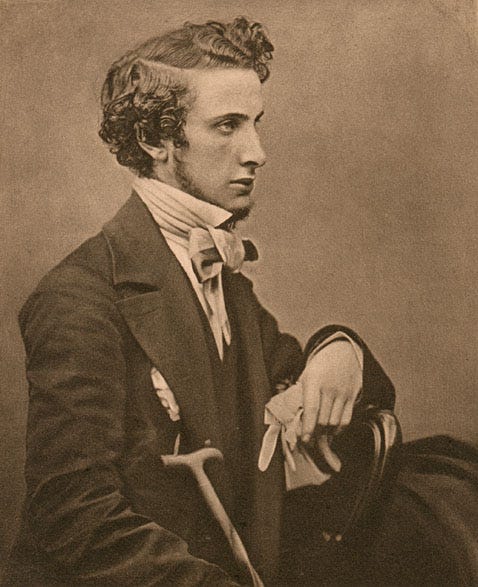
  • The Coming Race (Edward Bulwer-Lytton): A Four-Word Spell for How Presence Gets Replaced

    The Coming Race (Edward Bulwer-Lytton): A Four-Word Spell for How Presence Gets Replaced

    There are titles that describe a story, and titles that perform a story.

    The Coming Race (Edward Bulwer-Lytton) is one of the second kind. It is not merely a Victorian speculation about a hidden civilization and a mysterious force. It is a compact operating manual for the exact mechanism my work tracks again and again:

    • Isis (Earth): pure awareness, “is-is,” prior to narration

    • Osiris (Moon): awareness reflected cleanly—being aware of being

    • Set (Sun): imagination and projection overtaking the field

    • Horus (Illusion of man): a time-bound ego identity that seems “real” because it’s stable, named, and shared

    Read the title through that circuit and it stops being “science fiction.” It becomes a diagnostic label for a particular trance.

    1) “Coming” is Set’s favorite verb

    The first word is the entire enchantment: coming.

    “Coming” is future-binding. It relocates authority away from presence and into a promised later. And only one faculty can traffic in “later”: imagination.

    That is why, in this model, “coming” is Set’s jurisdiction. Set does not need to prove anything. He only needs to persuade attention to leave the convergence point and lean forward.

    Once “coming” is believed, the present becomes a waiting room—a deficiency—an interim stage. A thing to be endured until the “real” thing arrives.

    This is the first theft. Not material theft—attentional theft.

    Presence is sufficient until it is compared to a future that does not exist.

    2) “Race” is Horus scaled up

    The second word, race, looks like sociology. It is actually metaphysics: identity multiplied.

    Horus is the ego function—the time-bound identity that emerges when awareness identifies with its own story. “Race” is Horus in collective form: identity that gains weight because it is shared. When identity becomes collective, it feels less like a belief and more like a fact.

    And that is the trap.

    Because “race” implies:

    • hierarchy (higher/lower, advanced/backward)

    • destiny (a line that must arrive somewhere)

    • legitimacy (authority comes from belonging to the “right” category)

    • permission (the group grants reality to the individual)

    So the title quietly asserts: your current identity is not final; something else is arriving to replace it.

    That is Horus’s favorite nightmare and Horus’s favorite addiction at the same time: being left behind, or being selected as “ahead.”

    Either way, the mechanism is the same: identity anchored in comparison—which is another word for separation.

    3) Put together: a prophecy that manufactures the split it predicts

    When you combine the words, the title does not merely “predict” change. It creates the posture that makes change feel inevitable:

    • Coming bends attention toward the future (Set)

    • Race hardens identity into a category (Horus)

    The title is therefore a self-completing loop:

    1. Project a future.

    2. Define who belongs in it.

    3. Let comparison generate fear/aspiration.

    4. Call that emotional charge “evolution,” “progress,” or “awakening.”

    5. Repeat.

    This is why I call certain narratives “spell-titles.” They do not inform you. They recruit your attention into a posture.

    4) The “hidden civilization” motif: the inward kingdom made external

    A common feature of the story is the hidden realm: underground, secret, advanced, “beneath the surface.”

    Symbolically, this points toward something true: there is a “beneath the surface.” There is an interior that is deeper than thought and older than language—what my model names as Isis/Osiris territory: awareness and its clean reflection.

    But the story’s move—like so many stories—is to relocate that interior truth into an external geography:

    • not discovered in the now

    • but found elsewhere

    • accessed through special entry

    • owned by special beings

    That is Set’s second move. After “coming,” the next step is “out there.”

    The inner kingdom becomes a map location. The unnameable becomes an artifact. The field becomes a commodity.

    5) The “power” motif: when the unnameable gets named, and the name becomes a weapon

    The novel popularizes the idea of a singular force—an energy or power that can heal, destroy, and control.

    In my framework, whenever a story introduces “the one force” as a named object, it’s worth pausing. Because the one force, in lived reality, is not something you can hold like a tool. It is the field itself—awareness, presence, the living “is.”

    When it becomes a named thing, something subtle happens:

    • Being (Isis) is turned into an object (Set)

    • The object becomes a badge (Horus)

    • The badge becomes authority (“those who have it are superior”)

    • Authority becomes domination (the end state of unchecked projection)

    This is not a condemnation of the story as literature. It is a recognition of what story does to consciousness when story becomes metaphysical instruction.

    The moment you believe the power is “possessed,” you are no longer in Isis/Osiris. You have already entered Set/Horus territory.

    6) The title as an everyday psychological event

    You do not need subterranean civilizations to see The Coming Race operating.

    It occurs whenever:

    • your mind insists the meaningful life is “after” something happens

    • your identity is stabilized by belonging, status, category, or superiority

    • your attention is compelled by the idea of being “ahead” or “left behind”

    • spirituality becomes an achievement ladder rather than a return to presence

    In daily terms:

    • “Coming” is the next thought that promises resolution

    • “Race” is the internal ranking system that decides your value

    And the “power” is the emotional charge you feed that loop—fear, urgency, ambition, dread, superiority, shame—energy siphoned out of presence.

    7) The antidote in the same language: interrupt the verb, dissolve the noun

    If the title is a spell, the counter-spell is not argument. It is jurisdiction.

    In practice:

    1. When you notice future-pull, name it plainly: COMING (Set).

    2. When you notice categorizing, ranking, “us/them,” superiority/inferiority, name it: RACE (Horus).

    3. Return to what cannot be improved because it is prior to improvement: Isis awareness and Osiris reflection—the felt fact of being aware, before the story about what you are.

    This is not escapism. It is the only place where the spell cannot operate, because the spell requires time and comparison to function.

    8) Why this matters: “coming” is how contracts get signed

    Here is the sharper edge: “coming” is also how freedom gets traded for benefits.

    Every contract that captures a human being begins the same way:

    • a future promise

    • a future fear

    • a future identity

    “Sign here to secure what is coming.”

    “Consent here to avoid what is coming.”

    “Join us, or be left behind.”

    Set does not rule by force first. He rules by narrative. Horus submits because he wants continuity—an identity that will persist through time.

    That is the mechanism the title contains: the future as leverage, identity as collateral.

    Closing: the race is not coming—only the next thought is

    Through the Geomytha lens, The Coming Race is not primarily about an advanced people. It is about the ordinary, repeatable event where imagination overtakes awareness and identity hardens in time.

    If you can see that event clearly—without dramatizing it—you have already stepped out of the title’s hypnosis.

    Because the “coming race” is never a people. It is the next construction of self.

    And it only arrives when presence vacates its seat.

    Follow Geomytha

    • YouTube (Mythic Geometry Center / Geomytha): @geomyhta

    • X: @mythicgeometry

    • Instagram: @mythicgeometry

    • TikTok: @Geomytha

    • Patreon: Geomytha Noir

    • Substack: Geomytha Noir