Author: D. Cyprian

  • Revelation 21: The Geometry of the New City

    Revelation 21: The Geometry of the New City

    How New Heaven, New Earth, and New Jerusalem reveal the perfected Lamb-field in Geomytha.

    Revelation 20 ended with all of Set’s architecture dismantled:

    • beast, false prophet, dragon in the lake of fire,

    • Death and Hades themselves dissolved,

    • the books opened,

    • the second death defined.

    Revelation 21 asks the only question left:

    If everything built on Set is gone,

    what remains?

    The answer is not a cloud-kingdom. It is a city,

    a city that is also a Bride,

    a cube that is also a Holy of Holies,

    a luminous field where God and humanity dwell without mediation.

    In Geomytha, Revelation 21 is the full pattern of Lamb-aligned consciousness:

    • Isis-awareness no longer exiled,

    • Osiris-reflection healed and complete,

    • Set’s sun-loop extinguished,

    • Horus no longer beast or Babylonian consumer, but a citizen of a different geometry: New Jerusalem.

    Babylon was a city built on Set’s logic.

    New Jerusalem is a city built on the Lamb’s.

    New Heaven, New Earth, and “No More Sea”

    “Then I saw a new heaven and a new earth, for the first heaven and the first earth had passed away, and the sea was no more.” (Rev 21:1)

    “New heaven” and “new earth” are not a replacement plane; they are renewed fields:

    • Heaven – the pattern of meaning, symbol, law, invisible structures.

    • Earth – embodied life, matter, history.

    Under Set, these were split and distorted:

    • heaven = weaponized theology, ideology, narrative;

    • earth = exploited resource, body as commodity.

    “New” heaven and earth are these same domains re-knit around the Lamb:

    • heaven’s patterns no longer lie about reality;

    • earth’s embodiment is no longer treated as expendable.

    “The sea was no more” is not a hatred of water. In Revelation, the sea has been:

    • the source of the beast (ch. 13),

    • the symbol of chaotic, unconscious, collective emotion.

    In Geomytha, “no more sea” means:

    • the chaotic unconscious that kept birthing Set’s empires is stilled;

    • the field is no longer ruled by undigested fear and desire;

    • nothing new rises from the deep to attack the city.

    This is not a sterile world; it is a world where unconscious chaos no longer governs.

    “Behold, the Dwelling of God Is with Humanity”

    “And I saw the holy city, new Jerusalem, coming down out of heaven from God, prepared as a bride adorned for her husband.” (Rev 21:2)

    “Behold, the dwelling place of God is with man. He will dwell with them, and they will be his people…” (v.3)

    New Jerusalem “comes down out of heaven”:

    • it is not humanity’s tower to God (Babel),

    • it is God’s geometry descending into the human field.

    The city is “prepared as a bride”:

    • this is not a fortress first; it is a relationship.

    • the city is the corporate form of the Bride:

      • creation and consciousness in stable union with the Lamb.

    “The dwelling place (tabernacle) of God is with humanity”:

    • no more distant sky-god,

    • no more holy of holies behind curtains and priests,

    • no more separation between Presence and life.

    “He will wipe away every tear from their eyes, and death shall be no more, neither shall there be mourning nor crying nor pain anymore, for the former things have passed away.” (v.4)

    This is not denial of the past; it is the end of Set’s cycle:

    • the kind of death that ruled under Set is gone,

    • the kind of pain born from deception and domination has no more foothold.

    The One on the throne says:

    “Behold, I am making all things new.” (v.5)

    Not: “I am making all new things.”

    The same creation, reconfigured.

    The same Horus, now aligned with the Lamb instead of the beast.

    “It Is Done”: Alpha, Omega, and the Thirsty

    “And he said to me, ‘It is done! I am the Alpha and the Omega, the beginning and the end. To the thirsty I will give from the spring of the water of life without payment.’” (v.6)

    “It is done” corresponds to:

    • “It is finished” at the cross,

    • “It is done” at the seventh bowl (ch. 16).

    There, it was the completion of Set’s consequence.

    Here, it is the completion of Lamb’s renewal.

    “Alpha and Omega” in Geomytha confirms:

    • the I AM (Isis) is the origin and end of every cycle;

    • Set has never been the first principle nor the last word.

    “To the thirsty I will give… without payment”:

    • Babylon sold wine (her intoxicating mixture of desire and anesthesia).

    • The Lamb gives water of life freely:

      • no exploitation,

      • no spiritual marketplace,

      • no paywall to Presence.

    “The one who conquers will have this heritage, and I will be his God and he will be my son.” (v.7)

    Conquering, in this book, is not empire; it is refusal to yield to Set’s mark.

    To “conquer” is to stay loyal to the Lamb through collapse.

    By contrast:

    “But as for the cowardly, the faithless, the detestable… their portion will be in the lake that burns with fire and sulfur, which is the second death.” (v.8)

    The “cowardly” are listed first, not the spectacularly wicked:

    • those who collapse back into Set’s realm out of fear,

    • those who choose Babylon’s security over reality.

    In Geomytha, this is the final statement:

    • anything that clings to Set’s geometry cannot cross into this city;

    • it belongs to the fire that un-makes unreality.

    The City as Bride: Measured Light

    “Come, I will show you the Bride, the wife of the Lamb.” (v.9)

    “And he… showed me the holy city Jerusalem coming down out of heaven from God, having the glory of God, its radiance like a most rare jewel…” (vv.9–11)

    The angel offers to show the Bride and shows a city.

    In Geomytha, this fusion is central:

    • The Bride is not a disembodied group of souls.

    • The Bride is a social geometry:

      • a way of being together,

      • a pattern of relation,

      • an ordered, luminous environment.

    The city’s radiance is “like a most rare jewel”:

    • Babylon radiated neon, gold, and spectacle from Set’s core,

    • New Jerusalem radiates God’s own clarity, refracted through matter.

    The city has:

    • a great, high wall – boundary, protection, form,

    • twelve gates with the names of the tribes of Israel,

    • twelve foundations with the names of the apostles of the Lamb (vv.12–14).

    In Geomytha:

    • the twelve gates = full inclusion of the original people of the covenant;

    • the twelve foundations = full inclusion of the apostolic Lamb-witness;

    • the city is the completion of the story begun in Israel and the early church, not a replacement.

    The measuring angel uses a golden reed:

    “The city lies foursquare, its length the same as its width… 12,000 stadia. Its length and width and height are equal.” (v.16)

    A cube:

    • the shape of the Holy of Holies in the temple,

    • here expanded to city-scale.

    In Geomytha, the cube means:

    • the whole environment is holy of holies,

    • there is no inner chamber reserved for a few;

    • all of life is now the place where Presence meets creation.

    The measurements (12,000; walls 144 cubits) express completeness and rootedness in the twelvefold pattern. This is order without oppression: form that serves life, not Set’s control.

    The foundations are decorated with twelve kinds of precious stones (vv.19–20), and each gate is “a single pearl” (v.21).

    Stones and pearls here are the solidified story:

    • everything the Lamb has done in and through people,

    • all the costly transformations, are now part of the city’s visible structure.

    No Temple, No Sun: the Lamb as Light

    “And I saw no temple in the city, for its temple is the Lord God the Almighty and the Lamb.” (v.22)

    Under Set-coded religion, the temple is a controlled access point:

    • power brokers,

    • sacred vs profane spaces,

    • intermediaries gatekeeping God.

    In New Jerusalem:

    • there is no separate temple:

      • the entire city is already direct contact,

      • God and the Lamb themselves are the “temple.”

    “And the city has no need of sun or moon to shine on it, for the glory of God gives it light, and its lamp is the Lamb.” (v.23)

    This is not the denial of physical sun and moon as creatures; it is the end of Set’s appropriation of the sun as the primary source of meaning.

    In Geomytha:

    • Set’s solar overdrive is no longer needed;

    • the Lamb—slain and risen consciousness—now functions as the lamp:

      • light that does not burn,

      • guidance that does not enslave.

    The glory of God is no longer filtered through Babylon’s spectacle or Set’s overexposure.

    Light emanates from Presence itself, and the city is transparent to it.

    Nations, Kings, and the Gates That Never Close

    “By its light will the nations walk, and the kings of the earth will bring their glory into it… its gates will never be shut by day—and there will be no night there.” (vv.24–25)

    The nations are not erased; they are healed:

    • diversity of cultures, histories, and glories are not flattened;

    • they are reoriented to walk “by its light.”

    The kings of the earth, who in Babylon’s day fornicated with the prostitute, now “bring their glory into it”:

    • rulership itself is redeemed,

    • authority no longer stands against the Lamb but flows into his city.

    “The gates will never be shut by day”—and there is “no night”:

    • no threat that requires closing the city off;

    • no “night” of deceptive unconsciousness for Set to work in.

    In Geomytha, this is the end of fortress mentality:

    • the city is secure, but not defensive;

    • boundaries remain (walls, gates), but they are not used to create exclusion or fear;

    • the only exclusions are of what cannot live in truth.

    “But nothing unclean will ever enter it, nor anyone who does what is detestable or false, but only those who are written in the Lamb’s book of life.” (v.27)

    The criterion is not ethnicity, status, or spiritual technique.

    The criterion is alignment:

    • nothing that insists on falsehood can pass into this geometry;

    • only those whose identity is inscribed in the Lamb’s life-field belong.

    This is the final refusal of Set’s compromise.

    Revelation 21 in Geomytha: Living Toward the City

    Seen through Geomytha, Revelation 21 is not escapist fantasy; it is the finished pattern of what Lamb-alignment has always been moving toward:

    • New heaven and new earth: heaven (pattern) and earth (body) reconciled and renewed.

    • No sea: the unconscious chaos that bred beast-empires calmed, no new Set rising from the deep.

    • The dwelling of God with humanity: Isis and embodied life united with no exile zones.

    • The city as Bride: not disembodied souls, but a social geometry built on presence, truth, and love.

    • Cube-city: the entire environment is Holy of Holies; there is no dividing wall between sacred and ordinary.

    • No temple, no need of sun: no more religious control; no more Set-coded solar tyranny; the Lamb himself is illumination.

    • Open gates, healed nations: diversity without domination; boundaries without fear; exclusion only of what will not stop lying.

    For your actual life, this chapter asks:

    • Where, in my world, am I still trying to rebuild Babylon instead of moving toward this city?

    • Which of my habits, economies, and relationships are already tasting something of New Jerusalem (shared presence, honest boundaries, light that does not burn)?

    • Where do I still rely on Set’s sun—overwork, image, constant exposure—instead of letting the Lamb be my lamp?

    • What, in me, clearly cannot live inside this city’s geometry (compulsions, deceptions, patterns of harm)? How can those begin to pass through fire now, instead of later?

    • How can my home, my work, my parenting, and my art become small sketches of this city’s pattern, even in the middle of a world that still looks like Babylon?

    Revelation 21 is not asking you to wait passively for a distant future.

    It is handing you the blueprint of the Lamb’s city and asking:

    Will you keep volunteering for Set’s architecture,

    or will you begin, in whatever ways you can,

    to live as a citizen of New Jerusalem now?

    X: @mythicgeometry · Substack: Geomytha Noir · YouTube: Geomytha · Instagram: @mythicgeometry · TikTok: @Geomytha · Patreon: GeomythaNoir

  • Revelation 20: The Thousand Years and the Two Deaths

    Revelation 20: The Thousand Years and the Two Deaths

    How the binding of the dragon, the first resurrection, and the lake of fire map inner cycles of Set and Lamb in the Geomytha field.

    Revelation 19 ended with the rider on the white horse: the Lamb in warrior-mode, the beast and false prophet captured, their system thrown into the lake of fire, and the armies of Set reduced to carrion. Chapter 20 moves from the battlefield to the timeline:

    • What happens with the dragon (root pattern behind the beast)?

    • What is this “thousand years”?

    • Who shares in the first resurrection?

    • What is the second death?

    • How do the books and the book of life function in the final judgment?

    Through your Geomytha lens, Revelation 20 is not a literal calendar you have to decode; it is a map of how:

    • Set’s root-current can be bound,

    • Lamb-consciousness can start to reign even while the body is still alive,

    • and all unresolved patterns eventually face a second death in the lake of fire—the field where illusion cannot hold together.

    It is a chapter about cycles inside a person and in history: binding, rest, relapse, final exposure, and the difference between dying in Set and dying in Lamb.

    The Dragon Bound for a Thousand Years: A Season of Inner Restraint

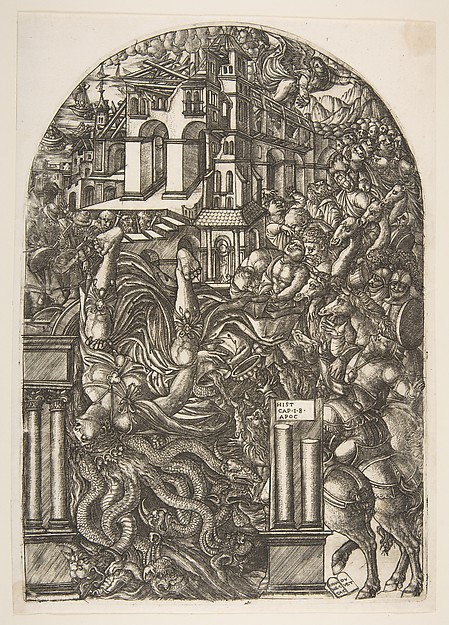
    “Then I saw an angel coming down from heaven, holding in his hand the key to the bottomless pit and a great chain. And he seized the dragon, that ancient serpent, who is the devil and Satan, and bound him for a thousand years, and threw him into the pit… so that he might not deceive the nations any longer, until the thousand years were ended. After that he must be released for a little while.” (Rev 20:1–3)

    The dragon, “that ancient serpent” (the primal Set-current behind the beast), is:

    • seized,

    • bound,

    • thrown into the Abyss,

    • sealed away,

    • unable to deceive “the nations” for a thousand years— but only for a time; he “must be released for a little while” later.

    In your system:

    • the dragon is the deep, trans-personal pattern of separation, fear, and domination; the archetypal Set-current.

    • The “key” and “chain” are the operation of Isis-awareness and Osiris-truth: when the Lamb’s field really takes hold, the dragon’s power to deceive is drastically limited.

    The “thousand years” in Geomytha is not primarily a literal count of solar orbits; it is a symbol of a qualitative epoch:

    • the nervous system comes under Lamb-rule,

    • the dragon is not destroyed, but restrained,

    • deception is not absent, but no longer the default atmosphere.

    In a single life, this looks like:

    • after a period of chaos and collapse (your own “bowls” tipping),

    • the core addiction / delusion is bound:

      • the old compulsions lose their absolute grip,

      • you enter a season where Lamb-awareness actually governs your days,

      • Set can still whisper, but he cannot run the house.

    This “binding” is real, but it is not yet the end of the pattern; the text is honest that the dragon will be “released for a little while” later.

    Thrones and the First Resurrection: Reigning in Lamb-Mode Before Physical Death

    “Then I saw thrones, and seated on them were those to whom the authority to judge was committed. Also I saw the souls of those who had been beheaded for the testimony of Jesus and for the word of God… They came to life and reigned with Christ for a thousand years… This is the first resurrection. Blessed and holy is the one who shares in the first resurrection! Over such the second death has no power…” (Rev 20:4–6)

    John sees thrones and people on them:

    • those entrusted with judgment,

    • those “beheaded” for the testimony of Jesus and the word of God,

    • those who had refused the beast, refused his image, refused his mark.

    “They came to life and reigned with Christ for a thousand years.” This is called the first resurrection.

    In your lens, this first resurrection is not simply “when you die and go to heaven.”

    It is:

    • the rising of Horus into Lamb-alignment,

    • the moment a person who has been “killed” by Set’s system (socially, economically, psychologically) enters a new mode of life under the Lamb’s rule—even within history.

    “Beheaded” saints are those whose old head (old mind, old identity) has been cut off by systems hostile to truth. Yet in that very loss, a new life emerges:

    • the mind of the Lamb,

    • the capacity to “judge” (discern) rightly,

    • a share in the Lamb’s authority to distinguish between beast and Lamb patterns.

    “Over such the second death has no power”:

    • if you have undergone this inner resurrection—a decisive shift of allegiance from Set to the Lamb—

    • then whatever happens to the body later (the first death) cannot unmake that alignment.

    • The second death (lake-of-fire annihilation of unreality) cannot consume what has already let go of illusion.

    In a single person’s story, the first resurrection might look like:

    • the collapse of an old ego-identity (through suffering, exposure, or conscious turning),

    • followed by a new life where your decisions, habits, and loyalties are increasingly Lamb-governed,

    • even as you continue to live within incomplete external systems.

    Satan Released for a Little While: The Last Subtle Wave of Set

    “And when the thousand years are ended, Satan will be released from his prison and will come out to deceive the nations… to gather them for battle… And they marched up over the broad plain of the earth and surrounded the camp of the saints and the beloved city…” (Rev 20:7–9)

    After the long period of restraint, the dragon is released “for a little while.”

    He returns to his oldest skill: deception and gathering for battle.

    In Geomytha:

    • even after a long season of inner stability in the Lamb,

    • the Set-current can re-emerge in subtler, more “refined” ways:

      • spiritual pride,

      • a sense of “I’m beyond falling now,”

      • old patterns disguised as new righteousness.

    “Gog and Magog” represent the outermost edges of resistance—far peoples, extremities of the field. They march to surround “the camp of the saints and the beloved city”:

    • the last attempt of Set to reassert siege over the Lamb-field,

    • the feeling, in a life or in history, that darkness is closing back in on something that had been at peace.

    But the outcome is strikingly anticlimactic:

    “…but fire came down from heaven and consumed them.” (v.9)

    There is no long battle; when this last flare of deception is allowed to show itself, it is immediately met by pure awareness-fire. In your terms:

    • once the Lamb-field is truly established,

    • late-stage Set-patterns, however dramatic, cannot sustain a real war;

    • they are burned away by a direct influx of awareness and consequence.

    The Devil in the Lake of Fire: The End of Recyclable Illusion

    “And the devil who had deceived them was thrown into the lake of fire and sulfur where the beast and the false prophet were, and they will be tormented day and night forever and ever.” (Rev 20:10)

    Now the dragon joins the beast and the false prophet in the lake of fire.

    You’ve already seen this lake as:

    • not a sadistic torture chamber,

    • but the field where unreality cannot hold itself together:

      • the beast (Set’s empire),

      • the false prophet (Set’s propaganda),

      • and now the dragon (Set’s root current) are all brought into a domain where they can no longer recycle into new forms.l

    In your Geomytha grammar:

    • as long as Set’s patterns can slip back into the Abyss and re-emerge as “the next big thing,” history loops.

    • the lake of fire is the end of that recyclability:

      • the core logic of separation and domination is exposed as geometrically unsustainable,

      • it cannot regenerate coherent forms,

      • its “torment” is its own self-contradiction, made permanent.

    The text’s “forever and ever” here marks not endless sadism, but irreversibility: Set’s realm, at the root level, has no future in Reality once the Lamb’s unveiling is complete.

    The Great White Throne and the Books: Osiris’ Final Audit

    “Then I saw a great white throne and him who was seated on it… And I saw the dead, great and small, standing before the throne, and books were opened. Then another book was opened, which is the book of life…” (Rev 20:11–12)

    A great white throne appears:

    • white: clarity, purity, nothing hidden. All the dead—“great and small”—stand before it.

    Two kinds of record appear:

    1. Books (plural) – detailed records of deeds.

    2. The book of life (singular) – the register of those belonging to the Lamb.

    “The dead were judged by what was written in the books, according to what they had done.” (v.12)

    In your system:

    • the books are Osiris’ domain:

      • precise memory,

      • accurate witness,

      • every act, omission, pattern.

    • the book of life is the Lamb’s domain:

      • your true name,

      • your primordial belonging in awareness,

      • the identity that precedes and outlasts your beast-iterations.

    The “sea,” “Death,” and “Hades” all give up their dead (v.13):

    • all domains—unconscious depths, physical mortality, psychic realms—yield every pattern for review.

    Everyone is judged “according to what they had done”:

    • no rhetoric,

    • no image management,

    • no doctrinal loopholes.

    In Geomytha, this is the final Osiris weighing:

    • everything Set hid, spun, or excused is laid out;

    • the books reveal the actual shape of a life, including the harm done and the good neglected.

    The Second Death: When Patterns That Refuse Reality Are Unmade

    “Then Death and Hades were thrown into the lake of fire. This is the second death, the lake of fire.” (Rev 20:14)

    After judgment, even Death and Hades are thrown into the lake of fire.

    “Death” (as a power) and “Hades” (the realm of the dead) are themselves dismantled.

    “This is the second death, the lake of fire.”

    In your lens:

    • the first death is bodily: the end of one Horus-iteration, one lifetime.

    • the second death is structural: the end of patterns and identities that refuse alignment with Reality.

    “Anyone whose name was not found written in the book of life was thrown into the lake of fire.” (v.15)

    This is not about God hunting for technicalities; it is about:

    • whether a person’s deepest allegiance and identity ever turned toward Lamb-truth,

    • or whether they clung to beast/Babylon patterns all the way through.

    In Geomytha terms:

    • if your ultimate self-investment remains in Set’s story,

    • then when the field of truth fully arrives, that story cannot survive.

    • The “you” that was nothing but that story passes through the lake of fire and does not come out.

    But if your name is in the book of life—if your deepest self has turned toward Lamb-consciousness, even haltingly—then:

    • the second death has no power over you,

    • what is destroyed in the fire are the false layers,

    • what remains is able to participate in New Jerusalem (chapter 21).

    How Revelation 20 Functions in Geomytha

    Revelation 20 gives you a pattern, not a date-chart. Through your system, it tells you:

    • The dragon (root Set-current) can be genuinely bound in a life or a culture for a long season. That binding is real, but not yet the final end.

    • The first resurrection is the rise of Lamb-consciousness in you now—a shift of identity and allegiance so deep that physical death cannot undo it.

    • The “thousand years” point to seasons where Lamb-rule is normal and Set-deception is restrained; “a little while” of release represents the last, subtle tests and flare-ups of the old pattern.

    • The lake of fire is where beast, false prophet, dragon, death, and Hades—all forms of unreality—are brought to the one place they can no longer pretend to be stable.

    • The books and the book of life show the interplay of Osiris and the Lamb: everything you have done matters; and beneath it, there is a deeper question of whose field you ultimately belong to.

    • The second death is not the annihilation of being as such; it is the annihilation of what will not reconcile with truth.

    In Geomytha this chapter invites questions like:

    • Where, in me, has the dragon already been “bound,” and where do I still let him deceive my inner “nations”?

    • What might my own “first resurrection” be—or begin to look like—if this present collapse and the new clarity around my entrenched patterns is actually a doorway into it?

    • If I imagine my life opened before Osiris’ books, what patterns would I already know have to go into the fire?

    • Am I living as if only the first death matters (avoid discomfort, survive), or as if the second death is what truly counts (let illusions die now so I don’t have to carry them into the final fire)?

    Revelation 20 is not trying to scare you into guessing timelines; it is giving you a sober geometry:

    Everything of Set will eventually be bound, exposed, and unmade.

    Everything of the Lamb will eventually reign.

    Your choice, daily, is whether you want the first resurrection now—

    or to cling to patterns that will only be harder to let go of when the books are opened and the fire is the only remaining teacher.

    X: @mythicgeometry · Substack: Geomytha Noir · YouTube: Geomytha · Instagram: @mythicgeometry · TikTok: @Geomytha · Patreon: GeomythaNoir
  • Revelation 19: The Wedding and the War

    Revelation 19: The Wedding and the War

    How the marriage supper of the Lamb and the rider on the white horse reveal the final exposure of Set’s empire in the Geomytha field.

    Revelation 18 ended with the funeral of Babylon: the great city of Set’s pleasure–economy burned, her merchants weeping, heaven rejoicing that her spell is broken. Revelation 19 opens on the other side of that collapse. Babylon’s song has stopped; now heaven’s sound comes into full focus. Through your Geomytha lens, this chapter shows two climaxes that are actually one:

    • the marriage supper of the Lamb – Isis-awareness and redeemed creation in union, and

    • the war of the rider on the white horse – the Lamb in his warrior aspect, destroying Set’s war-machine and propaganda. What Babylon called “fun” and “freedom” is gone. What remains is: a city preparing for a wedding, and a field in which the Lamb’s word makes war on everything that still insists on being beast.

    From Babylon’s Funeral to Heaven’s Hallelujah

    “After this I heard what seemed to be the loud voice of a great multitude in heaven, crying out, ‘Hallelujah! Salvation and glory and power belong to our God, for his judgments are true and just; for he has judged the great prostitute…’” (Rev 19:1–2)

    Heaven’s first response to Babylon’s fall is not somber; it is a roar of hallelujah. In your system, this is the field of Isis/Osiris recognizing:

    • reality has finally exposed Set’s city,

    • the “pleasure” that ran on slavery and sorcery is over,

    • the judgments are “true and just” – not arbitrary, but geometrically consistent with the pattern. The great multitude, the twenty-four elders, and the four living creatures all say “Amen. Hallelujah!” Heaven is relieved that Babylon, which fed on human souls, is no longer being subsidized. This is important for your Geomytha work: what feels like “loss of lifestyle” from inside Babylon is experienced as liberation from the vantage point of awareness.

    The Marriage Supper of the Lamb – Union After Exposure

    “‘Let us rejoice and exult and give him glory, for the marriage of the Lamb has come, and his Bride has made herself ready; it was granted her to clothe herself with fine linen, bright and pure’—for the fine linen is the righteous deeds of the saints.” (Rev 19:7–8)

    After Babylon’s collapse, the next image is a wedding. The Bride appears, dressed in “fine linen, bright and pure.” The text tells you: that linen is “the righteous deeds of the saints.” In Geomytha terms:

    • the Bride is creation plus consciousness: humanity in Lamb-alignment, Isis-awareness entering stable union with form,

    • her clothing is not Babylon’s purple and scarlet, but a fabric woven from actual acts of integrity, mercy, courage, repentance. This is the opposite of Set’s economy, where identity is purchased, marketed, and borrowed. Here, identity is granted and grown. The saints’ deeds are not currency to buy favor; they are simply the visible texture of a life lived in Lamb-field. The “marriage supper of the Lamb” is the true feast that Babylon’s banquets counterfeited:

    • not endless consumption of images,

    • but shared life with the One who has borne the cost of bringing presence back into the body of the world. You can read this as the macro-symbol of what happens whenever a person begins to live out of Isis/Lamb rather than Set: their life starts to look like a garment that actually fits.

    Blessed Are Those Invited – Two Suppers, Two Fields

    “And the angel said to me, ‘Write this: Blessed are those who are invited to the marriage supper of the Lamb.’” (Rev 19:9)

    Revelation 19 sets up a stark contrast that runs through the rest of the chapter:

    • Marriage supper of the Lamb – celebration, union, shared joy in truth.

    • The “great supper of God” for the birds (v.17–18) – a feast of carrion on the corpses of kings, captains, and beast-aligned armies. In your lens, these are two ways a life can end up being “food”:

    • In Lamb-mode, your life becomes nourishment for others in love and truth—your deeds are woven into the Bride’s garment.

    • In Set-mode, your life becomes “meat” for forces of decay and consequence—your choices feed collapse, and what remains of you is devoured by what you served. “Blessed are those invited” means: blessed are those who allow their Horus-identity to be taken up into Lamb-consciousness instead of insisting on marching with the beast to their own consumption.

    The Rider on the White Horse – The Lamb Makes War by Speaking

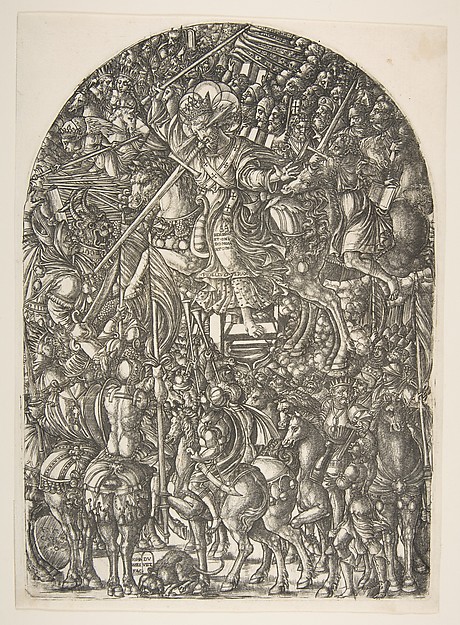
    “Then I saw heaven opened, and behold, a white horse! The one sitting on it is called Faithful and True, and in righteousness he judges and makes war.” (Rev 19:11)

    Heaven opens—not to pour more plagues, but to reveal a rider:

    • on a white horse – purity of intention, victory,

    • called “Faithful and True” – he is the opposite of Babylon’s sorcery and the beast’s lies,

    • “in righteousness he judges and makes war” – his warfare is not arbitrary violence; it is truth confronting unreality. His eyes are “like a flame of fire,” his head bears many diadems (many crowns), and he has a name no one knows but himself. He wears a robe dipped in blood, and his name is “The Word of God” (v.12–13). In your Geomytha framework, this is the Lamb in his warrior aspect:

    • the same consciousness that was slain now rides out as the active Word that cuts through Set’s structures,

    • the “flame of fire” eyes are Isis-awareness burning away pretense,

    • the many crowns show that all true authority has converged into this one field. The blood on his robe is not from slaughter he is about to do; it is the blood he has already shed. In other words: the one who now confronts the beast is the same one who refused to play the beast’s game even unto death. His “weapon” is telling:

    “From his mouth comes a sharp sword with which to strike down the nations…” (v.15)

    He does not wield a literal sword; he speaks. His word is what kills the lie.

    The Armies in Fine Linen – Lamb-Mode Identities as His Hosts

    “And the armies of heaven, arrayed in fine linen, white and pure, were following him on white horses.” (Rev 19:14)

    The armies wear the same linen as the Bride: “white and pure.” These are not beasts of war in Set’s style; they are beings whose identities have been woven by the Lamb’s righteousness. In your lens:

    • these “armies” represent all the ways Lamb-consciousness shows up in the world: true speech, costly integrity, embodied presence, patient resistance. They follow the rider; they do not innovate their own campaigns. Their role in “war” is to move in the field created by the Word that goes out of his mouth. “He will rule them with a rod of iron” and “tread the winepress of the fury of the wrath of God” (v.15) connects back to Psalm 2 and Revelation 14—this is the same one who has authority to discern and to bring to completion the harvest of Set’s grapes. His robe and thigh bear the name: “King of kings and Lord of lords” (v.16)—the true center around which all other powers will eventually be forced to orient, whether in willing consent or in collapse.

    The Great Supper of God – When Set’s Armies Become Food

    “Then I saw an angel standing in the sun, and with a loud voice he called to all the birds that fly directly overhead, ‘Come, gather for the great supper of God, to eat the flesh of kings, the flesh of captains… and the flesh of all men, both free and slave, both small and great.’” (Rev 19:17–18)

    This is the counter-image to the marriage supper. An angel “standing in the sun”—in the very place Set claimed for his own—summons birds to a grisly feast. The menu:

    • the flesh of kings, captains, mighty men,

    • horses and riders,

    • all ranks of humanity who have aligned themselves with the beast’s militarized system. In Geomytha terms, this is a picture of Set’s war machine being reduced to carrion. The very bodies that enforced his logic become food for forces of decay. It visualizes what you already saw in the bowls and in Babylon’s fall:

    • what is built on the beast’s assumptions eventually cannot sustain itself,

    • its proudest power-structures end as waste,

    • the “glory” of war and domination ends in unburied flesh.

    The Beast and the False Prophet Captured – The End of Propaganda and Spectacle

    “And I saw the beast and the kings of the earth with their armies gathered to make war against him who was sitting on the horse… And the beast was captured, and with it the false prophet… These two were thrown alive into the lake of fire that burns with sulfur.” (Rev 19:19–20)

    The beast—the empire of Set—and the “kings of the earth” muster their armies to fight the rider. This is the final form of resistance: a world-system that would rather annihilate itself than yield to truth. The fight is almost anticlimactic:

    • there is no detailed battle;

    • the beast and the false prophet are simply captured and thrown alive into the lake of fire. In your lens:

    • the beast = Set’s integrated political–economic–religious empire,

    • the false prophet = the propaganda machinery that made worship of the beast seem reasonable and spiritual,

    • the lake of fire = the field where unreality is finally unable to sustain itself; everything that cannot align with truth is consumed. The “rest were slain by the sword that came from the mouth of him who was sitting on the horse” (v.21): that is, by the very word that reveals them. When the Lamb speaks without filter, what is purely beast cannot stand. The birds’ feast completes the image of Set’s proud field becoming compost.

    How Revelation 19 Functions in Geomytha

    Revelation 19 brings together two images that Set always keeps apart: a wedding and a war. Through Geomytha, you can see:

    • Heaven’s hallelujah is not joy in pain; it is relief that Babylon’s trance is broken.

    • The marriage supper of the Lamb is the union of Isis-awareness and redeemed creation; the Bride wears a garment woven from actual Lamb-aligned deeds, not from Babylon’s branding.

    • The rider on the white horse is the Lamb as warrior Word: eyes of fire, robe dipped in his own blood, making war by speaking truth that unreality cannot endure.

    • The armies in white linen are all the forms of consciousness and community that move in that truth-field, not in Set’s violence.

    • The great supper of God for the birds shows that what refuses to become Bride ends up as carrion; there are only two feasts to attend.

    • The beast and false prophet are not negotiated with; they are removed, their pattern brought to a place where it can no longer reconstitute itself. For your work, this chapter presses a set of personal questions:

    • In my own life, which “supper” am I showing up for? Do my daily choices align more with the marriage feast (shared presence, honest deeds, mutual joy) or with the carrion feast (feeding systems that will consume me)?

    • Where am I still listening to the false prophet—voices, screens, narratives—that make the beast’s logic feel normal, even spiritual?

    • Am I willing to let the Word that comes from the rider’s mouth cut through my own defenses and self-justifications, or am I still trying to gather arguments “to make war against him”?

    • What would it look like, today, to treat my body and my relationships as Bride-material, not as Babylon’s inventory or the beast’s army? Revelation 19 is not primarily inviting you to imagine horsemen in the sky. It is inviting you to recognize the Lamb in his warrior aspect: the Presence that rides straight into your agreements with Set and says, without violence but with absolute clarity, “This cannot go on.” Your freedom is not in avoiding that rider; it is in letting his word separate what in you is Bride from what in you is still trying to be beast. X: @mythicgeometry · Substack: Geomytha Noir · YouTube: Geomytha · Instagram: @mythicgeometry · TikTok: @Geomytha · Patreon: GeomythaNoir
  • Revelation 18: The Funeral of Babylon

    Revelation 18: The Funeral of Babylon

    How the fall of the great city exposes the bankruptcy of Set’s pleasure-economy in the Geomytha field.

    Revelation 17 showed you who Babylon is:

    • the great prostitute,

    • riding Set’s scarlet beast,

    • dressed in royal luxury,

    • drunk on the blood of saints,

    • “the great city that has dominion over the kings of the earth.”

    Revelation 18 is her funeral. It is not a courtroom scene; it is a ruin-tour and a lament. Heaven announces her fall. Earth’s merchants and kings wail over her. A mighty angel throws a millstone into the sea and says: “So will Babylon be thrown down, with violence, and will be found no more.”

    Through your Geomytha lens, this chapter is what it feels like when:

    • Set’s city collapses,

    • Babylon’s promises are revealed as hollow,

    • all the ways you sold yourself to the pleasure-market stop paying,

    • and a voice from heaven says:

    “Come out of her, my people,

    lest you take part in her sins,

    lest you share in her plagues.” (Rev 18:4)

    It is both:

    • a macro-vision of civilizational collapse; and

    • a micro-experience of your own Babylon-pattern finally failing.

    A Mighty Angel and the Announcement of the Fall

    “After this I saw another angel coming down from heaven, having great authority, and the earth was made bright with his glory. And he called out with a mighty voice,

    ‘Fallen, fallen is Babylon the great! She has become a dwelling place for demons, a haunt for every unclean spirit… For all nations have drunk the wine of the passion of her sexual immorality, and the kings of the earth have committed immorality with her, and the merchants of the earth have grown rich from the power of her luxurious living.’” (Rev 18:1–3)

    One angel, full of light, announces Babylon’s reality. In your lens:

    • Heaven’s clarity (Isis-light) shines on Set’s city.

    • What looked like sophistication and culture is named as what it has become:

      • a dwelling for unclean spirits,

      • a haunt for compulsions, addictions, and distortions,

      • a place where the wine of Babylon (her intoxicating mixture of desire, status, and anesthetic) has been poured into all nations.

    The triad returns:

    • Nations have drunk her wine – the collective emotional field intoxicated.

    • Kings have fornicated with her – power structures have covenanted with her logic.

    • Merchants have grown rich from her luxury – the global Set economy is built on her seductions.

    This is Set’s world in full bloom: the pleasure-market fused with the power-market, sacralized by religious and cultural forms.

    “Come Out of Her, My People”: The Lamb’s Call to Exit the City

    “Then I heard another voice from heaven saying,

    ‘Come out of her, my people, lest you take part in her sins, lest you share in her plagues;

    for her sins are heaped high as heaven, and God has remembered her iniquities.’” (Rev 18:4–5)

    This is one of the most important lines in the entire book.

    In your system, this is not a call to geographical relocation; it is a call to archetypal relocation:

    • stop making Babylon’s logic your home;

    • stop letting your Horus identity be defined by her metrics;

    • stop drinking her wine as if it were the Grail.

    “Come out of her” implies:

    • you can live inside Babylon’s physical environment while spiritually exiting her agreement;

    • the exit is:

      • refusing her contracts,

      • loosening your dependence on her rewards,

      • reclaiming your presence from her spectacle economy.

    “Her sins are heaped high as heaven” reverses the Tower of Babel image:

    • the tower was humanity’s attempt to build up to heaven;

    • Babylon’s sins now form the “tower,” and heaven remembers—not in petty grudge, but in the sense of accurately bearing witness to the pattern.

    “Lest you share in her plagues” tells you plainly:

    Align with her logic, and you will experience her collapse as your own.

    Shift allegiance, and you may live in the same world while no longer being of that city.

    Double Return and Sudden Collapse

    “Pay her back as she herself has paid back others, and repay her double for her deeds… As she glorified herself and lived in luxury, so give her a like measure of torment and mourning… For in her heart she says, ‘I sit as a queen, I am no widow, and mourning I shall never see.’ For this reason her plagues will come in a single day…” (Rev 18:6–8)

    Babylon’s interior monologue:

    • “I sit as a queen.”

    • “I am no widow.”

    • “Mourning I shall never see.”

    This is Set’s city in denial of impermanence:

    • convinced of its own invulnerability,

    • sure that its supply chains, markets, and systems will endure,

    • emotionally insulated from the costs of its own pleasures.

    The “double” repayment is not arbitrary cruelty; it is:

    • a full return of everything she has done outward,

    • now experienced inwardly:

      • all the mourning she outsourced,

      • all the hunger she ignored,

      • all the grief she paid others to carry.

    “In a single day” and “in a single hour” (repeated later) are images of suddenness:

    • the illusion of gradual safety is shattered;

    • events accelerate when they reach a tipping point.

    In Geomytha language:

    Set’s city can maintain the illusion of stability for a very long time,

    but when the bowls are full, collapse looks “sudden,”

    even though it is the inevitable result of long patterns.

    Kings, Merchants, and Sailors: Who Weeps for Babylon?

    Revelation 18 gives three concentric circles of grief:

    1. Kings of the earth – political and power elites.

    2. Merchants of the earth – commercial and economic actors.

    3. Shipmasters and sailors – logistical and trade networks.

    All three stand far off and weep. They do not rush in to help; they watch her burn at a distance.

    Kings

    “And the kings of the earth… will weep and wail over her when they see the smoke of her burning. They will stand far off, in fear of her torment, and say, ‘Alas! Alas! You great city, you mighty city, Babylon! For in a single hour your judgment has come.’” (Rev 18:9–10)

    Kings lament:

    • not the truth,

    • not the saints,

    • but the loss of their liaison: the system that made their deals profitable, their power pleasurable.

    Merchants

    “And the merchants of the earth weep and mourn for her, since no one buys their cargo anymore…” (Rev 18:11)

    Then follows a long list of commodities:

    • gold, silver, jewels, fine linen, purple, silk, scarlet,

    • all manner of wood, ivory, bronze, iron, marble,

    • spices, wine, oil, fine flour, wheat, cattle, sheep, horses, chariots,

    • and finally: “slaves, that is, human souls.” (v.13)

    The list climbs from luxury goods down to human beings as inventory.

    In your lens, this is Set’s economy laid bare:

    • everything is reduced to cargo,

    • even consciousness itself becomes a tradable object,

    • and when Babylon falls, the merchants’ grief is:

      • “no one buys our cargo anymore.”

    They mourn lost demand, not the liberation of “human souls.”

    Shipmasters and Sailors

    “And all shipmasters and seafaring men, sailors and all whose trade is on the sea, stood far off and cried out as they saw the smoke of her burning, ‘What city was like the great city?’” (Rev 18:17–18)

    These are the people who move Babylon’s goods:

    • the logistics, networks, data carriers, media distributors.

    • They throw dust on their heads and cry “Alas! Alas!”

    The refrain is constant:

    “In a single hour all this wealth has been laid waste.” (v.17, 19)

    In Geomytha:

    • the entire supply chain of Set’s pleasure-machine is grieving its own obsolescence.

    • None of these groups are primarily grieving truth; they are grieving the end of their profit and identity.

    This is how you can diagnose Babylon in your own life:

    When some pattern collapses,

    am I mourning the loss of truth, or the loss of comfort and status?

    “Rejoice Over Her, O Heaven”: Lamb’s Perspective on the Fall

    “Rejoice over her, O heaven, and you saints and apostles and prophets, for God has given judgment for you against her!” (Rev 18:20)

    Heaven’s response is not morbid glee; it is relief:

    • saints, apostles, prophets – those who were silenced by Babylon’s system –

    • are finally vindicated: their testimony is confirmed.

    In your lens, this is when:

    • all the voices that said, “This system is killing us,”

    • all the bodies that bore the cost of the pleasure-market,

    • all the witnesses who pointed to the Lamb and were ignored or crushed,

    are publicly shown to have been aligned with Reality all along.

    Heaven rejoices not in pain itself, but in:

    • the dismantling of a structure that could not be reformed, only exposed and removed;

    • the ending of a field that kept Isis-awareness under constant anesthesia.

    Millstone in the Sea: No More of Babylon’s Music

    “Then a mighty angel took up a stone like a great millstone and threw it into the sea, saying,

    ‘So will Babylon the great city be thrown down with violence, and will be found no more;

    and the sound of harpists and musicians, of flute players and trumpeters, will be heard in you no more,

    and a craftsman of any craft will be found in you no more,

    and the sound of the mill will be heard in you no more,

    and the light of a lamp will shine in you no more,

    and the voice of bridegroom and bride will be heard in you no more…’” (Rev 18:21–23)

    The millstone is:

    • heavy,

    • irreversible,

    • sinking into the same sea that once birthed the beast.

    The angel then lists everything that ends in Babylon:

    • music and entertainment,

    • craft and industry,

    • productive work (“the mill”),

    • light,

    • weddings.

    In your lens, this is civilizational stillbirth:

    • Set’s city, which promised endless music, art, productivity, and romance,

    • loses all of it in the very moment its inner fraud is revealed.

    “For your merchants were the great ones of the earth, and all nations were deceived by your sorcery. And in her was found the blood of prophets and of saints, and of all who have been slain on earth.” (vv.23–24)

    “Your sorcery” = pharmakeia – chemically and symbolically mediated illusion:

    • media, propaganda, drugs, luxury, architecture, ritual –

    • all used to keep nations in a trance.

    Her final indictment:

    • she holds the blood not only of prophets and saints,

    • but “of all who have been slain on earth” –

    • she is the overarching pattern behind every systemic killing.

    Babylon’s fall is thus not a side event; it is the core unmasking of Set’s global spell.

    How Revelation 18 Functions in Geomytha

    Through your system, Revelation 18 is the funeral liturgy of Babylon and the practical core of what it means to “come out of her.”

    It shows that:

    • Babylon is a pleasure–power economy built on selling intimacy, beauty, and security through Set’s logic.

    • Her “wine” is any mixture of comfort, status, and anesthetic that keeps you from feeling and acting from awareness.

    • Her fall is both inevitable (given her geometry) and experienced as sudden (in a single hour).

    • Those most invested in her – kings, merchants, networks – mourn her not because she was good, but because she was profitable.

    • Heaven rejoices, because her collapse frees consciousness from a field that could not be “fixed,” only abandoned.

    For your Geomytha work, this chapter asks very direct questions:

    • Where, in my own life, am I still drinking Babylon’s wine – trading presence for comfort, truth for luxury, integrity for security?

    • Which of my loyalties, jobs, or habits are effectively merchants in her system, and which are citizens of a different city?

    • When I imagine “collapse,” am I secretly more afraid of losing Babylon’s benefits than relieved at the thought of her ending?

    • What would it practically mean, this week, to “come out of her” in one domain: money, media, sexuality, work, or religion?

    • If my own “Babylon” – my personal pleasure-system – began to shake, would I stand far off and mourn her, or would I agree with heaven that it is mercy for her to fall?

    Revelation 18 is not inviting you to obsess over which global city “is Babylon.” It is inviting you to recognize:

    Every time you treat your own soul as cargo,

    every time you sell your presence for luxury or anesthesia,

    you are living in a small Babylon that will, sooner or later, fall.

    The Lamb’s voice in this chapter is simple and urgent:

    “Come out of her, my people.”

    Not because you are too good for the world, but because you were never meant to live as inventory in Set’s city.

    X: @mythicgeometry · Substack: Geomytha Noir · YouTube: Geomytha · Instagram: @mythicgeometry · TikTok: @Geomytha · Patreon: GeomythaNoir
  • Revelation 17: Babylon Riding the Beast

    Revelation 17: Babylon Riding the Beast

    How the great prostitute, the scarlet beast, and the seven heads show Set’s pleasure economy consuming itself in the Geomytha field.

    Then one of the bowl angels pulls John aside for a tour of the real capital of Set’s world: not a palace or temple, but a woman. Not a bride, but a prostitute. Not a victim, but a queen riding the beast. In your lens, Revelation 17 is the unmasking of Babylon as the fully developed pleasure–power interface of Set’s realm: the system that uses intimacy, beauty, luxury, and desire as tools to bind Horus to the beast. If chapters 13–16 showed the mechanics of the beast’s empire and its consequences, chapter 17 shows the seductive face that made everyone consent to it.

    The Woman on Many Waters: Seduction as Infrastructure

    “Come, I will show you the judgment of the great prostitute who is seated on many waters, with whom the kings of the earth have committed sexual immorality, and with the wine of whose sexual immorality the dwellers on earth have become drunk.” (Rev 17:1–2)

    The angel promises to show John the judgment of the “great prostitute” seated on many waters. She is not a local vice; she is a global infrastructure:

    • “many waters” = peoples, multitudes, nations, languages (v.15) – the full human collective

    • “kings of the earth” commit “sexual immorality” with her – power structures enter covenant with her system

    • “dwellers on earth” are drunk on her wine – the masses intoxicated by what she offers In Geomytha, “sexual immorality” at this level is not about private bedroom rule-keeping; it is the misuse of intimacy and union. The principle meant for Isis–Osiris (awareness and form), for covenant and true communion, is diverted into union with Set’s system:

    • making security, identity, and meaning from Babylon’s offerings: comfort, luxury, status, narrative, spectacle

    • “going to bed” with the world-machine in exchange for feeling safe, admired, or numb. Her “waters” are the global emotional and economic currents that carry whole populations. She doesn’t rule by overt force; she rules by getting kings and peoples to want what she serves.

    Scarlet Beast: Babylon Riding Set’s Empire

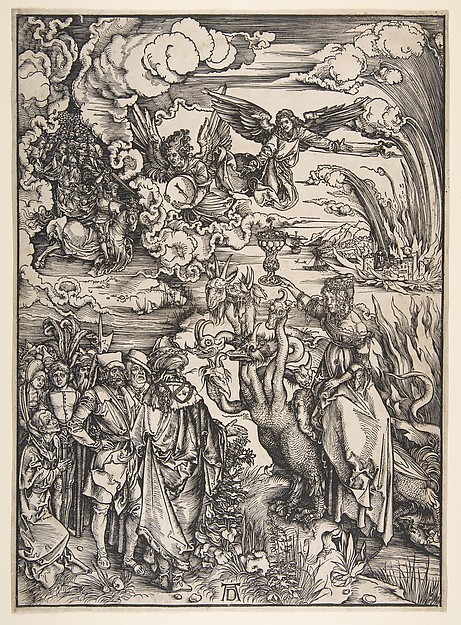
    “And he carried me away in the Spirit into a wilderness, and I saw a woman sitting on a scarlet beast that was full of blasphemous names, and it had seven heads and ten horns.” (Rev 17:3)

    The angel takes John to a wilderness—symbol of desolation and also spiritual clarity. There he sees the woman sitting on a scarlet beast:

    • the beast is scarlet – color of blood, luxury, appetite, violence

    • “full of blasphemous names” – its very identities deny the true nature of Reality

    • “seven heads and ten horns” – the same structural markers as the sea-beast of chapter 13: completeness of counterfeit perspective (seven), totalized power (ten) In Geomytha, this is Set’s empire (beast) and Babylon (prostitute) in symbiosis:

    • the beast provides power, enforcement, structure

    • the woman provides desire, glamour, narrative She “rides” the beast:

    • appearing to steer it—markets, entertainment, fashion, ideology—but utterly dependent on it for force and reach

    • their union is the fusion of economic, political, sexual, and religious seduction into one system. This is the full form of Set’s city: empire and pleasure woven into a single operating system.

    Purple, Scarlet, Gold, and a Golden Cup: Beauty in Service to Set

    “The woman was arrayed in purple and scarlet, and adorned with gold and jewels and pearls, holding in her hand a golden cup full of abominations and the impurities of her sexual immorality.” (Rev 17:4)

    Her appearance:

    • “purple and scarlet” – royal dignity and sensual extravagance

    • “gold, jewels, pearls” – wealth, refinement, allure

    • a golden cup – sacred vessel imagery—but it is “full of abominations and impurities” The outer form is exquisite; the contents are toxic. In Geomytha, Babylon is:

    • all the ways beauty, luxury, and spiritual symbolism are conscripted to serve Set

    • aesthetics and liturgies that anesthetize conscience, soothe anxiety, and glamorize harm The golden cup is the counterfeit Grail:

    • instead of holding the Lamb’s blood (consciousness passing through suffering into clarity), it holds a cocktail:

      • addictive comforts,

      • rationalized exploitation,

      • pleasure severed from covenant and truth. When the world drinks from her cup, it feels like relief, sophistication, or transcendence; only later does it discover the mixture: self-betrayal and complicity.

    Name on Her Forehead: Babylon the Great, Mother of Abominations

    “And on her forehead was written a name of mystery: ‘Babylon the great, mother of prostitutes and of earth’s abominations.’ And I saw the woman, drunk with the blood of the saints, the blood of the martyrs of Jesus.” (Rev 17:5–6)

    Her forehead—the same place where the beast’s mark and the Lamb’s name can be—bears a name:

    • “Babylon the great” – archetypal city of confusion and empire

    • “mother of prostitutes” – she births all lesser systems of selling out

    • “mother of earth’s abominations” – the fertile source of all the ways earth’s goodness is twisted She is “drunk with the blood of the saints and the martyrs of Jesus”:

    • the life of those who resisted her seduction becomes her intoxication

    • she feeds on the energy, attention, and even the sacrifice of those who tried to stand against her. In Geomytha:

    • Babylon is not one city; she is the pattern of Set’s world at full bloom:

      • religious institutions turned into power structures,

      • economies that require exploitation,

      • cultures that normalize envy, comparison, and lust,

      • spiritualities that offer experience without transformation. Her being “mother” means: whenever you see a small-scale sellout—someone trading their presence for status, love for image—you are seeing a child of Babylon. She is the root pattern: “You can have what you want, if you will give yourself to my system.”

    The Beast That Was, Is Not, and Is to Come: Recycling of Set’s Forms

    John marvels, and the angel explains:

    “The beast that you saw was, and is not, and is about to rise from the bottomless pit and go to destruction.” (Rev 17:8)

    In contrast to God, who “is, was, and is to come,” the beast:

    • “was” – had a historical form

    • “is not” – appears absent or dead

    • “is about to rise” – a new iteration emerges

    • “and goes to destruction” – its end is built into its pattern In Geomytha, Set’s world constantly recycles:

    • empires fall, ideologies fail, institutions rot—but their basic pattern reappears under new branding

    • people think, “This time it’s different,” not seeing the same beast in new clothes The “bottomless pit” (Abyss) is the collective unconscious storehouse of all unresolved patterns. When conditions align, the old logic resurfaces as “the next big thing.” But its geometry has not changed; it still tends toward destruction. The angel adds that those “whose names have not been written in the book of life from the foundation of the world” will marvel when they see the beast, “because it was and is not and is to come” (v.8). In other words:

    • those not rooted in Isis-awareness and the Lamb read the recycling of Set’s patterns as mystery and destiny,

    • rather than as a tired loop: the same solar trap, repeating.

    Seven Heads, Seven Mountains, Seven Kings: Layers of Set’s Rule

    “This calls for a mind with wisdom: the seven heads are seven mountains on which the woman is seated; they are also seven kings…” (Rev 17:9–10)

    The angel asks for wisdom—discernment beyond literalism. The seven heads are:

    • “seven mountains” – places of height, influence, dominance

    • “also seven kings” – ruling configurations, perhaps successive or simultaneous In Geomytha, seven often mirrors the days of creation, the full cycle; here it is the counterfeit completion of Set’s rule. You can read these heads as:

    • layers or domains where Babylon sits: politics, religion, economy, culture, knowledge, media, technology (or any similar sevenfold mapping)

    • or as successive epochs of empire, each a head of the same beast. “Five have fallen, one is, the other has not yet come; and when he does come he must remain only a little while. As for the beast that was and is not, it is an eighth but it belongs to the seven, and it goes to destruction.” (vv.10–11) In your lens, the exact numerology is less about end-time charting and more about this pattern:

    • Set’s rule appears as multiple iterations (kings, mountains) across history

    • each is limited (“five have fallen…”), none is ultimate

    • the final configuration (“eighth… belongs to the seven”) is just another recycling of the same old geometry, now fully mature—and thus ready to collapse.

    Ten Horns, One Hour: United Consent to the Beast

    “And the ten horns that you saw are ten kings who have not yet received royal power, but they are to receive authority as kings for one hour, together with the beast. These are of one mind, and they hand over their power and authority to the beast.” (Rev 17:12–13)

    Ten horns here are ten kings given authority “for one hour” with the beast:

    • short duration – intense but brief

    • “of one mind” – unanimity of purpose

    • they “hand over” their power to the beast. In Geomytha, this is the late-stage phase when:

    • multiple power centers (nations, corporations, elites, institutions) align around a single Set-logic

    • whatever their differences, they converge on preserving the system:

      • profit over presence,

      • control over truth,

      • image over integrity. “One hour” suggests that when consensus around the beast is total, its end is near. The system hits a kind of saturation point: all horns pointed in the same direction; after that, collapse is the only move left. Paradoxically, these very kings—

    “will hate the prostitute. They will make her desolate and naked, and devour her flesh and burn her up with fire, for God has put it into their hearts to carry out his purpose…” (vv.16–17)

    The power structures that rode with Babylon turn on her:

    • they strip her, consume her, burn her. In your lens, this is Set’s realm devouring its own pleasure system when it becomes inconvenient:

    • powers that used sex, luxury, entertainment, and religion to control people later purge those very things when they threaten control;

    • the markets and regimes that benefited from Babylon also preside over her destruction. Yet the text says, “God has put it into their hearts to carry out his purpose” (v.17):

    • even the beast’s self-destruction is harnessed by Reality;

    • Set is allowed to eat his own offspring, and this becomes part of Babylon’s judgment.

    The Woman Is the Great City: Set’s Capital Named

    The chapter closes with clarity:

    “And the woman that you saw is the great city that has dominion over the kings of the earth.” (Rev 17:18)

    The prostitute is not just a person; she is a city—an entire civilizational configuration:

    • a “great city” with global reach,

    • having “dominion over the kings of the earth” through seduction, finance, and narrative. In Geomytha:

    • this great city is Set’s fully developed cultural matrix:

      • where everything—sex, art, spirituality, law, economy—circulates through Babylon’s logic,

      • where to “live” usually means to be within her zoning codes, emotionally and mentally. She is the opposite pole to New Jerusalem (Rev 21):

    • both are cities;

    • one is built on Babylon’s commerce and fornication with kings;

    • the other on the Lamb’s self-giving and God dwelling with humanity. Every person, in your lens, lives between these two cities:

    • the inner Babylon, where you sell pieces of yourself for safety, approval, or pleasure;

    • the emerging New Jerusalem, where your identity is gift, not commodity.

    How Revelation 17 Functions in Geomytha

    Revelation 17 paints Babylon not as a side-story but as the heart of Set’s realm:

    • She sits on many waters: the emotional and economic oceans that carry humanity.

    • She rides the scarlet beast: pleasure, luxury, and spirituality all harnessed to empire.

    • She holds a golden cup: beauty and sacred symbolism used to deliver poison.

    • She is named on the forehead: the ruling mental pattern of “how the world works.”

    • She is drunk with the blood of saints: she lives off the energy and sacrifice of those who resisted her.

    • She is the great city: the integrated civilizational system of the beast. In your Geomytha reading, this chapter invites piercing self-inquiry:

    • Where in me do I treat my own presence as something to sell—for security, admiration, or anesthesia?

    • In what ways do I secretly love Babylon’s offerings more than I love truth—comfort over clarity, polish over integrity?

    • Which of my pleasures are genuinely Lamb-compatible, and which require me to ride the beast a little to get them?

    • Where do I see systems (legal, economic, religious) functioning as the children of Babylon, and how do I participate or resist?

    • Am I more afraid of Babylon’s judgment (loss of her comforts) than of remaining bound to her logic? Revelation 17 is not given to make you hunt for a single geo-political city to label; it is given so you can recognize Babylon’s pattern in your own habits, loyalties, and desires, and begin to come out of her before she collapses. In your terms:

    It is the portrait of Set’s pleasure-city at the height of its power,

    just before reality requires it to drink its own cup.

    X: @mythicgeometry · Substack: Geomytha Noir · YouTube: Geomytha · Instagram: @mythicgeometry · TikTok: @Geomytha · Patreon: GeomythaNoir

  • Revelation 16: When the Bowls Tip

    Revelation 16: When the Bowls Tip

    How the seven bowls of wrath map the full consequence of Set’s system in the Geomytha field.

    Revelation 15 ended with something chilling and precise:

    • The tent of witness in heaven opened.

    • Seven angels received seven golden bowls full of the wrath of God.

    • The sanctuary filled with smoke, and no one could enter until the plagues were finished.

    In your lens, that is the moment when reality says to Set’s world:

    “No more delay. You will now live inside the full shape of what you have chosen.”

    Revelation 16 pours those bowls out. Through Geomytha, these are not arbitrary punishments, but seven layers of exposure:

    • the body level (sores),

    • the emotional/collective sea,

    • the streams of thought,

    • the solar field itself,

    • the throne of the beast,

    • the channels of war,

    • and finally the entire architecture of Babylon’s reality.

    Isis-awareness is not attacking; she is withdrawing buffer.

    Osiris-reflection has already sung the song of Moses and the Lamb.

    Now Set’s configurations feel the weight of their own math.

    Horus, as the illusion of man, discovers what it means to have made covenant with the beast.

    Bowl 1 – Painful Sores: When the Body Carries the Mark

    “So the first angel went and poured out his bowl on the earth,

    and harmful and painful sores came upon the people

    who bore the mark of the beast and worshiped its image.” (Rev 16:2)

    The first bowl hits the earth and produces harmful, painful sores—but specifically:

    • “upon the people who bore the mark of the beast and worshiped its image.”

    Through Geomytha:

    • Earth = body, material life, the level of skin and nervous system.

    • The mark on hand and forehead (ch. 13) now appears as somatic consequence.

    This is the simplest layer of “wrath”:

    What you inscribe in your nervous system eventually shows up in your nerves and flesh.

    At this level, “sores” can image:

    • chronic stress and dysregulation from constant beast-mode living (no rest, no Sabbath);

    • addictions and their physical consequences;

    • bodily breakdown that mirrors the inner split between what you know is true and what you keep doing.

    Notice: the bowl doesn’t fall on random pagans. It falls on those who chose to mark themselves with Set’s story.

    This is revelation at the body level:

    • the false comfort of beast-worship begins to feel like pain,

    • the “reward” of the mark starts manifesting as sickness.

    Bowl 2 – Sea to Blood: The Collective Emotional Ocean Turns Toxic

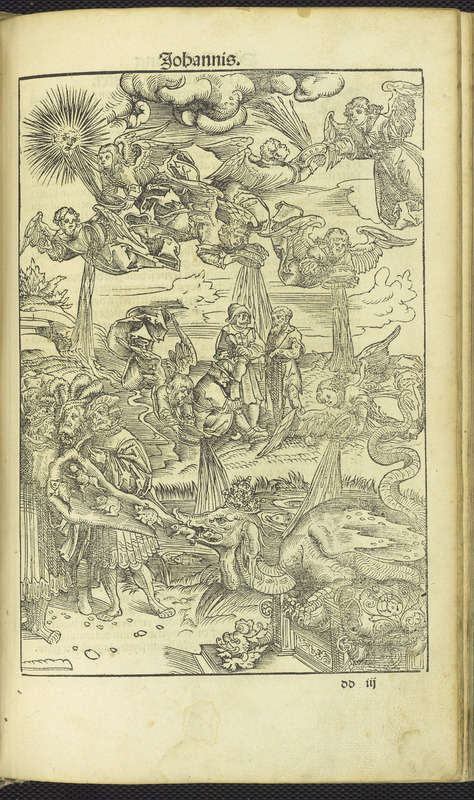
    “The second angel poured out his bowl into the sea,

    and it became like the blood of a corpse,

    and every living thing died that was in the sea.” (Rev 16:3)

    Now the sea is hit.

    Earlier:

    • the ten-horned beast rose from the sea (ch. 13);

    • the sea represented the collective unconscious/emotional field.

    Here:

    • the sea turns “like the blood of a corpse,”

    • every living thing in it dies.

    In Geomytha:

    • this is the collective emotional field becoming saturated with death-energy.

    • The ocean that once fed the beast—fear, desire, fantasies—becomes undrinkable, uninhabitable.

    Psychologically and culturally, this looks like:

    • a saturation point of despair, burnout, meaninglessness;

    • the feeling that “everything is contaminated,” no safe harbor in the social/emotional sea;

    • collective trauma surfacing everywhere—wars, abuse, exploitation—making old distractions feel like poison.

    Set has used the sea as his breeding pool. Now that pool turns on him. The very emotions he exploited become paralyzing.

    Bowl 3 – Rivers and Springs to Blood: Corrupted Thought-Streams Exposed

    “The third angel poured out his bowl into the rivers and the springs of water,

    and they became blood. And I heard the angel in charge of the waters say,

    ‘Just are you, O Holy One, who is and who was, for you brought these judgments.

    For they have shed the blood of saints and prophets, and you have given them blood to drink.

    It is what they deserve!’” (Rev 16:4–6)

    Now not just the sea, but rivers and springs are turned to blood.

    In your lens:

    • Sea – the vast emotional collective.

    • Rivers/springs – the streams of teaching, meaning, intellect: philosophies, theologies, ideologies, schools of thought.

    They become blood because:

    “They have shed the blood of saints and prophets, and you have given them blood to drink.”

    Meaning:

    • systems of thought that legitimized violence, exploitation, and the silencing of witnesses

    • now give back only their own violence as drink.

    Geomytha reading:

    • when ideologies, religions, and “common sense” have been used to crucify consciousness (saints, prophets, Lamb),

    • those same streams eventually yield nothing but the taste of what they killed.

    At this stage:

    • trust in institutions collapses;

    • people find that the “wisdom” they relied on leads only to more suffering;

    • all the lofty talk is exposed as having always been in service to Set.

    The angel doesn’t gloat; he simply says:

    “It is what they deserve”

    which, in your system, means:

    It is the inherent return of what they put into the field.

    Bowl 4 – The Sun Scorches: Set’s Own Element Overheats

    “The fourth angel poured out his bowl on the sun,

    and it was allowed to scorch people with fire.

    They were scorched by the fierce heat, and they cursed the name of God who had power over these plagues.

    They did not repent and give him glory.” (Rev 16:8–9)

    Now the bowl hits the sun itself—Set’s home element.

    • The sun is “allowed to scorch people with fire.”

    • Instead of repenting, they curse God and do not give glory.

    In Geomytha:

    • Set is the overclocked solar function:

      • productivity, visibility, narrative, calendar, ego.

    • This bowl is the burnout of pure solar logic.

    When the sun scorches:

    • the work/achievement machine becomes unbearable;

    • relentless exposure (social media, surveillance, metrics) becomes toxic;

    • the very brightness and speed people worshiped starts to cook them.

    The reaction is telling:

    • rather than questioning Set’s assumptions, people curse the Source;

    • they interpret the pain as God’s cruelty, not as the result of their own alignment with a devouring sun.

    This is beast-mode repentance: “We hate the consequences, but we won’t question the system.”

    Bowl 5 – Darkness on the Beast’s Throne: Collapse of Narrative Control

    “The fifth angel poured out his bowl on the throne of the beast,

    and its kingdom was plunged into darkness.

    People gnawed their tongues in anguish and cursed the God of heaven for their pain and sores.

    They did not repent of their deeds.” (Rev 16:10–11)

    This bowl hits the throne of the beast:

    • not the periphery, but the control center of Set’s system.

    • The whole kingdom is “plunged into darkness.”

    In Geomytha:

    • this is narrative collapse.

    • The systems that once defined “reality” (media, culture, politics, tech, finance) lose credibility, coherence, or functionality.

    • The “lights go out” on the story that made everything make sense.

    People “gnaw their tongues in anguish”:

    • gnawing the organ of speech, of story-making.

    • They are in pain from the mismatch between their old interpretations and their present reality.

    Again, they curse God and do not repent:

    • they cling to beast-logic even when it no longer pays off;

    • they would rather be angry at the sky than question the throne they served.

    This bowl is the moment when Horus, as beast-ego, loses his script but refuses to step into Lamb-mode. It is agony without surrender.

    Bowl 6 – Euphrates Dried and Frogs Released: Path for War and Propaganda

    “The sixth angel poured out his bowl on the great river Euphrates,

    and its water was dried up, to prepare the way for the kings from the east.

    And I saw, coming out of the mouth of the dragon and out of the mouth of the beast

    and out of the mouth of the false prophet,

    three unclean spirits like frogs.

    For they are demonic spirits, performing signs,

    who go abroad to the kings of the whole world,

    to assemble them for battle on the great day of God the Almighty.” (Rev 16:12–14)

    The sixth bowl dries up the Euphrates—the border river of ancient empire—and makes way for “the kings from the east.”

    Simultaneously, frog-like spirits come out of the mouths of dragon, beast, and false prophet:

    • they are spirits of propaganda and deception,

    • performing signs,

    • drawing rulers into a final confrontation.

    In your lens:

    • Euphrates = boundary/barrier that once restrained full-scale collision.

    • Its drying up = removal of natural buffers between power blocs, ideologies, or psychic parts.

    This is the stage when:

    • channels of conflict open: military, technological, cultural;

    • the last reserves of restraint are removed;

    • “there is nothing in the way anymore.

    The frog-spirits:

    • are the last wave of persuasive narratives:

      • conspiracy, nationalism, false spirituality, ideological fervor, techno-utopianism;

    • they gather both external powers (“kings of the whole world”) and inner energies into Armageddon—the big showdown.

    Jesus inserts a warning:

    “Behold, I am coming like a thief!

    Blessed is the one who stays awake, keeping his garments on…” (Rev 16:15)

    In Geomytha:

    • “stay awake” = maintain Isis-awareness;

    • “garments on” = keep your Lamb-aligned identity intact, not stripped by panic or seduction.

    The point is: as Set’s world moves toward maximum conflict, the Lamb tells you: this is exactly when to be most sober, not most swept up.

    Bowl 7 – “It Is Done”: Structural Collapse of Babylon’s Architecture

    “The seventh angel poured out his bowl into the air,

    and a loud voice came out of the temple, from the throne, saying,

    ‘It is done!’

    And there were flashes of lightning, rumblings, peals of thunder, and a great earthquake such as there had never been…” (Rev 16:17–18)

    The final bowl is poured into the air:

    • the atmosphere, the shared mental/relational field.

    • A voice from the throne says, “It is done!”—echoing “It is finished” from the cross.

    Then:

    • an unprecedented earthquake;

    • “the great city was split into three parts,”

    • “the cities of the nations fell,”

    • “God remembered Babylon the great, to make her drain the cup of the wine of the fury of his wrath”;

    • islands flee; mountains are no more;

    • huge hailstones fall, and people still curse God.

    Through Geomytha:

    • Air = the collective field of thought, communication, agreement.

    • This bowl shakes everything built on Set’s assumptions, everywhere.

    “The great city” (Babylon) split into three and the fall of “the cities of the nations” represent:

    • the collapse of the urban-mental architecture of the beast:

      • economic systems, political structures, religious power complexes, cultural capitals;

    • “split into three” suggests fragmentation: unity of the lie breaks apart.

    “Islands fled” and “mountains were not found”:

    • islands = isolated, self-contained identities and systems;

    • mountains = towering, stable hierarchies and institutions.

    Their disappearance signals:

    • the loss of perceived separateness and stability in the old order.

    • Nothing in Set’s world can pretend to stand apart or above anymore.

    The enormous hailstones:

    • discrete, brutal impacts of consequence—events, truths, exposures—that hit the ground hard.

    • People again curse God, still refusing to reinterpret their own deeds.

    The throne’s “It is done” means:

    The phase in which Set’s system could run on borrowed credit is over.

    The bowls have been emptied.

    Reality has fully answered the pattern.

    How Revelation 16 Functions in Geomytha

    Taken as a total pattern, the seven bowls chart the full-spectrum consequence of beast-alignment:

    1. Bowl 1 – Earth/Body:

      • The mark on hand and forehead shows up as pain in the flesh.

      • The body itself starts saying, “This is not sustainable.”

    2. Bowl 2 – Sea/Emotion:

      • The emotional collective becomes undrinkable.

      • The ocean of distraction and desire feels sick, not fun.

    3. Bowl 3 – Rivers/Thought:

      • Intellectual and spiritual streams that killed the truth become blood.

      • You taste the real cost of “respectable” lies.

    4. Bowl 4 – Sun/Solar Logic:

      • Set’s own element burns you.

      • Hustle, metrics, exposure, and light with no shade become torture.

    5. Bowl 5 – Throne/Narrative:

      • The beast’s “story” goes dark.

      • People are in anguish but still blame God, not their alliance.

    6. Bowl 6 – Pathways/War:

      • Restraints are removed; propaganda spirits gather all for confrontation.

      • This is the last chance to “stay awake and clothed.”

    7. Bowl 7 – Air/Architecture:

      • The entire atmosphere of Babylon’s world is shaken.

      • Cities fall, separateness collapses, impacts land, and heaven says, “It is done.”

    For your Geomytha work, this chapter pushes the questions directly into your daily life:

    • Body: Where is my own body already exhibiting “sores”—pain, fatigue, illness—that reflect long-term beast-patterns (overwork, numbing, fear)?

    • Emotion: Where does my emotional “sea” feel toxic from what I consume and how I cope?

    • Thought: Which of my trusted thought-streams (news, teachers, traditions) might actually be “blood”—justifying harm, numbing conscience?

    • Sun: In what ways am I scorched by my own solar expectations—what I demand of myself around productivity, image, and success?

    • Throne: Where is my inner “throne of the beast” losing light—old narratives that no longer make sense, leaving me in anguish?

    • Pathways: What “Euphrates” in me is drying up—old buffers that kept conflicts or traumas at bay? What frog-voices (inner or outer) are trying to recruit me into some final drama?

    • Architecture: If a quake shook my life right now—legal, financial, relational—what would fall? What is actually built on Lamb-alignment vs. what is pure Babylon?

    Revelation 16 is frightening only when you read it as “God deciding to be mean.”

    Through your lens, it is:

    The point where Isis-awareness and the Lamb stop subsidizing Set’s fantasy,

    and let his world experience what it has really been made of.

    The invitation underneath the bowls is:

    • not paranoia,

    • but preemptive repentance: changing alliance now, while the system still looks stable, instead of waiting until the quake.

    Or, in simpler terms for your work:

    Move your Horus out of 666 and toward Zion

    before your own bowls have to tip.

    X: @mythicgeometry · Substack: Geomytha Noir · YouTube: Geomytha · Instagram: @mythicgeometry · TikTok: @Geomytha · Patreon: GeomythaNoir
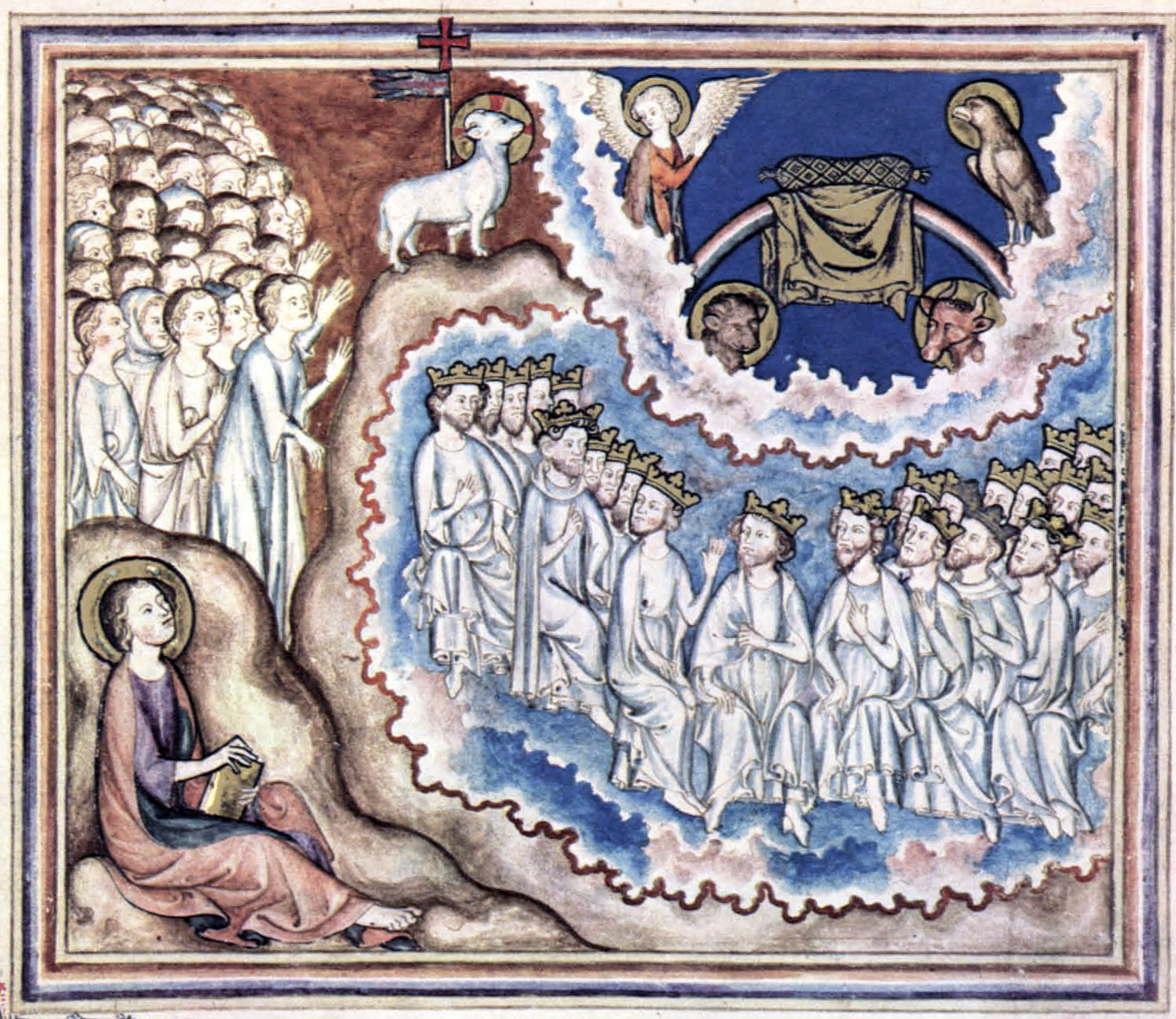
  • Revelation 15: The Sea of Glass and the Last Seven Bowls

    Revelation 15: The Sea of Glass and the Last Seven Bowls

    How the “sea of glass mingled with fire,” the song of Moses and the Lamb, and the seven last plagues mark the point of no more delay in the Geomytha field.

    Revelation 14 ended with a stark split: the Lamb on Mount Zion with the 144,000, three angels announcing the eternal gospel, Babylon’s fall, and the warning against the beast and his mark, followed by a double harvest: grain gathered, grapes thrown into the winepress. In your lens, the field has been fully polarized: Lamb-frequency vs. beast-frequency, wheat vs. grapes-of-the-earth. Revelation 15 is a short but dense hinge: it shows what happens in heaven’s Temple just before the seven bowls are poured out. Through Geomytha, this is the moment when: Isis-awareness has fully registered Set’s world; Osiris-reflection has sung its song; those who have conquered the beast stand steady; and the “wrath” of God—reality’s unfiltered consequence—moves into its final phase.

    Sea of Glass Mingled with Fire: Emotion Stilled, Imagination Transmuted

    “Then I saw another sign in heaven, great and amazing, seven angels with seven plagues, which are the last, for with them the wrath of God is finished. And I saw what appeared to be a sea of glass mingled with fire—and also those who had conquered the beast and its image and the number of its name, standing beside the sea of glass with harps of God in their hands.” (Rev 15:1–2)

    John sees “another sign in heaven”: seven angels with seven last plagues—“for with them the wrath of God is finished.” Before we see the bowls poured, he shows us a sea of glass mingled with fire and a particular group of people. In Geomytha, the “sea” is the emotional and collective unconscious field: tides of fear, desire, memory, trauma. Earlier in Revelation the sea roared, birthed beasts, and symbolized the depths from which Set’s structures rise. Now it appears “as a sea of glass”: stilled, clarified, transparent. But it is “mingled with fire”: the calm is not numbness; it is a field that has passed through the flame of awareness and judgment. The waters of emotion and imagination are not abolished; they are clarified and ignited in a new way. This is what happens when Isis-awareness and Osiris-reflection have fully metabolized the storms: the inner sea stops being the dragon’s pool and becomes a lucid, fiery mirror.

    Those Who Conquered the Beast, Its Image, and Its Number

    Who stands by this sea? “Those who had conquered the beast and its image and the number of its name.” Notice the threefold victory: over the beast (Set’s world-system), its image (the representations and idols of the system), and the number of its name (666, the solar-loop identity of man trapped in Set’s square). In Geomytha terms, these are: those who refused to let their Horus be fully defined by 666; those who would not worship the image of the beast—inner or outer; those who, even under pressure, did not surrender their forehead and hand to Set’s total calendar. They are not standing because they never encountered the beast, but because, in the Lamb’s field, they saw through it. They stand “beside the sea of glass,” not in the chaos of their own emotions. Their unconscious material has been brought into clarity and fire. They hold “harps of God”: their nervous system, their voice, their history, have become tuned instruments in the Lamb’s frequency. They are the human counterpart of the 144,000 in chapter 14, now shown in front of the transmuted sea.

    The Song of Moses and the Song of the Lamb: Law and Lamb in One Voice

    “And they sing the song of Moses, the servant of God, and the song of the Lamb, saying, ‘Great and amazing are your deeds, O Lord God the Almighty! Just and true are your ways, O King of the nations! Who will not fear, O Lord, and glorify your name? For you alone are holy. All nations will come and worship you, for your righteous acts have been revealed.’” (Rev 15:3–4)

    They sing two songs at once: the song of Moses and the song of the Lamb. Moses represents: Torah, law, exodus, plagues on Egypt, crossing the sea. The Lamb represents: Osiris-through-wounding, Christ-consciousness, sacrifice that reveals the heart of God, exodus from Set’s inner Egypt. In Geomytha, to sing both at once is to unite: the principle of lawful consequence (what you sow, you reap; plagues on oppressive systems) with the Lamb’s mode of mercy and self-giving. The lyrics they sing are not sentimental: “Great and amazing are your deeds… just and true are your ways… all nations will come… your righteous acts have been revealed.” “Wrath” in this context is reality enforcing its own structure. The oppressions, lies, and idolatries of Set’s system are not being randomly punished; they are being shown for what they are. The song recognizes: awareness has allowed Set’s empire to run its course; now, the truth of what that empire is must be revealed. Moses sang on the far shore of the Red Sea, after Pharaoh’s army drowned. Here, those who conquered the beast sing over a sea that is glass and fire: everything that was chaotic and devouring has been brought to stillness and transmutation, and the same God who broke Egypt now breaks Babylon.

    The Temple of the Tent of Witness Opens: Reality Moves into Enforcement Mode

    “After this I looked, and the sanctuary of the tent of witness in heaven was opened, and out of the sanctuary came the seven angels with the seven plagues, clothed in pure, bright linen, with golden sashes around their chests.” (Rev 15:5–6)

    Now John sees the sanctuary of the tent of witness in heaven open. “Tent of witness” recalls the tabernacle: the place where the Ark (covenant, testimony) was kept. In Geomytha, this is the inner core of reality—the place where Isis-awareness and the covenant of Being with creation are held. When this sanctuary opens and angels with plagues come out, it means: the enforcement of the covenant is about to move from inner record to outer consequence. The angels’ clothing—pure linen, golden sashes—marks them as aligned with the Lamb, not with the beasts. They are not random destroyers; they are executors of the scroll. The “witness” here is key: all that has been testified—by the two witnesses, by the saints, by conscience, by the Lamb’s blood—now moves from testimony to action. The bowls that follow in chapter 16 are not disconnected punishments; they are the unfolding of what the tent of witness has long recorded.

    Golden Bowls of Wrath: When the Cup Is Full

    “And one of the four living creatures gave to the seven angels seven golden bowls full of the wrath of God who lives forever and ever.” (Rev 15:7)

    One of the four living creatures—the same throne-creatures that continually say “Holy, holy, holy”—hands over seven golden bowls full of “the wrath of God.” Gold: purity, incorruptibility, value. Bowls: vessels of offering in Temple imagery. In Geomytha, this is important: the “wrath” is not a random storm; it is contained, measured, and handed over from the center of life itself. These bowls are the counter-image to the cup of Babylon’s wine in Revelation 14 and 17–18. Babylon made the nations drink the wine of her fornication—intoxication with Set’s system. Now, reality hands back its own cup: the clear, undiluted consequence of aligning with illusion. You can frame it this way: every time Set’s world chooses domination, exploitation, and lies, it pours a little more into a bowl. At a certain point, that bowl is “full.” When it is tipped, the result is experienced as “wrath”—but it is simply the convergence of all the small, denied consequences meeting their source. In your mythic grammar: the bowls are when the solar machine is forced to drink what it brewed.

    Smoke Filling the Sanctuary: No One Enters Until the Plagues Are Finished

    “And the sanctuary was filled with smoke from the glory of God and from his power, and no one could enter the sanctuary until the seven plagues of the seven angels were finished.” (Rev 15:8)

    The sanctuary fills with smoke from the glory and power of God, and no one can enter until the plagues are finished. This smoke echoes: Sinai’s cloud, the tabernacle and Solomon’s Temple filled so the priests could not stand to minister. It signals overwhelming presence. In Geomytha, this is the moment when: Isis-awareness, in her pure form, is no longer accessible as an escape hatch from consequence. The time for intercession, delay, and postponement has closed; the scroll has been opened, testimonies given, warnings announced, harvest announced. Now the pattern must finish playing out. “No one could enter the sanctuary” means: there is no fresh adjustment to the covenant field during this phase. Set’s world has to meet the full force of what it has set in motion. If earlier chapters presented “no more delay” in principle, here it becomes procedural: the Temple is not taking petitions. This is not because God has become less merciful; it is because mercy has already offered every possible opening (Lamb, witnesses, angels, harvest), and the integrity of the field requires that choice have consequence.

    How Revelation 15 Functions in Geomytha

    Revelation 15 is brief, but in your system it marks several crucial transitions: It shows a sea that has become “glass mingled with fire”: the emotional/unconscious field stilled and transmuted by awareness rather than breeding new beasts. It shows humans who have conquered the beast, its image, and its number, standing as tuned instruments by that sea: Horus no longer defined by 666 but aligned with the Lamb. It unites the song of Moses and the song of the Lamb: law and consequence joined with sacrificial love into one praise of reality’s justice. It shows the tent of witness opening: the inner record of what has been chosen now moving into enforcement. It hands golden bowls of wrath to angels: contained, measured consequences, the counter-cup to Babylon’s intoxicating wine. And it fills the sanctuary with smoke, closing access until the plagues are finished: a clear signal that the phase of warning and delay has ended. For your Geomytha work, this chapter invites sharp questions: Where is my inner sea still stormy, generating beasts—and where is it starting to feel like “glass mingled with fire,” clarity with energy? In what specific ways am I still worshiping the image of the beast—inner identities, outer systems—even if I mentally reject the beast itself? Am I willing to let the song of Moses and the Lamb play in me—to see the justice in consequence, not only the comfort of forgiveness? What “bowls” in my own life are already full—patterns whose consequences I keep postponing—and how might I cooperate with smaller corrections now, rather than waiting for a large tipping? And perhaps most sobering: If there comes a season where the “Temple is filled with smoke” in my life—no more wiggle room, things simply unfolding—can I trust that this, too, is part of reality’s integrity, not the absence of love? Revelation 15 stands like a calm, fiery antechamber before the bowls: it lets you see that when Set’s world finally meets the full consequence of its choices, the Lamb and the tent of witness have already done everything possible to call it out of that fate.

    X: @mythicgeometry · Substack: Geomytha Noir · YouTube: Geomytha · Instagram: @mythicgeometry · TikTok: @Geomytha · Patreon: GeomythaNoir
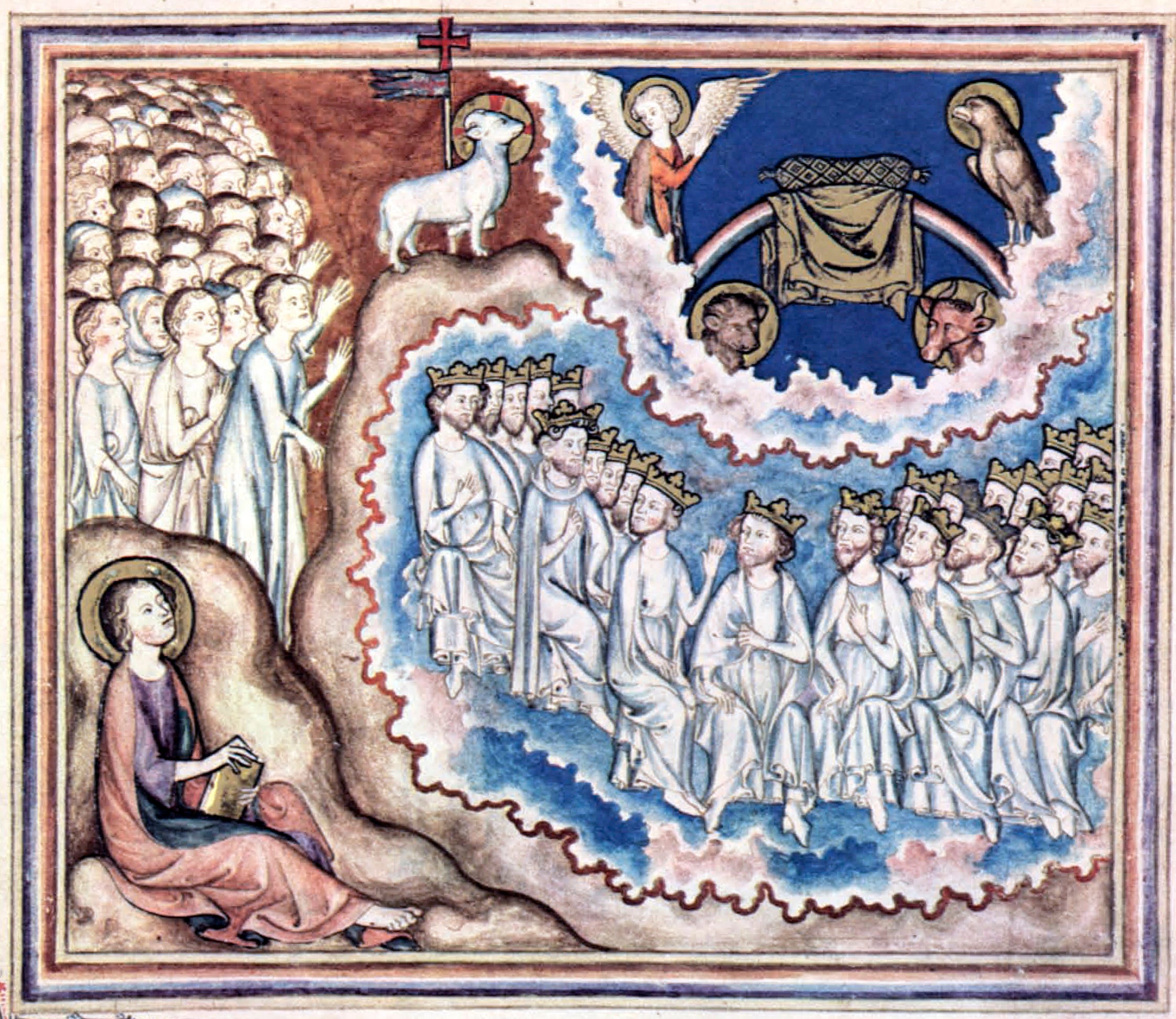
  • Revelation 14: The Lamb’s Frequency and the Fall of Babylon

    Revelation 14: The Lamb’s Frequency and the Fall of Babylon

    How Mount Zion, the 144,000, three angels, and the final harvest expose who is actually in resonance with Reality – through the Geomytha lens.

    Revelation 13 showed Set’s machine fully assembled:

    • a sea-beast (empire, market, war, spectacle),

    • an earth-beast (religion, ideology, propaganda),

    • an image of the beast (idols and systems that “speak”),

    • a mark on hand and forehead (behavior and thought patterned by the solar square),

    • and 666, “the number of a man” trapped in the illusion of man. Revelation 14 answers a different question:

    Once the beast-system is visible,

    what does it look like to stand in the Lamb’s field instead?

    We see:

    1. The Lamb on Mount Zion with 144,000 bearing a different name on their foreheads.

    2. A new song only they can learn.

    3. Three angels broadcasting: the eternal gospel, the fall of Babylon, and the warning against the beast.

    4. The blessed dead who “die in the Lord.”

    5. Two harvests: grain gathered by the Son of Man, and grapes thrown into the winepress. Through Geomytha:

    • Isis – awareness – now explicitly gathers what is truly hers.

    • Osiris – Lamb-consciousness – stands at the center as tuning fork.

    • Set – beast/Babylon – is announced as fallen even before his visible collapse.

    • Horus – illusion of man – is either harvested into truth or crushed in the winepress of its own choices.

    The Lamb on Mount Zion: Centered Awareness, Not Scattered Identity

    “Then I looked, and behold, on Mount Zion stood the Lamb,

    and with him 144,000 who had his name and his Father’s name written on their foreheads.” (Rev 14:1)

    In contrast to the beast rising from the sea and the earth, John now sees:

    • the Lamb – Osiris-as-Lamb, the “slain yet standing” consciousness from Revelation 5,

    • standing on Mount Zion – not random terrain, but the symbolic high point of alignment: center, axis, Temple-mount. With him: 144,000:

    • the same symbolic number as in Revelation 7 (12×12×1000) – completed circuits across all “tribes” and brother-types,

    • now explicitly with the Lamb on Zion, not just sealed on earth. They bear:

    • his name and his Father’s name on their foreheads – not the beast’s name/number. In Geomytha:

    • forehead = thought-center, interpretive field.

    • The mark of the beast was consent to Set’s solar story;

    • the name of the Lamb and the Father is consent to awareness and Lamb-mode as reference point. Zion is your inner high place where Isis, Osiris, and Lamb-Horus are consciously united:

    • not the city of Set,

    • not Babylon’s trading floor,

    • but the quiet, high axis where you know:

      • “I am not the beast,

      • I am not my 666 identity,

      • I am sourced in awareness and carried by the Lamb.”

    The Sound from Heaven: A Frequency Only Coherence Can Carry

    “And I heard a voice from heaven like the roar of many waters and like the sound of loud thunder.

    The voice I heard was like the sound of harpists playing on their harps,

    and they were singing a new song before the throne and before the four living creatures and before the elders.

    No one could learn that song except the 144,000 who had been redeemed from the earth.” (Rev 14:2–3)

    John hears:

    • a voice from heaven – not a single timbre but “many waters,” “thunder,” and “harpists,”

    • a new song sung before the throne, creatures, and elders. Crucially:

    “No one could learn that song except the 144,000 who had been redeemed from the earth.”

    This is not exclusivity for its own sake; it is physics of consciousness.

    In Geomytha:

    • the “new song” is the frequency of reality as the Lamb hears it:

      • gratitude without denial,

      • clear seeing without cynicism,

      • love that has passed through the wound and come out more lucid. Only those “redeemed from the earth” – not escaped from embodiment, but freed from identification with the beast’s earth-story – can learn it. You cannot learn this song by:

    • mental effort alone,

    • copying lyrics,

    • or mimicry. You learn it by:

    • consenting to Lamb-mode in your own life:

      • letting Osiris-through-the-wound be your interpreter,

      • letting Set’s story die in you,

      • discovering that awareness is not harmed by that death. The song is recognition:

    • the 144,000 recognize in themselves the same pattern they see in the Lamb;

    • that resonance is the melody.

    Virgins and Firstfruits: Uncorrupted by the Beast’s Story

    “It is these who have not defiled themselves with women, for they are virgins.

    It is these who follow the Lamb wherever he goes.

    These have been redeemed from mankind as firstfruits for God and the Lamb,

    and in their mouth no lie was found, for they are blameless.” (Rev 14:4–5)

    The language here has been misused badly. Through Geomytha, we read it archetypally, not as a literal male-celibacy requirement.

    Key descriptors:

    • “not defiled themselves with women… virgins”

    • “follow the Lamb wherever he goes”

    • “redeemed… as firstfruits”

    • “no lie… blameless” In your system:

    • “defilement” is not sexuality itself; it is union with Set’s story – being seduced by Babylon’s fornication with the kings of the earth (chapter 17),

    • “virgin” means not penetrated and impregnated by the beast’s narrative at the core identity level. These are the ones whose:

    • “mouth” speaks without carrying the dragon’s accusing voice,

    • “no lie” is found because they are not trying to maintain an ego-fiction against awareness,

    • “firstfruits” = early wave of a larger harvest – the first human configurations that fully align with the Lamb instead of the beast. They “follow the Lamb wherever he goes”:

    • into suffering,

    • into truth that costs them their image,

    • into places where Set’s world sees only failure,

    • trusting that awareness is still there. This is the opposite of 666-Horus, who follows the beast wherever the market goes.

    First Angel: The Eternal Gospel – Fear God, Not the Beast

    “Then I saw another angel flying directly overhead, with an eternal gospel to proclaim to those who dwell on earth,

    to every nation and tribe and language and people.

    And he said with a loud voice,

    ‘Fear God and give him glory, because the hour of his judgment has come,

    and worship him who made heaven and earth, the sea and the springs of water.’” (Rev 14:6–7)

    An angel flies “directly overhead” – a broadcast that crosses all borders.

    He carries an “eternal gospel” – not a new ideology, but an announcement that has been true all along:

    • “Fear God and give him glory,”

    • “worship him who made heaven and earth, the sea and the springs of water.” Through Geomytha:

    • “Fear God” = re-align your reference to Isis-source and the true axis of being,

    • not the beast, not the market, not Babylon.

    • “Heaven and earth, sea and springs” echoes Revelation 8–9: all the domains the trumpets hit. The angel basically says:

    You’ve seen what happens when you fear the beast and worship the machine.

    Turn your awe back to the Source that made the actual elements.

    This is the reversal of the mark:

    • pulling fear-energy out of Set’s empire,

    • returning glory to the One whose being the empire has been parasitizing.

    Second Angel: “Fallen, Fallen is Babylon the Great”

    “Another angel, a second, followed, saying,

    ‘Fallen, fallen is Babylon the great,

    she who made all nations drink the wine of the passion of her sexual immorality.’” (Rev 14:8)

    Here Babylon is named before her fall is narrated in full (chapters 17–18).

    She is described as:

    • “Babylon the great” – the archetypal city of Set:

      • fusion of empire, economy, spectacle, and spirituality,

    • making “all nations drink the wine of the passion of her sexual immorality”:

      • intoxicating the world with desiring what she desires. In Geomytha:

    • “sexual immorality” here is covenantal, not prudish:

      • Babylon uses the intimacy and union principle (meant for Isis–Osiris / God–creation)

      • and re-routes it into union with the beast:

        • merging identity with market,

        • selling your presence to Set’s calendar. The second angel announces her fall as if it were already accomplished:

    Once the Lamb stands on Zion,

    and once the 144,000 frequency exists,

    Babylon’s structural defeat is inevitable.

    This is not yet visible on the ground, but heaven reads the system’s core as already collapsed.

    Third Angel: Final Warning Against the Beast and His Mark

    “And another angel, a third, followed them, saying with a loud voice,

    ‘If anyone worships the beast and its image and receives a mark on his forehead or on his hand,

    he also will drink the wine of God’s wrath, poured full strength into the cup of his anger,

    and he will be tormented with fire and sulfur in the presence of the holy angels and in the presence of the Lamb.’” (Rev 14:9–10)

    The third angel speaks in the sharpest terms:

    • those who worship the beast and image,

    • and receive the mark on forehead or hand,

    • will drink another wine: the “wine of God’s wrath.” In Geomytha, “wrath” is not arbitrary rage; it is:

    The unedited encounter with reality when illusion is no longer shielded.

    To “drink God’s wrath” is to:

    • experience the full consequence of having aligned your being with the beast’s pattern,

    • without numbing, distraction, or delay. “Fire and sulfur… in the presence of the holy angels and in the presence of the Lamb” means:

    • this exposure happens in the light,

    • not in some hidden torture chamber,

    • but right where the true pattern is clearest. “No rest, day or night” for the beast-worshipers mirrors:

    • the inner state of 666-Horus:

      • no Sabbath,

      • no real stillness,

      • only the churn of Set’s clock. By contrast:

    “Here is a call for the endurance of the saints,

    those who keep the commandments of God and their faith in Jesus.” (Rev 14:12)

    Endurance here is:

    • the willingness to remain aligned with awareness and the Lamb,

    • even when the beast controls “buying and selling,”

    • trusting that the coming harvest will reveal what was actually wise.

    Blessed Are the Dead Who Die in the Lord

    “And I heard a voice from heaven saying, ‘Write this:

    Blessed are the dead who die in the Lord from now on.’

    ‘Blessed indeed,’ says the Spirit, ‘that they may rest from their labors, for their deeds follow them!’” (Rev 14:13)

    This line stands in deliberate contrast to:

    • those who “have no rest, day or night, these worshipers of the beast” (v.11). To “die in the Lord” in Geomytha is two-fold:

    1. Ego-death while alive:

      • allowing your beast-marked identity to die into Lamb-identity,

      • releasing your life story into awareness,

      • consenting to be nothing in Set’s eyes.

    2. Physical death from within that alignment:

      • leaving the body while rooted in the Lamb rather than the beast. “Rest from their labors” means:

    • the Set-driven compulsion to justify existence finally ends. “Their deeds follow them” means:

    • what has truly flowed from awareness and Lamb-mode is not lost;

    • it remains as pattern and fruit in the field of Being. The 666-life leaves behind unsatisfying residue and systems that collapse. The Lamb-aligned life leaves behind a frequency that remains in the book of life.

    The Harvest of the Earth: Grain and Grapes

    Revelation 14 closes with two linked visions:

    1. Grain harvest – by “one like a son of man.”

    2. Grape harvest – thrown into the winepress.

    “Then I looked, and behold, a white cloud, and seated on the cloud one like a son of man,

    with a golden crown on his head, and a sharp sickle in his hand.” (Rev 14:14)

    “And another angel came out of the temple, calling with a loud voice to him who sat on the cloud,

    ‘Put in your sickle, and reap, for the hour to reap has come, for the harvest of the earth is fully ripe.’

    So he who sat on the cloud swung his sickle across the earth, and the earth was reaped.” (Rev 14:15–16)

    The son of man here is:

    • the Horus-Christ figure,

    • but now clearly enthroned in the clouds with a golden crown,

    • harvesting at the Father’s timing. In Geomytha:

    this is Horus in alignment being entrusted with separation:

    • not conquering like the white horse of the first seal,

    • but reaping what is ready. The grain harvest represents:

    • all in humanity that has become true food –

      • identities and lives that have matured in Lamb-frequency,

      • “wheat” ready for the barn. Immediately, a second harvest:

    “Then another angel came out of the temple in heaven, and he too had a sharp sickle…

    ‘Put in your sickle and gather the clusters from the vine of the earth, for its grapes are ripe.’

    So the angel swung his sickle across the earth and gathered the grape harvest of the earth

    and threw it into the great winepress of the wrath of God.” (Rev 14:17–19)

    The grapes are “from the vine of the earth”:

    • fruit of Set’s system,

    • the wine Babylon made the nations drink. They are thrown into the winepress of God’s wrath:

    • all of that intoxicating energy,

    • squeezed under reality’s weight,

    • until what it really is comes out. “The blood flowed from the winepress, as high as a horse’s bridle, for 1,600 stadia” (v.20):

    • a hyperbolic image of massive consequence. In Geomytha:

    • the winepress is where Set’s stories are forced to meet what they have done.

    • The “blood” is the life-cost of those stories, now undeniable. If you drank Babylon’s wine, you must now face the winepress from the other side. If you consented to Lamb-mode, you are grain:

    • same field,

    • different outcome.

    How Revelation 14 Functions in Geomytha

    Revelation 14 is a counter-vision to Revelation 13:

    • Where 13 showed the beasts and the mark,

    • 14 shows the Lamb, Zion, the marked remnant, three angelic broadcasts, and the harvest. Summarized through your lens:

    1. Lamb on Zion –

      • Osiris-as-Lamb at the inner high place,

      • Horus re-anchored in the throne field,

      • 144,000 minds bearing a different name than 666.

    2. New Song –

      • a frequency only those de-marked from the beast can carry,

      • learned through suffering-metabolized, not through information.

    3. Three Angels –

      • Eternal gospel: fear Source, not the machine.

      • Babylon declared fallen: the system’s collapse is written even before it looks that way.

      • Beast warning: aligning hand and forehead with Set ends in direct exposure to reality’s “wrath.”

    4. Blessed Dead –

      • those whose ego-death and bodily death occur inside Lamb-alignment,

      • entering rest rather than endless Set-labor.

    5. Two Harvests –

      • Grain: what in humanity has become true food in the Lamb’s field.

      • Grapes: what in humanity has become intoxicating fuel for Babylon, pressed to reveal its cost. For your Geomytha work, Revelation 14 presses very specific questions:

    1. Where, in me, is Mount Zion – the inner place where the Lamb stands, apart from the city of Set?

    2. What song do my actual choices teach my nervous system to sing: the song of the Lamb, or the song of the beast?

    3. Am I still secretly drinking Babylon’s wine – chasing her forms of security, status, and thrill – while talking Lamb-language?

    4. In my daily life, what would it mean to “die in the Lord” today – to let a layer of my 666-Horus identity fall away?

    5. If my life were harvested right now, which parts are grain and which are grapes of the earth? Revelation 14 stands as a hinge:

    The beasts and the Lamb now stand fully revealed.

    Babylon is already named “fallen.”

    The only real question is:

    Which name is on your forehead,

    which song is in your mouth,

    and which harvest are you preparing yourself to be?

    X: @mythicgeometry · Substack: Geomytha Noir · YouTube: Geomytha · Instagram: @mythicgeometry · TikTok: @Geomytha · Patreon: GeomythaNoir
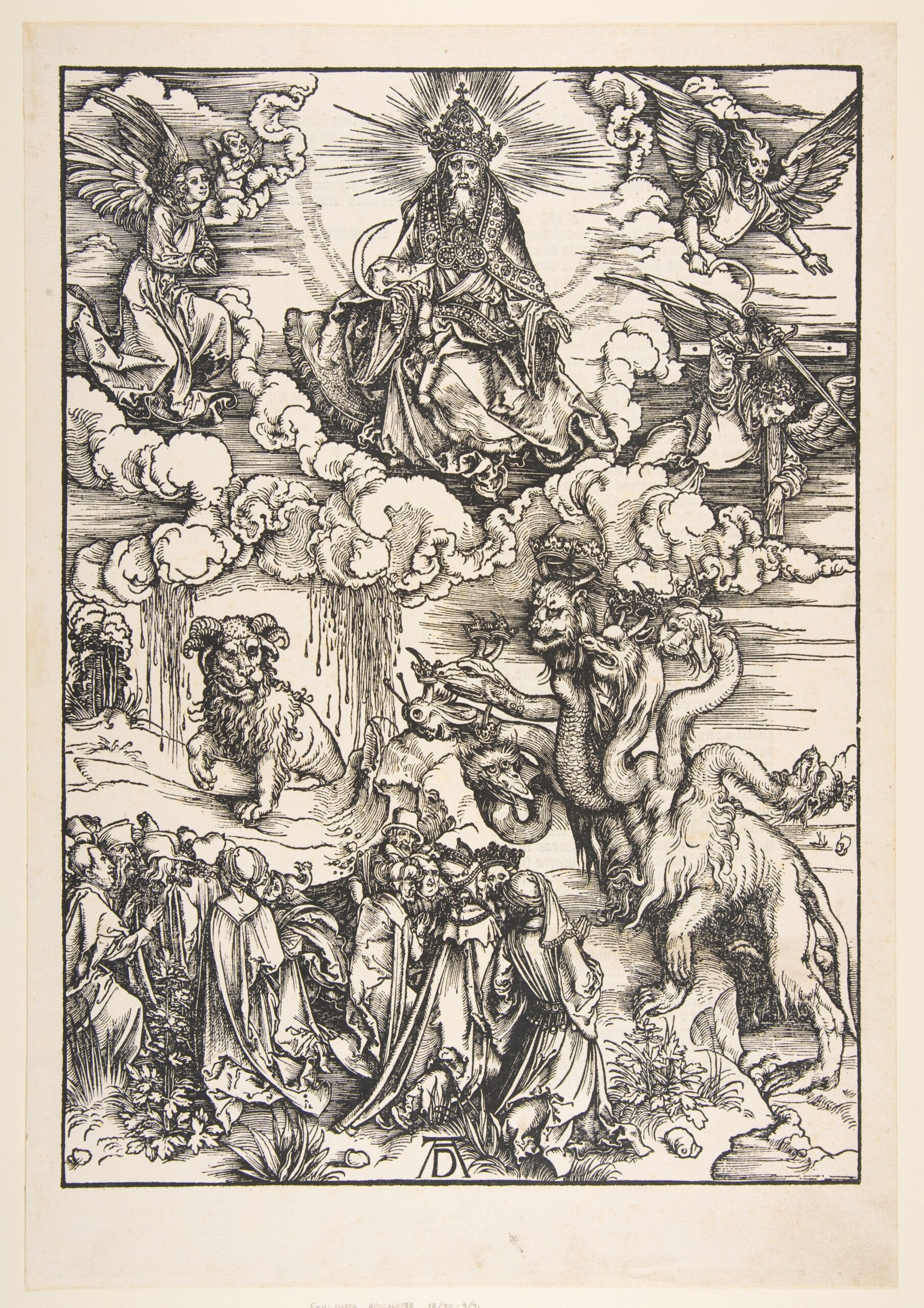
  • Revelation 13: Beasts, Images, and the Mark of the Solar Machine

    Revelation 13: Beasts, Images, and the Mark of the Solar Machine

    Paid essay — public preview. This page introduces the original essay. The complete argument, examples, and conclusion are available to paid Geomytha subscribers on Substack.

    How the two beasts and 666 describe Set’s full operating system – political, economic, and religious – through the Geomytha lens.

    Revelation 12 showed you the core drama behind everything:

    The Woman (Isis) – awareness, clothed with the sun, moon under her feet, crowned with twelve stars, in labor.

    The Dragon (Set) – solar imagination in predatory mode, trying to devour any real birth.

    The Male Child (Horus aligned with the throne) – seized to God and to the center, beyond the dragon’s reach.

    War in “heaven” – the interpretive field cleansed, the dragon cast down to earth.

    The woman nourished in the wilderness, the earth itself helping her, and the dragon raging against “the rest of her offspring.”

    Revelation…

    Read the complete essay on Substack →

    This WordPress page preserves the essay’s place in the Geomytha archive, its original title and subtitle, and its publication date. The full subscriber edition remains protected on Substack.

  • Revelation 12: The Woman, the Dragon, and the Birth of the Real Childhood

    Revelation 12: The Woman, the Dragon, and the Birth of the Real Childhood

    Paid essay — public preview. This page introduces the original essay. The complete argument, examples, and conclusion are available to paid Geomytha subscribers on Substack.

    How the woman clothed with the sun, the red dragon, and the “male child” map to Isis, Set, and Horus in the Geomytha field.

    Revelation 11 ended with the inner Temple opened and the Ark of the covenant visible:

    the deepest center of reality exposed,

    lightning, thunder, earthquake, hail marking the shock of that revelation.

    Revelation 12 then shifts into pure symbolic drama.

    We are shown:

    A woman clothed with the sun, the moon under her feet, and a crown of twelve stars.

    A great red dragon with seven heads and ten horns.

    A male child destined to “rule all nations with a rod of iron,” caught up to God and the throne.

    A war in heaven and the dragon…

    Read the complete essay on Substack →

    This WordPress page preserves the essay’s place in the Geomytha archive, its original title and subtitle, and its publication date. The full subscriber edition remains protected on Substack.