Author: D. Cyprian

  • Smoke on the Water: When Set’s Fire Paints a Veil Across Isis

    Smoke on the Water: When Set’s Fire Paints a Veil Across Isis

    There are titles that are merely poetic, and then there are titles that function like a diagram.

    “Smoke on the Water” is the latter.

    Not because it “sounds cool,” but because it names the exact mechanism by which consciousness is displaced:

    • Water is the Isis-field: the living, receptive ground of awareness (earth, body, immediacy).

    • Smoke is Set’s medium: the interpretive haze—imagination, compulsive meaning-making, story, reaction.

    • On the water is the entire tragedy: the veil laid over the mirror, so the mirror is still there, but you can no longer see it clearly.

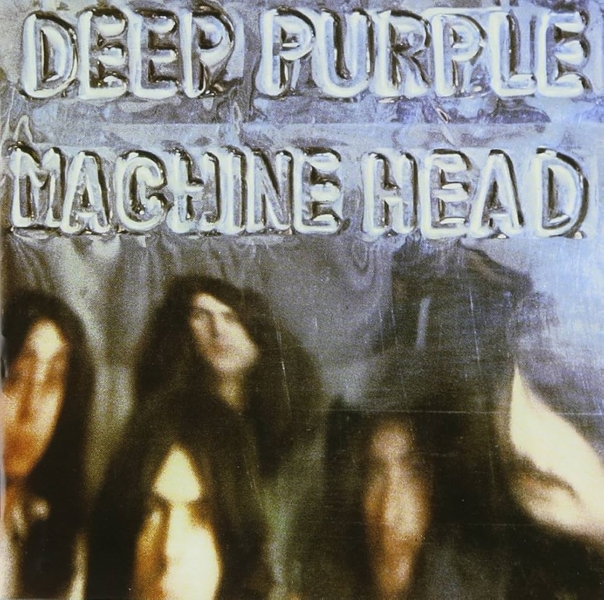
    And unlike most myths, this one is not allegorical by accident. The lyric’s origin is a literal event in Montreux: a flare gun ignited a fire at the casino, and the smoke drifted over Lake Geneva as Deep Purple watched from nearby.

    The Four Archetypes Hidden in One Sentence

    In the Geomytha lens, the entire human predicament can be read as the interaction of four principles:

    1. Isis / Earth — awareness as the given: the field before language.

    2. Osiris / Moon — reflecting consciousness: the mirror that can clarify and “perfect.”

    3. Set / Sun — overtaken by imagination: impulse, heat, dopamine, urgency, the hijack.

    4. Horus / Illusion of Man — the time-bound ego identity that crystallizes after the hijack: “me,” “my story,” “my wound,” “my opinion,” “my stance.”

    Now watch how the title performs that sequence without explaining it.

    Fire in the sky (Set) produces smoke (conceptual haze) that moves over water (Isis).

    Then the witness becomes a narrator (Horus): the mind finalizes the event into identity and time.

    The song is famous for its riff. But the title is famous because it describes the invisible technology behind the riff: how the mind learns to live on the film instead of the depth.

    The True Story Is the Myth Made Visible

    Deep Purple went to Montreux to record what would become Machine Head. They planned to use the casino, but a fire—sparked during a Frank Zappa concert—destroyed the venue, forcing them to improvise locations, including the Grand Hotel, using the Rolling Stones Mobile Studio.

    That’s the outer story.

    Here is the inner story:

    • A single impulsive act (“some stupid with a flare gun”) becomes the initiating spark.

    • The environment turns into urgency, narrative, and reaction.

    • And then the perfect symbol arrives: smoke drifting across the lake—the visible sign of mind-film overtaking presence.

    This is Set’s signature move: not “evil,” but captivation. Attention is pulled upward into heat and storyline, and what was once simple awareness becomes a commentary track.

    The Riff as the Loop That Can Awaken or Trap

    That riff is minimal, repeatable, almost ceremonial. Which means it functions like a consciousness device:

    • In Osiris mode, repetition becomes clarification: a mantra without ideology, a return to the center, a polishing of reflection.

    • In Set mode, repetition becomes compulsion: the same circuit re-firing for identity fuel.

    • In Horus mode, repetition becomes selfhood: “I am the one who knows this riff,” “this is my taste,” “this is my tribe,” “this is my era.”

    The same loop can either return you to the convergence point (the unnamable center) or tighten the time-bound persona around the loop.

    This is why the song teaches more than it says. It shows how easily the mind can make a home in the smoke—because the smoke feels like meaning.

    “Smoke on the Water” as the Tree of Knowledge Overlay

    In this system, the Tree of Life is the living immediacy you never left.

    The Tree of Knowledge is the interpretive architecture that claims it has replaced the living.

    Smoke is Tree-of-Knowledge behavior: information without contact, naming without seeing, narrative without presence.

    Water is Tree-of-Life reality: directness, receptivity, the silent fact of being.

    So the title can be read as a warning and a practice:

    Do not confuse the film for the field.

    Or, more sharply:

    The problem is not the fire.

    The problem is living in the smoke.

    A Practical Use: The “Smoke Check” (30 seconds)

    When you notice you are “in the song”—in commentary, in argument, in dread, in identity—do this:

    1. Name it once: “Smoke.” (Not to analyze—just to label the mode.)

    2. Return to the water: feel the body as the ground (breath low, weight, contact).

    3. Let the smoke move: do not swat it away, do not negotiate with it, do not build a case out of it.

    4. Watch what happens: if the story needs you to be Horus, it will try to recruit you again. Let it fail.

    This is not self-improvement. It is depossession—Osiris refusing to be overtaken by Set’s cinema.

    The Return Point You Never Left

    The entire world-system can be summarized as smoke on water: thought-film over living presence.

    The work is not to “win” inside the smoke. The work is to remember the water.

    Because the return point is not somewhere you travel to.

    It is what remains when you stop feeding the veil.

    — Geomytha (Mythic Geometry Center)

  • Cult of Personality as an Archetypal Mechanism (in Geomytha)

    Cult of Personality as an Archetypal Mechanism (in Geomytha)

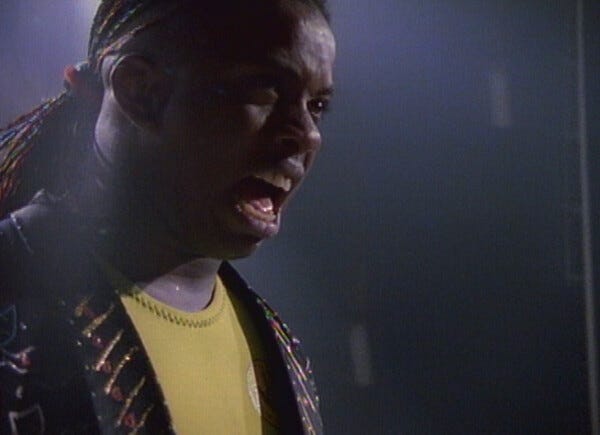
    Living Colour’s “Cult of Personality” is not primarily a protest song about one historical figure. It is a diagnosis of how consciousness gets recruited—how attention is captured, reflection is hijacked, and a time-bound identity is manufactured and then defended as “truth.”

    In Geomytha terms, it is the Set/Horus pipeline operating in public: imagination (Set / Sun) enthrones an image, and the listener’s ego identity (Horus / illusion of man) forms around it.

    1) The opening contract: “look at the image, not the field”

    The song begins with a direct invitation to exit Isis (pure presence) and enter the surface of appearances: look at me, read the face, accept the projection. This is the first move of the spell: attention leaves the field and is pinned to a personality—an externalized “center.”

    In Geomytha, that is the precise moment the living present is replaced by representation.

    2) Osiris inverted: reflection becomes servitude

    Osiris is the “perfect reflection” of Isis—presence mirroring itself cleanly, without distortion. In “Cult of Personality,” reflection becomes something else: a mirror that obeys the crowd.

    The lyrics frame the personality as a shapeshifter who can become whatever the audience wants. That is not reflection; that is performance—and performance is the beginning of capture, because it makes the outside look like the source.

    3) Set speaks in plain language: exploitation as a feature, not a bug

    The song is unusually candid about the mechanism. It does not merely imply manipulation; it depicts a personality that benefits from being believed and repeats the core formula: I know what you want, so I will sell you yourself.

    In Geomytha, this is Set functioning as the Sun of imagination—bright enough to blind, persuasive enough to override contradictions, and compelling enough to replace direct knowing with narrative.

    4) Horus as a product: identity assembled from slogans and borrowed certainty

    Horus is the constructed “I”—a time-bound identity formed when attention is routed into story, memory, fear, and promise. “Cult of Personality” shows Horus being mass-produced: not just beliefs, but a ready-made self—who you are, who your enemies are, what your “mission” is, what you must defend.

    That is why the “cult” is not merely admiration. It is identity fusion: you stop having beliefs and start being them. And once you are them, any threat to the personality feels like a threat to you.

    5) Why the song name-drops both “saints” and “monsters”

    The track deliberately places revered and reviled leaders in the same litany. The point is not that they are morally equivalent. The point is that the mechanism is structurally identical: a crowd can turn any figure into an idol, and the idol can be used in any direction, once attention is surrendered.

    In Geomytha terms: Set does not need “evil content” to operate. Set only needs imaging + identification.

    6) The sampled speeches: mass initiation into the spell

    The song uses sampled political speech—famously including Malcolm X and John F. Kennedy and Franklin D. Roosevelt.

    This matters archetypally: the crowd is not only listening to a riff; it is being ritually inducted. A speech sample is a kind of secular scripture—voice-of-authority energy—inserted to trigger the body-level feeling of importance and destiny. That feeling is then fused to the personality-image.

    7) The Geomytha takeaway: how to break the cult inside yourself

    The song is a warning, but it also implies the remedy:

    • Return attention to Isis (the field). If your nervous system is being “pulled” toward outrage, adoration, or fear, treat that as a diagnostic: your attention is being relocated.

    • Restore Osiris (clean reflection). Ask: What is directly present right now, before my story about it? This dissolves the glamour without requiring you to “debunk” every claim.

    • Recognize Set (solar imagination) by its signature. When contradictions feel “inspiring,” when certainty spikes without evidence, when identity gets heated—Set is recruiting.

    • Deflate Horus (time-bound ego) by de-fusing identity. You can hold positions, values, and preferences without turning them into “who I am.”

    In short: the cure for a cult of personality is not a better personality. It is presence that refuses to outsource the center.

    Geomytha’s final thoughts

    “Cult of Personality” endures because it describes a repeating pattern: the mind enthrones an image, then lives inside the image as if it were reality. In Geomytha, that is Set overtaking Osiris and generating Horus—the illusion of man—at scale.

    If this reading resonates, you can find more mythic-structure breakdowns here:

    YouTube: geomytha

    X: mythicgeometry

    Instagram: mythicgeometry

    Patreon: Geomytha Noir

  • The Red Sea Is the Moment the Sphere Becomes a Torus

    The Red Sea Is the Moment the Sphere Becomes a Torus

    Paid essay — public preview. This page introduces the original essay. The complete argument, examples, and conclusion are available to paid Geomytha subscribers on Substack.

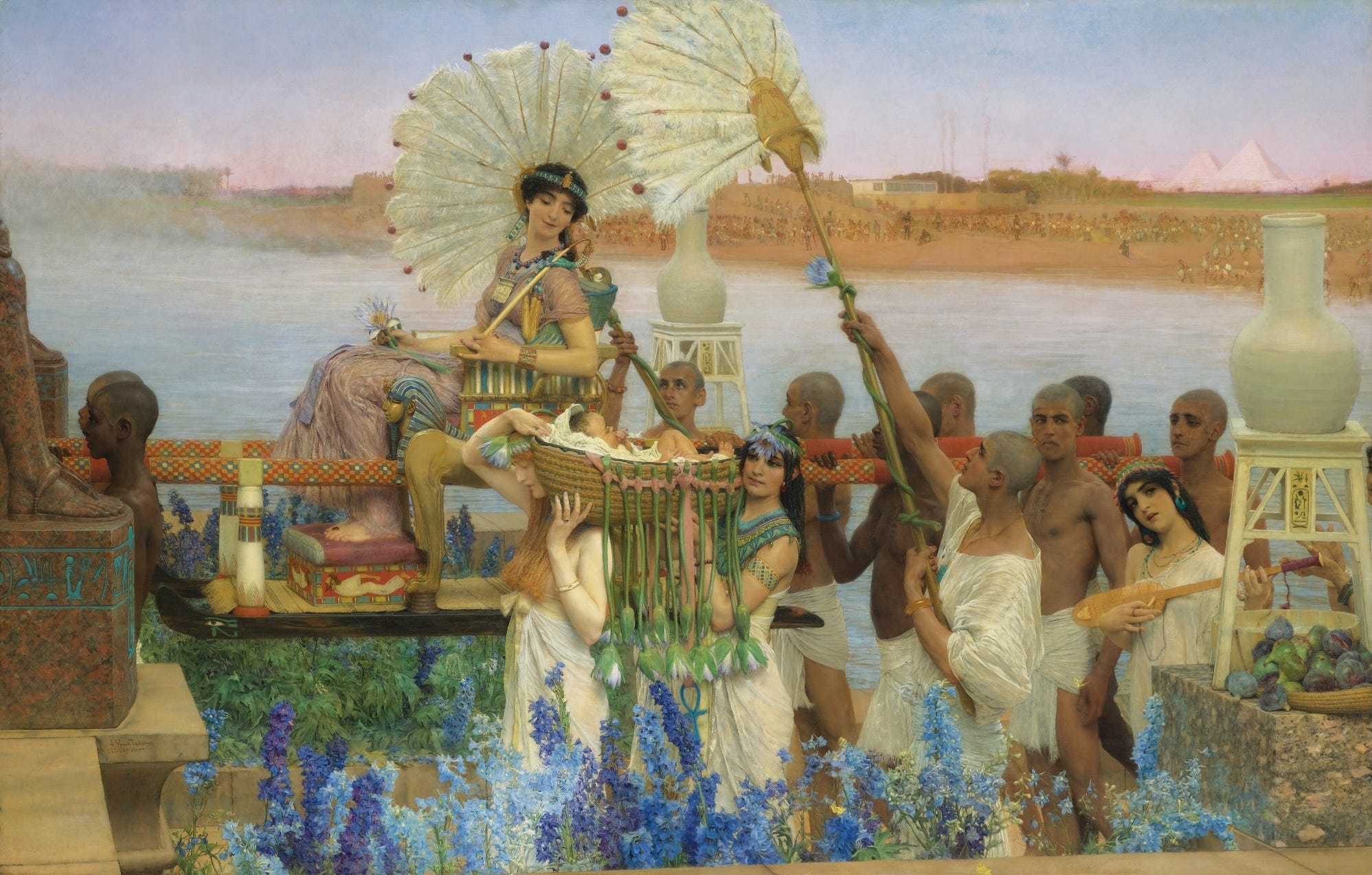
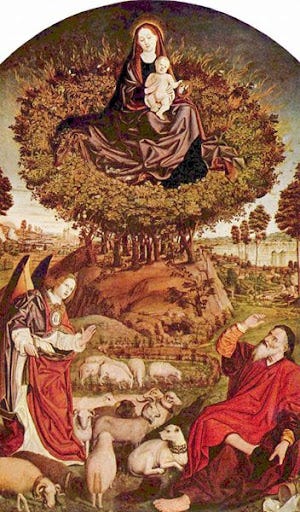
    The Burning Bush is the revelation: fire without consumption—presence igniting without being converted into ego.

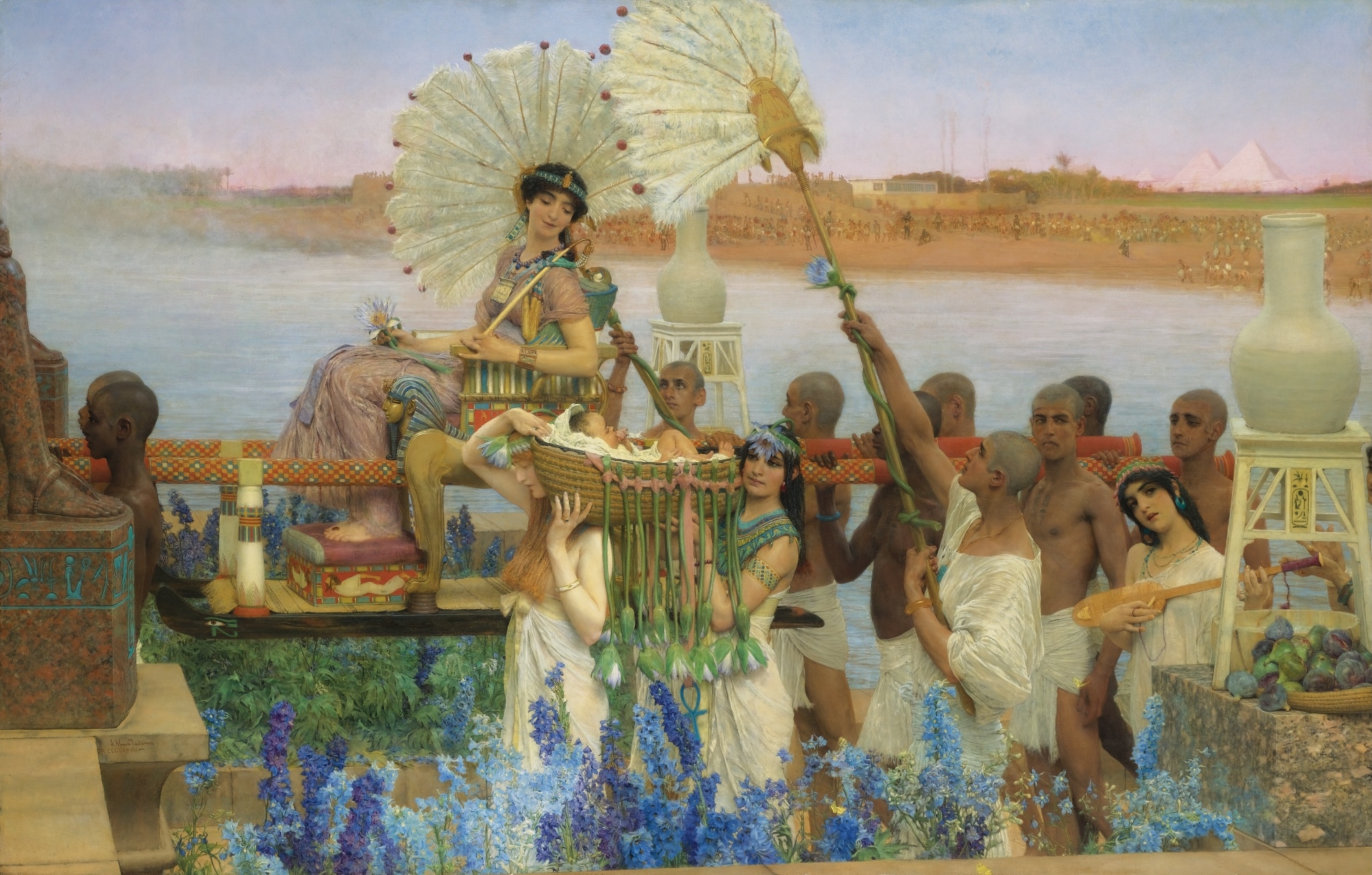
    Moses and Pharaoh is the confrontation: awareness versus the identity-system that enslaves attention through control, fear, and time-pressure.

    And the Red Sea is the threshold event that makes liberation irreversible:

    the severing of identification.

    In Geomytha, the Red Sea is not merely a historical escape scene. It is a precise interior event: the moment reflection separates from imagination, and the old regime cannot follow.

    To make that clear in the language of form:

    the parting of the Red Sea is the sphere reorganizing into a torus.

    Not as a literal, physical morphing of matter—but as a structural disclosure of how consciousness moves. In Geomytha, the…

    Read the complete essay on Substack →

    This WordPress page preserves the essay’s place in the Geomytha archive, its original title and subtitle, and its publication date. The full subscriber edition remains protected on Substack.

  • Moses and Pharaoh Are One Field

    Moses and Pharaoh Are One Field

    If the Burning Bush is the moment presence becomes undeniable—fire without consumption—then Moses and Pharaoh are what happens next: the confrontation between awareness and the identity-system that wants to keep awareness enslaved.

    In Geomytha, this is not primarily political history. It is an interior jurisdiction dispute.

    Not “good guys vs bad guys.”

    But: Isis’ jurisdiction vs Set’s jurisdiction—awareness versus the imagination-force that manufactures a time-bound self and then demands your labor to keep it alive.

    The Real Battlefield: Jurisdiction

    The common misread is to treat Pharaoh as merely a villain and Moses as merely a hero.

    But myths do not persist for millennia because they teach basic morality. They persist because they encode a repeatable mechanism.

    Pharaoh is the operating system of the ego:

    • It defines reality in terms of control and output.

    • It requires constant production to justify existence.

    • It punishes pauses as disobedience.

    • It turns life into quotas.

    Moses is the “call” that interrupts that system—not with an argument, but with a recognition: there is a different authority than the one in your head.

    In other words: Pharaoh is not simply “out there.” Pharaoh is the part of the psyche that believes value comes from extraction.

    The Enslavement Pattern: Consciousness as Labor

    Israel in Egypt is consciousness under management.

    When awareness is captured by the narrative-machine, your attention becomes labor:

    • laboring to predict,

    • laboring to regret,

    • laboring to defend identity,

    • laboring to curate perception,

    • laboring to maintain the persona.

    That is why the story is about work—brickmaking, quotas, supervision.

    In Geomytha terms, this is the Set-function at scale: the “solar” force overtakes reflection and converts living presence into time-bound productivity. Horus—ego identity—becomes the foreman.

    You are not living. You are “becoming someone.”

    And becoming someone is endless work.

    “Let My People Go” Is Not a Negotiation

    Read the demand precisely: it is not “give them better conditions.”

    It is: release.

    Because the point is not reform. The point is exit.

    The ego-system can offer a thousand compromises:

    • spiritual talk that keeps the same identity intact,

    • healing that becomes another badge,

    • productivity with nicer aesthetics,

    • even religion as a refined Pharaoh.

    But the myth refuses to call that liberation.

    Liberation is a jurisdiction change: attention stops being owned by Pharaoh.

    Hardened Heart: The Ego’s Most Predictable Reflex

    Pharaoh’s hardened heart is not random cruelty. It is a diagnostic feature of identity.

    When the system that runs on control is threatened, it becomes more control.

    When the story-self is threatened, it intensifies the story.

    That’s why “proof” doesn’t end the conflict. Miracles don’t resolve it. Evidence doesn’t dissolve it. The ego can metabolize anything into its own survival:

    • “This is happening to me.”

    • “I deserve this.”

    • “They’re doing this to me.”

    • “I’m chosen.”

    • “I’m cursed.”

    Even revelation can be captured and turned into persona.

    So the hardening is the myth naming a law: identity resists dissolution by doubling down.

    The Plagues as Deconstruction of Pharaoh’s World

    In Geomytha, the plagues are not divine tantrums. They are system failures—the staged collapse of the false order.

    Each plague attacks a different layer of certainty:

    • what you thought was stable becomes unstable,

    • what you trusted becomes unreliable,

    • what you controlled becomes uncontrollable.

    This is what happens internally when presence begins to reclaim the field:

    • the old comforts don’t work,

    • the old coping strategies backfire,

    • the old identity stories stop satisfying.

    Not because you are being punished.

    Because the trance is breaking.

    Pharaoh’s world must become unlivable for the psyche to stop worshiping it.

    The Exodus as the VMD Pattern in Motion

    If the VMD is the underlying grammar, the Exodus is one of its clearest narratives:

    • Isis (awareness / earth): the call to grounded reality, the directness of “what is.”

    • Osiris (reflection / moon): the re-coherence of perception—seeing the system clearly.

    • Set (imagination overtaking / sun): the empire of concepts, fear, control, division, and time-pressure.

    • Horus (ego identity): the persona that benefits from the system and fears release.

    The movement out of Egypt is the movement from being governed by Set/Horus to re-entering Isis/Osiris alignment—presence restoring reflection, reflection no longer taxed by the story-machine.

    This is why the wilderness matters: it is the transitional zone where the old identity dies and the new identity has not yet formed. A terrifying interval for the ego. A necessary interval for awareness.

    The Wilderness Is Where Pharaoh Survives in Disguise

    Here is the harsh part the myth insists on: leaving Egypt physically is not the same as leaving Egypt psychologically.

    That’s why the wilderness fills with complaints, nostalgia, and bargaining.

    The ego will miss its chains if its chains gave it structure.

    It will prefer familiar suffering to unknown freedom.

    So the wilderness becomes the mirror: you learn whether you wanted liberation—or merely a better Pharaoh.

    Moses as the Functional Bridge

    Moses is not the “perfect person.” He is the bridge-function:

    • the willingness to obey the call of presence,

    • the willingness to confront the internal empire,

    • the willingness to walk without the old guarantees.

    In Geomytha terms, Moses is what happens when reflection stops serving imagination and begins serving awareness.

    A living yes.

    Not to a doctrine.

    To the immediate truth.

    Stop Paying Pharaoh With Your Attention

    If you want the usable core of this myth, it is this:

    Pharaoh is sustained by attention.

    Every time you compulsively narrate, rehearse, defend, curate, or catastrophize, you pay taxes to Egypt.

    The exodus begins when you notice the payment and stop calling it “necessary.”

    Not through force.

    Through jurisdiction.

    You return the field to Isis.

    The Bush Was the Beginning

    The Burning Bush was the revelation: fire without consumption.

    Moses and Pharaoh is the implementation: will you live that revelation, or will Pharaoh convert it into another identity project?

    Because the ego can wear any costume—even a spiritual one.

    The myth does not end with inspiration.

    It begins with extraction ending.

    Connect with Geomytha

    • YouTube: geomytha

    • X: mythicgeometry

    • Instagram: mythicgeometry

    • TikTok: Geomytha

    • Patreon: Geomytha Noir

    • Substack: Geomytha Noir

  • The Burning Bush is a Diagram of Consciousness

    The Burning Bush is a Diagram of Consciousness

    Most readings of the Burning Bush treat it as a miracle story: a supernatural interruption of ordinary reality. In Geomytha, it reads differently.

    It is not an interruption. It is a disclosure.

    The Burning Bush is a mythic photograph of what awareness looks like when it is no longer being consumed by the ego’s storyline—when the inner field ignites, yet nothing is depleted. Fire without damage. Light without loss. Presence without the tax of identity.

    And once you see it that way, you can see why the same structure repeats everywhere: because the Burning Bush is not merely a story—it’s a clean instance of the underlying pattern that shows up in all stories.

    In Geomytha, that underlying pattern is what the Vortex Math Diagram (VMD) represents.

    The VMD as Mythic Grammar

    When I say “all myths are encoded in the VMD,” I do not mean ancient scribes were secretly doing arithmetic.

    I mean something more precise: the VMD expresses the recurring mechanics of consciousness—the same mechanics that myth, scripture, and story dress up as characters, conflicts, and revelations.

    The VMD gives a visual shorthand for the same perennial cycle:

    • Awareness (Isis / Earth): the living field that is already here.

    • Reflection (Osiris / Moon): consciousness becoming coherent, mirroring itself cleanly.

    • Imagination overtaking (Set / Sun): the “solar” force that fractures reflection into conceptual division.

    • Time-bound identity (Horus / the illusion of man): the ego-self formed out of narrative, memory, and projected continuity.

    Myths retell this as family drama, cosmic war, exile and return, fall and redemption. The VMD renders the structure beneath the costume.

    If you accept that premise, then every myth becomes traceable: you locate where awareness is stable, where reflection is intact, where division enters, and what identity is manufactured as a result.

    “Burning, Yet Not Consumed”

    This single phrase is the key.

    In ordinary egoic functioning, “fire” consumes. Intensity converts your attention into narrative. Energy turns into identity maintenance: defending, explaining, controlling, seeking, regretting, rehearsing. That is the felt experience of being “burned” by thought.

    But the Burning Bush is fire that does not consume.

    That is exactly how presence feels when it is no longer being harvested by conceptualization.

    • The field can be bright.

    • The moment can be intense.

    • The inner world can be alive.

    • And yet nothing is drained, because nothing is being turned into a story of “me.”

    This is not merely mystical language. It is an experiential claim: the difference between attention as presence and attention as possession.

    The Bush as the Interface of Form

    A bush is not a temple. It is not a palace. It is not a throne. It is ordinary, thorny, living form—humble matter.

    In Geomytha, that matters.

    Because the revelation is not delivered by escaping the world. It is delivered in the world, through the mundane interface where consciousness meets form. That is why the object is not glamorous: the myth refuses to let you confuse “truth” with prestige.

    The bush is the bodily world, the ordinary moment, the place you keep overlooking while you look for “spiritual experiences.”

    The burning bush says: the interface itself is the altar.

    Fire as Set: The Solar Force of Division

    In this framework, Set corresponds to the “solar” force that fractures reflection into conceptual division. It is not “evil” in a cartoon sense; it is a function—an overtaking.

    Fire is a clean symbol for this:

    • Fire illuminates.

    • Fire energizes.

    • Fire spreads quickly.

    • Fire transforms what it touches.

    That is also what thought does when it becomes governor instead of tool.

    When imagination (Set) overtakes reflection (Osiris), it produces the world of opposites—good/bad, safe/dangerous, success/failure—then installs a time-bound identity (Horus) to navigate the opposites.

    The Burning Bush is the moment when that overtaking is interrupted—not by repression, but by recognition.

    The fire remains, but it stops consuming the bush. In other words: the intensity remains, but it stops stealing the field to build an ego.

    The Voice That Names Itself

    Then comes the most provocative part: the voice.

    The text does not merely say “God spoke.” It gives a kind of self-definition that resists definition. In Geomytha terms, this is the point where awareness identifies itself as prior to the story.

    Not “a being inside the world,” competing with other beings.

    But presence as the ground of beings.

    That is why the revelation is not primarily a command. It is primarily an unveiling: the recognition of what is already true before the mind starts narrating.

    The Burning Bush is the moment consciousness realizes it is not the character.

    Why This One Myth Proves the Larger Claim

    If a single myth cleanly encodes the same awareness/reflection/overtaking/identity mechanics you see everywhere, then the larger thesis becomes testable:

    Myths are not random cultural artifacts. They are symbolic recordings of the same inner architecture.

    That is why you can take a story from Egypt, a parable from the Gospels, a Greek tragedy, a fairy tale, or a modern film—and reliably locate the same moves:

    1. A coherent state (Osiris reflection intact).

    2. An intrusion or fracture (Set enters as division).

    3. A new identity formed to survive the fracture (Horus).

    4. A restoration or a loop (return to Isis awareness, or repetition of the cycle).

    The VMD becomes the map because it expresses recurrence: loops, convergence, and the seductive illusion of linear progression.

    The Burning Bush as the VMD in Narrative Form

    Here is the simplest correspondence, stated plainly:

    • Isis (awareness / earth): the “bush” as living presence in form—ordinary, grounded, already there.

    • Osiris (reflection / moon): the capacity of consciousness to mirror itself without distortion.

    • Set (imagination overtaking / sun): the fire—intensity that normally consumes attention into narrative.

    • Horus (time-bound ego): the identity that would normally claim the event (“my calling,” “my mission,” “my specialness”) and convert revelation into persona.

    The Burning Bush is the moment the fire does not get to complete its usual work.

    The “solar” force is present, but it is no longer sovereign.

    That is the whole instruction.

    The Practical Instruction Hidden in the Myth

    If myths are instruction manuals, then the Burning Bush teaches a practice you can verify:

    Let intensity be present without converting it into identity.

    In real terms:

    • Feel the urge to explain yourself.

    • Feel the urge to judge.

    • Feel the urge to fix the future.

    • Feel the urge to rewrite the past.

    That is the “fire.”

    Now watch the moment you turn it into a self.

    That conversion is the consumption.

    The practice is not to extinguish the fire. The practice is to stop feeding it the bush.

    A Simple Exercise: Fire Without Consumption

    Try this for two minutes:

    1. Sit still. Let the body be the “bush”—ordinary, unromantic, present.

    2. Notice the strongest thought-current in the mind (worry, planning, resentment, desire).

    3. Do not argue with it. Do not obey it. Do not suppress it.

    4. Let it burn as sensation and energy—without attaching a storyline.

    5. When the mind tries to claim it (“this means X about me”), return to bare perception.

    If you do this even briefly, you will see the point: the fire can be there without eating you alive.

    That is “burning, yet not consumed” as lived experience.

    Closing: Why the Bush Still Burns

    In Geomytha, the Burning Bush is not a relic of ancient religion. It is the recurring moment that appears whenever presence breaks through the trance of identity.

    It appears when the field is bright and awake, and yet nothing needs to be defended.

    It appears when the mind’s solar machinery is running, but it is no longer allowed to crown itself king.

    And if it is true that all myths are encoded in the VMD, then the Burning Bush is one of the clearest entries in the archive: a direct depiction of the vortex point—where awareness remains itself, even while the world is on fire.

    Because the point was never to escape the fire.

    The point was to stop being consumed by it.

    Connect with Geomytha

    • YouTube: geomytha

    • X: mythicgeometry

    • Instagram: mythicgeometry

    • TikTok: Geomytha

    • Patreon: Geomytha Noir

    • Substack: Geomytha Noir

  • “Otherside” (Red Hot Chili Peppers) as a Geomytha Field Report

    “Otherside” (Red Hot Chili Peppers) as a Geomytha Field Report

    There are songs that feel less like entertainment and more like testimony.

    In Geomytha, “Otherside” reads as a first-person report from Horus (time-bound ego identity) describing what it is like to be driven by Set (imagination, compulsion, solar momentum), while still dimly remembering Osiris (reflective coherence) and longing—often without knowing how—for Isis (direct presence).

    This is not merely a “song about addiction.” In Geomytha, addiction is one of the clearest outer mirrors of the inner structure: attention gets hijacked, identity narrates the hijacking, the loop renews itself, and the witness remains just lucid enough to suffer the repetition.

    1) The title is the bait: “the other side”

    “The other side” sounds like relief—escape, resolution, a clean crossing.

    In Geomytha, that promise can be the signature move of Set: placing salvation in a future state—later, after, once, when. The mind says, “One more cycle and I’ll be free.” That future-lean is not neutral. It is often the very mechanism that keeps attention bound to the wheel.

    So the title has two simultaneous meanings:

    • Set’s “other side” (deferment): freedom is always just beyond the next turn.

    • Isis’s “other side” (immediacy): freedom is the moment attention stops feeding the turn.

    2) The core engine is recurrence: relapse as the reincarnation loop

    The emotional center of the song is cyclical. It does not describe a single fall; it describes patterned return—a gravitational pull back into the same corridor.

    In Geomytha terms, this is the reincarnation loop in miniature:

    • Presence is displaced.

    • Identity re-forms around the displacement.

    • The system repeats the very move it claims it wants to stop repeating.

    This is why the refrain feels like an ouroboros. It is not just a chorus; it is the mechanism speaking out loud.

    3) Set-language is “parasite voice”: compulsion narrating itself

    Listen for the vocabulary of being taken over—pulled, driven, overridden, compelled. In Geomytha, that is Set’s grammar: the voice that speaks in inevitability and appetite while claiming it is “me.”

    This is what makes “addiction” so revealing in the Geomytha map: it is an externalized form of the internal event where thought becomes governor instead of tool—and then explains its governance as personality, fate, or necessity.

    The content can change (a substance, a habit, a relationship, a fixation). The architecture remains the same:

    attention is extracted upward into narrative, and the body becomes a secondary witness.

    4) Why it hurts: Horus is lucid, but cannot stabilize the crossing

    The song carries a particular kind of suffering: the narrator is not entirely asleep. There is awareness.

    In Geomytha, this is the signature torment of Horus: conscious enough to recognize the trap, yet still organized as the trapped one. That partial lucidity intensifies the pain because it produces a double-bind:

    • If I cannot see the trap, I repeat it unconsciously.

    • If I can see the trap but identify as the trapped, I repeat it consciously.

    Either way, the loop remains intact until attention relocates out of the identity-narrative and back into presence.

    5) The hidden instruction: crossing the real “other side”

    In Geomytha, the true “other side” is not a future milestone. It is not earned by arguing with the mind, perfecting the story, or winning conceptual war.

    It is crossed through a simpler—often more difficult—movement:

    attention returns to Isis (direct presence) before Set can convert experience into narrative.

    That does not mean suppressing thought. It means restoring thought to its proper role: instrument, not throne.

    A practical Geomytha micro-practice (when the loop starts talking)

    1. Name the mechanic (quietly): “Set is recruiting the future.”

    2. Drop into sensation for 10 seconds: breath, feet, jaw, hands—anything immediate.

    3. Refuse the bargain: do not negotiate with the storyline.

    4. Choose one embodied action: water, a walk, a single task, a single page, a single call.

    The “other side” is not reached by thinking harder. In Geomytha, it is reached when presence is restored as the primary jurisdiction—and imagination is returned to its rightful place: powerful, useful, and non-sovereign.

    Closing: why this song matters

    “Otherside” endures because it documents a truth most people recognize even if they cannot name it:

    the battle is rarely between “good me” and “bad me.” It is between presence and the system that turns presence into time.

    In Geomytha, that system is Set. The witness caught in it is Horus. The coherence remembered is Osiris. And the way home is Isis—now, not later.

    Mythic Geometry Center

    • YouTube: Geomytha

    • X: mythicgeometry

    • Instagram: mythicgeometry

    • TikTok: Geomytha

    • Patreon: Geomytha Noir

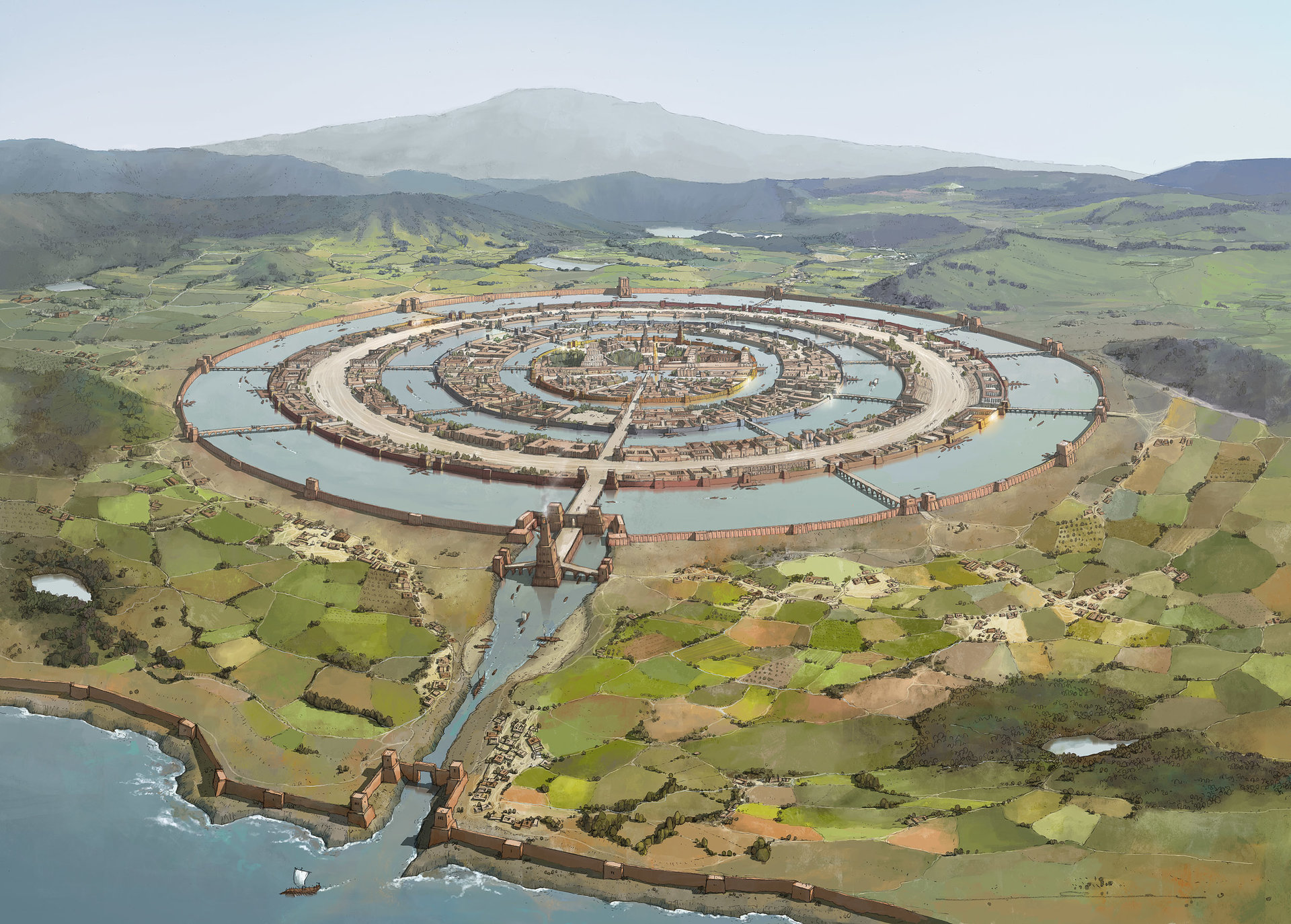
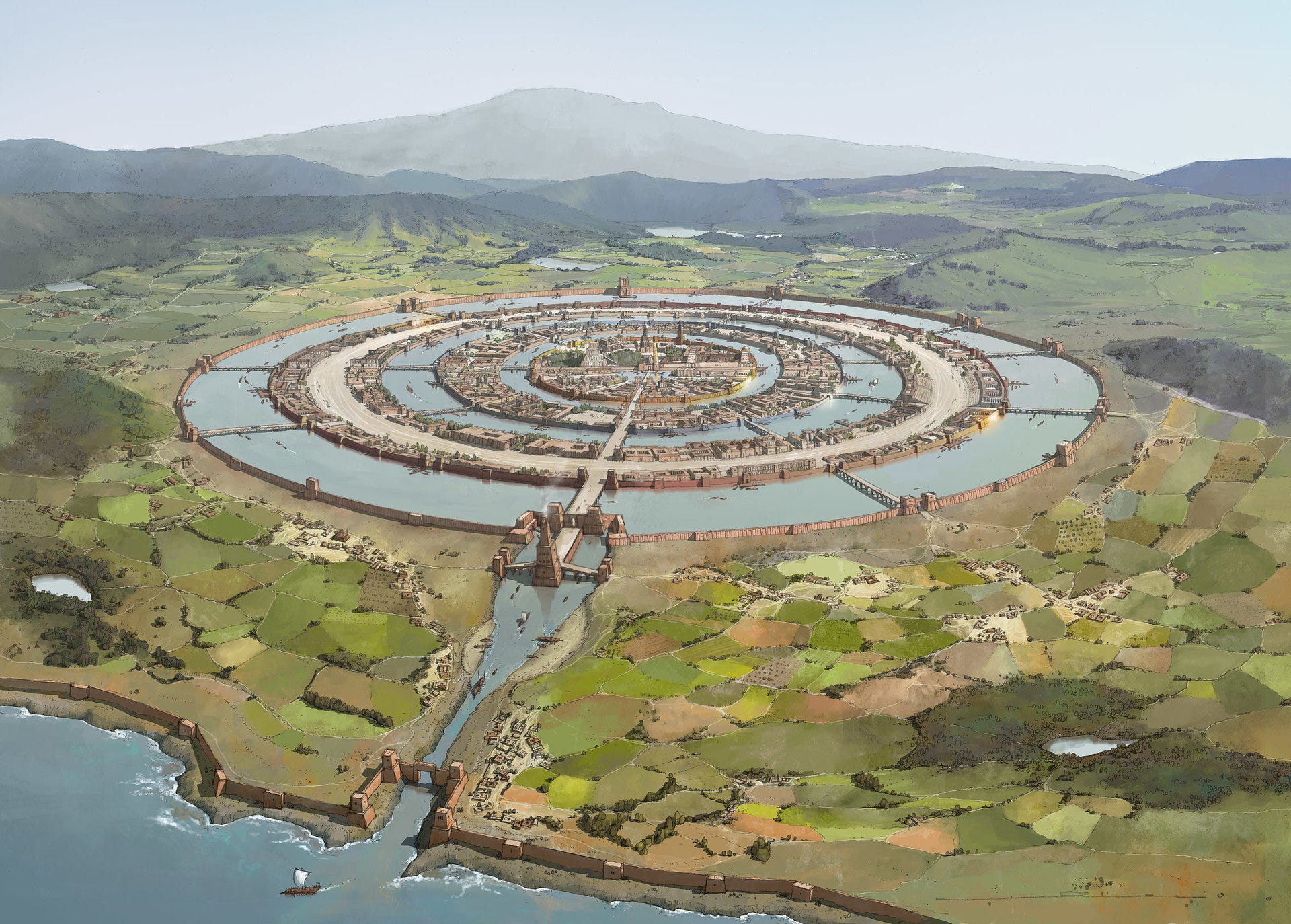
  • Atlantis and “Ring Around the Rosie”

    Atlantis and “Ring Around the Rosie”

    How the same symbol appears as empire-architecture and a children’s spell

    There is a disciplined way to read symbols without pretending there is a literal historical pipeline between them. In my system, motifs repeat because consciousness repeats. The same structure can appear as sacred geometry, mythic city-plans, nursery rhymes, pop songs, or political theology—not because one “copied” the other, but because the psyche keeps generating the same mechanism.

    Atlantis’ concentric rings and “Ring Around the Rosie” are an example of that repetition. They are the same symbol expressed at two scales: macro-architecture and micro-ritual.

    The core claim

    In my model, the “ring” is the time-bound enclosure—the loop that converts open awareness into a self-reinforcing identity-world.

    • Atlantis’ rings = the engineered, fortified version of the loop: a civilization built as nested perimeters around a center.

    • “Ring Around the Rosie” = the embodied version of the loop: bodies rotating in formation, chanting a patterned formula, culminating in collapse—“we all fall down.”

    This is not a historical claim that Plato coded a children’s rhyme. It is a symbolic claim: both images portray the same inner function.

    The map: Isis, Osiris, Set, Horus

    My system reads archetypes as phases of consciousness:

    • Isis (Earth / Awareness): the open field—prior to story, prior to perimeter.

    • Osiris (Moon / Reflective consciousness): coherence and lawful reflection—order without fixation.

    • Set (Sun / Imagination): the fracturing power that spins reflection into division—pattern, recursion, and compulsion.

    • Horus (Illusion of man): the time-bound “I,” produced by that spin—an identity that must defend itself to feel real.

    A “ring” is Set’s signature: a closed circuit. When awareness is overtaken by imagination, it begins to orbit. It begins to repeat. It forms a perimeter.

    Atlantis: the ego-city

    Atlantis, symbolically, is a portrait of Horus at civilizational scale: identity made into infrastructure.

    What do the rings represent?

    They represent nested defenses and feedback loops—a system that keeps circling its own premises.

    • Center: the seat of identity (“I am here; I rule here”).

    • Alternating bands of land and water: the oscillation between solidity and flux—between what the system can control (structure) and what it cannot (the dissolving unknown).

    • Concentricity: recursion. The system confirms itself by circulating itself.

    • Gates/bridges/canals: controlled access—truth, intimacy, dissent, and conscience are “permissioned.”

    In short: Atlantis is not merely “a city with rings.” It is an image of how a constructed world maintains itself: perimeter after perimeter, story after story, defense after defense.

    “Ring Around the Rosie”: the loop made flesh

    Now take the same structure and reduce it from empire to body.

    “Ring Around the Rosie” is not an argument. It is a ritual: a repeated motion performed in synchrony, with a formula that keeps time. That is precisely how the ego-world is installed: rhythm, repetition, and agreement.

    “Ring”

    The circle itself is the enclosure. The group makes a boundary by forming it.

    “Rosie”

    In my system, the “rosy” element functions as the lure: the pleasant surface of the loop—beauty, innocence, belonging, certainty. The loop does not arrive looking like a trap. It arrives looking like a game.

    “We all fall down”

    The loop ends the same way all closed identity-loops end: collapse. Either:

    • the system dissolves back into Isis (awareness), or

    • it shatters through crisis (a forced reset).

    The “fall” is not merely failure; it is the inevitable limit of a self-enclosed circuit. A loop cannot expand forever without breaking the spell that holds it together.

    Pull quote: The ego is a ring that must keep spinning to feel real.

    Set’s loop and the 3–6–9 “turn”

    In the vortex-math language of my system, Set’s function is the turning force—the patterning impulse that converts presence into time, and time into identity. You can visualize it as an “entrance” of patterned motion that captures awareness and makes it orbit around a center.

    That is what the ring depicts:

    • motion that creates separation,

    • separation that creates the self,

    • the self that requires the motion to persist.

    Atlantis expresses that capture as urban design. “Ring Around the Rosie” expresses it as choreography.

    Why this reading matter

    If Atlantis is read only as “lost history,” its symbolic power is wasted. The deeper utility of the myth is diagnostic: it shows what happens when a system builds its entire reality out of enclosure—when it treats the ring as salvation rather than as a spell.

    The question is not whether Atlantis was “real” in the archaeological sense. The question is whether Atlantis is real in you:

    • Where do you keep adding rings—more control, more narrative, more certainty—because the center feels vulnerable?

    • Where do you keep circling the same emotional territory because the loop gives identity a job?

    • Where do you chant the same internal formula until it feels like truth?

    When those questions are faced directly, the ring stops being merely a symbol. It becomes a mechanism you can observe.

    The exit: breaking the ring without destroying the world

    The goal is not to demonize structure. Osiris is structure when it reflects reality cleanly. The issue is Set’s structure—structure used to defend illusion.

    Breaking the ring, in my system, means:

    • returning to Isis as the ground (presence prior to story),

    • restoring Osiris as clear reflection (truth without compulsion),

    • seeing Set’s patterning as a tool rather than a ruler,

    • and letting Horus (identity) be functional—not sovereign.

    When the ring is seen, it loosens. When it loosens, it stops demanding collapse to end the cycle.

    Follow / Subscribe

    YouTube: geomytha

    X: mythicgeometry

    Instagram: mythicgeometry

    TikTok: geomytha

    Substack: Geomytha Noir

    Patreon: Geomytha Noir

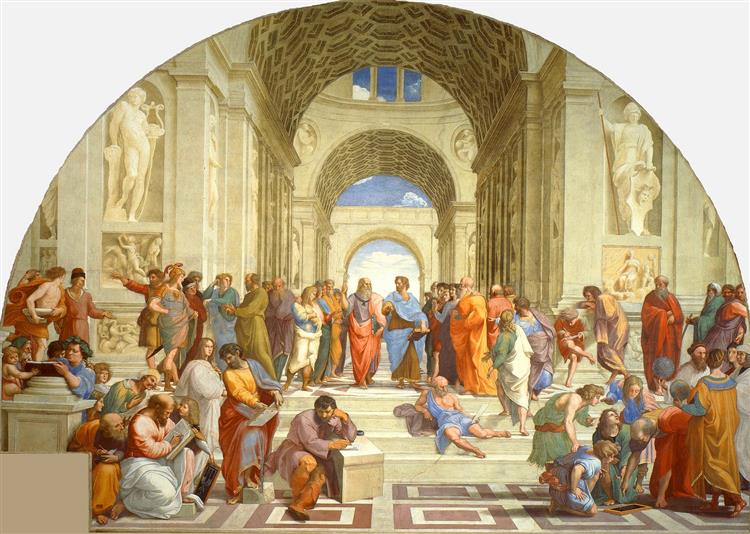
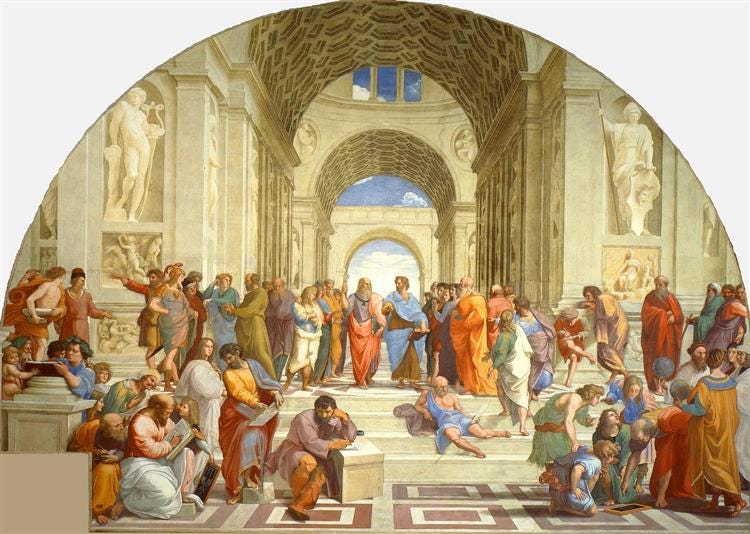
  • Plato’s Timaeus Is Not a Secret Cataclysm Chronicle

    Plato’s Timaeus Is Not a Secret Cataclysm Chronicle

    There is a popular claim that Plato’s Timaeus preserves a literal report of cyclical, world-resetting cataclysms (and that Atlantis is the “proof”). Read on its own terms, Timaeus does not bear that weight. Plato is doing something more characteristic—and more interesting: philosophical myth-making, the kind of “as-if” narration designed to teach through images, not to establish empirical history.

    Below is a tight, text-driven case you can share the next time someone insists Timaeus is basically an ancient disaster documentary.

    1) Plato labels the whole enterprise a “likely story,” not a proof

    In the prefatory framing, Timaeus explicitly describes what he is about to give as a “likely account” (eikōs logos) or “likely story” (eikōs muthos). The Stanford Encyclopedia of Philosophy (SEP) explains the point: the universe in Timaeus is treated as an image (eikōn), and Plato has Timaeus say that our accounts should match their subject—so discourse about an image-like, changing world should itself be image-like (plausible, fitting, not demonstrative).

    Pull quote: Plato tells you the genre up front: a “likely story” calibrated to a world in becoming.

    If someone wants to treat a segment of this dialogue as an evidentiary record (“therefore, cyclical worldwide cataclysms are established fact”), they must first explain why they are overriding Plato’s own epistemic framing.

    2) Atlantis is presented “as history” in the drama, but treated as Platonic myth in scholarship

    Inside the dialogue’s theatrical frame, Critias speaks as if he is delivering true history. But that is not how philosophical interpretation typically classifies the Atlantis narrative. SEP’s entry on Plato’s myths treats the Atlantis story as part of Plato’s mythic repertoire—precisely the kind of serious, truth-bearing narration that is not reducible to historical verification.

    That matters because the “literal-cataclysm” reading often trades on a confusion:

    • “It’s told as history” (a rhetorical mode),

    • therefore it is history (a method claim).

    Plato’s dialogues frequently use the first without entailing the second.

    3) The cataclysm motif functions as an argument about forgetting, not geology

    The “cataclysm” passages (fires, floods, survivors losing arts and letters) do not primarily serve to establish a timeline of Earth disasters. They serve a philosophical and cultural claim: civilizations can lose continuity, and so cultures repeatedly “start over” in knowledge. That supports Plato’s larger posture in Timaeus: humility about human claims, and orientation toward intelligible order rather than relying on fragile human memory.

    This is exactly the kind of why-the-record-is-gappy explanation that myths are good at: they dramatize limits of remembrance and transmission.

    Pull quote: In Plato, catastrophe is often a narrative tool for epistemology: why humans don’t reliably remember.

    The SEP discussion of the “likely account” underscores this: Plato is carefully calibrating what can be said about the changing, visible cosmos.

    4) Later Platonists explicitly treat Atlantis as symbolic “images” pointing beyond themselves

    Even within the Platonic interpretive tradition, Atlantis is commonly read as an image-bearing story whose meaning is not exhausted by literalism. Modern scholarship on Proclus’ approach (Proclus wrote a major commentary on Timaeus) explores how he treats the Atlantis narrative as philosophically structured and interpretively rich—an account that can be read on multiple levels, including symbolic ones.

    You do not need to accept Proclus’ metaphysics to see the takeaway: a symbolic reading is not a modern “cop-out.” It is a historically rooted way of reading Platonic myth.

    5) “But Plato says it’s true”—why that doesn’t settle literalism

    Many myths say they are “true.” Plato’s own myth-theory allows for a kind of truth that is not the same thing as empirical confirmation. SEP’s treatment of eikōs muthos highlights why: when the object is perpetually in becoming and cannot be known “strictly,” the appropriate discourse is narrative and probabilistic rather than demonstrative.

    So the decisive question becomes:

    True in what sense?

    • True as moral/political instruction (hubris punished; order vs disorder).

    • True as metaphysical orientation (how to speak about a changing cosmos).

    • True as cultural diagnosis (why societies lose continuity).

    None of that requires (or produces) “proof” of cyclical global cataclysm schedules.

    A quick “myth vs. history” checklist for

    Timaeus debates

    Use this the next time someone insists Timaeus is literal catastrophe reportage:

    • ☐ Does the text flag itself as a “likely story/account”? (Yes.)

    • ☐ Is the narration delivered through layered hearsay inside a dialogue? (Yes: Solon ← Egyptian priest ← Critias ← Plato.)

    • ☐ Is the story doing obvious philosophical work (ethical/political/cosmological framing)? (Yes.)

    • ☐ Do serious reference sources classify Atlantis as a Platonic myth? (Yes.)

    • ☐ Do major interpretive traditions read Atlantis symbolically as well as (or instead of) literally? (Yes.)

    If you check most of these boxes, the “literal proof” claim is not a responsible inference from the text.

    A cleaner conclusion: what Timaeus supports, and what it doesn’t

    What Timaeus supports very strongly is that Plato uses catastrophe imagery to address human limitation—fragile memory, unstable politics, the hazards of overconfident claims about the visible world, and the need for an account that fits a world in flux.

    What it does not support—without importing external assumptions—is the claim that Plato has handed us proof of a literal, cyclical, worldwide cataclysm program.

    Geomytha’s final thoughts

    The strongest reading isn’t “Plato hid geology.” It’s “Plato taught philosophy with images.”

    YouTube: geomytha

    X: mythicgeometry

    Instagram: mythicgeometry

    TikTok: geomytha

    Substack: Geomytha Noir

    Patreon: Geomytha Noir

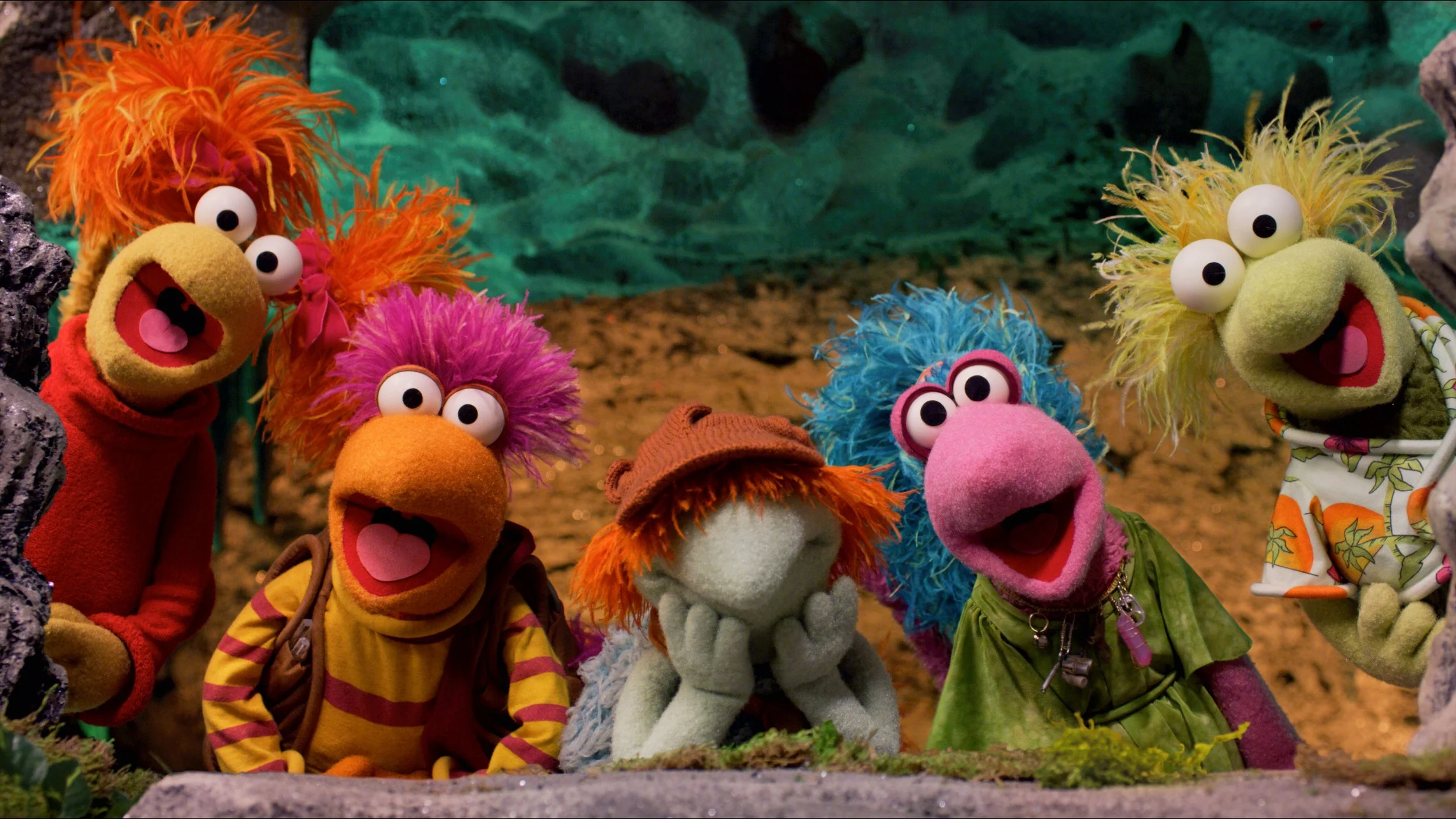
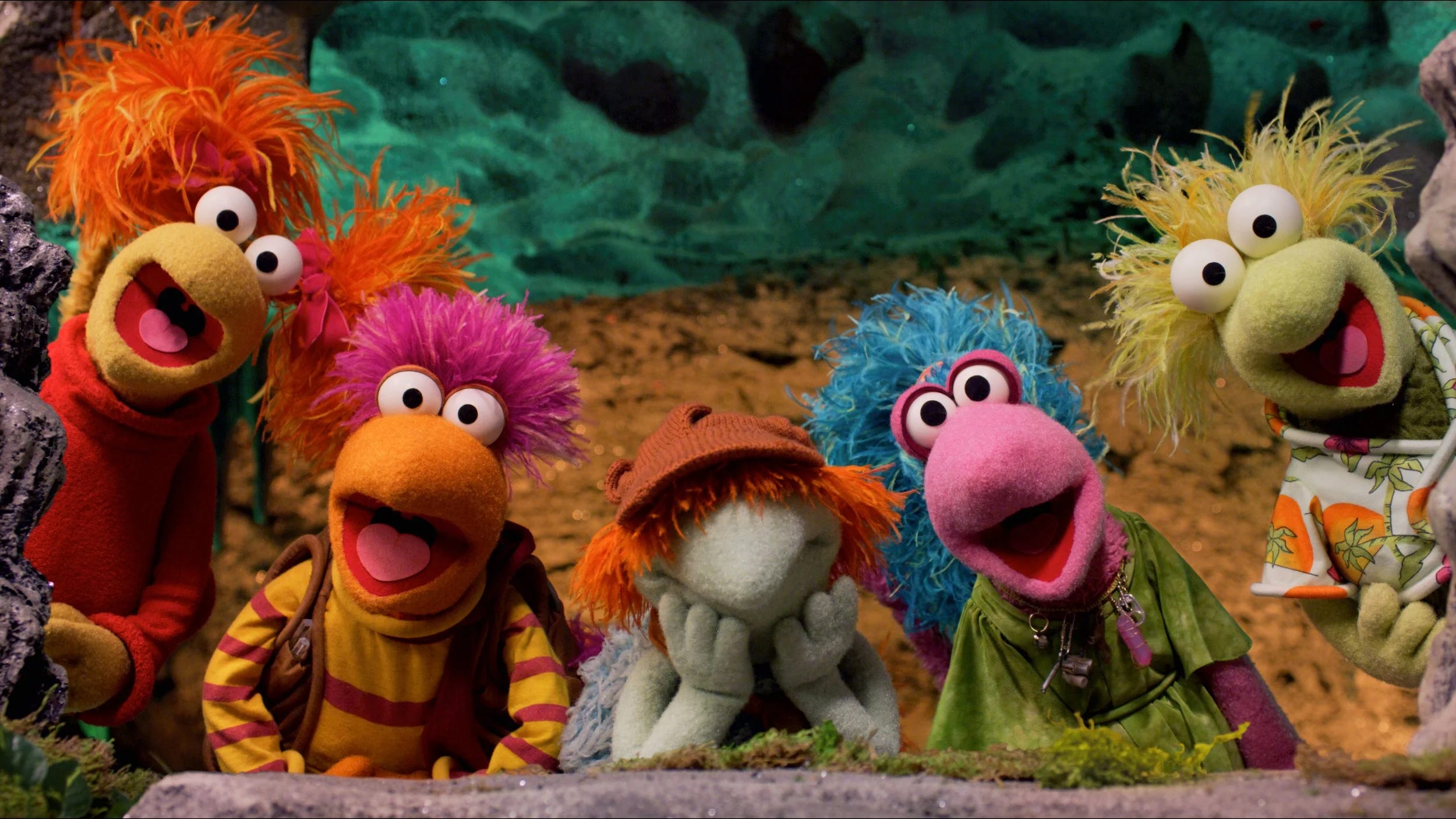
  • Fraggle Rock as Fragmented Consciousness

    Fraggle Rock as Fragmented Consciousness

    A Geomytha reading of how one interior world splits into “parts,” then forgets it was ever one

    Most people remember Fraggle Rock as a whimsical children’s show—bright colors, catchy songs, and charming creatures living in a hidden world. In Geomytha, that “hidden world” is the point: the Rock reads like the interior architecture of consciousness itself—one unified field divided into compartments that begin to mistake themselves for separate realities.

    The series is built on a simple but profound premise: multiple communities occupy the same ecosystem, depend on one another, and yet repeatedly fail to understand each other. When read symbolically, that is not just social commentary—it is a portrait of the psyche after it fragments.

    The Rock as the psyche-cavern

    The Rock is not merely a setting. It functions like a mind-space: layered, enclosed, interconnected, and internally consistent. Different regions are “close” yet experientially distant—exactly how internal parts coexist in one person while acting like separate nations.

    In Geomytha terms, the Rock is the container of awareness—the ground that existed before the story of separation began. The conflict is what happens when that ground is forgotten and the compartments start claiming sovereignty.

    The Fraggles as “parts” within one field

    The central Fraggles are not just characters; they read like stable sub-personalities—distinct orientations that persist over time. If you name them precisely, the show all but hands you an internal map:

    • Gobo — the seeker/scout part: initiative, risk-tolerance, outward exploration, “go first” energy, narrative drive.

    • Red — the assertive/fiery part: will, competitive spark, boundary-testing, disruption of complacency, corrective confrontation.

    • Wembley — the attachment/appeasement part: social harmony, belonging needs, indecision from over-attunement to others, conflict-avoidance.

    • Mokey — the intuitive/poetic part: imagination, feeling-tone, symbolism, contemplative sensitivity, receptivity to the unseen.

    • Boober — the anxious/protective part: vigilance, pessimistic forecasting, contamination/avoidance themes, procedural caution, “prevent harm” management.

    Read together, they form a recognizable inner ecology: the explorer (Gobo), the fighter (Red), the diplomat (Wembley), the mystic-artist (Mokey), and the sentinel (Boober). Fragmentation isn’t that these parts exist—it’s that each part starts acting like it is the whole.

    The Doozers as thought-forms and compulsive construction

    The Doozers are builders. Their identity is production: plans, structures, systems, repairs. In Geomytha, they resemble the constructive engine of mind—conceptual architecture continually erected to stabilize an uncertain world.

    The symbolic punchline is that the Fraggles consume those constructions. Read inwardly: the personality feeds on mental structures. We metabolize our own plans, worries, frameworks, and interpretations into mood and identity. Thought builds; identity eats; the cycle continues.

    That closed loop is what makes fragmentation durable: each part reinforces the others without noticing the shared source.

    The Gorgs as inflated ego-authority

    The Gorgs embody the stance of the ego that believes it rules reality. They interpret the world through status, control, and threat management. They are convinced of their centrality while remaining oddly blind to the living system surrounding them.

    In Geomytha, this maps to the time-bound identity that crowns itself “king”—the self-story that insists: my model is the universe; my boundaries are reality; my fear is wisdom.

    The Gorg posture is not merely arrogance; it is a compensatory delusion that emerges when inner unity collapses. A divided psyche often produces an authoritarian manager-part to keep the system from feeling its underlying instability.

    Doc and Sprocket: intellect and instinct out of sync

    The outer frame—Doc in his workshop and Sprocket reacting to what Doc dismisses—reads like a classic split:

    • Doc resembles the rational intellect that requires proof in its own language before it can acknowledge anything.

    • Sprocket resembles instinctive knowing: the body’s immediate recognition that something is happening, even when the intellect cannot categorize it.

    This dynamic captures a modern condition: the intellect becomes the official spokesperson for reality, while deeper perception is treated as noise—until it starts barking.

    Traveling Matt and the interpretive overlay

    Uncle Traveling Matt’s reports from “Outer Space” repeatedly misunderstand what he sees. That pattern is the point: perception filtered through an interpretive grid becomes a story that sounds plausible but misses the real thing.

    In Geomytha, this is how imagination overtakes contact. It is not lying; it is overlay—an interpretive film placed over direct experience until the overlay is mistaken for the world.

    What the show quietly teaches

    Viewed through this lens, Fraggle Rock is not primarily about creatures learning to get along. It is about consciousness learning to reintegrate.

    The ecosystem is one. The factions are interdependent. The conflict persists because each group mistakes itself for a separate world and treats the others as “external.” That is the signature of fragmentation: the loss of the felt sense of shared being.

    The remedy implied by the narrative is not domination but recognition:

    • communication between parts

    • humility about one’s own model of reality

    • restoring relationship across compartments

    • returning attention to the underlying unity that precedes the split

    When that unity is remembered, the story changes. Not because the parts disappear—but because they stop claiming the throne.

    If you want more Geomytha readings like this—myths, children’s stories, pop culture, and sacred texts decoded as consciousness maps—subscribe and share.

    • YouTube: Geomytha

    • X: @mythicgeometry

    • Instagram: mythic geometry

    • Patreon: Geomytha Noir

    • Substack: Geomytha Noir

  • Revelation 22: The River, the Tree, and the Final Word

    Revelation 22: The River, the Tree, and the Final Word

    How the river of life, the Tree of Life, and the final invitation reveal the completed Lamb-field in Geomytha.

    Revelation 21 showed you the finished geometry of the Lamb’s city:

    • New heaven and new earth,

    • no more sea,

    • New Jerusalem as cubic Holy of Holies,

    • no temple, no Set-sun,

    • the Lamb as lamp,

    • nations healed and kings bringing their glory into the city.

    Revelation 22 is not a new act; it is the interior detailing of that same pattern. It shows:

    • what flows at the center of the city,

    • what grows at the center of that flow,

    • how time is now shaped in this field,

    • and what the last word of the entire vision actually is.

    Through Geomytha, Revelation 22 is the completion of the entire Isis–Osiris–Set–Horus story:

    • Isis-awareness and the Lamb at the center,

    • Osiris as clear, healing reflection in the “water of life,”

    • Set finally banished from the inner architecture,

    • Horus no longer trapped in 666 time, but reigning as servant within the Lamb’s circuit.

    The River of the Water of Life: Consciousness Flowing from the Throne

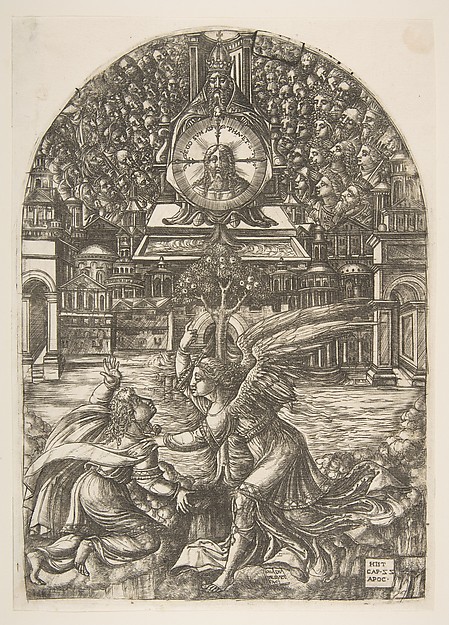
    “Then the angel showed me the river of the water of life, bright as crystal, flowing from the throne of God and of the Lamb through the middle of the street of the city…” (Rev 22:1–2a)

    At the heart of the city there is not a weapon, not a tower, not a data center, but a river.

    • It is “the water of life” – not static doctrine, but living flow.

    • “Bright as crystal” – transparent, nothing murky or manipulative in it.

    • It “flows from the throne of God and of the Lamb” – the source is shared:

      • not Set’s solar head,

      • but the unified Presence of God and the Lamb.

    It runs “through the middle of the street of the city” – the very center-line of the social geometry.

    In Geomytha, this river is:

    • the direct, unblocked flow of I AM awareness through creation,

    • the purified counterpart to all the polluted waters of the bowls and Babylon,

    • the healed version of every inner channel Set once hijacked (nervous system, attention, imagination).

    You could say:

    • in Babylon, water serves commerce and empire;

    • in New Jerusalem, water serves life and presence.

    This is also the Grail completed: the “living water” that once met a Samaritan woman at a well now runs at the scale of a city.

    The Tree of Life on Both Sides: Healed Time and Healed Nations

    “…also, on either side of the river, the tree of life with its twelve kinds of fruit, yielding its fruit each month. The leaves of the tree were for the healing of the nations.” (v.2b)

    Here the Tree of Life returns from Eden, but expanded:

    • It is no longer guarded by a flaming sword to keep humanity out.

    • It now grows on both sides of the river – accessible, flanking the flow.

    • It bears twelve kinds of fruit, one for each month – time itself is now a healed cycle.

    • Its leaves are “for the healing of the nations” – not for a few initiates, but for the entire collective.

    In Geomytha, this is the final resolution of the conflict between:

    • Tree of Life – presence, direct contact with I AM.

    • Tree of Knowledge of good and evil – Set’s appropriation of consciousness as information, judgment, separation.

    Humanity was exiled from the Tree of Life when it gave itself to the Tree of Knowledge in Set’s sense. Now, in the Lamb’s city:

    • the Tree of Life is back at the center;

    • the “knowledge” that once fragmented and shamed is now replaced by living wisdom;

    • time (months, cycles) is no longer a prison of repetition, but a liturgical rotation of gifts (“yielding its fruit each month”).

    The “healing of the nations” means:

    • all the ethnic, cultural, historical wounds that Babylon exploited are now treated at their root;

    • every pattern of empire, supremacy, self-hatred, and violent identity is met not with denial, but with medicine.

    The leaves are not “ideas” about healing; they are embodied, growing expressions of the Lamb’s life.

    No More Curse: Servants Seeing His Face and Reigning

    “No longer will there be anything accursed, but the throne of God and of the Lamb will be in it, and his servants will worship him.” (v.3)

    “They will see his face, and his name will be on their foreheads. And night will be no more…” (vv.4–5a)

    “No longer anything accursed” means:

    • the Genesis curse on the ground, on toil, on childbirth, on relationship—

    • and the self-imposed curse of Set’s realm (addiction, domination, idolatry)— have been fully removed from the operating system.

    “The throne of God and of the Lamb will be in it”:

    • the governing center is inside the city, not hovering outside;

    • there is no king’s palace separate from the people.

    “His servants will worship him”:

    • “servant” here is not slave of empire but belonging:

      • willingly aligned with the Lamb’s will,

      • work and worship indistinguishable in their orientation.

    “They will see his face”:

    • the ultimate reversal of “no one may see my face and live”;

    • Isis-awareness meets the Source without veil,

    • there is no longer a mediated second-hand religion.

    “His name will be on their foreheads”:

    • the direct counter-mark to the beast’s name and number;

    • Horus’ identity is now explicitly Lamb-stamped, not Set-coded.

    “Night will be no more”:

    • not the disappearance of literal darkness for circadian rhythms,

    • but the disappearance of spiritual night:

      • no hidden Set operations,

      • no periods where the city runs on ignorance or exploitation.

    “They will need no light of lamp or sun, for the Lord God will be their light, and they will reign forever and ever.” (v.5b)

    Again: the sun, as Set’s archetype, is no longer the organizing source.

    The “Lord God” as light and the Lamb as lamp are enough.

    “They will reign forever and ever”:

    • this is Horus’ true vocation fulfilled:

      • not beast-king,

      • not ego tyrant,

      • but servant-ruler under the Lamb.

    In Geomytha, this line is the final shape of ego:

    • not annihilated into nothing,

    • not enthroned as Set,

    • but stabilized as Lamb-aligned agency within the field of I AM.

    “These Words Are Trustworthy and True”: No More Sealing

    “And he said to me, ‘These words are trustworthy and true… Do not seal up the words of the prophecy of this book, for the time is near.’” (vv.6, 10)

    Earlier apocalyptic visions are often sealed—reserved for later, hidden, delayed. Here the command is opposite:

    • “These words are trustworthy and true” – not speculative fantasy, but reliable pattern.

    • “Do not seal up the words… for the time is near” –

      • this geometry is not meant to be locked away for a distant age;

      • it is a live template, pressing on every generation and every psyche.

    “Let the evildoer still do evil, and the filthy still be filthy, and the righteous still do right, and the holy still be holy.” (v.11)

    This is not permission for sin; it is description of ripeness:

    • patterns have matured;

    • those who insist on Set will continue in Set;

    • those who have aligned with the Lamb will continue in that alignment.

    In Geomytha:

    • there comes a point where the field has clarified so much that masking is no longer possible;

    • people simply are what they are choosing.

    “Behold, I Am Coming Soon”: The Final Sorting

    “Behold, I am coming soon, bringing my recompense with me, to repay each one for what he has done.” (v.12)

    “I am the Alpha and the Omega, the first and the last, the beginning and the end.” (v.13)

    The “coming” here is not a calendar date to decode; it is the arrival of this geometry into full manifestation.

    • “Recompense” is simply hidden reality made public:

      • what has been done in Set’s name yields its fruit,

      • what has been done in the Lamb’s name yields its fruit.

    Again the identity:

    • Alpha and Omega, first and last, beginning and end –

    • Set never held any of those titles legitimately;

    • the Lamb and the One on the throne have always been the actual bookends.

    “Blessed are those who wash their robes, so that they may have the right to the tree of life and that they may enter the city by the gates.” (v.14)

    “Wash their robes” points back to:

    • robes “washed in the blood of the Lamb” (Rev 7:14) –

    • identity cleansed not by denial of sin, but by truth and costly grace.

    Those are the ones who:

    • regain access to the Tree of Life,

    • and enter “by the gates”—

      • not by scaling walls like thieves,

      • not by secret knowledge,

      • but by the legitimate openings of the city.

    “Outside are the dogs and sorcerers and the sexually immoral and murderers and idolaters, and everyone who loves and practices falsehood.” (v.15)

    “Outside” here is not a petty exclusion; it names what cannot coexist with this geometry:

    • “sorcerers” – manipulators of consciousness (Babylon’s pharmakeia),

    • “sexually immoral” – not mere rule-breakers, but those who use intimacy as commodity,

    • “murderers and idolaters” – blatant Set-forms,

    • “everyone who loves and practices falsehood” – the fundamental issue.

    In Geomytha, this last category is the key:

    • the root exclusion is not human weakness; it is commitment to lying;

    • any pattern that loves illusion cannot function inside a city defined by transparent water and crystal light.

    The Final Invitation: The Spirit and the Bride Say, “Come”

    “I, Jesus, have sent my angel to testify to you about these things for the churches… I am the root and the descendant of David, the bright morning star.” (v.16)

    “Root and descendant of David” holds together:

    • origin and outcome,

    • source and fulfillment.

    “The bright morning star” is:

    • not Set’s noon,

    • but the star that appears before sunrise:

      • the signal that night is ending,

      • gentle, not blinding.

    “The Spirit and the Bride say, ‘Come.’

    And let the one who hears say, ‘Come.’

    And let the one who is thirsty come;

    let the one who desires take the water of life without price.” (v.17)

    This is the last invitation in the text—and it is stunningly open:

    • The Spirit (divine breath) and the Bride (Lamb-aligned community) say the same word: “Come.”

    • Anyone who hears is invited to join in the invitation.

    • The only requirement is thirst; the only action is coming; the only price is no price.

    In Geomytha, this is the reversal of Babylon’s economy:

    • all her wine cost you your presence, your soul, your integrity;

    • this water of life is given “without price.”

    The Lamb-field is not a luxury product; it is the native state of consciousness, offered back to those who have almost forgotten it.

    The Warning and the Last Word

    “I warn everyone who hears the words of the prophecy of this book: if anyone adds to them, God will add to him the plagues… and if anyone takes away from the words… God will take away his share in the tree of life and in the holy city…” (vv.18–19)

    This is not about forbidding commentary; it is a warning against tampering with the geometry:

    • “adding” – smuggling Set’s logic back into the pattern (e.g., turning the Lamb into another beast, turning New Jerusalem into another empire);

    • “taking away” – editing out the parts that confront Babylon, the beast, and the compromise of the churches.

    In Geomytha:

    • if you add Set back into this pattern, you re-invite his plagues;

    • if you cut out the hard edges of judgment and consequence, you cut yourself off from the very Tree and city you say you want.

    The testimony closes:

    “He who testifies to these things says, ‘Surely I am coming soon.’ Amen. Come, Lord Jesus!

    The grace of the Lord Jesus be with all. Amen.” (vv.20–21)

    The final human word is:

    “Come.”

    The final divine word is:

    “Grace.”

    In Geomytha, Revelation ends exactly as it should:

    • not with a timetable,

    • not with a secret code,

    • but with an open invitation and an assurance of unmerited favor.

    The geometry is complete:

    • Set’s city has fallen;

    • the Lamb’s city stands;

    • the river flows;

    • the Tree of Life bears fruit;

    • the nations can be healed;

    • and anyone who is thirsty is still invited in.

    The only real question left is the one this system keeps bringing you back to:

    Will you keep drinking Babylon’s wine under Set’s sun,

    or will you begin—now, here—to drink the water of life

    that flows from the throne of God and of the Lamb,

    and let that river reshape your own inner city into a small New Jerusalem?