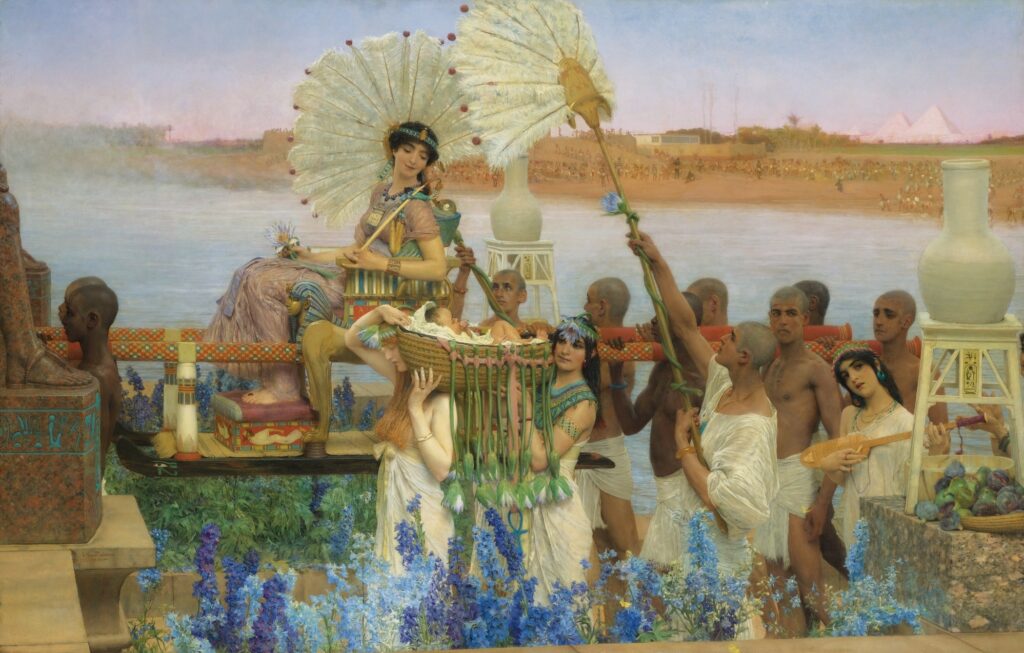
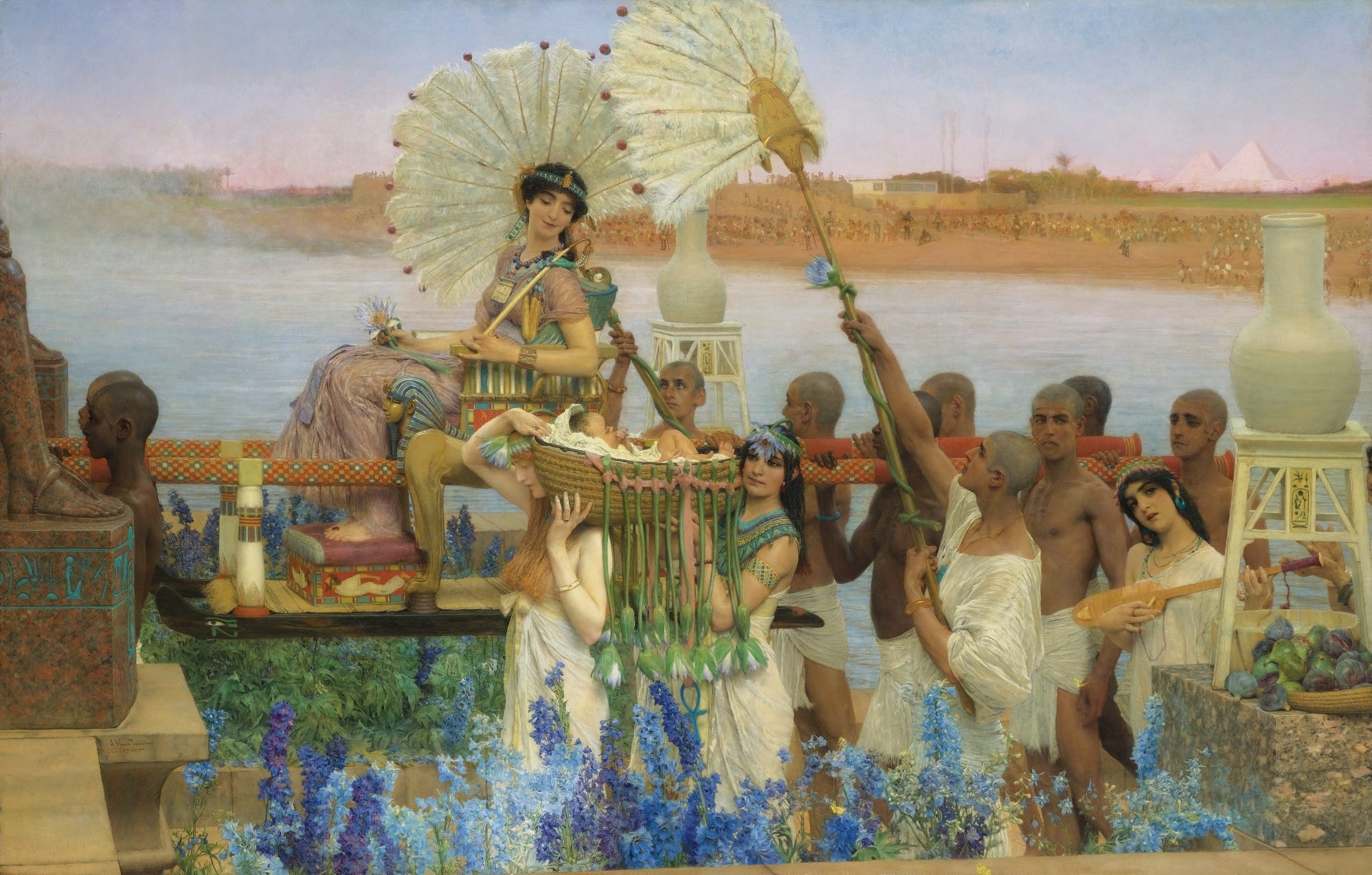
If the Burning BushEhyeh Asher Ehyeh — Exodus 3:14 / Burning BushIn Exodus 3, Moses asks what name he should give the Israelites when they ask who sent him. The reply includes the Hebrew formula Ehyeh Asher Ehyeh before Moses is instructed what…Read full entry → is the moment presence becomes undeniable—fire without consumption—then MosesMoses — ExodusBiblical figure Moses, called at the Burning Bush in Exodus.Read full entry → and Pharaoh are what happens next: the confrontation between awareness and the identityThis — IdentityThis names the formed identity: the body, role, image, wound, belief, or story claimed as what the self is.Read full entry →-system that wants to keep awareness enslaved.
In Geomytha, this is not primarily political history. It is an interior jurisdiction dispute.
Not “good guys vs bad guys.”
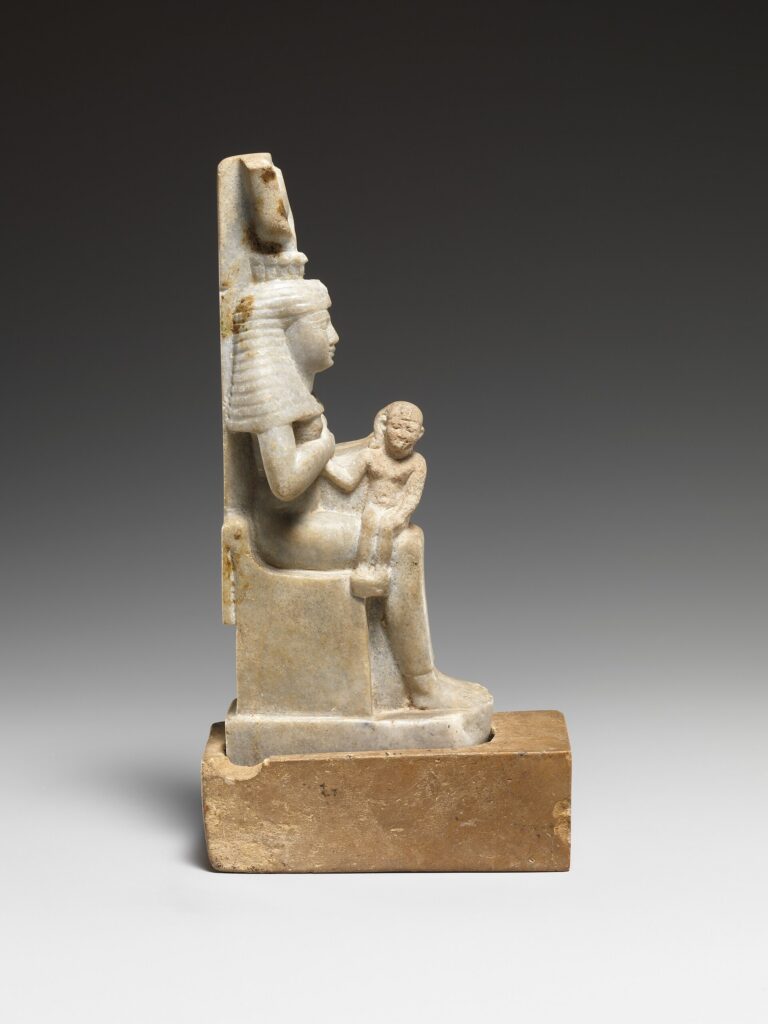
But: IsisIsisIn Geomytha, Isis names the unclaimed field: Is — pure being, awareness before possession, and the ground before the claimant appears.Read full entry →’ jurisdiction vs SetSetIn Geomytha, Set names the claimant: I — the interruption by which reflection is taken as mine and converted toward ownership.Read full entry →’s jurisdiction—awareness versus the imagination-force that manufactures a time-bound self and then demands your labor to keep it alive.
The Real Battlefield: Jurisdiction
The common misread is to treat Pharaoh as merely a villain and Moses as merely a hero.
But myths do not persist for millennia because they teach basic morality. They persist because they encode a repeatable mechanism.
Pharaoh is the operating system of the ego:
It defines reality in terms of control and output.
It requires constant production to justify existence.
It punishes pauses as disobedience.
It turns life into quotas.
Moses is the “call” that interrupts that system—not with an argument, but with a recognition: there is a different authority than the one in your head.
In other words: Pharaoh is not simply “out there.” Pharaoh is the part of the psyche that believes value comes from extraction.
The Enslavement Pattern: Consciousness as Labor
Israel in EgyptEgyptAncient Egyptian cultural and mythic field referenced by the essay.Read full entry → is consciousness under management.
When awareness is captured by the narrative-machine, your attention becomes labor:
laboring to predict,
laboring to regret,
laboring to defend identity,
laboring to curate perception,
laboring to maintain the persona.
That is why the story is about work—brickmaking, quotas, supervision.
In Geomytha terms, this is the Set-function at scale: the “solar” force overtakes reflectionAm — ReflectionAm names reflected presence: awareness embodied or mirrored without yet becoming ownership.Read full entry → and converts living presence into time-bound productivity. HorusHorusIn Geomytha, Horus names the identity that forms after claim: This — the body, role, image, wound, belief, or story taken as what the self is.Read full entry →—ego identity—becomes the foreman.
You are not living. You are “becoming someone.”
And becoming someone is endless work.
“Let My People Go” Is Not a Negotiation
Read the demand precisely: it is not “give them better conditions.”
It is: releaseReturn — RemembranceReturn names remembrance and release: the loosening of possession so reflection can become transparent to source again.Read full entry →.
Because the point is not reform. The point is exit.
The ego-system can offer a thousand compromises:
spiritual talk that keeps the same identity intact,
healing that becomes another badge,
productivity with nicer aesthetics,
even religion as a refined Pharaoh.
But the myth refuses to call that liberation.
Liberation is a jurisdiction change: attention stops being owned by Pharaoh.
Hardened Heart: The Ego’s Most Predictable Reflex
Pharaoh’s hardened heart is not random cruelty. It is a diagnostic feature of identity.
When the system that runs on control is threatened, it becomes more control.
When the story-self is threatened, it intensifies the story.
That’s why “proof” doesn’t end the conflict. Miracles don’t resolve it. Evidence doesn’t dissolve it. The ego can metabolize anything into its own survival:
“This is happening to me.”
“I deserve this.”
“They’re doing this to me.”
“I’m chosen.”
“I’m cursed.”
Even revelationRevelation — Book of RevelationThe final book of the Christian New Testament, also called the Apocalypse of John.Read full entry → can be captured and turned into persona.
So the hardening is the myth naming a law: identity resists dissolution by doubling down.
The Plagues as Deconstruction of Pharaoh’s World
In Geomytha, the plagues are not divine tantrums. They are system failures—the staged collapse of the false order.
Each plague attacks a different layer of certainty:
what you thought was stable becomes unstable,
what you trusted becomes unreliable,
what you controlled becomes uncontrollable.
This is what happens internally when presence begins to reclaim the field:
the old comforts don’t work,
the old coping strategies backfire,
the old identity stories stop satisfying.
Not because you are being punished.
Because the trance is breaking.
Pharaoh’s world must become unlivable for the psyche to stop worshiping it.
The Exodus as the VMD Pattern in Motion
If the VMD is the underlying grammar, the Exodus is one of its clearest narratives:
Isis (awareness / earth): the call to grounded reality, the directness of “what is.”
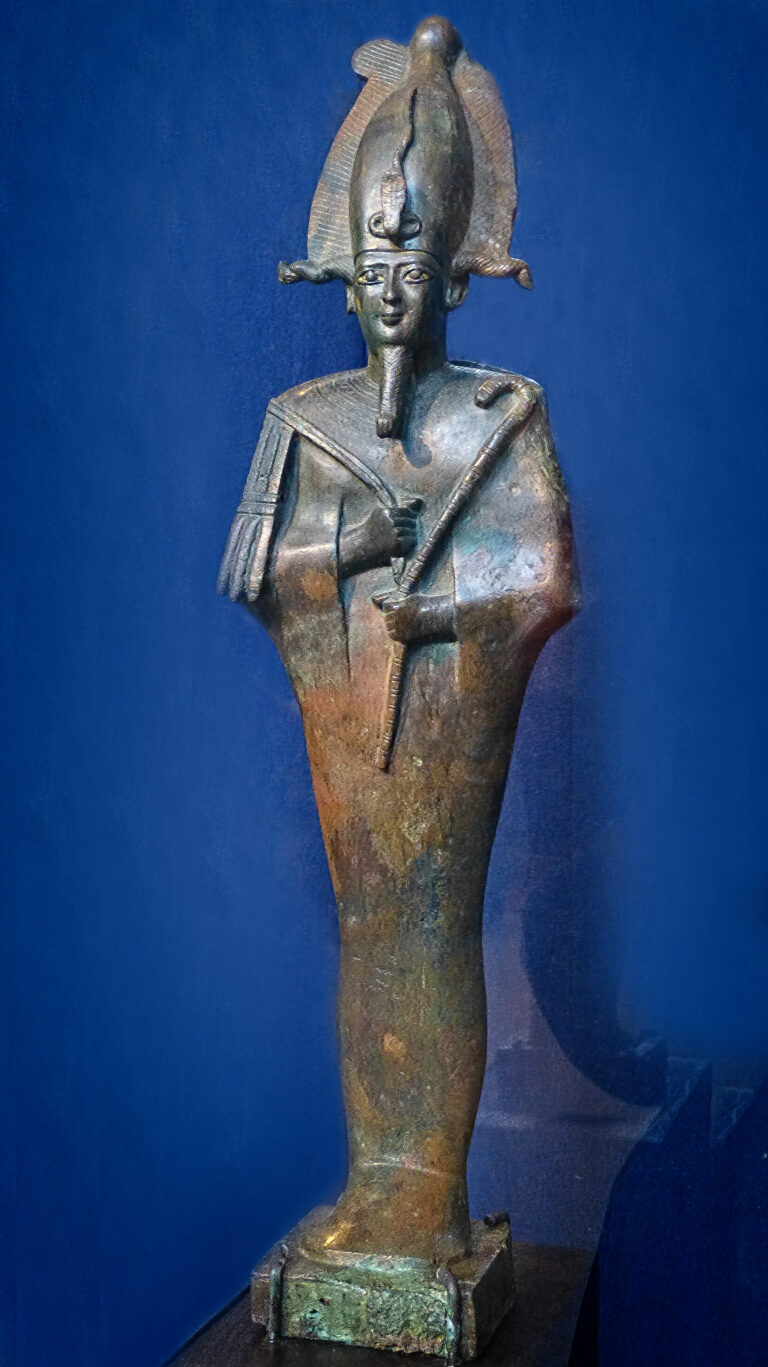
OsirisOsirisIn Geomytha, Osiris names reflected presence: Am — awareness reflected as living consciousness without yet becoming ownership.Read full entry → (reflection / moon): the re-coherence of perception—seeing the system clearly.
Set (imagination overtaking / sun): the empire of concepts, fear, control, division, and time-pressure.
Horus (ego identity): the persona that benefits from the system and fears release.
The movement out of Egypt is the movement from being governed by Set/Horus to re-entering Isis/Osiris alignment—presence restoring reflection, reflection no longer taxed by the story-machine.
This is why the wilderness matters: it is the transitional zone where the old identity dies and the new identity has not yet formed. A terrifying interval for the ego. A necessary interval for awareness.
The Wilderness Is Where Pharaoh Survives in Disguise
Here is the harsh part the myth insists on: leaving Egypt physically is not the same as leaving Egypt psychologically.
That’s why the wilderness fills with complaints, nostalgia, and bargaining.
The ego will miss its chains if its chains gave it structure.
It will prefer familiar suffering to unknown freedom.
So the wilderness becomes the mirror: you learn whether you wanted liberation—or merely a better Pharaoh.
Moses as the Functional Bridge
Moses is not the “perfect person.” He is the bridge-function:
the willingness to obey the call of presence,
the willingness to confront the internal empire,
the willingness to walk without the old guarantees.
In Geomytha terms, Moses is what happens when reflection stops serving imagination and begins serving awareness.
A living yes.
Not to a doctrine.
To the immediate truth.
Stop Paying Pharaoh With Your Attention
If you want the usable core of this myth, it is this:
Pharaoh is sustained by attention.
Every time you compulsively narrate, rehearse, defend, curate, or catastrophize, you pay taxes to Egypt.
The exodus begins when you notice the payment and stop calling it “necessary.”
Not through force.
Through jurisdiction.
You return the field to Isis.
The Bush Was the Beginning
The Burning Bush was the revelation: fire without consumption.
Moses and Pharaoh is the implementation: will you live that revelation, or will Pharaoh convert it into another identity project?
Because the ego can wear any costume—even a spiritual one.
The myth does not end with inspiration.
It begins with extraction ending.
Connect with Geomytha
YouTube: geomytha
X: mythicgeometry
Instagram: mythicgeometry
TikTok: Geomytha
Patreon: Geomytha Noir
Substack: Geomytha Noir