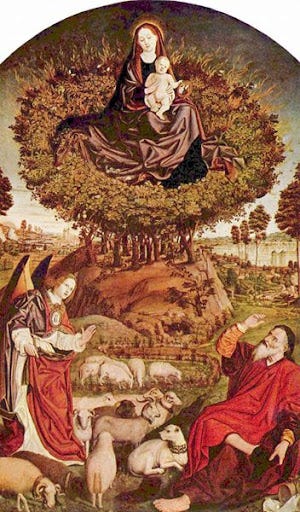
Most readings of the Burning BushEhyeh Asher Ehyeh — Exodus 3:14 / Burning BushIn Exodus 3, Moses asks what name he should give the Israelites when they ask who sent him. The reply includes the Hebrew formula Ehyeh Asher Ehyeh before Moses is instructed what…Read full entry → treat it as a miracle story: a supernatural interruption of ordinary reality. In Geomytha, it reads differently.
It is not an interruption. It is a disclosure.
The Burning Bush is a mythic photograph of what awareness looks like when it is no longer being consumed by the ego’s storyline—when the inner field ignites, yet nothing is depleted. Fire without damage. Light without loss. Presence without the tax of identityThis — IdentityThis names the formed identity: the body, role, image, wound, belief, or story claimed as what the self is.Read full entry →.
And once you see it that way, you can see why the same structure repeats everywhere: because the Burning Bush is not merely a story—it’s a clean instance of the underlying pattern that shows up in all stories.
In Geomytha, that underlying pattern is what the Vortex Math DiagramVortex Math DiagramThe diagram associated with Vortex-Based Mathematics arranges base-10 digit-root patterns around a circle and emphasizes the repeating doubling cycle 1→2→4→8→7→5→1, alongside special treatment of 3, 6, and 9. The repeating 1-2-4-8-7-5 cycle…Read full entry → (VMD) represents.
The VMD as Mythic Grammar
When I say “all myths are encoded in the VMD,” I do not mean ancient scribes were secretly doing arithmetic.
I mean something more precise: the VMD expresses the recurring mechanics of consciousness—the same mechanics that myth, scripture, and story dress up as characters, conflicts, and revelations.
The VMD gives a visual shorthand for the same perennial cycle:
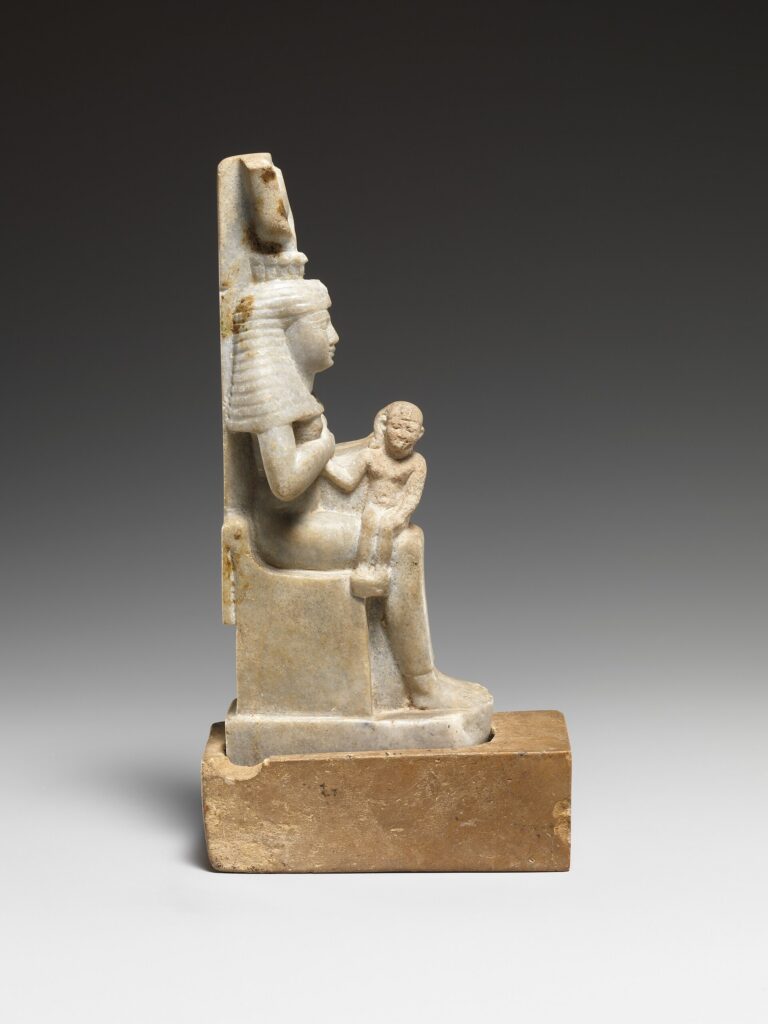
Awareness (IsisIsisIn Geomytha, Isis names the unclaimed field: Is — pure being, awareness before possession, and the ground before the claimant appears.Read full entry → / Earth): the living field that is already here.
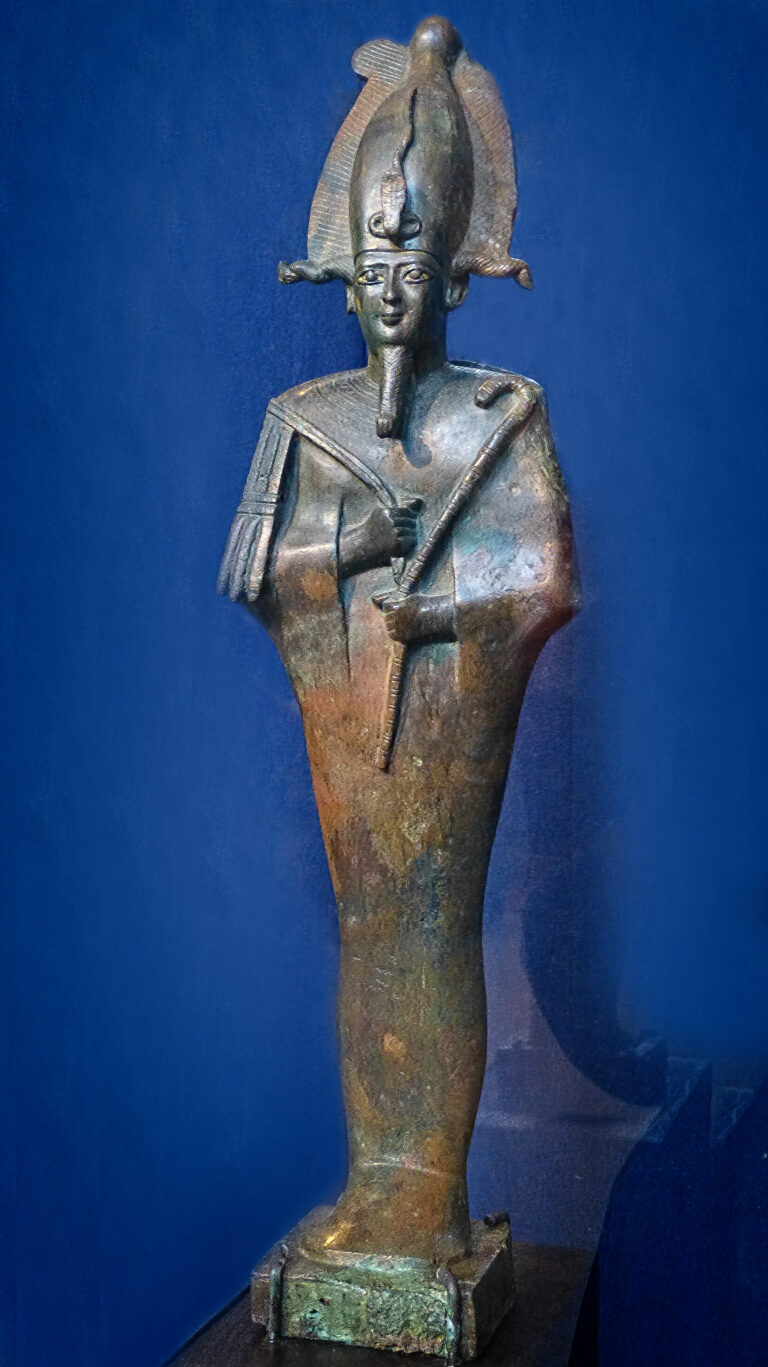
ReflectionAm — ReflectionAm names reflected presence: awareness embodied or mirrored without yet becoming ownership.Read full entry → (OsirisOsirisIn Geomytha, Osiris names reflected presence: Am — awareness reflected as living consciousness without yet becoming ownership.Read full entry → / Moon): consciousness becoming coherent, mirroring itself cleanly.
Imagination overtaking (SetSetIn Geomytha, Set names the claimant: I — the interruption by which reflection is taken as mine and converted toward ownership.Read full entry → / Sun): the “solar” force that fractures reflection into conceptual division.
Time-bound identity (HorusHorusIn Geomytha, Horus names the identity that forms after claim: This — the body, role, image, wound, belief, or story taken as what the self is.Read full entry → / the illusion of man): the ego-self formed out of narrative, memory, and projected continuity.
Myths retell this as family drama, cosmic war, exile and returnReturn — RemembranceReturn names remembrance and release: the loosening of possession so reflection can become transparent to source again.Read full entry →, fall and redemption. The VMD renders the structure beneath the costume.
If you accept that premise, then every myth becomes traceable: you locate where awareness is stable, where reflection is intact, where division enters, and what identity is manufactured as a result.
“Burning, Yet Not Consumed”
This single phrase is the key.
In ordinary egoic functioning, “fire” consumes. Intensity converts your attention into narrative. Energy turns into identity maintenance: defending, explaining, controlling, seeking, regretting, rehearsing. That is the felt experience of being “burned” by thought.
But the Burning Bush is fire that does not consume.
That is exactly how presence feels when it is no longer being harvested by conceptualization.
The field can be bright.
The moment can be intense.
The inner world can be alive.
And yet nothing is drained, because nothing is being turned into a story of “me.”
This is not merely mystical language. It is an experiential claimI — ClaimI names claim: the interruption by which reflected presence is taken as mine.Read full entry →: the difference between attention as presence and attention as possession.
The Bush as the Interface of Form
A bush is not a temple. It is not a palace. It is not a throne. It is ordinary, thorny, living form—humble matter.
In Geomytha, that matters.
Because the revelationRevelation — Book of RevelationThe final book of the Christian New Testament, also called the Apocalypse of John.Read full entry → is not delivered by escaping the world. It is delivered in the world, through the mundane interface where consciousness meets form. That is why the object is not glamorous: the myth refuses to let you confuse “truth” with prestige.
The bush is the bodily world, the ordinary moment, the place you keep overlooking while you look for “spiritual experiences.”
The burning bush says: the interface itself is the altar.
Fire as Set: The Solar Force of Division
In this framework, Set corresponds to the “solar” force that fractures reflection into conceptual division. It is not “evil” in a cartoon sense; it is a function—an overtaking.
Fire is a clean symbol for this:
Fire illuminates.
Fire energizes.
Fire spreads quickly.
Fire transforms what it touches.
That is also what thought does when it becomes governor instead of tool.
When imagination (Set) overtakes reflection (Osiris), it produces the world of opposites—good/bad, safe/dangerous, success/failure—then installs a time-bound identity (Horus) to navigate the opposites.
The Burning Bush is the moment when that overtaking is interrupted—not by repression, but by recognition.
The fire remains, but it stops consuming the bush. In other words: the intensity remains, but it stops stealing the field to build an ego.
The Voice That Names Itself
Then comes the most provocative part: the voice.
The text does not merely say “God spoke.” It gives a kind of self-definition that resists definition. In Geomytha terms, this is the point where awareness identifies itself as prior to the story.
Not “a being inside the world,” competing with other beings.
But presence as the ground of beings.
That is why the revelation is not primarily a command. It is primarily an unveiling: the recognition of what is already true before the mind starts narrating.
The Burning Bush is the moment consciousness realizes it is not the character.
Why This One Myth Proves the Larger Claim
If a single myth cleanly encodes the same awareness/reflection/overtaking/identity mechanics you see everywhere, then the larger thesis becomes testable:
Myths are not random cultural artifacts. They are symbolic recordings of the same inner architecture.
That is why you can take a story from EgyptEgyptAncient Egyptian cultural and mythic field referenced by the essay.Read full entry →, a parable from the Gospels, a Greek tragedy, a fairy tale, or a modern film—and reliably locate the same moves:
A coherent state (Osiris reflection intact).
An intrusion or fracture (Set enters as division).
A new identity formed to survive the fracture (Horus).
A restoration or a loop (return to Isis awareness, or repetition of the cycle).
The VMD becomes the map because it expresses recurrence: loops, convergence, and the seductive illusion of linear progression.
The Burning Bush as the VMD in Narrative Form
Here is the simplest correspondence, stated plainly:
Isis (awareness / earth): the “bush” as living presence in form—ordinary, grounded, already there.
Osiris (reflection / moon): the capacity of consciousness to mirror itself without distortion.
Set (imagination overtaking / sun): the fire—intensity that normally consumes attention into narrative.
Horus (time-bound ego): the identity that would normally claim the event (“my calling,” “my mission,” “my specialness”) and convert revelation into persona.
The Burning Bush is the moment the fire does not get to complete its usual work.
The “solar” force is present, but it is no longer sovereign.
That is the whole instruction.
The Practical Instruction Hidden in the Myth
If myths are instruction manuals, then the Burning Bush teaches a practice you can verify:
Let intensity be present without converting it into identity.
In real terms:
Feel the urge to explain yourself.
Feel the urge to judge.
Feel the urge to fix the future.
Feel the urge to rewrite the past.
That is the “fire.”
Now watch the moment you turn it into a self.
That conversion is the consumption.
The practice is not to extinguish the fire. The practice is to stop feeding it the bush.
A Simple Exercise: Fire Without Consumption
Try this for two minutes:
Sit still. Let the body be the “bush”—ordinary, unromantic, present.
Notice the strongest thought-current in the mind (worry, planning, resentment, desire).
Do not argue with it. Do not obey it. Do not suppress it.
Let it burn as sensation and energy—without attaching a storyline.
When the mind tries to claim it (“this means X about me”), return to bare perception.
If you do this even briefly, you will see the point: the fire can be there without eating you alive.
That is “burning, yet not consumed” as lived experience.
Closing: Why the Bush Still Burns
In Geomytha, the Burning Bush is not a relic of ancient religion. It is the recurring moment that appears whenever presence breaks through the trance of identity.
It appears when the field is bright and awake, and yet nothing needs to be defended.
It appears when the mind’s solar machinery is running, but it is no longer allowed to crown itself king.
And if it is true that all myths are encoded in the VMD, then the Burning Bush is one of the clearest entries in the archive: a direct depiction of the vortex point—where awareness remains itself, even while the world is on fire.
Because the point was never to escape the fire.
The point was to stop being consumed by it.
Connect with Geomytha
YouTube: geomytha
X: mythicgeometry
Instagram: mythicgeometry
TikTok: Geomytha
Patreon: Geomytha Noir
Substack: Geomytha Noir